
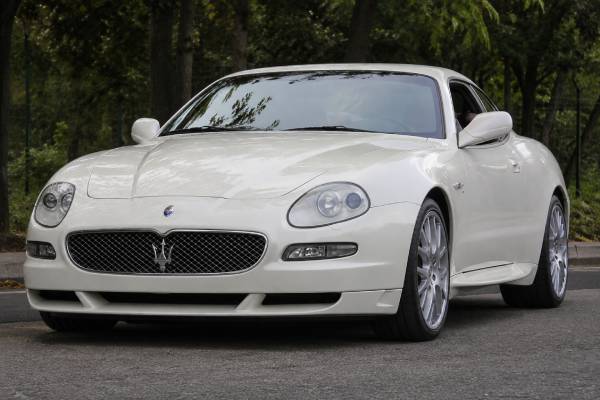
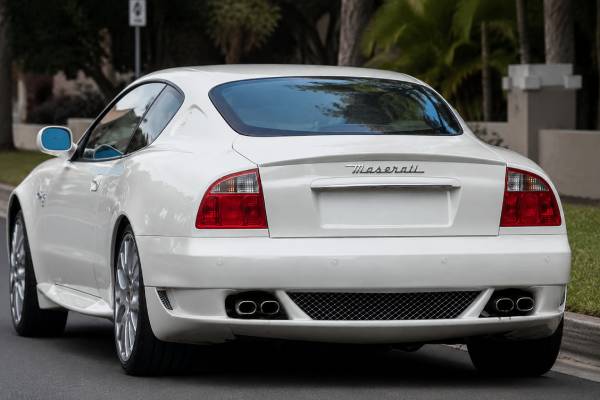
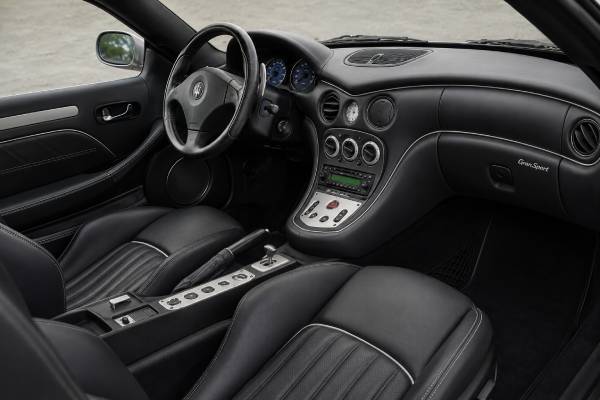
The 2004–2007 Maserati GranSport is the sharper, faster, and more involving development of the M138 Coupé. It keeps the compact four-seat body and naturally aspirated Ferrari-Maserati V8, then adds 400 hp, quicker Cambiocorsa shift programming, lower suspension, 19-inch wheels, improved aerodynamics, stronger visual details, and a cabin built around more supportive seats and carbon trim. The result is neither a stripped track car nor a soft luxury coupé. It is an old-school Italian grand tourer that asks the driver to participate, especially when operating its single-clutch paddle gearbox. That character explains both its appeal and its ownership demands. A good GranSport feels balanced, vocal, and surprisingly practical; a neglected one can need a clutch, hydraulic work, suspension joints, interior refinishing, cooling repairs, and tires at the same time. The right purchase starts with specialist diagnostics, a cold-to-hot road test, and proof that age-based maintenance was done even when annual mileage was low.
Table of Contents
- The GranSport’s Place in Maserati History
- Inside the 400 hp Transaxle Package
- Model Years, Options, and Special Versions
- Aerodynamics, Cabin, and Signature Details
- Real-World Performance and Road Manners
- Service Needs and Common Age-Related Faults
- Choosing and Inspecting the Right GranSport
The GranSport’s Place in Maserati History
The GranSport is the performance-focused final evolution of Maserati’s Giugiaro-shaped M138 Coupé family. Unveiled at the 2004 Geneva Motor Show and produced through 2007, it bridged the compact, mechanically direct Coupé era and the larger, more polished GranTurismo that followed.
Maserati had returned to the United States and other important markets with the 3200 GT’s successor, sold simply as Coupé and Spyder. Those cars introduced the 4.2-liter naturally aspirated V8 and a rear transaxle layout, but the GranSport turned the platform into a more cohesive driver’s car. Power rose from 390 to 400 hp, transmission control became faster, ride height dropped by 10 mm, and the body gained functional aerodynamic work. The name also revived a historic Maserati designation associated with sporting grand tourers from the 1950s.
Its purpose was not to chase a lap-time record. The GranSport retained four usable seats by sports-car standards, a 315-liter luggage compartment, electric comfort equipment, climate control, and the ability to cover long distances. At the same time, it made the driver work with a high-revving engine, hydraulic steering, steel brakes, and a single-clutch electrohydraulic gearbox. That blend feels increasingly unusual in an era of turbocharged engines, dual-clutch transmissions, and layers of configurable electronics.
The GranSport’s reputation has improved as owners and specialists have learned how to maintain the M138 platform. It was once viewed mainly as a depreciated exotic with frightening repair potential. Today, informed buyers recognize that the core V8 and steel chassis can be durable, while the greatest financial risks usually come from deferred maintenance, poor clutch use, aging electronics, suspension wear, and cosmetic deterioration.
Official Maserati heritage information lists 2,640 GranSport coupés. Published totals elsewhere may differ because some sources separate special editions, model years, or regional registrations. For a buyer, the exact global accounting matters less than the fact that production was modest and survival quality varies widely. The limited MC Victory sits at the top of the collector hierarchy, but an excellent standard car can be a better road-use choice because replacement trim is easier to find and the purchase premium is lower.
The GranSport remains appealing because it combines compact four-seat packaging, linear V8 response, balanced transaxle handling, conventional steel brakes, and prices below many comparable Italian exotics. Its compromises are equally direct: the gearbox needs technique, rear space is tight, fuel use is heavy, and specialist support is essential.
Inside the 400 hp Transaxle Package
The GranSport’s key engineering feature is its separation of the front-mounted V8 and rear-mounted gearbox-differential assembly. This transaxle architecture improves weight distribution, while the dry-sump 4,244 cc engine supplies 400 hp at 7,000 rpm and 452 Nm at 4,500 rpm.
| Category | Factory specification |
|---|---|
| Engine code | M138P, Ferrari-Maserati F136-family V8 |
| Configuration | 90-degree V8, aluminum block and heads, 32 valves |
| Displacement | 4,244 cc |
| Bore and stroke | 92.0 mm × 79.8 mm |
| Compression ratio | 11.1:1 |
| Induction | Naturally aspirated with electronic fuel injection |
| Lubrication | Dry sump |
| Maximum power | 400 hp at 7,000 rpm |
| Maximum torque | 452 Nm at 4,500 rpm |
| Maximum permitted engine speed | 7,600 rpm |
| Transmission | Six-speed Cambiocorsa automated manual |
| Drive | Rear-wheel drive with limited-slip differential |
| Suspension | Double wishbones front and rear; Skyhook adaptive damping on many cars |
| Brakes | Four-piston Brembo calipers, ventilated cross-drilled steel discs |
| Brake disc size | 330 × 32 mm front; 310 × 28 mm rear |
| Wheels | 19-inch Trofeo-style alloys |
| Tires | 235/35 ZR19 front; 265/30 ZR19 rear |
The engine uses twin overhead camshafts on each bank, variable timing on the intake side, hydraulic tappets, and four valves per cylinder. The GranSport’s extra output came from detail development of airflow, valve-seat work, internal friction reduction, and a freer exhaust rather than forced induction. The torque curve is broad enough for touring, but the engine’s personality lives in the upper half of the tachometer.
Dry-sump lubrication separates the oil supply from the crankcase. This helps maintain pressure during hard cornering and permits lower engine placement, but oil level must be checked using the correct procedure. Checking it cold or filling to an assumed dipstick level can lead to overfilling. A buyer should expect a specialist to know the required oil temperature, idle condition, and timing for a valid reading.
The Cambiocorsa transmission is often misunderstood. Internally, it is a six-speed manual gearbox. Hydraulic actuators operate the clutch and select gears in response to the steering-column paddles or automatic mode. It has no clutch pedal, yet it still slips a conventional friction clutch when moving away. Holding the car on an incline with the accelerator or creeping continuously in traffic creates the same wear as slipping a manual clutch.
Sport mode changes several responses. It shortens shift times, allows more assertive downshifts, opens the exhaust bypass more readily, relaxes stability intervention, and can firm the adaptive dampers. The system automatically blips the throttle on downshifts, which helps balance the car and creates much of the GranSport’s theater.
| Measure | Figure |
|---|---|
| Length | 4,523 mm |
| Width | 1,822 mm |
| Height | 1,295 mm |
| Wheelbase | 2,660 mm |
| Front/rear track | 1,525 mm / 1,538 mm |
| Dry weight | About 1,580 kg |
| Kerb weight | About 1,680 kg |
| Fuel tank | 88 liters |
| Boot volume | 315 liters |
| Claimed 0–100 km/h | 4.85 seconds |
| Claimed 0–200 km/h | 17.4 seconds |
| Claimed top speed | 290 km/h |
Performance figures are factory claims and period tests vary with surface, temperature, clutch condition, shift strategy, and measurement method. The important ownership point is that a healthy GranSport should feel crisp and consistent. Slurred engagement, delayed shifts, misfires near redline, steering shake, or a long brake pedal are condition faults, not normal Italian-car character.
Model Years, Options, and Special Versions
Most GranSport coupés share the same 400 hp powertrain, so specification and condition create more meaningful differences than model year alone. Buyers should identify market equipment, original colors, factory options, and any special-edition content before assigning a premium.
The production run began in 2004 for some markets, with many countries treating early cars as 2005 model-year vehicles. Later examples may have detail changes in software, trim, audio, regulatory equipment, or available colors, but there was no major mid-cycle mechanical redesign. This makes service history and current setup more important than automatically pursuing the newest registration.
Common equipment includes the Cambiocorsa transmission, 19-inch wheels, sports exhaust, MSP stability control, supportive front seats, carbon-fiber cabin trim, automatic climate control, electric windows and mirrors, and a push-button starter. Optional or market-dependent items included satellite navigation, telephone preparation, upgraded audio, parking sensors, heated seats, xenon lamps, electrochromic mirrors, custom luggage, and different trim combinations.
Skyhook adaptive damping requires particular attention. It was fitted widely and standard in some markets, while equipment listings vary elsewhere. A build sheet or option-code check is more reliable than assumptions. Cars without active damping are not necessarily inferior; some owners prefer the simpler fixed setup. A malfunctioning Skyhook car, however, should not be valued as if the system works.
Factory colors ranged from restrained metallic gray and black to strong red, yellow, blue, and the multi-layer Bianco Fuji. Interior choices mixed leather with technical BrighTex fabric on many coupés, along with contrasting piping and carbon accents. Re-trimming can be attractive, but originality should be documented, particularly on unusually specified cars.
Important special versions
The MC Victory is the best known. It received numbered production, revised aerodynamic pieces, more direct steering, carbon-shell seats, blue-weave carbon trim, Italian flag fender emblems, and a stronger MC12 connection. The Contemporary Classic package used ball-polished wheels, full leather, coordinated piping, a leather steering wheel, and vintage-style instruments. A U.S.-market Limited Edition added specific badges and luxury equipment. A Japan-only Maserati and Cornes 10th Anniversary series closed the run in very small numbers.
These editions deserve separate authentication. A standard GranSport with ball-polished wheels or carbon seats does not become a factory special. Request the original invoice, build data, plaque details, and historical photographs. Also remember that an unmodified standard car in a rare factory color may be more desirable than a poorly preserved special edition.
Modifications and originality
Aftermarket exhausts, ECU tuning, lowered springs, wheel spacers, audio upgrades, and modern infotainment conversions are common. Some improve usability, but they can introduce warning lights, drone, poor alignment, tire rubbing, or reduced resale appeal. The strongest arrangement is a reversible modification accompanied by the original components.
Clutch-related “upgrades” require caution. Software calibration, PIS setting, and correct parts installation matter more than marketing claims. A car that shifts harshly may not be sporty; it may be incorrectly adjusted. Any nonstandard clutch or transmission work should be supported by invoices and a specialist explanation.
Aerodynamics, Cabin, and Signature Details
The GranSport looks subtly different from the earlier Coupé, but its body changes serve a real purpose. Revised bumpers, deeper side skirts, a rear lip, and underbody management cut lift while reducing the drag coefficient to about 0.33.
The larger front grille improves visual aggression and cooling presentation. Chrome mesh appears at the front and rear, while the lower spoiler sits close enough to the road to demand care on ramps. The rear bumper frames four exhaust outlets, and the Trofeo-inspired wheels make the car appear lower even before accounting for the 10 mm suspension drop.
Giugiaro’s basic shape remains elegant and compact. The roofline allows rear seating, the glass area gives better visibility than many modern sports cars, and the narrow overall footprint is useful on European roads. The car’s age is most obvious in the lamp design, infotainment screen, and cabin switchgear rather than its proportions.
Inside, the GranSport uses deeply bolstered front seats, a slimmer center console, carbon-fiber trim, a thick-rim steering wheel, metal paddles, and a central analog clock. The mixture of leather, BrighTex technical fabric, carbon, and contrasting piping gives the cabin a period motorsport-luxury feel. It is less polished than a later GranTurismo, but more intimate.
The rear seats can carry adults for short distances, though legroom depends heavily on front-seat position. They are more useful for children, luggage, or occasional passengers. The boot is genuinely helpful for a sports coupé and can support weekend travel without soft bags filling the cabin.
Several design details are also inspection points:
- Front splitters and lower bumper edges suffer scrapes and repairs.
- Trofeo wheels bend or lose their original finish after repeated refurbishment.
- Carbon clearcoat may haze, lift, crack, or show poorly matched replacements.
- Seat bolsters wear, especially on the driver’s outer edge.
- Leather dashboards and trim can shrink or lift after heat exposure.
- Soft-touch coatings on vents, switches, and handles often become sticky.
- Headlamp lenses, seals, and rear light units can show age or moisture.
The exhaust system is central to the car’s identity. Vacuum-operated bypass valves alter the sound under load and in Sport mode. A cold start should produce a clean flare without metallic rattles, then settle to an even idle. Permanently wired-open valves may sound exciting briefly but can create tiring resonance and hide a failed control system.
Real-World Performance and Road Manners
A properly sorted GranSport feels agile, balanced, and communicative rather than brutally fast by current standards. Its strongest qualities are throttle response, steering information, body control, and the way the V8 builds power toward 7,000 rpm.
City driving exposes the gearbox’s limitations. In automatic mode, the car can pause between ratios and feel clumsy because the system must close the throttle, disengage the clutch, shift, and re-engage. Manual paddle control is usually smoother. Briefly easing the accelerator during an upshift reduces head movement and clutch shock. Leaving space in traffic prevents repeated low-speed clutch slip.
On an open road, the system makes much more sense. Downshifts arrive with a programmed throttle blip, the engine responds instantly, and the rear transaxle helps the chassis change direction without excessive front-end push. The car is happiest when driven rhythmically rather than attacked with abrupt steering and throttle inputs.
Hydraulic steering carries useful weight and texture. It should return naturally toward center and remain calm over bumps. Tramlining can come from wide front tires, but severe pulling or nervousness suggests alignment error, worn joints, bent wheels, or mismatched tires. The GranSport’s handling depends strongly on having four correct, recent tires of the same model.
Skyhook’s normal setting gives a firm but credible touring ride. Sport mode reduces body movement and makes smooth roads more rewarding, though it can become busy on broken surfaces. A fixed-damper car may feel consistent and mechanically simple, but any suspension arrangement must be judged for leaks, control-arm wear, ride-height balance, and alignment.
The brakes provide good modulation and adequate endurance for road use. They are not immune to abuse. Track use can crack drilled discs, overheat pads and fluid, and accelerate wheel-bearing or suspension wear. An owner who intends regular circuit work should inspect more frequently, use suitable fluid and pads, and understand that the Cambiocorsa clutch is not a launch-control component.
At motorway speed, the GranSport settles into its GT role, with supportive seats and useful luggage space. Wind and tire noise exceed newer luxury coupés, and the original navigation feels dated. Visibility is reasonable, but the wide turning circle, low nose, and clutch heat make repeated parking maneuvers awkward.
Service Needs and Common Age-Related Faults
GranSport reliability depends more on maintenance quality and use pattern than odometer reading. A car with 60,000 well-serviced kilometers can be a safer buy than a 15,000-kilometer example that sat for years with old fluids, an unsupported battery, and hardened seals.
Clutch, actuator, and gearbox control
The clutch is the first major inspection item. Diagnostic equipment should show wear data, clutch position, PIS calibration, hydraulic pressure behavior, and stored fault codes. Wear percentages are estimates based on setup values, so the technician must interpret them alongside engagement quality and invoices.
Warning signs include frequent pump operation, slow selection of first or reverse, a flashing gear indicator, neutral appearing unexpectedly, shudder on takeoff, hot-start shift refusal, or unusually harsh changes. Possible causes range from clutch wear and a tired accumulator to sensors, pump relay, actuator leakage, wiring, or poor calibration.
Driving technique matters. Avoid inching forward for long periods, reversing uphill, or balancing the car on the clutch. Select neutral during longer stops when advised by the owner’s documentation and specialist, and do not repeatedly use full-throttle standing starts.
Engine and cooling system
The chain-driven V8 does not require a routine timing-belt change, but that does not make it maintenance-free. Use the correct oil, change it by time as well as distance, and verify proper dry-sump checking. Inspect cam covers, oil lines, coolant hoses, radiator condition, expansion tank, water-pump area, thermostat behavior, and cooling-fan operation.
A stable temperature gauge is important. Overheating can damage an otherwise strong engine. Misfires may come from coils, plugs, injectors, air leaks, sensors, or low voltage. Oil-pressure warning behavior must be diagnosed rather than dismissed as a sender fault until pressure is mechanically confirmed.
Engine and transmission mounts age and can increase vibration or drivetrain movement. Exhaust manifolds, catalysts, oxygen sensors, and valve controls also deserve attention, especially on cars with nonstandard exhaust work.
Suspension, steering, and brakes
Ball joints and suspension bushings wear, and replacement can become costly if entire arms are required. Check for clunks, vague steering, uneven tire wear, steering-wheel shake, and inconsistent ride height. Skyhook warning lights require a scan of the suspension control system, not merely clearing the dashboard.
Brake discs should be measured for thickness and inspected for cracks around drillings. Flexible hoses, caliper condition, pad age, and fluid history matter. The parking brake can need adjustment or repair after little use.
Electrical and cosmetic aging
Low battery voltage causes misleading warnings and erratic behavior. A correct battery and maintainer are basic ownership tools, but persistent faults still need diagnosis. Test the alternator, starter, windows, mirrors, central locking, alarm, climate system, infotainment, seat motors, parking sensors, and instrument display.
Sticky interior coatings are common. Specialist refinishing can preserve symbols and restore a dry, factory-like surface. Cheap solvents may remove lettering or damage plastic. Check the headliner, dashboard leather, door seals, window regulators, and water entry. Parts supply is generally better for mechanical service items than for perfect original trim, so cosmetic completeness should influence the purchase decision.
Choosing and Inspecting the Right GranSport
The best GranSport is a complete, regularly serviced car with clean diagnostic data, recent age-based maintenance, matching quality tires, and no unresolved warning lights. Do not buy on color, mileage, or a freshly detailed engine bay before verifying the expensive systems.
Start with records. Look for annual or sensible time-based oil services, fluid changes, clutch work with calibration details, suspension repairs, cooling-system attention, brake invoices, tire dates, and battery history. A stamped booklet without supporting invoices is less useful than a thick file that shows what parts were fitted and who performed the work.
A specialist pre-purchase inspection should include:
- VIN and build-specification verification.
- Full-system diagnostic scan before fault codes are cleared.
- Clutch wear and PIS interpretation.
- Hydraulic-pump and accumulator assessment.
- Cold-start oil-pressure and engine-noise check.
- Cooling-system pressure test and leak inspection.
- Suspension-joint, damper, wheel, and alignment evaluation.
- Brake-disc measurement and tire date-code review.
- Underbody inspection for impact damage and fluid leaks.
- Operation of every switch, motor, display, and warning lamp.
| Strong signs | Reasons to pause |
|---|---|
| Known specialist history with detailed invoices | Long gaps explained only by low mileage |
| Smooth hot and cold gear engagement | Gearbox warnings or seller resistance to scanning |
| Recent matching tires and accurate alignment | Old tires, bent wheels, or inner-edge wear |
| Dry engine, stable coolant temperature | Coolant odor, oil leaks, or temperature fluctuation |
| Original trim and reversible upgrades | Missing carbon, cut wiring, or unexplained repainting |
| All electronics function at normal voltage | Multiple “minor” faults blamed on the battery |
Drive the car from cold until fully heat-soaked. Use manual and automatic transmission modes, normal and Sport settings, tight turns, rough surfaces, hard braking, motorway speed, and repeated first-reverse selection. The engine should rev cleanly, the steering should stay precise, and the clutch should engage consistently. A short drive around a dealer’s block cannot reveal hot hydraulic faults or cooling problems.
Budget for a baseline service after purchase unless recent work is proven. Add contingency for tires, brakes, sticky controls, wheel refurbishment, suspension joints, and a clutch even if none is immediately due. Insurance should reflect agreed value and limited parts availability. Access to a trusted specialist is more important than living near a general luxury-car workshop.
For frequent use, a standard car may make more sense than a rare edition with fragile, expensive trim. In every case, mechanical condition should win over odometer vanity. The GranSport suits an owner willing to learn its low-speed technique, warm it properly, exercise it regularly, and maintain it preventively. In return, it delivers compact four-seat usefulness, natural steering, and a high-revving V8 with genuine occasion.
References
- GranSport, GranSport Spyder – Gran Turismo models | Maserati 2026
- gransport spyder · coupé 2006 (Brochure)
- Vehicle Detail Search – 2005 MASERATI GRANSPORT | NHTSA 2026 (Recall Database)
- Maserati GranSport | PH Used Buying Guide – PistonHeads UK 2023
Disclaimer
This article is for informational purposes and does not replace professional diagnosis, inspection, or repair. Specifications, torque values, service intervals, and procedures vary by VIN, market, and installed equipment; confirm all work with the official service documentation for the individual car.
Please share this guide on Facebook, X/Twitter, or another enthusiast platform to help support our work.