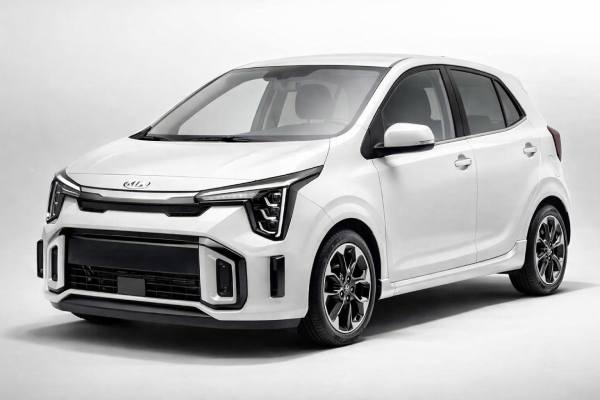
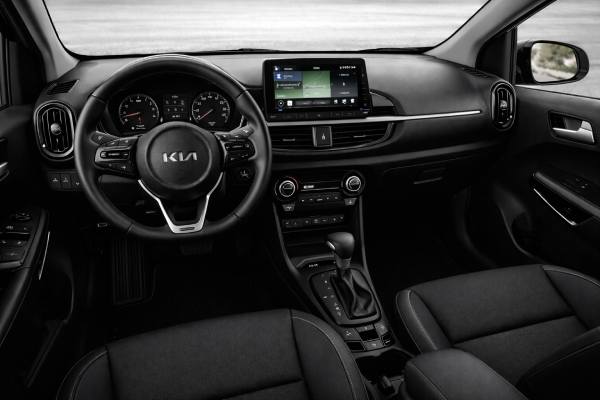
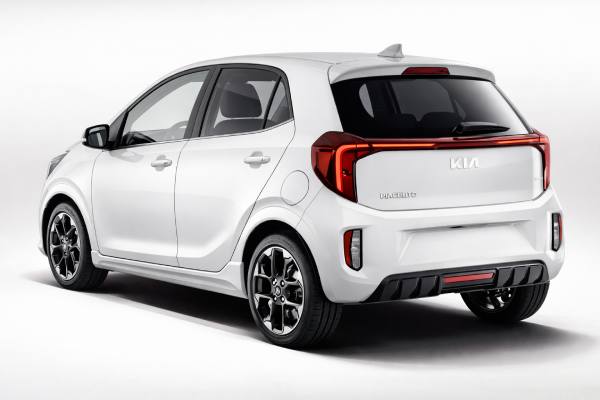
The 2025–present facelift of the Kia Picanto (JA) with the 1.0-litre G3LD three-cylinder is a classic “small car, big job” package: simple naturally aspirated hardware, light weight, and city-friendly dimensions—now paired with fresher styling and (in many markets) a stronger standard safety and infotainment baseline than earlier JA years. This engine is not about outright speed; it is about predictable response at low loads, low running costs, and easy servicing with widely available parts. The Picanto’s real value shows up in tight streets: short overhangs, a small turning circle, and a chassis tuned for urban bumps without feeling loose at motorway speeds. Buy it with clear expectations, keep up with oil and brake-fluid intervals, and it tends to reward owners with steady reliability and very manageable maintenance.
Quick Specs and Notes
- Easy-to-live-with city packaging: compact footprint, light controls, and simple drivetrain choices.
- Naturally aspirated 1.0 MPI suits short trips and lower fuel quality better than small turbos in tough duty cycles.
- Low consumables spend: modest tyres, small brake hardware, and straightforward service access.
- If equipped with an automated manual (AMT), budget for clutch wear and occasional actuator calibration.
- Change engine oil every 10,000–15,000 km (6,000–9,000 mi) or 12 months (whichever comes first), depending on usage and the official schedule for your market.
Jump to sections
- Kia Picanto JA 2025 powertrain overview
- Kia Picanto JA G3LD specs and dimensions
- Kia Picanto JA trims, safety and ADAS
- Reliability issues, recalls and TSBs
- Maintenance plan and buying tips
- Real-world driving and economy
- Rivals and value comparison
Kia Picanto JA 2025 powertrain overview
For the 2025–present facelift, the Picanto JA keeps the recipe that makes it work in dense traffic: a small-displacement, naturally aspirated petrol engine (G3LD) driving the front wheels through either a conventional manual gearbox or, in some markets, an automated manual transmission (AMT). The “68 hp” figure you see in listings is often a rounding artifact—some brochures quote output in PS (metric horsepower) or kW. What matters day to day is the character: modest peak power, but a smooth, linear build and decent tractability if you keep the revs in the mid-range.
Engine basics (what it means for owners):
- Architecture: inline-3, multi-point injection (MPI), naturally aspirated. MPI is generally forgiving of repeated cold starts and short runs because it tends to avoid the intake-valve deposit patterns associated with direct injection.
- Power delivery: you will not get strong highway passing without a downshift. In exchange, the engine behaves predictably in stop-start use and is typically easy on plugs, coils, and emissions hardware when serviced on time.
- Timing drive: this family is commonly chain-driven in many applications. In practice, that usually means no routine belt replacement, but it does raise the importance of clean oil (short-trip sludge and long oil intervals are what make chains noisy).
What the 2025 facelift changes in real life:
- Cabin and tech: many markets move to a larger infotainment screen, quicker smartphone integration, and improved camera/sensor integration.
- Safety packaging: depending on trim and region, newer builds often bundle more driver assistance as standard or make it easier to option. This matters for resale because buyers increasingly filter for AEB and lane support even in the A-segment.
- NVH and ride polish: facelift updates typically focus on bushing revisions, tyre changes, and calibration tweaks rather than hard mechanical redesign. The result is usually a slightly calmer feel on coarse asphalt and fewer rattles when the car is new.
Who this version suits best:
- Urban and suburban drivers who value small size, low running costs, and easy parking.
- Owners who prefer simple engines over small turbos and can accept that motorway overtakes need planning.
If you regularly carry four adults, do long climbs, or spend most of your time at 120–130 km/h (75–80 mph), consider the 1.2-litre variant where available. The 1.0 works—just with clearer limits.
Kia Picanto JA G3LD specs and dimensions
Below are practical, buyer-relevant specifications for the 2025–present facelift 1.0 MPI. Exact figures vary by market, emissions certification, wheel size, and transmission—treat these as typical ranges and confirm with your VIN-specific documentation.
Powertrain and efficiency
| Item | Specification |
|---|---|
| Code | G3LD |
| Engine layout and cylinders | I-3, 3 cylinders; typically DOHC, 4 valves/cyl (12V) |
| Displacement | 1.0 L (998 cc) |
| Induction | Naturally aspirated |
| Fuel system | MPI (multi-point injection) |
| Compression ratio (ICE) | ~10.5:1 (market-dependent) |
| Max power | 68 hp (50 kW) (often listed as ~63–67 hp / 46–50 kW depending on unit standard) |
| Max torque | ~95–96 Nm (70–71 lb-ft) |
| Timing drive | Typically chain (confirm by market/service literature) |
| Rated efficiency | ~5.1–5.6 L/100 km (≈ 46–55 mpg US / 50–65 mpg UK, depending on WLTP configuration) |
| Real-world highway @ 120 km/h (75 mph) | ~6.2–6.8 L/100 km (≈ 35–38 mpg US / 42–46 mpg UK) |
Transmission and driveline
| Item | Specification |
|---|---|
| Transmission | 5-speed manual (common); 5-speed AMT/automated manual (market-dependent) |
| Drive type | FWD |
| Differential | Open |
Chassis and dimensions
| Item | Specification |
|---|---|
| Suspension (front/rear) | MacPherson strut / torsion beam |
| Steering | Electric power steering (EPS) |
| Brakes | Front discs / rear drums (most trims); rear discs on some sport/upper trims (market-dependent) |
| Wheels and tyres (common size) | 185/55 R15 (common); also 175/65 R14 or 195/45 R16 by trim |
| Ground clearance | ~140 mm (5.5 in) |
| Length / width / height | ~3,595–3,605 mm (141.5–141.9 in) / 1,595 mm (62.8 in) / 1,485 mm (58.5 in) |
| Wheelbase | ~2,400 mm (94.5 in) |
| Turning circle (kerb-to-kerb) | ~9.4 m (30.8 ft) |
| Kerb (curb) weight | ~900–1,000 kg (1,985–2,205 lb) |
| Fuel tank | 35 L (≈ 9.2 US gal / 7.7 UK gal) |
| Cargo volume | ~255 L (9.0 ft³) seats up; up to ~1,010 L (35.7 ft³) seats down (method varies) |
Performance and capability
| Item | Typical value |
|---|---|
| Acceleration 0–100 km/h (0–62 mph) | ~14.5–16.0 s (wheels/gearbox dependent) |
| Top speed | ~155–165 km/h (96–103 mph) |
| Braking distance 100–0 km/h | typically ~40–45 m on quality tyres (test-dependent) |
| Towing capacity | Often not rated or very limited in some markets; where rated, expect modest figures and strict trailer rules |
| Payload | Commonly ~350–450 kg (770–990 lb) depending on trim and GVWR |
Fluids and service capacities (typical)
| Item | Specification (confirm by VIN) |
|---|---|
| Engine oil | Commonly 5W-30 (spec varies by market); capacity ~3.1–3.5 L (3.3–3.7 US qt) with filter |
| Coolant | Long-life ethylene glycol mix (often 50/50); ~4.0–5.0 L (4.2–5.3 US qt) |
| Manual/AMT gear oil | Typically ~1.5–2.0 L (1.6–2.1 US qt) |
| A/C refrigerant | Often R1234yf in newer EU cars; charge varies by system |
| Key torque specs | Wheel nuts often ~85–100 Nm (63–74 lb-ft); drain plug often ~30–40 Nm (22–30 lb-ft) (verify) |
The “best” spec is the one that matches your usage: smaller wheels usually ride better and cost less in tyres, while upper trims may add safety sensors and comfort features that matter more than a slight styling upgrade.
Kia Picanto JA trims, safety and ADAS
Trim naming differs widely by country, but most 2025–present Picanto lineups follow a familiar ladder: a value-focused base, a mid trim that adds comfort/infotainment, and a sport-styled or premium trim that bundles lighting, wheels, and driver assistance. When you shop, focus less on the badge and more on equipment proofs—what sensors and modules are actually installed.
Trims and options that change ownership
Most important comfort and usability options:
- Infotainment screen size and connectivity: look for factory Apple CarPlay/Android Auto, and check whether the USB ports are data-capable (some base trims are charge-only in certain markets).
- Parking aids: rear camera quality and the presence of rear parking sensors matter more than you’d think in a short car because the rear window is small and pillars are thick for crash structure.
- Lighting: LED headlamps (where available) can improve night confidence, but verify beam pattern and replacement cost—some LED units are expensive if damaged.
Mechanical or functional differences to watch:
- Wheel and tyre packages: 14-inch setups are usually the sweet spot for ride and cost. 16-inch sport wheels look sharp but can raise tyre cost and road noise.
- Brake hardware: rear drums are common and perfectly acceptable in this class. They last a long time, but you still want periodic cleaning and inspection—especially if the car sees winter salt.
- Transmission type: a 5-speed manual is simplest long term. An AMT can be fine, but it adds clutch-actuation hardware and calibrations that affect smoothness.
Safety ratings and what they really mean
Small cars often carry an older-generation crash rating because retesting is expensive and the platform may not be re-certified after every facelift. The Picanto’s published crash-test results may therefore reflect the JA generation’s test year, not a 2025 retest. Use the rating as a structural baseline, then judge the 2025–present safety equipment separately.
Safety systems and ADAS (typical availability)
Depending on market and trim, you may see:
- AEB (Autonomous Emergency Braking): some versions support vehicle and pedestrian detection; cyclist support depends on sensor suite and software.
- Lane support: Lane Keeping Assist (LKA) and sometimes Lane Following Assist (LFA). These systems rely on camera calibration—windscreen replacement can require recalibration.
- Driver attention and speed assistance: driver alertness monitoring and speed limit info/assistance in some regions.
- Stability and braking basics: ESC stability control, ABS, hill-start assist, and tyre pressure monitoring are common in many markets.
Airbags and child-seat provisions:
- Most cars in this segment provide front and side airbags; curtain airbags may be trim-dependent in some markets.
- Look for ISOFIX/LATCH points and clear top-tether routing. In a small cabin, correct child-seat fit matters as much as the anchor count.
Bottom line: for most buyers, the best “trim” is the one that gives you AEB + lane support + a good lighting package while staying on smaller wheels.
Reliability issues, recalls and TSBs
The Picanto JA 1.0 MPI is generally a low-drama ownership proposition, but reliability is still shaped by usage. Short trips, long idle time, and neglected fluids are what turn “simple” engines into problem engines. Think in terms of prevalence (how often it happens) and severity (what it costs when it does).
Common (expect to see on higher-mileage or city-driven cars)
- 12 V battery fatigue (low cost): frequent short trips and lots of accessory use can age batteries quickly.
Symptoms → slow cranking, stop-start system (if equipped) disabling, random warning lights.
Remedy → battery test under load; replace with correct capacity and reset battery management if required. - Brake wear and corrosion (low to medium): light cars can still eat front pads in city use; rear drums can glaze or collect dust.
Symptoms → squeal, pulsation, weak bite, parking brake travel changes.
Remedy → clean and service slides/drums; flush brake fluid on schedule. - Suspension bush and link wear (low to medium): small anti-roll bar links and front bushes take a beating on potholes.
Symptoms → clunks over bumps, vague steering on rough surfaces.
Remedy → replace links/bushes; align afterwards.
Occasional (more dependent on maintenance or environment)
- Ignition components (medium): coils or plugs can misbehave sooner with poor fuel, extended intervals, or oil contamination.
Symptoms → misfire under load, flashing MIL, rough idle.
Remedy → correct plugs, coil diagnosis, check for oil in plug wells. - Timing chain noise (medium to high if ignored): not “scheduled,” but oil neglect can accelerate chain and tensioner wear.
Symptoms → rattle at cold start, correlation faults, rough running.
Remedy → verify oil grade/interval history; address tensioner/chain if out of spec. - AMT clutch and calibration (medium): if your car uses an automated manual, clutch life is strongly driver- and traffic-dependent.
Symptoms → judder in first gear, slow engagement, hill creep issues, “gearbox” warnings.
Remedy → clutch wear measurement, actuator learning/calibration; clutch replacement when slipping.
Rare (but worth screening)
- A/C leaks or weak cooling (medium): road debris and time can affect condensers.
Symptoms → gradual loss of cooling, oily residue on condenser.
Remedy → leak test, condenser replacement, correct refrigerant charge. - Body corrosion hotspots (medium): varies heavily by climate and underbody protection.
Symptoms → bubbling at seams, rust at rear arches or underbody points.
Remedy → early treatment and cavity/underbody protection.
Recalls, TSBs, and software actions
Because the 2025–present facelift is relatively new, campaigns may be limited or region-specific. The smart approach:
- Run an official VIN check (manufacturer or national authority where available).
- Ask for dealer history showing campaign completion.
- Verify any ADAS-related repairs (windscreen, bumper, camera) were followed by correct calibration.
A clean service record and proof of campaign work matter more in a modern small car than an extra cosmetic package.
Maintenance plan and buying tips
A practical maintenance plan for the 1.0 MPI Picanto is simple: keep fluids fresh, inspect brakes and tyres often, and treat short-trip use as “severe duty.” Below is a useful baseline that aligns with how these cars are commonly operated; always defer to the official schedule for your market and VIN.
Core maintenance schedule (distance/time)
| Item | Interval (typical) | Notes |
|---|---|---|
| Engine oil and filter | 10,000–15,000 km or 12 months | Short trips: choose the shorter interval. |
| Cabin air filter | 15,000–30,000 km or 12–24 months | Replace sooner if dusty city use. |
| Engine air filter | 30,000–45,000 km | Inspect at every oil service in dusty areas. |
| Spark plugs | 60,000–90,000 km | Confirm plug type; replace coils only if diagnosed. |
| Coolant | 5 years then every 2–3 years (or per spec) | Use correct long-life coolant and mix. |
| Brake fluid | Every 2 years | Important for pedal feel and ABS/ESC health. |
| Manual/AMT gear oil | 60,000–120,000 km (usage-based) | Earlier if frequent city heat cycles or shifting complaints. |
| Tyre rotation | Every 10,000 km | Helps quietness and tyre life; align if uneven wear. |
| 12 V battery test | Annually after year 3 | Replace proactively if weak before winter. |
| A/C service check | Yearly | Confirm correct refrigerant and leak-free system. |
Fluid specifications and “decision-grade” torque values
Because oils and fasteners vary by market, treat these as typical:
- Engine oil: commonly 5W-30 meeting the manufacturer’s required ACEA/API spec; capacity usually around 3.1–3.5 L with filter.
- Gear oil: a GL-4 manual transmission fluid is common in small 5-speed units; capacity usually ~1.5–2.0 L.
- Wheel nuts: often ~85–100 Nm; tighten with a torque wrench, not an impact-only approach.
- Oil drain plug: often ~30–40 Nm; always use the correct washer/gasket approach.
Buyer’s guide: what to check before you buy
Paperwork and history
- Service invoices showing oil intervals by date, not just mileage.
- Proof of brake fluid changes (often skipped).
- Any record of AMT clutch work or calibrations (if applicable).
Physical inspection checklist
- Cold start: listen for timing rattle and check idle stability.
- Road test: confirm smooth take-off (especially AMT), no steering pull, and consistent braking.
- Tyres: uneven wear suggests alignment or bushing issues.
- Underbody: check for corrosion and damaged splash shields.
- Electronics: test camera, parking sensors, and all driver assistance alerts.
Best long-term configuration (for most owners)
- 1.0 MPI with manual transmission, 15-inch or smaller wheels, and the best safety pack you can get. This combination usually minimizes surprises and maximizes resale demand.
Real-world driving and economy
The Picanto’s driving personality is defined by light weight and short gearing. In town it feels eager at low speeds, and the small footprint is a genuine advantage in narrow streets and tight parking. On faster roads it is stable for its class, but you will notice wind sensitivity and more engine noise than in larger B-segment hatchbacks.
Ride, handling, and NVH
- Ride: with 14–15 inch wheels, the suspension does a good job rounding off sharp edges. Bigger wheels can make potholes more abrupt and increase cabin thrum.
- Handling: the car changes direction easily and feels honest at moderate speeds. The rear torsion beam keeps things simple; mid-corner bumps can nudge the tail slightly, but stability control is typically well tuned.
- Steering: EPS is light and quick for parking. Feedback is limited (normal in the segment), but accuracy is good once you get used to it.
- Noise: at 120 km/h (75 mph), the engine sits at higher rpm than you might expect, and tyre roar becomes the main soundtrack—especially on wider, lower-profile tyres.
Powertrain character
A naturally aspirated 1.0 MPI rewards a “momentum” style:
- In traffic it is smooth and predictable, with clean throttle modulation.
- On hills or merges it needs a downshift—keep it in the mid-range and it feels much happier.
- If you have an AMT, smoothness depends on calibration and clutch condition. The best ones feel fine when you lift slightly during upshifts; worn clutches can feel jerky in stop-start queues.
Real-world efficiency (what owners usually see)
Expect results to move significantly with speed and temperature:
- City: often 5.5–7.0 L/100 km depending on traffic density and trip length.
- Mixed: commonly 5.2–6.2 L/100 km with sensible speeds.
- Highway at 120 km/h: roughly 6.2–6.8 L/100 km, with higher numbers in winter or strong headwinds.
Cold weather short trips are the efficiency “worst case” because the engine spends more time warming up and the cabin heater demand is proportionally higher.
Key performance metrics that matter
In everyday use, the most relevant metric is not the 0–100 time—it is how willing the car feels from 50–90 km/h. With the 1.0, that willingness is there if you use the gearbox and avoid lugging the engine. If your driving is mostly motorway overtakes or steep grades, the 1.2-litre alternative is the more relaxed choice.
Rivals and value comparison
The Picanto competes in a shrinking A-segment where equipment and safety are now as important as price. The key question is whether you want the smallest possible car, or you are willing to step up in size for quieter cruising.
Where the Picanto 1.0 MPI wins
- Urban usability: few cars are as easy to park and place on narrow roads.
- Mechanical simplicity: the naturally aspirated MPI setup is easy to service and tends to tolerate mixed usage patterns.
- Running costs: tyres, brakes, and routine services are usually modest compared with turbocharged or heavier alternatives.
Where key rivals may beat it
- More space for similar money: a bigger hatch can feel like a class upgrade at motorway speed. For example, the Dacia Sandero often offers more cabin and boot room, but it is less “tiny city car” in feel.
- Refinement: some competitors feel quieter on fast roads. The Hyundai i10 is frequently cross-shopped for its cabin usability and balanced ride.
- Different packaging ideas: the Toyota Aygo X trades classic city-hatch proportions for a taller, crossover-like stance—good visibility, but different ride and tyre cost dynamics.
- All-weather niche: the Suzuki Ignis (where available) can appeal if you want a taller seat and a more “mini-utility” vibe, though it is a different concept than a pure city hatch.
How to choose intelligently
Pick the Picanto 1.0 if your priorities are:
- tight-city maneuvering,
- predictable, simple mechanicals,
- and low operating costs.
Consider stepping up a size if you do:
- frequent 120–130 km/h travel,
- long gradients with passengers,
- or you simply want a quieter cabin and more boot capacity.
Value in this segment comes from spec matching, not chasing the cheapest listing. The right safety pack and wheel size can make the car feel like a better category without changing the engine at all.
References
- Picanto MY25 Tekniset tiedot 2025 (Technical Specifications)
- Kia Picanto 2017 (Safety Rating)
- Manuals & Guides | Owner Resources | Kia Mauritius 2026 (Owner’s Manual Portal)
- Kia Picanto Euro NCAP test datasheet (standard) – Sept 2017 | Thatcham Research 2017 (Safety Datasheet)
Disclaimer
This article is for informational purposes only and is not a substitute for professional inspection, diagnosis, or repair. Specifications, torque values, service intervals, and procedures can vary by VIN, market, model year, and equipment; always verify details using the official owner’s manual and service documentation for your exact vehicle.
If this guide helped, please consider sharing it on Facebook, X (Twitter), or your favorite forum to support our work.