
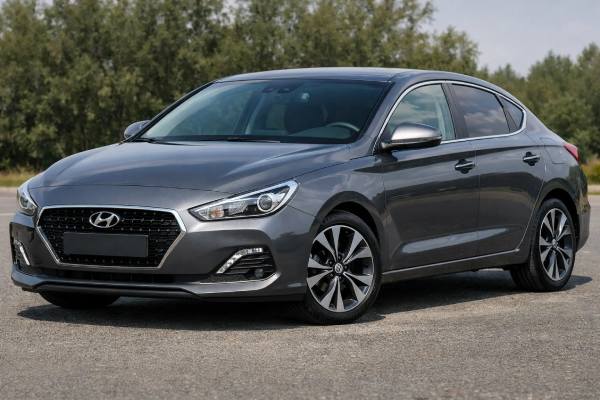
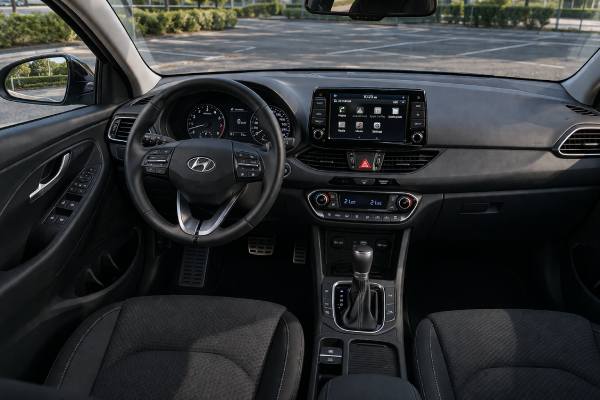
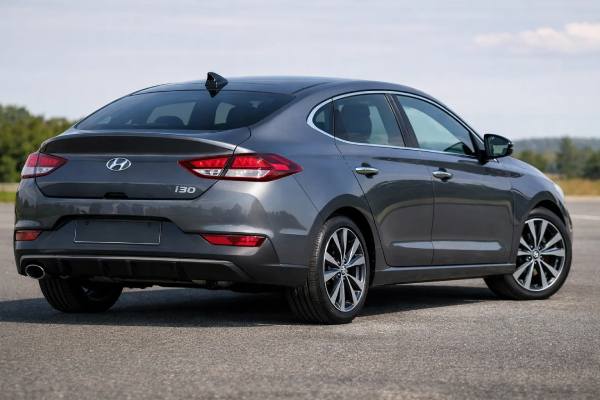
The Hyundai i30 Fastback 1.0 T-GDi is one of those cars that makes more sense the longer you look at it. On paper, a 120 hp three-cylinder turbo may not sound exciting. In practice, the PD Fastback combines neat packaging, a useful 450-litre boot, tidy road manners, and lower running costs than the bigger-engined versions. It also adds a cleaner shape than the regular hatch, which is part of its appeal on the used market.
For owners, the engineering story is simple. This is a light-pressure turbo petrol with direct injection, front-wheel drive, and either a six-speed manual or, in later markets, a seven-speed dual-clutch automatic. It is not a hot hatch, but it is more refined and more substantial than many small-turbo family cars from the same period. The key to a good ownership experience is careful maintenance: regular oil changes, good tyres, up-to-date software where applicable, and close attention to ignition and driveline condition.
Fast Facts
- The Fastback body gives you a larger boot and a more distinctive shape than the standard i30 hatch.
- The 1.0 T-GDi engine is efficient on long runs and feels stronger in the mid-range than its size suggests.
- Standard safety equipment was strong for the class, especially in UK and European trims.
- A neglected service history can turn this engine and, on later cars, the dual-clutch gearbox into a much riskier used buy.
- A sensible real-world oil-service interval is every 10,000 to 15,000 km or once a year.
What’s inside
- Hyundai i30 Fastback in Context
- Hyundai i30 Fastback Numbers and Hardware
- Hyundai i30 Fastback Grades and Safety Tech
- Trouble Spots and Factory Actions
- Service Plan and Used-Buy Tips
- On-Road Feel and Economy
- Rival Matchups and Verdict
Hyundai i30 Fastback in Context
The PD-generation Hyundai i30 Fastback was Hyundai’s attempt to make the ordinary family hatch look and feel more premium without pushing it into premium-car pricing. That matters because the 1.0 T-GDi version is not just the cheapest Fastback engine. It is also the version that best captures the car’s core idea: style, practicality, and easy ownership, with enough power to avoid feeling flat in daily use.
Compared with the regular i30 hatch, the Fastback trades a little rear headroom for a sleeker roofline and a larger cargo area. The shape is more elegant than most compact hatchbacks, but it still keeps a proper liftback opening, which makes it far more useful than a traditional small saloon. That is one of the main reasons the car has aged well. It still looks different, yet it is not harder to live with.
The 1.0-litre T-GDi engine also suits the car better than many buyers assume. Because it is turbocharged, it delivers its torque earlier than an old-style naturally aspirated small petrol. Around town and in mixed driving, the car feels lighter on its feet than the bigger 1.4-litre badge hierarchy might suggest. You do notice the difference under a full load or on steep motorway grades, but for one or two people using the car as a commuter, family runabout, or long-distance daily, the engine rarely feels badly matched.
What makes the Fastback especially appealing as a used car is balance. It is quieter and more composed than a lot of small-turbo rivals from the late 2010s, yet it does not carry the fuel or maintenance burden of the stronger 1.4 T-GDi or the sharper N Line and N models. The cabin design is simple, visibility is still decent for a sloping-roof car, and most European and UK trims were generously equipped for their price point.
The weakness is just as clear. This is not the version to buy for effortless overtaking with four adults and luggage, and it does not hide neglect well. A patchy service history, poor tyres, worn plugs, low-grade oil, or a hesitant DCT on later cars can undo the calm impression the car makes when healthy. So the i30 Fastback 1.0 works best when judged for what it is: a stylish, practical compact liftback with honest performance and good everyday manners, not a budget sports saloon in disguise.
Hyundai i30 Fastback Numbers and Hardware
For this 2018 to 2020 article, the baseline focus is the European and UK-market Hyundai i30 Fastback PD with the 1.0 T-GDi 120 hp petrol engine. Core mechanical layout stayed consistent, but homologation figures and gearbox availability broadened slightly by model year and market.
Powertrain and efficiency
| Spec | Value |
|---|---|
| Code | 1.0 T-GDi Kappa-family petrol |
| Engine layout and cylinders | Inline-3, DOHC, 4 valves per cylinder |
| Bore × stroke | 71.0 × 84.0 mm (2.80 × 3.31 in) |
| Displacement | 1.0 L (998 cc) |
| Induction | Turbocharged |
| Fuel system | Direct injection |
| Compression ratio | 10.0:1 |
| Max power | 120 hp (88.3 kW) @ 6,000 rpm |
| Max torque | 171–172 Nm (126 lb-ft) @ 1,500–4,000 rpm |
| Timing drive | Chain |
| Rated efficiency | 6.0–6.1 L/100 km WLTP combined, depending on year and gearbox |
| Earlier combined figure | 5.5 L/100 km NEDC combined on 2018 UK data |
| Real-world highway @ 120 km/h (75 mph) | About 5.8–6.7 L/100 km (40–49 mpg UK / 35–41 mpg US) |
Transmission and driveline
| Spec | Value |
|---|---|
| Transmission | 6-speed manual; later 7-speed DCT in some 2020 markets |
| Drive type | Front-wheel drive |
| Differential | Open differential |
Chassis and dimensions
| Spec | Value |
|---|---|
| Front suspension | MacPherson strut |
| Rear suspension | Multi-link on Fastback 1.0 T-GDi in published Fastback data |
| Steering | Motor Driven Power Steering; 2.57 turns lock-to-lock |
| Brakes | Four-wheel disc brakes |
| Wheels and tyres | Most common size 225/45 R17 on 17-inch alloys |
| Length | 4,455 mm (175.39 in) |
| Width | 1,795 mm (70.67 in) |
| Height | 1,425 mm (56.10 in) |
| Wheelbase | 2,650 mm (104.33 in) |
| Turning circle | 10.6 m (34.8 ft) |
| Kerb weight | 1,242–1,385 kg (2,738–3,053 lb) on 2018 manual listings; 1,240–1,411 kg (2,734–3,111 lb) across 2020 6MT and 7DCT listings |
| GVWR | 1,820 kg (4,012 lb) manual; later listings up to 1,850 kg (4,079 lb) |
| Fuel tank | 50 L (13.2 US gal / 11.0 UK gal) |
| Cargo volume | 450 L (15.9 ft³) seats up / 1,351 L (47.7 ft³) seats down, VDA |
| Payload | 435–578 kg (959–1,274 lb), depending on trim and year |
Performance and capability
| Spec | Value |
|---|---|
| 0–100 km/h (0–62 mph) | 11.5 s early 6MT; 11.2 s on later listings |
| Top speed | 188–196 km/h (117–122 mph), depending on model year data |
| Towing capacity | Up to 1,200 kg (2,646 lb) braked on manual cars; some later DCT listings are lower |
| Unbraked towing | Typically 600 kg (1,323 lb); lower on some later DCT entries |
| Roof load | 80 kg (176 lb) |
Fluids and service capacities
| Item | Practical guidance |
|---|---|
| Engine oil | Use the exact Hyundai-approved petrol-engine oil spec for the VIN; 0W-20 or 5W-30 may be specified by market |
| Coolant | Use Hyundai-approved long-life coolant at the correct mix ratio for climate and market |
| Transmission fluid | Manual and DCT specifications vary by gearbox code and market; verify by VIN before service |
| Differential / transfer case | Not applicable as separate service units |
| A/C refrigerant | Verify under-bonnet label; refrigerant type and charge vary by build |
| Key torque specs | Public owner-facing Fastback sheets do not publish workshop torque values; use service documentation only |
Safety and driver assistance
| Item | Value |
|---|---|
| Euro NCAP rating | 5 stars for the PD-generation i30 family |
| Euro NCAP category scores | Adult 88%, child 84%, vulnerable road users 64%, safety assist 68% |
| IIHS | Not applicable for this Europe-focused model line |
| ADAS suite | AEB, FCW, LKAS, driver attention alert, TPMS, ESC, HAC standard on many UK trims; BSD and RCTA on higher trims |
The big lesson from the numbers is that the 1.0 T-GDi Fastback was engineered as a polished family car first. It is spacious, usefully light, and efficient enough to justify itself, but its real strength is the way the whole package fits together rather than any single headline figure.
Hyundai i30 Fastback Grades and Safety Tech
Trim structure changed more than the basic mechanical package during 2018 to 2020. In the UK launch period, the Fastback 1.0 T-GDi was offered in trims such as SE Nav, Premium, and Premium SE. By the 2019 to 2020 period, N Line styling versions also appeared in some markets, including a 120 hp 1.0 T-GDi N Line manual. That means used buyers need to identify the car by equipment, not just by engine badge.
The early trims were easy to separate once you know what to look for. SE Nav cars typically carried 17-inch alloys, manual parking brake, rear parking sensors, touchscreen navigation, cruise control with speed limiter, rear camera, dual smartphone connectivity, and cloth seats. Premium and Premium SE moved the car up with LED headlamps, privacy glass, electric parking brake with auto hold, smarter instrument display, keyless entry, rain sensors, heated features, and in the top trim a panoramic glass roof. Across all trims, the Fastback looked more expensive than it was, which is still one of its strongest used-market advantages.
The later N Line adds a different layer. On 1.0 T-GDi cars, the N Line was mostly a styling and equipment play rather than a major mechanical rewrite. It typically brought sportier bumpers, black trim details, N Line badging, Michelin tyres on 17-inch wheels, a more aggressive cabin look, and sport seats or upgraded upholstery. The stronger 1.4 T-GDi versions gained more meaningful chassis and tyre changes, so buyers should not assume a 1.0 N Line is mechanically identical to the higher-output N Line cars.
Safety equipment is a real strength of this model. The PD-generation i30 family scored five stars in Euro NCAP testing, and even the lower-powered 1.0 T-GDi manual hatch variant was directly included in the tested family range. In practical terms, that gave the Fastback a strong passive-safety base. Expect front airbags, side airbags, curtain airbags, ISOFIX outer rear mounts, stability control, anti-lock braking, hill-start assist, tyre-pressure monitoring, and a rigid, modern compact-car shell.
Driver assistance was also better than many class rivals at launch. In UK-market Fastback specifications, autonomous emergency braking with forward collision warning, lane departure warning with lane keep assist, and driver attention alert were standard across the main trim walk. Blind-spot detection and rear cross-traffic alert tended to be upper-trim features. That is important when shopping used, because a cheaper SE Nav car may still carry the key active-safety systems that many rivals reserved for options.
One ownership note matters here: any camera-based lane or emergency-braking hardware should be checked carefully after windscreen replacement, front-end repair, or battery-related faults. These systems are simple by current standards, but they still need to be working properly, and warning lights or disabled functions should never be ignored on a pre-purchase inspection.
Trouble Spots and Factory Actions
The i30 Fastback 1.0 T-GDi is generally a sound used car, but it has the normal weak points of a direct-injection turbo petrol and, in later DCT markets, the normal quirks of a compact dual-clutch gearbox. The car is usually best described as solid rather than bulletproof. Buy a maintained car and it is easy to like. Buy a neglected one and the savings disappear quickly.
Common, low-to-medium cost issues
- Ignition wear: rough idle, hesitation under boost, or a flashing engine light often comes down to spark plugs or coil packs. Turbo three-cylinders are sensitive to plug condition, and overdue service can make a healthy engine feel coarse.
- Battery and voltage faults: weak 12 V batteries can trigger warning lights, stop-start problems, and random electronic complaints. This is especially common on lightly used cars.
- Brake corrosion: rear discs can corrode before they truly wear out, especially on cars that mostly do short urban trips.
Occasional, medium-cost issues
- Carbon build-up: as with many direct-injection engines, intake-valve deposits can build over time. Symptoms include uneven idle, softer response, and a general feeling that the engine has lost some crispness.
- Boost leaks or intake-hose issues: whistle, underboost, or patchy response can come from loose clamps or ageing hoses rather than a failed turbocharger.
- Manual clutch wear: city driving, hill starts, or towing can shorten clutch life. A high bite point or flare under load deserves attention.
Occasional, medium-to-high cost issues
- 7-speed DCT shudder or hesitation: where fitted, the dual-clutch transmission can show low-speed jerkiness, delayed take-up, or poor calibration feel. Sometimes this is normal dry-clutch behaviour, but software updates, adaptation, or clutch-pack work may be needed if it becomes excessive.
- Cooling-system age wear: watch for seepage around hoses, thermostat housing areas, and pump-related noise as mileage rises.
Rare but expensive
- Timing-chain noise: there is no routine chain-replacement interval, but persistent rattle, fault codes linked to valve timing, or poor oil history should be taken seriously.
- Turbocharger damage from poor oil care: the engine is not notorious for turbo failures when serviced correctly, but long oil intervals and poor-quality oil increase risk.
On the chassis side, the Fastback usually wears well. Still, expect drop links, bushings, wheel alignment drift, and tyre-edge wear to appear with age. Cheap tyres hurt this car more than many owners expect. They increase noise, make the steering feel vague, and can cause the rear of the ownership experience to feel less refined than it really is.
Factory actions and recalls are harder to summarize in one neat list because they vary by country, production date, and drivetrain. There is no single universally defining recall that shapes the 1.0 T-GDi Fastback’s reputation. The right approach is VIN-based checking through the official Hyundai recall portal and dealer records. Ask for proof of completed campaigns, software updates, and service history. If the car has a DCT, also ask whether the transmission has had any calibration updates or clutch-related work. On a modern Hyundai, paperwork is often more informative than mileage alone.
Service Plan and Used-Buy Tips
This is the section that matters most for long-term value. The i30 Fastback 1.0 T-GDi rewards a preventive maintenance plan. Even though Hyundai’s official schedules can vary by market, fuel quality, and usage conditions, a practical owner strategy is clear.
Suggested real-world maintenance schedule
| Item | Practical interval |
|---|---|
| Engine oil and filter | Every 10,000 to 15,000 km or 12 months |
| Engine air filter | Inspect at 15,000 km, replace around 30,000 km sooner in dusty use |
| Cabin filter | Every 15,000 to 20,000 km or 12 months |
| Spark plugs | Every 45,000 to 60,000 km is a sensible turbo-petrol target |
| Brake fluid | Every 24 months |
| Coolant | Inspect condition regularly; replace to official long-life schedule for VIN and market |
| Manual gearbox oil | Sensible refresh around 60,000 to 90,000 km |
| DCT service | Follow exact gearbox-code guidance; inspect behaviour and software status closely |
| Brake pads and discs | Inspect every service |
| Tyre rotation | About every 10,000 km |
| Wheel alignment | Check yearly or after tyre-edge wear, pothole strikes, or suspension work |
| Auxiliary belt and hoses | Inspect from mid-life onward, especially after 60,000 km |
| 12 V battery test | Begin annual testing from year four |
| Timing chain | Inspect on symptoms, noise, or timing-correlation faults; no routine replacement interval |
What to inspect before buying
- Start the engine from cold. Listen for chain noise, rattly accessories, unstable idle, or obvious exhaust leaks.
- Drive at low speed and under moderate load. Check for hesitation, misfire, or flat spots.
- On DCT cars, crawl in traffic and reverse uphill if possible. Excessive shudder, judder, or delay is a warning sign.
- Check that the safety systems initialize cleanly with no warning lights.
- Inspect all four tyres for brand, age, and even wear. Mismatched or worn front tyres are common and change the car’s character.
- Look for rear-brake corrosion, suspension knocks, and evidence of poor wheel alignment.
- Confirm recall completion, software history, and routine servicing.
Common reconditioning items
- Front and rear brake discs and pads
- Battery
- Spark plugs and sometimes coils
- Tyres
- Drop links and suspension bushes
- Wiper system and washer pump items on older, urban-used cars
The best version to seek depends on your priorities. A clean 2018 or 2019 manual car with strong service history is often the safest value buy. It avoids DCT risk, keeps running costs simple, and still gives you the full Fastback look and practicality. A later N Line 1.0 is attractive if you want the sharper styling and a newer cabin feel, but buy it for the look and equipment, not because you expect a major performance gain.
The long-term durability outlook is good if the car has been maintained with discipline. This is not a fragile engine, but it is less tolerant of neglect than an old large-capacity naturally aspirated petrol. The buyers who stay happiest are usually the ones who treat it like a modern turbo engine from day one.
On-Road Feel and Economy
The Hyundai i30 Fastback 1.0 T-GDi feels calmer than its engine size suggests. At a steady cruise, the car’s longer rear body, solid structure, and sensible suspension tuning give it a mature road manner. It tracks straight on the motorway, absorbs surface changes well, and generally feels more substantial than many 1.0-litre rivals. That is the car’s biggest dynamic strength.
Around town, the engine is easy to use. Peak torque arrives early, so you do not need to chase revs to keep up with traffic. In the manual, the six-speed gearbox suits the engine well and helps the car feel more alert than the 11-second 0–100 km/h times suggest. In later DCT form, the car can feel smoother in flowing driving but less polished in parking-speed manoeuvres if the clutch calibration or condition is not ideal.
Handling is secure rather than playful. The steering is light to medium in weight, accurate enough, and predictable, but it is not especially full of feedback. The Fastback turns in cleanly, keeps good body control, and remains composed on a poor road, yet it always behaves like a comfort-oriented family liftback rather than a warm hatch. That is not a criticism. It means the chassis matches the engine. The 1.0 T-GDi is about easy pace, not drama.
Braking performance is perfectly acceptable for the car’s job, though much depends on tyre quality and disc condition. A well-kept car on good rubber feels stable and confidence-inspiring. A tired example with corroded discs and budget tyres can feel much less secure.
In real-world fuel use, the car usually lands close to expectations. A gentle long motorway run can deliver around 5.8 to 6.4 L/100 km. Mixed driving often sits between 6.3 and 7.2 L/100 km. Heavy urban use, cold weather, short trips, and aggressive throttle inputs can push it into the 7s or low 8s. That still makes it a relatively economical family car, just not a miracle economy special once real traffic is involved.
Load and towing are where you feel the engine’s limits. One or two occupants are fine. A full cabin, luggage, and a steep grade demand more planning. The car remains stable, but overtakes take longer and economy drops quickly. For buyers who routinely carry weight, the 1.4 T-GDi is the better fit. For everyone else, the 1.0 is the smarter compromise.
Rival Matchups and Verdict
The i30 Fastback 1.0 T-GDi competes in a slightly unusual space because not many rivals combine a coupe-like roofline, family-car packaging, and a modest turbo petrol in the same way. That makes comparison more interesting than a simple hatchback ranking.
| Rival | Hyundai advantage | Rival advantage |
|---|---|---|
| Ford Focus 1.0 EcoBoost | More distinctive fastback shape, larger liftback cargo area, strong safety kit | Sharper steering and more playful chassis |
| Skoda Scala 1.0 TSI | Better style, more premium visual presence, multi-link rear setup feel | Often roomier in the rear and usually cheaper to run |
| Kia Ceed 1.0 T-GDi | More elegant body style and boot usefulness, calmer motorway feel | Similar mechanicals with easier hatchback access and sometimes better value |
| Mazda3 Skyactiv-G | Better cargo flexibility and usually lower purchase cost | More upscale cabin and stronger steering feel |
Against those rivals, the Hyundai’s core strengths stay consistent. It looks more special than most of them, it is practical enough to justify itself as a one-car household choice, and its safety and equipment levels are often generous. It also tends to feel solid and well damped on ordinary roads, which is exactly where owners spend most of their time.
Where it loses ground is emotional appeal from behind the wheel. The Ford is more engaging. The Mazda feels richer inside. Some Volkswagen Group rivals feel punchier in mid-range response. And if you need regular full-load performance, the 1.0 T-GDi is simply not the best engine in the Fastback range.
But judged honestly, the Hyundai i30 Fastback 1.0 T-GDi is still easy to recommend. It is a smart used buy for someone who wants style without a premium badge, practicality without an SUV, and decent efficiency without giving up proper road-trip comfort. The trick is to buy carefully. A clean manual car with strong records and good tyres is the sweet spot. Do that, and the Fastback delivers exactly what it promised when new: understated value with more design flair than the average compact family car.
References
- Hyundai i30 Fastback Press Kit – November 2018 2018 (Technical Data)
- Hyundai i30 Technical Specifications 2020 (Technical Data)
- EuroNCAP | Hyundai i30 2017 (Safety Rating)
- Hyundai Owners manuals | Hyundai Motor UK 2025 (Owner’s Manual)
- Home | Hyundai Recalls & Service Campaigns 2025 (Recall Database)
Disclaimer
This article is for informational purposes only and is not a substitute for professional diagnosis, repair, or factory service advice. Specifications, torque values, service intervals, procedures, and equipment can vary by VIN, market, gearbox, trim, and production date. Always verify the exact details for your car against official Hyundai service documentation before carrying out maintenance or repairs.
If this guide helped you, please consider sharing it on Facebook, X/Twitter, or another platform. That support helps us continue publishing detailed guides like this one.