

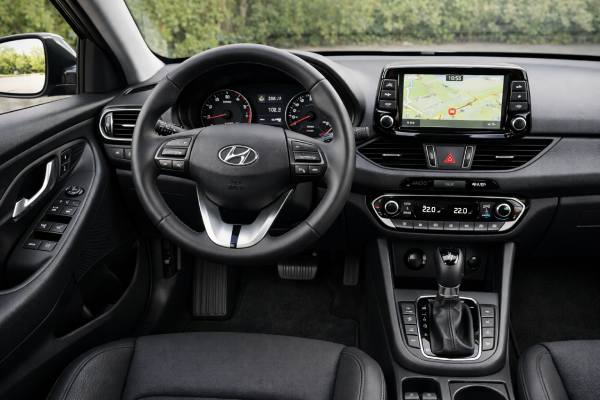
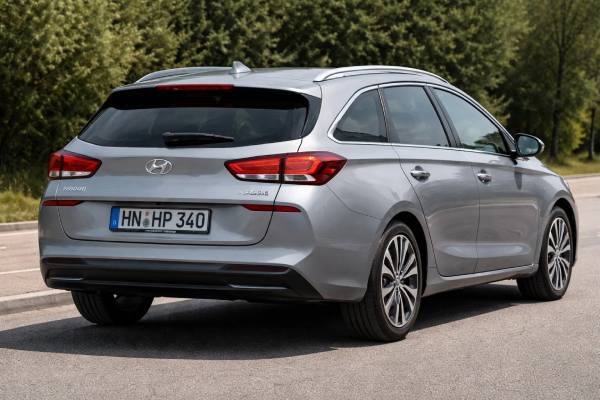
The Hyundai i30 Wagon PD with the 1.6 CRDi Smartstream 115 hp diesel is one of those cars that makes more sense the longer you look at it. It combines the compact footprint and tidy road manners of the i30 hatch with the larger cargo area and better load flexibility of a proper estate. For owners who cover regular motorway or mixed-distance mileage, this version has a lot going for it: useful low-end torque, long cruising range, stable chassis tuning, and a boot that is genuinely family-friendly. The Smartstream diesel also brought cleaner emissions hardware, but that sophistication comes with a familiar modern-diesel rule: it prefers consistent use and does not love a life made up of only short urban trips. In 2019 and 2020 trim, the wagon also benefited from Hyundai’s strong safety baseline, a polished cabin, and good value in the used market. The key is buying the right one, not just buying the cheapest one.
Owner Snapshot
- Big 602 L boot and a flat, useful load area make it more practical than many compact hatchbacks.
- The 115 hp Smartstream diesel gives strong everyday torque without the higher cost of the 136 hp mild-hybrid setup.
- Stable motorway manners and multi-link rear suspension help it feel mature for a compact estate.
- Short-trip use can accelerate DPF, EGR, and AdBlue-related trouble on neglected examples.
- Official maintenance is typically every 30,000 km or 2 years, with closer oil attention wise for hard urban use.
What’s inside
- Hyundai i30 Wagon PD big picture
- Hyundai i30 Wagon PD data sheet
- Hyundai i30 Wagon PD grades and protection
- Weak spots and campaigns
- Service plan and used buying
- Road manners and economy
- Wagon rivals and value
Hyundai i30 Wagon PD big picture
The i30 Wagon sits in a very practical part of the market. It is larger and more useful than a conventional compact hatch, yet it avoids the higher weight, higher ride height, and often higher fuel use of a small SUV. In 1.6 CRDi Smartstream 115 hp form, that logic becomes even clearer. This is a load-friendly family estate designed for drivers who value efficiency, range, and everyday usability more than headline performance.
What makes this version interesting is how carefully Hyundai positioned it. The 115 hp diesel is not the cheapest engine in the range, but it avoids the added cost and extra complexity of the 136 hp 48-volt mild-hybrid version. In simple terms, it gives you most of the diesel estate benefits people actually want: real mid-range torque, easy high-speed cruising, and low long-trip fuel consumption. At the same time, it avoids the impression that every modern diesel needs electrification to feel complete.
The Smartstream name is important here. Hyundai updated the i30 range for the 2019 model year with a cleaner 1.6-liter diesel family that met the tougher Euro 6d-Temp and later Euro 6d standards. That brought the expected emissions hardware, including SCR after-treatment and AdBlue, but it also changed some ownership details that matter to used buyers. This is a more advanced engine than the older simple diesel estate formula, so service discipline matters more than ever.
The wagon body is one of the car’s real strengths. Boot space is rated at 602 L with the seats up and 1,650 L with them folded, which is excellent for a car in this class. The rear compartment is long, square, and easier to use than many coupe-styled alternatives. Families, dog owners, and people who regularly carry bulky work or hobby gear tend to appreciate that more than they expected.
On the road, the i30 Wagon does not feel like a bargain-bin estate. The multi-link rear suspension gives it better composure than many torsion-beam rivals, especially over broken surfaces and during fast lane changes. It is not a sports wagon, but it is calm, predictable, and pleasant over distance. That makes it especially well suited to commuting, airport runs, and holiday mileage.
The 2019–2020 period also matters because equipment changed around the facelift. Late 2019 cars introduced the Smartstream diesel, while 2020 facelift models updated trim structure, infotainment, and styling. The result is that two cars with the same 115 hp badge can feel slightly different in cabin tech and equipment. For used buyers, build date and trim matter at least as much as registration year.
This car makes the most sense for drivers who regularly cover enough distance to keep a modern diesel healthy. If that describes your use, the i30 Wagon 1.6 CRDi 115 is still a compelling practical estate with sensible long-term appeal.
Hyundai i30 Wagon PD data sheet
The table below focuses on the wagon-specific 1.6 CRDi Smartstream 115 hp version sold across the 2019–2020 period. Some figures vary slightly by gearbox, trim, wheel size, roof rail fitment, and market.
| Powertrain and efficiency | Hyundai i30 Wagon 1.6 CRDi Smartstream 115 |
|---|---|
| Code | 1.6 CRDi Smartstream, 85 kW |
| Engine layout and cylinders | Inline-4, 4 cylinders, DOHC, 4 valves per cylinder |
| Bore × stroke | 77.0 × 85.8 mm (3.03 × 3.38 in) |
| Displacement | 1.6 L (1,598 cc) |
| Induction | Turbocharged, variable-geometry turbo |
| Fuel system | Common-rail direct injection, piezo injectors |
| Compression ratio | 15.9:1 |
| Max power | 115 hp (85 kW) @ 4,000 rpm |
| Max torque | 280 Nm (206 lb-ft) @ 1,500–2,750 rpm manual; 300 Nm (221 lb-ft) @ 1,500–2,500 rpm 7-DCT |
| Timing drive | Belt |
| Emissions hardware | SCR with AdBlue, oxidation catalyst, DPF, EGR |
| Rated efficiency | 4.1–4.3 L/100 km (57.4–54.7 mpg US / 68.9–65.7 mpg UK) |
| Real-world highway @ 120 km/h | usually around 5.0–5.7 L/100 km, depending on tyres, weather, and load |
| Transmission and driveline | Data |
|---|---|
| Transmission | 6-speed manual or optional 7-speed DCT, market-dependent |
| Drive type | FWD |
| Differential | Open |
| Chassis and dimensions | Data |
|---|---|
| Front suspension | MacPherson strut |
| Rear suspension | Multi-link |
| Steering | Electric rack-and-pinion, 13.4:1 ratio |
| Front brakes | Ventilated discs, typically 280 mm; some earlier higher trims used larger hardware |
| Rear brakes | Discs, typically 272 mm; some higher trims used 284 mm |
| Most common tyre size | 205/55 R16 |
| Other factory tyre sizes | 195/65 R15, 225/45 R17 |
| Ground clearance | 140 mm (5.5 in) |
| Length | 4,585 mm (180.5 in) |
| Width | 1,795 mm (70.7 in) |
| Height | 1,465 mm without rails / 1,475 mm with rails (57.7 / 58.1 in) |
| Wheelbase | 2,650 mm (104.3 in) |
| Turning circle | 10.6 m (34.8 ft) |
| Kerb weight | about 1,340–1,495 kg manual, higher with DCT and equipment |
| GVWR | 1,920 kg |
| Fuel tank | 50 L (13.2 US gal / 11.0 UK gal) |
| AdBlue tank | 12 L |
| Cargo volume | 602 L / 1,650 L (21.3 / 58.3 ft³), VDA |
| Performance and capability | Data |
|---|---|
| 0–100 km/h | 11.1 s |
| Top speed | 192 km/h (119 mph) |
| Braking distance | tyre- and trim-dependent; no single factory figure consistently published |
| Towing capacity | 1,500 kg braked / 650 kg unbraked (3,307 / 1,433 lb) |
| Payload | roughly 425–580 kg depending on trim and equipment |
| Fluids and service capacities | Data |
|---|---|
| Engine oil | verify by VIN; low-SAPS Euro-diesel oil is essential, capacity 4.4 L (4.65 US qt) including filter |
| Coolant | Hyundai-approved long-life coolant, about 7.3 L (7.71 US qt) |
| Transmission oil | Hyundai-approved manual or DCT fluid; manual capacity about 1.6 L, some earlier listings show 1.8 L depending on spec |
| Differential / transfer case | not applicable |
| A/C refrigerant | varies by exact HVAC system and market |
| A/C compressor oil | varies by system specification |
| Key torque specs | confirm by VIN and workshop data before service work |
| Safety and driver assistance | Data |
|---|---|
| Euro NCAP | 5 stars |
| Adult Occupant | 88% |
| Child Occupant | 84% |
| Vulnerable Road Users | 64% |
| Safety Assist | 68% |
| IIHS | not applicable for this European-market estate |
| ADAS suite | AEB, lane keeping support, cruise and sign-recognition features, camera and parking aids, with availability varying by trim and year |
The most important technical takeaway is that this 115 hp wagon is the straightforward Smartstream diesel in the facelift-era range. It is not the 48-volt car, and that can be a real advantage for buyers who want a simpler powertrain. The second key point is that this engine uses a belt-driven cam setup, so buyers should not assume it has the older “no belt to think about” logic of some earlier Hyundai diesels.
Hyundai i30 Wagon PD grades and protection
Trim level changes the used-car appeal of the i30 Wagon more than many shoppers expect. The 1.6 CRDi 115 was usually positioned as a sensible mid-range diesel rather than a luxury flagship, and in many 2020 lists it appeared mainly in Select and Trend trims. That is important, because it means most 115 hp wagons are useful daily drivers, but not every car is equally well equipped.
A basic pattern for the 2019–2020 wagon range looked like this:
- Select usually covered the essentials well: climate control basics, rear parking help, useful infotainment, and the core safety baseline.
- Trend tended to be the sweet spot, adding more desirable comfort and tech features such as larger alloys, richer infotainment, camera equipment, heated items, and broader convenience hardware.
- The 115 hp diesel was usually not the engine paired with the sportier N Line or more expensive Prime versions, which were more commonly linked to other powertrains.
That matters when you inspect a used car. A Trend-spec wagon generally feels much newer and more complete than a sparsely optioned Select, even when both share the same engine and gearbox. Common differences to look for include:
- 16- or 17-inch wheels
- reversing camera and front parking sensors
- larger touchscreen and navigation
- heated front seats and heated steering wheel
- dual-zone climate control
- LED lighting upgrades
- smart key and richer trim materials
- adaptive cruise control on the right cars and markets
The 2020 facelift also changed the look and equipment strategy. Hyundai sharpened the exterior, updated the media systems, and reorganized the trim ladder. This means late 2020 cars may have noticeably better cabin tech than a late-2019 example, even when the engine and core wagon practicality are very similar.
On safety, the i30 family maintained a strong position. Euro NCAP gave the i30 a five-star result, and that matters because this wagon shares the same core platform philosophy and safety approach as the rest of the PD range. In real-world ownership terms, the car’s strength is not one headline gadget but a well-rounded baseline of passive and active protection.
Typical safety equipment across the range included:
- multiple airbags, including side and curtain coverage
- ESC, ABS, brake assist, and hill-start assist
- autonomous emergency braking
- lane keeping support
- driver-attention and speed-limit support on some cars
- ISOFIX child-seat points on the outer rear seats
- parking sensors and camera systems depending on trim
ADAS fitment is worth checking carefully. Windscreen cameras, parking sensors, and driver-assistance functions are useful, but they also raise the importance of proper repair history. A badly repaired front bumper or an incorrectly replaced windscreen can create persistent warning messages or quiet system underperformance. That is why calibration records matter on a used car with lane and collision-avoidance hardware.
For most buyers, the best i30 Wagon 115 is not the rarest version. It is the one with the cleanest history, the right trim, working safety systems, and equipment that suits actual daily use.
Weak spots and campaigns
The i30 Wagon 1.6 CRDi Smartstream 115 is generally a sensible used diesel, but it rewards the right owner profile. Like most Euro 6-era diesel estates, it is durable when it is used properly and serviced on time, and far less happy when it spends its life doing cold starts, school runs, and short urban hops.
The most common issues fall into a familiar modern-diesel pattern.
Common, usually low to medium cost
- DPF loading on low-mileage urban cars
- EGR contamination and intake soot build-up
- tired 12 V battery performance
- brake corrosion on low-use cars
- parking sensor or camera faults on older daily drivers
Occasional, medium cost
- AdBlue system faults, including heater or level-related issues
- injector correction drift or fuel-system roughness
- clutch wear and dual-mass flywheel noise on hard-used manuals
- DCT hesitation or shudder if servicing and software history are unclear
- wheel alignment and uneven tyre wear after pothole use
Less common, but higher cost
- turbo wear on poorly serviced engines
- heavily blocked DPF requiring more than a simple regeneration
- SCR-related component replacement
- timing-belt neglect or uncertainty on poorly documented cars
Symptoms are usually clear if you know what to look for. A car that starts and idles roughly, runs repeated fan cycles, smells hot after short trips, or shows reduced economy may be telling you it is struggling with regeneration or soot loading. A lazy throttle response at low speed, uneven part-throttle pull, or emissions warning light can point toward EGR or intake contamination. AdBlue issues may show as warning messages, limited restart countdowns, or stubborn emissions faults rather than obvious drivability changes.
One useful ownership insight is that the 115 hp Smartstream is the non-mild-hybrid diesel in this range. That is good for simplicity, but it still carries modern after-treatment complexity. In other words, it is simpler than the 48-volt 136 hp version, not simple in an old-school diesel sense.
Chassis and body durability are respectable. The wagon is not notorious for major structural weakness, but older examples still deserve checks around:
- rear brake hardware and parking brake operation
- front suspension bushes and links
- wheel bearings
- stone-chip corrosion at the nose and wheel arches
- underbody and subframe condition on winter-road cars
- tailgate seal and load-bay trim wear on high-use estates
Public campaign and recall history is fragmented by country, so the safe buying rule is simple: do not rely on seller memory. Use Hyundai’s campaign lookup and national recall tools, then compare that with dealer service records. A proper used-car file should show routine services, any emissions-system work, and proof that software updates or campaigns were completed where required.
Before purchase, ask specifically for:
- full service history
- proof of recall or campaign completion
- any recent DPF, EGR, injector, or AdBlue work
- gearbox service evidence if fitted with DCT
- evidence of correct timing-belt planning for the exact engine and VIN
A good example of this car can be very dependable. A neglected one can become an expensive lesson in why modern diesels dislike the wrong lifestyle.
Service plan and used buying
A practical maintenance plan matters more on this car than polished brochure claims. Hyundai’s long official intervals can look attractive on paper, but buyers who want long-term diesel durability are usually better served by a more conservative approach, especially if the wagon does mixed or city-heavy work.
A sensible real-world maintenance rhythm looks like this:
- Engine oil and filter: officially around 30,000 km or 2 years in many schedules, but every 10,000 to 15,000 km or yearly is a safer habit for urban, towing, cold-climate, or stop-start use.
- Engine air filter: inspect every service and replace as required, often by 30,000 km in normal conditions.
- Cabin filter: yearly or around 15,000 to 30,000 km.
- Fuel filter: replace by the official diesel schedule for the VIN and market.
- Brake fluid: every 2 years is a smart baseline.
- Coolant: inspect condition and replace by time-based manufacturer guidance.
- Transmission fluid: manual and DCT cars benefit from clean fluid and leak inspection even when owners assume the gearbox is “filled for life.”
- Timing belt: replace at the official interval for the exact Smartstream diesel engine; do not confuse this belt-driven setup with older chain-driven assumptions.
- Auxiliary belt and hoses: inspect at every service.
- Tyres, alignment, and brakes: inspect regularly because estate cars often carry weight and see mixed road surfaces.
- 12 V battery: test from around year 4 onward.
Useful capacities for planning include:
- engine oil with filter: 4.4 L
- cooling system: about 7.3 L
- manual transmission oil: about 1.6 L on facelift-era data, though some earlier listings differ
- fuel tank: 50 L
- AdBlue: 12 L
For fluids, always prioritize VIN-correct service data. This engine needs the right low-ash oil for its emissions hardware. Using the wrong oil or stretching drain intervals is a classic way to turn a tidy used diesel into a soot-prone one.
The used-buyer checklist should focus on condition, history, and usage pattern:
- cold-start quality and idle smoothness
- warning lights, especially emissions-related
- signs of interrupted regeneration or frequent short-trip use
- clutch take-up and flywheel noise
- DCT behavior if fitted
- AdBlue warnings or recent SCR repairs
- brake wear and rear caliper condition
- tyre wear pattern and wheel damage
- underbody corrosion
- leaks around intercooler, turbo plumbing, or coolant system
- function of parking camera, sensors, and lane systems
- tailgate and cargo-area wear on family or commercial-style use
The safest buy is usually a higher-mileage motorway car with complete history rather than a very low-mileage urban diesel with patchy servicing. Seek a Select or Trend car that has clearly been maintained and driven properly. Be cautious with neglected short-run cars, especially if they have repeated emissions-related invoice history. Long-term durability is solid when maintenance is proactive and the car’s diesel nature is respected.
Road manners and economy
The i30 Wagon 1.6 CRDi 115 is not dramatic from behind the wheel, but it is easy to respect. Its best quality is that it feels settled. The extra rear body length does not make it clumsy, and the multi-link rear suspension helps it stay composed over poor surfaces, expansion joints, and mid-corner bumps that unsettle some cheaper compact estates.
At town speed, the engine’s low-end torque is more useful than the modest power figure suggests. The manual car pulls cleanly from low revs and feels flexible in traffic. It does not leap forward, but it rarely feels flat unless fully loaded. The optional 7-DCT version adds some convenience and slightly more peak torque, though buyers should value condition and service history more than the gearbox choice itself.
Out on the motorway, the wagon plays to its strengths. Straight-line stability is good, the steering is light but accurate, and the cabin is reasonably calm at typical cruising speeds. This is where the diesel estate formula still makes sense. It will cover distance with less effort than many small turbo-petrol rivals, especially when the car is carrying passengers and luggage.
Ride quality depends partly on wheel size. Cars on 16-inch tyres tend to be the most rounded choice for real roads, offering a better balance of noise, bump absorption, and replacement cost. Seventeen-inch cars look sharper, but they can add a little more tyre thump over rough surfaces.
In real-world fuel use, buyers can expect something like this:
- city-heavy use: about 5.8 to 6.8 L/100 km
- mixed driving: about 4.8 to 5.6 L/100 km
- steady highway running: about 4.7 to 5.3 L/100 km
- winter short-trip use: noticeably worse, especially during regeneration events
Those numbers make sense for a wagon with this space and torque output. The real advantage is not just low consumption, but how little the car’s economy seems to collapse when it is carrying a family load or spending long periods at road speed.
Performance is adequate rather than strong. With 11.1 seconds to 100 km/h and a 192 km/h top speed, this is a car that asks for measured overtakes rather than aggressive ones. Passing performance is acceptable if the driver uses the diesel’s mid-range properly, but it is not the choice for buyers who want a quick estate.
Towing and loading suit the car’s character well. A 1,500 kg braked towing figure is useful, and the wagon body handles luggage with far less compromise than the hatch. Expect fuel use to rise significantly under trailer or full-load work, but the car’s underlying stability remains a strength.
The verdict from the driver’s seat is simple: the i30 Wagon 115 works best as a calm, efficient long-distance tool. That may not sound glamorous, but in daily life it is exactly what many owners want.
Wagon rivals and value
The i30 Wagon 1.6 CRDi 115 sits among some very capable rivals, so its appeal comes from balance rather than dominance in one category. It is not the most premium, the fastest, or the most famous, but it often lands in a very sensible middle ground.
Against the Volkswagen Golf Variant 1.6 TDI, the Hyundai usually gives up some badge prestige and maybe a touch of cabin polish, but it often wins on value and equipment per dollar or euro spent. A well-kept i30 Wagon can feel like the smarter buy when price, practicality, and motorway comfort matter more than brand image.
Against the Ford Focus Estate diesel, the Hyundai is usually less playful but a little more relaxed. The Focus remains one of the more engaging cars in this class, yet the i30 often feels like the easier family companion. It majors on composure, not steering sparkle.
Against the Peugeot 308 SW BlueHDi, the Hyundai feels more conventional and perhaps easier to live with. The Peugeot can be excellent for economy and comfort, but the Hyundai’s simpler cabin logic and straightforward driving position appeal to many used buyers.
Against the Opel or Vauxhall Astra Sports Tourer diesel, the i30 is again a value-and-balance contender. Both cars offer good space and sensible running costs. The Hyundai’s advantage is often that it feels a little more cohesive and can come with generous equipment in the used market.
The Kia Ceed Sportswagon diesel is the closest philosophical rival. In many ways, this becomes a condition-and-history decision rather than a brand decision. The Hyundai often has slightly stronger model recognition in some markets, while the Kia can be equally rational. Choose whichever car has the cleaner maintenance record.
Why choose the i30 Wagon 115 specifically?
- It gives you real estate-car practicality without SUV bulk.
- The 115 hp diesel is simpler than the 136 hp mild-hybrid alternative.
- It is efficient enough to justify diesel ownership when used correctly.
- The wagon body is genuinely useful, not just a styling exercise.
- Used prices are often reasonable relative to equivalent German rivals.
Why might you skip it?
- Your driving is mostly short urban trips.
- You want sharper performance or more premium badge appeal.
- You prefer a petrol car to avoid diesel after-treatment complexity.
- You want the most advanced trim combinations, which were often linked to other engines.
In the used market, the Hyundai’s biggest strength is that it tends to deliver practical value without feeling cheap. For buyers who understand what a modern diesel estate needs, that makes it one of the more underrated choices in the segment.
References
- Hyundai i30 erhält verfeinertes Design und saubere Motoren 2018 (Press Release)
- Hyundai i30 Kombi | Technische Daten | Stand: 4.2019 2020 (Technical Data)
- i30 5-Türer und Kombi 2020 (Pricing and Equipment)
- EuroNCAP | Hyundai i30 2017 (Safety Rating)
- Check if a vehicle, part or accessory has been recalled 2025 (Recall Database)
Disclaimer
This article is for informational purposes only and is not a substitute for professional diagnosis, repair, or vehicle-specific technical advice. Specifications, torque values, service intervals, equipment, and procedures can vary by VIN, market, gearbox, trim, and production date, so always verify any maintenance or repair decision against the official service documentation for the exact vehicle.
If you found this guide useful, please consider sharing it on Facebook, X, or another social platform to support our work.