
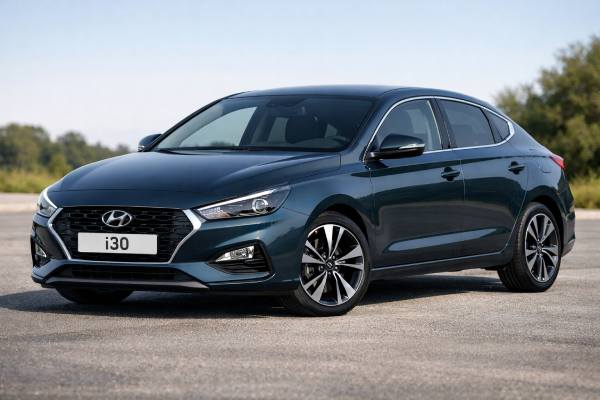
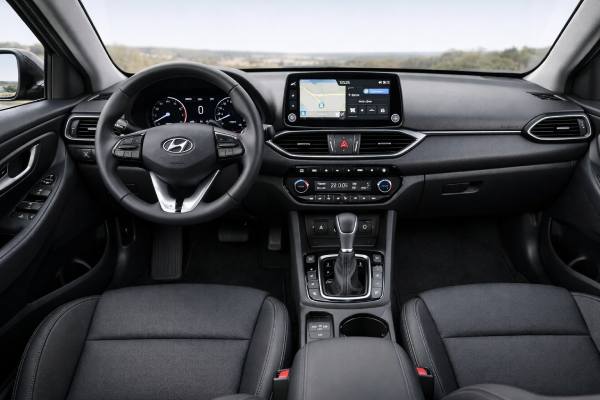
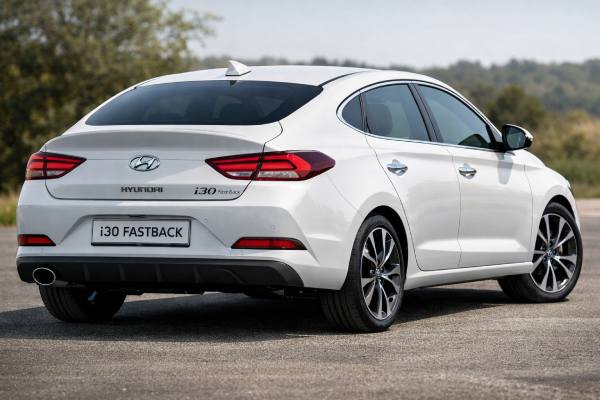
The current Hyundai i30 Fastback PD 1.5 T-GDi 48V 140 hp sits in a very appealing middle ground. It looks more distinctive than the standard i30 hatch, but it still keeps the practical liftback layout and the everyday usability that make the i30 range easy to recommend. With the 1.5-litre mild-hybrid turbo petrol engine, it also gets enough torque and flexibility to suit the sleeker body far better than the base engines do. The 2024 update sharpened the styling again, added more standard safety features, improved charging and connectivity details, and kept the car’s strongest trait intact: a mature, well-balanced driving character. For many buyers, that makes this Fastback the sweet spot between the basic petrol versions and the much costlier N models. The main caution is complexity. Compared with a simple naturally aspirated i30, this version adds turbocharging, 48V hardware, and either iMT-style manual logic or DCT automatic behaviour, so maintenance quality matters.
Core Points
- The 140 hp mild-hybrid engine gives the Fastback the performance its sleek shape deserves without turning it into a costly hot hatch.
- The Fastback body keeps a useful 450 L boot and a practical hatch opening while looking more special than the regular i30.
- The 2024 update added more standard Smart Sense safety features, more USB-C charging, and improved cabin tech.
- Check carefully for ignition faults, DCT shudder, and any battery or charging warnings on 48V cars.
- A sensible real-world oil-service interval is every 10,000–15,000 km or 12 months.
Navigate this guide
- Hyundai i30 Fastback 140 Briefing
- Hyundai i30 Fastback Tech Map
- Hyundai i30 Fastback Equipment and Protection
- Problems, Updates and Wear Points
- Care Plan and Used Buying Tips
- How the Fastback Drives Daily
- Fastback Rivals and Value
Hyundai i30 Fastback 140 Briefing
The facelifted i30 Fastback remains one of Hyundai’s most underrated body styles. It is neither a traditional hatchback nor a conventional saloon. Instead, it blends a lower, sleeker roofline with a genuine liftback rear opening, which means it looks more stylish than the normal i30 without becoming awkward to use every day. That combination matters, because many coupe-like compact cars ask buyers to sacrifice too much practicality for design. The i30 Fastback does not.
The 1.5 T-GDi 48V 140 hp version is especially important because it brings the drivetrain the Fastback really needs. Lower-powered versions can still do the job, but this mild-hybrid turbo petrol has enough torque and flexibility to make the car feel properly rounded. With 253 Nm arriving from just 1,500 rpm, it does not need to be driven hard to feel responsive. That is useful in ordinary life. The car moves off more confidently, copes better with passengers and luggage, and feels more relaxed on faster roads than the smaller engines do.
This version also benefits from the broader 2024 update across the i30 range. Hyundai added more standard Smart Sense safety features, including stronger forward collision support, lane-following assistance, and speed-limit warning. It also improved everyday usability with more USB-C charging ports, extra LED interior and boot lighting, and broader parking assistance standardization in some markets. Those are not headline-grabbing changes, but they make the car feel more current.
The Fastback’s value lies in how these pieces fit together. It is stylish enough to stand out in a car park, practical enough to function as a family car, and fast enough to avoid feeling like a compromise. The mild-hybrid system adds a belt-driven starter-generator and 48V battery support, which helps with smoother stop-start operation, coasting strategies, and a small efficiency gain. It does not transform the car into a hybrid in the Toyota sense, but it gives the engine a more polished character.
In ownership terms, this is the i30 for someone who wants more flair than the basic hatchback offers, but who does not want the fuel, tyre, brake, and insurance appetite of an i30 N. That is a very reasonable brief. The only real catch is that this is not the simplest i30. Turbocharging, 48V assistance, and optional DCT transmission all add variables that need proper servicing and proper diagnosis when problems appear. A good example feels modern, smooth, and easy to like. A neglected one can feel unnecessarily complicated. That is why service history matters more than the attractive body shape alone.
Hyundai i30 Fastback Tech Map
For this guide, the reference car is the current Hyundai i30 Fastback with the 1.5 T-GDi 48V mild-hybrid engine in 140 PS form. Current Austrian Hyundai documents are a useful baseline because they still openly list this exact version with six-speed manual and seven-speed DCT configurations. Where workshop-level values are not clearly published in the open current sheets, they are presented conservatively and should be verified by VIN before ordering parts or fluids.
| Powertrain and efficiency | Value |
|---|---|
| Code | 1.5 T-GDi 48V Smartstream family |
| Engine layout and cylinders | Inline-4, DOHC, 4 cylinders, 4 valves per cylinder |
| Displacement | 1.5 L (1,482 cc) |
| Bore × stroke | 71.6 × 92.0 mm (2.82 × 3.62 in) |
| Induction | Turbocharged |
| Fuel system | Direct injection |
| Compression ratio | 10.5:1 |
| Max power | 140 hp (103 kW) @ 5,500 rpm |
| Max torque | 253 Nm (186.6 lb-ft) @ 1,500–3,000 rpm |
| Timing drive | Chain |
| Mild-hybrid motor type | Belt-driven starter generator |
| System voltage | 48 V |
| Battery chemistry | Lithium-ion polymer |
| Electric motor max output | 12.2 kW (16.6 hp) |
| Rated efficiency | 5.8–6.8 L/100 km 6MT, 5.6–6.4 L/100 km 7DCT |
| Real-world highway @ 120 km/h | about 6.2–7.2 L/100 km |
| Transmission and driveline | Value |
|---|---|
| Transmission | 6-speed manual or 7-speed DCT |
| Drive type | FWD |
| Differential | Open |
| Chassis and dimensions | Value |
|---|---|
| Suspension front/rear | MacPherson strut / multi-link |
| Steering | Electric rack-and-pinion; published PD-family ratio about 13.4:1 |
| Brakes | Disc brakes front and rear |
| Brake diameters | about 305 mm front and 284 mm rear on published facelift Fastback petrol data |
| Wheels and tyres | Common sizes include 225/45 R17 and 225/40 R18 |
| Ground clearance | 135 mm (5.3 in) |
| Length | 4,455 mm (175.4 in) |
| Width | 1,795 mm (70.7 in) |
| Height | 1,425 mm (56.1 in) |
| Wheelbase | 2,650 mm (104.3 in) |
| Turning circle | 10.6 m (34.8 ft) |
| Kerb weight | 1,301–1,428 kg (2,868–3,148 lb) 6MT; 1,332–1,459 kg (2,936–3,217 lb) 7DCT |
| GVWR | 1,850 kg (4,079 lb) 6MT; 1,880 kg (4,145 lb) 7DCT |
| Fuel tank | 50 L (13.2 US gal / 11.0 UK gal) |
| Cargo volume | 450 L / 1,351 L (15.9 / 47.7 ft³), VDA |
| Performance and capability | Value |
|---|---|
| 0–100 km/h | 9.8 s 6MT / 9.9 s 7DCT |
| Top speed | 197 km/h (122 mph) |
| Braked towing | 1,010 kg (2,227 lb) |
| Unbraked towing | 510 kg (1,124 lb) |
| Payload | roughly 391–548 kg depending on trim and gearbox |
| Fluids and service capacities | Value |
|---|---|
| Engine oil | Hyundai-approved full-synthetic oil, commonly 0W-30 or 5W-30 depending on market approval |
| Engine oil capacity | about 4.2 L (4.4 US qt) with filter |
| Coolant | Hyundai-approved long-life coolant at the correct mix ratio |
| Coolant capacity | about 6.3 L manual / 6.1 L DCT |
| Transmission fluid | use only the exact Hyundai fluid for the manual or DCT fitted |
| Transmission fluid capacity | about 1.6 L manual / about 2.0 L DCT, verify by VIN |
| Differential and transfer case | not applicable as separate service units on this FWD layout |
| A/C refrigerant | verify by under-bonnet label and production date |
| A/C compressor oil | verify by refrigerant type and VIN |
| Key torque specs | always confirm wheel, spark plug, drain plug, and brake fastener values in official service data |
| Safety and driver assistance | Value |
|---|---|
| Euro NCAP family baseline | 5 stars |
| Adult occupant protection | 88% |
| Child occupant protection | 84% |
| Vulnerable road users | 64% |
| Safety assist | 68% |
| ADAS suite | FCA/AEB, lane keep assist, lane following assist, intelligent speed assist, rear occupant alert, parking sensors, and market-specific extras |
The numbers explain the car well. It is not a performance special, but it is brisk enough to feel right. It is also more practical than the styling suggests. That balance is the reason this version works so well on paper and, when maintained properly, in real ownership too.
Hyundai i30 Fastback Equipment and Protection
The current Fastback’s trim story depends on region, but the Austrian market gives a useful picture because Hyundai still publishes detailed pricing and brochure material there. In that structure, the 1.5 T-GDi 48V 140 PS Fastback sits above the smaller 1.0-litre versions and appears in richer trims such as GO! Plus and N Line. That already tells you something important: Hyundai treats this engine as a more premium and more style-led option, not just a budget stepping stone.
GO! Plus cars are usually the more discreet value choice. They combine the stronger engine with comfort and convenience items that matter in real life, such as navigation, larger displays, smartphone integration, wireless charging, heated seats, heated steering wheel, better climate-control hardware, and stronger parking support. N Line versions add the sportier layer that many Fastback buyers actually want. That usually means larger alloy wheels, more aggressive bumpers, N Line seats, red stitching, darker interior trim, and extra visual distinction outside. In some markets, N Line also brings a slightly sharper steering and suspension feel.
That matters because the Fastback is partly an emotional buy. People choose it because it looks more special than the regular hatchback. N Line plays directly into that. It makes the car feel closer to the visual spirit of the N models without their running-cost burden. The trade-off, as always, is that larger wheels and sportier trim can increase tyre and brake costs while taking a little softness out of the ride.
The 2024 update also strengthened the broader safety and convenience package. Hyundai stated that the updated i30 now comes standard with more Smart Sense features. These include Forward Collision-Avoidance Assist, Lane Following Assist, and Intelligent Speed Limit Assist, while Rear Occupant Alert logic was added to help prevent rear-seat items or passengers from being forgotten. Hyundai also added LED lights to the interior and boot, more USB-C charging points, and front and rear parking sensors as standard in the update. Those changes are small individually, but together they make the current Fastback feel more complete than older PD cars.
Safety ratings are slightly more complex. There is no separate current Fastback-only crash-test score. The relevant official benchmark is still the PD i30 family’s five-star Euro NCAP result, which provides the structural baseline. For owners, the practical part is the equipment. A current Fastback can include a much richer active-safety package than the earlier PD cars did, but the exact list still varies by trim, gearbox, and local market. Features such as Highway Driving Assist 1.5, stronger FCA variants including junction support, and more advanced assistance bundles may depend on option structure.
When viewing a car, check the actual hardware instead of assuming the trim badge tells the full story. Confirm screen size, parking sensors, camera operation, wheel size, seat type, and the presence of assistance menus in the cluster or infotainment system. If the car has had windscreen replacement or front-end repair, ask whether calibration was performed correctly afterward. On a late-model i30 with camera-based safety systems, that is not a minor detail. It is part of whether the car still delivers the protection and convenience that justify its place in the range.
Problems, Updates and Wear Points
The i30 Fastback 1.5 T-GDi 48V generally has a sound reputation, but it is still a modern turbo petrol with mild-hybrid hardware, so its issues tend to cluster in predictable places. The positive news is that it is not defined by one famous catastrophic defect. The more realistic ownership pattern is smaller faults, wear items, and the consequences of patchy servicing.
The first category is the familiar turbo-petrol set. Ignition coils and spark plugs can degrade and cause hesitation or misfire under load. The symptoms are usually easy to spot: a stumble when accelerating hard, uneven pulling in a higher gear, or a slight roughness that seems more obvious when the engine is warm. These are often moderate-cost repairs, not disasters, but they are important clues about how well the car has been maintained.
The second category is direct-injection behavior. Over time, intake-valve deposit build-up can develop because fuel no longer cleans the back of the valves in the way it did on old port-injection engines. That usually shows up as rougher idle, slightly duller throttle response, or a sense that the engine no longer feels quite as smooth as it should. It tends to be more noticeable on cars that do lots of short urban trips and less noticeable on cars that cover mixed or motorway mileage.
The third category is the 48V mild-hybrid system. In most cases it is unobtrusive, and that is exactly how it should feel. But it does add more components and more control logic than a plain petrol car. Watch for charging-related warnings, irregular stop-start behavior, or unexplained electrical faults. A weak conventional 12V battery can also confuse matters, because low-voltage issues often trigger a surprising range of warnings. Hyundai’s warranty page notes that 48V batteries are covered by the five-year unlimited-mileage warranty when new, which is reassuring, but once the car is older, the real question is still whether the system behaves consistently every time.
Transmission choice is another major variable. The manual version is usually the simpler long-term bet. The 7-speed DCT is easier in traffic and can feel smooth when healthy, but it is more sensitive to heat, low-speed crawling, and poor service history. Warning signs include shudder when pulling away, hesitation on slopes, or jerky parking manoeuvres once the car is hot. Some examples can improve with calibration or software attention. Others show genuine wear.
Chassis wear is more ordinary. N Line cars on larger wheels can wear front tyres, drop links, and bushes faster than softer, smaller-wheel versions. None of that is unusual, but it still affects the budget. Infotainment glitches and parking-camera or sensor faults also show up occasionally, which is why every screen, sensor, and driver-assistance function should be tested thoroughly.
Dealer update history matters more than many buyers think. Hyundai says its retailers check and perform recommended updates during servicing. On a car that combines infotainment, safety cameras, 48V logic, and possibly DCT software, that matters. A complete service record is valuable not only because it proves oil changes, but because it suggests the car remained within the manufacturer’s technical support loop.
Care Plan and Used Buying Tips
This is a car that responds well to disciplined routine maintenance. Hyundai’s official structures can look generous on paper, but a used 1.5 T-GDi 48V Fastback is better protected by shorter oil intervals and closer attention to ignition, gearbox behavior, and battery health. That does not mean the car is fragile. It means modern turbo mild-hybrid systems reward proactive owners.
A practical schedule looks like this:
| Item | Practical interval | Notes |
|---|---|---|
| Engine oil and filter | 10,000–15,000 km or 12 months | Shorter intervals make sense for short trips or hard driving |
| Main service inspection | 12 months | Check brakes, tyres, cooling system, battery, and electronics yearly |
| Engine air filter | Inspect yearly, replace around 20,000–30,000 km | Sooner in dusty or urban-heavy use |
| Cabin filter | 12 months or 15,000–20,000 km | Cheap and worth doing on time |
| Spark plugs | 45,000–60,000 km | A common source of rough running when overdue |
| Coolant | Check every service; renew by official schedule | Use only the correct Hyundai coolant |
| Brake fluid | Every 2 years | Important for long-term corrosion control and pedal consistency |
| Brake inspection | Every service | Pads, discs, hoses, and slider condition matter |
| Manual or DCT fluid | Inspect for leaks and follow exact gearbox guidance | Never guess fluid type |
| Timing chain | No scheduled belt interval, but inspect on symptoms | Noise, timing faults, or poor oil history matter |
| Auxiliary belt and hoses | Inspect every service | Replace on age, cracking, or noise |
| Tyres and alignment | Pressure monthly; alignment when wear pattern changes | N Line wheel packages make this more important |
| 12V battery | Test yearly from year 4 onward | Weak 12V batteries create many nuisance faults |
| 48V system check | Investigate immediately if any mild-hybrid warning appears | Particularly important on low-use cars |
Used-car inspection should start with a cold start and a calm road test. Listen for chain noise, irregular idle, and any obvious misfire. Then check how the car behaves under load in a higher gear. You want smooth, consistent pull, not hesitation. On DCT cars, repeat low-speed take-offs, reverse manoeuvres, and incline starts once the drivetrain is fully warm. Good DCT cars feel normal. Tired ones feel busy and awkward.
Then move to the details that often tell the true story:
- Matching quality tyres rather than bargain mixed brands.
- Clean wheel condition without heavy curb rash on all corners.
- Fresh brake feel and no vibration from the front axle.
- Proper operation of the reversing camera, parking sensors, and touchscreen.
- No engine, battery, tyre-pressure, or safety-system warning lights.
- Full service invoices, not just a stamped booklet.
- Clear evidence of campaign or update completion.
- No unexplained aftermarket modifications.
The best used buys are usually lightly optioned but well-maintained GO! Plus or clean N Line examples with full invoice history and original hardware. The cars to treat more cautiously are low-mileage urban DCT cars with patchy servicing, cars that show repeated electrical complaints, and modified cars with unknown software history.
Long term, the durability outlook is good if you buy carefully and maintain it properly. This is a modern, fairly sophisticated small-family car, not a crude old petrol hatch. But treated with the right level of care, it should remain a very satisfying and stylish everyday car.
How the Fastback Drives Daily
The i30 Fastback 1.5 T-GDi 48V feels like the version of the current i30 range that best justifies the Fastback body. The engine has enough torque to make the lower, sportier shape feel matched rather than merely dressed up. In normal driving, the strongest impression is not outright speed but effortlessness. With 253 Nm available from low rpm, the car pulls well in the middle of the rev range and does not need constant downshifts to feel awake.
Around town, that makes it easy to like. The engine feels more relaxed than the smaller 1.0-litre choices, and the mild-hybrid system helps stop-start behavior feel smoother and a little more polished. The manual gearbox suits the engine well and keeps the powertrain feeling direct. The DCT is useful in heavy traffic and can be perfectly pleasant when healthy, but it is the version that adds more long-term uncertainty.
At motorway speeds, the Fastback’s body style becomes a genuine strength. The lower roofline and planted stance help the car feel calm and settled on the highway. It is not a luxury car, but wind and road noise are well controlled for the class, and the engine has enough reserve to overtake without feeling strained. That is one of the biggest differences between this 140 hp car and the naturally aspirated versions elsewhere in the range. You notice it less in a sprint figure than in the way the car breathes at speed.
Ride quality depends heavily on trim and wheel size. Smaller-wheel cars are usually the best daily drivers, while N Line cars on 18-inch wheels look sharper and feel more tied down but can be firmer on poor surfaces. Even then, the chassis remains well judged. Hyundai tuned the i30 family for European roads, and it shows. The Fastback feels balanced, predictable, and mature rather than nervous or harsh.
Handling is tidy rather than playful. There is enough front-end bite to keep the car engaging on a good road, and the steering is accurate enough to place the nose confidently. But this is not an N car, and it does not pretend to be one. Its strengths are composure, stability, and the way it combines everyday comfort with a slightly sportier flavor.
Real-world economy is respectable. The WLTP figures sit around 5.8–6.8 L/100 km for the manual and 5.6–6.4 L/100 km for the DCT, depending on trim and wheel size. In mixed use, many owners should expect about 6.5–7.5 L/100 km. At a steady 100–120 km/h, roughly 6.2–7.2 L/100 km is realistic. Cold weather, short urban trips, larger wheels, and DCT traffic use can push consumption higher. Those figures are fair for a 140 hp mild-hybrid petrol fastback, but they are not miraculous.
Performance is brisk enough to feel satisfying. A 0–100 km/h time just under 10 seconds and a 197 km/h top speed mean the car is clearly quicker than the basic petrol i30s without moving into expensive performance-car territory. That is exactly the space it needs to occupy.
Fastback Rivals and Value
The i30 Fastback 1.5 T-GDi 48V competes in a slightly unusual part of the compact market, which is also why it remains interesting. It is not a mainstream hatch, not an entry-premium saloon, and not a full performance model. That means its rivals vary depending on what buyers value most.
Against the Mazda3, the Hyundai usually gives away a little cabin richness and some steering polish, but it answers with stronger mid-range shove and a more obviously practical rear hatch opening. The Mazda may feel more premium in small tactile details, while the Hyundai often feels more flexible and easier to recommend for mixed family use.
Against the Kia Proceed, the contest is especially close because both cars aim to combine style and practicality without moving into SUV territory. The Proceed leans harder into its shooting-brake image, while the i30 Fastback feels slightly more restrained and mature. On the used market, this is usually decided by equipment, condition, and maintenance history rather than by any major engineering gap.
Against an Audi A3 or similar entry-premium compact, the Hyundai is not trying to win on badge prestige. It fights on value. You often get more visible equipment, lower expected repair pricing, and a less intimidating ownership proposition. For buyers who want style and current technology without paying premium-brand money, that matters a lot.
Against the regular Volkswagen Golf, the Hyundai again trades a little polish for value and distinctiveness. The Golf is the safer choice in some people’s minds because it is the class default. The Fastback offers a more individual shape, a strong standard safety story in current form, and a drivetrain that is genuinely useful in everyday driving. That makes it more compelling than its lower profile suggests.
That is the real verdict on the current i30 Fastback 1.5 T-GDi 48V 140 hp. It is not the loudest car in the class, not the cheapest to buy, and not the fastest. What it offers instead is a very well-judged mix of style, practicality, performance, and daily usability. In a market where many cars feel generic, that is valuable.
The best examples are likely to be clean, well-documented GO! Plus or N Line cars with original hardware, healthy electronics, and either a smooth DCT or a crisp manual. Bought carefully, this Fastback remains one of the smarter and more distinctive compact mild-hybrid petrol cars available today.
References
- Bolder and more high-tech: i30 gets update 2024 (Press Release)
- TECHNISCHE DATEN i30 HATCHBACK / KOMBI / FASTBACK 2025 (Technical Data)
- i30 2025 (Price List)
- EuroNCAP | Hyundai i30 2017 (Safety Rating)
- Routine Servicing 2026 (Servicing)
Disclaimer
This article is for informational purposes only and is not a substitute for professional diagnosis or repair. Specifications, torque values, intervals, procedures, fluid grades, capacities, and equipment can vary by VIN, market, trim, gearbox, and production date, so always verify the exact requirements against official Hyundai service documentation for the specific vehicle.
If this guide helped you, please consider sharing it on Facebook, X, or another social platform to support our work.