
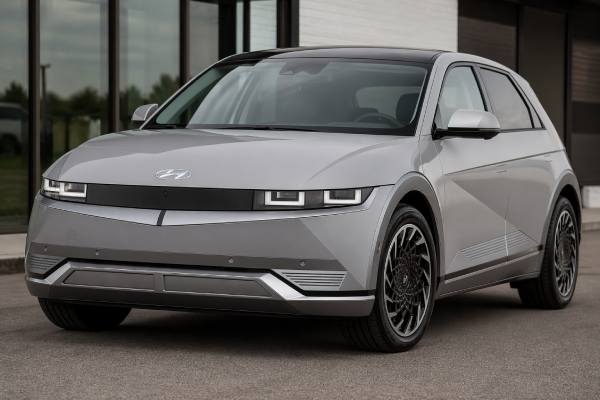
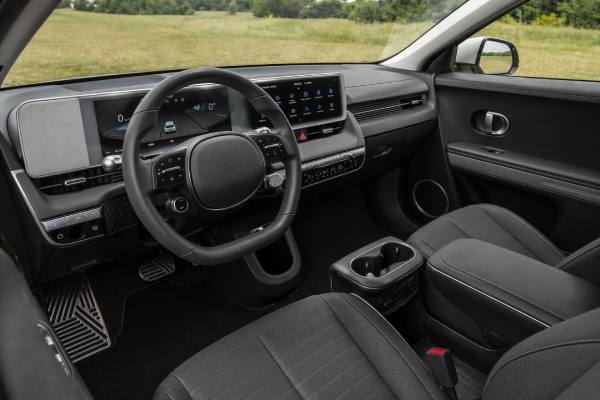
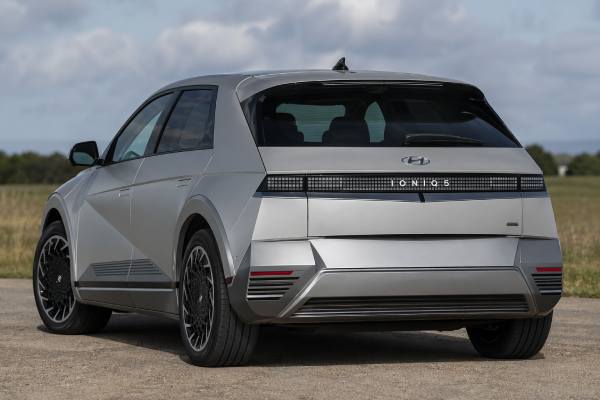
The 2022–2024 Hyundai IONIQ 5 with the 168 kW rear motor is the version that turns this model from an impressive early EV into a genuinely rounded long-range daily car. It keeps the clean rear-wheel-drive layout, but pairs it with the larger 77.4 kWh battery, stronger output, and the fast-charging E-GMP platform that made the IONIQ 5 feel more advanced than many rivals when new. For owners, that usually means easy motorway pace, a roomy cabin, impressive DC charging when conditions are right, and a more relaxed feel than many firmer electric crossovers. It is also one of the better used EVs to study carefully rather than buy casually. Software history, recall completion, charging behavior, wheel size, and cold-weather equipment matter more here than simple mileage. When those pieces line up, the 225 hp rear-drive IONIQ 5 is still one of the most convincing comfort-first EVs of its generation.
Essential Insights
- Fast 800-volt charging remains one of this model’s biggest ownership advantages on long trips.
- The rear-drive setup is lighter and simpler than AWD, while still feeling properly quick in normal driving.
- Cabin space, rear-seat room, and overall comfort are stronger than many same-era rivals.
- Early cars need careful checking for ICCU, AC charging, and software campaign history.
- A sensible routine is tyre rotation and brake inspection every 12,000 km or 12 months.
Guide contents
- Hyundai IONIQ 5 NE long-range profile
- Hyundai IONIQ 5 NE technical tables
- Hyundai IONIQ 5 NE grades and ADAS
- Known problems and campaign fixes
- Service needs and buying advice
- On-road range and driving feel
- Hyundai IONIQ 5 against rivals
Hyundai IONIQ 5 NE long-range profile
The 168 kW rear-drive IONIQ 5 is arguably the sweet-spot version of the pre-facelift car. It combines the larger battery introduced for the updated long-range model with the simpler single-motor layout, so it avoids the extra front drive unit, extra mass, and extra tyre consumption of the AWD version. That matters more in daily ownership than many buyers expect. The car still feels strong, still cruises easily at motorway speeds, and still gives you the standout 800-volt charging architecture, but it does so with fewer moving parts and slightly cleaner efficiency.
At a technical level, the attraction is easy to understand. Hyundai’s E-GMP platform was a major step forward for mainstream EV packaging. The battery sits low in the floor, the wheelbase is unusually long for the body size, and the charging system is designed to work with both 400 V and 800 V infrastructure. In practice, this gives the IONIQ 5 a calm, stable stance on the road and the ability to recover range quickly when a strong DC charger is available. That remains one of its biggest ownership advantages even now.
This version is also better balanced than its shape suggests. The IONIQ 5 is visually bold and slightly retro-futuristic, but it is not a novelty car underneath. It is spacious, practical, and easy to place on the road. The rear-drive layout gives it a tidy, natural feel in the wet and under power, yet the chassis tuning remains comfort-led rather than playful. That is the right choice for the mission. Most owners will appreciate the mature ride, low-speed refinement, and relaxed long-distance behavior more than extra cornering bite.
The larger 77.4 kWh battery changed the car in useful ways. It did not turn the IONIQ 5 into the most efficient EV in the class at high motorway speeds, but it gave the rear-drive version enough genuine range to feel easy to live with year-round. In mild weather, it can be impressively usable on mixed routes, and the fast-charge capability helps on long journeys where a smaller or slower-charging battery would feel more limiting.
Used buyers should still remember that this is an early-generation high-tech EV, not a simple appliance. The best ownership experience depends on completed recalls, correct software, stable AC charging behavior, and evidence that the car’s charging and low-voltage systems have been looked after properly. Cosmetic condition matters, but this is one of those cars where the service and campaign record matters more. When it has been maintained well and updated properly, the 168 kW rear-drive IONIQ 5 remains one of the most convincing used electric crossovers in its class.
Hyundai IONIQ 5 NE technical tables
Powertrain and battery
| Spec | Value |
|---|---|
| Motor type | Permanent Magnet Synchronous Motor |
| Motor layout | Single rear motor, rear axle |
| Drive type | RWD |
| Transmission | Single-speed reduction gear |
| Reduction gear ratio | 2.263 |
| Final drive ratio | 4.706 |
| Max power | 168 kW / 225 hp |
| Max torque | 350 Nm / 258 lb-ft |
| Battery chemistry | Lithium-ion pack |
| Gross battery capacity | 77.4 kWh |
| Usable battery capacity | about 74.0 kWh |
| System voltage | 697 V |
| Battery layout | Floor-mounted traction pack |
| Pack configuration | 192s2p |
| Cell count | 384 |
Charging and efficiency
| Spec | Value |
|---|---|
| AC connector | Type 2 |
| DC connector | CCS Combo 2 |
| Charging port location | Right rear quarter |
| Onboard AC charger | 10.5 kW |
| DC charger compatibility | 400 V / 800 V |
| DC fast-charge peak | up to about 220 kW on suitable hardware |
| Typical DC charging curve | about 170–175 kW average over 10–80% in ideal conditions |
| Main taper point | usually becomes more noticeable beyond about 55–60% SOC |
| AC 10–100% charge time | about 11 h 45 min at 7 kW |
| DC 10–80% charge time, 350 kW | about 18 min |
| DC 10–80% charge time, 50 kW | about 62–73 min |
| Battery preconditioning for DC charging | Available by model year and market; later cars and updated software can pre-heat before fast charging when a DC charger is set in navigation |
| Thermal management | Liquid-cooled battery and power electronics |
| Heat pump | Available or standard depending on market and year; supports cabin efficiency and, in equipped cars, helps battery conditioning |
| Official test standard | WLTP |
| Rated efficiency | about 17.0 kWh/100 km |
| Rated range, 19-inch wheels | up to 507 km / 315 mi |
| Rated range, 20-inch wheels | up to 454 km / 282 mi |
| Real-world highway at 120 km/h | about 23–26 kWh/100 km |
| Real-world highway range at 120 km/h | about 285–320 km / 177–199 mi |
Performance and capability
| Spec | Value |
|---|---|
| 0–100 km/h | 7.3 s |
| 0–62 mph | 7.3 s |
| Top speed | 185 km/h / 115 mph |
| 80–120 km/h | about 4.7 s |
| Towing capacity, braked | 1,600 kg / 3,527 lb |
| Towing capacity, unbraked | 750 kg / 1,653 lb |
| Payload | about 435–515 kg / 959–1,135 lb |
| Turning circle | 11.98 m / 39.3 ft |
Chassis and dimensions
| Spec | Value |
|---|---|
| Front suspension | MacPherson strut |
| Rear suspension | Multi-link |
| Steering type | Rack-mounted motor-driven power steering |
| Steering turns lock to lock | 2.67 |
| Front brakes | 345 mm ventilated discs |
| Rear brakes | 345 mm ventilated discs |
| Parking brake | Electronic |
| Wheels and tyres, common 19-inch fitment | 235/55 R19 |
| Wheels and tyres, common 20-inch fitment | 255/45 R20 |
| Length | 4,635 mm / 182.5 in |
| Width | 1,890 mm / 74.4 in |
| Height | 1,605 mm / 63.2 in |
| Wheelbase | 3,000 mm / 118.1 in |
| Kerb weight | about 1,935–2,015 kg / 4,266–4,442 lb |
| GVWR | 2,450 kg / 5,401 lb |
| Cargo volume | 527 L / 18.6 ft³ |
| Front trunk | 25 kg rated load in 2WD models |
Safety and service capacities
| Spec | Value |
|---|---|
| Euro NCAP | 5 stars |
| Euro NCAP adult occupant | 88% |
| Euro NCAP child occupant | 86% |
| Euro NCAP vulnerable road users | 63% |
| Euro NCAP safety assist | 88% |
| IIHS overall status, 2024 | Top Safety Pick+ |
| IIHS headlight rating | Good or Acceptable, depending on headlight package |
| Core ADAS suite | AEB, ACC, lane keep assist, lane follow assist, blind-spot support, rear cross-traffic support, intelligent speed assist, highway assist |
| Reduction gear fluid | HK ATF 65 SP4M-1 |
| Reduction gear fluid capacity, 2WD rear | 3.4–3.5 L / 3.6–3.7 US qt |
| Standard coolant, 2WD with heat pump | 6.3 L / 6.6 US qt |
| Standard coolant, 2WD without heat pump | 6.4 L / 6.8 US qt |
| Low-conductivity coolant, extended battery 2WD with heat pump | 11.9 L / 12.6 US qt |
| Low-conductivity coolant, extended battery 2WD without heat pump | 11.2 L / 11.8 US qt |
| Brake fluid | DOT 4 LV / ISO 4925 Class 6 |
| A/C refrigerant, with heat pump | R-1234yf, 900 ± 25 g |
| A/C refrigerant, without heat pump | R-1234yf, 700 ± 25 g |
| A/C compressor oil, with heat pump | POE J639, 180 ± 10 g |
| A/C compressor oil, without heat pump | POE J639, 150 ± 10 g |
| Wheel nut torque | 108–127 Nm / 79–94 lb-ft |
Hyundai IONIQ 5 NE grades and ADAS
For this version of the IONIQ 5, trim strategy matters because the motor and battery tell only part of the story. In most markets, the 168 kW rear-drive car sat in the middle of the range in performance terms but could span from sensible, efficiency-minded trims to richly equipped versions with bigger wheels and far more technology. That means used buyers should judge the car by the whole specification, not just by power output.
A useful way to think about these 2022–2024 cars is to separate them into three layers. The entry or lower-middle trim usually gives you the important hardware: the bigger battery, fast charging, the main displays, the core SmartSense safety package, and 19-inch wheels. Those are often the most rational used buys because they protect ride comfort and range. Mid-spec cars typically add comfort equipment that genuinely improves ownership, such as seat heating, better interior trim, stronger lighting, more cameras, and a more complete convenience package. The top versions add premium features such as larger wheels, upgraded seat functions, more parking assistance, higher-spec headlights, richer audio, digital mirrors in some markets, and the fuller ADAS menu.
The wheel and equipment mix changes the verdict more than buyers expect. A 19-inch long-range rear-drive car is usually the most balanced form of this model. It rides well, it tends to return the best range, and tyre replacement costs are easier to manage. Once you move to 20-inch wheels, the car looks sharper and may bring extra equipment, but real-world efficiency and road-noise isolation usually take a small step backward.
Year-to-year changes are also important. The larger 77.4 kWh battery and the stronger 168 kW rear motor define this version, but equipment related to heat management and charging became more useful as Hyundai refined the car. In some markets, 2023 brought broader battery-conditioning support and higher-trim heat-pump availability. In some 2024 markets, heat pump, battery heating, and conditioning hardware became easier to find or standardised across more of the range. That can make a later car a better winter EV even if it looks nearly identical.
Quick identifiers help when a seller’s description is vague. Nineteen-inch wheels usually point to the more efficient versions. Higher trims often have more distinctive lighting signatures, richer seat trim, a more advanced parking-camera setup, and extra blind-spot display features. Inside, Bose branding, seat upholstery, digital side-mirror screens, and the presence of more advanced parking functions can quickly separate upper trims from the rest.
Safety equipment is one of the IONIQ 5’s strengths. Euro NCAP’s five-star result remains a solid indicator of the base structure, and Hyundai backed that up with a broad suite of active systems. Seven airbags, including a front-centre airbag, are a key part of the package. ISOFIX or LATCH provision is straightforward, and the child-seat friendliness is generally strong for the class.
ADAS coverage is extensive, but not every car has every function. Core systems such as forward collision avoidance, lane keeping, lane centring support, driver attention monitoring, and intelligent speed assistance are commonly fitted. Higher trims typically add blind-spot collision support, blind-spot camera display, rear cross-traffic support, smarter cruise and lane integration, and stronger parking aids. After repairs, alignment work, windscreen replacement, or bumper removal, buyers should make sure camera and radar calibrations were completed properly, because that matters as much as the hardware list itself.
Known problems and campaign fixes
The 168 kW rear-drive IONIQ 5 is fundamentally a good EV, but it is also one of those modern cars where software history and campaign completion are part of reliability. The main mechanical package is strong. The main ownership risk comes from a small number of well-known electrical and charging-system issues that deserve close attention.
A useful way to map them is by prevalence and cost:
- Common, medium-to-high importance: ICCU and 12 V charging support problems.
- Occasional, medium importance: interrupted AC charging or reduced Level 2 charging speed.
- Occasional, low-to-medium importance: battery-conditioning and charging-software shortcomings on early cars.
- Occasional, low importance: brake corrosion, hatch and trim noises, suspension knocks, and tyre wear from alignment drift.
- Rare, high importance: genuine high-voltage component replacement outside campaign work.
The biggest headline issue is the ICCU, or Integrated Charging Control Unit. Symptoms can include warning lights, a weak or repeatedly discharged 12 V battery, charging irregularities, or the car entering a reduced-power fail-safe mode. The underlying concern is that the ICCU can fail in a way that stops proper charging of the 12 V system. Hyundai’s later remedy campaign is important because it expanded and replaced earlier recall action on some vehicles. A used buyer should not accept vague answers here. The seller should be able to show recall completion and ideally dealer documentation confirming the latest remedy, not just an early visit.
The second major area is AC charging behavior. Some 2022–2024 cars can experience interrupted Level 2 charging or reduced charging speed. Symptoms are simple: the session starts, then stops, restarts, or settles at a lower power level than expected. In many cases, the official cure is software logic improvement rather than major hardware replacement. That is encouraging, but it also means the car should be checked for campaign completion and then tested on a real AC charger before purchase.
Battery conditioning is another point where model year matters. Early cars were not equally good at preparing the battery for cold-weather fast charging. Later updates and broader feature availability improved that. This is not a failure in the same sense as ICCU trouble, but it does affect ownership. A car that lacks proper preconditioning behavior will feel less impressive in winter and can charge more slowly than buyers expect.
The battery pack itself does not have a reputation for dramatic early capacity loss. That is the good news. The more realistic concerns are charging performance consistency, thermal-management health, and whether the correct coolant types have been maintained. On this car, the low-conductivity coolant loop is not something to ignore. Wrong fluid, neglected service, or sloppy prior work are more worrying than ordinary gradual capacity loss.
On the chassis side, issues are mostly ordinary. Heavy EV mass means tyres and alignment matter. Inner-shoulder wear can show up if geometry is off. Low-use friction brakes can corrode because regen does so much of the work. Some cars develop minor suspension noises or everyday trim rattles, especially from the hatch area. None of these are deal-breakers, but they should reduce the price if present.
Before buying, ask for five things: full service history, proof of recall completion, records of any ICCU or charging work, evidence of correct coolant service if done, and a battery state-of-health report. On this model, those documents tell you more than a polished exterior ever will.
Service needs and buying advice
The IONIQ 5 does not demand the kind of routine service an ICE crossover does, but it still rewards a structured maintenance plan. The best approach is to treat it as a high-tech EV with a few heavy-vehicle habits: tyres, brakes, cooling circuits, and software status all matter.
A practical maintenance rhythm looks like this:
- Every 12,000 km or 12 months
- Rotate tyres.
- Inspect pads, discs, and caliper movement.
- Check tyre wear pattern, balance, and alignment.
- Inspect steering and suspension joints and bushes.
- Check coolant levels in both reservoirs.
- Test the 12 V battery and charging behavior.
- Inspect charge-port latch, seals, and cable fit.
- Confirm open recalls and software campaigns.
- Every 24,000 km or 24 months
- Replace or at least closely inspect the cabin air filter.
- Inspect brake fluid condition and moisture content.
- Inspect underbody covers, battery-shield area, and fasteners.
- Recheck brake corrosion, especially on cars used gently or mostly in traffic.
- Every 60,000 km
- Inspect reduction gear fluid, as Hyundai specifies checking it at this interval.
- Inspect drive-unit mounts, seals, half-shafts, and any emerging noise from the reduction gear area.
- Severe-use adjustments
- Shorten tyre, brake, and charging-hardware inspections if the car sees frequent DC fast charging, repeated high-speed motorway use, towing, mountain driving, or very cold or very hot climates.
Used buyers should pay special attention to fluid correctness. The IONIQ 5 uses specific cooling circuits, and this is not a car where random workshop substitutions are acceptable. The reduction gear fluid, brake fluid type, refrigerant, and EV coolant strategy all matter. If a seller cannot describe who serviced the car and what was used, that is a warning sign.
The inspection checklist should start with the battery and charging system. Ask for a battery state-of-health readout, but also judge the car by behavior. Does the estimated range at a given state of charge feel plausible for the wheel size and season? Does AC charging run steadily? Does DC charging start normally and build power without repeated interruptions? A good IONIQ 5 should feel consistent, even if winter range is lower than summer range.
Then move to the cooling and thermal side. Check for evidence of leaks, poor-quality hose work, or dried coolant marks around the front service area. On cars equipped with a heat pump, confirm that cabin heating is effective and efficient rather than relying heavily on resistive backup behavior.
The chassis and body inspection is simple but important. Look underneath for scraped battery shields, cracked plastic covers, bent underbody panels, and corrosion on exposed hardware. Check tyre shoulders closely. Listen for suspension clunks over rough roads. Inspect the brake discs for heavy rust ridging if the car has done mostly light urban work with strong regen.
Electronics matter too. Make sure every camera, radar-driven assist system, infotainment function, seat feature, and remote charging setting works properly. Ask about update history. Some cars have had meaningful improvement through dealer-applied software, and that can make ownership easier.
For most buyers, the best used choice is a 19-inch long-range rear-drive car with full campaign history, stable charging behavior, and heat-management equipment that suits the climate. The long-term durability outlook is good, but budget for tyres, brake servicing to manage corrosion, and the possibility of future low-voltage or charging-system attention rather than assuming the car will need nothing at all.
On-road range and driving feel
From behind the wheel, the 168 kW rear-drive IONIQ 5 feels more polished than its dramatic styling suggests. It is quick, but not in a frantic way. The response off the line is immediate and smooth, and the motor delivers its 350 Nm in a very clean, easy-to-meter manner. Around town, that makes the car feel calm rather than jumpy. On the open road, it has enough mid-range pull to overtake confidently without creating the abrupt surge that some EVs use to impress in a short test drive.
Ride quality is a major strength. The long wheelbase and low battery mass give the IONIQ 5 a planted, settled feel over broken surfaces, and it handles larger bumps with more composure than many rivals. It is not a light car, so you do notice its mass in tighter direction changes, but the body remains controlled and the chassis seldom feels nervous. On 19-inch wheels, it is particularly well judged. On 20-inch wheels, turn-in looks a little sharper on paper, but the ride gets busier and road noise is usually higher.
The steering is accurate and easy, though not especially rich in feedback. That suits the car’s mission. This is a comfort-first EV with good body control, not a driver’s crossover pretending to be a hot hatch. The rear-drive balance is still welcome in wet weather, where the car feels clean and predictable.
Regenerative braking is one of the better parts of the driving experience. Hyundai gives the driver useful control through paddle-adjustable regen levels, and the i-Pedal mode is easy to learn. In daily use, the system feels intuitive. The only caveat is the familiar EV issue of friction-brake handoff. It is decent, but not perfect, and drivers coming from the very best blended-braking systems will notice that.
Real-world efficiency depends heavily on speed. In city use and slower mixed driving, this IONIQ 5 can be very reasonable for its size. Around 16–19 kWh/100 km is achievable in mild conditions if traffic and climate are kind. On the motorway, speed changes the picture quickly. At 120 km/h, expect something nearer 23–26 kWh/100 km, which is respectable but not class-leading. That usually means a genuine high-speed range in the high-200 km to low-300 km zone, with cold weather, wind, and larger wheels pushing the result downward.
Charging remains the car’s strongest long-distance asset. Home charging is straightforward, and overnight recovery is easy on a proper AC setup. Public DC charging is where the IONIQ 5 still feels special. With the battery at the right temperature and the charger actually delivering, the car can add meaningful distance in a short stop. That said, owners should keep expectations realistic. Cold batteries, busy chargers, and high starting state of charge all reduce the headline benefit. Even so, this Hyundai is still one of the better real-trip EVs of its era because its charging system can genuinely save time when conditions line up.
Hyundai IONIQ 5 against rivals
The 168 kW rear-drive IONIQ 5 competes best as a complete package rather than by chasing one dominant number. It is not the fastest rear-drive EV of its type, nor the outright most efficient at motorway speeds, but it combines space, comfort, charging speed, and everyday usability in a way that still makes a lot of sense.
The closest rival is the Kia EV6 rear-drive long-range model. Because the two cars share core hardware, the choice comes down to character. The EV6 feels lower, tighter, and a little more driver-focused. The IONIQ 5 feels airier, more spacious, and more relaxed. If you want a slightly sportier stance and a more cocooned driving position, the Kia may suit you better. If you value cabin openness, rear-seat comfort, and a stronger sense of calm on long journeys, the Hyundai is usually the better fit.
Against the Tesla Model Y, the comparison becomes more philosophical. The Tesla tends to feel more software-led and often more efficient, with very strong route-planning integration. The Hyundai fights back with better seat comfort for many drivers, a more distinctive cabin atmosphere, more visual character, and controls that some owners find easier to live with. The IONIQ 5 also feels more deliberately comfort-tuned, which many buyers still prefer on ordinary roads.
Versus the Volkswagen ID.4 and Skoda Enyaq, the Hyundai usually feels more technically ambitious. Its fast-charging performance is a major advantage, and the platform packaging is more dramatic. The Volkswagen and Skoda alternatives feel more conventional and familiar, which some buyers genuinely like, but the Hyundai tends to feel more special in the areas that matter on long electric trips.
The Polestar 2 is another useful comparison. It is a more driver-centric car with a lower seating position and stronger steering feel. But it cannot match the IONIQ 5 for rear-seat space, cabin openness, or crossover practicality. The Hyundai is the family-friendly tool. The Polestar is the more focused driver’s choice.
Where does the IONIQ 5 lose points? It is not the last word in motorway efficiency, and the styling can make some shoppers expect a more aggressive chassis than the car actually has. Some rivals also offer simpler trim structures, while the Hyundai needs a little more homework because wheel size, heat-management equipment, lighting, and ADAS features vary meaningfully by market and year.
Overall, though, the 168 kW rear-drive IONIQ 5 remains one of the most sensible and satisfying used EV choices in its class. It offers enough performance, excellent packaging, and still-impressive charging capability, while avoiding some of the extra weight and complexity of dual-motor alternatives. For buyers who want a comfort-first EV that still feels technically clever, it remains one of the strongest rivals in the segment.
References
- Hyundai IONIQ 5. 2024 (Technical Specifications)
- 9. Maintenance – Hyundai | UK | User Manuals 2022 (Owner’s Manual)
- Euro NCAP | Hyundai IONIQ 5 2021 (Safety Rating)
- 2024 Hyundai Ioniq 5 2024 (Safety Rating)
- Safety Recall 272: Integrated Charging Control Unit (ICCU) 2024 (Recall Database)
Disclaimer
This article is for informational purposes only and is not a substitute for professional diagnosis, repair, or official service information. Specifications, torque values, service intervals, procedures, and equipment can vary by VIN, market, software level, and trim, so always verify details against the correct official service documentation for the exact vehicle.
If this guide was useful, please consider sharing it on Facebook, X, or another platform to support our work.