
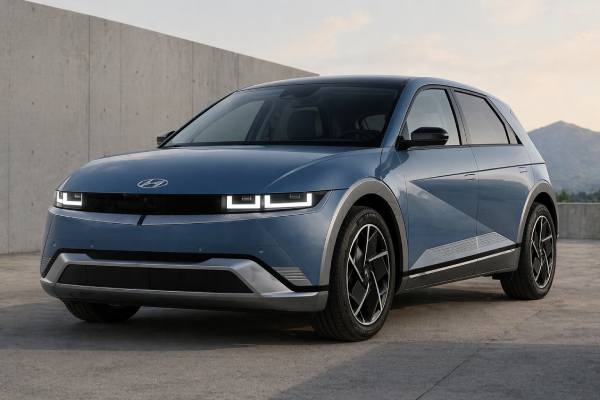
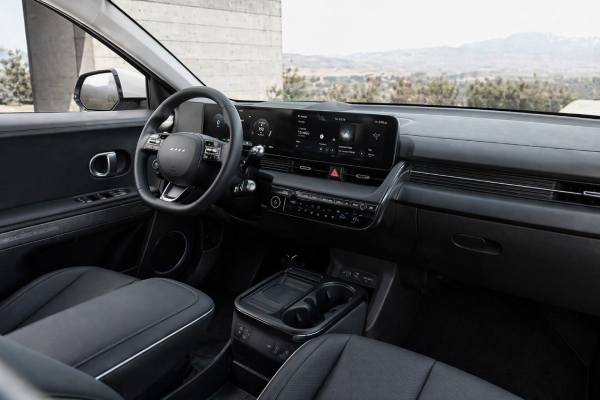
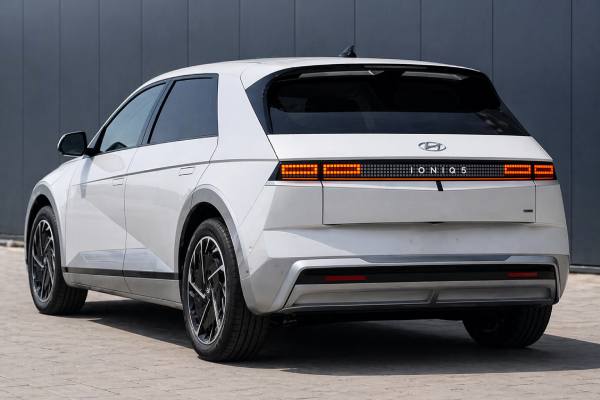
The Hyundai IONIQ 5 N is not simply a faster IONIQ 5. It is a much more serious engineering exercise built to prove that a high-performance EV can still feel engaging on road and track. The 2024-onward model uses dual permanent-magnet motors, an 84.0 kWh battery, reinforced body and chassis hardware, larger brakes, dedicated cooling logic, and a long list of N-specific software features that change how the car accelerates, corners, and manages heat. It is also much quicker than the regular AWD IONIQ 5, with up to 478 kW and 770 Nm available during N Grin Boost. Yet the bigger story for owners is balance. This car still charges very quickly, remains practical enough for daily use, and carries over the IONIQ 5’s spacious cabin and 800-volt architecture. The trade-off is obvious: tyres, brakes, and thermal management matter much more here than they do on the standard car, and software campaign history is essential when buying used.
Quick Specs and Notes
- The IONIQ 5 N combines genuine track-capable braking and cooling with everyday EV charging speed.
- Body reinforcements, e-LSD hardware, and N-specific steering and damping make it far more than a software special.
- Straight-line pace is extreme, but the real achievement is repeatable performance and brake feel.
- Check recall completion carefully, especially for the 2025 braking and N e-Shift software campaign.
- Inspect tyres, brakes, and cooling performance every 15,000 km or 12 months, and after every track event.
Start here
- Hyundai IONIQ 5 N in context
- Hyundai IONIQ 5 N hard data
- Hyundai IONIQ 5 N equipment and ADAS
- Failure risks and recall record
- Service planning and used checks
- Track manners and road range
- Where the IONIQ 5 N sits
Hyundai IONIQ 5 N in context
The IONIQ 5 N exists because Hyundai N wanted its first EV to behave like an N car, not just accelerate like one. That sounds like marketing language until you look at the hardware. The body shell gets extra welding and structural adhesive. The motor and battery mounts are reinforced. The front and rear subframes are strengthened. Hyundai also fitted integrated drive axles at both ends, larger brakes, a dedicated steering setup, electronically controlled damping, and a rear electronic limited-slip differential. The result is not a regular IONIQ 5 with a bigger inverter. It is a purpose-built performance derivative.
Its powertrain numbers are serious. In normal running, the car delivers 448 kW and 740 Nm, which is already enough to put it in true super-hatch and junior-supercar territory. With N Grin Boost engaged, output rises to 478 kW and torque to 770 Nm for ten seconds. Hyundai quotes 3.5 seconds to 100 km/h and 3.4 seconds with the boost function active. Top speed is 260 km/h, which is unusual for a tall EV hatchback and immediately tells you what sort of brief this car had.
What makes the IONIQ 5 N more interesting than many fast EVs is the way Hyundai tried to solve the usual problems of driver engagement. N e-Shift simulates an eight-speed dual-clutch gearbox by shaping torque delivery and adding virtual shift events. N Active Sound+ overlays sound profiles through internal and external speakers. N Drift Optimizer, N Torque Distribution, N Battery Preconditioning, N Launch Control, and N Race modes all point to the same idea: Hyundai wanted the driver to work with the car, not simply pin the accelerator and let software do the rest.
It still retains much of the base IONIQ 5’s practicality. The wheelbase remains 3,000 mm, so rear-seat space is generous. The cabin still feels open and usable, and the 800-volt E-GMP platform still gives the car one of the better charging setups in the segment. That matters because some high-performance EVs are thrilling for an hour and awkward for a week. The IONIQ 5 N is better rounded than that.
The catch is ownership cost and use profile. This is a heavy, very powerful EV running on 275-section Pirelli tyres, large friction brakes, and more aggressive software and cooling strategies than the normal car. Track days, repeated launch control use, and hard road driving will age consumables quickly. A regular IONIQ 5 owner can sometimes be casual about brake exercise, tyre wear, and service history. An IONIQ 5 N owner cannot. That is why the used-buying decision depends as much on software status, brake condition, tyre history, and evidence of sensible ownership as it does on mileage.
For the right buyer, though, the package is unusually compelling. It is fast enough to feel outrageous, clever enough to feel distinctive, and practical enough to justify itself beyond weekend use.
Hyundai IONIQ 5 N hard data
Powertrain, battery, and efficiency
| Spec | Value |
|---|---|
| Motor type | Dual permanent-magnet synchronous motors |
| Motor count and axle | One front motor and one rear motor |
| Front motor output | 166 kW normal / 175 kW with N Grin Boost |
| Rear motor output | 282 kW normal / 303 kW with N Grin Boost |
| Combined output | 448 kW normal / 478 kW with N Grin Boost |
| Combined power in horsepower | about 601 hp normal / 641 hp with N Grin Boost |
| Combined power in metric horsepower | 609 PS normal / 650 PS with N Grin Boost |
| Combined torque | 740 Nm normal / 770 Nm with N Grin Boost |
| System voltage | 697 V |
| Electrical architecture | 800 V |
| Battery chemistry | Lithium-ion polymer, NMC pouch cells |
| Battery layout | Floor-mounted underbody pack |
| Battery module structure | 384 cells, 192s2p |
| Gross battery capacity | 84.0 kWh |
| Usable battery capacity | 80.0 kWh |
| Thermal management | Liquid-cooled battery and power electronics |
| Heat pump | Fitted in key markets |
| Battery preconditioning for DC charging | Yes, plus N Battery Preconditioning Drag and Track modes |
| Official efficiency standard | WLTP |
| WLTP rated efficiency | 21.2 kWh/100 km |
| WLTP rated range | 448 km (278 mi) |
| Real-world highway at 120 km/h | about 26.1 kWh/100 km (420 Wh/mi) |
| Real-world highway range at 120 km/h | about 306 km (190 mi) |
Driveline, charging, and performance
| Spec | Value |
|---|---|
| Transmission / drive unit | Single-speed front reduction gear with dog clutch and rear single-speed reduction gear |
| Front reduction gear ratio | 2.2647 |
| Rear reduction gear ratio | 2.2632 |
| Final drive ratio | 4.7060 |
| Drive type | AWD |
| Differential / torque distribution | Front torque-vectoring control and rear electronic limited-slip differential |
| Charging connector (AC) | Type 2 |
| Charging connector (DC) | CCS Combo 2 |
| Charging port location | Right rear quarter |
| Onboard charger (AC) | 10.5–11.0 kW |
| DC fast-charge peak | 239–263 kW |
| Typical DC average power, 10–80% | about 196 kW |
| Replenishment time, DC 10–80% | about 18 min |
| Replenishment time, AC 10–100% | about 7 h 35 min at 11 kW |
| Vehicle-to-load output | 3.6 kW |
| 0–100 km/h | 3.5 s |
| 0–100 km/h with N Grin Boost | 3.4 s |
| 80–120 km/h | 1.9 s |
| 80–120 km/h with N Grin Boost | 1.8 s |
| Top speed | 260 km/h (161 mph) |
| Braking distance, 100–0 km/h | 40.2 m |
Chassis, dimensions, and safety data
| Spec | Value |
|---|---|
| Front suspension | MacPherson strut |
| Rear suspension | Multi-link |
| Damping system | Electronic Control Suspension |
| Steering type | Rack-mounted motor-driven power steering, rack and pinion |
| Steering turns lock-to-lock | 2.29–2.31 |
| Turning circle, kerb-to-kerb | 12.42 m |
| Front brakes | 400 mm x 34 mm ventilated discs, four-piston monobloc calipers |
| Rear brakes | 360 mm x 20 mm ventilated discs, single-piston calipers |
| Regenerative braking limit | up to 0.6 G |
| Wheels and tyres | 21 x 9.5J forged alloy wheels with 275/35 R21 Pirelli P-Zero HN tyres |
| Ground clearance | 142 mm |
| Length | 4715 mm |
| Width | 1940 mm |
| Width with mirrors | 2152 mm |
| Height | 1585 mm |
| Wheelbase | 3000 mm |
| Kerb weight | 2200–2235 kg |
| GVWR | 2660 kg |
| Payload | about 460–510 kg |
| Cargo volume | 480 L seats up / 1540 L seats down |
| Euro NCAP | 5 stars |
| Euro NCAP adult occupant | 88% |
| Euro NCAP child occupant | 86% |
| Euro NCAP vulnerable road users | 63% |
| Euro NCAP safety assist | 88% |
| IIHS applicability | IONIQ 5 line ratings apply to 2024–26 body family |
| IIHS headlight rating | Good on projector-LED setups, Acceptable on reflector-LED setups |
Hyundai IONIQ 5 N equipment and ADAS
The trim story on the IONIQ 5 N is much simpler than it is on the regular IONIQ 5. In most markets, this is effectively a single high-spec performance flagship rather than a range of sub-trims. That changes how buyers should read the car. You are not choosing between a comfort trim and a sport trim. You are choosing between the IONIQ 5 N and everything else.
That single-trim strategy makes sense because the N-specific content is extensive. The forged 21-inch wheels, 275/35 tyres, larger 400 mm front brakes, 360 mm rear brakes, electronic control suspension, strengthened steering column, N-specific steering calibration, rear e-LSD, and dual-motor AWD system are all core to the model. So are the software layers that define the car’s identity: N Grin Boost, N Launch Control, N Torque Distribution, N Drift Optimizer, N Pedal, N Race, N Battery Preconditioning, N Active Sound+, and N e-Shift. Remove those, and it stops being an IONIQ 5 N in any meaningful sense.
You can usually identify the real car quickly. Outside, it has the deeper N bumpers, orange accents, a taller rear spoiler, black trim details, and forged 21-inch wheels with performance tyres. Inside, the biggest giveaways are the N steering wheel with its dedicated buttons, fixed center console arrangement, N bucket-style seats, Performance Blue accents, and the N-specific interface pages in the infotainment system. In markets where the car is sold in only one specification, the option list is usually limited to paint, matte finishes, and a few market-specific convenience items rather than major mechanical choices.
Safety equipment is generous, and much of it is standard because Hyundai positions the IONIQ 5 N as a premium halo model. That normally means forward collision avoidance with car, pedestrian, cyclist, and junction-turn coverage, blind-spot monitoring, blind-spot view monitor, lane keep assist, lane follow assist, rear cross-traffic collision avoidance, Highway Drive Assist 2, parking collision avoidance, driver attention warning, rear occupancy alert, a front-center airbag, curtain airbags, and ISOFIX anchorage on the outer rear seats.
The crash-rating story needs careful wording. Euro NCAP’s five-star result belongs to the wider IONIQ 5 line, not to a separate N-only crash program. Likewise, IIHS evaluates the IONIQ 5 body family rather than the N as a standalone model. That still matters because the N is built on the same core structure, and IIHS specifically notes that 2024-onward IONIQ 5 models received reinforcements to the B-pillar and door sill for improved side-impact protection. The practical takeaway is positive: the N does not give up core passive safety in exchange for pace.
There is one more used-buying point worth stressing. ADAS correctness matters more than ADAS presence. A used IONIQ 5 N with windshield replacement, front-end paintwork, track damage, kerbed wheels, or alignment work should be checked for proper calibration of radar, cameras, steering angle, and parking sensors. On this car, a feature list tells you what it left the factory with. A proper inspection tells you whether it still works as intended.
Failure risks and recall record
The IONIQ 5 N is still too new for a fully mature reliability picture, so the right approach is not to invent long-term trends that have not developed yet. Instead, focus on what is confirmed, what is likely under hard use, and what should worry a buyer most.
The clearest factory action so far is the U.S. and Canada 2025 safety recall covering the Integrated Electronic Brake system and Vehicle Control Unit software. This is a genuine N-specific issue, not a generic IONIQ 5 carryover. Under certain conditions, the left-foot braking feature could trigger depressurization of the ABS system and reduce braking performance. Hyundai later expanded the remedy because the VCU software could also allow unexpected continued acceleration during pedal lift when N e-Shift was engaged. That is a serious service-history item. Any used buyer should confirm the recall repair was completed and should treat vague seller answers as a red flag.
Beyond that, the main risks are wear-related rather than widespread design collapse. This is a 2.2-tonne EV on 21-inch forged wheels and wide Pirelli tyres, with huge instant torque and track-capable regen and friction braking. That means some patterns are predictable:
- Common, medium cost: front tyres and shoulder wear, especially on cars that have seen repeated hard launches, track use, or poor alignment.
- Common, medium to high cost: front brake pads and discs on aggressively driven cars, especially if the car has seen circuit work or repeated mountain-road use.
- Occasional, medium cost: kerbed wheels, tyre sidewall damage, or vibration complaints caused by pothole strikes and aggressive wheel-and-tyre sizing.
- Occasional, medium cost: suspension geometry drift after hard impacts or track kerb use.
- Occasional, low to medium cost: trim rattles, brake squeal, and noise complaints that stem from high-performance pads, tyres, or body stiffness rather than a clear fault.
The EV-specific systems deserve a more nuanced view. There is not yet strong evidence that the 84.0 kWh pack has a broad early degradation problem. Battery health should still be checked, especially on cars that have lived on repeated rapid charging or track days, but the battery itself does not currently stand out as the weak link. More relevant is thermal management. The IONIQ 5 N depends heavily on correct cooling behavior, correct software, and clean airflow through its front cooling systems. A car that has lived hard but shows no fault codes can still reveal its story through inconsistent charging, weak repeat performance, or unusually hot brake and tyre behavior after modest use.
Track use changes the reliability conversation. Hyundai designed the car for it, but that does not make track driving free. Repeated hot laps accelerate pad wear, tyre wear, and heat cycling of the entire driveline and battery system. Buyers should ask directly whether the car has seen circuit work and, if so, what was replaced afterward. That is not a reason to reject the car automatically. A carefully maintained track-used example can be better than a neglected road car. But you need the paperwork.
There is also a difference between confirmed recall history and internet rumor. Unlike earlier non-N IONIQ 5 variants, the N’s most important confirmed service action so far is the braking and N e-Shift software campaign. Do not let a seller blur that into generic statements about “all software updates done.” Ask for campaign numbers, invoice dates, and dealer records.
For pre-purchase due diligence, request the full service file, recall proof, tyre and brake history, alignment reports, evidence of any wheel repairs, a battery health report, and a real charging demonstration if possible. That is the quickest way to separate an enthusiast-owned, well-sorted car from one that was simply driven hard.
Service planning and used checks
The IONIQ 5 N may be an EV, but it still needs a disciplined service plan. In fact, it needs more ownership attention than the regular IONIQ 5 because its consumables and thermal systems operate under much higher load. The baseline is simple: inspect it often, treat track use as severe use, and never assume software status takes care of mechanical wear.
A practical maintenance pattern looks like this:
- Every 15,000 km or 12 months: inspect tyres, rotate only if wear pattern and tyre setup allow it, inspect alignment condition, inspect brake pads and discs, inspect caliper sliders and hardware, inspect suspension joints and bushings, inspect steering rack and boots, inspect cooling-system hoses, inspect the charge port, and replace the cabin air filter if needed.
- Every 30,000 km or 24 months: replace brake fluid and inspect the system carefully for heat-related deterioration if the car has seen track use.
- After every track event: check tyre shoulder wear, wheel condition, pad thickness, disc condition, brake fluid feel, and look for underbody or cooling-duct damage.
- At higher mileage or under severe use: treat the reduction gear lubricant as a real service item rather than a lifetime abstraction, especially if the car has seen repeated launches, track days, or aggressive mountain driving.
- From year 3 onward: test the 12-volt battery annually and pay attention to any unusual low-voltage behavior.
Severe use absolutely applies here. Frequent DC charging, hot climates, repeated launches, canyon driving, track work, pothole-heavy roads, winter salt exposure, and long motorway runs on sticky tyres all count. That is why the IONIQ 5 N should not be serviced on the same mental schedule as a gentle commuter EV.
In practical terms, the most important consumables are obvious. The 275/35 R21 tyres are expensive and easy to abuse. The brakes are excellent, but they are still consumables. Hyundai’s N Brake Regen reduces some friction-brake load, yet owners should not assume pads and discs last forever. On a hard-driven N, they will not. If the car has seen circuit use, fresh brake fluid matters more than on a normal IONIQ 5, and many owners will want a dealer-approved higher-performance fluid strategy depending on how the car is used.
The used-buyer checklist should be focused and unforgiving:
- Battery health: ask for a state-of-health report, check displayed range versus expected range, and look for evidence of repeated thermal throttling or abnormal charge taper.
- Charging hardware: test both AC and DC charging, inspect the charge-port latch and seals, and confirm battery preconditioning functions correctly.
- Brakes and tyres: check for uneven wear, cracked or heat-cycled tyres, lip formation on discs, pad thickness, and vibration under load.
- Cooling systems: inspect radiators, ducts, undertrays, active air flap operation, and look for stone damage or blocked cooling passages.
- Chassis: check wheel condition, suspension geometry, and any signs of kerb or track damage.
- Electronics and software: confirm recall completion, OTA and dealer update history, and correct operation of N e-Shift, N Grin Boost, drive modes, and ADAS features.
The long-term durability outlook is promising but conditional. The battery and motors should hold up well under normal enthusiastic road use. The parts most likely to cost real money over time are tyres, brakes, wheel repairs, alignment work, suspension wear, and any cooling-related service on hard-used cars. The IONIQ 5 N can be a robust performance EV, but only if it is maintained like one.
Track manners and road range
The IONIQ 5 N works because it feels engineered, not improvised. From the first few corners, it is obvious Hyundai did more than add power. The steering is quicker and more direct than the regular IONIQ 5. Body control is tighter. The fixed center console and supportive seats matter more than expected because they stop the driver moving around under load. And the brake system feels much more serious than the spec sheet alone suggests.
On the road, the car is far more playful than a heavy electric hatchback has any right to be. Turn-in is clean, front-end bite is strong for something with this much mass, and the rear axle feels active rather than passive. The configurable torque distribution gives the car a wide operating window, from secure all-weather traction to more rear-biased behavior for a livelier balance. The rear e-LSD helps the car rotate more convincingly than the ordinary AWD IONIQ 5, and N Pedal changes the lift-off behavior enough to make corner entry feel more deliberate and engaging.
Brake performance is one of the car’s standout strengths. The 400 mm front discs, four-piston monobloc calipers, and strong regenerative integration give the IONIQ 5 N more confidence under repeated heavy stops than most fast EVs. Hyundai’s claim of up to 0.6 G regenerative deceleration is not just a party trick. It helps reduce fade and brake temperature on harder drives. The handoff between regen and friction braking is still blended, but Hyundai tuned it well enough that it rarely feels clumsy.
The powertrain character is unusual in a good way. In normal EV mode, it is brutally quick and very clean in delivery. With N e-Shift and sound functions engaged, the car becomes far more theatrical. That will divide opinion. Some drivers will love the added interaction. Others will prefer the car’s default smoothness. The important thing is that the car gives you both, and the simulated shifts actually help meter power on a corner exit more naturally than many skeptics expect.
Real-world efficiency is where the compromises show. Around town, the IONIQ 5 N is less punishing than its image suggests, but it is never especially frugal. In mixed mild-weather use, consumption around the low-20s kWh/100 km is realistic if you stay disciplined. Use the N functions often, and that rises quickly. On faster roads, it becomes a thirsty performance EV rather than a range hero. A real 120 km/h or 75 mph motorway run is likely to return about 26.1 kWh/100 km and around 306 km of range, which aligns with the car’s mission but is clearly short of the regular 84 kWh AWD car.
Charging partly rescues that. The car still benefits from Hyundai’s 800-volt platform and strong fast-charge behavior. In good conditions, 10 to 80 percent in about 18 minutes remains a real strength, and the average charging power across that window is strong enough to make long trips easier than the highway range alone would suggest. Preconditioning is especially important here, not just for road-trip charging but for performance driving too.
The IONIQ 5 N is therefore best understood as a performance EV that remains practical, not a practical EV that happens to be fast. Driven that way, it is one of the most complete cars of its type.
Where the IONIQ 5 N sits
The IONIQ 5 N competes in a very specific niche. It is not trying to be the cheapest fast EV, the most luxurious one, or the one with the longest range. It is trying to be the one that enthusiasts actually want to drive. That makes its rivals interesting because most of them excel in different areas.
Against the Kia EV6 GT, the Hyundai feels more developed as a performance product. The Kia is extremely quick and shares much of the E-GMP foundation, but the IONIQ 5 N has the more complete chassis package, more serious braking feel, more sophisticated thermal and track logic, and a richer sense of driver interaction. The EV6 GT is still rapid and appealing, yet the Hyundai feels like the car built from a longer engineering brief.
Against the Tesla Model 3 Performance, the Hyundai loses on efficiency, compactness, and probably simplicity of ownership if charging-network convenience is your top priority. The Tesla is lighter on its feet in some conditions and usually more efficient at sustained speed. But the Hyundai counters with stronger brake hardware, more versatile cabin space, more aggressive thermal control for repeated hard use, and a much more characterful approach to performance.
Against the Porsche Taycan 4S or GTS, the IONIQ 5 N is the value play. It cannot match Porsche’s polish, steering purity, or outright brand cachet, but it gets surprisingly close in driver engagement for far less money. That is a remarkable achievement. The Hyundai also brings more everyday hatchback practicality than some pricier rivals.
Against the Ford Mustang Mach-E GT, the Hyundai feels more purpose-built and more consistent. The Ford has presence and pace, but the Hyundai’s charging speed, brake integration, software depth, and track-minded calibration give it a clearer identity and a broader dynamic bandwidth.
The biggest reason the IONIQ 5 N matters, though, is that it sits slightly outside the normal EV comparison game. Many fast EVs are measured mainly by acceleration and lap time. Hyundai added another layer by asking how a performance EV should feel, how it should communicate with the driver, and how it should behave after repeated hard use. That gives the car a distinct place in the market.
Its drawbacks are real. It is heavy. It is not especially efficient. It wears expensive tyres and brakes. And some buyers will find the sound and shift simulation gimmicky. But none of those points erase the central fact that Hyundai achieved something unusual here. The IONIQ 5 N is not just a quick EV. It is a convincing performance car that happens to be electric.
For buyers who want maximum range, the regular 84 kWh IONIQ 5 AWD is the smarter choice. For buyers who want the most theatre, the most capability, and the most interesting interpretation of the platform, the IONIQ 5 N is the one that stands apart.
References
- Hyundai IONIQ 5 N | Technical, Specifications and Pricing | Model year 2024 | March 2024 2024
- Hyundai IONIQ 5 N | Technical data | March 2024 2024
- Euro NCAP | Hyundai IONIQ 5 2021 (Safety Rating)
- 2025 Hyundai Ioniq 5 2025 (Safety Rating)
- IMPORTANT SAFETY RECALL 2025 (Recall Database)
Disclaimer
This article is for informational purposes only and is not a substitute for professional diagnosis, repair, or track-preparation advice. Specifications, torque values, intervals, software behavior, and service procedures can vary by VIN, market, build date, and fitted equipment, so always verify all work against the correct official service documentation for the exact vehicle.
If this guide helped you, please consider sharing it on Facebook, X, or another social platform to support our work.