
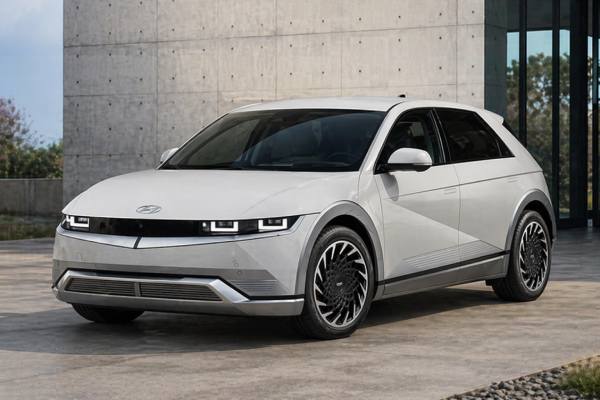
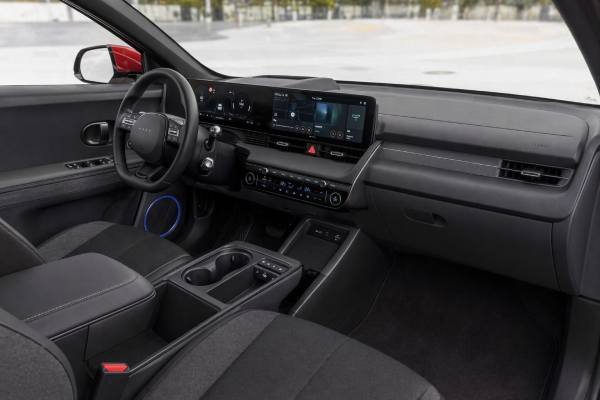
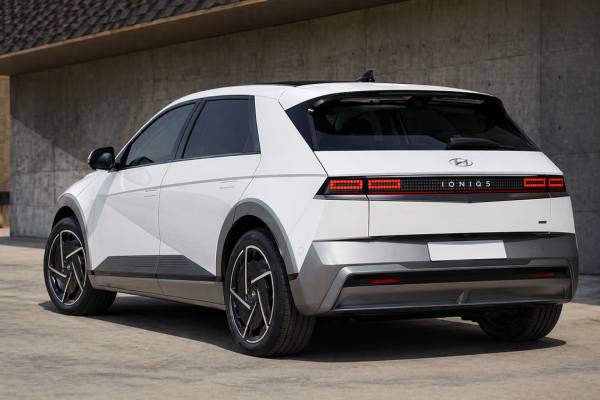
The facelifted Hyundai IONIQ 5 with the 168 kW rear motor is the version that makes the strongest all-round case in the updated lineup. It keeps the simpler single-motor rear-wheel-drive layout, but now pairs it with the facelift car’s larger 84 kWh battery, improved cabin usability, updated infotainment, better cold-weather charging support, and the small but important everyday fixes owners wanted from the original design. That means more range than the 63 kWh facelift car, fewer efficiency penalties than the AWD model, and a calmer ownership profile than many heavy dual-motor rivals.
In practical terms, this is the facelift IONIQ 5 for people who want one EV to do nearly everything: commuting, family duty, regular intercity travel, and occasional longer road trips. It is still not the version to buy purely for performance bragging rights. It is the one to buy for balance. The main caution is that, as with any still-new EV update, campaign history, charging behavior, and software status matter almost as much as mileage.
Core Points
- This is the most balanced facelift IONIQ 5 for many buyers, combining the larger battery with the simpler rear-drive layout.
- Fast DC charging remains a real advantage, especially on longer trips where charging time matters more than peak range claims.
- The facelift brings useful daily improvements such as a rear wiper, revised physical controls, and broader cold-weather charging support.
- Reliability looks promising, but this is still a recent update, so recall completion and software status should be checked carefully.
- Tire rotation is due every 12,000 km, and reduction gear fluid should be checked every 60,000 km.
Section overview
- Hyundai IONIQ 5 Updated Long-Range Profile
- Hyundai IONIQ 5 Specification Sheets
- Hyundai IONIQ 5 Grades and Safety Systems
- Reliability Trends and Recall Checks
- Maintenance Schedule and Buying Strategy
- Road Manners and Power Use
- Rivals, Alternatives, and Value
Hyundai IONIQ 5 Updated Long-Range Profile
Among facelift IONIQ 5 variants, the 168 kW rear-drive car is the one that most clearly turns the model’s design into a mature everyday product. The standard-range facelift still makes sense as a lower-cost entry, and the AWD versions are undeniably quicker, but the long-range rear-drive model is where Hyundai’s updated package feels most complete. It has the larger 84 kWh battery, the stronger 225 hp rear motor, and none of the extra mass and front-axle complexity that come with dual motors. In real ownership terms, that matters more than a simple power figure suggests.
This facelift also needs to be understood as more than a cosmetic refresh. Hyundai did not merely revise the lights and bumpers. It added the rear wiper buyers had been asking for, increased battery capacity over the earlier long-range car, improved the control layout with more physical switchgear for high-use functions, updated the infotainment system, and made battery heating and preconditioning a much more central part of the user experience. Those are the kinds of changes that matter every day, not just on a launch-specification sheet.
A useful point of clarity is the power figure itself. In European trim documents, this long-range rear-drive facelift is commonly listed at 228 PS and 168 kW. In U.S. specifications, the same motor is presented as 225 hp and 168 kW. For practical purposes, this is the same rear motor in different market conventions, not a different tune that changes the ownership verdict. The more important change is the battery. The facelift long-range car moves to the newer 84 kWh pack, which gives it a more convincing long-distance role than the earlier 77.4 kWh car, especially in colder weather or sustained motorway use.
That is really the heart of its appeal. The IONIQ 5 has always been roomy, technically ambitious, and unusually strong on charging performance. What some buyers wanted was a version that felt less compromised on distance without becoming expensive, tyre-hungry, or overly heavy. The facelift long-range rear-drive model is that answer. It is not as forceful off the line as the AWD car, but it is more efficient, easier on consumables, and still plenty quick in everyday use.
The updated range structure also makes this version easier to recommend. In the UK, for example, the 84 kWh rear-drive configuration stretches from Advance through Premium, N Line, Ultimate, and N Line S. That means buyers can choose between efficiency-first 19-inch cars and richer-featured 20-inch versions without changing the core motor and battery combination. That flexibility strengthens the used-market case too. You are not forced into a top trim just to get the powertrain that makes the most sense.
The result is a car that feels better sorted than the original. It still has the same bold design and long-wheelbase packaging, but the facelift version behaves more like a refined production tool than an early statement piece. For many owners, that is exactly what makes it the sweet spot.
Hyundai IONIQ 5 Specification Sheets
Powertrain, battery and efficiency
| Specification | Value |
|---|---|
| Motor type | Permanent-magnet synchronous motor |
| Motor layout | Single rear motor |
| Drive type | Rear-wheel drive |
| Max power | 225 hp (168 kW) |
| Max torque | 350 Nm (258 lb-ft) |
| Battery type | Lithium-ion |
| Battery capacity, usable | 84.0 kWh |
| Battery configuration | 384 cells (32 modules) |
| Battery power output | 277 kW |
| System voltage | 697 V |
| Electrical architecture | 800 V class |
| Thermal management | Liquid-cooled battery and power electronics |
| Heat pump | Standard in UK facelift range |
| Battery heating and preconditioning | Standard in UK facelift range |
| Official efficiency, WLTP | 16.1 to 17.2 kWh/100 km |
| Official range, WLTP | 515 to 570 km (320 to 354 mi) |
| Official range, EPA | 318 mi |
Charging and driveline
| Specification | Value |
|---|---|
| Transmission | Single-speed reduction gear |
| Charging connector (AC) | Type 2 |
| Charging connector (DC) | CCS Combo 2 |
| Charging port location | Right rear quarter |
| Onboard charger | 10.5 kW AC |
| Estimated AC wallbox 10–100% | 7 hr 35 min on 10.5 kW three-phase wallbox |
| Estimated 50 kW DC 10–100% | 1 hr 16 min |
| Estimated 350 kW DC 10–100% | 18 min |
| DC fast-charge peak | 260 kW |
| Vehicle-to-load | Inside V2L available from Premium trim upward in UK range |
Performance, chassis and dimensions
| Specification | Value |
|---|---|
| 0–100 km/h | 7.5 s |
| Top speed | 185 km/h (114 mph) |
| Front suspension | MacPherson strut |
| Rear suspension | Multi-link |
| Steering system | Rack mounted |
| Steering lock-to-lock | 2.67 turns |
| Turning circle | 11.98 m |
| Brake system | Active Hydraulic Booster with regenerative brake, ABS, and ESC |
| Front brakes | 345 mm discs |
| Rear brakes | 345 mm discs |
| Tyres, 19-inch trims | 235/55 R19 |
| Tyres, 20-inch trims | 255/45 R20 |
| Length | 4655 mm (183.3 in) |
| Width | 1890 mm (74.4 in) |
| Height | 1605 mm (63.2 in) |
| Wheelbase | 3000 mm (118.1 in) |
| Kerb weight | 1985 to 2085 kg (4376 to 4597 lb) |
| Payload | 505 to 605 kg (1113 to 1334 lb) |
| GVWR | 2590 kg (5709 lb) |
| Braked towing | 1600 kg (3527 lb) |
| Unbraked towing | 750 kg (1653 lb) |
| Cargo volume, seats up | 520 L |
| Cargo volume, seats down | 1580 L |
Safety and service data
| Specification | Value |
|---|---|
| Euro NCAP | 5 stars; Adult 88%, Child 86%, Vulnerable Road Users 63%, Safety Assist 88% |
| IIHS | Top Safety Pick+ for 2025 IONIQ 5 family |
| IIHS headlight rating | Good on projector-headlight trims; Acceptable on reflector-headlight trims |
| ADAS baseline | FCA, lane keep assist, lane follow assist, highway drive assist, smart cruise control, parking distance warning, intelligent speed limit assist |
| Reduction gear fluid check | Every 60,000 km |
| Brake fluid specification | DOT 4 LV / ISO 4925 Class 6 |
| Wheel nut torque | 108 to 127 Nm (79 to 94 lb-ft) |
Hyundai IONIQ 5 Grades and Safety Systems
For this facelift long-range rear-drive version, the UK structure is the clearest baseline because Hyundai separates the powertrain cleanly across multiple trims. The 84 kWh rear-drive car appears in Advance, Premium, N Line, Ultimate, and N Line S. That is important because the facelift does not force buyers into a luxury trim just to get the big-battery rear-drive setup. It also means the best version for one owner can look very different from the best version for another.
Advance is the quiet value play. It gives you the long-range powertrain, 19-inch wheels, dual 12.3-inch displays, climate control, heated front seats, heated steering wheel, the facelift’s rear wiper, battery heating and preconditioning, and the updated cabin logic that makes the newer car easier to use. For buyers who care most about efficiency and purchase value, Advance is already a serious spec. It is also the trim most closely tied to the best official WLTP range figure, because its 19-inch wheel package keeps energy use lower than the 20-inch versions.
Premium is where the long-range rear-drive IONIQ 5 starts to look like the likely sweet spot. It builds on the strong base car with features that genuinely improve everyday ownership: more advanced driver assistance, Highway Drive Assist 2, blind-spot collision avoidance, smarter lighting, wireless charging, a hands-free tailgate, and interior V2L. It is not just a nicer badge. It is the trim where the facelift’s extra maturity becomes easier to feel in day-to-day use.
N Line changes the character more than the engineering. It adds the sportier body kit, different wheels, distinct cabin trim, and a more aggressive look. It is attractive, but buyers should be honest with themselves. On this model, the visual gain usually comes with a small efficiency and ride penalty, because the big-battery rear-drive car is at its most convincing when it stays on the less aggressive 19-inch setup.
Ultimate and N Line S are the feature-heavy versions. They add the higher-grade interior finishes, camera and parking systems, better seat functions, available digital mirror technology, and the broader convenience and visibility package that helps justify the facelift over cheaper rivals. These are impressive cars, but they are not always the smartest used buy unless their extra equipment genuinely matters to you.
Safety remains one of the IONIQ 5’s core strengths. Euro NCAP’s five-star family result still provides a solid passive-safety baseline, and IIHS gives the facelift-era model family a strong contemporary result with Top Safety Pick+ status for 2025. There is also useful trim detail behind the headlines. IIHS shows that projector-lamp versions earn a better headlight score than reflector-lamp versions, so trim choice affects more than appearance. On dark roads, it changes real usability.
The ADAS package is broad. Depending on trim and market, you will find forward collision avoidance with car, pedestrian, cyclist, and junction functions, adaptive cruise, lane keeping and lane following, blind-spot support, rear cross-traffic coverage, speed-limit assistance, and more advanced highway assistance on upper trims. The practical caveat is repair quality. Windscreen replacements, bumper repairs, radar work, or camera changes should never be treated casually on a car with this much driver-assistance hardware.
Reliability Trends and Recall Checks
Because this facelift long-range rear-drive IONIQ 5 is still a relatively new model, the most honest reliability view is one built on platform history, confirmed service actions, and cautious early patterns rather than on a decade of field data. That is not a weakness. It is simply the right way to judge a new-phase EV.
The helpful starting point is this: the facelift did not arrive on an unproven foundation. Hyundai had already learned a great deal from the original IONIQ 5, especially around charging behavior, battery conditioning, interface design, and customer expectations in winter use. The facelift directly addresses several of those points with standard battery heating and preconditioning in the UK range, a more polished cabin interface, and a generally less experimental feel. That gives the newer long-range rear-drive car a stronger day-one ownership case than the first production run had.
At the same time, buyers should not assume that “facelift” means “immune to campaigns.” The IONIQ 5 remains a sophisticated EV with a large battery, a high-voltage charging system, complex software layers, and extensive ADAS hardware. On any car like that, campaign completion matters. The big ICCU story that shaped discussion around earlier IONIQ 5s centered on 2022–2024 model-year vehicles, not automatically on every facelift VIN. That distinction matters. A facelift buyer should verify open campaigns, but should not lazily assume the new car inherits every older issue in identical form.
The clearer confirmed facelift-era recall item so far is a rear floor wiring-harness campaign affecting certain 2025 U.S.-built vehicles. That issue involved insufficient crimping at rear side-airbag connector terminals, with potential warning-lamp symptoms and possible deployment-signal disruption. For the long-range rear-drive buyer, the lesson is less about panic and more about process. Even on a near-new EV, you still verify recall completion by VIN and dealer record, not by trusting that a new-looking car must already be sorted.
In practical terms, the issue map currently looks like this:
- Common low-severity risks: tyre shoulder wear from pressure or alignment neglect, friction-brake surface corrosion from heavy regen use, and minor trim noises.
- Occasional low-to-medium risks: interrupted AC charging sessions, charge-port wear, flap or seal deterioration, and 12 V battery weakness after repeated short-use or storage patterns.
- Occasional medium risks: incomplete software status leading to poorer-than-expected charging, route planning, or assistance behavior.
- Rare but important risks: unresolved recall items, restraint-system warnings, or wiring and control-unit faults that require dealer-level diagnosis.
Battery health is not the main fear point here. The facelift long-range car uses the newer 84 kWh pack, and there is no broad public pattern suggesting unusual degradation in ordinary use. That does not mean batteries are magic. Frequent high-speed driving, repeated rapid charging, very hot climates, and long periods parked at very high state of charge will still accelerate wear compared with gentler use. But the battery itself is not the weak link most buyers should worry about first.
What matters more is evidence. A seller who can show dealer history, campaign completion, clean charging behavior, and no unexplained warning history is offering a far better car than a cheaper example with vague answers about updates. On this facelift IONIQ 5, software history is part of mechanical history. Treat it that way.
Maintenance Schedule and Buying Strategy
The facelift long-range rear-drive IONIQ 5 is a low-maintenance EV, but not a care-free one. The right ownership approach is simple: fewer service items than an internal-combustion car, but more attention to condition checks, charging hardware, cooling systems, tyre wear, and software status than many buyers expect. That is especially true on a heavy family EV that uses strong regenerative braking and can spend a lot of time rapid charging on longer trips.
A sensible working schedule looks like this:
- Every month:
- Check tyre pressures with the tyres cold.
- Inspect the charge-port flap, pins, and seals for dirt, water, or physical damage.
- Check both coolant reservoirs visually.
- Watch for new warning lights, especially charging, restraint, or ADAS alerts.
- Every 12,000 km or 12 months:
- Rotate tyres.
- Inspect brake pads and disc faces.
- Inspect suspension joints, steering components, and underbody covers.
- Test the 12 V battery.
- Check wheel alignment if steering feel changes or tyre wear becomes uneven.
- Every 24 months:
- Replace the cabin air filter sooner in dusty or polluted use.
- Check brake-fluid condition and moisture level.
- Inspect A/C and heat-pump performance.
- Every 60,000 km:
- Check reduction gear fluid condition.
- Investigate any seepage, hum, or driveline vibration rather than dismissing it as normal EV noise.
- Severe-use schedule:
- Shorten inspection intervals if the car sees repeated DC fast charging, frequent motorway running, towing, extreme temperatures, or regular winter road salt.
This is where many EV owners make avoidable mistakes. They assume low-maintenance means no-maintenance. On the IONIQ 5, that usually shows up in the brakes first. Because the car leans heavily on regeneration, the friction brakes can corrode or become noisy long before they wear out. Cars used only for gentle commuting sometimes look worse underneath than cars used harder but inspected properly. A buyer should therefore inspect brake hardware, not just pad thickness.
The same logic applies to tyres. The long-range rear-drive facelift is more efficient than the AWD model, but it is still a heavy EV with strong instant torque. Tyres wear differently from those on lighter family hatchbacks, and inner-shoulder wear can signal poor alignment or neglected pressures. On this model, a straight-tracking car with evenly worn tyres is a good sign.
For used buying, trim strategy matters. Advance is the rational value pick. Premium is often the smartest all-round choice because it adds more useful tech without forcing you into the most expensive trims. Ultimate and N Line S make sense only if you genuinely want the added comfort, camera, and styling equipment. The best value does not automatically sit at the top of the trim ladder.
A strong inspection checklist should cover five points:
- Battery behavior: compare displayed range with state of charge and ambient temperature, then watch how consistently the car charges.
- Charging hardware: inspect the port, flap, seals, and cable fit, and confirm AC charging does not repeatedly interrupt.
- Cooling and thermal management: check for correct coolant history, quiet fan operation, and proper preconditioning behavior.
- Chassis and body: inspect tyre shoulders, wheel condition, brake surfaces, battery-shield area, and any lift or jack damage.
- Electronics: verify ADAS, cameras, sensors, navigation-based charger routing, and update history.
Long-term durability looks good, but high-cost surprises will most likely come from electronics, charging hardware, tyres, and occasional suspension wear, not from the motor itself. That is a healthy risk profile for a modern EV, provided the car has been kept current.
Road Manners and Power Use
On the road, this facelift long-range rear-drive IONIQ 5 feels like the most natural version of the updated range. It is not meant to be the dramatic one. It is meant to be the easy one. The 168 kW rear motor gives the car enough effortless shove that it never feels underpowered in normal driving, while the rear-drive layout keeps the front axle free of the heaviness and traction management that come with the AWD versions. The official 0–100 km/h time of 7.5 seconds tells you it is usefully quick, but the better way to describe it is calm rather than fast.
Step-off response is smooth and immediate, exactly as an EV should be. Mid-range pull is strong enough for short overtakes and motorway merges, and because the car does not need to manage front and rear torque split, the power delivery feels clean and predictable. There is no multi-speed drama here, just a well-tuned single-speed reduction gear doing its job quietly.
Ride quality is still one of the strongest reasons to buy an IONIQ 5. The long wheelbase smooths broken roads impressively well, and the low-mounted battery helps the body stay composed even though the car is not especially light. On 19-inch wheels, the long-range rear-drive facelift feels especially well judged. It is stable, quiet, and comfortable in a way that suits a family EV. On 20-inch trims, the car still rides well, but you notice more edge to impacts and more road noise, especially on coarse surfaces.
Steering is accurate but not deeply communicative. That is not a flaw unique to Hyundai. It is normal for the class. What matters more is that the car tracks cleanly on the motorway and never feels nervous. Braking is also handled well overall, though the usual EV caveat applies: the transition from regeneration to friction braking is acceptable rather than invisible. Hyundai’s paddle-based regen system remains one of the better setups in the class because it lets drivers tune the feel easily between freer coasting and stronger regeneration.
Real efficiency is good, but like all broad, upright EVs it changes sharply with speed. In mixed use, the long-range rear-drive facelift should comfortably beat the standard-range car on real-world flexibility, not because it is vastly more efficient, but because it has more battery to work with. In town and slower mixed routes, low-to-mid teens kWh/100 km are realistic in mild weather with a gentle driver. Mixed driving often sits around the mid-to-high teens. Fast motorway work is where conditions take over. At around 120 km/h, especially with heating or cold rain, the number can climb into the 20s and the car starts behaving like a normal aerodynamic reality rather than like a brochure promise.
That is why wheel choice matters. The 19-inch long-range rear-drive cars are the clever picks for people who actually cover distance. Hyundai’s own official figures show that the 20-inch trims give away useful WLTP range and efficiency compared with the more restrained versions. In the real world, that gap can become even more obvious in cold weather.
Charging remains the counterweight that keeps the car compelling. Even several years into the IONIQ 5 story, the platform’s rapid DC charging is a major strength. The official fast-charge figure remains impressive, and in practice the car is easier to travel in than many rivals with similar battery size because it spends less time connected. That matters as much as range itself.
Rivals, Alternatives, and Value
The facelifted 168 kW rear-drive IONIQ 5 succeeds because it offers a better balance than many rivals rather than because it dominates any single metric. It is not the cheapest car in the class, nor the most overtly sporty, nor the longest-range EV on every test cycle. What it does extremely well is combine space, charging speed, comfort, and usability into a package that still feels technically ambitious.
Its closest rival remains the Kia EV6 long-range rear-drive model. The two cars share much of their engineering logic, and that means both benefit from strong charging ability and solid real-world flexibility. The difference is in character. The EV6 feels lower, tighter, and more driver-focused. The IONIQ 5 feels more open, more family-oriented, and easier to live with in everyday use. If you care most about cabin atmosphere and practical comfort, the Hyundai has the edge. If you want the slightly sharper, more sporting sibling, the Kia makes that case well.
The Volkswagen ID.4 is a more conventional alternative. It is comfortable, straightforward, and familiar, but it does not match the Hyundai’s charging architecture or its sense of interior space relative to footprint. The IONIQ 5 still feels like the more modern EV-first product. That matters when you are living with it every day rather than just comparing headline range numbers.
The Tesla Model Y remains impossible to ignore in this segment because it still sets a tough benchmark for software integration, efficiency, and charging-network convenience in Tesla-friendly markets. Yet the IONIQ 5 answers with a softer ride, a more distinctive cabin, more conventional day-to-day ergonomics, and a design that many buyers simply prefer. For some owners, the Hyundai’s calmer and more human interior experience matters more than the Tesla’s ecosystem advantages.
The Renault Scenic E-Tech and Skoda Enyaq also deserve a place on the shortlist because both make a sensible family-EV argument. The Renault often feels very cleverly packaged and efficient. The Skoda remains reassuringly practical. But the IONIQ 5 still stands out because it combines fast charging, long-wheelbase packaging, and a genuinely distinctive design without asking you to accept a harsh ride or a cramped rear seat.
That leads to the value question. Within the facelift IONIQ 5 range, the 168 kW rear-drive car is arguably the best buy for people who actually use their EV like a family car. It avoids the standard-range model’s obvious long-trip limitations, but also avoids the AWD model’s extra cost, mass, and tyre appetite. It gives you enough power, enough battery, and the cleaner ownership logic of a single-motor layout.
The verdict is therefore quite clear. This is not the wildest IONIQ 5. It is the most convincing one for a wide range of buyers. If you shop carefully, choose the right trim, and make sure the car’s software and campaign status are fully current, the facelift long-range rear-drive IONIQ 5 is one of the strongest all-round electric family crossovers on sale.
References
- New IONIQ 5 pricing and specification 2024 (Technical Specifications)
- 2025 IONIQ 5 Features and Specifications 2024 (Technical Specifications)
- 9. Maintenance – Hyundai | UK | User Manuals 2022 (Owner’s Manual)
- Euro NCAP | Hyundai IONIQ 5 2021 (Safety Rating)
- 2025 Hyundai Ioniq 5 2025 (Safety Rating)
Disclaimer
This article is for informational purposes only and is not a substitute for professional diagnosis or repair. Specifications, torque values, service intervals, procedures, and equipment can vary by VIN, market, trim, and software level, so always verify details against the official service documentation for the exact vehicle.
If this guide was useful, please consider sharing it on Facebook, X, or another social platform to support our work.