
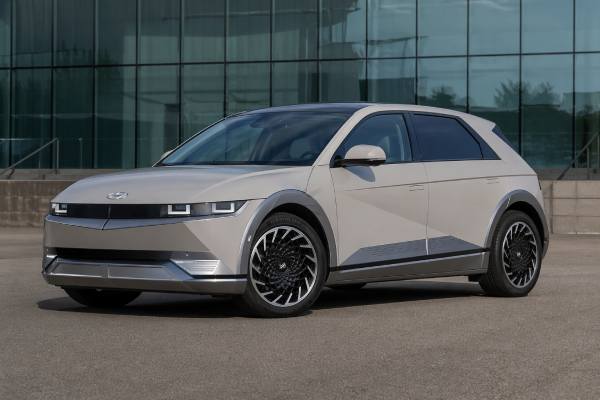
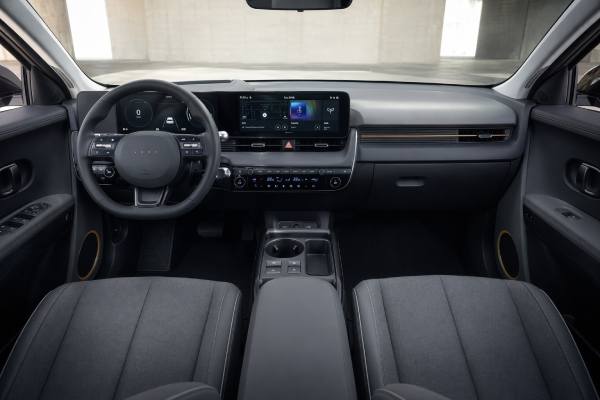
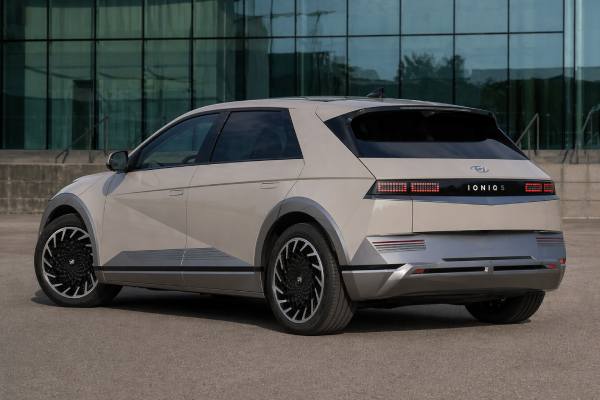
The facelifted Hyundai IONIQ 5 with the 125 kW rear motor is the simplest version of the updated range, but it is not a stripped-back afterthought. It combines the refreshed body, improved cabin controls, rear wiper, updated battery options, and Hyundai’s still-impressive 800-volt charging hardware in the most efficiency-minded package of the lineup. In standard-range 63 kWh form, it is aimed at drivers who want the IONIQ 5’s space, design, and fast-charging capability without paying for power or battery capacity they may never use.
For ownership, this version makes sense when your driving pattern matches it. It is smooth, roomy, easy to charge, and likely the least costly facelift IONIQ 5 to run on tyres and energy. The trade-off is simple: motorway reserve is good rather than generous. Because this facelift arrived recently, long-term fault trends are still developing, so service history, dealer campaigns, and software status matter more than age alone.
Quick Specs and Notes
- Spacious cabin, flat floor, and useful 520 L VDA boot make it a strong family EV.
- The 63 kWh rear-drive setup is the most efficiency-focused facelift IONIQ 5.
- Standard battery heating, pre-conditioning, and heat pump improve cold-weather usability.
- Early-production campaign and software history matter more than mileage at this stage.
- Inspect it every 10,000 km or 12 months, and replace brake fluid every 30,000 km or 24 months.
Contents and shortcuts
- Hyundai IONIQ 5 facelift basics
- Hyundai IONIQ 5 data sheet
- Hyundai IONIQ 5 trims and safety
- Common faults and factory fixes
- Maintenance schedule and buyer tips
- Driving range and road feel
- How this facelift compares
Hyundai IONIQ 5 facelift basics
The facelifted standard-range IONIQ 5 is one of those cars that looks modest on a spec sheet but makes more sense the longer you live with the numbers. Hyundai did not reinvent the NE platform for the facelift. Instead, it improved the parts that owners notice every day: battery sizing, cabin usability, charging preparation, visibility, and trim logic. That matters because the original IONIQ 5 was already one of the most thoughtfully packaged EVs in its class.
In 125 kW rear-drive form, the facelift car keeps the IONIQ 5’s strongest traits. The wheelbase is still a huge 3,000 mm, the floor remains flat, and the cabin still feels more open than most similarly sized electric crossovers. Rear passengers get real legroom, the dashboard looks clean without being barren, and the driving position is more relaxed than sporty. Hyundai also fixed a few annoyances. The rear wiper is a small change, but on a family EV used through winter, it is a meaningful one. The revised center console and more physical climate-related controls also make the cabin easier to use without constant screen tapping.
The standard-range facelift version is best understood as the sensible IONIQ 5, not the cheap one. In UK and European facelift trim structures, the 63 kWh battery is paired with the 170 PS rear-drive powertrain, which translates to 168 hp. That is enough for normal use. It will not deliver the effortless shove of the long-range AWD car, but it is smooth, quiet, and strong enough to make the car feel modern rather than underpowered. Around town and on secondary roads, it suits the IONIQ 5’s relaxed character very well.
Where the compromise shows is on faster intercity work. The facelift battery is larger than the old 58 kWh standard-range pack, but it is still the smaller battery in the facelift lineup. That means the car is at its best as a daily commuter, regional family vehicle, or urban-and-suburban EV that can still take a longer trip when needed. It is not the ideal trim for drivers who spend long hours at 120 km/h in winter.
That does not weaken its overall case. In the right use pattern, this may be the most rational facelift IONIQ 5 of the range. It gives you the updated platform, quick charging, excellent space efficiency, and cleaner operating costs than the heavier long-range versions. For buyers who value practicality and energy efficiency more than outright range bragging rights, it is arguably the facelift IONIQ 5 with the clearest purpose.
Hyundai IONIQ 5 data sheet
Powertrain and battery
| Spec | Value |
|---|---|
| Platform code | NE |
| Powertrain layout | Single-motor rear-wheel-drive battery electric vehicle |
| Motor type | Permanent Magnet Synchronous Motor |
| Motor count and axle | Single rear motor |
| Max power | 168 hp (125 kW) |
| Max torque | 350 Nm (258 lb-ft) |
| Battery chemistry | Lithium-ion |
| Traction battery capacity | 63 kWh usable |
| Battery module layout | 288 cells (24 modules) |
| Pack layout | Underfloor |
| System voltage | 523 V |
| Battery thermal management | Battery heating system, battery pre-conditioning, and heat pump |
| Official efficiency test | WLTP |
| Rated efficiency | 15.6 kWh/100 km |
| Rated range | 440 km (273 mi) WLTP |
Charging and driveline
| Spec | Value |
|---|---|
| Transmission | Single-speed reduction gear |
| Final gear ratio | 4.706 |
| Drive type | RWD |
| Differential type | Open |
| Charging connector (AC) | Type 2 |
| Charging connector (DC) | CCS |
| Charging port location | Right rear quarter |
| Onboard AC charger | 10.5 kW |
| DC fast-charge peak | 260 kW |
| Replenishment time, DC 10–80% | About 18 min on a 350 kW charger |
| Replenishment time, AC 0–100% | About 5 h 50 min on 10.5 kW three-phase |
| Battery preconditioning for DC charging | Standard |
Performance and capability
| Spec | Value |
|---|---|
| 0–100 km/h | 8.5 s |
| Top speed | 185 km/h (114–115 mph) |
| Towing capacity, braked | 750 kg (1,653 lb) |
| Towing capacity, unbraked | 750 kg (1,653 lb) |
| Payload | 510–590 kg (1,124–1,301 lb) |
Chassis, dimensions, and safety
| Spec | Value |
|---|---|
| Front suspension | MacPherson strut |
| Rear suspension | Multi-link |
| Steering type | Rack-mounted electric power steering |
| Steering turns lock-to-lock | 2.67 |
| Turning circle | 11.98 m (39.3 ft) |
| Brake system | Active hydraulic booster with ABS and ESC |
| Front brakes | 325 mm disc |
| Rear brakes | 325 mm disc |
| Wheels and tyres | 235/55 R19 on standard-range UK trims |
| Length | 4,655 mm (183.3 in) |
| Width | 1,890 mm (74.4 in) |
| Height | 1,605 mm (63.2 in) |
| Wheelbase | 3,000 mm (118.1 in) |
| Kerb weight | 1,880–1,960 kg (4,145–4,321 lb) |
| GVWR | 2,470 kg (5,446 lb) |
| Cargo volume | 520 L seats up / 1,580 L seats down (VDA) |
| Euro NCAP rating | 5 stars |
| Euro NCAP scores | Adult 88%, Child 86%, Vulnerable Road Users 63%, Safety Assist 88% |
| IIHS overall status | Top Safety Pick+ for 2025 |
| IIHS headlights | Acceptable on SE-style reflector lamps, Good on projector-lamp trims |
| IIHS LATCH ease of use | Acceptable |
Service fluids and intervals
| Spec | Value |
|---|---|
| Reduction gear fluid specification | HK ATF 65 SP4M-1 |
| Reduction gear fluid capacity | 3.4 + 0.1 L |
| Coolant for electric devices and motor | Approx. 6.4 L |
| Brake fluid specification | DOT 4 |
| Brake fluid interval | Replace every 30,000 km or 24 months |
| Cabin air filter interval | Replace every 10,000 km or 12 months in this maintenance schedule |
| Standard coolant interval | First at 200,000 km or 120 months, then every 40,000 km or 24 months |
| Low conductivity coolant interval | Every 60,000 km or 36 months |
| A/C refrigerant, Type A with heat pump | R-1234yf, 900 ± 25 g |
| A/C refrigerant, Type A without heat pump | R-1234yf, 700 ± 25 g |
| Wheel nut torque | 79–94 lb-ft |
Hyundai IONIQ 5 trims and safety
For this facelift standard-range article, the UK market is the clearest baseline because Hyundai split the revised IONIQ 5 lineup cleanly by battery and trim. In that market, the 63 kWh rear-drive powertrain appears in Advance and Premium form, while the sportier N Line, Ultimate, and N Line S trims move to the larger 84 kWh battery. That is useful for buyers because it means the 168 hp standard-range car is not just one isolated fleet special. It sits in two well-defined trims, each with a different ownership feel.
Advance is the value-focused entry point, but it is not bare. It already includes redesigned 19-inch wheels, heated front seats and steering wheel, dual 12.3-inch displays, wireless Apple CarPlay and Android Auto, OTA capability, rain-sensing wipers, smart regenerative braking, dual-zone climate control, and Hyundai’s main core safety systems. This is the trim that best suits the 63 kWh powertrain if efficiency and ride comfort matter most. The 19-inch wheels help range, reduce road noise, and keep the chassis more compliant than the 20-inch packages fitted to richer trims higher up the range.
Premium adds features that make the car feel materially more upmarket. It brings blind-spot collision avoidance, Highway Drive Assist 2.0, a hands-free tailgate, interior V2L, ambient lighting, better seat trim, additional seat adjustment, and a broader active-safety package. For many used buyers, this is likely the sweet spot, because it preserves the standard-range efficiency profile while adding the equipment that most owners actually notice every day.
The facelift itself also matters. Compared with the earlier IONIQ 5, the revised car got new 19-inch and 20-inch wheel designs, refreshed bumpers, a longer rear spoiler, a rear wiper, revised center-console controls, and standard battery heating, pre-conditioning, and heat pump hardware across the UK range. Those changes are more than cosmetic. The rear wiper improves wet-weather usability, the revised controls reduce touchscreen dependence, and the standard thermal hardware helps both winter charging and winter range.
Safety is still one of the IONIQ 5’s strongest selling points. Euro NCAP’s five-star result remains relevant, with strong adult and child-occupant scores and a good safety-assist showing. In the United States, IIHS ratings for the current model line are even more impressive. The 2025 IONIQ 5 qualifies as a Top Safety Pick+, and the rating applies to 2024–26 models in the updated front and side tests. The facelift also benefits from the structural improvements Hyundai introduced around the B-pillar and door sill from 2024 onward for better side-impact protection.
Trim-specific lighting remains worth checking. IIHS rates SE-style reflector lamps as Acceptable, while projector-lamp versions on richer trims earn Good. That means buyers who do a lot of night driving should not ignore lamp type just because all facelift IONIQ 5s look broadly similar in photos. On a used EV, the right headlight setup can be just as important as a few extra convenience features.
Common faults and factory fixes
The facelift 125 kW rear-drive IONIQ 5 is still too new for a fully settled reliability map. As of April 2026, there is not yet the kind of long field history that lets you call certain failures truly common in the way you can with older models. That matters, because this section needs to be read differently from one covering a four- or five-year-old EV. The right question is not “what always breaks?” but “what is already visible, what has carried over, and what should buyers watch early?”
So far, the facelift car looks more like an evolution than a reset. That is good news, because Hyundai kept the E-GMP platform’s strengths and addressed some usability weaknesses. The biggest current ownership concern is not a mature battery or motor problem pattern. It is early-production quality control, campaign completion, and software status.
One early official campaign in some markets covered rear floor wiring harness connector terminals tied to the rear side-airbag circuit. The practical takeaway is simple: on any early-production 2025 car, check that dealer campaigns were completed and that there are no stored airbag faults or warning lamps. That is the kind of issue that is straightforward when handled early and frustrating when ignored.
Beyond that, the issue map looks more cautious than dramatic:
- Occasional, medium severity: early campaign-related electrical faults, especially where harnesses, connectors, or software logic trigger warning lamps. Symptoms → cause → remedy: airbag light or fault code → connector or crimp issue → dealer inspection, repair, or harness replacement.
- Occasional, medium severity: charging or thermal-management complaints in cold weather. Symptoms → cause → remedy: unexpectedly slow DC charging or heavy winter consumption → battery not properly pre-conditioned, cold-soaked pack, or outdated software → verify battery-preconditioning operation, update software, and test charging under controlled conditions.
- Common, low severity: friction-brake corrosion on lightly used EVs. Symptoms → cause → remedy: rusty discs, light grinding, uneven low-speed brake feel → regen masks brake use → clean and service the brake hardware, and use the friction brakes periodically.
- Occasional, low severity: trim noises, hatch-area rattles, or charge-port flap complaints. Symptoms → cause → remedy: squeaks or rattles over sharp surfaces → clips, trim fit, or minor adjustment needs → dealer trim work or fastener adjustment.
Battery durability remains the calmer part of the picture. There is no strong evidence so far that the facelift standard-range pack is inherently fragile. It is liquid-cooled, has proper thermal management, and benefits from battery heating and pre-conditioning being more consistently equipped than before. The more realistic battery risks are usage-driven: repeated fast motorway driving, frequent high-power DC charging, and long periods parked at very high state of charge in hot weather.
The 12 V battery and low-voltage system are still worth monitoring on any modern EV, even where there is no clear facelift-specific epidemic. If a car shows repeated warning cascades, erratic wake-up behavior, or odd charging interruptions, do not dismiss it as “just software” until the system has been properly diagnosed. On an early-production EV, small electrical behaviors often reveal whether the car has had the right updates and dealer attention.
Maintenance schedule and buyer tips
This facelift IONIQ 5 is a low-maintenance vehicle by normal family-car standards, but low maintenance is not the same as no maintenance. In fact, the standard-range rear-drive car rewards simple, disciplined servicing more than occasional big interventions. Tyres, brakes, battery-conditioning hardware, and fluid correctness matter more than heroic workshop bills.
A practical schedule for normal use looks like this. Every 10,000 km or 12 months, inspect the cooling system, reduction gear area, 12 V battery condition, all electrical systems, brake lines, brake pedal feel, parking brake, brake fluid level, steering rack, linkage and boots, driveshafts, tyre condition and pressures, tyre rotation need, front suspension joints, and chassis bolts and fasteners. Cabin air filter replacement falls at every service in the owner schedule used here, which is more frequent than on some earlier IONIQ 5 schedules and worth following in dusty or urban driving. Brake fluid is inspected yearly and replaced every 30,000 km or 24 months. Standard coolant has a long first interval, while low-conductivity coolant has a shorter one at 60,000 km or 36 months.
For severe use, shorten your expectations. Hyundai specifically calls out repeated short trips, towing, frequent stop-start operation, and repeated high-speed driving as reasons to service more often. In that use profile, reduction gear fluid is treated more seriously, with a listed severe-use replacement interval of 120,000 km. Brake inspection frequency should also increase because EV brake corrosion is driven by use pattern, not just mileage.
The most useful service facts for buyers and owners are these:
- Reduction gear fluid: HK ATF 65 SP4M-1, 3.4 + 0.1 L.
- Electric devices and motor coolant: about 6.4 L.
- Brake fluid: DOT 4.
- Type A air-conditioning system with heat pump: R-1234yf, 900 ± 25 g.
- Wheel nut torque: 79–94 lb-ft.
When buying used, start with charging behavior, not just dashboard range. A healthy standard-range facelift IONIQ 5 should AC-charge consistently, DC-charge cleanly, and show expected taper rather than throwing charge interruptions or unexplained power drops. Then inspect the hardware around the charge port, seals, latch, and any supplied charging cable or V2L adapter.
Next, inspect the vehicle like a chassis. Look for uneven tyre wear, steering off-center, rumbling wheel bearings, or roughness over sharp bumps. The IONIQ 5 is quiet enough that small suspension faults can hide until you listen for them. Check the underside for damaged battery shields, bent jacking points, or scraped undertrays. Then inspect the brakes carefully. On EVs, low pad wear can coexist with neglected discs, sliders, and calipers.
For this specific drivetrain, the trims to seek are usually the 19-inch-wheel cars with complete service history and documented campaign work. Advance is the efficiency buy. Premium is the best balance if you want richer driver assistance and convenience. The version to avoid is not a particular trim, but any early car with vague software history, no proof of dealer campaigns, or an owner who cannot explain how the car has been charged and maintained. Long term, the battery should not be your first fear. The more likely costs are tyres, brakes, trim rectification, and occasional electrical or charging-system diagnosis.
Driving range and road feel
The facelift standard-range IONIQ 5 drives exactly the way this configuration should: cleanly, quietly, and with enough power to feel modern without pretending to be sporty. The 125 kW rear motor gives the car strong step-off response and a very natural mid-range delivery. It is not fast in the way the long-range AWD model is fast, but it is more than adequate for daily traffic, urban junctions, and country-road overtakes.
The chassis still leans toward comfort, which suits this trim well. On 19-inch wheels, ride quality is one of the car’s strongest assets. The long wheelbase helps it settle nicely over poor surfaces, and the low-mounted battery keeps body control tidy without making the car feel stiff. Steering is accurate but not especially chatty. That is not a weakness in this context. It makes the IONIQ 5 easy to place, relaxed at speed, and much less tiring than sharper but more nervous EVs.
Noise levels remain good. Around town, the car is impressively calm. At motorway pace, wind and tyre noise do rise, but the facelift still feels mature rather than coarse. The addition of the rear wiper does not change refinement, but it does improve rainy-day usability in a way owners will notice immediately. Brake feel is also respectable. Hyundai’s regenerative and friction-brake blending is more natural than many older EV systems, though like most EVs it can still feel slightly synthetic right at the end of a stop.
Range is where expectations need to be set properly. The 440 km WLTP figure is useful as a class position marker, not as a guaranteed everyday number. In mild mixed use, this version should be able to feel genuinely efficient and easy to live with, especially if your driving includes town work and secondary roads. In those conditions, consumption in the mid-to-high teens kWh per 100 km is realistic. Once you move to true motorway running, the smaller battery becomes more obvious. A steady 120 km/h will usually pull the usable range down into the high-200 km band in mild weather, with colder conditions pushing it much nearer the low-200s. That still makes the car useful, but it confirms what the spec sheet already suggests: this is the IONIQ 5 for efficient regional driving, not the ideal trim for relentless winter autobahn use.
Charging is the reason the standard-range IONIQ 5 still feels competitive. Home charging on 10.5 or 11 kW AC is easy to manage, and the standard battery heating, heat pump, and pre-conditioning give the facelift car a better cold-weather charging story than some older trims. On a powerful DC charger, 10–80% in about 18 minutes is still an excellent result for a family EV. In daily life, that means the car feels smaller-battery on the road but not necessarily awkward at the charger, which is one of its biggest advantages over rivals with slower rapid-charge behavior.
How this facelift compares
The closest rival remains the Kia EV6 Standard Range, because it shares the same E-GMP foundations and much of the same charging logic. The Kia is lower, looks more overtly sporty, and feels a little tighter from the driver’s seat. The Hyundai counters with the more spacious-feeling cabin, the more relaxed seating position, and a stronger sense of openness. For family buyers who care about rear-seat comfort and interior atmosphere, the IONIQ 5 usually feels like the more thoughtful design.
Against Volkswagen’s ID.4 entry-level or smaller-battery rear-drive versions, the Hyundai’s biggest strengths are charging architecture and cabin character. The IONIQ 5 feels more special inside, charges faster when conditions are right, and has a flatter, more versatile-feeling floor plan. The Volkswagen answer is usually simplicity and a more conservative look. Buyers who want something calmer and less design-led may still prefer the VW, but the Hyundai feels more technically ambitious.
The Tesla Model Y is a different proposition. It usually answers with stronger software, sharper route planning, and in some versions better outright range. The IONIQ 5 replies with a friendlier cabin, more conventional controls, a less austere interior, and on this 19-inch setup a more forgiving ride. In standard-range form, the Hyundai is not the ideal car to take on the Model Y in pure range terms. It wins instead on comfort, layout, and how pleasant it feels to use every day.
The Renault Scenic E-Tech and similar efficient front-drive family EVs also deserve mention. Some of them will beat the IONIQ 5 standard-range car on outright energy use or range efficiency. But Hyundai’s package is still unusually strong in the areas many families care about most: interior room, fast charging, seat comfort, and the sense that the vehicle was designed from the ground up as an EV rather than adapted to one.
That is why this particular facelift IONIQ 5 makes sense despite not being the headline version. It is not the fastest. It is not the longest-range. But it may be the most rational facelift IONIQ 5 for buyers who want design, packaging, and fast-charging ability without carrying the cost and weight of the 84 kWh variants. The key is honesty about use case. If your life is mostly local, suburban, and regional with reliable home or workplace charging, it is a very good match. If you cover long motorway distances every week, the long-range car is the better buy.
In short, the facelift 125 kW rear-drive IONIQ 5 compares well because it does the basics so cleanly. It is roomy, efficient enough, comfortable, easy to charge, and more thoughtfully updated than the light cosmetic facelift might suggest at first glance.
References
- New IONIQ 5 pricing and specification 2024 (Specification Sheet)
- Hyundai Motor UK reveals New IONIQ 5 pricing and specification 2024 (Press Release)
- OWNER’S MANUAL 2025 (Owner’s Manual)
- Euro NCAP | Hyundai IONIQ 5 2021 (Safety Rating)
- 2025 Hyundai Ioniq 5 2025 (Safety Rating)
Disclaimer
This article is for informational purposes only and is not a substitute for professional diagnosis, repair, or a pre-purchase inspection. Specifications, torque values, maintenance intervals, procedures, and equipment vary by VIN, market, trim, software level, and factory options, so always verify against the correct official service documentation for the exact vehicle.
If this guide helped you, please consider sharing it on Facebook, X, or another social platform to support our work.