
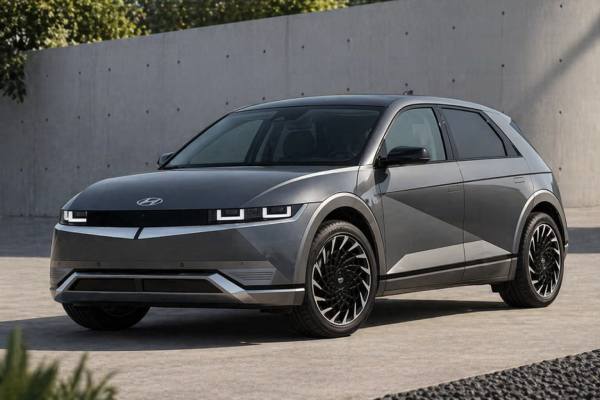
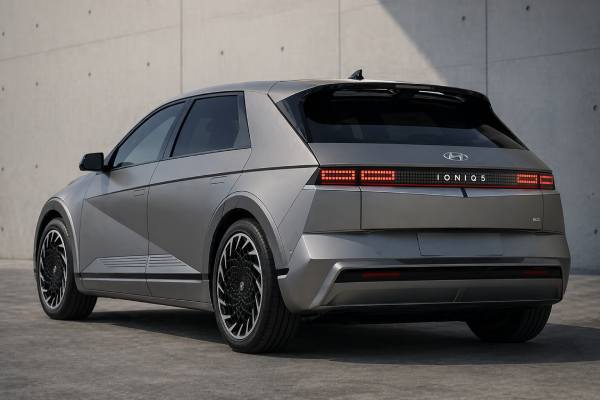
The facelifted Hyundai IONIQ 5 AWD is the version that turns the car from a stylish long-range EV into a genuinely complete all-weather crossover. It uses the larger 84 kWh battery, Hyundai’s 800-volt charging architecture, and a dual-motor HTRAC setup with a front disconnector system that can reduce drag when full AWD is not needed. In plain terms, that means stronger acceleration, better traction in poor weather, and still-excellent charging on a capable DC station. It also keeps the qualities that made the IONIQ 5 easy to recommend in the first place: a roomy cabin, a long wheelbase, very good ride comfort, and calm motorway manners. For owners, the main question is not whether it feels modern enough. It does. The real question is whether the specific car has the right trim, the right software history, and the right service record. Get those details right, and this is one of the most usable fast-charging AWD EVs in its class.
Fast Facts
- Dual-motor AWD gives this facelifted IONIQ 5 strong real-world pace and much better wet-weather traction than the rear-drive version.
- The 84 kWh battery and 800-volt charging system make it a strong long-trip EV, not just a stylish commuter.
- Ride comfort, cabin space, and motorway refinement remain standout strengths.
- Early 2025 VINs still deserve careful recall and charging-history checks before purchase.
- Rotate tyres every 12,000 km or 12 months to control wear on this heavy, torque-rich AWD setup.
What’s inside
- Hyundai IONIQ 5 AWD facelift profile
- Hyundai IONIQ 5 AWD hard data
- Hyundai IONIQ 5 AWD equipment map
- Failure patterns and open actions
- Service plan and smart buying
- AWD pace, range, and manners
- Why this AWD wins or loses
Hyundai IONIQ 5 AWD facelift profile
The facelifted AWD IONIQ 5 is the version for buyers who want the model’s design and charging strengths without compromising on traction or pace. Hyundai kept the same basic E-GMP layout, but the update matters because it adds the larger 84 kWh battery, broader battery-preconditioning support, and a more polished overall spec. In dual-motor form, the car feels meaningfully stronger than the rear-drive version, but it does not lose its core character. It is still calm, spacious, and comfort-led.
What makes this AWD version more interesting than the power figure alone suggests is the way Hyundai has engineered the driveline. The front motor is not there only for headline acceleration. On the facelift car, the HTRAC system uses a disconnector actuator system, which lets the car reduce front-axle drag under lighter loads and re-engage extra traction when conditions demand it. That matters because it helps narrow the efficiency penalty that usually comes with dual-motor EVs. The result is an AWD IONIQ 5 that still makes sense as a daily driver, not just as the “faster one.”
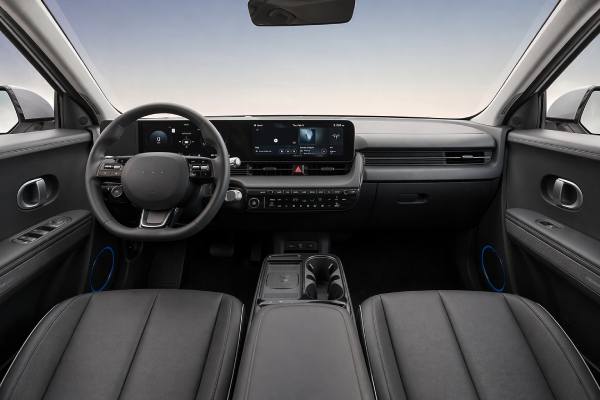
The cabin remains one of the car’s biggest selling points. The long wheelbase creates real rear-seat room, the upright roofline helps the cabin feel airy, and the overall packaging is better than many rivals that look just as large from the outside. It is a practical family EV, but it does not feel utilitarian. The facelift also improves the interior presentation and software polish enough that the car feels less like an early-generation EV experiment and more like a finished product.
This version also suits demanding climates better. Heat pump availability is strong, battery heating with pre-conditioning is easier to find, and AWD naturally makes the car more useful in heavy rain, slush, and snow. For buyers who live outside mild urban areas, that can be worth more than the extra straight-line speed. It is also one of the reasons the facelift AWD deserves to be judged separately from the earlier dual-motor cars.
Ownership, however, still depends on details. This is a high-tech EV with complex charging, cooling, and assistance systems. It is not fragile, but it is not a car to buy on badge appeal and a short test drive alone. Trim, wheel size, software status, recall completion, and evidence of correct servicing all matter. That is especially true for 2025-present cars, because they are still early in their life cycle and some market-specific campaigns are only now becoming visible.
Viewed properly, the facelift AWD IONIQ 5 is not the sporty version of the standard car. It is the fully developed one: faster, more secure in poor weather, still impressively fast to charge, and mature enough to serve as a serious long-distance family EV.
Hyundai IONIQ 5 AWD hard data
Motor, battery, and efficiency
| Spec | Value |
|---|---|
| Motor type | Permanent Magnet Synchronous Motor, front and rear |
| Motor count and axle layout | Dual motor, front axle and rear axle |
| Drive type | AWD |
| AWD system | HTRAC dual motor with Disconnector Actuator System |
| Max power, front motor | 74 kW |
| Max power, rear motor | 165 kW |
| Max power, combined | 239 kW / about 320 hp |
| Max torque, front motor | 255 Nm / 188 lb-ft |
| Max torque, rear motor | 350 Nm / 258 lb-ft |
| Max torque, combined | 605 Nm / 446 lb-ft |
| Battery chemistry | Lithium-ion |
| Battery capacity | 84 kWh |
| Battery output | 277 kW |
| System voltage | 697 V |
| Battery layout | Floor-mounted traction battery |
| Cell count | 384 |
| Pack configuration | 192s2p |
| Thermal management | Liquid-cooled battery and power electronics |
| Heat pump | Yes |
| Official efficiency standard | WLTP |
| Rated efficiency, 19-inch wheels | 16.8 kWh/100 km |
| Rated efficiency, 20-inch wheels | 18.1 kWh/100 km |
| Rated range, 19-inch wheels | up to 546 km / 339 mi |
| Rated range, 20-inch wheels | up to 495 km / 308 mi |
| Real-world highway at 120 km/h | about 26–29 kWh/100 km |
| Real-world highway range at 120 km/h | about 275–310 km / 171–193 mi |
Charging and driveline
| Spec | Value |
|---|---|
| Transmission, front | Single-speed reduction gear |
| Transmission, rear | Single-speed reduction gear |
| Reduction gear ratio, front | 2.263 |
| Reduction gear ratio, rear | 2.263 |
| Final drive ratio | 4.706 |
| Differential and torque distribution | Electronically managed dual-motor AWD |
| AC connector | Type 2 |
| DC connector | CCS Combo 2 |
| Charging port location | Right rear quarter |
| Onboard AC charger | 10.5 kW |
| Max AC acceptance | 10.5–11 kW |
| DC fast-charge peak | about 260–263 kW |
| Typical DC average power, 10–80% | about 196 kW |
| Typical taper onset | about 55–60% SOC |
| DC 10–80% | about 18 min on 350 kW hardware |
| AC 0–100% | about 8 h 45 min at 11 kW |
| AC 10–100% | about 10 h 50 min at 7 kW |
| Charger compatibility | 400 V / 800 V |
| Battery preconditioning for DC charging | Yes, including navigation-linked preconditioning |
| Vehicle-to-load output | 3.6 kW |
Performance and utility
| Spec | Value |
|---|---|
| 0–100 km/h | 5.3 s |
| 0–62 mph | 5.3 s |
| Top speed | 185 km/h / 115 mph |
| Towing capacity, braked | 1,600 kg / 3,527 lb |
| Towing capacity, unbraked | 750 kg / 1,653 lb |
| Maximum tow ball weight | 100 kg / 220 lb |
| Payload | about 595 kg / 1,312 lb |
| Turning circle | 11.98 m / 39.3 ft |
| Roof load limit | 80 kg / 176 lb |
Chassis and dimensions
| Spec | Value |
|---|---|
| Front suspension | MacPherson strut |
| Rear suspension | Multi-link |
| Steering type | Rack-mounted motor-driven power steering |
| Steering turns lock-to-lock | 2.67 |
| Brake booster | Active hydraulic booster with regenerative braking |
| Front brakes | 345 mm x 30 mm ventilated discs |
| Rear brakes | 345 mm x 20 mm ventilated discs |
| Parking brake | Electronic |
| Common wheel and tyre size | 255/45 R20 |
| Ground clearance | 160 mm / 6.3 in |
| Length | 4,655 mm / 183.3 in |
| Width | 1,890 mm / 74.4 in |
| Height | 1,605 mm / 63.2 in |
| Wheelbase | 3,000 mm / 118.1 in |
| Kerb weight | about 2,165–2,190 kg / 4,773–4,828 lb |
| GVWR | 2,685 kg / 5,919 lb |
| Cargo volume, rear | 520 L / 18.4 ft³ |
| Cargo volume, rear seats folded | 1,580 L / 55.8 ft³ |
| Front trunk | 24 L / 0.85 ft³ |
| Front trunk rated load | 10 kg / 22 lb |
Safety and service capacities
| Spec | Value |
|---|---|
| Euro NCAP rating | 5 stars |
| Euro NCAP adult occupant | 88% |
| Euro NCAP child occupant | 86% |
| Euro NCAP vulnerable road users | 63% |
| Euro NCAP safety assist | 88% |
| IIHS award | Top Safety Pick+ |
| IIHS headlight rating | Good or Acceptable, depending on light package |
| ADAS suite | AEB, ACC, lane keep assist, lane follow assist, blind-spot support, rear cross-traffic support, intelligent speed assist |
| Highway assist | Highway Drive Assist 2 on higher trims |
| Over-the-air updates | Yes |
| Battery heating and pre-conditioning | Yes |
| Reduction gear fluid, front | 3.2–3.3 L / 3.4–3.5 US qt |
| Reduction gear fluid, rear | 3.4–3.5 L / 3.6–3.7 US qt |
| Reduction gear fluid spec | HK ATF 65 SP4M-1 |
| Standard coolant, AWD | 6.8 L / 7.2 US qt |
| Low-conductivity coolant, AWD extended type with heat pump | 11.6 L / 12.3 US qt |
| Brake fluid spec | SAE J1704 DOT 4 LV / ISO 4925 Class 6 |
| Wheel nut torque | 108–127 Nm / 79–94 lb-ft |
| High-voltage battery warranty | 8 years / 160,000 km in many markets |
Hyundai IONIQ 5 AWD equipment map
For the facelifted AWD IONIQ 5, trim matters more than many buyers expect because the AWD powertrain is not available across the whole range in every market. In the UK, the dual-motor 84 kWh car sits higher in the line-up, which means most AWD examples already come with richer equipment than the entry rear-drive cars. That helps used value, but it also means buyers need to separate features they genuinely want from features that merely look expensive.
A useful starting point is to think of this AWD version as a higher-spec car first and a powertrain upgrade second. In UK-style specification, AWD is tied to trims such as N Line, Ultimate, and N Line S rather than the lower Advance and Premium grades. That matters because the buyer is almost always getting a 20-inch wheel package, richer lighting, more cameras, and more cabin equipment along with the second motor. The upside is a premium-feeling spec. The downside is a hit to efficiency, tyre cost, and sometimes ride softness.
N Line is usually the volume AWD choice. It gives you the full 325 PS drivetrain, the more assertive exterior treatment, 20-inch wheels, HDA 2.0, FCA 2.0, a heat pump, battery heating with pre-conditioning, and OTA updates. In practical terms, it has the core hardware that matters. Ultimate adds more comfort and convenience, such as a head-up display and access to option packs with surround view, blind-spot view, and smarter parking functions. N Line S is effectively the fully loaded expression of the AWD car, with the richest cabin spec, premium seating functions, and the strongest parking and camera package.
Quick identifiers help when listings are vague. Twenty-inch wheels are common on the AWD facelift. HDA 2.0, blind-spot collision avoidance, heat pump, battery heating with pre-conditioning, and OTA updates are major checkpoints because they directly affect everyday usefulness. On upper trims, features such as digital mirrors, surround-view monitoring, remote smart parking support, front relaxation seats, and rear seat movement can separate a high-spec car from a merely well-photographed one.
Safety equipment is broad. The IONIQ 5’s structure already performed well in Euro NCAP testing, and the current U.S.-market IIHS result is stronger than many buyers realise because it now reflects the updated crash structure used on 2024–2026 vehicles. Hyundai also widened the active-safety story on the facelift. Forward collision avoidance, intelligent speed assistance, lane keep assist, lane follow assist, smart cruise control, rear automatic braking support, and blind-spot assistance are not rare extras here. They are part of the car’s mainstream equipment story.
There are still important trim differences. Lower-spec markets may not get every parking or blind-spot camera function. Higher trims usually add the more advanced parking aids, richer light packages, and better visibility tools. That is significant because IIHS headlight results vary by hardware. Projector-style light packages score better than reflector-based ones, so the exact trim is not only a comfort or appearance issue.
After body repair, bumper removal, windscreen replacement, or suspension work, ADAS calibration matters. This car has enough radar and camera integration that careless repair work can quietly reduce the value of a supposedly top-spec example. On the used market, a proper calibration record can be more useful than one more glossy brochure claim.
Failure patterns and open actions
The facelifted AWD IONIQ 5 is still too new to have a deep long-term failure record in the way a ten-year-old crossover does, so honesty matters here. The early picture is encouraging, but the model should be treated as a modern software-heavy EV, not as a machine whose future can be judged only by motor and battery design. The broad E-GMP hardware is strong. The areas to watch are electrical support systems, charging behavior, and campaign history.
A practical fault map looks like this:
- Common watch items, medium importance: software level, charging behavior, 12 V support, and VIN-specific campaign completion.
- Occasional issues, medium-to-high importance: charge interruptions, charge-port heat complaints, warning-message faults, and low-voltage electrical gremlins.
- Occasional wear items, low-to-medium importance: brake corrosion from heavy regen use, inner-edge tyre wear, suspension knocks, and hatch-area trim noise.
- Rare but potentially expensive: high-voltage module failure, onboard charger replacement, or control-unit replacement after fault tracing.
The first thing to understand is that newer facelift cars are better resolved than the earliest IONIQ 5s, but the platform’s ICCU history still makes a VIN check essential. Even when a specific facelift AWD car is not part of an ICCU campaign, the broader charging-control history of this architecture means software status matters. A car that has missed dealer updates may still drive well on a short test route, yet charge less consistently or show more low-voltage oddities in everyday use.
There is also a specific current recall context to know about. Certain 2025 U.S.-market IONIQ 5 vehicles built in the early production window were recalled for a rear floor wiring harness issue that could affect rear side-airbag deployment if crimp quality was insufficient. That is not a reason to avoid every 2025 facelift car. It is a reminder that very new production can still carry launch-window campaign risk, and that official VIN checking is part of due diligence, not an optional extra.
Charging behavior remains the next most important area. Symptoms to watch are simple: AC charging that starts and stops unexpectedly, obvious thermal throttling at modest ambient temperatures, or repeated charge-port complaints. The likely root causes vary from software logic to port-area hardware and wiring checks. The correct remedy is usually inspection plus updated software or component replacement, not guesswork.
Battery health itself is not the main worry on this facelift. The more realistic concern is consistency rather than raw degradation. A good car should produce believable range for its trim and wheel size, precondition properly, and charge at the rate you would expect when battery temperature is in the right window. Early dramatic capacity loss is not the normal story here.
AWD adds a little extra complexity because the front drive unit and disconnector system introduce more components than the rear-drive car has. There is no strong evidence yet that this has become a widespread weak point on facelift cars, but it is still worth listening for driveline shunt, unusual front-end noises under power, or system warnings related to AWD engagement. A quiet, smooth test drive matters.
The simplest buying rule is this: judge the facelift AWD by documents and behavior, not by appearance alone. Full recall proof, software history, stable charging, and clean underbody condition tell you more than glossy paint and a strong spec sheet.
Service plan and smart buying
The facelift AWD IONIQ 5 does not need heavy routine servicing, but it does need disciplined inspection. It is a large, powerful EV with two drive units, complex cooling circuits, and advanced assistance systems. The smart way to maintain it is to focus on wear, fluid correctness, and electronic health rather than waiting for obvious failure.
A practical service rhythm looks like this:
- At charging stops and at least monthly
- Check standard coolant and low-conductivity coolant levels.
- Check washer fluid.
- Check tyre pressures.
- Watch for steering pull, brake drag, or warning messages.
- Every 12,000 km or 12 months
- Rotate tyres.
- Inspect tyre balance and alignment.
- Inspect brake pads, discs, and caliper freedom.
- Inspect steering and suspension joints.
- Check charge-port latch, seal, and connector condition.
- Test the 12 V battery and verify charging support.
- Review open recalls, service campaigns, and OTA history.
- Every 24,000 km or 24 months
- Replace the cabin air filter, sooner in dusty use.
- Inspect brake fluid condition and renew by time-based schedule where required.
- Recheck underbody shields, battery-cover fixings, and corrosion on exposed hardware.
- Inspect brake corrosion carefully on lightly used cars.
- Every 60,000 km
- Check reduction gear fluid condition.
- Inspect front and rear drive-unit seals and mounts.
- Listen for any emerging reduction-gear or bearing noise.
- Severe-use adjustments
- Shorten checks if the car does frequent DC fast charging, repeated motorway runs, towing, mountain use, or operation in extreme climates.
For decision-making, the useful workshop figures are these: the front reduction gear takes roughly 3.2–3.3 L, the rear about 3.4–3.5 L, the fluid spec is HK ATF 65 SP4M-1, brake fluid is low-viscosity DOT 4, and wheel nut torque is 108–127 Nm. That is enough to tell whether a seller or independent workshop actually knows what they serviced.
The buyer’s checklist should focus on systems that matter on this AWD version. Start with battery and charging behavior. Ask for a battery state-of-health readout, then compare real displayed range with the wheel size and ambient temperature. A healthy facelift AWD car should still feel honest in its range estimates, even if 20-inch cars are clearly less efficient than 19-inch ones.
Next, test both AC and DC charging if possible. Stable AC behavior matters because that is where day-to-day ownership happens. DC behavior matters because this car is only truly special when it can use its fast-charging hardware properly. Check that preconditioning works and that the car can arrive at a charger ready to perform.
Then inspect the chassis. This is a heavy, quick AWD EV, so tyres tell the truth. Uneven inner-edge wear, fresh cheap tyres, or a steering wheel slightly off-centre are all reasons to slow down and inspect further. Brakes also need attention because strong regen can hide friction-system neglect.
For trim choice, the value answer is usually the least flashy AWD spec that still includes the hardware you want. In UK-style thinking, N Line AWD often makes the most sense. Ultimate AWD is better if you want more comfort and camera hardware. N Line S is the luxury option, but it adds cost and keeps the 20-inch efficiency penalty.
Long term, this car should age well if it is serviced correctly. Expect gradual battery aging, normal 12 V battery replacement at some point, recurring tyre costs, and periodic brake cleanup. The bigger ownership risks are neglected software and charging-system history, not the dual-motor layout itself.
AWD pace, range, and manners
On the road, the facelift AWD IONIQ 5 feels exactly like a dual-motor family EV should feel: fast, composed, and surprisingly easygoing. The headline number is the 5.3-second run to 100 km/h, but the real story is how cleanly the car delivers that pace. There is no dramatic gearbox moment, no scramble for traction, and very little fuss. It simply leaves a junction or merges onto a motorway with the kind of effortless shove that makes slower family crossovers feel old-fashioned.
The extra front motor changes more than straight-line performance. In poor weather, the car feels more secure and less reactive than the rear-drive version. Snow mode and the HTRAC strategy make the AWD car easier to place on wet or greasy roads, and under harder acceleration it feels more planted than playful. The front disconnector also helps the system make more sense in normal use, because the car is not dragging a permanently engaged front axle around when it does not need to.
Ride quality stays impressively good. That is important, because many AWD EVs become heavier and more abrupt once the second motor and bigger wheel packages arrive. The IONIQ 5 still absorbs broken surfaces well, and its long wheelbase gives it excellent motorway calm. You do feel the extra mass compared with rear-drive versions, especially in quick direction changes, but the car never feels clumsy. It feels substantial.
Steering is accurate rather than chatty. The car is still comfort-led, not sports-led. Buyers who want sharp steering feel will still prefer a Kia EV6 or Polestar 2. Buyers who want a relaxed, expensive-feeling cruiser will usually prefer the Hyundai. The brake pedal is good rather than perfect. Regen blending is competent, and the paddle-controlled regeneration system remains one of Hyundai’s better ideas, but the final handoff to friction braking is still not the class benchmark.
Real-world efficiency is the main trade-off for choosing AWD. In city use, mild-weather consumption can stay around 17–20 kWh/100 km, which is respectable for a dual-motor crossover of this size. Mixed driving often falls in the 20–23 kWh/100 km range. At 120 km/h, the drag and mass start to show, and 26–29 kWh/100 km is a more realistic expectation. That usually means high-speed range around 275–310 km with a sensible reserve. In milder mixed use, the car is much happier.
Cold weather affects both range and charging. HVAC load, dense air, and low battery temperature still hurt consumption, but the facelift is a better winter EV because preconditioning is easier to live with and the hardware is better integrated. It still is not a miracle. It is simply more consistent than the older car.
Charging remains a core strength. Home charging at 11 kW is easy overnight work. Public DC charging is where the AWD IONIQ 5 still feels special. When the battery is warm enough and the charger is actually delivering power, the car can rip through the 10–80% window in about 18 minutes and sustain a very strong average charge rate. That matters more in real travel than one extra tenth in the 0–100 time.
With passengers or a trailer, the car stays stable, but energy use rises fast. Moderate towing can cut usable range by around a third, sometimes more, and long grades will expose the usual EV penalty. Even so, the car feels structurally and dynamically more confident than many buyers expect.
Why this AWD wins or loses
The facelift AWD IONIQ 5 competes by being broad-shouldered rather than hyper-focused. It is not the most efficient high-speed EV in the class, and it is not the most overtly sporty. What it does exceptionally well is combine meaningful power, genuine family space, rapid charging, and comfort in a way that still feels modern.
The closest rival is the Kia EV6 AWD. The shared platform makes the differences easy to understand. The Kia feels lower, tighter, and more driver-oriented. The Hyundai feels airier, calmer, and more obviously practical. If you want the dual-motor E-GMP formula with a sportier attitude, the EV6 is stronger. If you want the same core engineering with better rear-seat atmosphere and a more relaxed daily feel, the IONIQ 5 is usually the better choice.
Against the Tesla Model Y AWD, the Hyundai gives away some efficiency and software integration, but it wins on cabin character, ride quality for many drivers, and charging sophistication relative to many non-Tesla rivals. The Tesla still feels like the efficiency benchmark. The Hyundai feels like the more human, more comfortable long-trip alternative for buyers who do not want every function buried inside one design philosophy.
Compared with the Volkswagen ID.4 GTX and Skoda Enyaq 85x, the Hyundai feels more technically ambitious. The 800-volt charging system is not a brochure gimmick. It changes travel time. The German alternatives may feel more conventional inside, and some drivers will like that, but they do not usually match the IONIQ 5’s charging pace or sense of cabin openness.
The Polestar 2 AWD is stronger if you care about steering feel, seating position, and a more compact performance-car personality. It is less convincing if rear-seat space, crossover practicality, and family packaging matter. The Hyundai is the smarter choice for people who need the car to do everything rather than just feel sharp.
Where does the IONIQ 5 AWD lose? First, tyre and efficiency costs rise once you choose the dual-motor, 20-inch-wheel version. Second, the chassis is composed but not truly engaging. Third, trim complexity means you have to shop carefully. This is not a car where “top trim” automatically means “best buy.” Some versions make much more sense than others.
Overall, the facelift AWD IONIQ 5 is one of the strongest all-round electric crossovers on sale. It is quick enough, very comfortable, seriously fast to charge, and far more spacious than many rivals that look similar on paper. For buyers who want one EV to handle commuting, winter weather, family use, and long-distance travel without drama, it is very easy to recommend. The key is to buy the right trim, on the right wheels, with a clean software and recall history.
References
- New IONIQ 5 pricing and specification 2024 (Technical Specifications)
- Hyundai IONIQ 5 Specification sheet 2026 (Technical Specifications)
- Euro NCAP | Hyundai IONIQ 5 2021 (Safety Rating)
- 2025 Hyundai Ioniq 5 2025 (Safety Rating)
- 2025 Hyundai IONIQ 5 Vehicle, VIN 2025 (Recall Database)
Disclaimer
This article is for informational purposes only and is not a substitute for professional diagnosis, repair, or official service information. Specifications, torque values, service intervals, procedures, recall status, and equipment can vary by VIN, market, trim, software level, and build date, so always verify details against the correct official service documentation for the exact vehicle.
If this guide was useful, please consider sharing it on Facebook, X, or another platform to support our work.