


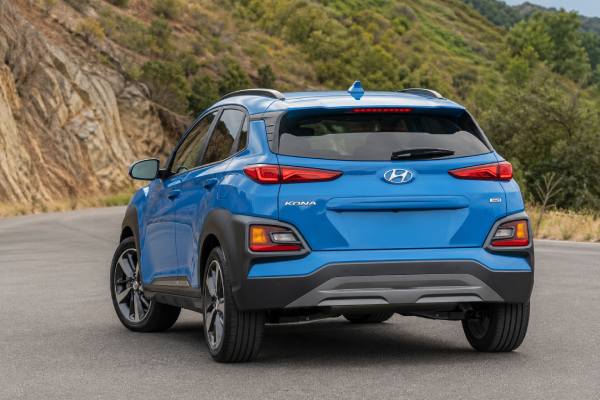
The 2018–2020 Hyundai KONA OS with the 1.6 CRDi 115 hp diesel sits in a useful sweet spot of the small-SUV market. It has the upright driving position and tidy footprint buyers want, but it pairs them with a relatively simple front-wheel-drive manual diesel setup instead of the heavier and costlier dual-clutch or all-wheel-drive versions. That matters in ownership terms. This version tends to be the lightest diesel KONA, the most straightforward to service, and one of the easiest to justify for drivers who cover regular motorway or A-road mileage. It also arrived with a strong safety base, sensible packaging, and a modern Euro 6d-TEMP emissions system. The trade-off is equally clear: this is not the ideal KONA for constant short trips, because its DPF, SCR/AdBlue, and related emissions hardware reward longer runs and regular warm-up cycles. As a used buy, though, a well-maintained example can still make strong practical sense.
At a Glance
- Strong low-rpm torque and relaxed motorway manners for a small crossover.
- Compact exterior size, but still a useful 361 L boot and 170 mm ground clearance.
- Simpler and lighter than the higher-output diesel DCT and AWD versions.
- Best suited to regular longer drives; repeated short urban use can accelerate DPF and emissions-system trouble.
- Official normal-service oil interval is 30,000 km or 24 months, but severe use cuts that to 15,000 km or 12 months.
Navigate this guide
- Hyundai KONA OS diesel profile
- Hyundai KONA OS 115 tech specs
- Hyundai KONA OS trims and safety kit
- Reliability patterns and service actions
- Maintenance plan and buying checks
- On-road feel and economy
- Rivals in the used SUV class
Hyundai KONA OS diesel profile
In the first-generation KONA range, the 1.6 CRDi 115 is the calm, rational option. It does not chase the sportier image of the 1.6 T-GDi petrol, and it avoids the extra mechanical complexity of the 136 hp diesel with 7DCT or HTRAC all-wheel drive. In most European markets, the 115 hp diesel came as a 2WD six-speed manual, which means fewer drivetrain parts, lower kerb weight, and a more predictable used-car risk profile.
That basic layout shapes how the car feels. The KONA OS is short and easy to place in town, yet it does not feel flimsy or under-engineered. The wheelbase is a useful 2,600 mm, the seating position is upright, and visibility is decent by class standards, even if the thick rear pillars still make the reversing camera worthwhile. Boot space is respectable rather than class-leading, but the square opening and split rear seat make it usable for family duty, luggage, or everyday gear.
The diesel engine is the real reason to pick this version. Hyundai’s 1.6 CRDi in 115 hp tune gives the KONA enough mid-range shove to feel effortless at legal cruising speeds. It is not quick in an overtaking-lane sense, but it is easy to drive smoothly. The manual gearbox suits the engine’s torque band well, and on longer drives the car feels more mature than its size suggests. Buyers stepping out of an older compact hatchback often notice that this KONA is less about pace and more about low-effort progress.
There are, however, clear boundaries. The rear seat is acceptable for adults rather than generous. The 18-inch wheel packages fitted to higher trims look better, but they shave some comfort off the car’s basic ride quality. And because this is a late-2010s Euro 6 diesel, ownership discipline matters. Cars that mostly saw short cold starts, school runs, and stop-start city use can become much less appealing than examples that covered regular open-road mileage.
It is also worth keeping the timeline straight. This article covers the pre-facelift 2018–2020 OS KONA. The wider late-2020 update brought styling revisions and a broader technology refresh, so buyers should not assume that every facelift-era convenience or SmartSense feature belongs to the earlier diesel cars discussed here.
Hyundai KONA OS 115 tech specs
Official Hyundai material for this diesel KONA comes from two closely related sources: the original European technical sheet and the UK diesel pricing and specification pack. They agree on the core hardware, dimensions, and packaging, while showing the usual market-by-market differences in homologation figures and trim fit. For owners and buyers, the important takeaway is simple: the 115 hp diesel is a turbocharged 1.6-liter four-cylinder, manual-only, front-wheel-drive setup with modest weight and genuinely strong economy for a small SUV.
| Item | Specification |
|---|---|
| Code | 1.6 CRDi / Smartstream D1.6 |
| Engine layout and cylinders | Inline-4, DOHC, 4 valves per cylinder |
| Bore × stroke | 77.0 × 85.8 mm (3.03 × 3.38 in) |
| Displacement | 1.6 L (1,598 cc) |
| Induction | Turbocharged |
| Fuel system | Common-rail direct injection diesel |
| Compression ratio | 15.9:1 |
| Max power | 115 hp (85 kW) @ 4,000 rpm |
| Max torque | 280 Nm (207 lb-ft) @ 1,500–2,750 rpm |
| Timing drive | Belt system; official schedule calls for inspection at 120,000 km and replacement at 240,000 km |
| Transmission | 6-speed manual |
| Drive type | FWD |
| Differential | Open differential |
| Rated efficiency | 4.2 L/100 km combined (56.0 mpg US / 67.3 mpg UK) |
| Real-world highway @ 120 km/h (75 mph) | Typically about 5.6–6.3 L/100 km in good condition |
| Acceleration | 0–100 km/h (0–62 mph) in 10.7 s |
| Top speed | 183 km/h (114 mph) |
| Item | Specification |
|---|---|
| Suspension (front/rear) | MacPherson strut / coupled torsion beam axle |
| Steering | Motor Driven Power Steering (MDPS); ratio not published in the cited sheets |
| Brakes | Ventilated front discs / solid rear discs; official disc diameters not published in the cited sheets |
| Wheels and tyres | 205/60 R16, 215/55 R17, or 235/45 R18 depending on trim; 215/55 R17 is the common middle-ground setup |
| Ground clearance | 170 mm (6.7 in) |
| Length / width / height | 4,165 / 1,800 / 1,550–1,565 mm (164.0 / 70.9 / 61.0–61.6 in) |
| Wheelbase | 2,600 mm (102.4 in) |
| Turning circle | 10.6 m (34.8 ft) |
| Kerb weight | 1,318 kg (2,906 lb) |
| GVWR | 1,850 kg (4,079 lb) |
| Fuel tank | 50 L (13.21 US gal / 11.00 UK gal) |
| Cargo volume | 361 L / 1,143 L (12.7 / 40.4 ft³), VDA method |
| Towing capacity | 1,250 kg braked / 600 kg unbraked (2,756 / 1,323 lb) |
| Payload | 532 kg (1,173 lb) |
| Item | Specification |
|---|---|
| Engine oil | ACEA C5, C2, or C3; preferred SAE 5W-30 in Europe; 4.4 L (4.65 US qt) |
| Coolant | Ethylene-glycol phosphate coolant with distilled or deionized water; 7.8 L (8.24 US qt) |
| Manual transmission fluid | API GL-4, SAE 70W; 1.7–1.8 L (1.80–1.90 US qt) |
| Differential / transfer case | Not applicable on this 2WD variant |
| Brake and clutch fluid | FMVSS 116 DOT 3 or DOT 4; 0.7–0.8 L (0.74–0.85 US qt) |
| A/C refrigerant | R-1234yf: 450 g (15.87 oz) ± 25 g; some non-European markets list R-134a at 500 g |
| A/C compressor oil | PAG, 120 g (4.23 oz); official source states mass rather than volume |
| Key torque spec | Wheel lug nuts: 107–127 Nm (79–94 lb-ft) |
| Crash rating | Euro NCAP: 5 stars; Adult 87%, Child 85%, Vulnerable Road Users 62%, Safety Assist 60% |
One detail worth noting is the torque figure. Early European launch material listed 275 Nm for some homologation states, while Hyundai’s UK diesel pack and later Smartstream tuning references place the 115 hp manual version at roughly 280 Nm. In real ownership terms, that difference is academic; either way, the engine’s usable low-end pull is one of the car’s main strengths.
Hyundai KONA OS trims and safety kit
For trim analysis, the UK market gives a clear baseline because Hyundai published a clean diesel-specific launch breakdown there. The 115 hp manual 2WD version appeared in SE, Premium, and Premium SE trim. Importantly, these trims did not change the basic mechanical package. If you are shopping specifically for the 115 hp car, the differences are mainly wheel size, comfort equipment, infotainment level, and a few driver-assistance upgrades.
SE is the value point and, in many ways, the smartest ownership trim. It came with 17-inch alloys, manual air conditioning, automatic headlamps, LED daytime running lights, cruise control with speed limiter, heated power mirrors, rear parking sensors, a reversing camera, and a 7-inch infotainment display with DAB, Bluetooth, Apple CarPlay, and Android Auto. For many buyers, that is enough equipment without adding the 18-inch wheel ride penalty.
Premium adds the more upscale look most people associate with the KONA: 18-inch alloys, a chrome grille surround, more exterior brightwork, climate control, rain-sensing wipers, privacy glass, keyless entry and start, an 8-inch navigation touchscreen, wireless charging, and the KRELL audio upgrade. Premium SE adds the luxury-focused items such as leather upholstery, power front seats, seat heating and ventilation, heated steering wheel, front parking sensors, and the head-up display.
Quick visual identifiers are fairly easy. SE cars usually sit on 17-inch wheels and look more understated. Premium and Premium SE cars usually ride on 18-inch wheels and have the more dressed-up grille and body garnish. Inside, the move from the 7-inch screen to the 8-inch navigation unit is also an easy giveaway. HUD almost always means Premium SE.
Safety equipment was strong for the class, but readers should separate standard equipment from available equipment. Hyundai said all UK diesel trims included Driver Attention Alert, Lane Keeping Assist, Hill Start Assist Control, and Downhill Brake Control, while Autonomous Emergency Braking with Pedestrian Recognition was available as an option. Euro NCAP’s five-star result also reflects that the broader KONA platform met a solid baseline in adult, child, and safety-assist performance, and the rating explicitly covered the 1.6 CRDi manual and DCT variants during the annual review period before expiry. That matters because some small-SUV rivals of the era looked well equipped on paper but had weaker active-safety coverage in lower trims.
For family use, the KONA also supports ISOFIX child-seat mounting points on the outer rear seats, and the platform uses front, side, and curtain airbags in markets equipped to the full European safety spec. On the used market, that gives the diesel KONA a reassuringly modern safety baseline even before you start counting trim-level comforts.
Reliability patterns and service actions
The broad reliability story for the KONA 1.6 CRDi 115 is better described as condition-sensitive than fundamentally weak. There is no evidence here of a universally bad engine or a chronically fragile chassis, but there are several areas where maintenance history and usage pattern matter a great deal.
The biggest ownership caveat is the emissions system. Hyundai’s own launch material stresses that this diesel uses SCR with AdBlue, lean NOx trap hardware, and a DPF. That helped it meet Euro 6d-TEMP rules, but it also means the car dislikes endless short cold trips. Cars used mainly for town work can accumulate soot load, interrupt regens, and begin to show the usual modern-diesel warning-light pattern. That does not make the model inherently unreliable; it means the wrong usage profile can create reliability complaints that are really operating-pattern complaints.
There are also documented service actions worth checking by VIN. One official Safety Gate notice covering Kona OS production from 29 March 2018 to 8 October 2021 warns that fuel-filter paper could migrate into and damage the high-pressure pump, with possible engine shut-down risk. A second official alert covering some Kona production from 14 December 2018 to 21 June 2020 states that interrupted oil supply could damage the engine and also affect brake-booster function, increasing braking effort. These are exactly the kinds of factory actions that should be confirmed before purchase, especially on a 2019 or 2020 car.
Outside of those official actions, the likely used-car trouble spots are familiar small-diesel items. DPF loading is common on city cars. AdBlue and NOx-related faults are occasional rather than rare as mileage climbs. Clutch wear depends heavily on driver behavior, and this manual version is often bought by high-mileage users, so check pedal weight, bite point, and low-speed shunt. Suspension wear is usually low-to-medium cost rather than dramatic, but 18-inch wheel cars can feel more brittle over poor surfaces and may go through tyres and alignment adjustments a bit faster.
Severity also varies. DPF and sensor faults are often medium-cost annoyances if caught early. High-pressure fuel-system problems are high-cost. Recall-related oil-supply issues are high-severity because they can escalate from noise to engine damage. Rust is not a defining KONA problem, but as these cars age, it is still worth checking underbody edges, rear suspension mounting points, and any car that lived in a salt-heavy climate.
For pre-purchase screening, ask for a complete service history, proof of recall completion, evidence of correct low-ash oil use, and any invoices relating to fuel system work, DPF cleaning, AdBlue faults, or warning-light diagnosis. Those documents tell you more about a diesel KONA than cosmetic condition ever will.
Maintenance plan and buying checks
The official maintenance schedule for the Smartstream D1.6 is long on paper, but a used-car owner should read it with some judgment. Hyundai lists normal oil service at 30,000 km or 24 months in Europe, with severe use cutting that to 15,000 km or 12 months. On a new fleet car doing long motorway runs, that can be defensible. On an eight-year-old used diesel, a shorter interval is the safer choice.
| Item | Official baseline | Practical used-car view |
|---|---|---|
| Engine oil and filter | 30,000 km or 24 months normal; 15,000 km or 12 months severe use | 15,000–20,000 km or 12 months is a sensible ceiling |
| Air cleaner filter | Inspect at 30,000 km, replace at 60,000 km; sooner in dust | Inspect every service, replace early in dusty or urban use |
| Fuel filter cartridge | Inspect at 30,000 km, replace at 60,000 km | Do not stretch it on an older diesel |
| Timing belt system | Inspect at 120,000 km; replace at 240,000 km | Inspect closely for age, leaks, and noise; do not ignore age-related deterioration |
| Coolant | First replacement at 210,000 km or 10 years, then every 30,000 km or 24 months | Still inspect level, leaks, and hose condition regularly |
| Brake and clutch fluid | Replace every 30,000 km or 24 months | Important on any car with uncertain service history |
| Cabin filter | Replace every 30,000 km or 24 months | Often worth replacing sooner |
| Manual transmission fluid | Inspect on schedule; severe-use replacement at 120,000 km | Replace proactively around 100,000–120,000 km if history is unclear |
| Tyre rotation | Every 12,000 km | Use it as a brake and suspension inspection point |
The fluid and consumable choices matter. This engine wants the correct low-ash ACEA oil family, not just any 5W-30 from a shelf. Coolant should be the specified phosphate-based mix with deionized or distilled water. Manual gearbox oil, brake fluid, and even the air-conditioning charge all have clearly stated specifications in the owner’s manual, so there is little excuse for guessing.
As a buyer’s checklist, focus on cold-start behavior, smoke, idle quality, clutch feel, and signs of interrupted diesel maintenance. Confirm that the engine warms properly, that the cooling fans behave normally, and that no stored emissions faults are hiding behind a recently cleared dashboard. Underneath, inspect for oil seepage, damage to the undertrays, and evidence of curb strikes or poor jacking. Inside, verify camera, infotainment, HUD if fitted, seat heaters or ventilation, and every switch on Premium SE cars, because feature-rich trims cost more to recondition.
The best used examples are usually not the cheapest ones. They are the cars with full history, open-road mileage, correct oil, completed campaign work, and no evidence of chronic short-trip use. That kind of KONA can age quite well. A neglected city diesel can become expensive faster than its modest purchase price suggests.
On-road feel and economy
On the road, the 115 hp diesel KONA is better than its power figure suggests. The reason is not outright speed. It is torque delivery. In ordinary traffic, the engine pulls cleanly from low rpm, so the car rarely feels strained. Around town it steps off without drama, and on rural roads it does its best work between the lower and middle parts of the rev range. You do not buy this version for excitement; you buy it because it feels settled and efficient.
Ride quality depends heavily on wheel size. SE cars on 17-inch wheels are the easier everyday choice and usually the better long-term used buy. Premium and Premium SE cars on 18s look sharper and turn in a touch more crisply, but they also transmit more sharp-edge impact into the cabin. None of the versions is truly sporty. The steering is light, accurate enough, and easy to live with, but not rich in feedback. Straight-line stability is good for a compact crossover, and the 10.6 m turning circle helps it feel genuinely manageable in tight urban spaces.
Noise, vibration, and harshness are acceptable rather than class-leading. At idle, it is unmistakably a small diesel. Once warm and moving, refinement improves. At motorway pace the engine settles down, wind noise is moderate, and the car feels more grown-up than many buyers expect from a B-segment SUV. The manual gearbox matches the engine well, though it is tuned more for smoothness and economy than for a particularly slick or short throw.
Official combined economy sits around 4.2 L/100 km in period NEDC-correlated figures, and that explains why the model appealed to high-mileage users. In real use, a healthy car driven normally tends to land around 5.0–5.8 L/100 km mixed. Steady highway running at 100–120 km/h often produces about 5.6–6.3 L/100 km. Heavy city use, repeated cold starts, winter conditions, or a blocked regeneration pattern can push it higher. The car is efficient, but it is not magic; it still needs the right route profile to show its best side.
With moderate towing or a full passenger and luggage load, expect a noticeable consumption penalty, usually in the 15–25% range depending on speed and terrain. Stability remains decent within its towing limits, but this is still a light front-drive crossover, so it is happiest towing modest loads rather than working like a larger SUV. For most owners, the diesel KONA’s appeal is simpler: easy parking, low fuel use, and enough torque to make daily driving feel effortless.
Rivals in the used SUV class
The used-market rivals that make the most sense here are the Renault Captur 1.5 dCi or Blue dCi, the Peugeot 2008 1.5 BlueHDi, and the Volkswagen T-Roc 1.6 TDI 115. Each answers the same question in a different way.
| Model | Main strength | Main drawback | Why choose the KONA instead |
|---|---|---|---|
| Renault Captur 1.5 dCi | Comfortable, efficient, often good value | Cabin feel and long-term detail durability can be less convincing | The KONA feels more solidly engineered and often carries stronger safety and trim content |
| Peugeot 2008 1.5 BlueHDi | Excellent fuel economy and smart cabin design | Some buyers dislike the driving position and small steering wheel layout | The KONA is more conventional and easier to adapt to immediately |
| Volkswagen T-Roc 1.6 TDI 115 | Refined highway character and strong badge appeal | Usually costs more for similar age and mileage | The KONA often gives better value and a richer equipment list at the same budget |
Against the Captur, the KONA usually wins on solidity and the sense that it was built to take mileage well. Against the 2008, the KONA wins on familiarity. Hyundai did not try to reinvent the driving position or control layout, so buyers moving from older hatchbacks often feel at home faster. Against the T-Roc, the KONA wins on price-to-equipment ratio. The Volkswagen is arguably the more mature long-distance cruiser, but it often carries a stronger resale premium that is not always matched by a proportionate ownership advantage.
The KONA’s real niche is that it blends several virtues instead of dominating one. It is not the roomiest rival, not the most exciting, and not always the absolute quietest. But the 1.6 CRDi 115 gives it a strong all-round used-car identity: compact outside, efficient on longer runs, decent to drive, and available with genuinely useful equipment. That makes it particularly attractive for buyers who want one car to cover commuting, family errands, and regular intercity mileage without stepping into a larger, costlier SUV.
For that reason, the KONA OS diesel makes the most sense for buyers who value balance. Choose it over rivals when you want a sensible small crossover with honest diesel economy, a straightforward manual drivetrain, and a safety and equipment level that still feels current enough years later.
References
- OWNER’S MANUAL 2019 (Owner’s Manual)
- Technical specifications – Hyundai Europe 2018 (Technical Specifications)
- Hyundai Motor UK announces KONA diesel pricing and specifications 2018 (Press Release)
- Hyundai KONA 2017 (Safety Rating)
- Safety Gate: the EU rapid alert system for dangerous non-food products 2022 (Recall Notice)
Disclaimer
This article is provided for informational purposes only and is not a substitute for professional diagnosis, inspection, or repair. Specifications, torque values, maintenance intervals, procedures, and equipment can vary by VIN, market, model year, trim, emissions calibration, and factory options, so always verify details against the correct official service documentation for the exact vehicle.
If this guide was useful, please consider sharing it on Facebook, X, or your preferred platform to support our work.