

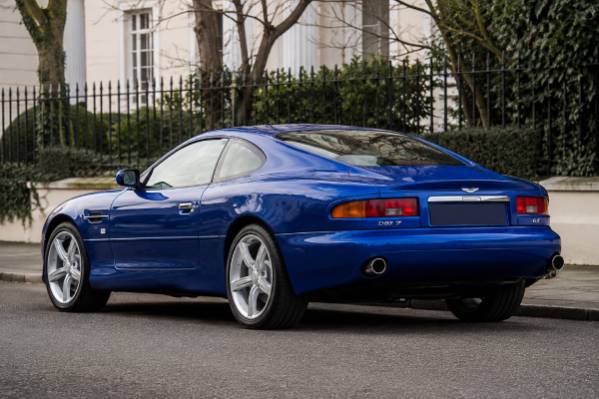
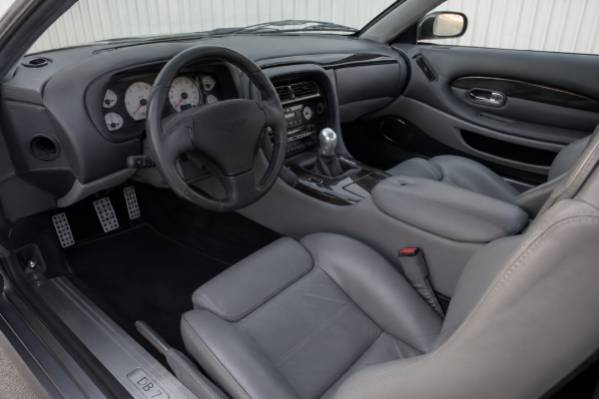
The Aston Martin DB7 GT is the most concentrated factory-developed expression of the regular-production DB7 coupé. Unveiled at the 2002 British Motor Show, it retained the 5.9-litre AM702 V12 but raised output to 435 bhp, paired it exclusively with a six-speed manual gearbox, and added coordinated changes to the clutch, suspension, braking assistance, aerodynamics, and exterior detailing.
That description matters because the GT is often confused with the visually related GTA. The automatic GTA kept the standard Vantage’s 420 bhp tune, whereas the GT combined the higher-output engine with a manual transmission and a much smaller production total of 191 cars. It is therefore both a driver-focused finale and a low-volume collectible.
Age has made condition more important than the badge alone. A genuine, complete GT with correct hardware and an unbroken history can be deeply rewarding; a neglected or incorrectly rebuilt example can consume money at a rate its rarity does not excuse. This guide focuses only on the 2002–2003 DB7 GT and explains how to judge its specifications, engineering, maintenance needs, faults, and buying priorities.
Table of Contents
- What GT means here
- DB7 GT factory specification
- The engine and gearing revisions
- Brakes, suspension, and aero
- Owning a production run of 191
- Authenticity and condition checks
- Buying for driving or collection
What GT means here
The DB7 GT is not merely a trim package or a Vantage with a different grille. Aston Martin used the outgoing DB7 platform to create a more responsive, more stable, and more distinctive manual coupé without abandoning the refinement expected of a grand tourer.
The revised V12 produced 435 bhp, 15 bhp more than the ordinary Vantage. Torque was quoted at 410 lb-ft, or 556 Nm, and the engine drove through a six-speed manual transmission. A twin-plate clutch helped manage the load while reducing the inertia and effort associated with a large single-plate assembly. The final-drive calibration and power delivery made the car feel more immediate than the headline increase alone suggests.
Aston Martin also changed the way the chassis used that performance. Springs, dampers, bushings, steering response, brake assistance, and underbody airflow were reconsidered as a system. The front gained a larger mesh grille and bonnet vents, while the rear received a reshaped boot-lid lip. Unique five-spoke wheels and model-specific badging completed the visual distinction.
The GT’s identity is inseparable from its transmission. Aston Martin built 191 GTs with the six-speed manual. It also produced 112 GTAs, which used the five-speed Touchtronic automatic and the standard 420 bhp Vantage engine tune. Sellers sometimes describe any car with GT-style bodywork as a GT, so the chassis record, factory specification, transmission, engine details, and original invoice must agree.
DB7 GT factory specification
The DB7 GT uses a front-mounted, naturally aspirated V12, rear-wheel drive, and a six-speed manual gearbox. Its important numbers are close to the Vantage’s, but the engine tune, clutch, chassis calibration, and aerodynamic details distinguish the complete package.
| Specification | DB7 GT value | Context |
|---|---|---|
| Engine code | AM702 | Longitudinal front installation |
| Configuration | Naturally aspirated 60-degree V12 | Aluminium alloy block and heads |
| Displacement | 5,935 cc (5.9 L) | 89.0 mm bore × 79.5 mm stroke |
| Valvetrain | Four overhead camshafts, 48 valves | Four valves per cylinder |
| Compression ratio | 10.3:1 | Premium unleaded petrol required |
| Maximum power | 435 bhp (324 kW) | At 6,000 rpm |
| Maximum torque | 556 Nm (410 lb-ft) | At 5,000 rpm |
| Transmission | Six-speed manual | GT specification; not the automatic GTA |
| Clutch | Twin-plate | Model-specific driveline upgrade |
| Drive | Rear-wheel drive | Limited-slip differential |
| Measure | Published figure | Practical interpretation |
|---|---|---|
| 0–60 mph | Approximately 4.9 seconds | Surface, tires, launch, and test method matter |
| Maximum speed | Approximately 185 mph (298 km/h) | Requires suitable conditions and a fully healthy car |
| Fuel tank | Approximately 89 L (23.5 US gal) | Touring range varies sharply with speed |
| Production | 191 GT cars | Separate from 112 automatic GTAs |
| Model years | 2002–2003 | Brief end-of-production run |
| Specification | Value |
|---|---|
| Body style | Two-door 2+2 fixed-head coupé |
| Length | Approximately 4,692 mm (184.7 in) |
| Width | Approximately 1,830 mm (72.0 in), excluding mirrors |
| Height | Approximately 1,243 mm (48.9 in) |
| Wheelbase | 2,591 mm (102.0 in) |
| Published curb weight | Approximately 1,800 kg (3,968 lb) |
| Seating | 2+2, with limited rear accommodation |
| Component | Specification | GT relevance |
|---|---|---|
| Front suspension | Independent double wishbones, coil springs, dampers, anti-roll bar | Recalibrated for the GT |
| Rear suspension | Independent double wishbones with longitudinal links | Revised damping and compliance control |
| Front brakes | 355 mm ventilated discs, four-piston calipers | Enhanced system with Vanquish-derived brake booster |
| Rear brakes | 330 mm ventilated discs, four-piston calipers | Parking brake operates separately |
| Front tires | 245/40 ZR18 | Use a matched high-performance set |
| Rear tires | 265/35 ZR18 | Correct load and speed ratings are essential |
| Wheels | Unique five-spoke GT alloys | Condition and originality influence value |
| Feature | DB7 GT | DB7 GTA |
|---|---|---|
| Maximum power | 435 bhp | 420 bhp |
| Transmission | Six-speed manual | Five-speed Touchtronic automatic |
| Clutch | Twin-plate manual clutch | Torque converter |
| Production | 191 | 112 |
| Core appeal | Driver engagement and higher-output tune | GT appearance with automatic usability |
Published weights and acceleration figures may use different test standards. Optional equipment, market specification, and later wheel changes can also alter an individual car, so factory build data should take priority over a generic chart.
The engine and gearing revisions
The GT’s extra 15 bhp is only one part of its mechanical distinction. Revised engine breathing and calibration, a manual-only driveline, and the twin-plate clutch create a more urgent response while preserving the broad torque delivery that defines the Aston Martin V12.
The 5,935 cc AM702 is an all-aluminium, quad-cam, 48-valve engine. It makes peak torque high in the rev range by modern standards, yet twelve cylinders and nearly six litres provide useful thrust well below 5,000 rpm. In a sound car, the engine should pull evenly from modest speed, harden its note as revs rise, and remain smooth near the top of the range. Hesitation, flashing warning lamps, uneven exhaust pulses, or a fuel smell are faults, not personality.
The higher-output specification depends on the entire induction, exhaust, fueling, ignition, and control system working correctly. A weak coil, worn plug, unmetered air leak, tired sensor, restricted catalyst, or low fuel pressure can erase the advantage and threaten expensive components. Misfire is particularly serious because unburned fuel can overheat a catalyst. A buyer should insist on a cold start, an extended test drive, and a diagnostic scan capable of reading Aston Martin-era systems rather than relying only on a generic code reader.
The six-speed gearbox gives the GT a mechanical involvement the GTA cannot replicate. First gear is purposeful rather than long-legged, the intermediate ratios keep the V12 in its stronger range, and sixth permits relaxed motorway travel. The lever should move cleanly once the oil is warm. Resistance during quick changes, a tendency to baulk, noise that alters with clutch position, or a gear that disengages under load deserves specialist investigation.
The twin-plate clutch is a defining component, not a disposable detail to ignore during negotiation. It can feel more deliberate than a modern light clutch, but engagement should still be progressive. Judder may come from contamination, heat damage, worn mounts, distorted friction surfaces, or poor installation. A very high bite point, slip under full torque, release-bearing noise, or difficulty selecting reverse can indicate an approaching major bill. Ask who replaced the clutch, which parts were used, and whether the flywheel, hydraulics, and rear engine seals were inspected at the same time.
Cooling health sets the boundary for safe performance. The radiator, fans, thermostat, hoses, expansion tank, pressure cap, and coolant quality must all work together. A temperature gauge that wanders in traffic, staining around hose joints, dried residue near the expansion tank, or repeated top-ups must be explained before purchase. Internal hose deterioration and restricted radiators can be difficult to see, which is why preventive replacement history is valuable.
Oil leaks are not automatically catastrophic on an older V12, but location and rate matter. Light dampness is different from oil reaching the exhaust, collecting on undertrays, or requiring frequent replenishment. Undertrays can hide both leaks and careless repairs, so the car needs inspection on a lift. Compression, oil pressure, and leak-down testing are not mandatory for every healthy example, but they are reasonable when the history, running quality, or scan data creates doubt.
Brakes, suspension, and aero
The GT’s chassis changes were designed to make the DB7 more precise at speed without turning it into a harsh track car. Their value is lost when wear, mismatched tires, poor alignment, or substitute parts change the calibration.
Aston Martin revised spring and damper settings, suspension compliance, steering behavior, and braking assistance. The Vanquish-derived booster changed pedal assistance, while the large ventilated discs and four-piston calipers provided the thermal capacity expected of a 185 mph grand tourer. On the road, the pedal should be firm, repeatable, and easy to modulate. Steering should build weight naturally, and the car should take a set through a fast bend rather than floating, stepping sideways, or needing constant correction.
Bush wear often develops gradually enough that an owner adapts to it. Front wishbone joints, anti-roll-bar hardware, rear links, dampers, top mounts, wheel bearings, and steering joints should be assessed as a connected system. Replacing one noisy component can leave the underlying looseness untouched. A specialist who understands DB7 geometry should inspect loaded joints, measure ride height, check damper leakage, and confirm that adjustment points are free rather than seized.
Tires have an outsized influence. The GT’s staggered 18-inch arrangement requires correct front and rear sizes, suitable load and speed ratings, similar tread type, and sensible age. A car on premium but mismatched tires can behave worse than one on a fresh, coherent set from a single range. Inner-shoulder wear may reveal alignment errors or worn joints even when the outside tread looks healthy. Date codes matter because low-mileage collector cars often retain hardened rubber long after tread depth appears acceptable.
Brake inspection should include disc thickness and cracking, pad condition, caliper seals, flexible hoses, fluid age, parking-brake function, and evidence of track overheating. Surface corrosion after storage may clean off, but a pulsing pedal, blue spots, deep lips, or persistent drag requires work. Brake fluid absorbs moisture and should be renewed by time, not merely by mileage.
The aerodynamic changes are functional as well as cosmetic. The larger mesh grille improves the GT’s visual and cooling identity; bonnet vents help manage under-bonnet heat; undertrays guide airflow; and the reshaped rear lip contributes to high-speed balance. Missing panels, damaged fixings, blocked vents, or crude repairs beneath the nose can therefore affect both durability and stability.
The unique wheels should be checked for cracks, welds, excessive runout, corrosion under the finish, and loss of original profile through repeated refurbishment. Correct replacement wheels are scarce, so a cosmetically attractive but structurally compromised set is a significant problem. Confirm that wheel bolts, locking hardware, and center caps are appropriate and that no spacer has been added to mask an incorrect wheel specification.
Owning a production run of 191
Low production makes originality valuable, but it also makes planning essential. The GT shares its fundamental engine and body architecture with other DB7 V12 models, yet its model-specific exterior, interior, clutch, wheel, and chassis pieces can be expensive or slow to source.
The best ownership approach begins with a baseline inspection rather than a cosmetic shopping list. Record fluid condition, charging voltage, battery age, tire dates, brake measurements, cooling-system pressure, fault codes, suspension play, underbody corrosion, and every non-standard item. This establishes what the car needs now and prevents the same problem from being diagnosed repeatedly by different workshops.
Annual mileage alone is a poor maintenance guide. A GT driven 1,000 miles in a year still experiences coolant aging, brake-fluid moisture absorption, battery cycling, seal hardening, corrosion, and tire deterioration. Regular exercise is generally healthier than prolonged inactivity when the engine is warmed fully and the car is kept dry. Very short starts in storage add moisture to the exhaust and crankcase without bringing systems to operating temperature.
A strong battery and correct charging voltage are particularly important. Low voltage can create misleading warnings, upset control modules, and overwork the starter. Use a compatible maintainer during long storage, but do not treat it as a substitute for testing the battery under load. Inspect grounds and terminal security before condemning an electronic module.
Cooling-system service should be evidence-based and preventive. Coolant concentration, hose age, radiator condition, fan operation, and cap sealing matter more than a recently wiped expansion tank. The V12 creates substantial heat, and the GT’s bonnet vents do not compensate for restricted coolant flow. Any history of overheating should prompt careful investigation for consequential damage.
Ignition service is labor-intensive because access is limited. Replacing plugs while leaving marginal coils can result in duplicated labor, yet replacing every component without diagnosis can waste scarce parts. A specialist should interpret misfire counts, plug appearance, coil age, fuel trims, and catalyst efficiency together. Keep invoices detailed enough to show cylinder locations and component brands.
Corrosion prevention deserves equal priority. DB7s can corrode around sills, wheel arches, jacking points, suspension mountings, floor seams, screen surrounds, and hidden cavities. A clean upper body proves little. The GT should be inspected with covers removed where practical, drains cleared, and vulnerable cavities treated only after existing rust is assessed. Wax sprayed over active corrosion is concealment, not repair.
Interior preservation affects both enjoyment and value. Leather can shrink around the dashboard and door tops, headlining adhesive can fail, switchgear coatings can deteriorate, and air-conditioning evaporator repairs can require extensive disassembly. Keep the cabin ventilated and dry, condition leather conservatively, protect it from intense sun, and repair water entry before retrimming anything.
Insurance should reflect agreed value, limited production, and realistic parts availability. Photograph the car, badges, wheels, trim, engine bay, underside, documents, and tool kit. Store a copy of the build record and service file separately. In the event of damage, evidence of the exact specification helps prevent a repairer from using visually similar but incorrect Vantage or GTA components.
Authenticity and condition checks
A DB7 GT should be authenticated before its condition is priced. Matching the visible badges to the advertisement is not enough; the factory build record, vehicle identity, manual driveline, engine specification, trim, and GT-specific hardware must form a consistent story.
Begin with the VIN and build data. Compare the stamped and labeled identifiers with the registration document, service book, invoices, and any factory heritage record. Look for disturbed rivets, inconsistent fonts, fresh sealant, or paint around identity areas. None of those clues alone proves wrongdoing, but unexplained discrepancies require resolution before money changes hands.
Confirm that the car is a GT rather than a GTA or Vantage converted with exterior parts. The six-speed manual and 435 bhp specification are central, but also inspect the grille, bonnet vents, boot-lid lip, wheels, badging, interior details, undertrays, brake assistance, and suspension records. Conversions can be attractive cars, yet they should never be represented or valued as one of the 191 factory GTs.
Paintwork must be read in context. Consistent meter readings are reassuring, but hand-finished low-volume cars can show variation. More important signs include overspray on seals, masking lines, sanding marks, mismatched metallic orientation, missing factory labels, distorted seams, and poor panel alignment. Examine the roof, rear quarters, bonnet edges, door shuts, front structure, boot floor, and spare-wheel area rather than focusing only on glossy outer panels.
The underside is decisive. Inspect front and rear suspension pickups, sills, jacking points, floor edges, radius-arm areas, brake and fuel lines, differential mounts, exhaust supports, and undertray fasteners. Fresh black coating should not prevent probing or photography. Ask what was removed before treatment and request images of the metal underneath.
Start the engine completely cold. Watch for smoke, excessive chain or accessory noise, uneven idle, warning lamps that fail to illuminate during the bulb check, and cooling fans that behave abnormally. After a long drive, restart it hot, scan all accessible modules, inspect for fresh leakage, and verify that the temperature remains stable in traffic. A five-minute demonstration is inadequate.
Use full throttle only after oil and coolant are warm and conditions are safe. The engine should deliver clean, uninterrupted acceleration. The clutch should hold in a high gear without flare, and the gearbox should accept shifts both gently and briskly. Test the differential for chatter, the driveline for clunks, and the propeller-shaft area for vibration under load and on overrun.
Then test the car’s secondary systems. Air conditioning should cool strongly without unpleasant evaporator odor. Windows must drop, rise, and seal correctly. Seat motors, mirrors, locks, instruments, lamps, washers, audio equipment, alarm, and remote functions should all operate. An electrical defect may be minor, but a collection of them often signals low voltage, water ingress, or neglected maintenance.
Buying for driving or collection
The right DB7 GT depends on how it will be used, but mechanical integrity should outrank mileage in every case. A documented, regularly exercised car with sympathetic maintenance is usually a stronger prospect than a dormant, ultra-low-mileage example needing recommissioning throughout.
A driving-focused buyer can accept discreet, reversible improvements when they solve known weaknesses without erasing identity. Modern tires, an improved battery maintainer connection, carefully chosen cooling components, and invisible audio updates may increase usability. Retain every original part and document each change. Avoid suspension kits, exhaust systems, wheels, or engine software that make the car difficult to return to factory form.
A collection-focused buyer should place greater weight on original paint, complete GT equipment, matching trim, factory tools, books, keys, luggage where supplied, period sales material, and a traceable ownership chain. However, originality is not permission to ignore expired tires, contaminated fluids, weak cooling parts, or unsafe brakes. Preservation requires controlled maintenance, not paralysis.
Budget beyond the purchase price. A pre-purchase inspection, transport, registration, insurance, initial fluid service, battery, tires, alignment, air-conditioning work, suspension renewal, or clutch repair can turn an apparently cheaper car into the expensive choice. Keep a separate contingency for model-specific pieces because availability, not labor time, may determine how long a repair takes.
Do not buy solely from photographs. The GT’s weaknesses hide underneath, behind trim, within cooling and ignition systems, and in the difference between genuine and assembled specification. A specialist inspection should include lift access, diagnostic scanning, cold and hot running, road testing, paint assessment, document review, and confirmation of GT identity.
The most desirable example is not automatically the lowest-numbered, brightest, or least driven. It is the car whose condition, provenance, specification, and asking price agree. When those elements align, the DB7 GT delivers something the later Aston Martin range approached differently: the mature DB7 shape, a naturally aspirated V12, a substantial manual gearbox, and a final factory effort to sharpen the platform without stripping away its grand-touring purpose.
Its rarity should encourage careful stewardship, but not prevent use. Warm it thoroughly, exercise every system, keep it dry and correctly serviced, and record what is done. The GT was engineered to make the last regular DB7 coupé more rewarding to drive. Maintaining that coherence is the best way to preserve both its value and its reason for existing.
References
- Aston Martin Media — DB7 GT historic model overview
- Aston Martin — DB7 Vantage heritage and technical background
- Ultimatecarpage — Aston Martin DB7 GT specifications
- Carfolio — 2002 Aston Martin DB7 GT technical data
- Classic & Sports Car — Aston Martin DB7 buyer’s guide
- NHTSA — Vehicle recall lookup
Disclaimer
This article is for general informational purposes and is not a diagnosis, repair instruction, or substitute for inspection by a qualified Aston Martin specialist. Specifications, service intervals, tightening torques, fluids, parts, and procedures can vary by VIN, market, production date, and installed equipment. Verify all work against official workshop information and the records for the individual car. Please share this guide with other DB7 enthusiasts when it may help them preserve or evaluate a GT responsibly.