

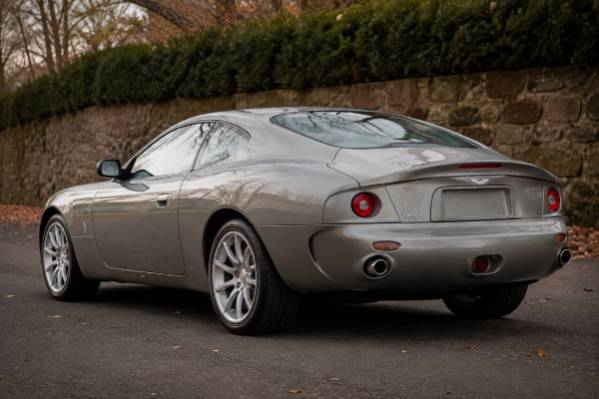
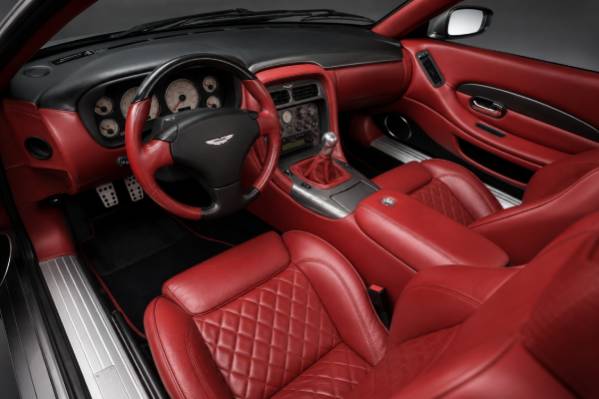
The 2003 Aston Martin DB7 Zagato is a coachbuilt reinterpretation of the V12 DB7 rather than a decorative special edition. Its unique bodyshell, aluminium panels, shortened wheelbase, double-bubble roof, two-seat cabin, 440 bhp AM702 V12, and six-speed manual gearbox changed both the proportions and the way the car responded. Only 99 customer examples were made for the United Kingdom, Europe, and South-East Asia.
The project revived a relationship associated with the DB4 GT Zagato, but it was conceived for a different era. Aston Martin and Zagato had to make a low-volume car that looked handmade while still satisfying modern expectations for drivability, climate control, and finish. The result is shorter, lighter, and visually more assertive than a DB7 Vantage, yet it retains recognizable DB7 mechanical foundations.
Rarity makes the normal DB7 buying hierarchy incomplete. Mechanical condition remains essential, but the originality and repairability of the bespoke body, glass, lamps, wheels, leather, plaques, and trim can matter even more. This guide examines the one-year DB7 Zagato, explains its factory specification, and sets out a preservation-led method for assessing one before purchase.
Table of Contents
- From dinner conversation to 99 cars
- DB7 Zagato technical record
- A different body on a shorter foundation
- How the Zagato changes the drive
- Preserving a coachbuilt DB7
- Reading provenance and repair quality
- Deciding whether a car is right
From dinner conversation to 99 cars
The DB7 Zagato began as a proposal to renew Aston Martin’s collaboration with the Milanese coachbuilder. It became a fully re-bodied, limited-production coupé whose proportions and market position were deliberately separate from the standard DB7 Vantage.
Aston Martin records the project’s origin at the 2001 Pebble Beach Concours d’Elegance, where company chief executive Ulrich Bez and Andrea Zagato discussed creating a third-generation Aston Martin Zagato. Nori Harada developed the preliminary design at Zagato, while an Aston Martin team led by design director Henrik Fisker reviewed the work. The project was announced at the 2002 Geneva Motor Show.
The prototype, named “Georgia,” began as an early left-hand-drive DB7 Vantage Volante. Zagato transformed it in Milan with hand-beaten steel and aluminium bodywork. That prototype established the visual vocabulary: a larger interpretation of the Aston Martin grille, deep side forms, a tightly drawn glasshouse, the signature double-bubble roof, a sculpted rear window, circular rear lamps, and a boot lid that dropped into the tail.
Aston Martin required enough commitments to make production viable. The finished proposal was privately shown in July 2002 at Gieves & Hawkes on Savile Row, and all 99 planned customer cars were spoken for before the later press presentation. Unlike the prototype conversion, the production cars used their own shortened structure and unique body rather than simply receiving new outer panels on an unchanged Volante.
The market restriction is part of the model’s identity. The coupé was sold in the United Kingdom, Europe, and South-East Asia, but not officially homologated for the United States. Cars later brought into the US can be subject to specific import status or mileage restrictions, so a buyer there must verify federal and state documentation independently rather than assuming that an existing title resolves every legal question.
The DB7 Zagato also sits between categories. It is a factory Aston Martin, a Zagato design, a low-volume coachbuilt body, and a modified member of the NPX family. Calling it merely a DB7 with unusual styling misses the structural changes; calling it an unrelated supercar ignores the V12, suspension architecture, electronics, and service needs it shares with the Vantage and GT.
DB7 Zagato technical record
The production DB7 Zagato combines the 5,935 cc AM702 V12 with a six-speed manual transmission and rear-wheel drive. Factory heritage material quotes 440 bhp, 410 lb-ft of torque, a 1740 kg weight, 4.9-second 0–60 mph acceleration, and a 190 mph maximum speed.
| Specification | Value | Model-specific point |
|---|---|---|
| Engine code | AM702 | Front-mounted longitudinally |
| Configuration | Naturally aspirated 60-degree V12 | Aluminium alloy block and cylinder heads |
| Displacement | 5,935 cc (5.9 L) | 89.0 mm bore × 79.5 mm stroke |
| Valvetrain | Four overhead camshafts, 48 valves | Four valves per cylinder |
| Compression ratio | 10.3:1 | Premium unleaded petrol |
| Maximum power | 440 bhp (approximately 324 kW) | At 6,000 rpm |
| Maximum torque | 556 Nm (410 lb-ft) | At 5,000 rpm |
| Gearbox | Six-speed manual | Production coupé specification |
| Drive | Rear-wheel drive | Limited-slip differential |
| Measure | Published figure | Meaning |
|---|---|---|
| 0–60 mph | Approximately 4.9 seconds | Test method and launch conditions vary |
| Maximum speed | Approximately 190 mph (306 km/h) | Factory heritage figure |
| Customer production | 99 cars | Separate from the development prototype |
| Production year | 2003 | Single-year limited series |
| Original markets | UK, Europe, and South-East Asia | Not originally offered in the United States |
| Specification | Value | Comparison point |
|---|---|---|
| Length | 4,481 mm (176.4 in) | Substantially shorter than a DB7 Vantage |
| Width | 1,861 mm (73.3 in) | Bespoke body measurement |
| Height | 1,244 mm (49.0 in) | Low double-bubble roof profile |
| Wheelbase | 2,531 mm (99.6 in) | Shortened relative to the regular DB7 |
| Published weight | Approximately 1,740 kg (3,836 lb) | Lower than a V12 Vantage coupé |
| Seating | Two | Rear area becomes a trimmed luggage shelf |
| Area | Factory feature | Inspection significance |
|---|---|---|
| Roof | Zagato double-bubble profile | Shape, seams, glazing, and headlining must be correct |
| Rear | Sculpted window, single round lamps, drop-down boot lid | All are difficult model-specific pieces |
| Front | Large grille aperture and distinctive bonnet treatment | Check alignment and cooling-air path |
| Wheels | Zagato five-spoke alloy design | Originality and structural condition affect value |
| Interior | Aniline leather, quilted trim, two-seat layout | Color, stitching, shrinkage, and replacement material matter |
| Numbering | Individual production identification | Must agree with build and ownership records |
| Component | Configuration | Service concern |
|---|---|---|
| Front suspension | Independent double wishbones, coil springs, monotube dampers, anti-roll bar | Wear can obscure the shorter chassis’s precision |
| Rear suspension | Independent double wishbones with longitudinal control arms | Bush and mounting condition is critical |
| Steering | Power-assisted rack and pinion | Check leaks, play, assistance, and centering |
| Brakes | Ventilated discs with ABS | Inspect calipers, hoses, discs, and fluid by condition |
| Fuel tank | Approximately 89 L (23.5 US gal) | Age, venting, and hose condition remain relevant |
Power figures are reported differently in some period and later sources because bhp, metric horsepower, rounding, and development-versus-production data are not always separated. The assignment’s 440 hp identification and Aston Martin’s heritage figure define the variant here; an individual car’s factory record remains the best evidence.
A different body on a shorter foundation
The shortened wheelbase and unique shell are the engineering center of the DB7 Zagato. They reduce overhang, remove the regular DB7’s rear seats, and create a more compact mass around the occupants, but they also make accident repair and corrosion control unusually consequential.
The production body is not a collection of readily interchangeable Vantage panels. Its roof, rear structure, doors and openings, lighting arrangement, glazing interfaces, bonnet, wings, grille, bumpers, boot lid, and numerous trim pieces belong to a run of 99 cars. Even where a hidden component began with a DB7-related part, the way it mounts or aligns may differ. Before buying, assume nothing about availability until a specialist has confirmed a part number and source.
The car’s materials require informed repair. Aston Martin describes a unique steel bodyshell, while the prototype and many accounts emphasize aluminium panels in the construction. Dissimilar metals, hand-finished joints, adhesives, sealers, and paint layers must be understood before stripping or welding. A conventional body shop may be excellent at modern collision work yet lack the metal-shaping, corrosion isolation, and record-keeping needed for a coachbuilt Aston Martin.
Proportion changes have dynamic effects. A shorter wheelbase generally makes a car respond more quickly to steering and road inputs. The reduced length and weight help the Zagato feel more compact than the Vantage, while the wide body and large tires preserve substantial grip. That combination can be alert and rewarding on a smooth road, but it also exposes worn dampers, old tires, incorrect ride height, or poor geometry more rapidly.
The two-seat cabin is part of the structural solution. Where the regular DB7 carries nominal rear seats, the Zagato provides a quilted parcel area with luggage restraint. This improves utility for two travelers and visually continues the bespoke leatherwork. It also creates more surfaces that can be damaged by ultraviolet light, moisture, unsecured luggage, or careless detailing.
The roof deserves close examination from outside and inside. Look along both bubbles under diffuse light for ripples, filler settlement, paint distortion, and asymmetry. Inspect the sculpted rear window seal, headlining attachment, screen bonding, drainage paths, and surrounding trim. Water marks on the parcel shelf or boot lining may trace back to a small sealing failure that is difficult to repair without disturbing rare components.
At the rear, the drop-down boot lid and single circular lamps are defining details. Verify uniform gaps, smooth latch operation, correct seals, complete hinges, unbroken lamp lenses, and evidence that the rear panel has not been pulled out after impact. Reproduction or adapted lamps may look acceptable in photographs but weaken originality and can introduce sealing or electrical problems.
Underneath, inspect the shortened structure rather than assuming normal DB7 reference points tell the whole story. Examine sill sections, floor seams, jacking points, suspension pickups, rear control-arm mountings, crossmembers, fuel and brake lines, and every repaired area. Photographs from earlier restorations are especially valuable because finished underseal can hide both excellent work and serious compromise.
How the Zagato changes the drive
The DB7 Zagato feels more immediate than the standard Vantage because it is shorter, lighter, manual-only, and slightly more powerful. Its strongest quality is not a single acceleration number but the unity of compact proportions, naturally aspirated response, mechanical gear selection, and long-distance V12 character.
The AM702 should start promptly from cold, settle without hunting, and build power without hesitation. Twelve-cylinder smoothness can disguise an early misfire, so listen at both exhaust outlets and inspect diagnostic data. A weak ignition coil, tired plug, intake leak, injector problem, or catalyst restriction can create uneven load response before the idle becomes obviously rough.
Heat management remains crucial. The radiator, fans, thermostat, internal and external hoses, expansion tank, cap, and coolant must all be healthy. Watch the temperature during slow traffic after a fast run, not only while cruising. Coolant stains, a sweet smell, fan irregularity, pressure loss, or repeated replenishment warrants investigation. Overheating history should be treated as a major due-diligence issue, not answered with a new cap and reassurance.
The six-speed manual should feel positive rather than delicate. Shift quality changes as the oil warms, but persistent baulking, gear noise, driveline vibration, or movement out of gear is abnormal. Clutch action can be substantial, yet it should engage progressively and hold the engine’s torque in a high gear. Check the hydraulic system, release mechanism, flywheel condition, mounts, and rear seals when clutch work is documented.
The shorter car should track cleanly and respond in one movement. A nervous front end may come from old tires, toe errors, worn bushes, damaged wheels, or previous accident repair. A rear that steers itself over bumps often indicates compliance in links or mountings. Alignment should be performed only after mechanical play and ride height have been corrected; otherwise the printout documents a temporary setting rather than a healthy chassis.
Brake performance must be assessed progressively. The pedal should remain firm through repeated stops, the steering should not pull, and no wheel should remain hot from drag. Low-mileage cars can have corroded disc surfaces, sticky calipers, internally failing hoses, or old fluid despite an immaculate appearance. Inspect the parking brake separately because long storage can seize or misadjust its components.
The Zagato is capable of very high speed, but a road test need not approach it to reveal health. Stability at legal motorway speed, clean acceleration through several gears, accurate steering, quiet wheel bearings, controlled damping, and consistent temperature provide more useful evidence. Any test should respect tire age, road conditions, laws, and the value of the car.
Noise expectations also differ from a regular DB7. The compact body and bespoke trim may transmit more mechanical and road sound, but rattles should still be localized. A tap from a loose rear trim panel is not the same as a metallic knock from a suspension mounting. A specialist familiar with the model can separate handmade character from deterioration without dismissing every sound as normal.
Preserving a coachbuilt DB7
Preservation should prioritize irreplaceable material first, then the systems whose failure can damage it. Dry storage, controlled use, cooling and ignition care, corrosion inspection, and detailed documentation protect more value than repeated cosmetic polishing.
Storage must manage humidity rather than simply hide the car indoors. The building should be dry, ventilated, secure, and free from persistent condensation. Avoid trapping a damp car beneath an impermeable cover. After washing, dry panel gaps, grille recesses, lamp surrounds, wheel centers, boot seals, and the underside before storage. Exercise the air conditioning and electrical equipment during use so faults emerge before a planned journey.
Aniline leather has a natural appearance but can be vulnerable to sunlight, abrasion, liquid staining, and inappropriate chemicals. Test any product on a concealed area, use minimal moisture, and avoid shiny coatings that change the finish. Shrinkage at stitched edges, dashboard contours, parcel-shelf panels, and door tops should be addressed by an experienced trimmer before seams tear.
Paint correction must be conservative. A unique body with potentially varied factory film thickness should not be machine-polished to an arbitrary modern reading. Measure the finish, identify repainted zones, and preserve edges and raised forms. Stone chips can be evidence of honest use; sanding through a curve or removing a hand-finished contour is permanent damage.
Mechanical service should follow time, condition, and verified workshop information. Engine oil, filters, brake fluid, coolant, gearbox lubricant, differential oil, belts, hoses, and fuel-system components all age even when mileage is low. Do not publish or follow a universal interval without checking the individual car’s market, VIN, prior work, and current fluid specification.
Low voltage can generate confusing faults, so battery health, charging output, grounds, and maintainer compatibility deserve routine attention. A battery that starts the engine once may still collapse under diagnostic or cooling-fan load. Investigate the electrical supply before replacing rare control equipment.
The engine bay should remain complete and serviceable, not over-restored. Retain labels, clips, hose routes, shields, fasteners, and finishes. Photograph everything before disassembly. When an original component is rebuilt, keep the invoice, serial information, and removed parts where practical. Future owners need evidence that authenticity was preserved rather than a claim that everything is “correct.”
Model-specific spares are worth sourcing intelligently, but indiscriminate hoarding can produce unusable aged stock. Rubber seals, adhesives, electronic modules, and tires deteriorate in storage. Concentrate on verified trim, lamps, wheel components, switchgear, and documented new-old-stock pieces that are genuinely applicable to the numbered car.
Reading provenance and repair quality
A DB7 Zagato’s file should establish identity, ownership, specification, mileage, service, and every significant body intervention. Provenance is useful only when documents corroborate the physical car.
Start with the VIN, production number, engine details, factory build record, registration history, service book, keys, manuals, and original supply documents. Compare dates and mileage chronologically. A gap is not automatically suspicious, but it should prompt questions about storage, recommissioning, import status, and unrecorded repairs.
Inspect the number plaque and badges without treating them as proof by themselves. Their typeface, fasteners, finish, location, and aging should agree with known original cars. Replacement plaques can be necessary after trim work, but the reason and source should be recorded. The same applies to Zagato emblems, wheel centers, grille mesh, lamps, and interior hardware.
Body repair quality must be judged beyond color match. Use a paint-depth meter as a map, then inspect panel shape, shut lines, seam sealer, welds, adhesive lines, fasteners, glass markings, rubber fit, and hidden surfaces. An expert repair can preserve a car’s integrity; a superficial repair can distort the very forms that make it valuable.
Look for collision clues at the nose, wheel housings, floor, sills, suspension pickups, rear corners, and boot structure. Uneven tire wear or an alignment sheet with adjustment at its limit may be the dynamic trace of old damage. Ask for photographs taken before, during, and after any major work. A reputable restorer normally documents rare-car metalwork extensively.
Corrosion can begin where outer panels appear perfect. Inspect behind liners and trim where access is safe, around window and lamp apertures, under seals, within sill cavities, at floor seams, and near steel-to-aluminium interfaces. Bubbling paint is a late symptom. Moisture readings, borescope images, and specialist familiarity are more useful than tapping random panels.
Mechanical provenance should show recurring care rather than one large invoice prepared for sale. Look for cooling-system maintenance, ignition work, fluid changes, clutch history, brake and suspension renewal, tire dates, air-conditioning repairs, battery management, and diagnostic notes. Verify whether model-specific parts were rebuilt or substituted.
Finally, reconcile the car’s wear with its stated mileage. Inspect steering-wheel texture, pedal pads, seat bolsters, luggage shelf, door pulls, switchgear, stone chips, wheel finish, underside impacts, and tool use. No single item proves mileage, but the pattern should be coherent. A 2,000-mile car can age badly; a 20,000-mile car can remain exceptional when used and maintained carefully.
Deciding whether a car is right
The best DB7 Zagato is the example whose originality, condition, records, legal status, and price support one another. Rarity should increase scrutiny, not pressure a buyer into accepting unanswered questions.
Decide first whether the car will be driven regularly, shown, collected, or used for international events. A driver may tolerate localized paintwork or carefully rebuilt mechanical components if the structure and unique trim are correct. A concours-oriented buyer may demand exceptional originality, but must still budget for invisible age-related service. An imported car may suit either role only after its documentation and operating restrictions are verified.
Commission separate expertise when necessary. A DB7 mechanical specialist can evaluate the V12, driveline, suspension, electronics, and cooling system. A coachwork specialist can assess shape, metal, corrosion, paint, and repairability. An import professional or attorney may be needed for a car outside its original market. One general inspection rarely covers all three areas adequately.
Build the purchase budget around risk rather than asking price alone. Transport, enclosed storage, agreed-value insurance, tires, fluids, cooling work, ignition service, leather preservation, wheel repair, air conditioning, and the search for a single unique lamp can materially change first-year cost. A lower-priced car with compromised bespoke parts may never become the better value.
Avoid unnecessary modification. The DB7 Zagato’s significance comes from the integrated factory and coachbuilder specification. Reversible updates for safety or reliability should be documented and the original pieces retained. Engine tuning, suspension changes, altered bodywork, non-original wheels, or retrimming in generic leather can reduce both coherence and collectability.
Use the car enough to keep it understood. A considered drive brings fluids to temperature, exercises seals, reveals weak batteries or fans, and prevents the ownership experience from becoming purely static. Before any long trip, confirm tire age, pressure, coolant behavior, brake condition, charging voltage, spare-key function, and roadside arrangements suitable for a low-volume Aston Martin.
The DB7 Zagato is compelling because its mechanical and visual changes reinforce one another. It compresses the DB7’s long grand-touring form, removes nominal rear accommodation, adds a stronger V12 tune and manual gearbox, and wraps the result in a body that cannot be mistaken for a series-production coupé. Buying well means protecting that whole object rather than chasing a power figure or production number in isolation.
References
- Aston Martin Media — DB7 Zagato project and production history
- Aston Martin — DB7 Zagato and DB AR1 heritage overview
- Ultimatecarpage — DB7 Vantage Zagato technical specifications
- Classic & Sports Car — Aston Martin DB7 buyer’s guide
- Hagerty UK — Aston Martin DB7 buying guide
- NHTSA — Importing a motor vehicle into the United States
Disclaimer
This article provides general information and is not a mechanical diagnosis, restoration specification, legal opinion, or repair procedure. Vehicle data, service requirements, tightening torques, fluids, components, and approved methods can differ by VIN, market, build detail, and later work. Confirm all technical decisions with official documentation and experienced Aston Martin and coachwork specialists; verify import status with the relevant authority. Please share this guide when it can help another enthusiast evaluate or preserve a DB7 Zagato carefully.