
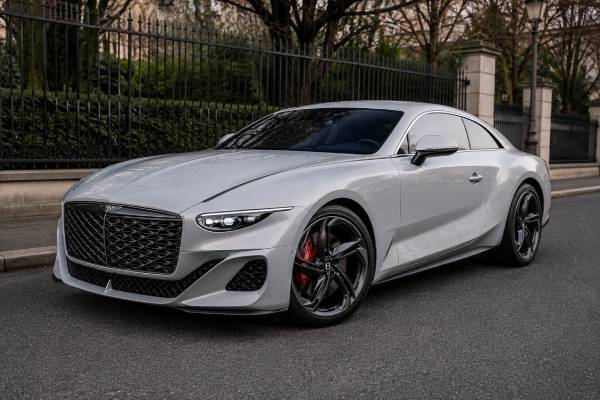
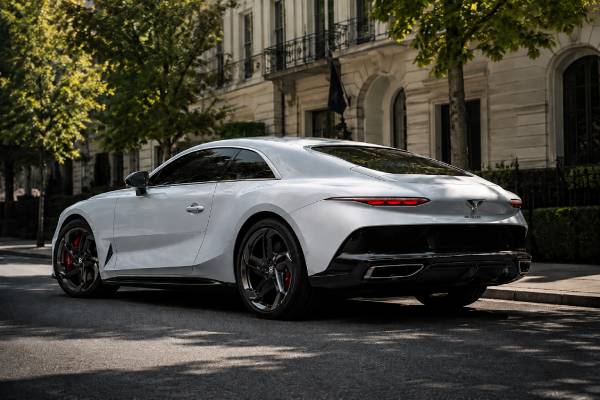
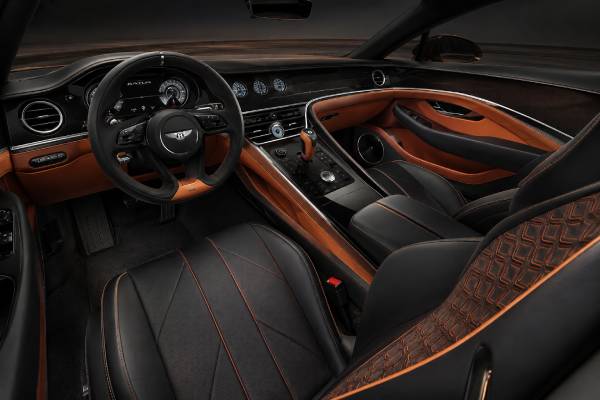
The Bentley Batur is an 18-car Mulliner coupe built around the final and most powerful road-going evolution of Bentley’s 6.0-liter twin-turbo W12. Its 740 hp output matters, but the car’s greater significance is visual: the Batur introduced the low, clean, muscular design language that Bentley intended to carry into its electric era. Beneath the hand-finished body is serious Continental GT Speed-derived hardware, including all-wheel drive, an eight-speed dual-clutch transmission, four-wheel steering, a 48-volt active anti-roll system, an electronic limited-slip differential, and carbon-silicon-carbide brakes. Every customer car was commissioned individually, so paint, trim, materials, and even small control details can differ greatly. That makes buying, maintaining, or valuing one less like assessing a normal production Bentley and more like auditing a modern coachbuilt collectible. This guide explains the exact mechanical package, the design and construction, sensible maintenance priorities, and the documentation that should accompany a genuine, correctly cared-for Batur.
Table of Contents
- Why the Batur Matters
- W12 Performance and Driving Character
- Batur Specifications and Chassis Hardware
- Coachbuilt Design, Materials, and Personalization
- Maintenance for a Low-Volume W12
- Buying: Provenance, Condition, and Due Diligence
- Ownership Fit and Long-Term Outlook
Why the Batur Matters
The Batur matters because it joined three endings and beginnings in one car: the closing chapter of Bentley’s W12, the revival of Mulliner coachbuilding, and the first production use of a new Bentley design language. It is not merely a Continental GT with a rare trim package; more than 800 unique parts were created for the project, and only 18 customer cars were built.
Bentley revealed the Batur in 2022 and began customer production after an extensive development program. Two prototypes covered more than 30,000 km (18,641 miles), including high-speed work, rough-surface durability, and hundreds of hours of solar loading to check materials and finishes. That testing is important context. Coachbuilt does not mean experimental in the casual sense: Bentley engineered the car to meet the standards expected of a modern grand tourer, even though many visible and tactile parts existed in tiny numbers.
The name comes from Lake Batur on the Indonesian island of Bali, continuing Bentley’s use of notable natural locations for Mulliner cars. More important than the name is the stance. The grille sits lower and more upright, the bonnet appears longer, and the cabin is visually pulled rearward. Slim headlamps and a strong shoulder line make the coupe look wider and less formal than the Continental GT donor architecture. The rear treatment is clean, with narrow lamps and an active spoiler rather than a forest of add-on aerodynamic pieces.
Production scarcity alone does not explain the Batur. Each owner worked with Mulliner to select colors, textures, metals, fabrics, veneers, and personalized details. One car can therefore feel restrained and almost traditional, while another can use exposed carbon fiber, bright contrast paint, titanium, natural-fiber composites, or 3D-printed precious-metal controls. For collectors, that creates two simultaneous values: the value of the model as one of 18 and the value of a particular commission as a one-off design object.
The Batur also marked a technical peak. Bentley’s W12 had already powered cars capable of immense speed with quiet effort, but the Batur received revised induction, turbocharging, intercooling, and calibration to reach 750 PS, equivalent to 740 bhp. It arrived near the end of W12 production, giving the model historical weight that an ordinary limited edition rarely has.
W12 Performance and Driving Character
The Batur’s defining dynamic quality is effortless force rather than nervous supercar drama. Its 1,000 Nm (738 lb-ft) of torque, full-time all-wheel drive, and fast dual-clutch gearbox allow it to gain speed with startling ease while retaining the calm, insulated character expected of a Bentley grand tourer.
The W12 is arranged as four banks of three cylinders in a compact “W” layout. That packaging gives twelve-cylinder smoothness in a shorter engine than a conventional V12, helping Bentley fit a large-capacity engine and all-wheel-drive system ahead of the passenger cell. Two turbochargers provide the broad torque plateau needed to move a substantial luxury coupe without constant downshifts.
For the Batur, Bentley did more than increase boost in software. The final specification used a revised intake system, upgraded turbochargers, new intercoolers, and fresh engine calibration. A full titanium exhaust reduced mass and gave the car a more distinct voice, while 3D-printed titanium finishers turned a normally hidden functional component into part of the commission.
The eight-speed dual-clutch transmission is central to the car’s dual nature. In relaxed driving it can shift with little interruption, keeping the engine in its deep torque band. Under hard acceleration, it delivers the direct, rapid changes expected of a high-performance coupe. Owners should not judge it by the behavior of a conventional torque-converter automatic: very low-speed clutch engagement can feel more mechanical, especially during tight parking maneuvers or on an incline. Smooth adaptation and correct software matter more than chasing an artificial “slush” that the design was never intended to provide.
Chassis systems work together rather than acting as isolated gadgets. Four-wheel steering turns the rear wheels opposite the fronts at lower speeds to improve agility and in the same direction at higher speeds to add stability. The 48-volt active anti-roll system can resist body roll in corners but relax its response over uneven roads. An electronic limited-slip rear differential and torque vectoring help distribute drive, while all-wheel drive gives the Batur dependable traction when the surface is cool or wet.
The result is a car that can carry huge speed without demanding constant corrections. It should feel settled on a fast road, precise for its size, and unusually resistant to roll. That does not make it light. The Batur’s character depends on managing mass with powerful hardware, not disguising it as a small sports car. Steering inputs should be measured, braking zones respected, and tire temperature considered before using full performance.
Carbon-silicon-carbide discs are another major part of the experience. The 440 mm front discs use ten-piston calipers, while the 410 mm rear discs use four-piston calipers. They offer exceptional heat capacity and reduce unsprung mass compared with similarly capable iron brakes. At low temperature they may feel different from ordinary steel brakes, and replacement cost can be extreme. A buyer should assess disc condition through an authorized specialist rather than relying only on appearance or an odometer reading.
Published performance places the Batur at 3.4 seconds from 0–100 km/h (0–62 mph), under 3.3 seconds from 0–60 mph, and 337 km/h (209 mph) at the top end. Those figures describe capability, not the way most examples will be used. The more revealing measure is how little effort the car needs for a motorway pass or a climb: torque arrives early, the gearbox responds quickly, and the body remains composed.
Batur Specifications and Chassis Hardware
The Batur is a gasoline-only ICE coupe with a 6.0-liter twin-turbo W12, an eight-speed dual-clutch transmission, and active all-wheel drive. Its technical foundation is related to the Continental GT Speed, but the powertrain, exhaust, chassis calibration, body, and much of the cabin were developed specifically for this 18-car Mulliner series.
| Specification | Value | Notes |
|---|---|---|
| Powertrain type | Gasoline ICE | No hybrid drive system |
| Engine | 6.0-liter twin-turbo W12 | Revised intake, turbochargers, intercoolers, and calibration |
| Displacement | 5,950 cc (363.1 cu in) | Factory W12 displacement |
| Maximum output | 750 PS / 740 bhp (552 kW) | Final production specification |
| Maximum torque | 1,000 Nm (738 lb-ft) | Factory figure |
| Exhaust | Full titanium system | 3D-printed titanium finishers |
| Specification | Value | Configuration |
|---|---|---|
| Transmission | 8-speed dual-clutch | Automatic operation with manual selection |
| Drive type | Active all-wheel drive | Performance-oriented torque distribution |
| Rear differential | Electronic limited-slip differential | Works with torque-vectoring control |
| Steering | Four-wheel steering | Rear-steer direction changes with speed |
| Measure | Value | Condition |
|---|---|---|
| 0–60 mph | Under 3.3 seconds | Published model specification |
| 0–100 km/h | 3.4 seconds | Published model specification |
| Maximum speed | 337 km/h (209 mph) | Published model specification |
| Maximum torque output | 1,000 Nm (738 lb-ft) | Supports high-gear acceleration |
| System | Specification | Purpose |
|---|---|---|
| Suspension control | Speed-tuned air suspension | Balances body control and touring comfort |
| Roll control | 48-volt active anti-roll system | Actively resists cornering roll |
| Front brakes | 440 mm carbon-silicon-carbide discs, 10-piston calipers | High thermal capacity |
| Rear brakes | 410 mm carbon-silicon-carbide discs, 4-piston calipers | Matched high-performance system |
| Driver-adjustable modes | Bentley, Sport, Comfort, and Custom | Changes powertrain and chassis response |
| Specification | Value | Notes |
|---|---|---|
| Body style | 2-door fixed-roof coupe | Two-seat Mulliner coachbuilt model |
| Wheel diameter | 22 in | Bespoke Batur wheel design |
| Front tires | 275/35 ZR22 | Staggered performance fitment |
| Rear tires | 315/30 ZR22 | Wider rear fitment |
| Customer production | 18 cars | All allocated before production |
| Unique components | More than 800 | Developed for the Batur program |
| Typical build time | About four months per car | Hand assembly and individual commissioning |
Fuel-economy and emissions figures are deliberately omitted here. A tiny coachbuilt series can be registered under different market procedures, and a value borrowed from a related Continental GT would not be an exact Batur figure. For ownership planning, fuel quality, low annual use, storage, and the condition of the fuel system are more useful than a theoretical consumption number.
Coachbuilt Design, Materials, and Personalization
No two Batur commissions need look or feel alike, so “standard specification” describes the engineering more reliably than the visible car. The body shape is fixed, but paint, brightware, carbon treatments, upholstery, embroidery, veneers, metals, and small controls could be developed around an owner’s brief.
Mulliner’s coachbuilding process begins with proportion and surface, not decoration. The Batur’s long bonnet, rearward cabin, and broad rear haunches create a different visual center of gravity from the Continental GT. A low grille and slim lamps reduce the sense of height, while the continuous line running from the bonnet toward the rear gives the body a deliberate forward motion even when parked.
Aerodynamic features are integrated into that form. The front splitter, side treatment, underbody management, rear diffuser, and active rear spoiler contribute to stability without making the car look like a track special. That restraint suits the Batur’s purpose: it is a high-speed road coupe, not a homologation racer.
Inside, familiar Bentley architecture is transformed through detail. The fascia can combine traditional veneers with newer materials, while the ventilation controls, drive-mode selector, and organ stops can be produced in titanium or 3D-printed 18-carat gold. Natural-fiber composite made with flax offered an alternative to conventional carbon fiber in selected areas. Leather could be joined by lower-impact textiles, including material made using a coffee-roasting by-product.
These choices affect care. Polished metal, satin metal, open-pore wood, gloss lacquer, natural-fiber composite, leather, Alcantara-like textiles, and exposed carbon do not respond to the same cleaner. The commission specification should be treated as the car’s material-care map. A generic detailer who assumes every dark panel is plastic or every matte surface can be polished risks irreversible damage.
Color is equally important. Mulliner could match a customer sample or create layered effects that are hard to repair invisibly. A small stone chip on a common production color may be straightforward; the same chip on a multi-stage bespoke finish may require test panels, archived formulas, and a specialist approved to work with the exact paint system. Owners should preserve paint labels, sample plaques, commissioning renders, and correspondence rather than viewing them as presentation extras.
The cabin’s low-volume parts deserve careful use. A 3D-printed precious-metal control is functional, but it is also a numbered or traceable crafted object. Rings, watches, and abrasive cleaning cloths can mark soft finishes. Likewise, bespoke embroidery and contrast piping should be protected from dye transfer and harsh solvents. Preventive habits are more valuable than aggressive restoration.
Maintenance for a Low-Volume W12
The correct maintenance strategy is time-based, VIN-specific, and preventive, even when the car covers very few miles. A Batur should be serviced through an authorized Bentley or Mulliner-capable facility with access to the car’s build data, current diagnostic software, and the exact procedures for its unique components.
A low odometer does not stop fluids from absorbing moisture, seals from aging, batteries from discharging, or tires from developing flat spots. Long periods of display can be harder on a complex grand tourer than regular, properly warmed use. The goal is not simply to keep mileage low; it is to keep every system exercised without subjecting the car to short, cold cycles.
Engine and fuel-system care
The W12 should reach full operating temperature during use, not idle indefinitely in storage. A meaningful drive allows oil temperature to stabilize, moves the turbocharger wastegates through their range, circulates transmission and differential fluids, and dries moisture from the exhaust. Repeated starts followed by a few minutes of idling can contaminate oil and drain the battery without delivering those benefits.
Use fuel of the octane grade specified for the market and avoid leaving an ethanol-containing blend in the tank for very long storage. Storage practice should follow Bentley guidance and local fuel chemistry; adding an unapproved treatment merely because a car is valuable is not sensible. Record when fuel was added and rotate it through normal driving.
Watch for coolant odor, dried residue around hose joints, unusual fan operation, or a change in warm idle. The W12’s tightly packaged cooling and forced-induction systems make early diagnosis preferable to waiting for a warning. After a spirited drive, allow the car to complete its normal temperature-management cycle rather than switching off immediately after a high-load stop.
Battery, electronics, and software
A compatible maintainer is essential when the car is parked. The Batur carries numerous control modules, powered conveniences, alarm functions, and networked chassis systems. Low voltage can create misleading warning messages or interrupt calibrations. The maintainer connection, settings, and ventilation conditions should follow the owner documentation; do not improvise directly at hidden terminals.
Before and after long storage, test every major function: seat and steering adjustment, climate control, cameras, parking sensors, active spoiler, lighting, infotainment, keyless entry, and drive-mode selection. Record software campaigns and diagnostic reports with the service history. On a car this rare, an unexplained warning should be captured before it is cleared.
Tires, brakes, and chassis
The Batur’s tires are structural performance components. Check pressure cold, inspect inner shoulders as well as visible outer tread, and record manufacturing dates. A tire can have full tread but be unsuitable because of age, sidewall damage, storage deformation, or repeated low-pressure operation. Replacement should preserve the exact approved size, speed rating, load rating, and matched axle specification.
Carbon-silicon-carbide brakes require specialist assessment. Surface appearance alone does not reveal remaining service life. Ask for measured wear data and inspection of calipers, pads, hoses, and mounting hardware. Avoid wheel cleaners that can attack caliper finishes or contaminate friction surfaces.
Air suspension, four-wheel steering, active anti-roll control, and the electronic differential should operate silently and without warning messages. Uneven ride height after parking, knocking, fluid residue, steering that does not self-center normally, or repeated chassis alerts deserve immediate diagnosis. Because the systems interact, replacing a part without correct calibration can leave the car technically mobile but dynamically wrong.
Body and cabin preservation
Wash using methods suited to the commission’s paint, brightware, exposed carbon, and satin surfaces. Protective film may be valuable, but installation should account for unusual panel edges, sensors, and finishes. Keep a record of film brand, pattern, installation date, and any paint correction completed beforehand.
Store the car dry, clean, and ventilated, away from rapid temperature swings. Control humidity rather than sealing moisture beneath a cover. Use only a breathable, paint-safe cover that fits around the Batur’s body and active aerodynamic elements. Leather should be cleaned gently and kept away from direct heat; open-pore veneers should not be saturated or polished like lacquered wood.
A strong ownership file should include dated service invoices, diagnostic printouts, tire records, battery replacements, paint and film documentation, transport records, and photographs before and after any work. That file is part of the car’s condition, not an administrative afterthought.
Buying: Provenance, Condition, and Due Diligence
Buying a Batur is primarily an exercise in verifying identity, commission integrity, and care history. Because there are only 18 customer cars and each is individually specified, a normal used-car checklist is necessary but not sufficient.
Begin with provenance. Confirm the VIN through Bentley, match it to the numbered Batur identity, and obtain the original commission documents. The ideal file includes specification sheets, design renders, material samples or presentation items, factory correspondence, delivery records, invoices, manuals, keys, accessories, and any bespoke luggage supplied with the car. Missing pieces may be replaceable in function but not in historical value.
Next, establish whether the car remains as commissioned. Reversible protective film is different from repainting, changing a unique trim panel, refinishing precious-metal controls, or replacing bespoke upholstery with a near match. Any deviation should be documented with the reason, date, photographs, and the identity of the workshop. An authorized repair can still be excellent, but secrecy damages confidence.
Inspect in five layers:
- Identity and records: VIN, build number, commission specification, delivery market, ownership chain, service history, recall status, keys, and accessories.
- Body and finish: paint-depth readings interpreted for the actual material, panel-edge condition, carbon or natural-fiber surfaces, glass, lamps, active spoiler, underbody, and evidence of transport damage.
- Mechanical systems: cold start, fluid condition, cooling behavior, transmission adaptation, differential operation, steering, suspension height, brake measurements, tire age, and alignment.
- Electronics: complete diagnostic scan, battery history, software campaigns, warning history, camera and sensor operation, infotainment, climate control, and all commissioned convenience features.
- Road behavior: straight tracking, smooth low-speed clutch engagement, consistent boost, clean shifts, stable braking, correct drive-mode changes, and absence of chassis noise.
Do not rely on mileage as a summary of condition. A 500-mile car moved repeatedly when cold, stored on underinflated tires, and allowed to discharge may need more work than a 3,000-mile car exercised and serviced properly. Equally, a car used hard on circuits or high-speed events can look pristine while carrying brake, tire, and heat-cycle wear.
The pre-purchase inspection should involve both an authorized Bentley facility and, when needed, an independent specialist in paint, composites, or collector-car provenance. The buyer should authorize diagnostic scans and measurement, not only a visual report. Because replacement coachbuilt parts may require remanufacture rather than shelf supply, small defects can have large time and cost consequences.
Market value will be shaped by more than sequence number. Color and material taste, public history, right- or left-hand drive, tax status, regional registration, condition, completeness, and the quality of the original commission all matter. A celebrated show car may attract one buyer and deter another who prefers privacy. The best purchase is the example whose specification, history, and intended use align—not automatically the lowest-mileage or loudest-colored car.
Ownership Fit and Long-Term Outlook
The Batur best suits an owner willing to preserve a one-off commission while still using the machinery enough to keep it healthy. It is a poor match for someone seeking anonymous supercar convenience, easy parts substitution, or a simple cost-per-mile calculation.
As a driving object, it offers a rare combination: the force and smoothness of Bentley’s ultimate W12, modern active-chassis control, genuine long-distance comfort, and a body that does not resemble a normal production coupe. As a collectible, it sits at a meaningful point in company history, immediately before Bentley ended W12 manufacture and before the design language it previewed spread to later models.
Scarcity can support desirability, but it does not eliminate ownership risk. Bespoke body panels, special finishes, low-volume controls, carbon-silicon-carbide brakes, and complex chassis electronics can turn a minor incident into a long repair. Insurance should therefore recognize agreed value, specialist transport, the correct repair network, and the cost of recreating unique components. Storage and security should be planned with equal care.
The healthiest long-term approach is disciplined rather than theatrical. Drive the car on suitable roads, warm it fully, avoid unnecessary short cycles, service it by time and condition, keep the battery supported, document every intervention, and preserve all commission materials. Use transport when road conditions or logistics create avoidable exposure, but do not assume motionless display is preservation.
There is no meaningful fleet-wide reliability pattern for 18 individually built cars. Claims that the Batur has a specific “common fault” should be treated cautiously unless supported by factory information or multiple documented cases. The sensible baseline is the known complexity of the W12 Continental platform, combined with the additional responsibility of coachbuilt body and interior parts.
For the right custodian, those demands are part of the appeal. The Batur is not simply a final-power-output statistic. It is a hand-finished record of Bentley at the moment its most famous modern engine reached its peak and its next design era began.
References
- Batur 2026
- Mulliner Coachbuilt | Mulliner | Bentley Motors 2026
- History and Heritage 2026
- 2024 Bentley Batur First Drive Review: The Ultimate Grand Tourer? 2023
- Service and maintenance 2026
- Recalls 2026
Disclaimer
This article is for informational purposes only and is not a substitute for professional diagnosis or repair. Specifications, torque values, service intervals, and procedures can differ by VIN, market, and equipment; verify every technical decision against the car’s official Bentley service documentation. Please share this guide on Facebook, X/Twitter, or your preferred platform if it helped you.