
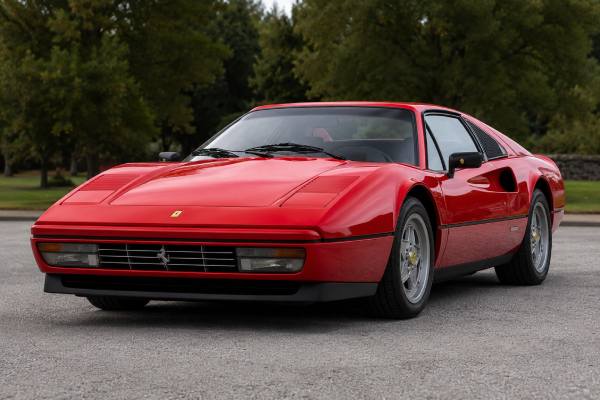
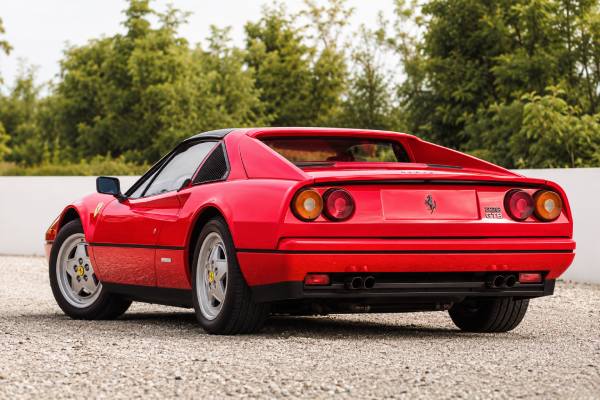
The Ferrari 328 GTB (F 106 MB 100) was the fixed-roof berlinetta version of Ferrari’s mid-engine V8 sports car built from 1985 to 1989, powered by the F 105 CB 000 3.2-litre naturally aspirated V8 rated at 270 hp. It replaced the 308 GTB quattrovalvole with a larger engine, cleaner body detailing, improved cabin ergonomics, and enough mechanical refinement to become one of the most usable classic Ferraris of its era.
The 328 GTB matters because it sits at a very appealing point in Ferrari history. It has the compact Pininfarina shape, a gated five-speed manual gearbox, unassisted steering, and a transverse V8 mounted behind the cabin, yet it is less intimidating to maintain than many later Ferraris. It was also built in far smaller numbers than the open-roof 328 GTS, which gives the GTB extra interest among collectors who value rarity, structure, and purity of line.
Quick Take
The Ferrari 328 GTB’s strongest appeal is its blend of classic analogue Ferrari feel, usable 1980s engineering, and elegant fixed-roof Pininfarina proportions. Its identity is built around a 3.2-litre four-valve V8, tubular steel chassis, gated manual gearbox, and relatively serviceable layout, with the important caution that originality, corrosion condition, belt-service history, documentation, and accident repair quality matter more than mileage alone.
Table of Contents
- History, Position and Collector Significance
- Engine, Chassis and Key Specifications
- Production, Variants and Factory Details
- Design, Engineering and Special Features
- Driving Experience and Real Performance
- Reliability, Maintenance and Restoration Reality
- Market Value, Buying Guide and Rivals
History, Position and Collector Significance
The 328 GTB is important because it was the final development of Ferrari’s 308-based transverse mid-engine V8 line before the 348 introduced a very different generation. It kept the compact, low, driver-focused formula of the 308, but added more torque, smoother bodywork, better cooling, and a more mature cabin.
Ferrari introduced the 328 in 1985 as the successor to the 308 GTB and 308 GTS quattrovalvole. The name followed Ferrari’s simple period logic: “32” for roughly 3.2 litres and “8” for eight cylinders. GTB meant Gran Turismo Berlinetta, the closed coupe, while GTS identified the removable-roof targa version.
The 328 arrived at a time when Ferrari’s road-car range was broadening. The Testarossa gave the company a dramatic flat-12 flagship, the Mondial 3.2 offered more practicality, and the 328 served as the compact two-seat V8 sports car. It was not the fastest Ferrari of its day, but it was one of the most balanced. It combined recognisable Ferrari drama with relatively straightforward mechanical architecture.
The GTB was always the rarer body style. Buyers in period heavily favoured the GTS because of its removable roof and open-air image. That made the GTB less common when new, but more desirable to many collectors today. The fixed roof gives the body a cleaner side profile and usually a more rigid feel, while the lower production total gives it extra appeal for buyers who want something more focused than the more numerous GTS.
The 328 also has a special place because it is often viewed as one of the last classic “small” Ferraris. It predates power steering, paddle-shift gearboxes, electronic suspension, digital driver aids, and complex carbon-ceramic braking systems. It is still a serious performance car, but the driver must manage the engine, gearbox, brakes, steering effort, and tyre grip directly.
Historically, the 328 did not define Ferrari through motorsport in the way some earlier competition models did. Its importance is different. It represents the mature road-going form of Ferrari’s 1970s and 1980s mid-engine V8 idea: beautiful, usable, mechanical, and compact. That makes it attractive to collectors who want a Ferrari they can drive, maintain, and understand without stepping into the restoration and operating costs of more fragile or more exotic models.
Today, the 328 GTB is collectible for four main reasons:
- it is the rarer fixed-roof version of the 328 family
- it retains the classic gated-manual, naturally aspirated V8 Ferrari character
- it is generally more approachable to service than many later mid-engine Ferraris
- it sits between the famous 308 and the more modern, heavier-feeling 348
The best cars are not simply low-mileage examples. The most valuable 328 GTBs tend to combine originality, clear service records, correct factory specification, strong cosmetics, corrosion-free structure, factory books and tools, and evidence that the car has been maintained rather than stored into deterioration.
Engine, Chassis and Key Specifications
The 328 GTB’s core specification is a transverse rear-mid-mounted 3.2-litre V8, five-speed manual gearbox, rear-wheel drive, tubular steel chassis, and compact two-seat berlinetta body. It is a simple layout by modern Ferrari standards, but it rewards correct tuning and careful maintenance.
| Item | Specification |
|---|---|
| Model | Ferrari 328 GTB |
| Chassis type | F 106 MB 100 tubular steel frame |
| Engine code | F 105 CB 000 |
| Engine layout | Rear-mid, transverse, 90-degree V8 |
| Displacement | 3,185.76 cc |
| Bore x stroke | 83.0 mm x 73.6 mm |
| Valve gear | Double overhead camshafts per bank, four valves per cylinder |
| Fuel system | Bosch K-Jetronic mechanical fuel injection |
| Ignition | Marelli Microplex electronic ignition |
| Maximum power | 270 hp at 7,000 rpm |
| Maximum torque | 304 Nm at 5,500 rpm |
| Transmission | Five-speed manual with reverse |
| Drivetrain | Rear-wheel drive |
The F 105 CB 000 engine was an evolution of the 308 quattrovalvole V8. Ferrari increased displacement from about 3.0 litres to 3.2 litres by increasing bore and stroke, giving the 328 more mid-range torque and a stronger feel in normal road driving. This mattered as much as the headline power figure. The 328 does not need to be worked quite as hard as a 308 QV to feel responsive.
The engine is all-alloy and uses four valves per cylinder, which was still a meaningful performance feature in the 1980s. Bosch K-Jetronic injection gives the car better drivability and emissions control than carburettors, but it is still a mechanical fuel-injection system. It depends on clean fuel delivery, correct pressures, good injectors, and properly adjusted warm-up components.
The gearbox is mounted with the engine in the traditional transverse Ferrari V8 arrangement. The five-speed manual uses the open metal gate that has become part of the classic Ferrari experience. The shift pattern is conventional, but the feel is very mechanical, especially when cold.
| Item | Specification |
|---|---|
| Front suspension | Independent unequal-length wishbones, coil springs, telescopic dampers, anti-roll bar |
| Rear suspension | Independent unequal-length wishbones, coil springs, telescopic dampers, anti-roll bar |
| Steering | Rack and pinion, unassisted |
| Brakes | Ventilated discs front and rear |
| Front tyres | 205/55 VR 16 |
| Rear tyres | 225/50 VR 16 |
| Length | 4,255 mm |
| Width | 1,730 mm |
| Height | 1,128 mm |
| Wheelbase | 2,350 mm |
| Dry weight | About 1,263 kg |
| Fuel capacity | 74 litres |
Ferrari’s tubular steel frame gives the 328 a classic race-derived construction style, though the car was very much a road car. The suspension is conventional but effective: double wishbones, coil springs, dampers, and anti-roll bars at both ends. There is no active damping, no power steering, and no electronic chassis management.
Performance figures vary slightly between sources and test conditions, but the 328 GTB is generally quoted at about 263 km/h top speed, with 0–100 km/h in roughly the low-six-second range. Period tests depended heavily on surface, tyres, engine tune, and launch technique. More important than the numbers is how the 328 delivers speed: with a rising V8 note, a light body, and direct controls rather than electronic assistance.
Production, Variants and Factory Details
The 328 GTB was the rare coupe version of the 328 family, with about 1,344 GTBs built compared with more than 6,000 GTS examples. That production imbalance is one of the main reasons GTBs attract focused collector attention today.
The 328 family consisted mainly of two body styles:
- 328 GTB: fixed-roof berlinetta, chassis type F 106 MB 100
- 328 GTS: removable-roof targa, chassis type F 106 MS 100
The GTB and GTS shared the same basic powertrain, suspension layout, brakes, and dimensions. The difference was body structure and roof design. The GTB’s fixed roof gives it a cleaner coupe profile and avoids the targa panel storage and sealing concerns of the GTS. For buyers who value driving feel, the GTB is often preferred because it can feel tighter and quieter.
Production began in 1985 and ended in 1989. Ferrari made running changes during the model life, but the broad identity stayed consistent. The most important late-production change was the arrival of anti-lock brakes on later cars in some markets. ABS cars can often be identified by their later convex wheel design, while earlier cars used the deeper-dish concave wheel style. Market specification matters, so buyers should check the individual car rather than relying only on model year.
The 328 GTB’s factory identification is important when buying. A proper inspection should confirm that the chassis number, engine number, gearbox, body details, market equipment, and paperwork make sense together. A Ferrari Classiche certification or factory heritage documentation can help, but it does not replace physical inspection. A certified car can still need mechanical work, paint correction, or rubber and fuel-system renewal.
Common factory and period details that affect desirability include:
- original exterior colour and interior trim
- correct wheels for production period and ABS status
- original books, pouch, tools, jack, and records
- correct glass, lights, badging, and market-specific lamps
- original engine and gearbox where verifiable
- documented timing-belt, clutch, brake, suspension, and cooling work
- absence of heavy accident repair or non-factory body modification
Rosso Corsa is the colour most people associate with the 328, often paired with tan, beige, black, or cream leather. Other colours can be very desirable when original and documented, especially darker blues, silver, black, and rare period shades. A non-red 328 GTB can attract strong interest because the coupe is already rare and unusual factory colours make a car stand out.
Factory options and equipment varied by market, but buyers should pay attention to air conditioning, trim condition, wheel type, stereo installation, tool kits, spare wheel arrangement, and emissions equipment. U.S.-market cars and European-market cars can differ in lighting, bumpers, side markers, emissions components, and instruments. A car imported across markets is not automatically a problem, but its paperwork and compliance history should be clear.
Because the 328 GTB is a collector Ferrari, originality often matters more than upgrades. Sensible reversible improvements, such as modern tyres in the correct size or discreet cooling and electrical reliability work, may help usability. Permanent changes, incorrect retrims, aftermarket body parts, non-original wheels, missing emissions equipment, or poorly installed audio systems can reduce value.
Design, Engineering and Special Features
The 328 GTB’s design is distinctive because it refines the 308 shape rather than replacing it. Pininfarina kept the low wedge, flying-buttress rear-quarter treatment, and compact proportions, but softened the bumpers, improved airflow, and made the car look more integrated.
The 308 had sharp 1970s detailing. The 328 looks smoother and more mature. Its front and rear bumpers are blended more cleanly into the body, the nose is neater, and the lower panels feel less like add-ons. The result is still recognisably related to the 308, but less fussy.
The fixed roof is a major part of the GTB’s appeal. The roofline flows naturally into the rear pillars and engine-cover area, giving the car a more complete coupe shape than the GTS. It also avoids the visual break of the removable targa roof. Many collectors prefer the GTB simply because it looks like the purest version of the design.
The engine placement defines the car’s shape. The V8 sits transversely behind the cabin, so the rear deck is broad and vented for cooling. Side intakes feed air toward the engine bay, while louvres and rear openings help manage heat. The 328 does not use modern active aerodynamics, but its body was shaped with attention to lift, cooling, and high-speed stability.
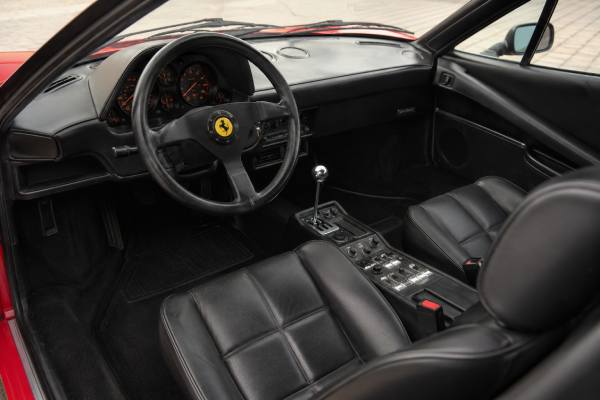
Inside, the 328 is simple but special. The cabin has a low dashboard, clear round instruments, a thin-rim steering wheel, leather-trimmed seats, and the exposed metal shift gate. It is not spacious by modern standards, but it is more usable than many people expect. Visibility is good for a mid-engine car, especially forward and to the sides. Rear visibility is limited but manageable because the car is compact.
The driving position is classic Italian sports car rather than modern ergonomic perfection. The pedals can feel offset, the steering wheel sits relatively close, and taller drivers should try the car before buying. Seat padding, leather condition, and old foam can change how a 328 feels, so two examples can sit noticeably differently.
Engineering highlights include:
- compact transverse V8 packaging
- four-valve cylinder heads
- mechanical fuel injection with electronic ignition
- tubular steel chassis construction
- all-independent suspension
- unassisted rack-and-pinion steering
- gated five-speed manual gearbox
- ventilated four-wheel disc brakes
- fixed-roof berlinetta structure on the GTB
The sound is a major part of the car’s character. The 3.2-litre V8 is not as loud or hard-edged as later flat-plane Ferrari V8s, but it has a crisp mechanical tone, especially as revs rise. Intake noise, camshaft character, exhaust note, and gearbox whine all contribute to the experience. A tired exhaust, incorrect aftermarket system, or badly tuned injection can make the car feel less special, so sound quality can also be a useful inspection clue.
Driving Experience and Real Performance
A good 328 GTB feels light, direct, mechanical, and balanced rather than brutally fast by modern standards. Its appeal comes from response, sound, steering feel, and the gated manual gearbox more than raw acceleration.
The engine has enough torque to be flexible on the road, especially compared with earlier 3.0-litre versions. Below about 3,000 rpm it is smooth and usable, not explosive. As revs rise, it becomes sharper and more eager. The strongest part of the experience is the way the engine builds power cleanly toward the top end without needing turbo boost or drive modes.
Throttle response depends heavily on tune. A well-sorted Bosch K-Jetronic 328 starts cleanly, warms up properly, idles steadily, and pulls without hesitation. A poorly adjusted car may stumble cold, smell rich, hesitate under load, or feel flat. Many “slow” 328s are not truly slow; they are simply overdue for fuel, ignition, valve, or exhaust attention.
The gearbox is one of the central pleasures of the car. The metal gate gives each shift a defined path, and the lever needs deliberate movement. Second gear can be reluctant when cold, which is common in many classic Ferraris. A patient driver lets the gearbox warm up and avoids forcing the shift. Once warm, a healthy gearbox should feel precise rather than obstructive.
The steering is heavy at parking speeds because it is unassisted. On the move, it becomes one of the best parts of the car. It gives clear front-tyre feedback and makes the 328 feel narrow and accurate on a good road. Modern drivers used to quick electric steering may need a few miles to adjust, but the reward is genuine connection.
Ride quality is firm but not punishing when the suspension is fresh and the tyres are correct. Old dampers, tired bushes, incorrect tyres, and poor alignment can make a 328 feel nervous, harsh, or vague. A properly set-up GTB should feel composed, with good body control and predictable balance.
The braking system is strong enough for spirited road use, but it does not feel like a modern carbon-ceramic setup. Pedal effort is higher, and repeated hard use will reveal the limits of old fluid, aged hoses, tired pads, or worn discs. For road driving, a refreshed standard brake system is usually better than an aggressive upgrade that spoils pedal feel.
On a mountain road, the GTB’s strengths are obvious. It is compact, relatively light, communicative, and easy to place. The fixed roof gives a sense of solidity, and the mid-engine balance lets the car rotate neatly when driven with respect. It is not a car that rewards clumsy inputs. Lift-off oversteer, old tyres, wet roads, and sudden mid-corner corrections can still catch out an inexperienced driver.
In town, the 328 is usable but not effortless. The clutch is heavier than a modern sports car’s, the steering needs muscle when parking, the cabin can get warm, and low-speed visibility over the rear haunches takes practice. On the highway, it settles well, but wind noise, tyre noise, and engine sound are part of the experience.
The best 328 GTB driving experience comes from a car that is used regularly. Cars stored for long periods often need recommissioning before they feel right. Fresh tyres, correct alignment, clean injectors, good ignition components, healthy cooling, and renewed suspension rubber can transform the car more than expensive cosmetic detailing.
Reliability, Maintenance and Restoration Reality
The 328 GTB has a strong reputation by classic Ferrari standards, but it is still a hand-built exotic car that needs specialist care. Its biggest advantage is that major belt service is more accessible than on many later mid-engine Ferraris because the engine does not normally need to be removed.
Timing belts and tensioners are the first maintenance concern. Age matters as much as mileage. A car showing low mileage but no recent belt service should be treated as due. Many specialists use time-based intervals as well as mileage-based intervals, and owners should follow the correct service literature and expert advice for the specific car.
The cooling system must be in excellent condition. Radiators, fans, thermostats, water pumps, hoses, expansion tanks, and old clamps all deserve attention. A 328 that runs hot in traffic may have several small issues rather than one obvious failure. Because heat affects fuel lines, wiring, rubber parts, and cabin comfort, cooling health is central to ownership.
Fuel-system condition is another major area. Bosch K-Jetronic can be reliable, but it dislikes stale fuel, dirt, vacuum leaks, and incorrect adjustment. Common trouble spots include injectors, fuel accumulator, warm-up regulator, fuel pumps, filters, rubber hoses, and metering components. Any fuel smell should be taken seriously.
Electrical issues are common on aging cars. Fuse boxes, relays, connectors, grounds, window motors, fans, lighting circuits, alternators, and old alarm installations can all cause problems. Slow windows and weak air conditioning are common complaints. A clean, unmodified electrical system is worth paying extra for.
The gearbox is usually robust, but it should be inspected for synchro wear, bearing noise, oil leaks, and clutch condition. Second-gear stiffness when cold is not unusual, but grinding, jumping out of gear, or heavy noise is not acceptable. Clutch replacement is not shocking by exotic-car standards, but it is still specialist work.
Suspension and steering wear can hide behind shiny paint. Bushes, ball joints, dampers, wheel bearings, steering racks, and suspension pick-up areas should be checked carefully. A 328 with worn suspension may still look valuable but drive poorly. Correct alignment is especially important because the car’s appeal depends on steering feel and balance.
Corrosion is less severe than on many older Italian classics, but it is not absent. Buyers should inspect:
- lower doors and door bottoms
- sills and jacking areas
- wheel arches and lower wings
- front compartment and battery area
- floorpan edges and seams
- windscreen and rear-window surrounds
- suspension mounting points
- areas hidden by underseal or old repairs
Accident history is one of the biggest value risks. The 328’s tubular chassis and low body can be repaired, but poor repairs can affect alignment, panel fit, handling, and long-term value. Uneven panel gaps, mismatched paint, overspray, strange tyre wear, and missing factory labels should prompt deeper inspection.
Restoration costs can exceed the value difference between an average car and a very good one. Paintwork, leather, dashboard repair, correct wheels, engine bay detailing, suspension rebuilding, and fuel-system overhaul add up quickly. Buying the cheaper car is rarely cheaper if it needs everything.
Originality versus upgrades should be judged carefully. Sensible maintenance improvements are usually acceptable. Reversible upgrades may make the car easier to use. But a collector-grade 328 GTB should not be heavily modified unless priced accordingly. Non-original paint colour, incorrect interior materials, aftermarket bodywork, and missing original parts can all hurt long-term value.
A proper pre-purchase inspection should be done by a Ferrari specialist familiar with 308 and 328 models. A normal used-car inspection is not enough. The specialist should inspect the engine, compression or leak-down where appropriate, fuel system, cooling system, chassis, suspension, brakes, electrical system, accident history, documentation, and originality.
Market Value, Buying Guide and Rivals
The 328 GTB occupies a strong collector position because it is rarer than the GTS, more usable than many older Ferraris, and still delivers the classic manual V8 experience. Values are highly condition-sensitive, and unusual auction results can distort simple averages.
As of the mid-2020s, ordinary driver-quality 328 GTBs often trade below the best low-mileage, highly documented, original cars by a wide margin. In broad terms, usable higher-mileage cars can sit in the lower six-figure range in major markets, while exceptional low-mileage, late-production, rare-colour, Classiche-certified, or highly original GTBs can command much more. European asking prices often overlap with U.S. values after currency, tax, and import differences, but local market condition matters.
The most important market point is that a 328 GTB is not valued like a normal used car. Mileage matters, but it is not the whole story. A 20,000-mile car with old belts, poor paintwork, weak records, and dried-out systems may be less attractive than a 45,000-mile car with excellent maintenance and clean originality.
Value drivers include:
- verified originality
- fixed-roof GTB body style
- documented service history
- recent belt and major mechanical work
- factory books, tools, jack, and records
- desirable original colour combination
- low ownership count
- accident-free structure
- correct wheels and trim
- Ferrari Classiche certification where applicable
- strong leather, dashboard, paint, and glass condition
Cars to seek are honest, complete, well-maintained examples with clear history and no major stories. The ideal car starts easily, warms correctly, shifts properly once warm, tracks straight, stops confidently, keeps cool in traffic, and has documentation that supports its condition.
Cars to avoid include examples with unclear import history, missing records, heavy modifications, neglected belt service, corrosion, poor accident repair, fuel smells, overheating, dashboard electrical faults, incorrect wheels, badly retrimmed interiors, or paintwork that hides structural issues.
A useful buyer inspection checklist is:
| Area | What to check |
|---|---|
| Identity | Chassis, engine, gearbox, market specification, documents |
| Engine | Oil leaks, belt history, warm idle, smoke, compression, service records |
| Fuel system | Cold start, hot restart, hesitation, fuel smell, injector condition |
| Cooling | Temperature stability, fans, radiator, hoses, water pump, coolant age |
| Gearbox | Cold and warm shifts, synchros, clutch bite, noise, leaks |
| Chassis | Accident evidence, corrosion, suspension pick-ups, underbody repairs |
| Interior | Leather, dashboard shrinkage, switches, air conditioning, windows |
| Originality | Wheels, trim, paint colour, books, tools, exhaust, factory details |
Ownership risk is moderate for a classic Ferrari, not low in normal-car terms. A good 328 is one of the more manageable classic Ferraris, but deferred maintenance can still become expensive quickly. The safest financial move is usually to buy the best inspected car you can justify rather than chasing the lowest purchase price.
The closest same-brand alternatives are the 308 GTB/GTS quattrovalvole, the 328 GTS, the Mondial 3.2, and the later 348 tb. The 308 offers earlier styling and sometimes lower entry cost, but the 328 is generally stronger and more refined. The 328 GTS gives open-roof appeal and more market choice, but the GTB is rarer and often preferred by purists. The 348 is more modern and faster in some ways, but it brings different service demands and a more 1990s driving character.
Period rivals include the Porsche 911 Carrera 3.2, Porsche 930 Turbo, Lamborghini Jalpa, Lotus Esprit Turbo, and Aston Martin V8 Vantage. The Porsche is easier to live with and usually more practical. The Lamborghini is rarer and more dramatic but can be harder to source parts for. The Lotus offers serious mid-engine character at a different price point. The Ferrari’s advantage is its combination of usability, beauty, brand strength, engine character, and collector demand.
Long-term collectability looks strong because the 328 GTB has the traits buyers increasingly value: analogue controls, naturally aspirated engine, manual gearbox, compact size, limited production, recognisable design, and reasonable serviceability within the Ferrari world. The best cars should remain desirable, especially original GTBs with excellent documentation and no stories.
References
- Ferrari 328 GTB (1985) – Ferrari.com 2026
- Ferrari 328 GTS (1985) – Ferrari.com 2026
- Safer Car Vehicle Safety, Ratings and Recalls | NHTSA 2026 (Recall Database)
- 1988 Ferrari 328 GTB configurations | Hagerty Valuation Tools 2026 (Valuation Guide)
- Ferrari 328 GTB Market – CLASSIC.COM 2026 (Market Data)
Disclaimer
This article is for informational purposes only and is not a substitute for professional diagnosis, repair, valuation, or pre-purchase inspection. Specifications, torque values, service intervals, procedures, emissions equipment, and factory details can vary by VIN, market, production date, and equipment, so owners and buyers should verify all technical work against official Ferrari service documentation and a qualified marque specialist.
If this guide helped you, please share it on Facebook, X/Twitter, or your preferred car community to support our work.