
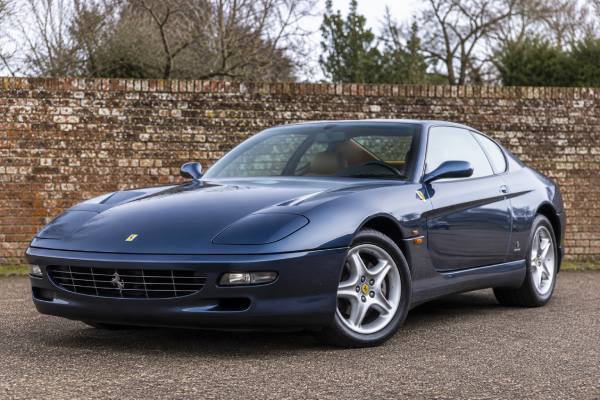
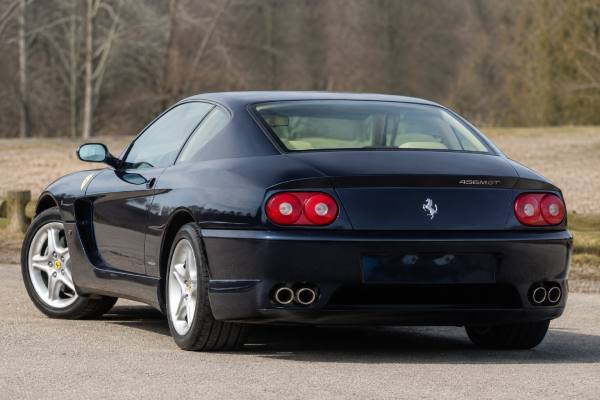
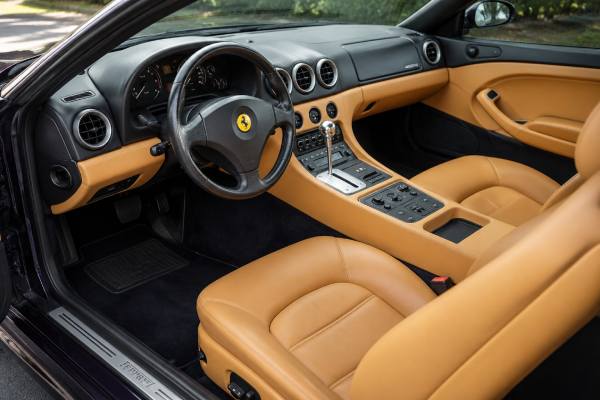
The Ferrari 456M GT Scaglietti is the late-production, highly personalized version of Ferrari’s front-engined V12 2+2 coupe, built around the F116C 5.5-liter naturally aspirated V12 and offered during the 2002–2003 closing chapter of the 456M line. It matters because it combines the discreet long-distance character of the 456M GT with Ferrari’s early Carrozzeria Scaglietti personalization program, including the famous Bicolore Scaglietti presentation car associated with Michael Schumacher.
This is not a separate engine family or a radically re-engineered model. It is best understood as a rare factory-personalized 456M GT, sometimes described as the 456M GT Scaglietti or Bicolore Scaglietti, using the same 442 hp V12, rear-wheel-drive layout, and six-speed manual transaxle as the standard 456M GT. Its appeal comes from that mix: an elegant Pininfarina 2+2 grand tourer, a manual Ferrari V12, late-production refinements, and a much stronger story than an ordinary 456M.
Quick Take
The Ferrari 456M GT Scaglietti is most appealing as a subtle, usable, front-engined V12 Ferrari with rare factory personalization rather than as an aggressive supercar. Its core identity is the late F116C-powered 456M GT: 5.5 liters, 442 hp, rear-drive, a six-speed manual gearbox, and a refined 2+2 cabin wrapped in one of Ferrari’s cleanest modern grand-touring shapes. The caution is ownership sensitivity: these cars reward complete history, correct belt servicing, healthy rear suspension, good window sealing, preserved leather, and proof of factory Scaglietti specification. A genuine Bicolore/Scaglietti car with documentation is far more collectible than a normal 456M GT with similar colors added later.
Table of Contents
- History and Significance of the 456M GT Scaglietti
- F116C V12, Chassis, and Key Specifications
- Production, Variants, and Factory Options
- Design, Engineering, and Special Details
- Driving Experience and Performance Character
- Reliability, Maintenance, and Restoration Reality
- Market Value and Collector Buying Guide
History and Significance of the 456M GT Scaglietti
The 456M GT Scaglietti sits at the end of Ferrari’s 1990s V12 2+2 era and represents the moment when factory personalization became a more formal part of the Ferrari ownership experience. Its importance is not just performance; it is the combination of a mature 456M GT platform, a manual V12 drivetrain, and documented special-order details.
The original Ferrari 456 GT replaced the aging 412 and brought Ferrari’s four-seat grand tourer idea into the modern era. Instead of the sharp-edged, formal shape of the 400 and 412 series, the 456 used a smoother Pininfarina body, a new V12, and a rear-mounted gearbox layout that gave the car better balance than many traditional front-engined luxury coupes.
The 456M, with “M” standing for Modificata, arrived as the revised version. Ferrari improved the front-end treatment, cooling, aerodynamics, interior layout, instrumentation, and general usability. The 456M GT kept the six-speed manual gearbox, while the 456M GTA used a four-speed automatic. By 2002, the car was nearing the end of production, and Ferrari was preparing the larger 612 Scaglietti that would replace it.
The Scaglietti connection came through Ferrari’s Carrozzeria Scaglietti personalization program. The most famous example was the Bicolore Scaglietti version shown at Geneva in 2002, a two-tone 456M GT created around Michael Schumacher’s preferences. It was finished in subtle grey tones, with special interior details and upgraded equipment. The idea was not to make the 456M louder or more extreme, but to show how a buyer could commission a more personal, factory-built Ferrari.
That matters today because collector value increasingly depends on originality and documentation. A normal 456M GT can be a very satisfying V12 Ferrari, but a true Scaglietti-personalized or Bicolore car has a more specific place in Ferrari history. It links the old coachbuilt tradition to the modern Tailor Made era, where paint, trim, materials, and special details can define a car’s identity almost as much as the mechanical specification.
The 456M GT Scaglietti also has an understated reputation. It is not a poster-car Ferrari like an F50 or Enzo, and it was never intended to be. It is a fast, restrained, front-engined grand tourer for long distances, luggage, and occasional rear-seat use. That gives it a different kind of desirability: less visual drama, more elegance, and a strong appeal to buyers who want a manual V12 Ferrari without the constant attention of a mid-engined exotic.
F116C V12, Chassis, and Key Specifications
The heart of the 456M GT Scaglietti is the F116C 5.5-liter naturally aspirated V12, rated at 442 hp and 550 Nm of torque. It is paired with a six-speed manual gearbox and rear-wheel drive, giving the car the classic long-nose Ferrari GT layout with modern 1990s engineering.
| Category | Specification |
|---|---|
| Model years covered | 2002–2003 |
| Body style | 2-door 2+2 coupe |
| Chassis family | F116 / late 456M GT |
| Engine code | F116C |
| Engine layout | Front longitudinal 65-degree V12 |
| Displacement | 5,474 cc |
| Bore x stroke | 88 mm x 75 mm |
| Compression ratio | 10.6:1 |
| Maximum power | 442 hp at 6,250 rpm |
| Maximum torque | 550 Nm at 4,500 rpm |
| Fuel and ignition management | Bosch Motronic M5.2 |
| Lubrication | Dry sump |
| Transmission | 6-speed manual |
| Drive | Rear-wheel drive |
The engine is a major part of the car’s charm. It is smooth, large-capacity, naturally aspirated, and tuned for flexible torque rather than peaky race-car behavior. The “456” name comes from the approximate displacement of each cylinder in cubic centimeters, a traditional Ferrari naming approach that became rare after this era.
The gearbox is just as important to the car’s identity. A manual 456M GT is more desirable than the automatic GTA for most collectors because it gives the driver a direct connection to the V12 and because manual front-engined Ferraris have become much more sought after. The gated shifter, heavy clutch feel when cold, and long-legged gearing all fit the car’s grand touring role.
| Item | Specification |
|---|---|
| Frame | Tubular steel structure |
| Suspension | Independent unequal-length wishbones, coil springs, telescopic dampers, anti-roll bars |
| Rear suspension feature | Self-leveling rear system |
| Steering | Rack-and-pinion with power assistance |
| Front tires | 255/45 ZR 17 |
| Rear tires | 285/40 ZR 17 |
| Length | 4,763 mm |
| Width | 1,920 mm |
| Height | 1,300 mm |
| Wheelbase | 2,600 mm |
| Dry weight | About 1,690 kg |
| Fuel capacity | 110 liters |
| 0–100 km/h | About 5.2 seconds |
| Top speed | About 300 km/h |
The 456M GT was not light, but it was engineered for high-speed stability. The long wheelbase, wide track, rear-mounted gearbox layout, and large fuel capacity make sense for a continental GT. The car was built to cover ground quickly and comfortably, not to behave like a stripped track special.
Production, Variants, and Factory Options
The Scaglietti cars are best understood as rare late-production 456M GTs with factory personalization, not as a completely separate mechanical variant. For buyers, the difference between a documented Scaglietti/Bicolore car and a normal 456M GT with similar cosmetic changes is critical.
The broader 456M family included the 456M GT with six-speed manual transmission and the 456M GTA with automatic transmission. Both used the same basic V12, body structure, and 2+2 layout. The GT is generally more collectible because of the manual gearbox, while the GTA appeals to buyers who want an easier long-distance cruiser and may accept a lower market value.
The Bicolore Scaglietti version appeared late in the model’s life. The best-known specification used a two-tone grey exterior treatment, special interior leather, red stitching, personalized details, uprated brake equipment, and high-end audio/navigation features for the period. Some cars are associated with a “Schumacher Edition” description because Michael Schumacher’s own specification helped introduce the concept.
Important identification points include:
- Factory documentation showing Carrozzeria Scaglietti personalization.
- Original build records, order sheets, invoices, or Ferrari Classiche material.
- Correct two-tone paint layout if the car is a Bicolore example.
- Interior trim details that match the factory order.
- A dedication plaque or special trim elements where specified.
- Matching engine, gearbox, color, and trim records.
- Evidence that any brake, wheel, audio, or navigation equipment is factory-original rather than later added.
Buyers should be careful with terminology. “Scaglietti” can be used loosely in advertisements, especially because Ferrari later launched the 612 Scaglietti as a separate model. For the 456M GT, the term usually points to personalization under the Carrozzeria Scaglietti program or the Bicolore Scaglietti special series. That makes paperwork more important than badges, paint, or seller description.
Factory options on late 456M cars could include special paint, special leather, Daytona-style seat inserts, colored brake calipers, Scuderia Ferrari wing shields, fitted luggage, audio upgrades, dedication plates, and other personalization details. These details matter because the best examples are not necessarily the most modified; they are the cars whose special equipment is original, documented, and preserved.
A normal 456M GT in a desirable color with strong history can still be a smart purchase. A real Scaglietti-personalized car, however, should be judged more like a collector specification. The value is tied to the originality of the full configuration, not just the mechanical condition.
Design, Engineering, and Special Details
The 456M GT Scaglietti is visually restrained for a Ferrari, and that restraint is central to its appeal. The design works because it hides serious V12 performance under a clean, elegant 2+2 shape rather than relying on vents, wings, or race-inspired decoration.
Pininfarina’s proportions are classic front-engined GT: long hood, set-back cabin, short rear deck, and a broad stance. The 456M revision smoothed the front end compared with the earlier 456 GT, improved the grille and air intake treatment, removed some of the earlier visual clutter, and gave the cabin a more modern layout. It also kept one of the model’s most memorable features: pop-up headlights. The 456M is often remembered as one of the last Ferraris to use them.
The body construction mixes traditional and advanced ideas. The chassis is a tubular steel structure, while the body uses aluminum panels. The hood on the 456M is notable for its use of carbon fiber, a forward-looking material choice at the time. This combination helped Ferrari control weight while keeping the strength and refinement expected of a large V12 grand tourer.
Engineering features that define the car include:
- A front-mounted V12 set far enough back to support balanced handling.
- A rear transaxle layout that helps weight distribution.
- Self-leveling rear suspension suited to passengers and luggage.
- Large 17-inch wheels and wide rear tires for high-speed stability.
- Power-assisted steering designed for grand touring rather than track purity.
- Strong four-wheel disc brakes with ABS.
- A large fuel tank that suits long-distance use.
The Scaglietti/Bicolore details add another layer. The two-tone grey scheme is subtle, not showy. Rather than making the 456M look like a racing special, it emphasizes the car’s tailored GT character. The interior treatments, stitching, plaque details, and equipment upgrades make the car feel like a commissioned object. That is exactly why authenticity matters: the special features should look integrated and factory-correct, not like aftermarket decoration.
Inside, the 456M GT is a proper 2+2, but expectations should be realistic. The front seats are comfortable and suitable for long trips. The rear seats are useful for smaller adults over short distances, children, or extra cabin luggage. The trunk is more practical than in most mid-engined Ferraris, and the cabin has a calmer, more luxurious mood than a 355 or 360.
The sound is also part of the engineering character. The 5.5-liter V12 is smoother and deeper than smaller Ferrari engines. It does not need to be worked hard to feel special. At low rpm it is refined; at higher rpm it becomes more metallic and urgent. That dual personality is exactly what a Ferrari GT should have.
Driving Experience and Performance Character
The 456M GT Scaglietti drives like a fast, heavy, refined Ferrari grand tourer, not like a compact sports car. Its best qualities are V12 smoothness, high-speed stability, long-distance comfort, and the involvement of a manual gearbox.
Acceleration is strong even by modern standards. A 0–100 km/h time of about 5.2 seconds and a top speed around 300 km/h put the car among the fastest four-seat grand tourers of its period. More important than the numbers is how the power arrives. The naturally aspirated V12 builds speed with a smooth, elastic pull, and the engine has enough torque that the driver does not need constant downshifts.
The six-speed manual gearbox changes the whole personality of the car. In relaxed driving, it makes the 456M feel mechanical and deliberate. On a fast road, it adds timing and involvement. The shift should feel precise once warm, though it is not a light modern gearbox. A poor shift quality, jumping out of gear, clutch slip, or driveline clunks should be treated as inspection warnings.
Steering feel is more GT than race car. The car is wide, long, and substantial, so it rewards smooth inputs. It does not dart into corners like a 360 Modena, but it settles well and feels confident at speed. The front end should feel accurate, and the rear should remain stable if the suspension and tires are healthy.
Ride quality is one of the 456M’s strengths. The self-leveling rear suspension was designed for real grand touring use, especially when the car carries passengers or luggage. A well-maintained car should feel composed rather than floaty. Excessive rear bounce, uneven ride height, warning lights, hydraulic leaks, or harsh impacts suggest suspension work is overdue.
Braking performance is strong, but the car’s weight matters. The brakes need to be in excellent condition, and tire quality has a major effect on confidence. Old low-mileage tires are common on collector Ferraris and should not be trusted simply because they have tread depth. On a 456M GT, fresh premium tires are part of the safety and performance package.
In city use, the car feels large and expensive to operate. Visibility is better than in many mid-engined Ferraris, but the long nose, wide body, heavy doors, and low seating position still require care. Heat management, air conditioning performance, clutch feel, and window sealing become more noticeable in traffic.
On highways and sweeping roads, the car makes the most sense. It is quiet enough to travel, powerful enough to pass with ease, and special enough to feel like an event. The Scaglietti specification adds rarity and visual interest, but the driving experience remains pure 456M GT: smooth, fast, elegant, and slightly old-school.
Reliability, Maintenance, and Restoration Reality
A good 456M GT Scaglietti can be reliable by exotic-car standards, but deferred maintenance can turn it into a very expensive project. The most important ownership rule is simple: buy condition, history, and documentation before mileage or color.
The F116C V12 is generally respected when maintained properly. The major issue is not that the engine is fragile; it is that it is large, complex, parts are expensive, and labor must be done by people who know the model. Timing belt service is critical. The belts can be changed without removing the engine, which helps compared with some Ferraris, but the work still needs proper tools, parts, and experience.
Common areas to inspect include:
- Timing belt history, tensioners, and related service invoices.
- Valve cover, cam seal, oil, and coolant leaks.
- Valve guide wear signs, including smoke after idle or on overrun.
- Engine mounts, which can deteriorate and cause secondary damage.
- Intake gaskets and coolant hoses in the engine V.
- Fuel pump mounts and fuel system rubber deterioration.
- Radiator, fans, and cooling system condition.
- Clutch wear and gearbox behavior on manual cars.
The rear self-leveling suspension is another major inspection point. Leaking rear dampers, tired hydraulic components, failed accumulators, and incorrect ride height can be expensive. The system is part of the car’s character, so deleting or poorly converting it may hurt originality, especially on a rare Scaglietti car.
Electrical and interior issues are common with age. Sticky switches and trim are familiar on Ferraris from this period. Leather can shrink or pull around the dashboard, rear parcel shelf, door tops, and airbag areas, especially if the car has lived in hot climates. Electric seat faults, climate control problems, window regulator issues, and poor window sealing should all be checked before purchase.
Window fit deserves special attention. The 456 family is known for frameless-window sealing concerns. A car with wind noise, water ingress, slow window drop, or poor glass alignment may require careful adjustment or parts replacement. This is not just a comfort issue; water leaks can damage trim and electronics.
Restoration is possible but costly. A full interior retrim, correct paintwork, suspension overhaul, or V12 top-end work can quickly exceed the price difference between an average car and an excellent one. For a documented Scaglietti car, originality should usually be preserved unless a component is unsafe or failed. Repainting a Bicolore car incorrectly, changing interior colors, or replacing special trim with ordinary 456M parts can reduce the car’s collector value.
A proper pre-purchase inspection should include:
- Verification of VIN, engine number, gearbox type, and factory specification.
- Review of service records, especially belt services and major repairs.
- Cold start, warm idle, smoke check, and leak inspection.
- Road test with gearbox, clutch, brakes, steering, and suspension evaluation.
- Lift inspection for corrosion, accident repair, leaks, and underbody damage.
- Window, seat, climate, instrument, and electrical function test.
- Paint-depth readings and confirmation of Bicolore layout where relevant.
- Review of Ferrari Classiche or factory documentation if available.
The best cars are often not the lowest-mileage cars. A lightly used but regularly serviced 456M GT is usually safer than a garage queen with old belts, flat-spotted tires, tired seals, and no recent specialist attention.
Market Value and Collector Buying Guide
The 456M GT Scaglietti occupies a more specialized market than the standard 456M GT. A regular manual 456M GT already carries a premium over automatic cars, while a documented Scaglietti or Bicolore example can command a much stronger collector price because of rarity, story, and specification.
As of the current collector market, ordinary 456M GT manuals often trade across a broad band depending on mileage, country, color, service history, and condition. Well-kept manual cars commonly sit above automatic 456M GTA values, and exceptional low-mileage examples can move notably higher. Recent public sales for manual 456M GTs have often appeared around the high five-figure to low six-figure range in major currencies, with special cars exceeding that when the specification and history justify it.
A genuine Bicolore Scaglietti or Schumacher-associated specification should not be valued like a normal 456M GT with attractive paint. Its market depends on proof. The difference between “painted in the style of” and “factory-delivered as” is enormous.
| Factor | Why It Matters |
|---|---|
| Factory Scaglietti documentation | Separates a genuine special-order car from a later cosmetic recreation |
| Manual gearbox | Usually more desirable and collectible than the automatic GTA |
| Original paint and trim | Especially important for Bicolore cars and special interiors |
| Complete service history | Reduces risk on belt, suspension, engine, and gearbox issues |
| Condition of leather and switches | Interior correction can be expensive and affects presentation |
| Suspension health | Rear self-leveling faults can create major bills |
| Low but credible mileage | Desirable only when supported by maintenance and condition |
| Ownership provenance | Named ownership, long-term care, and specialist history can add value |
The best example to buy is a documented factory car with matching original specification, regular specialist maintenance, no accident history, healthy suspension, fresh tires, good interior condition, and no unresolved warning lights or leaks. The car should come with books, tools, service invoices, ownership records, and any Ferrari Classiche or factory correspondence available.
Cars to avoid include:
- Scaglietti-labeled cars with no documentation.
- Repainted Bicolore-style cars with unclear original colors.
- Cars overdue for belt service.
- Cars with smoke, overheating, or oil pressure concerns.
- Cars with sagging rear suspension or hydraulic leaks.
- Cars with poor window sealing and water damage.
- Cars missing special trim, plaques, books, or provenance.
- Cheap examples needing “only minor recommissioning.”
A 456M GT Scaglietti is not the cheapest way into Ferrari ownership, even if some 456-family cars look affordable compared with newer V12 models. It is better approached as a collector-grade analog GT with high maintenance needs and a narrow pool of knowledgeable specialists. A buyer who stretches to purchase a neglected car may soon spend the difference in repairs.
Long-term collectability looks promising for the right examples. Manual V12 Ferraris have a strong collector base, late-production cars are desirable, and factory-personalized Ferraris are increasingly appreciated. The 456M’s understated styling may also age better than more flamboyant designs. Still, future value depends heavily on preservation. A genuine Scaglietti car with full records is the one to protect; a tired car with missing history is simply an expensive V12 Ferrari project.
References
- Ferrari 456M GT (1998) – Ferrari.com 1998 (Manufacturer Specifications)
- Ferrari 456M GT Specifications 2025 (Technical Specifications)
- Ferrari 456M GT Market – CLASSIC.COM 2026 (Market Data)
- Ferrari 456GT buyer’s guide: what to pay and what to look for | Classic & Sports Car 2020 (Buying Guide)
- Decision That Nonconforming 1997 and 1998 Ferrari 456 GT and GTA Passenger Cars Are Eligible for Importation 2004 (Regulatory Notice)
Disclaimer
This article is for informational purposes only and is not a substitute for professional diagnosis, repair, appraisal, or inspection. Specifications, torque values, service intervals, parts, procedures, and equipment can vary by VIN, market, production date, and individual factory options. Always verify details against official Ferrari service documentation and consult a qualified Ferrari specialist before purchase, maintenance, or restoration work.
If this guide helped you, please consider sharing it on Facebook, X/Twitter, or your favorite enthusiast community to support our work.