
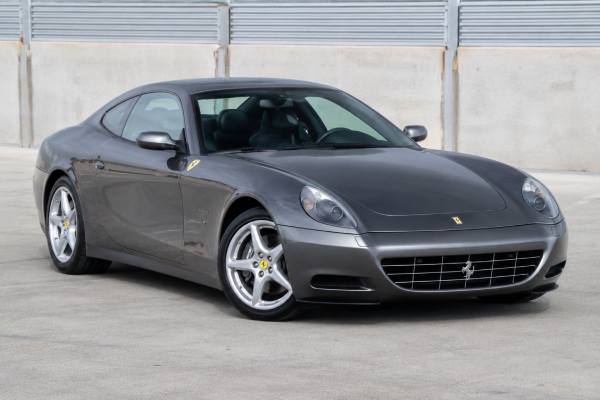

The Ferrari 612 Scaglietti is one of the more misunderstood modern V12 Ferraris. It is not a light, sharp-edged two-seat supercar. It is a front-mid-engine, four-seat grand tourer built to cover long distances quickly, carry real passengers, and bring a naturally aspirated Ferrari V12 into a more usable format. In late-production form, especially the 2007–2011 cars associated with the F133H-era 5.7-litre V12 and One-to-One personalization period, it is also becoming more interesting to collectors who want the last generation of large, naturally aspirated Ferrari GTs before the FF changed the formula.
Quick Take
The 612 Scaglietti’s strongest appeal is its mix of a 540 hp naturally aspirated V12, real grand-touring comfort, aluminum construction, and understated rarity compared with flashier mid-engine Ferraris. Its identity matters because it was Ferrari’s flagship four-seat GT between the 456M and FF, and late cars brought the model closer to a bespoke collector object through the One-to-One program. The caution is ownership cost: deferred maintenance, F1 clutch wear, brake-system recalls, sticky interiors, and aluminum body repairs can overwhelm a cheap purchase. The best cars are original, well-documented, specialist-maintained examples with clean provenance, desirable specification, and verified recall work.
Table of Contents
- History and Collector Significance
- Engine, Chassis, and Key Specifications
- Production, Variants, and Factory Options
- Design, Engineering, and Special Features
- Driving Experience and Real Performance
- Maintenance, Reliability, and Restoration Risk
- Market Values and Buying Guide
History and Collector Significance
The 612 Scaglietti matters because it was Ferrari’s large V12 grand tourer at the point where the brand moved from traditional steel-bodied 2+2s toward modern aluminum architecture, electronic chassis control, and deep factory personalization. It replaced the 456M, sat above the V8 sports cars in price and status, and served buyers who wanted Ferrari performance without giving up rear seats and luggage space.
Ferrari introduced the 612 Scaglietti for the 2004 model year, but this guide focuses on the later 2007–2011 period, when the car gained more collector relevance through special editions, updated F1 gearbox calibration, the One-to-One ordering program, and the late F133H-related engine era. Some 2007 cars sit at the transition point, so engine code, equipment, and build details should always be verified by VIN, market, and factory documentation.
The name honors Sergio Scaglietti, the Modenese coachbuilder closely tied to Ferrari’s early racing and GT history. The body itself was styled by Pininfarina, with design work associated with Ken Okuyama and Ferrari’s early-2000s grand touring language. The result was deliberately not as aggressive as a 360 Challenge Stradale, F430, or 599 GTB. The 612 was long, flowing, formal, and shaped around its purpose: four-person travel at very high speed.
Its position in Ferrari history is also important. The 612 was the last front-engine Ferrari four-seater available with a factory manual gearbox, though late 2007–2011 cars are overwhelmingly F1 automated manuals. It was succeeded by the FF, which added shooting-brake packaging and Ferrari’s unusual four-wheel-drive system. That makes the 612 the final traditional rear-wheel-drive Ferrari V12 2+2 in the classic grand-touring mold.
Collectors used to overlook the 612 because it was large, expensive to maintain, and less visually dramatic than a two-seat Berlinetta. That view has softened. Buyers now recognize several features that make the car historically interesting:
- It uses a naturally aspirated 65-degree Ferrari V12 rather than a turbocharged or hybrid system.
- It has front-mid-engine balance with a rear transaxle layout.
- It introduced a more modern aluminum construction approach for Ferrari’s large V12 GT line.
- It was produced in relatively limited numbers compared with mass-market luxury coupes.
- Factory manual cars, Sessanta cars, and highly specified One-to-One examples have become distinct collector subgroups.
The car’s reputation today is split in a useful way. Poorly maintained F1 cars can still be bought for less than many people expect from a V12 Ferrari. The best low-mileage cars, unusual colors, factory manuals, and special-series examples are treated much more seriously. That gap makes the 612 a car where condition, originality, documentation, and specification matter more than the badge alone.
Engine, Chassis, and Key Specifications
The 612 Scaglietti’s technical story starts with its 5.7-litre naturally aspirated V12 and its aluminum body-and-frame construction. It is a large grand tourer, but its front-mid-engine layout, rear transaxle, and rear-biased weight distribution give it more balance than its size suggests.
The late-production F133H-related cars use the same basic Ferrari V12 family that powered several front-engine Ferrari GTs of the era. The 612’s displacement is 5,748 cc, despite the “612” name suggesting six litres. Output is 540 hp at high rpm, with torque arriving strongly enough to make the car feel relaxed in normal use and urgent when the revs rise.
| Category | Specification |
|---|---|
| Model | Ferrari 612 Scaglietti |
| Chassis code | F137 |
| Engine family | Ferrari F133 V12, late cars associated with F133H-era specification |
| Configuration | 65-degree naturally aspirated V12, front-mid-mounted |
| Displacement | 5,748 cc / 5.7 litres |
| Bore x stroke | 89.0 mm x 77.0 mm |
| Valvetrain | DOHC, 48 valves |
| Maximum power | 540 hp / 397 kW at 7,250 rpm |
| Maximum torque | 588 Nm / 434 lb-ft at 5,250 rpm |
| Drivetrain | Rear-wheel drive, rear transaxle |
| Transmission | 6-speed F1 automated manual; 6-speed gated manual on rare earlier cars |
| Body and structure | Aluminum space frame with aluminum body panels |
| Suspension | Double wishbones with adaptive damping |
| Wheelbase | 2,950 mm |
| Length | 4,902 mm |
| Width | 1,957 mm |
| Height | 1,344 mm |
| Approximate kerb weight | About 1,850–1,865 kg, depending on equipment |
| 0–100 km/h | About 4.2 seconds |
| Top speed | About 315–320 km/h, depending on source and specification |
The engine is not a lazy luxury-car V12. It is smooth at low speed, but the car’s character changes above the midrange. Peak power arrives at 7,250 rpm, so the engine rewards revs. It also gives the 612 a more traditional Ferrari feel than later forced-induction GT cars. The sound is polished rather than raw, with a hardening V12 note as the exhaust opens and the engine approaches the top of the tachometer.
The transaxle layout helps the 612 avoid the nose-heavy feel that can affect large front-engine cars. Ferrari placed the engine behind the front axle line as much as packaging allowed, then mounted the gearbox at the rear. That helps weight distribution and gives the car better high-speed stability.
The gearbox is central to how a 612 feels. The F1 transmission is not a torque-converter automatic and not a dual-clutch transmission. It is an automated manual with electrohydraulic clutch and shift actuation. Driven gently, it can feel clunky by modern standards. Driven with proper throttle timing and in sportier settings, it feels much more natural. Late cars generally have more polished shift behavior than early cars, but clutch condition and calibration matter greatly.
The chassis is equally important. The 612 was a major step beyond the 456M because it used aluminum construction rather than a conventional steel structure. That helped control weight, improve stiffness, and make the car feel more modern. It is still a big Ferrari, but it does not feel like a soft luxury coupe when it is healthy.
Production, Variants, and Factory Options
The 612 Scaglietti was built in small numbers, and the differences between ordinary F1 cars, rare manuals, Sessanta examples, and One-to-One cars have a large effect on desirability. For buyers, the exact specification can matter almost as much as mileage.
Total production is generally cited at just over 3,000 cars. Factory manual cars are much rarer, with widely repeated collector-market data placing them at fewer than 200 examples. Late 2007–2011 cars are mostly F1 cars, which makes a factory manual relevant mainly as context unless the buyer is looking at an earlier build.
The main production and specification groups are best understood this way:
| Version or period | Why it matters |
|---|---|
| Standard 612 Scaglietti | The core production model with V12 power, aluminum structure, four seats, and either F1 or rare manual transmission. |
| Factory manual cars | Highly collectible because they combine a front-engine Ferrari V12 with an open-gate manual and four-seat layout. |
| HGTS / HGTC-style handling packages | Desirable where factory-fitted, usually because of sharper chassis, braking, exhaust, or gearbox calibration depending on package and market. |
| 612 Sessanta | Limited 60th-anniversary version, built in very small numbers, with distinctive trim and collector appeal. |
| One-to-One / OTO cars | Late personalized cars with a more bespoke ordering process and often stronger option content. |
The 612 Sessanta is the most obvious special edition. Created to celebrate Ferrari’s 60th anniversary, it brought special colors, richer interior treatment, and distinctive equipment such as an electrochromic glass roof. It is not a stripped track model; its appeal is rarity, presentation, and factory significance.
The One-to-One program is also important. In 2008 Ferrari used the 612 to promote a more personalized buying process. Rather than choosing from a short option sheet, customers could select from broader combinations of paint, leather, trim, stitching, wheels, luggage, brake calipers, and technology. As a result, late cars can vary widely. Some are conservative dark-color GTs. Others have unusual leathers, contrast stitching, panoramic or electrochromic roof options, carbon details, and special-order paint.
Options and details that can influence desirability include:
- factory paint-to-sample or unusual historic colors
- Daytona-style seats or special leather layouts
- contrasting stitching, piping, and upper-dashboard colors
- Scuderia Ferrari fender shields
- 19-inch wheels
- carbon-ceramic brakes, where fitted
- sport exhaust or handling-package equipment
- electrochromic glass roof
- Bose or upgraded audio equipment
- matching luggage and complete tool/manual sets
- Ferrari Classiche or factory documentation
Authenticity is important. Buyers should distinguish between factory options, dealer-installed items, and later modifications. A high-quality exhaust, modern infotainment upgrade, or manual conversion may make a car nicer to use, but the collector market usually pays more for factory-correct specification. This is especially true for cars advertised as rare-package, OTO, Sessanta, or factory manual examples.
Documentation should include service records, build data, option lists, recall completion, ownership history, manuals, tool kit, battery charger, and any factory certification where available. On a 612, a beautiful color combination is not enough if the service file is thin and the car has unresolved mechanical needs.
Design, Engineering, and Special Features
The 612 looks the way it does because it was designed as a true Ferrari grand tourer, not a stretched two-seat supercar. Its long hood, rear-set cabin, broad shoulders, and sculpted side scallops all serve the idea of a front-mid-engine V12 car built for distance.
The design is more subtle than many modern Ferraris. The side scallop is the most recognizable feature, often linked to the famous 375 MM built for Roberto Rossellini and Ingrid Bergman. The nose is low and smooth, the headlights are pulled back, and the tail is cleaner than the more aggressive 599 GTB that followed in Ferrari’s two-seat V12 line.
That subtlety divides opinion. Some buyers think the 612 is too restrained. Others see it as one of Ferrari’s more elegant modern GTs, especially in dark metallic colors, blues, greys, and deep reds. The car’s size is obvious in photographs, but in person the long wheelbase and low roof give it presence without making it look like a conventional luxury coupe.
The aluminum structure is a major engineering feature. Ferrari used an aluminum space frame with aluminum body panels, which helped the 612 become bigger yet more advanced than the 456M. The structure also gave the car the stiffness needed for high-speed stability and more precise suspension control.
The packaging is unusual for a Ferrari because the rear seats are not symbolic. They are still not limousine seats, but adults can fit for shorter journeys, and children or smaller passengers can travel comfortably. The luggage area is also meaningful by Ferrari standards. This makes the 612 a rare V12 Ferrari that can be used for long weekends without turning every trip into a packing exercise.
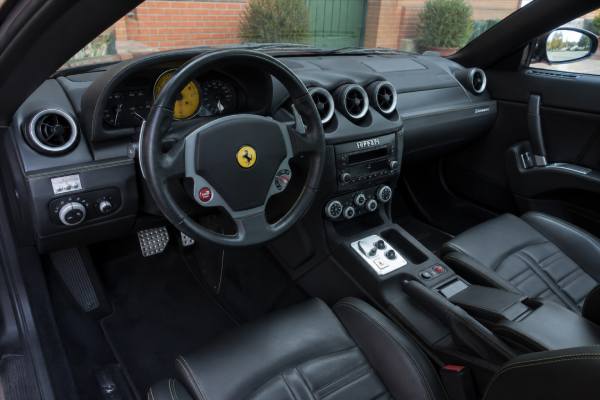
The cockpit follows early-2000s Ferrari thinking: a leather-rich cabin, analog instruments, a prominent central tachometer, metal shift paddles on F1 cars, and a driving position that feels more sporting than luxury-sedan soft. Late cars can have especially rich interiors because of the One-to-One program. That is good for character, but it also means interior condition is a serious value factor.
Several special features define the late cars:
- more developed F1 shift behavior than early automated-manual Ferraris
- adaptive suspension that can make the car both composed and comfortable
- optional or package-dependent carbon-ceramic brakes
- personalization choices that make individual cars feel quite different
- available electrochromic roof on certain special or late specifications
- a naturally aspirated V12 soundtrack with genuine long-distance refinement
The design and engineering also show where the 612 sits between eras. It has modern stability control, adaptive damping, and advanced aluminum construction, but it still feels mechanical compared with later dual-clutch, screen-heavy Ferraris. That mix is now part of its appeal.
Driving Experience and Real Performance
A healthy 612 Scaglietti feels fast, stable, and surprisingly composed rather than nervous or theatrical. Its best driving experience is not a short city blast; it is a fast road, open highway, or long mountain route where the V12, chassis balance, and grand-touring comfort can work together.
Acceleration is strong even by modern standards. The car’s 540 hp output and broad V12 torque make it easy to build speed with little effort. It does not have the instant low-rpm shove of a turbocharged engine, but it gathers pace in a cleaner, more linear way. The upper half of the rev range is where the engine feels most Ferrari-like.
Throttle response is sharp but not harsh. The engine can be driven gently in traffic, yet it wakes up quickly when the throttle opens. The sound is smoother than a mid-engine V8 Ferrari at low speed, but the V12 note becomes harder and more metallic as revs rise.
The F1 gearbox needs the right expectations. It is not as seamless as a modern dual-clutch. In automatic mode, it can feel hesitant, especially at low speeds. Using the paddles and slightly easing the throttle during gentle shifts makes the car smoother. In faster driving, the system feels much better because it was designed around positive, deliberate shifts rather than luxury-car creep.
Steering is one of the pleasant surprises. The 612 is large, but it does not feel vague when the suspension is healthy and the tires are correct. The long wheelbase gives stability, while the rear transaxle helps the car rotate more naturally than its size suggests. It is not a lightweight sports car, but it is balanced and confident.
Ride quality is a major part of the car’s charm. On good tires, with dampers and bushings in proper condition, the 612 can be genuinely comfortable. That makes it more usable than harder-edged Ferraris, especially over poor roads or long distances. A tired car, however, can feel loose, heavy, and expensive within the first few minutes of a test drive.
Braking depends heavily on equipment and condition. Steel brakes are capable for road use and less frightening to service. Carbon-ceramic brakes, where fitted, are desirable but must be inspected for disc life, damage, and replacement cost. A 612 with old tires, old brake fluid, and neglected suspension will not feel like the car Ferrari intended.
Visibility is reasonable for a large GT. The driving position is low but not cramped. The long hood is always present, and the rear quarters require care in tight spaces, but the car is easier to place than its dimensions suggest once the driver adjusts.
The 612 is not best judged as a track car. It can be driven quickly, but its weight, tire costs, brake costs, and grand-touring mission make repeated track use expensive. Its natural environment is a long route where high-speed refinement and a naturally aspirated V12 matter more than lap times.
Maintenance, Reliability, and Restoration Risk
The 612 can be durable when used and serviced correctly, but it is never cheap to own. The biggest risks are not usually catastrophic engine failure; they are deferred maintenance, F1 clutch wear, aging electronics, sticky trim, suspension wear, brake costs, and poor-quality accident repair.
The V12 itself has a good reputation when maintained by specialists. It does not carry the same belt-service anxiety as some older Ferraris, but that does not make it low-maintenance. Oil leaks, cooling-system age, ignition components, sensors, engine mounts, and neglected fluids can still create large invoices. Any rough running, warning lights, overheating history, or incomplete service file should be taken seriously.
The F1 transmission system deserves careful inspection. Clutch wear is measurable with proper diagnostic equipment, and that reading should be part of any pre-purchase inspection. A car that shifts harshly, slips, creeps poorly, or shows gearbox warnings may need clutch work, actuator attention, sensor repair, or calibration. The 2005–2007 F1 clutch-sensor recall is especially important for cars in the affected range.
The brake system also needs documentation. Ferrari’s later brake fluid reservoir cap recall affected 2005–2011 612 Scaglietti cars, among many other models. A buyer should confirm recall completion by VIN rather than assuming it was done. Brake fluid condition, warning lights, pedal feel, and service invoices all matter.
Common ownership and inspection areas include:
- F1 clutch wear percentage and shift quality
- F1 actuator, pump, sensors, and hydraulic leaks
- brake recall completion and brake fluid service
- carbon-ceramic disc condition, if fitted
- suspension bushings, ball joints, dampers, and alignment
- tire age, correct tire specification, and uneven wear
- coolant hoses, radiators, fans, and signs of overheating
- oil leaks from covers, seals, and hoses
- battery condition and history of low-voltage faults
- sticky switches, HVAC buttons, and interior plastics
- leather shrinkage on dashboard and rear shelf
- seat motors, window regulators, parking sensors, and infotainment faults
Interior restoration can be deceptively costly. Many 612s have leather-covered dashboards, console panels, headliners, and rear trim. Heat and age can shrink leather, lift edges, and distort trim. Sticky buttons are common in Ferraris of this era. A cabin that looks only “a little tired” can require a large retrim and refinishing budget if the goal is collector-level presentation.
The aluminum body is another major risk area. Accident repair must be inspected carefully because aluminum structure and body panels require correct procedures. Uneven panel gaps, paint mismatch, corrosion around repairs, damaged undertrays, poorly mounted bumpers, and missing fasteners can reveal a car that has had a harder life than the seller admits.
Parts availability is generally better than for many obscure exotics, but parts are expensive and some trim pieces can be slow to source. The more unusual the specification, the more difficult it can be to match leather, stitching, paint, roof components, or special-order details.
A proper pre-purchase inspection should be performed by a Ferrari specialist familiar with 612s, 575s, 599s, and F1 transmission systems. A generic exotic-car inspection is not enough. The inspector should be able to read clutch data, check service campaigns, inspect the underside properly, evaluate suspension wear, and distinguish factory specification from later changes.
Market Values and Buying Guide
The 612 market is wide because specification changes everything. Ordinary F1 cars can still look like value in the V12 Ferrari world, while factory manuals, Sessanta cars, and excellent One-to-One examples can trade at far higher levels.
Recent public market data often places clean F1 cars in the low-six-figure range, with rougher or higher-mileage cars below that and exceptional late or low-mile cars above it. Factory manual cars are a different market. Because they are rare and represent the last manual Ferrari four-seater, they can command a very large premium over F1 examples. Sessanta cars are also special because of their limited-production status and anniversary identity.
A realistic buyer should think in tiers:
| Type of car | Typical buyer concern | Collector appeal |
|---|---|---|
| Higher-mile F1 coupe | Deferred maintenance, clutch life, sticky interior, suspension wear | Moderate, mostly condition-driven |
| Clean documented F1 coupe | Service history, options, color, recall completion | Good if original and well-kept |
| Late OTO / One-to-One car | Specification quality, documentation, unusual trim condition | Strong when colors and options are desirable |
| Factory manual | Authenticity, gearbox originality, provenance | Very strong |
| 612 Sessanta | Original special-edition equipment, condition, completeness | Very strong due to limited production |
Value is driven by more than mileage. A low-mile car with old tires, sticky interior, no clutch data, and patchy records can be worse than a higher-mile car with annual specialist maintenance. These cars dislike neglect. Regular use, correct servicing, and a thick invoice file are valuable.
The most important value factors are:
- factory specification and option list
- original paint and clean body history
- documented ownership history
- complete service records from recognized specialists or Ferrari dealers
- F1 clutch condition and recent calibration
- completed recalls and service campaigns
- interior condition, especially dashboard leather and sticky trim
- tire age and brake condition
- tools, books, charger, manuals, keys, luggage, and accessories
- color combination and market desirability
Cars to seek include original, unmodified examples with clean paintwork, strong service history, recent major maintenance, healthy clutch readings, fresh tires, and no warning lights. Desirable colors can include traditional Ferrari shades, but many collectors appreciate the 612 in darker metallics, blues, silvers, and elegant historic tones that suit the body better than resale-red thinking.
Cars to avoid include cheap examples with no recent Ferrari specialist inspection, gearbox warnings, poor shift quality, accident history, missing records, badly sticky interiors, old tires, unresolved recalls, or signs of long storage. A 612 that has sat unused may need tires, fluids, battery, fuel-system attention, suspension work, F1 service, and interior restoration before it is truly dependable.
Manual conversions deserve careful thought. A well-executed conversion can improve driving enjoyment, but it should not be valued like a factory manual. Documentation, parts quality, reversibility, and transparency are essential. Misrepresented conversions are a serious red flag.
Long-term collectability looks strongest for factory manual cars, Sessanta cars, excellent OTO cars, and unusually specified low-mileage examples. Standard F1 cars may also become more appreciated as naturally aspirated V12 Ferraris become rarer, but they will remain condition-sensitive. The 612 rewards the buyer who chooses the best car rather than the cheapest car.
References
- Ferrari 612 Scaglietti (2004) – Ferrari.com 2004 (Manufacturer Specifications)
- USA RECALL CAMPAIGN 2008 (Recall Campaign)
- Part 573 Safety Recall Report 22V-536 2022 (Recall Database)
- 2008 Ferrari 612 Scaglietti Base | Hagerty Valuation Tool® 2026 (Valuation Guide)
- Ferrari 612 Scaglietti Market – CLASSIC.COM 2026 (Market Data)
Disclaimer
This article is for informational purposes only and is not a substitute for professional diagnosis, repair, inspection, or valuation. Specifications, torque values, service intervals, recall status, and procedures can vary by VIN, market, production date, equipment, and later updates. Always verify details against official Ferrari service documentation and have any purchase inspected by a qualified Ferrari specialist.
If this guide helped you, please consider sharing it on Facebook, X/Twitter, or your favorite car community to support our work.