
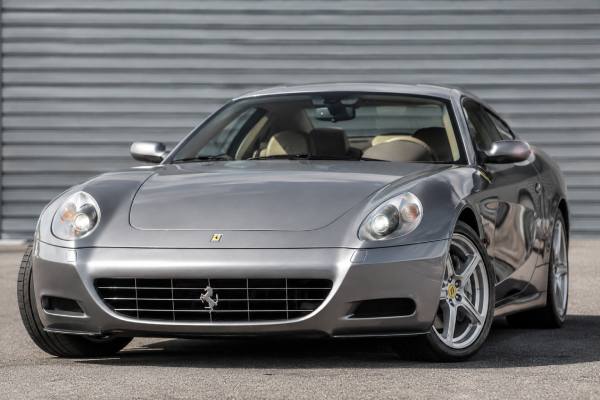
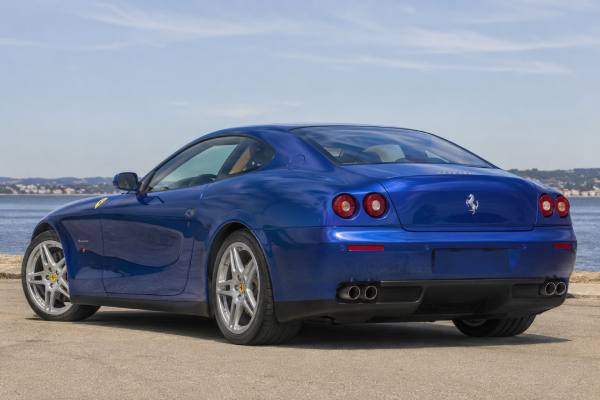
The Ferrari 612 Scaglietti One-to-One is the late-production version of Ferrari’s front-mid-engine V12 2+2 grand tourer. It is not a lightweight track special or a stripped collector trophy. Its purpose is different: carry four people, cover long distances quickly, and deliver a naturally aspirated Ferrari V12 experience with more comfort and personal tailoring than most Maranello cars of its era.
The 2008–2011 One-to-One, often shortened to OTO, matters because it represents the most developed form of the 612. These cars brought the F133H version of the 5.7-liter V12 era, the faster F1 SuperFast automated manual system, the steering-wheel manettino, extensive factory personalization, and desirable late options such as the electrochromic panoramic roof and HGT2 handling package. For buyers, the key is not simply finding a 612. It is finding a correctly documented, well-maintained, original OTO with the right specification and no hidden deferred maintenance.
Quick Take
The 612 Scaglietti One-to-One is most appealing as a discreet V12 Ferrari GT: fast, roomy, rare in late OTO form, and more usable than many mid-engine Ferraris. Its technical identity is built around the all-aluminum F137 chassis, the 5,748 cc F133H naturally aspirated V12, and the late SuperFast F1 transaxle setup. The main caution is ownership cost, especially clutch condition, carbon-ceramic brake wear, tires, sticky interior parts, age-related electronics, and documented recall completion. The best cars are original, fully serviced, well-optioned, and backed by Ferrari build records, manuals, tools, and specialist inspection.
Table of Contents
- Why the OTO 612 Matters
- F133H V12, Chassis, and Specs
- OTO Production, Options, and Identification
- Design, Engineering, and Special Features
- Road Character, Performance, and Usability
- Maintenance, Reliability, and Restoration Risk
- Market Values and Buying Guide
Why the OTO 612 Matters
The One-to-One is the most mature version of the 612 Scaglietti, and that is why collectors and drivers separate it from earlier cars. It kept the same broad grand-touring concept, but added a more modern control layout, faster shifting, richer personalization, and a stronger late-production identity.
Ferrari introduced the 612 Scaglietti as the successor to the 456M, but the 612 was more than a direct replacement. It was larger, more spacious, and more structurally advanced. Its aluminum spaceframe made it an important step in Ferrari’s move away from older steel-bodied V12 GT construction. The result was a big 2+2 that could still feel like a Ferrari rather than a luxury coupe with a badge.
The car sat in a special place in the range. It was the elegant, front-engined V12 Ferrari for people who wanted daily usability, luggage space, and adult rear seats. It was not as dramatic as an Enzo, not as sharp as a 430 Scuderia, and not as overtly aggressive as a 599 GTB Fiorano. Its appeal was more subtle. It delivered the sound and speed of a large Ferrari V12 in a body that could cross countries without punishing its occupants.
The One-to-One program added another layer. Ferrari used the 612 as the launch platform for a more personal ordering process, where buyers could work through color, leather, trim, stitching, wheels, roof, audio, and handling choices in much greater detail. This is why no two OTO cars should be treated as equal on the market. Specification matters as much as mileage.
The OTO also arrived near the end of Ferrari’s naturally aspirated, single-clutch automated manual GT period. Later Ferrari V12 grand tourers moved toward different layouts, including the FF’s shooting-brake body and four-wheel-drive system. The 612 OTO therefore has a distinct identity: it is the final evolution of the traditional, rear-drive, four-seat Ferrari V12 coupe before Ferrari changed the formula.
For enthusiasts, the car’s reputation has improved with time. Early reactions often focused on its size and restrained styling. Today, buyers are more likely to appreciate its long-bonnet proportions, real usability, analog V12 character, and relative rarity compared with more common modern exotic cars. The best examples feel less like used luxury cars and more like understated collector GTs.
For investors and serious collectors, the car’s significance rests on a few points:
- It is a late front-mid-engine Ferrari V12 2+2 with genuine grand-touring ability.
- OTO cars are more desirable than ordinary early F1 examples when specification and condition are strong.
- Manual 612s are much rarer overall, but the OTO identity is mainly tied to the late F1 SuperFast specification.
- Factory documentation, original options, and color combination have a large effect on value.
- Deferred maintenance can erase the price advantage of a cheaper car very quickly.
The 612 OTO is not a car to buy casually because it looks inexpensive beside a modern V12 Ferrari. It is best understood as a complex, low-volume, aluminum-bodied Ferrari GT that rewards careful buying and proper specialist care.
F133H V12, Chassis, and Specs
The late 612 One-to-One uses the F133H version of Ferrari’s naturally aspirated 5.7-liter V12, paired mainly with the updated F1 SuperFast automated manual transaxle. The core numbers still look serious today: 540 hp, a top speed around 320 km/h, and 0–100 km/h in roughly 4.2 seconds.
| Category | Specification |
|---|---|
| Model | Ferrari 612 Scaglietti One-to-One |
| Internal type | F137 |
| Production focus | Late 612, 2008–2011 |
| Engine code | F133H |
| Engine layout | Front-mid-mounted 65-degree V12 |
| Displacement | 5,748 cc |
| Induction | Naturally aspirated |
| Valvetrain | DOHC, 48 valves |
| Maximum output | 540 hp at 7,250 rpm |
| Maximum torque | About 588 Nm at 5,250 rpm |
| Transmission | 6-speed F1 SuperFast automated manual transaxle |
| Drivetrain | Rear-wheel drive |
| Top speed | About 320 km/h |
| 0–100 km/h | About 4.2 seconds |
The engine is the heart of the car’s appeal. It is smooth at low revs, serious in the midrange, and much more exciting near the top of the tachometer. The 612’s name can mislead casual readers because it is not a 6.0-liter car. The displacement is 5,748 cc, and the “12” refers to the V12 engine layout.
The F133H update did not transform the 612 into a different car, but it made the late cars feel more polished. The engine management was updated, the gearbox software became more responsive, and the OTO-era drivetrain feels better integrated than earlier F1 examples. A healthy car should pull cleanly, idle smoothly when warm, and shift without harsh slipping or excessive clutch smell.
| Area | Details |
|---|---|
| Structure | Aluminum spaceframe with aluminum body panels |
| Body style | Two-door 2+2 coupe |
| Suspension | Independent double wishbones front and rear |
| Damping | Adaptive damping with selectable driving modes |
| Brakes | Carbon-ceramic brakes on OTO specification, with condition and fitment verified by build sheet |
| Steering | Power-assisted rack-and-pinion |
| Fuel tank | About 108 liters |
| Wheelbase | 2,950 mm |
| Overall length | About 4,902 mm |
The chassis is as important as the engine. The 612 was a big Ferrari, but its aluminum structure helped control weight and stiffness. The front-mid-engine layout also placed much of the mass behind the front axle line, helping the car feel less nose-heavy than its dimensions suggest.
The rear transaxle layout matters for balance. By placing the gearbox at the rear, Ferrari gave the 612 a more balanced feel than a conventional front-engine, front-gearbox layout would have allowed. The car still feels large, but it does not feel clumsy when properly aligned and fitted with good tires.
Fuel consumption is not a strength. Official U.S. ratings for late 612 models are in the low-teens combined mpg range, depending on transmission. In real use, short trips, cold starts, city driving, and enthusiastic V12 use can make it worse. Anyone buying an OTO should budget for fuel as part of the experience rather than expecting modern GT efficiency.
OTO Production, Options, and Identification
A proper 612 OTO is identified less by one single badge and more by its late-production build process, equipment, and factory documentation. Buyers should confirm the car by VIN, build sheet, options list, service records, and physical specification rather than relying only on seller wording.
The broader 612 Scaglietti production run covered the mid-2000s through 2011, with total production often cited at just over 3,000 cars. The OTO period accounts for a smaller late slice of that run. Because the One-to-One program emphasized personal ordering, two cars from the same model year can differ sharply in desirability.
The major late-production changes include:
- F133H engine management in late cars.
- Updated F1 SuperFast shifting software.
- Revised transmission hardware related to the 599 GTB family.
- Steering-wheel manettino and start button.
- Electrochromic panoramic roof availability.
- HGT2 handling package availability.
- Extensive Atelier-style personalization.
- Widespread carbon-ceramic brake fitment on late OTO specification.
- Greater emphasis on customer-selected colors, leather, stitching, trim, and wheel finishes.
The OTO name can be used loosely in listings, so a buyer should look for supporting evidence. A correct car should have paperwork that confirms its original build specification. Ferrari Classiche documentation is valuable, but even without it, a strong file should include stamped service history, original manuals, factory option information, recall records, and invoices from known Ferrari specialists.
Options that affect desirability
The highest-value OTO cars usually combine a strong color combination, desirable mechanical options, and documented originality. A common black-over-tan car can be beautiful, but rare historical colors, elegant metallics, or carefully chosen two-tone interiors may draw more collector interest.
Important options and features include:
- HGT2 handling package.
- Carbon-ceramic brake system.
- Electrochromic panoramic roof.
- 20-inch Challenge-style wheels.
- Daytona-style or diamond-quilted seats.
- Carbon-fiber interior trim.
- Bose infotainment and parking camera where fitted.
- Special-order leather, stitching, carpets, and headliner materials.
- Scuderia Ferrari shields, depending on buyer preference.
- Complete original luggage, manuals, tools, covers, and keys.
The panoramic electrochromic roof is a signature OTO feature. It gives the cabin a much lighter feel and is often mentioned prominently in listings. It should be tested carefully because replacement or repair is not something to treat casually.
Originality and documentation
Originality matters because many 612s were once treated as depreciated used exotics rather than future collector cars. Wheel changes, aftermarket audio, non-original exhaust work, paint repairs, missing books, and incomplete service records all affect confidence.
A buyer should ask for:
- VIN and assembly information.
- Factory build sheet or option printout.
- Full service invoices, not only stamps.
- Clutch wear readings for F1 cars.
- Carbon-ceramic brake wear data or specialist measurement.
- Confirmation of recall completion.
- Tire age and specification.
- Evidence of annual servicing even when mileage is low.
- Paint-meter readings and accident inspection.
- Original manuals, tools, tire inflator, cover, and keys.
The OTO is at its best when it remains a factory-correct Ferrari, not a modified used luxury coupe. Tasteful maintenance upgrades may be acceptable, but cosmetic changes should be reversible and documented.
Design, Engineering, and Special Features
The 612 OTO’s design is a study in grand-touring proportion rather than visual aggression. Its long hood, swept roofline, scalloped sides, and short rear deck make more sense when viewed as a modern coachbuilt Ferrari 2+2 than as a conventional supercar.
The shape came from Pininfarina and drew inspiration from the famous 375 MM associated with Roberto Rossellini and Ingrid Bergman. That influence is most visible in the side scallops and the way the front fenders frame the nose. The 612 was never universally loved when new, but time has helped its design. It now looks cleaner than many more heavily styled modern exotics.
The engineering underneath is more important than the surface drama. The aluminum spaceframe was a major part of the car’s character. It allowed Ferrari to build a large four-seat coupe with stiffness, refinement, and a more controlled weight penalty. The body panels were also largely aluminum, which is good for weight but important for inspection because aluminum repair requires real expertise.
Packaging and cabin design
The 612 is one of the few Ferraris of its era that can genuinely carry adults in the rear for short-to-medium trips. It is not a limousine, but the wheelbase and roofline give it more usable rear accommodation than many 2+2 coupes. This is one of the reasons the car has aged well: it can do things that a two-seat Berlinetta cannot.
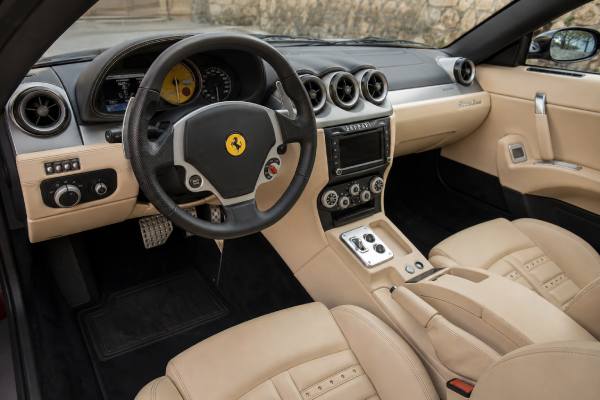
The cockpit blends traditional Ferrari cues with 2000s electronics. The large central tachometer, leather dashboard, metal accents, and gated-style console treatment give the driver a clear sense of occasion. The OTO steering wheel adds the manettino switch and start button, making late cars feel closer to Ferrari’s more modern performance models.
Interior quality depends heavily on care. Leather shrinkage, sticky switches, worn bolsters, sagging headliners, and tired plastics can make an expensive car feel neglected. A carefully stored OTO with soft leather, clean stitching, and functioning controls feels much more special.
Sound and sensory character
The 5.7-liter V12 is not as raw as Ferrari’s most extreme engines, but it has a rich, layered sound. At low speed it is smooth and cultured. As revs build, the intake and exhaust sharpen into a classic front-engine Ferrari note.
The exhaust specification matters. Cars with sport exhaust or HGT2-related equipment usually feel more vocal and urgent. A quiet car is not necessarily wrong, because the 612 was designed as a long-distance GT, but the best examples balance refinement with enough sound to remind you that a large naturally aspirated V12 is working ahead of the cabin.
The OTO’s special features are not gimmicks when they work properly. The manettino changes the car’s behavior, the roof changes cabin atmosphere, and the SuperFast gearbox makes the car feel more responsive. Together they make the late 612 more than an early car with extra leather.
Road Character, Performance, and Usability
A healthy 612 OTO feels fast, stable, and confident rather than nervous or razor-edged. It is a grand tourer first, but the V12, rear transaxle balance, and adaptive suspension give it more driver appeal than its size suggests.
Acceleration is strong from almost any sensible road speed. The engine does not need to be worked hard to make progress, but it rewards revs. Below the midrange it is smooth and easy. Above that, it becomes more obviously Ferrari, with a harder edge to the sound and a stronger rush toward the top of the rev range.
The F1 SuperFast gearbox is central to the experience. It is a single-clutch automated manual, not a modern dual-clutch transmission. That means it needs mechanical sympathy. Driven smoothly, especially with a slight lift during gentler upshifts, it can feel engaging and period-correct. Driven like a modern automatic, it can feel abrupt. In sportier modes and under load, shifts are quicker and more satisfying.
Steering is lighter than an older manual-steering Ferrari but still communicates road surface and front-end load well when the suspension and tires are right. The car’s length and width are always present, especially on narrow roads, but it settles beautifully at speed. This is where the 612 makes sense: fast highway travel, open A-roads, long mountain sections, and cross-country routes.
Ride quality is better than many expect. The car can cover rougher roads without the constant harshness of a track-focused Ferrari, although wheel choice and tire condition matter. 20-inch wheels look good and are desirable, but they make tire quality, tire age, and wheel condition even more important.
Braking performance is strong when the carbon-ceramic system is healthy. The pedal should feel firm and consistent. Any vibration, pulling, warning lights, or unusual noise needs investigation. Carbon-ceramic discs can last a long time when used properly, but replacement cost is high enough to affect the purchase decision.
In everyday use, the 612 is unusually practical for a V12 Ferrari. It has a usable trunk, real rear seats, good long-distance refinement, and enough visibility to be driven regularly. It is still a low-volume exotic, though. Parking sensors and cameras are useful, the front overhang needs care, and city traffic can accelerate clutch wear in F1 cars.
The best driving experience comes from a car that has not just been polished for sale but properly set up. Alignment, tires, suspension bushings, engine mounts, gearbox calibration, and brake condition all shape how the 612 feels. A tired example can feel heavy and dull. A sorted OTO feels expensive, composed, and surprisingly athletic.
Maintenance, Reliability, and Restoration Risk
The 612 OTO can be a robust Ferrari when maintained correctly, but it is not cheap to keep right. The danger is not one universal fatal flaw; it is the combination of age, low use, specialist parts, electronic systems, and expensive deferred maintenance.
The V12 itself is generally respected when serviced properly. Regular fluid changes, correct warm-up, clean cooling systems, and attention to leaks matter more than mileage alone. A low-mile car that has sat unused can be worse than a higher-mile car maintained by a good specialist.
The F1 transmission and clutch require careful inspection. Clutch wear readings are useful, but they are only part of the story. Buyers should also evaluate take-up smoothness, pump behavior, actuator operation, gearbox warning lights, and service history. Stop-start city use can wear the clutch faster than open-road driving.
Known inspection areas include:
- Clutch wear and F1 system calibration.
- F1 pump, actuator, sensors, and hydraulic condition.
- Engine oil leaks and coolant leaks.
- Radiators, hoses, fans, and cooling efficiency.
- Engine mounts and transmission mounts.
- Suspension bushings, ball joints, and adaptive dampers.
- Carbon-ceramic discs, pads, and brake fluid history.
- Tire age, tire brand, and correct speed rating.
- Wheel bends or cracks from pothole impacts.
- Sticky interior switches and soft-touch surfaces.
- Leather dashboard shrinkage from sun exposure.
- Battery health and control-module behavior.
- Roof operation and electrochromic glass function.
- Recall completion, especially brake-related campaigns.
The carbon-ceramic brakes deserve special attention. They can last a very long time in road use, but damage, heavy wear, or replacement needs are expensive. A seller saying “carbon brakes last forever” is not enough. A specialist should inspect disc condition, pad life, warning lights, and service records.
The interior can become a major cost area. Ferrari leather dashboards of this period can shrink or pull near vents and edges. Sticky buttons and trim are common across many Ferraris of the era. These problems are fixable, but proper restoration is labor-intensive and cheap cosmetic fixes can look poor.
Electrical health is also important. Many 612s are used infrequently, and weak batteries can cause misleading warning lights or module issues. A proper battery maintainer is part of ownership. During inspection, every system should be tested: windows, seat motors, HVAC, infotainment, parking sensors, roof, lighting, manettino modes, and warning displays.
Recall history should not be ignored. Earlier 612 F1 cars had a clutch-sensor-related recall, and the wider Ferrari brake fluid reservoir cap recall also affected the 612 range. A buyer should check by VIN with Ferrari or an authorized dealer because completion status is more important than general model-year discussion.
Restoration risk is different from an older steel classic but still serious. Aluminum structure repairs need specialist knowledge. Poor accident repair, hidden corrosion around fasteners, incorrect paintwork, or badly aligned panels can reduce value. Since the 612 is large and relatively subtle, some cars were repaired without the same collector scrutiny given to flagship limited Ferraris.
A sensible maintenance approach includes annual servicing, fluid changes on time rather than mileage alone, frequent battery conditioning, periodic suspension inspection, and immediate attention to leaks or warning lights. Skipping work because the car has only covered a few hundred miles is false economy.
Market Values and Buying Guide
The 612 OTO occupies a useful middle ground in the Ferrari market: rarer and more special than casual observers realize, but still often less expensive than two-seat V12 icons or rare manual Ferraris. The spread between an average F1 car and a top OTO can be large because specification, condition, and documentation drive value.
Recent market activity has shown usable F1 612s in the lower six-figure range, while late OTO examples with strong options, low mileage, and desirable colors can sit notably higher. Exceptional cars, rare special editions, and manual-transmission 612s are their own market and should not be used as direct comparisons for ordinary OTO F1 cars.
Value is influenced by:
- OTO identity and late-production specification.
- HGT2 package and carbon-ceramic brake condition.
- Electrochromic roof and other signature OTO features.
- Factory color combination.
- Interior originality and leather condition.
- Mileage, but only when supported by service history.
- Ferrari dealer or respected specialist maintenance.
- Clean accident history and original body panels.
- Manuals, tools, covers, keys, and accessories.
- Ferrari Classiche or factory documentation.
- Recall completion and recent major service work.
The cheapest car is rarely the best buy. A neglected 612 can need clutch work, brake attention, tires, sticky-part refinishing, suspension repairs, fluids, battery work, and leather correction at the same time. That can quickly exceed the price gap to a better car.
Buyer inspection checklist
A serious pre-purchase inspection should be performed by a Ferrari specialist familiar with 612s and F1 systems. The inspection should include more than a road test and a visual look.
| Priority | What to verify | Why it matters |
|---|---|---|
| Identity | VIN, build sheet, OTO specification, factory options | Confirms the car is what the seller claims |
| Drivetrain | Clutch wear, F1 system function, gearbox behavior | Major cost area and central to driving quality |
| Brakes | Carbon-ceramic disc and pad condition | Replacement can be very expensive |
| Chassis | Accident signs, aluminum repair quality, panel alignment | Structural originality affects safety and value |
| Interior | Leather shrinkage, sticky controls, roof operation | Cosmetic restoration can be costly |
| Service | Invoices, annual maintenance, fluid history, recalls | Shows whether the car was preserved or merely stored |
Seek cars that feel coherent. The best OTOs have matching condition everywhere: clean paint, supple leather, smooth gearbox operation, complete records, correct tires, no warning lights, and a specification that makes sense. Be cautious of cars with shiny presentation but weak paperwork.
Avoid cars with missing history, unclear accident repairs, non-original modifications, neglected interiors, unresolved warning lights, or sellers unwilling to provide clutch and brake data. A bargain 612 that needs everything is not a bargain; it is a project with Ferrari parts prices.
Long-term collectability looks favorable for the best OTO examples because the formula is increasingly rare: naturally aspirated V12, rear-wheel drive, aluminum grand-touring coupe, real 2+2 usability, and highly personalized late-production identity. The market is selective, though. Average cars may remain price-sensitive, while exceptional examples become harder to replace.
The right buyer is someone who wants to use the car as Ferrari intended: long trips, proper warm-up, careful storage, regular servicing, and enough mileage to keep systems healthy. The wrong buyer is someone chasing the lowest entry price into V12 Ferrari ownership without budgeting for maintenance.
References
- Ferrari 612 Scaglietti (2004) – Ferrari.com 2004 (Manufacturer Specifications)
- Gas Mileage of 2011 Ferrari 612 Scaglietti 2011 (Official Fuel Economy)
- USA RECALL CAMPAIGN REF. NO. 47 F1 CLUTCH SENSOR 612 SCAGLIETTI MODEL YEAR 2005 – 2007 2008 (Recall Campaign)
- Part 573 Safety Recall Report 22V-536 2022 (Recall Database)
- Ferrari 612 Scaglietti Market – CLASSIC.COM 2026 (Market Data)
Disclaimer
This article is for informational purposes only and is not a substitute for professional diagnosis, repair, inspection, valuation, or legal advice. Specifications, torque values, service intervals, procedures, recalls, and equipment can vary by VIN, market, model year, and factory option package. Always verify details against official Ferrari service documentation, factory records, and a qualified Ferrari specialist before buying, servicing, or repairing a vehicle.
Please share this article on Facebook, X/Twitter, or your preferred enthusiast community if it helped you. Your support helps us keep producing detailed, practical automotive guides.