
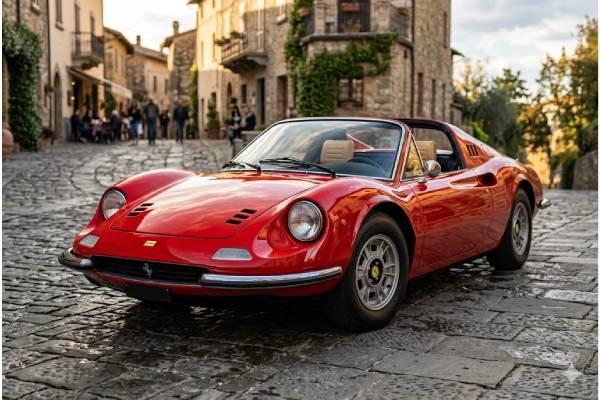
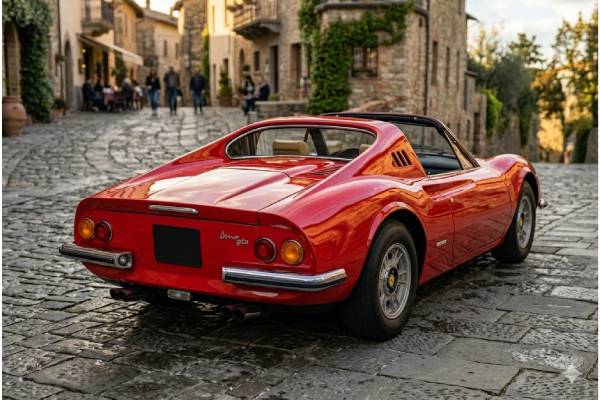
The Ferrari Dino 246 GTS is one of the most loved open Italian sports cars of the early 1970s. It was not sold under full Ferrari badging when new, but history has settled the argument: the Dino is now accepted as one of Maranello’s most important road cars. The 246 GTS combined a mid-mounted V6, compact dimensions, Pininfarina styling, Scaglietti body construction, and a removable roof panel that made it more usable and more desirable in warm-weather markets.
Quick Take
The 1972–1974 Dino 246 GTS is not the fastest classic Ferrari-linked car, but it is one of the most satisfying. Its 2.4-liter Tipo 135 CS V6, five-speed transaxle, independent suspension, and low driving position give it a balanced, intimate feel that larger V12 Ferraris cannot copy. For buyers, the appeal is matched by risk: originality, corrosion, accident history, correct components, roof fit, documentation, and restoration quality matter more than mileage alone.
Table of Contents
- Why the 246 GTS Still Matters
- Tipo 135 CS Engine and Core Specs
- E-Series Production, Options, and Identification
- Pininfarina Shape and Mid-Engine Layout
- Road Feel, Sound, and Real Performance
- Maintenance, Restoration, and Known Risks
- Values, Buying Checks, and Collector Outlook
Why the 246 GTS Still Matters
The Dino 246 GTS matters because it proved that a smaller, lighter, mid-engine sports car could carry Maranello engineering prestige without a front-mounted V12. It helped move Ferrari-related road cars toward the layout that later defined generations of 308, 328, 348, F355, 360, F430, 458, 488, and F8 models.
The Dino name honored Alfredo “Dino” Ferrari, Enzo Ferrari’s son, who was closely associated with Ferrari’s early V6 thinking before his death in 1956. By the late 1960s, Ferrari needed a production V6 road car for both emotional and practical reasons. The company also needed a smaller model to compete with cars such as the Porsche 911 and to support V6 homologation links with Fiat’s Dino program.
The earlier Dino 206 GT introduced the basic formula: a compact, mid-engine berlinetta with a transversely mounted V6 and gorgeous Pininfarina lines. The 246 GT that followed brought a larger 2.4-liter engine, more torque, a longer wheelbase, and a more usable character. The 246 GTS arrived as the open-roof version, giving buyers the same basic mechanical package with a removable roof panel.
The GTS was especially important in the United States, where open sports cars had strong appeal. The lift-off roof panel made the Dino feel more relaxed and glamorous, but it did not turn the car into a soft boulevard cruiser. The basic structure, steering, suspension layout, and powertrain remained close to the coupé.
Collectors prize the 246 GTS for several overlapping reasons:
- It is rarer than the 246 GT coupé.
- It has a strong link to the birth of Ferrari’s mid-engine road-car identity.
- It offers open-air driving without losing the Dino’s compact proportions.
- It has one of Pininfarina’s most graceful 1970s shapes.
- It is usable by classic exotic standards, provided it is maintained properly.
- It sits in a sweet spot between beauty, mechanical simplicity, rarity, and brand importance.
The Dino’s reputation has changed dramatically. For years, some buyers treated it as a “not quite Ferrari” because it used the Dino marque and a V6 engine. That view has largely disappeared. Today the 246 GTS is often judged on its own strengths: balance, design purity, sound, and historical importance rather than cylinder count.
Tipo 135 CS Engine and Core Specs
The Dino 246 GTS uses a 2.4-liter 65-degree V6 known in this application as the Tipo 135 CS, mounted transversely behind the cabin. Its headline output was 195 hp at 7,600 rpm, but the car’s real appeal comes from low weight, gearing, response, and balance rather than raw power.
| Item | Specification |
|---|---|
| Production years | 1972–1974 |
| Body style | Two-seat targa-style spider with removable roof panel |
| Engine code | Tipo 135 CS |
| Engine layout | Rear mid-mounted, transverse 65-degree V6 |
| Displacement | 2,419.20 cc |
| Bore x stroke | 92.5 mm x 60 mm |
| Compression ratio | 9.0:1 |
| Valve gear | Dual overhead camshafts per bank, two valves per cylinder |
| Fuel system | Three Weber twin-choke carburetors |
| Maximum power | 195 hp at 7,600 rpm |
| Transmission | Five-speed manual transaxle |
| Drivetrain | Rear-wheel drive |
| Brakes | Four-wheel hydraulic disc brakes, servo assisted |
| Steering | Rack and pinion |
| Frame | Tubular steel chassis |
The Dino V6 is compact and rev-happy. The 65-degree angle is part of the engine’s character, giving the unit a distinctive sound and allowing neat packaging across the car. The iron block and alloy cylinder heads make it heavier than an all-alloy racing-style unit, but the design is robust when built and serviced correctly.
Unlike later fuel-injected Ferraris, the Dino relies on carburetor tune, ignition health, valve adjustment, and clean fuel delivery to feel right. A properly set-up car starts cleanly, pulls smoothly, and becomes sharper as revs rise. A poorly tuned example can feel flat, lumpy, hesitant, or hot-tempered in traffic.
The five-speed manual transaxle is central to the car’s personality. It rewards patience when cold and precision when warm. The best examples have a mechanical, deliberate shift action rather than the fast, light movement of a modern manual gearbox.
| Area | Useful detail |
|---|---|
| Wheelbase | 2,340 mm |
| Suspension | Independent suspension with wishbones, coil springs, dampers, and anti-roll bars |
| Wheels | Period alloy wheels, with wider Campagnolo wheels on “flares” cars |
| Top speed | About 235 km/h, depending on specification and test conditions |
| 0–60 mph | Commonly quoted in the low-seven-second range for healthy cars |
| Driving character | Light, balanced, communicative, and more agile than many larger period exotics |
Period performance figures vary because test cars, markets, emissions equipment, tire condition, gearing, and measurement methods were not always consistent. A good Dino 246 GTS is quick for its era, but its main performance advantage is not straight-line dominance. It is the way the chassis, steering, engine note, and compact body work together.
E-Series Production, Options, and Identification
Most 246 GTS cars belong to the later E-series production period, which is why correct identification is important. The GTS body, open roof, late production details, market equipment, and factory options can make two cars with similar colors and mileage worth very different money.
The 246 line evolved through several production phases. Early 246 GT cars differed in details from later cars, while GTS production was concentrated in the later period. The GTS was introduced after the GT had already established the 2.4-liter platform, so buyers should treat a GTS as a late-model Dino and inspect it accordingly.
The often-quoted production figure for the 246 GTS is about 1,274 cars. That makes it notably scarcer than the 246 GT coupé. The GTS was built with Scaglietti coachwork and carried the Dino identity rather than full Ferrari nose badging in the way later Ferraris did.
GT versus GTS
The difference is simple at first glance: the GT is the fixed-roof coupé, and the GTS has a removable roof panel. In the market, however, that difference has major consequences. The GTS usually brings stronger money because it is rarer and offers open-air driving. The GT, meanwhile, has the purest roofline and may appeal more to drivers who prefer the cleanest Pininfarina silhouette.
The GTS roof panel should be inspected carefully. Fit, seals, latch condition, storage arrangements, and evidence of water entry all matter. A car with a poorly fitting roof may have worn hardware, previous accident damage, body movement, or restoration errors.
Chairs and flares
The most famous factory-style desirability marker is the “chairs and flares” configuration. This phrase refers to Daytona-style seats and wider wheel-arch flares, often paired with wider Campagnolo wheels. Cars with both features are highly sought after, especially when the specification is documented as original.
Many cars have gained seats, flares, wheels, or visual changes later in life. That does not automatically make them bad drivers, but it changes collectability. A buyer paying top-tier money should verify whether the features were original to the car, period-added, or modern additions.
Documents that matter
For a Dino 246 GTS, paperwork is not a bonus. It is part of the car’s value. The strongest files usually include:
- Ferrari Classiche certification where available and appropriate
- Original books, pouch, tools, jack, and sales documents
- Ownership history with dates and locations
- Service invoices from recognized specialists
- Restoration records with photographs
- Engine, gearbox, chassis, and body-number confirmation
- Color and trim confirmation from trusted marque records
- Import, federalization, or market-conversion records where relevant
Matching-numbers status matters, but it should not be reduced to one phrase in a listing. A proper inspection should confirm the engine number, gearbox number, chassis stamping, body tags, and major component correctness. On valuable Dinos, expert verification is worth the cost.
Pininfarina Shape and Mid-Engine Layout
The Dino 246 GTS looks special because its design is functional without looking technical. Pininfarina gave it flowing fenders, a low nose, soft curves, a compact cabin, and muscular rear haunches that make the car appear light and athletic rather than aggressive.
The mid-engine layout defines the proportions. There is no long V12 hood. The cabin sits forward, the nose is low, and the engine mass sits behind the driver. This gives the Dino a different visual rhythm from a Daytona, 365 GTC/4, or 275 GTB. It feels modern in concept but still delicate in detail.
The GTS changes the look of the 246 by removing the fixed roof and rear quarter-window flow of the GT. Some purists prefer the coupé, but the GTS has its own charm. With the roof removed, the car looks lower and more relaxed. With the roof installed, the black or contrasting panel gives the side profile a different, more 1970s character.
The body was not built like a modern stamped, robot-welded production shell. Hand finishing, panel fit, trim alignment, and restoration history all affect how a Dino presents today. A beautiful Dino should have even gaps, correct brightwork, smooth panel transitions, proper door fit, and no obvious signs that filler is hiding corrosion or accident repair.
Cooling and packaging
The Dino’s beauty hides a packaging challenge. The engine is behind the cabin, but the radiator sits at the front, so coolant travels through long pipes. This makes cooling-system condition very important. Old hoses, tired clamps, blocked radiator cores, weak fans, and trapped air can turn a fine-looking car into a traffic headache.
Airflow also matters. The low nose, side intakes, rear vents, and engine-bay heat management all work as a system. A restored car should keep the correct ducting, panels, seals, and fan operation rather than relying on cosmetic freshness alone.
Cockpit and details
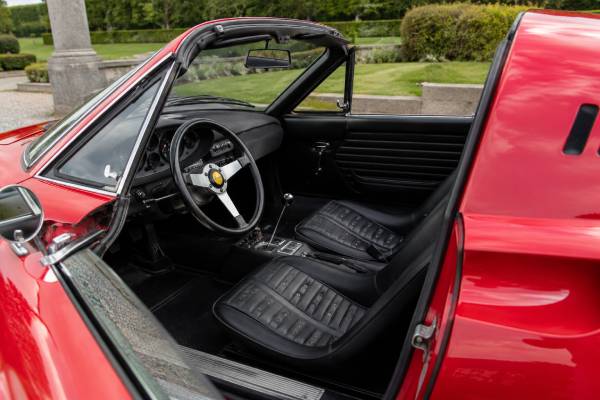
Inside, the Dino feels compact and focused. The driving position is low, the windscreen is close, and the cabin has a clear sports-car feel. Veglia instruments, toggle-style controls, a gated shifter, and slim pillars help create the period atmosphere.
The GTS can be warmer and noisier than the GT, especially with the roof off. That is part of the appeal. A good interior should not look over-restored in a modern way. Correct materials, seat patterns, dash texture, carpets, switchgear, and steering wheel details all affect authenticity.
Road Feel, Sound, and Real Performance
A healthy Dino 246 GTS feels light, eager, and alive at normal road speeds. It is fast enough to enjoy seriously, but it does not need illegal speeds to show its best qualities.
The engine is the center of the experience. At low revs, the V6 has a busy, mechanical texture. As it climbs, the sound sharpens into the intake-and-exhaust note that makes the Dino feel more exotic than its displacement suggests. It does not have the deep authority of a Colombo V12, but it has a musical, hard-edged character that suits the car’s size.
Throttle response depends heavily on carburetor condition and setup. When the Webers are balanced and the ignition system is healthy, the Dino responds cleanly and builds power with enthusiasm. When the car is out of tune, the same engine can feel fussy, flat, or uneven.
The gearbox rewards mechanical sympathy. First shifts from cold can be stiff, and rushing the lever is not the point. Once warm, the five-speed becomes part of the pleasure. The ratios suit a flowing road, and the lever has the positive, metallic feel that many drivers associate with classic Ferraris.
Steering is one of the car’s great strengths. There is no modern electric assistance and no heavy front engine over the nose. At parking speeds it requires effort, but once moving it becomes accurate and talkative. The driver feels the front tires load and release, which makes the car easy to place.
The ride is firm but not punishing when the suspension is fresh and the tires are correct. Old bushings, worn dampers, incorrect ride height, or modern tire choices can make a Dino feel nervous or harsh. Set up correctly, it has a supple, flowing quality that works well on real roads.
Braking expectations should be period-correct. The four-wheel discs are effective for a light early-1970s sports car, but they do not feel like modern carbon-ceramic brakes. Pedal feel, booster condition, hose age, caliper health, and pad choice make a big difference.
The GTS adds open-air enjoyment, wind noise, and more exposure to engine and exhaust sound. It can also add roof-related rattles if the panel, seals, or latches are tired. A tight GTS feels special. A loose one can feel charming for ten minutes and annoying on a long drive.
Maintenance, Restoration, and Known Risks
The Dino 246 GTS is a specialist classic, not a simple old used car. The engine is durable when cared for, but age, corrosion, poor restoration, incorrect parts, and long storage can create expensive problems.
The first risk is corrosion. Dinos can rust in structural and cosmetic areas, and fresh paint can hide serious metalwork. Buyers should inspect the lower body, sills, floors, wheel arches, door bottoms, front and rear valances, suspension pickup areas, battery area, and seams around repaired panels. A magnet and visual check are not enough. A proper lift inspection by a Dino specialist is essential.
The second risk is accident repair. Many Dinos were used hard when they were less valuable. Poorly repaired crash damage can affect panel fit, suspension geometry, roof fit, steering feel, and long-term value. Look for uneven gaps, strange welds, incorrect chassis repairs, distorted mounting points, and mismatched finishes under the car.
Mechanically, the V6 needs correct timing, valve adjustment, carburetor balancing, clean fuel supply, good ignition components, and proper cooling. A car that has sat unused may need more than fluids and a battery. Fuel tanks, lines, pumps, carburetors, hoses, gaskets, seals, and ignition parts can all suffer from age.
Common ownership and restoration concerns include:
- Cooling-system weakness from old hoses, blocked radiator cores, tired fans, or corroded pipes
- Carburetor wear, air leaks, incorrect jetting, or poor synchronization
- Oil leaks from aged seals and gaskets
- Worn engine mounts and gearbox mounts
- Weak second-gear synchro or general transaxle wear
- Clutch wear or poor adjustment
- Brake caliper sticking after storage
- Perished suspension bushings and tired dampers
- Electrical faults from old wiring, grounds, switches, and fuse blocks
- Roof seal leaks and wind noise on GTS cars
- Incorrect trim, wheels, seats, badges, or repaint details after restoration
Restoration quality is a major value driver. A glossy restoration can still be wrong. The best work keeps original identity intact and uses correct materials, finishes, fasteners, plating, wiring routes, upholstery patterns, and mechanical details. Over-modernized restorations may be easier to live with but can lose value with serious collectors.
Parts availability is better than for many obscure exotics because the Dino is valuable and well supported by specialists. That does not mean parts are cheap. Correct wheels, trim, instruments, roof hardware, interior pieces, engine parts, and original accessories can be costly. Labor is often the bigger issue because the car rewards people who know Dinos specifically, not just classic cars generally.
A pre-purchase inspection should include compression and leak-down testing, gearbox assessment, cooling-system pressure check, underside inspection, electrical review, brake inspection, suspension check, verification of identification numbers, and a road test from cold. The inspector should also review the paperwork before judging the car’s value.
Values, Buying Checks, and Collector Outlook
The Dino 246 GTS sits in a strong collector position because it combines rarity, open-roof desirability, Ferrari-linked history, and one of the most admired Pininfarina shapes. Current market results show a wide spread, with ordinary usable cars, restored cars, highly original cars, and exceptional “chairs and flares” examples occupying very different price levels.
As of 2026, public market data often places average Dino 246 GTS values in the mid-six-figure dollar range, while the best documented, rare-specification, freshly presented, or exceptional-provenance cars can sell far higher. Recent headline results above $1 million show what the top of the market will pay for the right car, but that should not be treated as the value of every GTS.
The biggest value drivers are:
- Original body, chassis, engine, and gearbox
- Verified factory colors and trim
- Genuine GTS identity, not a converted car
- Documented “chairs and flares” specification where claimed
- Ferrari Classiche certification or strong marque-expert documentation
- High-quality restoration by respected specialists
- Original books, tools, jack, pouch, and records
- Low ownership count with clear provenance
- Correct wheels, seats, roof panel, trim, and instruments
- No hidden corrosion or questionable crash repair
Buyers should be cautious with cars that look inexpensive. A Dino needing metalwork, paint correction, interior retrim, engine work, gearbox rebuild, suspension renewal, brake overhaul, and correct missing parts can consume a large restoration budget quickly. It is usually cheaper to buy a properly restored or well-preserved car than to rescue a tired one, unless the buyer has unusual access to parts and specialist labor.
| Priority | What to check | Why it matters |
|---|---|---|
| Identity | Chassis, engine, gearbox, body tags, market specification | Authenticity is central to value |
| Body structure | Sills, floors, arches, suspension points, prior repairs | Rust and crash damage are expensive to correct |
| Roof system | Panel fit, latches, seals, storage, water entry | GTS-specific issues affect usability and originality |
| Mechanical health | Compression, leak-down, gearbox, clutch, cooling, brakes | Major repairs require specialist labor |
| Documentation | Books, tools, invoices, restoration photos, ownership trail | Paperwork supports provenance and price |
| Correct details | Seats, wheels, trim, instruments, finishes, colors | Incorrect details can reduce collector appeal |
The best Dino 246 GTS for most collectors is not necessarily the lowest-mileage car. It is the car with the clearest identity, best documentation, soundest structure, correct specification, and proven specialist care. A carefully used, well-maintained example can be more enjoyable than a museum-like car that has sat too long.
For long-term collectability, the outlook remains strong. The Dino has already crossed from “entry Ferrari alternative” into blue-chip classic status. Its beauty, limited production, analog driving experience, and role in Ferrari’s mid-engine story should keep it desirable. The main caution is price discipline. At this level, small differences in originality and condition can mean large differences in value.
References
- Ferrari Dino 246 GTS (1972) – Ferrari.com 1972 (Manufacturer Specifications)
- Ferrari Dino 246 GT (1969) – Ferrari.com 1969 (Manufacturer Specifications)
- 115 – Instruments And Accessories parts diagram for Ferrari 246 Dino GT Coupe & Spyder (From Ch 02132) | Maranello Classic Parts 2026 (Parts Catalog)
- 1974 Ferrari Dino 246 GTS | Gooding Christie’s 2025 (Auction Result)
- Dino 246 GTS Market – CLASSIC.COM 2026 (Market Data)
Disclaimer
This article is for informational purposes only and is not a substitute for professional diagnosis, repair, inspection, valuation, or restoration advice. Specifications, torque values, service intervals, procedures, and correct parts can vary by chassis number, market, production date, equipment, and previous restoration history. Always verify details against official service documentation and a qualified Ferrari Dino specialist before buying, servicing, or restoring a vehicle.
If this guide helped you, please consider sharing it on Facebook, X/Twitter, or your favorite automotive community to support our work.