
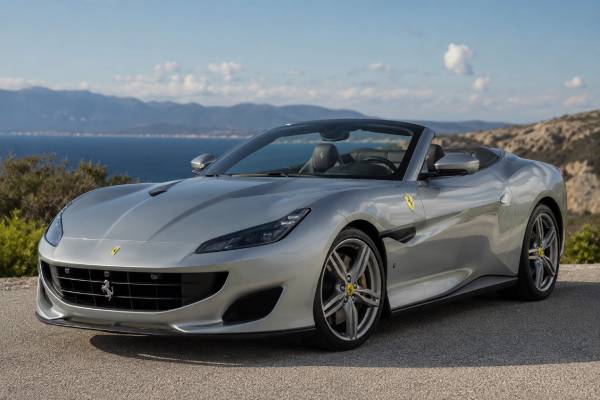
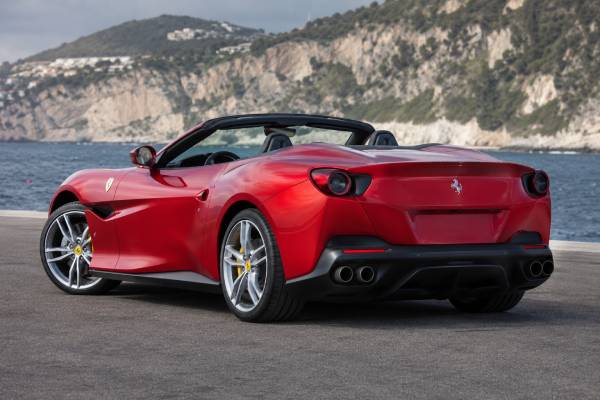
The Ferrari Portofino F164 is the first-generation Portofino, the front-mid-engined V8 retractable-hardtop GT that replaced the California T and sat below Ferrari’s mid-engined sports cars as the brand’s most usable open model. Built for the 2018–2020 period before the Portofino M update, it combined a 3.9-litre twin-turbo F154 BE V8, rear-wheel drive, a 7-speed dual-clutch gearbox, and a folding metal roof with small rear seats. Ferrari quoted 600 cv, commonly rounded in listings as 600 hp, with 0–100 km/h in 3.5 seconds and a top speed above 320 km/h. Its appeal is not rarity in the limited-edition sense. It matters because it is a modern Ferrari that can be used often, still feels special, and now sits in an important used-market window where specification, maintenance history, options, and recall completion make a major difference.
Table of Contents
- Why the F164 Portofino Mattered
- F154 BE V8 Specs and Chassis Data
- Production Years, Options, and Identification
- Design, Engineering, and Convertible Hardware
- Road Character, Performance, and Daily Use
- Maintenance, Reliability, and Specialist Costs
- Market Values, Inspection, and Buying Advice
Why the F164 Portofino Mattered
The Portofino mattered because it turned Ferrari’s open V8 GT into a sharper, more confident car without giving up the retractable roof and everyday usability that made the California line popular. It was not a stripped-out special, but it was a major step forward from the California T in structure, styling, performance, and driver involvement.
Ferrari revealed the Portofino in 2017 as the successor to the California T, with customer cars arriving for the 2018 model period in many markets. The name came from the Italian Riviera town of Portofino, and Ferrari even created a launch colour, Rosso Portofino, to suit the car’s elegant GT identity. That positioning was important. The Portofino had to be relaxed enough for city, coast, and long-distance use, but still serious enough to feel like a real Ferrari when driven quickly.
Its place in the range was unusual. It was the accessible open Ferrari, but not a soft cruiser in the old sense. It used a powerful version of the F154 twin-turbo V8 family, an aluminium body and chassis structure, carbon-ceramic brakes, magnetorheological damping, an electronic differential, and Ferrari’s side-slip and traction systems. It also introduced electric power steering to Ferrari’s front-engined V8 GT line, helping give the car a quicker front-end response than the California T.
For collectors and buyers, the original Portofino now sits in a useful position. It is modern enough to have strong parts support, contemporary diagnostics, good performance, and reasonable usability. It is also old enough that condition and maintenance history are becoming more important than showroom novelty. The later Portofino M brought 620 cv, an 8-speed gearbox, and more aggressive software, so the 2018–2020 Portofino is the cleaner first version of the model rather than the ultimate development.
That distinction matters when buying. A standard Portofino will not usually carry a premium over a Portofino M, but it can still be desirable when the colour, options, mileage, service history, and documentation are right. For many owners, it is one of the easiest modern Ferraris to live with: fast, elegant, roof-down capable, and less intimidating than a track-focused mid-engined model.
F154 BE V8 Specs and Chassis Data
The Portofino’s core specification is simple: a front-mid-mounted 3.9-litre twin-turbo V8, rear-wheel drive, a 7-speed dual-clutch gearbox, and a folding metal roof. The numbers are still serious today, especially because the car delivers its torque low in the rev range and remains stable at high speed.
| Item | Specification |
|---|---|
| Engine | F154 BE 90-degree twin-turbo V8 |
| Displacement | 3,855 cc / 3.9 litres |
| Bore x stroke | 86.5 mm x 82 mm |
| Maximum power | 441 kW / 600 cv at 7,500 rpm |
| Torque | 760 Nm from 3,000 to 5,250 rpm |
| Compression ratio | 9.45:1 |
| Transmission | 7-speed F1 dual-clutch automatic |
| Drivetrain | Rear-wheel drive |
Ferrari’s 600 cv rating is metric horsepower. In some English-language markets, it is often listed as about 591 hp SAE, while sellers frequently round it to 600 hp. The difference is a unit conversion issue, not a different engine tune.
| Item | Specification |
|---|---|
| Length | 4,586 mm |
| Width | 1,938 mm |
| Height | 1,318 mm |
| Wheelbase | 2,670 mm |
| Front / rear track | 1,633 mm / 1,635 mm |
| Kerb weight | 1,664 kg |
| Dry weight | 1,545 kg |
| Weight distribution | 46% front / 54% rear |
| Boot capacity | 292 litres |
| Fuel tank | 80 litres |
| Area | Specification |
|---|---|
| 0–100 km/h | 3.5 seconds |
| 0–200 km/h | 10.8 seconds |
| Top speed | Over 320 km/h |
| Front tyres | 245/35 ZR20 |
| Rear tyres | 285/35 ZR20 |
| Front brakes | 390 mm x 34 mm carbon-ceramic discs |
| Rear brakes | 360 mm x 32 mm carbon-ceramic discs |
| Key systems | E-Diff3, F1-Trac, SCM-E damping, stability control, electric power steering |
The Portofino is a GT, but its hardware is not casual. The carbon-ceramic brakes, wide rear tyres, rear-biased weight distribution, and electronic differential give it the foundation of a real high-performance car. The folding roof, boot, and rear seats add weight and complexity, yet Ferrari’s chassis work helped keep the car responsive rather than soft.
Production Years, Options, and Identification
The 2018–2020 Portofino was sold as one main body style: a 2+2 retractable-hardtop convertible. There was no factory coupe, manual gearbox, lightweight track edition, or numbered special series for the standard F164 Portofino.
Production and model-year labelling vary by market. The original Portofino entered production for the late-2010s model cycle, while the updated Portofino M appeared in 2020 and reached some markets as a later model-year car. For buying purposes, the important split is clear:
| Version | Key differences |
|---|---|
| Portofino F164 | 600 cv, 7-speed dual-clutch gearbox, original styling, no Race mode |
| Portofino M | 620 cv, 8-speed dual-clutch gearbox, revised bumpers, updated controls, added Race mode |
The original car is often the better value. The Portofino M is quicker and more developed, but the standard Portofino gives much of the same visual appeal and open-air GT usability at a lower entry price.
Options matter greatly. Two Portofinos with similar mileage can feel very different in the market because Ferrari buyers care about colour, trim, and factory equipment. Strong specifications often include:
- Carbon-fibre driver zone with LED shift lights.
- Carbon-fibre centre bridge, sill covers, or exterior details.
- Forged 20-inch wheels.
- Daytona-style or full-electric seats.
- Passenger display.
- Upgraded audio.
- Apple CarPlay where fitted.
- Front and rear parking sensors, reversing camera, or surround-view equipment.
- Contrast stitching, coloured seat inserts, embroidered headrests, and special leather.
- Yellow, red, silver, or black brake calipers matched to the exterior and wheel choice.
Tailor Made and Atelier specifications can add appeal, but only when the result is tasteful and well documented. A rare colour can help value, but an awkward colour combination can narrow the buyer pool. Rosso Corsa, Nero, Grigio, Blu, Bianco, and the launch-associated Rosso Portofino all have different audiences.
Identification should be done through paperwork, not badges alone. A buyer should confirm the VIN, build date, market, engine family, factory options, service history, warranty status, and recall completion. Ferrari dealer records, original books, spare keys, battery tender, tool kit, tyre inflator, invoices, and Ferrari Approved inspection documents all add confidence.
For modern Ferraris, “matching numbers” is less central than on a 1960s collector car, but originality still matters. A car with an engine, gearbox, roof module, infotainment unit, or major body component replaced should not automatically be rejected. It does, however, need clear documentation showing why the work was done, who performed it, and whether factory parts and Ferrari diagnostic procedures were used.
Design, Engineering, and Convertible Hardware
The Portofino’s design works because it hides a complex brief: front V8, folding hardtop, rear seats, usable boot, and Ferrari proportions. It is more athletic than the California T, with a lower, longer visual stance and a fastback-like roofline when closed.
The car was designed by the Ferrari Design Team under Flavio Manzoni’s direction. It kept the long-bonnet, short-tail GT format but moved away from the softer shape of the California and California T. The side profile is the key view. With the roof up, the Portofino looks more like a coupe than a traditional convertible. With the roof down, the rear deck and buttresses give it a clean open-car shape without looking chopped or awkward.
The retractable hardtop is central to the car’s appeal. It gives better refinement and security than a fabric roof, and it lets the Portofino behave like a coupe in poor weather. The tradeoff is weight, packaging, and long-term maintenance. The roof mechanism, seals, alignment, drain paths, and trim panels should all be treated as serious inspection points.
Ferrari also put major effort into the aluminium structure. The chassis and body-in-white were redesigned compared with the California T, with more integrated components and modern production methods. That helped reduce weight and increase stiffness, two areas that matter even more in a convertible. A stiff structure helps the suspension work properly, reduces shake over broken roads, and keeps the car feeling precise when the roof is open.
The F154 BE V8 sits behind the front axle line, which is why the car is described as front-mid-engined rather than simply front-engined. That placement helps the 46/54 weight split and gives the Portofino a more balanced feel than its elegant shape might suggest. The turbos, exhaust routing, cooling needs, and intake system are tightly packaged, so heat management and correct servicing are important.
Aerodynamically, the Portofino is not a winged track car. Its design focuses on stability, cooling, and clean airflow around a convertible body. The large front intake, sculpted sides, underbody work, and rear treatment all serve the GT mission. The engineering goal is not to look extreme; it is to keep the car calm at high speed and comfortable over long distances.
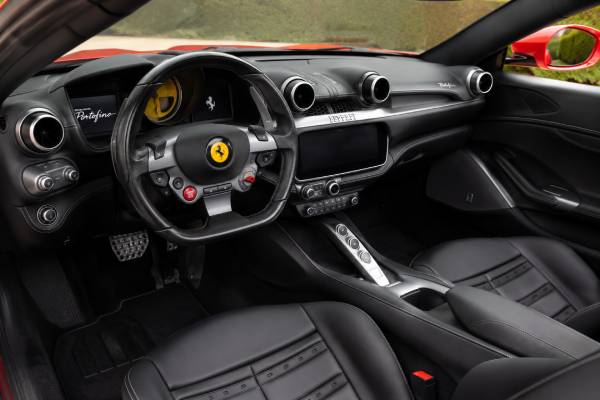
Inside, the Portofino uses a driver-focused Ferrari layout with a central tachometer, steering-wheel controls, paddle shifters, and a broad centre display. The rear seats are best treated as occasional seats for children or very short adult trips. They are more useful as extra luggage space, especially with the roof folded. The cabin quality depends heavily on specification and care. Light leather, heavily used seat bolsters, sticky buttons, scratched carbon trim, and worn switchgear should all affect value.
Road Character, Performance, and Daily Use
The Portofino is fast enough to feel like a true Ferrari, but its personality is more GT than track weapon. Its best quality is the way it combines huge torque, open-air drama, and daily usability without demanding constant effort from the driver.
The engine is the main event. The twin-turbo V8 pulls hard from low revs and keeps building to the top end. It does not have the razor-edged response of Ferrari’s older naturally aspirated V8s, but it is far stronger in the middle of the rev range. That makes the Portofino easy to drive quickly on real roads. You do not need to chase the redline to feel the performance.
Ferrari worked hard to reduce the muted character that can affect turbo engines. The Portofino has sharp throttle response for a turbocharged GT, and the exhaust has a more expensive, layered tone than many rivals. It is not as raw as a 458 or as dramatic as a V12 Ferrari, but with the roof down it still feels special. Buyers should listen for clean cold starts, even idle, normal turbo whistle, and proper operation of exhaust valves without rattles or buzzing.
The 7-speed dual-clutch gearbox is quick, smooth, and well suited to the car. Around town, it behaves like a refined automatic when warm. On a mountain road, it gives crisp paddle shifts and keeps the engine in its broad torque band. Hesitation, harsh engagement, warning lights, or repeated low-speed shuddering need specialist diagnosis before purchase.
The steering is quick and light. Some drivers coming from older hydraulic-steering Ferraris may find it less textured, but it makes the car easy to place and gives the front end a more alert feel than the California T. The rear of the car feels planted rather than nervous, helped by the rear weight bias, tyre size, and E-Diff3.
The ride is one of the Portofino’s strongest everyday traits. Magnetorheological damping allows the car to feel controlled without becoming punishing. On poor roads, wheel choice, tyre age, tyre brand, and alignment make a noticeable difference. A poorly aligned car on old tyres can feel nervous and noisy; a correctly set-up car feels calm and expensive.
The carbon-ceramic brakes are powerful and durable when used properly. In normal road use, they can feel slightly firm at low speeds, and some noise is normal. What is not normal is vibration, pulling, pedal inconsistency, heavy scoring, chipped disc edges, or warning lights. Replacement costs are high enough that brake condition must be part of the price discussion.
As a daily-use Ferrari, the Portofino is more practical than many people expect. Visibility is decent, the roof makes it secure, the boot is useful when the roof is up, and the driving position suits longer trips. The main compromises are width, low ground clearance, expensive tyres, limited rear-seat space, and the constant need to manage battery health if the car is parked for long periods.
Maintenance, Reliability, and Specialist Costs
The Portofino can be a reliable modern Ferrari when it is used, charged, serviced, and inspected correctly. The expensive problems usually come from deferred maintenance, weak batteries, roof neglect, accident history, ignored warnings, or buying on colour and mileage alone.
Ferrari’s seven-year maintenance programme covered many cars from new, with scheduled service generally tied to annual visits or mileage-based intervals up to 20,000 km depending on use and market. For a 2018–2020 Portofino, some cars will now be near the end of that coverage or already beyond it. A buyer should verify coverage by VIN and not assume the programme is still active.
| Area | What to check |
|---|---|
| Service history | Annual stamps, invoices, correct fluids, campaign records, Ferrari diagnostic reports |
| Battery and electronics | Battery age, tender use, warning lights, stored fault codes, infotainment operation |
| Engine | Oil leaks, coolant leaks, turbo plumbing, misfires, smoke, abnormal noises |
| Gearbox | Smooth take-up, no shudder, clean shifts, no DCT warnings or leaks |
| Roof system | Full open-close cycle, seal condition, alignment, rattles, water marks, drain condition |
| Suspension | Damper function, bush wear, lift system where fitted, alignment, tyre wear pattern |
| Brakes | Carbon-ceramic disc condition, pad life, fluid history, recall completion |
| Body and paint | Panel gaps, paint depth, undertray damage, front splitter scrapes, accident repairs |
Battery condition deserves special attention. Modern Ferraris are sensitive to low voltage. A weak battery can trigger warning messages, module faults, roof hesitation, parking-sensor errors, and strange infotainment behaviour. A Portofino should come with its charger, and a careful owner will have used it.
The roof is another major inspection area. Operate it several times from fully closed to fully open and back again. Watch for uneven movement, slow operation, warning messages, trim interference, seal deformation, and water staining inside the boot or rear cabin. A convertible Ferrari with roof faults can quickly become expensive.
The 2022 brake-fluid-reservoir-cap recall is important for affected cars. The issue involved a cap that might not vent correctly, potentially causing brake fluid leakage and loss of braking capability. The remedy involved replacing the cap and updating software in affected vehicles. Any Portofino should be checked by VIN for completed recalls and service campaigns, especially if it moved between countries or passed through independent dealers.
The engine itself is not known as a fragile unit, but it is still a high-output turbocharged Ferrari engine in a hot, tight bay. Look for coolant odour, oil seepage, damaged hoses, misfires, rough cold idle, smoking after idle, and non-factory tuning. Modified engine software or exhaust work may reduce buyer confidence unless fully reversible and well documented.
Carbon-ceramic brakes, tyres, and suspension parts are major cost drivers. Old tyres with good tread are still a problem if they are hardened or mismatched. Uneven rear tyre wear can point to alignment issues or aggressive use. Wheel damage is common on low-profile 20-inch tyres, so inspect inner rims, not only the visible faces.
A pre-purchase inspection by a Ferrari specialist is not optional. The inspection should include diagnostic scans, paint readings, lift inspection, roof operation, brake measurement, tyre-date check, undertray inspection, leak check, service-campaign verification, and a road test from cold.
Market Values, Inspection, and Buying Advice
The Portofino is now a specification-sensitive modern Ferrari rather than a simple used exotic. The best cars are not always the lowest-mileage cars; they are the cars with the right spec, clean history, current servicing, strong cosmetics, and no hidden mechanical or roof issues.
In the current market, original Portofino values usually sit below later Portofino M examples. U.S. asking prices for regular 2018–2020 cars commonly cluster around the high-$100,000 to low-$200,000 range, with mileage, colour, options, dealer status, and condition moving the number. Very low-mileage, highly optioned, Ferrari Approved, or unusual-colour cars can ask more. Accident-history cars, deferred-service cars, unpopular specifications, and high-mileage cars need meaningful discounts.
The strongest value factors are:
- Full Ferrari or recognised-specialist service history.
- Clean title and clean accident history.
- Desirable colour combination.
- Strong factory options, especially carbon driver zone and good seat specification.
- Completed recalls and campaigns.
- Original books, keys, charger, tools, and invoices.
- Recent tyres from a correct premium fitment.
- Clean roof function and dry interior.
- Good carbon-ceramic brake life.
- No non-factory tuning or poorly fitted aftermarket parts.
Mileage should be judged sensibly. A very low-mileage Portofino may look attractive, but long storage can create battery, tyre, seal, and fluid issues. A car with moderate mileage, regular annual service, fresh tyres, clean diagnostics, and careful ownership can be the better buy.
Avoid cars with vague histories. “Just serviced” means little without invoices. “Ferrari maintained” should be backed by dealer records. “No issues” should be confirmed by diagnostic scan and road test. Walk away from any seller who refuses a specialist inspection, cannot explain warning lights, or has no documentation for paintwork, roof repair, or major mechanical work.
A practical buying process looks like this:
- Confirm the exact version, VIN, model year, market, and option list.
- Review service invoices, not only stamped books.
- Check recall and campaign completion by VIN.
- Inspect tyres, brakes, roof operation, paint, underbody, and interior wear.
- Commission a Ferrari specialist pre-purchase inspection.
- Price the car against condition, not just mileage.
- Budget for immediate catch-up work even on a good example.
For long-term collectability, the Portofino is unlikely to behave like a numbered Ferrari special. It was produced as a series model and bought by many owners for usability rather than investment. Even so, good examples should remain desirable because they offer a rare mix: Ferrari badge, open roof, V8 performance, attractive styling, usable cabin, and modern serviceability.
The best Portofino to buy is not necessarily the cheapest one. It is the car that feels tight, drives cleanly, has a complete history, shows no roof or brake surprises, and has a specification you will still like after the purchase excitement fades. Buy one properly, keep it on schedule, maintain the battery, and it can be one of the most enjoyable ways into modern Ferrari ownership.
References
- Ferrari Portofino: the Italian Grand Tourer par excellence 2017 (Manufacturer Press Release)
- The Ferrari Portofino revealed 2017 (Manufacturer Press Release)
- Warranties And Official Ferrari Maintenance 2026 (Manufacturer Maintenance Information)
- Part 573 Safety Recall Report 22V-536 2022 (Recall Database)
- Ferrari Portofino Market – CLASSIC.COM 2026 (Market Data)
Disclaimer
This article is for informational purposes only and is not a substitute for professional diagnosis, repair, appraisal, or pre-purchase inspection. Ferrari specifications, torque values, fluids, intervals, procedures, recalls, and campaign requirements can vary by VIN, market, build date, equipment, and software level. Always verify details against the official service documentation and have the vehicle inspected by a qualified Ferrari specialist or authorised Ferrari dealer.
If you found this guide useful, please consider sharing it on Facebook, X/Twitter, or your preferred car community to support our work.