
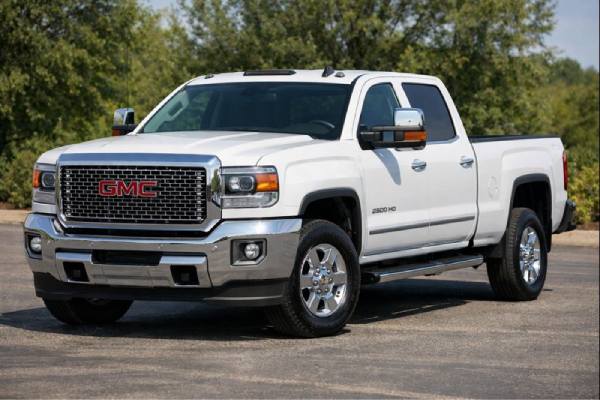
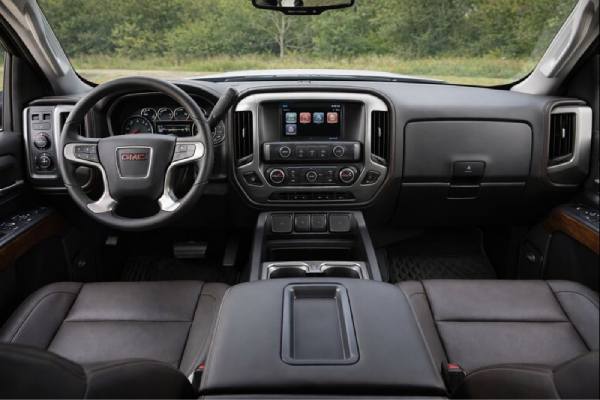
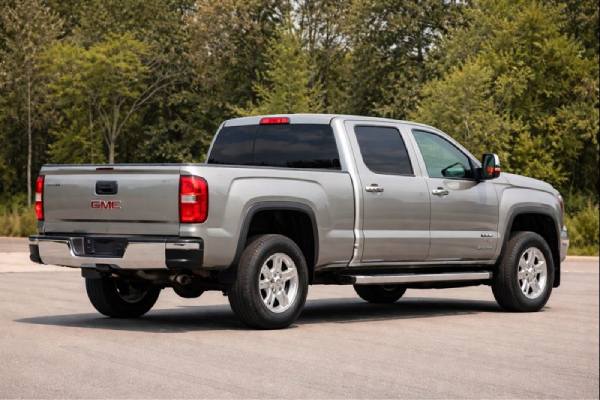
The 2015–2019 GMC Sierra HD 4WD on the K2XX platform was built for work first: strong frames, simple drivetrains, and parts availability that still favors long service life. The LC8 6.0L V8 CNG configuration is a niche but smart fit for fleets that can refuel on-site—especially when fuel cost stability matters more than outright range. You get familiar heavy-duty hardware (solid towing manners, durable axles, and a conventional 4WD system), plus cleaner-burning natural gas that can reduce certain wear patterns and oil contamination.
The trade-off is that CNG ownership is more “systems” than “engine”: tank packaging, high-pressure lines, valves, filters, and fueling habits become just as important as oil changes. When those pieces are understood, this Sierra HD can be an unusually predictable long-term work truck.
Quick Specs and Notes
- Strong low-end drivability for loaded work, with 4WD traction that suits job sites and winter routes.
- CNG can lower fuel spend and soot-related deposits when you have reliable local fueling access.
- The LC8 package adds high-pressure fuel components—budget time for inspections and occasional seal and filter service.
- Change engine oil by the Oil Life Monitor or 12 months, whichever comes first, even with “clean” CNG use.
- Plan a 10,000–15,000 km (6,000–9,000 mi) check cadence for CNG fuel system condition (lines, filters, mounts), adjusted to duty cycle.
Contents and shortcuts
- CNG Sierra HD 4WD in context
- LC8 CNG specs and capacities
- Trims, packages, and safety tech
- Reliability patterns and known fixes
- Maintenance plan and buying tips
- Road manners, towing, and economy
- Rivals and best alternatives
CNG Sierra HD 4WD in context
Think of the LC8 CNG Sierra HD 4WD as two trucks layered into one: a conventional heavy-duty pickup underneath, and an alternative-fuel system sitting on top of it. The heavy-duty side is what most owners already understand—big brakes, stout cooling, a frame designed for payload and towing, and a 4WD system meant to put power down on imperfect surfaces. That foundation is why these trucks remain popular in municipal and contractor fleets.
The CNG side changes how you plan routes and maintenance. Compressed natural gas is stored at very high pressure, so the truck adds cylinders (tanks), brackets, high-pressure lines, and pressure regulation hardware before fuel even reaches the engine. In daily use that means:
- Packaging matters. Depending on the upfit, tanks can reduce bed space, shift weight rearward, and reduce payload versus an otherwise similar gasoline truck.
- Refueling is different. Time-to-fill can vary significantly based on station capacity (fast-fill vs. time-fill), ambient temperature, and how full the storage bank is.
- Your “range” is infrastructure-dependent. If you can refuel on-site, CNG can feel effortless. If you rely on public stations with limited hours or slow-fill, it can feel restrictive.
There are also practical advantages. CNG typically burns cleaner than gasoline, which can reduce soot-related deposits and keep engine oil looking cleaner longer. That said, you should not treat that as permission to stretch oil changes—short trips, idle time, and heavy loads still age oil by heat cycles and moisture.
For buyers, the big decision is not “is a 6.0 V8 reliable?”—it generally is. The real question is “is the CNG system complete, correctly installed, and supported where I operate?” When the answer is yes, the LC8 Sierra HD becomes a stable-cost, easy-to-standardize work truck with a familiar driving feel and fewer diesel-specific ownership variables.
LC8 CNG specs and capacities
This section focuses on what’s most useful when you’re comparing trucks, ordering parts, or sanity-checking a used purchase. Exact figures can vary by cab/box, axle ratio, upfit, and local emissions certification, so treat these as typical values and confirm on the door jamb label and the upfitter documentation.
Engine and performance (LC8 CNG V8)
| Item | Spec (typical) |
|---|---|
| Code | LC8 |
| Engine layout and cylinders | V8, OHV (pushrod), 2 valves/cyl (16 valves total) |
| Displacement | 6.0 L (≈ 5,967 cc) |
| Bore × stroke | ≈ 101.6 × 92.0 mm (4.00 × 3.62 in) |
| Induction | Naturally aspirated |
| Fuel system | Dedicated CNG (high-pressure storage + regulation) |
| Compression ratio | ≈ 9.6:1 (typical LC8 family spec) |
| Max power | 360 hp (268 kW) @ rpm (varies by calibration) |
| Max torque | ~515 Nm (380 lb-ft) @ rpm (varies by calibration) |
| Timing drive | Chain |
| Emissions/efficiency standard | Market-specific (fleet/commercial certifications vary) |
Transmission and 4WD driveline (common K2XX HD configuration)
| Item | Spec (typical) |
|---|---|
| Transmission | 6-speed heavy-duty automatic (commonly 6L90 family) |
| Drive type | 4WD (2-speed transfer case; system varies by trim and year) |
| Differentials | Open standard; locking rear differential commonly available depending on package |
| Final drive ratios | Commonly 3.73 or 4.10 (confirm RPO/axle label) |
Chassis, dimensions, and weights (ranges)
Because Sierra HD pickups came in multiple wheelbases and body styles, the most honest way to list dimensions is as ranges. Confirm your exact truck by cab/box.
| Item | Typical range (varies by configuration) |
|---|---|
| Length | ~5,850–6,670 mm (230–263 in) |
| Width (no mirrors) | ~2,045 mm (80.5 in) |
| Height | ~1,980–2,050 mm (78–81 in) |
| Wheelbase | ~3,350–4,180 mm (132–165 in) |
| Curb weight | ~2,900–3,400 kg (6,400–7,500 lb) |
| GVWR | commonly up to ~4,309 kg (9,500 lb) on many 2500HD configs (verify) |
CNG-specific capacities (what to verify)
| Item | What to look for |
|---|---|
| CNG cylinder capacity | Rated in GGE (gasoline gallon equivalent) or gasoline-liter equivalent; varies by upfit |
| Service life | Cylinder label shows manufacture date and end-of-life date; do not assume “forever” |
| Pressure rating | Common service pressure is in the 3,600 psi class (check label) |
| Fuel plumbing | Inspect routing, chafe protection, and secure mounting at every service |
If you’re building a maintenance plan or comparing two used trucks, prioritize three documents: the standard owner manual for the chassis, the upfitter paperwork for the CNG system (cylinders/regulators/filters), and the vehicle’s option content listing (so you know which 4WD transfer case and axle ratio you’re actually maintaining).
Trims, packages, and safety tech
Most LC8 CNG Sierra HD trucks were purchased for commercial use, so you’ll see a skew toward practical trims and fleet-friendly equipment rather than fully loaded luxury. That matters because “Sierra HD” is a wide umbrella: the same platform can feel very different depending on suspension tuning, wheel/tire load rating, and towing hardware.
Trims and configurations you’ll commonly encounter
- Work Truck / base fleet trims (common): Durable interior materials, simpler infotainment, and fewer electronic options. These trucks are often the easiest to keep in service because they have fewer high-cost convenience modules.
- SLE / SLT (less common in CNG fleets): More comfort features, upgraded seats, and more available towing conveniences. These can be excellent if maintained, but diagnosing electrical issues may take more time due to added modules.
- Cab and bed choices: Regular cab, double cab, and crew cab all exist across these years. The cab/box choice changes wheelbase, turning circle, and how CNG tank packaging affects payload distribution.
Options that materially change capability
When you’re evaluating one truck against another, look for options that change the “hard math”:
- Axle ratio and locking differential: These can change launch feel, hill performance, and how confident the truck is when towing at speed.
- Towing equipment: Factory tow mirrors, integrated brake controller, and heavy-duty trailering wiring reduce rework and improve reliability compared with improvised aftermarket wiring.
- Tire class and wheels: On HD trucks, the tire’s load range (and age) can matter more than tread depth for safe towing.
Safety ratings (what to expect)
For many heavy-duty pickups, public crash-test rating coverage can be limited compared with mainstream passenger vehicles. In practice, owners rely on:
- Standard safety equipment: Front airbags, stability control, ABS, and trailer-sway-related functions (where equipped).
- Fleet safety policy: Tires, brakes, and load securement often have a bigger real-world impact than optional driver-assistance on this generation.
Driver assistance and practical safety tech
Don’t expect a modern ADAS suite on a 2015–2019 HD pickup, but you may see:
- Rear camera (increasingly common through the run)
- Rear parking sensors on better-equipped trims
- Trailer brake controller and trailer sway mitigation features (equipment-dependent)
If a truck has been repaired after a crash or modified for fleet use, verify sensor placement and wiring integrity. A “simple” backup camera fault can sometimes be a symptom of splices, corrosion in connectors, or a poorly grounded aftermarket accessory—issues that become more common in work-truck life.
Reliability patterns and known fixes
A well-kept 6.0L HD gasoline powertrain is typically valued for predictable longevity. With the LC8 CNG variant, the engine can remain the least dramatic part of ownership—while the fuel system becomes the place where small problems create downtime if ignored.
Below are issues grouped by prevalence and cost tier. Mileage bands are approximate because idle hours and towing load can age components faster than the odometer suggests.
Common (low to medium cost)
- Exhaust manifold bolt leaks (tick on cold start):
Symptom: ticking noise that quiets warm, sometimes an exhaust smell.
Likely cause: heat cycling and fastener fatigue.
Remedy: replace failed bolts, check manifold flatness, and fix early before it erodes sealing surfaces. - Accessory drive wear (belt noise, tensioner wobble):
Symptom: squeal, chirp, or belt tracking issues.
Cause: tensioner/idler wear, misalignment, or contaminated belt.
Remedy: replace tensioner and idlers as a set when wear is visible; verify pulley alignment. - EVAP and emissions-related faults (check-engine lights):
Symptom: intermittent MIL, fueling odor, poor start after fill events.
Cause: purge solenoid issues, cracked hoses, or sealing problems.
Remedy: smoke test and replace failed valves/hoses; keep repairs tidy because fleets often accumulate “temporary” fixes.
Occasional (medium cost)
- Cooling system seepage (coolant smell, slow loss):
Symptom: low coolant over time without obvious puddles.
Cause: aging hoses, water pump seep, radiator end-tank seep.
Remedy: pressure test, repair proactively before heavy towing seasons. - 4WD engagement or transfer-case-related quirks:
Symptom: delayed engagement, noises, or warning messages.
Cause: actuator wear, sensor faults, fluid neglect, or wiring/ground issues.
Remedy: verify correct fluid and service intervals; address wiring corrosion early.
CNG-system specific (medium to high cost, downtime-sensitive)
- High-pressure leaks (odor near tanks, hissing, pressure loss):
Symptom: smell near the rear of the truck, audible leak, or abnormal fuel pressure behavior.
Cause: fitting seal wear, damaged lines, chafe points, or improper torque on fittings.
Remedy: leak test with appropriate methods, correct routing and protection, replace seals/lines as specified by the CNG system supplier. - Regulator performance problems (hard starts, hesitation, stalling):
Symptom: inconsistent idle, hesitation under load, or cold-weather driveability issues.
Cause: contamination, icing/thermal management issues, or internal wear.
Remedy: replace filters on schedule, verify heater/thermal routing if applicable, and update calibrations where supported. - Cylinder date/inspection noncompliance (purchase risk):
Symptom: none—this is a paperwork and compliance issue.
Cause: missing inspection records or cylinders near end-of-life.
Remedy: verify cylinder labels, inspection requirements, and budget replacement if dates are near limits.
The most important reliability habit is simple: treat the CNG system like a piece of industrial equipment. If you routinely inspect mounts, lines, fittings, and filters, you prevent the kinds of leaks and drivability faults that turn a good truck into a frustrating one.
Maintenance plan and buying tips
A practical maintenance plan for this Sierra HD should be built around three realities: heavy-duty use accelerates wear, CNG adds inspection needs, and fleets often accumulate “maintenance debt” when trucks are kept running through busy seasons.
Baseline maintenance schedule (distance and time)
Use this as a conservative starting point, then adjust to your duty cycle.
- Engine oil and filter: Follow Oil Life Monitor, or 12 months max. Severe service (idle, short trips, heavy towing): shorten the interval.
- Engine air filter: Inspect every 10,000–15,000 km (6,000–9,000 mi); replace when loaded or annually in dusty service.
- Cabin air filter (if equipped): Inspect every 15,000–20,000 km (9,000–12,000 mi); replace at least yearly for work trucks.
- Spark plugs: Many fleets plan 96,000 km (60,000 mi)-class intervals for gaseous-fuel trucks unless documentation supports longer; confirm your exact LC8 spec.
- Coolant: Replace on the manufacturer schedule; test freeze/boil protection yearly if trucks see winter and heavy towing.
- Transmission fluid: For heavy towing or frequent heat cycling, consider service in the 60,000–100,000 km (40,000–60,000 mi) range; confirm the exact interval guidance for your use.
- Transfer case and differentials: Service more often for off-road, snow operations, or frequent trailer work. Fluid condition tells the truth—check it, don’t guess.
- Brake fluid: Every 2 years, especially in humid or corrosion-prone regions.
- Brake pads/rotors: Inspect at every tire rotation; HD trucks can consume brakes quickly when used in stop-and-go loaded routes.
- Tires: Rotate and inspect every 10,000–12,000 km (6,000–7,500 mi); verify load range and replace aged tires even if tread remains.
CNG-specific service habits (non-negotiable)
- Visual inspection cadence: At minimum, inspect tanks, mounts, shields, and line routing at every oil service.
- Filter discipline: Replace CNG system filters on the schedule recommended by the system supplier or fleet standard. Skipped filter changes are a common root cause behind regulator and injector complaints.
- Leak checks after any underbody work: Any time a truck gets suspension, hitch, or bed repairs, re-check CNG line routing and attachment points.
Buyer’s guide checklist (what to inspect before purchase)
- Documentation: Upfitter paperwork, cylinder labels/dates, and any inspection records. Missing paperwork is a price lever—or a reason to walk.
- Underbody condition: Look for corrosion at brake lines, frame edges, and around tank mounts and shields.
- Fuel system integrity: Evidence of chafing, improvised clamps, or wet/oily residue near fittings (even if it’s “not leaking now”).
- Driveline feel: 4WD engagement test, listen for clunks on takeoff, and check for vibration under load.
- Cooling system health: Pressure test if possible; towing trucks that overheat even once can develop recurring issues.
Long-term outlook: if the truck’s CNG system is supported in your region and the chassis is not rust-compromised, the LC8 Sierra HD can be a steady, cost-manageable work platform—especially for predictable routes and fleet-controlled maintenance.
Road manners, towing, and economy
A Sierra HD 4WD of this era is designed to feel stable under load rather than “light” when empty. Expect a firm ride on broken pavement, a planted front end at highway speeds, and steering that prioritizes durability over delicate feedback. With good tires and tight front suspension components, these trucks track straight and feel confident towing—exactly what fleet operators want.
Powertrain character on CNG
The LC8’s natural aspiration means throttle response is linear—no turbo lag, no sudden torque spike. Under load, you’ll feel the engine build power with rpm, and the transmission will often prefer downshifts rather than lugging. That’s normal for a gasoline/CNG HD truck: it makes its best work when it can spin.
Practical notes that owners notice:
- Cold behavior: Depending on the CNG system design and ambient temperature, cold starts and early driveaway can be slightly more sensitive to fuel pressure stability than a pure gasoline truck.
- Shift logic: With a trailer, the truck will generally hold gears longer and downshift earlier. If it hunts gears excessively, check for incorrect axle ratio expectations (calibration mismatch), tired sensors, or a transmission that is overdue for service.
Real-world efficiency (useful ranges)
Fuel economy on HD trucks varies dramatically with speed, payload, tire choice, and idle time. For that reason, ranges are more helpful than single numbers.
- Mixed driving (light to moderate load): roughly 17–22 L/100 km gasoline-equivalent (11–14 mpg US / 13–17 mpg UK)
- Highway at 100–120 km/h (60–75 mph), unloaded: roughly 15–20 L/100 km (12–16 mpg US / 14–19 mpg UK)
- Towing moderate loads: expect +25% to +60% higher consumption depending on trailer shape, grade, and speed
CNG adds another layer: you’ll often track consumption in gasoline-gallon-equivalent (GGE) terms. Many fleets find the truck’s “cost per kilometer” is the real win rather than maximum range, especially when time-fill stations are available overnight.
Towing and load behavior
Under towing, this platform’s strengths are stability and thermal capacity—provided the cooling system is healthy and the truck is correctly equipped. For best results:
- Keep speeds reasonable; aero drag is what punishes HD fuel economy the most.
- Use tow/haul mode consistently when towing.
- Maintain tire pressures appropriate for load and verify trailer brake controller function.
If your use case is frequent heavy towing at high combined weights, a diesel variant may still outperform on torque and long-grade efficiency. But for predictable regional towing and fleet fueling, the LC8 CNG setup can deliver consistent behavior and simpler emissions-related ownership than modern diesel systems.
Rivals and best alternatives
The right comparison for an LC8 CNG Sierra HD is less about brand loyalty and more about how your operation fuels, loads, and maintains vehicles. Here’s how it generally stacks up against the most common alternatives.
Versus diesel HD pickups (Duramax/Power Stroke/Cummins)
Where the LC8 CNG can win
- Lower and more stable fuel cost in fleets with contracted natural gas supply
- Potentially simpler long-term emissions complexity compared with modern diesel aftertreatment
- Familiar V8 service patterns and widely available conventional HD chassis parts
Where diesel often wins
- Better low-rpm torque for very heavy towing and steep grades
- Better range for long-distance routes without reliable CNG infrastructure
- Strong resale in certain markets where diesel demand remains high
If your trucks spend their life towing near maximum ratings or running long highway legs across rural regions, diesel often remains the more efficient tool. If your routes are local/regional with known refueling points, CNG can be the more predictable cost tool.
Versus gasoline-only 6.0L HD trucks (L96-style)
This is the closest “apples to apples” comparison because the driving feel and chassis experience can be similar.
CNG advantages
- Fuel cost and emissions profile can be attractive for fleets
- Cleaner combustion can reduce some deposit-related concerns
CNG disadvantages
- Added system complexity: tanks, regulators, high-pressure lines, periodic inspections, and paperwork
- Packaging and payload compromises depending on upfit
If you don’t have dependable CNG access, the gasoline-only truck is usually the better ownership experience. If you do, the LC8 can be the smarter fleet standard—especially when you factor in centralized maintenance and refueling.
Versus Ford and Ram gas HD offerings
Competitors’ gas HD trucks (and their aftermarket alternative-fuel conversions) can be viable, but the decision often comes down to:
- Availability of OEM-style alternative fuel documentation and service support
- Upfitter network strength in your region
- How standardized your fleet already is (parts, diagnostics tools, technician familiarity)
For most buyers, the best “rival” is the one with the strongest local support for alternative fuel systems. A slightly better truck on paper can become a worse truck in practice if no one nearby can properly service the CNG hardware.
References
- 2019 GMC Sierra Owner’s Manual 2019 (Owner’s Manual)
- 6.0L V-8 LC8 ALTERNATIVE FUEL COMPATIBLE 2020 (Technical Guide)
- Body Builder Manuals | GM Upfitter 2025 (Service Manual)
- Vehicle ratings 2025 (Safety Rating)
Disclaimer
This article is for informational purposes only and is not a substitute for professional diagnosis, inspection, or repair. Specifications, torque values, service intervals, and procedures can vary by VIN, market, upfit system, and equipment. Always confirm details using official service documentation and the CNG system supplier’s instructions for your exact vehicle.
If this guide helped, please consider sharing it on Facebook, X (Twitter), or your preferred platform to support our work.