
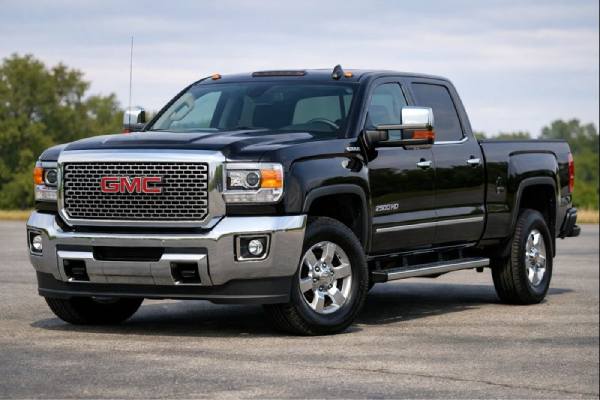
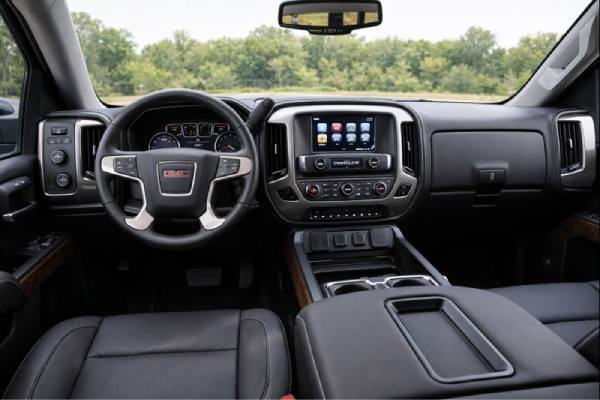
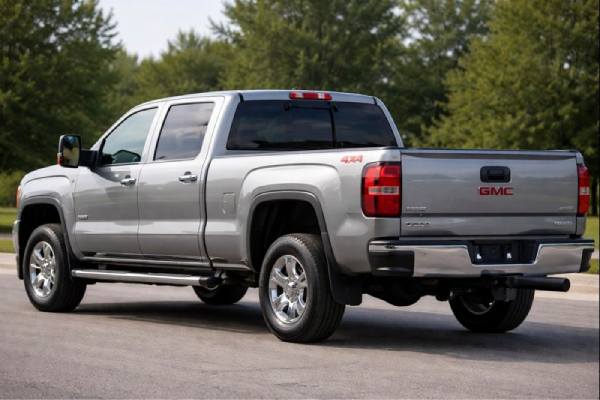
The 2015–2019 GMC Sierra HD in RWD form with the L96 6.0L gas V8 is the “simple heavy-duty” choice in the GMTK2XX generation: fewer diesel emissions systems, a proven pushrod V8, and a chassis built for payload and steady towing rather than comfort-car manners. The 6.0L doesn’t make diesel-like low-rpm torque, but it’s predictable, serviceable, and well matched to the HD cooling package and 6-speed automatic—especially when geared correctly for your trailer.
For owners, the big story is trade-offs: lower complexity and often lower acquisition costs versus higher fuel use under load, more revs on grades, and a suspension tuned for work. If you understand how GVWR, axle ratings, and hitch setup drive real capability, the L96 Sierra HD RWD can be a reliable long-haul partner for fleets, contractors, and RV towing in fair-weather regions.
At a Glance
- Strong “work truck” durability with a straightforward 6.0L V8 and fewer emissions components than the diesel.
- RWD helps curb weight and can increase payload versus similar 4WD builds.
- Towing can reach roughly 13,000–14,400 lb (5,897–6,532 kg) on properly equipped 2500HD/3500HD 2WD setups.
- Budget for ignition and exhaust wear items over time (manifold bolts, plugs, coils), plus transmission heat management if towing often.
- Follow the oil life monitor, but plan on oil changes about every 8,000–12,000 km (5,000–7,500 mi) or 12 months, whichever comes first.
Navigate this guide
- GMC Sierra HD RWD snapshot
- L96 6.0 V8 specs
- Sierra HD trims, towing, and safety
- Reliability watchlist and recalls
- Maintenance plan and buyer tips
- Driving feel and fuel use
- Rivals and best alternatives
GMC Sierra HD RWD snapshot
The GMTK2XX Sierra 2500HD/3500HD (2015–2019) sits in a specific sweet spot: modern enough to have strong structure, refined braking and stability systems, and current-era interiors, but old-school enough to keep the powertrain straightforward—especially with the L96 6.0L gasoline V8. In RWD form, these trucks are typically bought for three reasons: payload, predictable towing behavior on pavement, and lower ownership complexity compared with the Duramax diesel.
Mechanically, the L96 is a naturally aspirated, iron-block 6.0L pushrod V8 with port fuel injection. That matters because it tends to be tolerant of real-world use—short trips, idling, and seasonal storage—without the same emissions aftertreatment and high-pressure fuel-system risks that shape diesel ownership. The flip side is power delivery: you’ll use revs to hold speed on grades, and gearing becomes a real decision, not a checkbox. If you tow often, a 4.10 axle ratio can make the truck feel noticeably more “willing” than a taller ratio, especially with heavier trailers.
RWD configuration changes the ownership equation. You usually gain some payload headroom and reduce front-driveline maintenance, but you must manage traction differently. Tires, load in the bed, and differential choice (including available automatic locking behavior) matter more in rain, loose gravel, or winter conditions. For most buyers considering 2WD HD trucks, the best real-world match is commercial use, frequent highway miles, and towing on paved roads.
One more point that separates the Sierra HD from half-tons: capability is limited by ratings, not horsepower. The most important numbers are GVWR, rear axle rating, tire load index, and hitch/receiver ratings. Once you understand those, the L96 truck can be configured to do hard work with fewer surprises—and fewer expensive emissions-related repairs down the line.
L96 6.0 V8 specs
Below is a specs-first view for the 2015–2019 Sierra HD RWD with the L96 6.0L gas V8. Some details vary by cab/box, 2500HD vs 3500HD, and axle configuration (SRW vs DRW). Use the tables to identify what’s “core hardware” versus what changes with configuration.
Engine and performance (L96)
| Item | Specification |
|---|---|
| Code | L96 |
| Engine layout and cylinders | V8, OHV (pushrod), 2 valves/cyl (16-valve) |
| Bore × stroke | 101.6 × 92.0 mm (4.00 × 3.62 in) |
| Displacement | 6.0 L (5,967 cc) |
| Induction | Naturally aspirated |
| Fuel system | Port fuel injection |
| Compression ratio | ~9.6:1 (typical L96 spec) |
| Max power | 360 hp (268 kW) @ ~5,400 rpm |
| Max torque | 515 Nm (380 lb-ft) @ ~4,200 rpm |
| Timing drive | Chain |
| Emissions/efficiency standard | U.S. EPA light-duty rules apply differently by GVWR; many HD trims are not EPA fuel-economy-label rated |
Efficiency reality check (what to expect): Many 2500HD/3500HD configurations fall outside the typical window for consumer fuel-economy labels, so your “baseline” is real-world use. Unloaded highway driving often lands in the low-to-mid teens mpg (U.S.) if speeds are reasonable. Under load, fuel use rises quickly—especially at higher speeds or into headwinds—because the L96 makes its power higher in the rev range than the diesel option.
Transmission and driveline (RWD)
| Item | Specification |
|---|---|
| Transmission | 6-speed automatic (heavy-duty unit used in HD applications) |
| Drive type | RWD (2WD) |
| Axle ratios (typical) | 4.10 common on tow-focused builds; other ratios vary by GVWR package |
| Differential | Open rear differential common; automatic locking function available on many trims/packages |
A practical note: if you tow near the top of the chart often, prioritize cooling and gearing. Tow/Haul mode, a healthy transmission cooler, and conservative fluid change intervals can matter more than chasing a small horsepower difference on paper.
Chassis, dimensions, and weights (range overview)
HD dimensions vary widely by cab (regular/double/crew) and bed (standard/long). Use ranges rather than a single number:
| Item | Typical range (varies by configuration) |
|---|---|
| Length | ~5,850–6,450 mm (~230–254 in) |
| Wheelbase | ~3,600–4,175 mm (~142–164.5 in) |
| Width (body) | ~2,040 mm (~80.3 in), mirrors excluded |
| Fuel tank | 136.3 L (36.0 US gal / 30.0 UK gal) |
| GVWR (typical) | ~4,309–5,900+ kg (~9,500–13,000+ lb), depends on 2500HD/3500HD and SRW/DRW |
Fluids and service capacities (use VIN-specific confirmation)
These are common service decision points for L96 HD trucks:
| Item | Typical specification and capacity |
|---|---|
| Engine oil | 5W-30; 5.7 L (6.0 US qt) |
| Spark plug gap | 0.95–1.10 mm (0.037–0.043 in) |
| Rear axle lubricant | 75W-90 (capacity varies by axle and housing) |
| Wheel lug nuts (HD 8-lug typical) | 190 Nm (140 lb-ft) torque |
Because these trucks were sold in many configurations, treat capacities and torque values as “starting points” and verify against the under-hood label, owner’s manual for your year, and service documentation for your axle and wheel package.
Sierra HD trims, towing, and safety
Trims and options that matter on the L96 RWD truck
For 2015–2019, Sierra HD trims typically include base/work truck, SLE, SLT, and Denali. On the used market, trim matters less than option content—especially trailering hardware, axle ratio, and rear axle type.
Key options and why they matter:
- Trailering equipment and wiring: Look for integrated 7-pin wiring, hitch receiver rating, and the right mirrors for your trailer width. A truck can be “HD” and still be poorly optioned for towing.
- Axle ratio selection: If you tow heavy or live in hilly terrain, a tow-oriented ratio (often 4.10) can noticeably improve grade performance and reduce hunting between gears.
- Automatic locking rear differential: Helpful in RWD trucks for boat ramps, wet grass, and gravel job sites. It’s not a substitute for 4WD, but it can prevent the “one tire fire” that strands unloaded 2WD trucks.
- Upfit and payload packages: Camper/tow packages, springs, and tires can change payload and how stable the truck feels under tongue weight.
- Bed and cab choice: Crew cab comfort is great, but wheelbase affects turning circle and trailer behavior. Long wheelbase trucks often feel calmer with longer trailers, but they are less nimble in town.
Quick identifiers when shopping used:
- Window sticker/build codes in the glovebox or service paperwork often reveal axle ratio and trailering package content.
- Rear axle tag or RPO codes help confirm differential type.
- Receiver and wiring are easy visual checks—if the truck lacks factory wiring and clean mounting, it may have been retrofitted.
Towing numbers (what they look like in practice)
Capability depends on configuration, but properly equipped 2019-era Sierra 2500HD 2WD with the 6.0L V8 shows conventional tow ratings around 13,000–14,400 lb depending on cab/box. Fifth-wheel/gooseneck ratings for certain 2500HD builds can reach ~14,200–14,400 lb with the right axle ratio and equipment.
For 2019 Sierra 3500HD 2WD, conventional towing with the 6.0L V8 commonly sits around 13,000–14,200 lb depending on SRW/DRW and bed length, while fifth-wheel/gooseneck ratings can be in the ~14,300 lb range for certain SRW configurations.
Two important clarifications:
- Payload usually runs out before “max tow.” Tongue weight plus passengers plus cargo adds up fast.
- RWD traction is a real limiter on steep or slippery launches. Tires and weight distribution can make or break your ramp/jobsite experience.
Safety ratings and driver assistance
Heavy-duty pickups are not always tested in the same way as lighter vehicles by every rating agency. Where available, you may see NHTSA-related information by model year and configuration, but don’t assume you’ll find a complete, apples-to-apples star rating across all HD variants.
What you can count on across the platform:
- Core safety hardware: stability control, ABS, traction control, and a modern airbag system (front and often side/curtain coverage depending on cab).
- Trailer safety basics: Tow/Haul mode, integrated brake controller availability, and mirror options are “safety equipment” in real life because they reduce driver workload and braking heat.
If you’re buying used, confirm the truck’s safety systems still behave correctly after suspension lifts, wheel/tire changes, or collision repairs—especially steering angle sensors and ABS wheel speed sensors that stability control depends on.
Reliability watchlist and recalls
The L96 Sierra HD RWD has a generally strong durability reputation, but reliability depends on how the truck was used. A fleet truck that lived on the highway can be cleaner than a lightly driven truck that did short trips, idled for hours, and towed heavy with infrequent fluid changes.
Common vs occasional vs rare issues (and what they feel like)
Common (expect over time):
- Exhaust manifold bolt fatigue/leaks: Ticking on cold start that quiets as it warms can point to a small leak at the manifold flange. Remedy ranges from retorquing to replacing bolts/manifold hardware.
- Ignition wear (plugs, coils, wires): Misfires under load, rough idle, or flashing check-engine light often trace to ignition components. The HD engine bay runs hot under towing; heat cycling accelerates wear.
- Accessory drive wear: Belt squeal, tensioner noise, or alternator load issues show up with age and corrosion exposure.
Occasional (depends on duty cycle):
- Cooling system seepage: Hoses, clamps, radiator seams, and water pump wear are more common on trucks that tow in hot climates.
- Transmission heat-related wear: Shudder, harsh shifts, or delayed engagement can appear if the truck towed heavy with old fluid or overheated repeatedly.
- Fuel system delivery issues: Hard starts or stumble can be a tired pump, contaminated fuel, or sensor drift.
Rare but expensive (verify early):
- Severe transmission failure or torque converter damage: Usually linked to chronic overheating or neglected service.
- Rear axle bearing noise under load: Can follow heavy towing with low fluid or incorrect lubricant after service.
Symptoms → likely causes → practical remedies
- “Tick-tick-tick” cold start, fades warm → manifold leak or bolt issue → inspect for soot marks; replace hardware if needed.
- Hesitation on grades, misfire codes → ignition component breakdown → replace plugs/coils as a set if mileage and symptoms line up.
- Hot transmission smell after towing → overheated ATF → service fluid, inspect cooler lines, and confirm Tow/Haul use and cooling fan operation.
- Rear-end clunk when shifting D/R → driveline lash or worn U-joints → inspect joints, carrier bearing (if equipped), and pinion play.
Software, calibrations, and “it drives weird” fixes
Even with a traditional V8, modern trucks rely on calibrations. If you see odd shift behavior, intermittent warning lights, or trailer-brake-controller glitches, a dealer-level scan for stored codes and calibration updates is worth it—especially after a battery replacement or aftermarket electrical work.
Recalls, TSBs, and how to verify work
Because recall campaigns can affect safety-critical systems (airbags, steering, braking, electronics), treat recall status as a purchase condition:
- Run the VIN through the official recall lookup.
- Ask for dealer repair history or printed recall completion proof.
- Check for open campaigns even if the seller claims “all done.”
Finally, don’t ignore corrosion. These are body-on-frame trucks; rust on brake lines, crossmembers, and suspension hardware can turn simple maintenance into major labor.
Maintenance plan and buyer tips
A strong maintenance plan for the L96 Sierra HD RWD focuses on three themes: heat management, fluids, and wear items that fail under load. Below is a practical schedule that works for most owners; adjust tighter if you tow frequently, idle for long periods, or operate in extreme heat/cold.
Practical maintenance schedule (distance/time)
Every 8,000–12,000 km (5,000–7,500 mi) or 12 months
- Engine oil and filter (5W-30; follow the oil life monitor if equipped).
- Inspect belts, coolant level, and visible leaks.
- Inspect tires (including inner duals if DRW), and check pressures cold.
Every 12,000 km (7,500 mi)
- Tire rotation (if tire sizes allow) and brake inspection.
- Chassis inspection: steering linkages, ball joints, idler/pitman arms, shock leaks.
Every 24,000–40,000 km (15,000–25,000 mi)
- Replace engine air filter as needed (sooner in dust).
- Service brake system inspection more thoroughly if towing in mountains.
Every 48,000–80,000 km (30,000–50,000 mi)
- Transmission service interval depends on duty cycle. If towing often, treat ATF as a “working fluid” and service earlier.
- Rear differential fluid service (earlier if towing heavy or if the axle has seen water intrusion/launch ramps).
- Replace cabin air filter (if equipped) and inspect HVAC performance.
Every 160,000 km (100,000 mi)
- Spark plugs (confirm exact interval for your year; replace sooner if misfire symptoms appear).
- Consider proactive cooling system inspection: thermostat, hoses, and water pump condition.
Every 4–6 years
- 12V battery testing/replacement window.
- Brake fluid exchange (time-based is safer than mileage-based).
Fluids and specs (decision-ready)
- Engine oil: 5W-30; capacity commonly 5.7 L (6.0 US qt).
- Fuel tank: commonly 136.3 L (36.0 US gal).
- Spark plug gap: 0.95–1.10 mm (0.037–0.043 in) (verify plug part number by VIN).
Essential torque values to know (owner-useful)
These are the values that help you avoid expensive mistakes:
- Wheel lug nuts (typical HD 8-lug): 190 Nm (140 lb-ft).
- If you run dual rear wheels, follow the correct inner/outer wheel procedure and recheck torque after the first heat cycle or a short drive.
Buyer’s guide: what to inspect before purchase
Paperwork and configuration checks
- Confirm axle ratio, GVWR, and whether it’s SRW or DRW (the door-jamb label is your friend).
- Verify tow equipment: receiver rating, wiring, brake controller, and mirror type.
- Ask for transmission and differential service records if the truck towed regularly.
Mechanical checks
- Cold start listen test (manifold tick, lifter noise, belt squeal).
- Scan tool check for misfire history and transmission temperature history if available.
- Look for coolant crusting around the water pump and hose junctions.
- Inspect driveline U-joints and rear pinion seal area for seepage.
Chassis and corrosion
- Brake lines, frame seams, and crossmember rust.
- Front-end play: idler/pitman arms, ball joints, wheel bearings.
- Uneven tire wear that suggests alignment or worn steering components.
Best “value” setup for most owners
- If towing moderately: 2500HD RWD with the right axle ratio and trailering package.
- If payload is the priority (bed loads, slide-in campers): 3500HD SRW or DRW depending on your real payload needs—then match tires to the rating.
Long-term, these trucks reward conservative maintenance and correct configuration more than any single upgrade.
Driving feel and fuel use
The L96 Sierra HD RWD drives like a heavy-duty truck should: stable, deliberate, and happiest when it’s working. Unloaded ride quality is firm because the springs are designed to control payload, not glide over broken pavement. Once you add tongue weight or bed load, the chassis settles and feels more composed—one of the most consistent traits of HD pickups.
Ride, handling, NVH (noise, vibration, harshness)
- Straight-line stability: Strong. Long wheelbase configurations feel especially calm at highway speeds and with long trailers.
- Steering feel: Built for control over feedback. Expect a heavier, slower response than a half-ton—normal for an HD front end designed around payload.
- Braking feel: Confident when the system is healthy, but brake heat becomes the limiting factor on long downhill grades—use Tow/Haul and downshifts, and ensure trailer brakes are properly adjusted.
Cab noise is generally reasonable for the era, but a work-trim truck on aggressive tires will be louder than an SLT/Denali on highway tires. Exhaust leaks and worn engine mounts can also add vibration that owners sometimes mistake for “engine problems.”
Powertrain character: how the 6.0 works in the real world
The L96 doesn’t deliver diesel-style shove at 1,600–2,000 rpm. Instead, it builds power with rpm and feels best when it can downshift and hold a steady rev range on grades. That’s not a flaw—it’s how naturally aspirated gas engines make towing power.
What helps most:
- Correct axle ratio: A tow-focused ratio reduces gear hunting and keeps engine temps and transmission temps more stable.
- Tow/Haul mode: Raises shift points and increases engine braking through smarter downshifts.
- Cooling health: A clean radiator stack, good fan/clutch operation (as equipped), and fresh coolant matter more than many owners realize.
Real-world fuel use (typical owner experience)
Because many HD configurations aren’t displayed like passenger-car mpg labels, it’s best to think in ranges:
- Unloaded mixed driving: often 15–20 L/100 km (12–16 mpg US) depending on speed, tire type, and gearing.
- Highway at 120 km/h (75 mph): often sits toward the higher end of fuel use because aero drag dominates on a tall HD truck.
- Towing: commonly increases fuel use by 30–70% depending on trailer weight, frontal area, terrain, and wind.
The biggest “efficiency upgrade” is usually behavior: slowing down a little, using Tow/Haul intelligently, keeping tires at correct pressure, and not overloading the truck past its most stable operating window.
Rivals and best alternatives
If you’re shopping a 2015–2019 Sierra HD RWD with the L96, you’re usually comparing it with other gasoline heavy-duty pickups, not half-tons. Here’s how it stacks up in the real world.
Ford F-250 Super Duty (gas) of the same era
Why buyers cross-shop: Strong work-truck ecosystem, broad availability, and a gas V8 option that also favors durability.
- Where Ford may win: Depending on configuration, you may find stronger aftermarket support for specific fleet upfits and a different steering/ride feel that some prefer.
- Where the Sierra HD can win: The L96 simplicity and parts familiarity in GM-heavy fleets, plus strong tow-package availability.
Ram 2500/3500 6.4 HEMI
Why buyers cross-shop: Higher gas-engine output and strong towing hardware.
- Where Ram may win: More power on paper and, in some trims, a refined interior feel.
- Where the Sierra HD can win: The GM 6.0 is often viewed as a conservative, long-life option with straightforward serviceability, especially for high-mileage fleets.
Nissan Titan XD (gas)
Why buyers cross-shop: Price and “in-between” size concept.
- Reality check: Titan XD competes more with lighter-duty use cases. If your priorities are maximum payload, axle ratings, and long-term trailer stability, the traditional 2500/3500-class trucks are usually the better tool.
The closest internal rival: Chevrolet Silverado HD (same platform)
Mechanically, a Silverado HD with the same engine and 2WD configuration is the direct alternative. Differences come down to pricing, trim availability, and condition—so buy the best-maintained example, not the badge.
Who should choose the L96 Sierra HD RWD?
Pick it if you want:
- A work-focused HD truck with fewer diesel-specific costs and failure points.
- Strong towing and payload potential when configured correctly.
- A platform with widely available parts and service knowledge.
Skip it (or reconsider 4WD or diesel) if:
- You regularly tow heavy in mountains and want low-rpm torque and exhaust braking.
- You operate on snow, mud, or slick job sites where 2WD traction becomes the daily headache.
- Fuel cost under load is a primary decision factor.
In short, the L96 Sierra HD RWD is best when you value predictability, maintainability, and honest capability over headline torque numbers.
References
- Owner’s Manual 2015 (Owner’s Manual)
- 2019 GMC Sierra 2500HD & 3500HD Catalog 2019 (Brochure)
- 2019 GMC Towing and Trailering Guide 2019 (Towing Guide)
- Vehicle Detail Search – 2019 GMC SIERRA 2500 PU CC 2WD 2019 (Recall Database)
- Check for Recalls: Vehicle, Car Seat, Tire, Equipment 2025 (Recall Lookup)
Disclaimer
This article is for informational purposes only and is not a substitute for professional diagnosis, inspection, or repair. Specifications, torque values, capacities, service intervals, and procedures can vary by VIN, market, model year, and equipment; always verify details using your official owner’s manual and service documentation for the exact vehicle you are working on.
If this guide helped, please consider sharing it on Facebook, X (Twitter), or your favorite forum to support our work.