
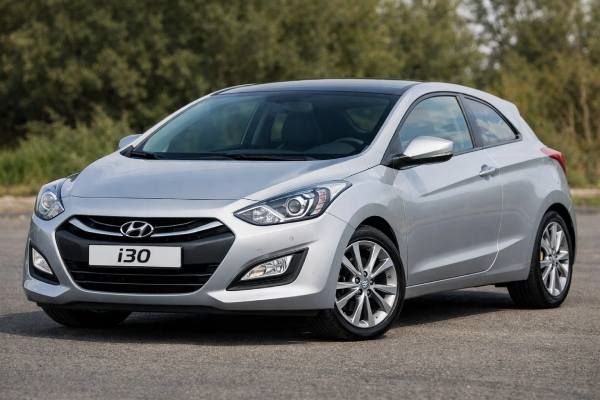
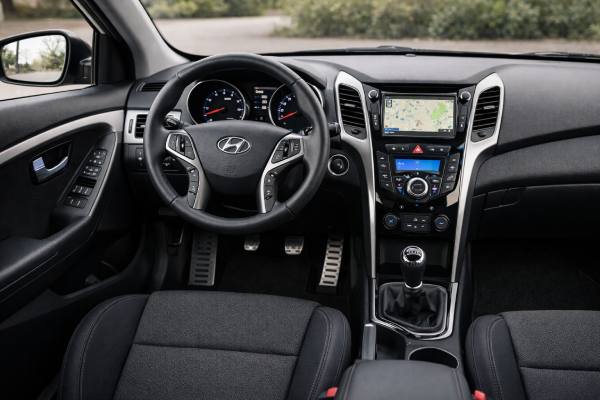
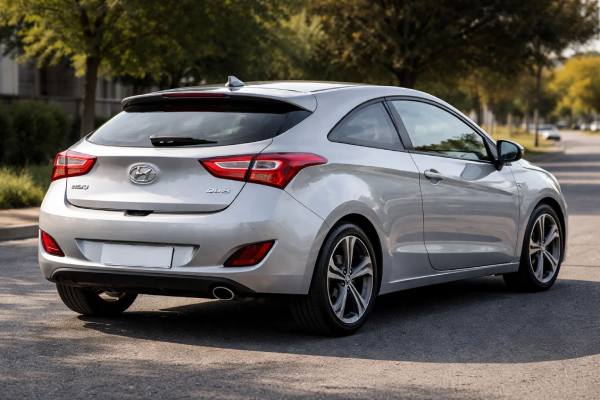
The 2013–2015 Hyundai i30 Coupe 1.6 CRDi 128 sits in an unusual corner of the compact-car market. It takes the second-generation GD i30 platform, gives it a lower-looking three-door body, and pairs it with Hyundai’s strong 1.6-liter diesel rather than a small petrol engine. That makes it more interesting in ownership than its modest image suggests. You get useful diesel torque, excellent long-distance economy, and a chassis that is more sophisticated than many rivals thanks to its independent rear suspension. At the same time, it is still a practical hatchback rather than a true sports coupe, so daily usability remains one of its better qualities. The key ownership question is not whether it looks sharper than the five-door. It is whether the stronger diesel and sleeker body make sense for the way you drive. For higher-mileage drivers, the answer can still be yes. For short-trip city use, it is a much less convincing buy.
Core Points
- The 1.6 CRDi 128 gives the i30 Coupe strong mid-range pull and much better real-world flexibility than the basic petrol engines.
- The three-door body looks sportier, but the car still keeps useful hatchback practicality.
- Independent rear suspension helps ride and body control feel more mature than many compact rivals.
- Like many Euro 5 diesels, it dislikes repeated short journeys that interrupt DPF regeneration.
- A smart service baseline is engine oil and filter every 15,000 km or 12 months.
On this page
- Hyundai i30 Coupe GD Character
- Hyundai i30 Coupe GD Fact Sheet
- Hyundai i30 Coupe GD Trim and Safety
- Known Faults and Service Actions
- Care Plan and Shopper Checks
- Driving Impressions and Economy
- Rivals and Ownership Value
Hyundai i30 Coupe GD Character
The Hyundai i30 Coupe was never designed to be a hardcore hot hatch. That is the first thing worth understanding, because it shapes the entire ownership experience. Underneath, this is still a GD-generation i30, which means front-wheel drive, a compact hatchback footprint, and a platform engineered around daily use rather than track-day drama. What changes in Coupe form is the visual attitude. The roofline looks lower, the body is longer than the regular five-door hatch, and the overall shape feels more purposeful. In 1.6 CRDi 128 trim, the engine choice also changes the way the car makes sense.
This version uses Hyundai’s 1.6-liter D4FB common-rail diesel in its 128 hp state of tune. It is a turbocharged four-cylinder with direct injection, chain-driven camshafts, and a strong torque band that defines how the car feels on the road. Peak torque sits at about 260 Nm and arrives low enough in the rev range to make the car feel much more flexible than its power figure alone suggests. That matters because the i30 Coupe is not especially light in modern terms, and the diesel gives it the sort of effortless in-gear response many small petrol engines struggle to match.
The 2013–2015 timing is also important. These are the later GD-era Coupe cars, sold after the second-generation i30 platform had already established its identity. They combine a mature chassis, a cleaner interior design than the older FD cars, and a safety structure that was strong for the period. The three-door body does sacrifice some rear-seat access compared with the hatch, but it does not turn the car into a compromise vehicle the way some genuine coupes do. You still get a hatchback boot, foldable rear seats, and enough practicality for normal daily use.
That is part of the i30 Coupe’s appeal. It is a style-led car that still behaves like a sensible compact. Front suspension is MacPherson strut, but the rear uses Hyundai’s multi-link arrangement rather than a cheaper torsion beam. That gives the car a more settled ride and better control over poor surfaces than many people expect. The steering is electrically assisted and light in effort, which suits commuting better than enthusiastic driving, but the platform itself is fundamentally competent.
The diesel engine changes the ownership case more than the body does. The 1.6 CRDi 128 makes sense if you cover longer distances, want strong range, and prefer a car that can overtake without living at high revs. It makes much less sense if your driving is mostly short, cold urban trips. That is the central truth of this model. The shape says sporty. The engineering says efficient long-distance compact. Buyers who understand that usually like it. Buyers who expect a mini-grand-tourer often do not.
As a used car, then, the i30 Coupe 1.6 CRDi is best seen as a stylish but rational diesel hatch. It offers more torque and economy than the basic petrols, more everyday usefulness than a true coupe, and more visual character than the regular five-door. It just needs an owner whose usage pattern suits a Euro 5 diesel.
Hyundai i30 Coupe GD Fact Sheet
The numbers behind the 2013–2015 Hyundai i30 Coupe 1.6 CRDi 128 paint a very consistent picture. This is a compact three-door hatch with a strong small diesel, good official efficiency, and enough performance to feel brisk without becoming expensive to run.
| Powertrain and efficiency | Specification |
|---|---|
| Code | D4FB |
| Engine layout and cylinders | Inline-4, DOHC, 4 valves per cylinder |
| Bore × stroke | 77.2 × 84.5 mm (3.04 × 3.33 in) |
| Displacement | 1.6 L (1,582 cc) |
| Induction | Turbocharged, intercooler |
| Fuel system | Common rail direct injection |
| Compression ratio | 17.3:1 |
| Max power | 128 hp (94 kW) @ 4,000 rpm |
| Max torque | 260 Nm (192 lb-ft) @ 1,900–2,750 rpm |
| Timing drive | Chain |
| Rated efficiency | About 5.0 / 3.7 / 4.2 L/100 km urban / extra-urban / combined |
| Rated efficiency in mpg | About 47.0 / 63.6 / 56.0 mpg US and 56.5 / 76.3 / 67.3 mpg UK |
| Real-world highway @ 120 km/h | Usually around 5.3–5.9 L/100 km in a healthy car |
| Emissions standard | Euro 5 |
| Exhaust after-treatment | DPF fitted |
These figures explain why the car works so well on longer runs. The engine has enough torque to make sixth gear useful, and the official combined consumption is still strong by modern non-hybrid standards. In the real world, fuel use rises if the car is doing repeated short trips or if the DPF is struggling to regenerate properly.
| Transmission, driveline, and chassis | Specification |
|---|---|
| Transmission | 6-speed manual |
| Drive type | FWD |
| Differential | Open front differential |
| Suspension front / rear | MacPherson strut / independent multi-link |
| Steering | Rack-and-pinion electric power steering |
| Brakes | Ventilated front discs / rear discs |
| Wheels and tyres | Common factory sizes include 205/55 R16 and 225/45 R17 depending on trim |
| Length / width / height | About 4,300 / 1,780 / 1,455 mm (169.3 / 70.1 / 57.3 in) |
| Wheelbase | 2,650 mm (104.3 in) |
| Turning circle | 10.6 m (34.8 ft) |
| Kerb weight | Roughly 1,380 kg (3,042 lb), depending on trim and market |
| GVWR | About 1,840 kg (4,057 lb) |
| Fuel tank | 53 L (14.0 US gal / 11.7 UK gal) |
| Cargo volume | About 378 L (13.3 ft³) seats up / around 1,316 L (46.5 ft³) seats folded |
The body dimensions matter more than they first seem to. The Coupe is longer and lower-looking than the five-door hatch, but it still keeps useful luggage space. That is one reason it works as a daily driver rather than just a style exercise.
| Performance and service capacities | Specification |
|---|---|
| 0–100 km/h | About 10.9 s |
| Top speed | About 192 km/h (119 mph) |
| Braking distance | Not consistently published for the exact Coupe 1.6 CRDi manual |
| Towing capacity | Market-dependent; verify from VIN plate and handbook before towing |
| Payload | Varies by market and trim; commonly just under 500 kg |
| Engine oil | Low-ash diesel oil, usually 5W-30; about 5.3 L (5.6 US qt) service fill |
| Coolant | About 6.8 L (7.2 US qt) |
| Transmission oil | Manual transaxle fill varies by service method and gearbox family; verify before filling |
| Differential / transfer case | Not applicable |
| A/C refrigerant | R-134a; exact charge varies by VIN and label |
| A/C compressor oil | PAG type; confirm exact grade by compressor label |
| Key torque specs | Wheel nuts commonly 100 Nm (73.8 lb-ft) |
| Crash ratings | ANCAP 2012 old-model i30 rating applies to all 5-door and 3-door hatch and wagon variants |
| Headlight rating | IIHS not applicable |
| ADAS suite | No AEB, ACC, lane support, BSD, or traffic-sign assist |
The fact sheet makes the car’s role obvious. It is not a performance coupe in the traditional sense. It is a stylish compact diesel hatch with enough torque, enough speed, and enough efficiency to make real-life driving easy when the car is healthy.
Hyundai i30 Coupe GD Trim and Safety
Trim naming for the i30 Coupe depends heavily on region, so the cleanest way to understand it is to focus on equipment groups rather than exact grade names. In most markets, the 1.6 CRDi 128 sat above the absolute base petrol models and was often paired with mid-level or better trim because it was aimed at drivers who valued distance ability and lower fuel costs. That usually means the average diesel Coupe on the used market is a bit better equipped than the cheapest petrol equivalent.
Common equipment themes include 16-inch or 17-inch wheels, climate control, steering-wheel audio controls, trip computer functions, Bluetooth-era media integration, and upgraded seat trim compared with entry cars. Some markets also bundled cruise control, automatic lights, or parking sensors into diesel-friendly packages. These are useful additions in a car designed for longer runs, but they do not fundamentally change the ownership picture. A cleaner lower-spec diesel is usually still a better buy than a shabby higher-trim one.
Mechanically, trim differences are not dramatic. The 1.6 CRDi 128 manual remains the same basic car across most equipment levels. You do not usually see radically different suspension tuning, braking packages, or drivetrain hardware. That makes this a condition-first car. Service history, correct diesel maintenance, and clean bodywork matter far more than trim prestige.
Safety is one of the stronger parts of the GD i30 story, and the official ANCAP rating is especially useful for this Coupe because it explicitly states that the 2012 i30 assessment applies to all 5-door and 3-door hatch and wagon variants. That means the safety case is not a loose assumption based only on the regular hatch. The tested model was introduced in Australia and New Zealand during 2012, and Hyundai provided evidence that the relevant variants offered comparable occupant protection.
The standard safety package listed for the tested car was good for the time: dual front airbags, a driver knee airbag, side airbags, and head-protecting side curtains, plus ABS, EBD, and ESC. Intelligent seat-belt reminders were fitted to all seats. ANCAP’s published results were strong: 15.35 out of 16 in frontal offset, 15.33 out of 16 in side impact, 2 out of 2 in the pole test, and 35.69 out of 37 overall. In practical terms, that makes the GD i30 one of the more convincing older compact cars from its era in passive safety terms.
What it does not offer is modern active-safety technology. ANCAP states that AEB in all its listed forms was not available on any variant, and lane-support systems were also unavailable. So buyers should be clear about what they are getting. This is a strong older structure with good restraint provision, not a modern driver-assistance car.
A careful used buyer should check:
- correct airbag warning-lamp behavior,
- ESC and ABS function,
- seat-belt condition and rear-seat usability,
- and VIN-based recall or service-campaign completion.
The i30 Coupe’s trim structure is simple enough that the safest strategy is to buy the cleanest, best-documented car with the equipment you actually want, rather than chasing a badge. In this model, the difference between a good car and a bad one is usually maintenance quality, not trim level.
Known Faults and Service Actions
The i30 Coupe 1.6 CRDi 128 is usually dependable when it has been maintained correctly and used in a way that suits a Euro 5 diesel. Problems tend to appear when owners treat it like a short-trip petrol hatchback or stretch servicing because the car feels fundamentally solid. That is where the repair bills begin.
The most common issue group is diesel-emissions related. Like many 2010s compact diesels, this engine can suffer from EGR and intake deposit build-up, especially if it spends most of its life doing low-speed urban work. Symptoms usually include hesitant throttle response, flatness below 2,000 rpm, rougher idle, or extra smoke under load. Because the car also uses a DPF, repeated interrupted regeneration cycles can lead to rising soot load, warning lights, or limp-home mode. In a car used for regular longer drives, these systems are much less troublesome. In a city-only car, they can become the central ownership problem.
Fuel-system health is the next big watch point. The common-rail injection system depends on clean fuel delivery and stable injector behavior. Early warning signs include hard cold starting, rough idle, metallic diesel knock, smoke, or combustion leakage around the injector area if the seals are failing. These are the kinds of faults that are manageable when caught early and expensive when ignored. A pre-purchase scan and a careful cold start matter a lot on this engine.
Clutch and flywheel wear also deserves real attention. The 128 hp diesel’s torque makes the car pleasant to drive, but it also means driveline wear shows up clearly if the car has spent years in town traffic. Watch for shudder when moving off, vibration through the pedal, rattling at idle, or slip under load. None of those symptoms should be dismissed on a used example because the parts cost is too high to shrug off.
The GD generation also has a well-known steering-related weak point. Electric power steering coupler wear can create clicking, clunking, or vague-feeling low-speed steering behavior. It is not unique to the Coupe, but it matters here because it can make an otherwise tidy car feel worn out. The fix is usually manageable, but a quiet steering column is still a meaningful buying advantage.
Other issues are more routine old-car items:
- tired front drop links and bushes,
- rear brake drag on lightly used cars,
- wheel-bearing noise,
- thermostat weakness affecting warm-up and economy,
- and air-conditioning decline as the car ages.
Service actions and recalls should never be guessed. The right way to handle them is through official Hyundai recall portals and dealer records. Hyundai’s official recall resources remain the best way to verify open or completed campaigns by VIN. Market-specific actions can include airbag-related campaigns, ABS-related actions, and other safety or service updates, so paperwork matters.
For buyers, the practical takeaway is clear. A good i30 Coupe diesel should start cleanly from cold, idle steadily, pull hard without smoke, steer quietly, and come with evidence of proper oil and filter work. The cars to avoid are the cheap, style-led examples with warning lights, vague “serviced recently” claims, and obvious signs of city-only use.
Care Plan and Shopper Checks
The i30 Coupe 1.6 CRDi 128 is not difficult to maintain, but it does reward disciplined servicing. That matters because the basic engine is strong, and most of the expensive problems come from delayed routine care rather than a bad design. In that sense, this is a car that stays affordable by being kept on a schedule.
A practical maintenance plan looks like this:
| Item | Practical interval |
|---|---|
| Engine oil and filter | Every 15,000 km or 12 months |
| Engine air filter | Inspect every service, replace around 30,000–45,000 km |
| Cabin air filter | Usually yearly |
| Fuel filter | Around 30,000–60,000 km depending on fuel quality and service history |
| Coolant | About every 90,000 km or 5 years |
| Manual transmission oil | Sensible preventive change around 90,000–120,000 km |
| Brake fluid | Every 2 years |
| Auxiliary belt | Inspect every service and replace if noisy, cracked, or contaminated |
| Timing chain | No fixed replacement interval; inspect for noise, stretch symptoms, and timing-correlation faults |
| Brake inspection | At every service |
| Tyre rotation | About every 10,000–15,000 km |
| Alignment check | When tyre wear is uneven or after suspension work |
| Battery test | Yearly after about 4 years |
| DPF and regeneration behavior | Review at service time if warning lights or smoke appear |
The biggest maintenance mistake with this model is treating the timing chain as a forever part and the DPF as something that takes care of itself. Both need observation. A chain that grows noisy on cold start or an engine that shows timing-related fault behavior needs inspection. A diesel that regenerates too often or shows rising fuel use also needs diagnosis before the problem becomes expensive.
Useful service figures are straightforward. Engine oil service fill is about 5.3 liters, coolant capacity is about 6.8 liters, and wheel nuts are commonly tightened to 100 Nm. The transmission oil quantity depends on the exact service method and gearbox family, so it is one of the areas where VIN-specific workshop data is worth checking rather than guessing. Correct low-ash oil is especially important because of the DPF.
For buyers, the most important checks are these:
- insist on a genuine cold start,
- listen for timing-chain noise and flywheel rattle,
- look for smoke under hard acceleration,
- scan the car for engine, ABS, steering, and airbag faults,
- check that the engine warms normally,
- and verify recall or campaign work by VIN.
Then inspect the details that reveal how the car has really been used:
- injector area for smell or carbon buildup,
- boost hoses for oil mist and splits,
- rear brakes for corrosion or drag,
- front tyres for alignment wear,
- steering for low-speed clunks,
- door edges, rear arches, and hatch shut areas for rust or poor repairs,
- and seat wear for clues about true mileage and use.
The best cars are usually the most boring ones: consistent service history, motorway use, no warning lamps, matching quality tyres, and no attempt to hide a cold start. The worst are attractive-looking cars sold cheaply because the owner is passing on diesel problems to the next person.
Long-term durability can be very good when the car is maintained on time and driven in a way that suits a diesel. That is what makes this model worth considering at all.
Driving Impressions and Economy
On the road, the i30 Coupe 1.6 CRDi 128 is more convincing than its badge suggests. It is not a true sports coupe, and it does not feel especially exotic, but it does feel like a well-sorted compact car with more torque and style than average. In many ways, that is exactly the right balance.
The engine is the biggest part of the experience. With 260 Nm available from low revs, the Coupe feels much stronger in everyday driving than the small petrol models. You do not need to wind it out to make progress, and in normal traffic it feels relaxed and willing. Overtakes on secondary roads are easier than the 128 hp number might suggest because the torque arrives early and the 6-speed manual works well with it. This is not explosive performance, but it is properly usable performance.
The chassis is one of the car’s better features. The GD platform rides with more maturity than many compact rivals, and the multi-link rear suspension helps the car stay settled over poor surfaces. Straight-line stability is good, cornering balance is safe and neutral, and the body feels more composed than a style-led three-door might imply. Steering is light and not especially rich in feedback, but for daily use it suits the car. This is a compact diesel hatch that happens to look sportier, not a front-drive coupe built around steering feel.
Ride quality is also stronger than expected. Cars on 16-inch wheels often feel especially well judged, while larger wheels sharpen the look but can add a bit more road harshness. Because the Coupe still shares much of its practical DNA with the regular i30, it remains comfortable enough for commuting and longer journeys rather than becoming tiring.
Noise levels depend heavily on condition. A healthy example still sounds like a small diesel at idle, but once warm it should settle down nicely. At motorway speed, the six-speed gearing helps refinement, and the engine is usually less intrusive than tyre or wind noise. Worn tyres, tired engine mounts, or wheel-bearing noise can quickly spoil that impression, so the state of the car matters.
Real-world economy remains one of the strongest reasons to choose this model. A typical pattern looks like this:
- City: about 5.8–6.8 L/100 km if the DPF is healthy
- Highway at 100–120 km/h: about 5.3–5.9 L/100 km
- Mixed driving: about 5.5–6.3 L/100 km
Those are still very respectable figures for a conventional diesel compact of this age. They also explain why the Coupe makes sense mainly for drivers who cover distance. On low mileage and repeated short trips, the economic advantage narrows while the diesel-specific risks rise.
Performance itself is brisk enough to satisfy most owners. Around 10.9 seconds to 100 km/h and roughly 192 km/h flat out are not sports-car numbers, but they are enough to make the car feel lively in real traffic. The i30 Coupe diesel works best when you use its torque and gearing rather than trying to drive it like a rev-hungry petrol coupe.
That is the central impression it leaves. It is a stylish three-door that drives like a mature, efficient, torque-rich hatchback. For the right owner, that is a better outcome than chasing fake sportiness.
Rivals and Ownership Value
The Hyundai i30 Coupe 1.6 CRDi 128 sat in an unusual niche even when it was new. Its closest alternatives were not pure sports coupes, but stylish compact hatchbacks and three-door diesels such as the Kia pro_cee’d 1.6 CRDi, Volkswagen Scirocco 2.0 TDI, Renault Mégane Coupé diesel, and in some markets the SEAT León SC diesel. That makes the Hyundai easier to judge when you stop comparing it with true coupes and start comparing it with sharper-looking everyday hatchbacks.
Against the Kia pro_cee’d, the story is straightforward. The two cars share much of their engineering, so condition, specification, and service history matter more than brand preference. Against the Volkswagen Scirocco, the Hyundai often loses on image and cabin drama, but it can be the calmer financial decision if you want a stylish diesel hatch without paying a stronger badge premium. Against the Renault Mégane Coupé diesel, the Hyundai usually wins on simplicity of ownership feel and predictable cabin ergonomics, even if the Renault can feel a little more visually distinctive.
The i30 Coupe’s strongest arguments are clear:
- useful diesel torque,
- very good real-world fuel economy,
- a chassis with better composure than many value-focused rivals,
- respectable safety for its era,
- and hatchback practicality hidden under a sportier shape.
Its weaknesses are equally clear:
- rear-seat access is worse than the five-door hatch,
- the three-door body adds style more than performance,
- short-trip use is a poor match for the diesel,
- and some rivals feel more special inside.
That last point matters. The i30 Coupe is not a car that overwhelms with drama. Instead, it wins by being easier to live with than it first appears. It offers more everyday usability than a true coupe, more torque than the basic petrol engines, and lower long-run fuel costs for drivers who actually use it on distance. It also avoids pretending to be a hot hatch when it is not.
For used buyers, that can make it a smart niche choice. If you want something that looks a little less ordinary than a standard five-door but still works as a daily driver, the Coupe has a real appeal. If you want maximum practicality, the regular i30 hatch or Tourer is still the more rational answer. If you want a genuinely sporty compact, there are sharper alternatives. The Coupe sits between those worlds.
That is also where its value lies. The best examples are often overlooked because buyers either want the practical five-door or the more obvious sporty badge. That can make the i30 Coupe 1.6 CRDi 128 a surprisingly sensible used buy for someone who wants economy, torque, and a bit more style without giving up everyday function. Buy with your head, not just your eyes, and it is easy to recommend. Buy the cheapest neglected diesel you can find, and it quickly stops looking clever.
References
- Hyundai Owners manuals | Hyundai Motor UK 2026 (Owner’s Manual)
- Hyundai i30 | Safety Rating & Report | ANCAP 2012 (Safety Rating)
- Stellar safety for new Colorado, i30 and BRZ 2012 (Safety Rating)
- Car Recalls | Owning | Hyundai Australia 2025 (Recall Checker)
- Safety Recall Campaigns 2026 (Recall Database)
Disclaimer
This article is for informational purposes only and is not a substitute for professional diagnosis or repair. Specifications, torque values, service intervals, procedures, and equipment can vary by VIN, market, build date, and trim, so always verify critical details against the official service documentation for the exact vehicle.
If this guide was useful, please consider sharing it on Facebook, X, or another social platform to support our work.