


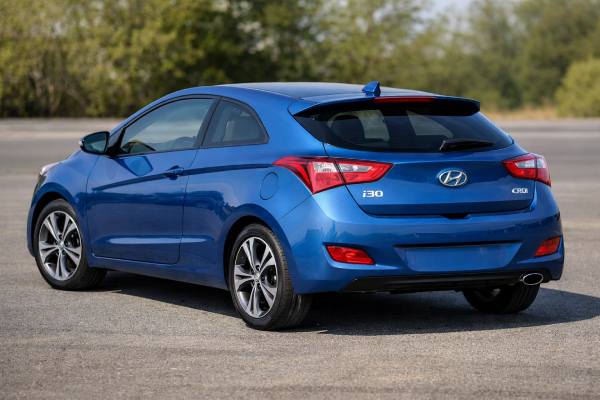
The facelifted Hyundai i30 Coupe GD 1.4 MPI is an unusual kind of used car value. It looks sportier than the five-door hatch, but under the skin it stays practical, straightforward, and easier to live with than many style-led coupes. That is its core appeal. The 1.4-liter MPI petrol engine is not fast, but it is simple, chain-driven, and generally less complicated than the old diesel and turbo alternatives buyers often compare it with. The facelifted 2015–2017 cars also benefit from cleaner styling, Euro 6-era efficiency updates, and a more mature overall feel than earlier versions. What you get, then, is not a junior hot hatch. It is a tidy three-door compact that blends everyday usability with lower ownership drama. The trade-off is obvious: performance is modest. If you want easy overtaking or strong low-rpm shove, this is not the right engine. If you want a sensible, attractive coupe-shaped daily car, it makes much more sense.
Top Highlights
- The 1.4 MPI engine is simpler and usually cheaper to own long term than the diesel or turbo versions.
- Coupe styling adds visual appeal without sacrificing the i30’s useful 378 L boot and 2,650 mm wheelbase.
- Facelift cars feel modern enough inside and keep the GD generation’s stable, mature road manners.
- Weak maintenance habits can lead to timing-chain noise, ignition faults, and a tired-feeling engine.
- A sensible oil-and-filter interval is every 10,000 to 15,000 km or 12 months.
Jump to sections
- Hyundai i30 Coupe GD Character
- Hyundai i30 Coupe GD Specs
- Hyundai i30 Coupe GD Trim and Protection
- Long-Term Fault Map
- Service Plan and Buyer Notes
- Everyday Driving Verdict
- Coupe Rivals in Context
Hyundai i30 Coupe GD Character
The i30 Coupe has always occupied an interesting place in the Hyundai range. It is based closely on the standard GD-generation i30 hatchback, but the three-door body gives it a more deliberate, lower-slung appearance and a more personal feel. That makes it more stylish than the regular hatch without turning it into something expensive or difficult to own. In facelifted 2015–2017 form, Hyundai refined the formula rather than changing it completely. The exterior became cleaner, the range was updated for later emissions requirements, and the whole package felt slightly more polished.
In 1.4 MPI form, this is the simplest petrol coupe in the facelift lineup. That matters. Buyers looking at used compact coupes often end up caught between attractive styling and mechanical complexity. The i30 1.4 MPI avoids much of that tension. Its naturally aspirated engine is straightforward, chain-driven, and not especially stressed. There is no turbocharger, no diesel emissions hardware, and no high-output tune to chase problems later in life. That alone makes it attractive to buyers who want a more interesting shape than a five-door hatch but still need a car that can handle commuting, errands, and occasional longer trips without becoming a project.
The downside is performance. The facelift 1.4 MPI uses a 1,368 cc four-cylinder petrol engine with 100 hp and around 134 Nm. That is enough for normal driving, but not much more. Around town, the car feels light and manageable. On open roads, it needs revs and planning. The engine is smooth and honest, but it does not create the illusion of effortless pace. Drivers coming from old turbo-diesels or stronger petrol hatchbacks may find it modest. Drivers coming from smaller city cars usually find it acceptable and easy to use.
The coupe body does not ruin practicality either, which is one of the i30’s better traits. You still get a proper rear bench, a useful boot, and a car that fits daily life better than many buyers expect from a three-door. Access to the rear is naturally less convenient than in the five-door hatch, but this is still a usable family-sized compact rather than a tiny lifestyle coupe.
The GD chassis also helps. Hyundai made this generation feel mature and stable on the road, with better refinement than older i30s and a more polished overall balance. That calmness is part of why the 1.4 MPI works as well as it does. The car never pretends to be faster than it is. Instead, it leans into comfort, predictability, and ease of use. In the used market, that makes the facelift i30 Coupe 1.4 MPI more appealing than its modest numbers suggest.
Hyundai i30 Coupe GD Specs
The figures below focus on the facelifted 2015–2017 Hyundai i30 Coupe GD 1.4 MPI in its common European-style 6-speed manual form. Values can vary slightly by trim, wheel package, market, and BlueDrive-style efficiency package. Where published numbers differ between sources, the table uses the most widely repeated range or approximate baseline rather than pretending every market car was identical.
Powertrain and efficiency
| Item | Value | Notes |
|---|---|---|
| Code | G4LC | Hyundai Kappa 1.4 MPI petrol |
| Engine layout and cylinders | Inline-4, DOHC, 16-valve | 4 cylinders, 4 valves per cylinder |
| Bore × stroke | 72.0 × 84.0 mm | 2.83 × 3.31 in |
| Displacement | 1.4 L (1,368 cc) | Naturally aspirated petrol |
| Induction | Naturally aspirated | No turbo or supercharger |
| Fuel system | MPI / indirect injection | Simpler than GDI layouts |
| Compression ratio | 10.5:1 | Common published figure |
| Max power | 100 hp (74 kW) @ 6,000 rpm | 99–101 hp depending on market notation |
| Max torque | 134 Nm (99 lb-ft) @ 4,000 rpm | High-rpm torque peak |
| Timing drive | Chain | No fixed belt-replacement interval |
| Rated efficiency | 5.6 L/100 km (42.0 mpg US / 50.4 mpg UK) | Combined, Blue/efficient manual spec |
| Real-world highway @ 120 km/h | about 6.1–6.8 L/100 km | Tyres, wind, and load matter |
Transmission and driveline
| Item | Value | Notes |
|---|---|---|
| Transmission | 6-speed manual | Most common setup for this engine |
| Drive type | FWD | Front-wheel drive |
| Differential | Open | Standard road-car layout |
Chassis and dimensions
| Item | Value | Notes |
|---|---|---|
| Suspension (front/rear) | MacPherson strut / independent rear suspension | Comfort-focused but composed |
| Steering | Electric rack and pinion | Light, accurate, everyday-friendly |
| Brakes | Ventilated front discs / rear discs | ABS standard |
| Wheels/Tyres | 195/65 R15 most common | 16- and 17-inch wheels appeared by trim |
| Ground clearance | about 140 mm (5.5 in) | Varies slightly by tyre package |
| Length / Width / Height | 4,300 / 1,780 / 1,470 mm | 169.3 / 70.1 / 57.9 in |
| Wheelbase | 2,650 mm | 104.3 in |
| Turning circle (kerb-to-kerb) | 10.6 m | 34.8 ft |
| Kerb (Curb) weight | about 1,250–1,305 kg | 2,756–2,877 lb depending on trim |
| GVWR | 1,820 kg | 4,012 lb |
| Fuel tank | 53 L | 14.0 US gal / 11.7 UK gal |
| Cargo volume | 378–1,316 L | 13.4–46.5 ft³ |
Performance and capability
| Item | Value | Notes |
|---|---|---|
| Acceleration | 0–100 km/h in about 12.7 s | Slow but usable |
| Top speed | 183 km/h | 114 mph |
| Braking distance | depends strongly on tyre and test source | no single consistent official figure |
| Towing capacity | 1,200 kg braked / 600 kg unbraked | market dependent |
| Payload | about 515–565 kg | varies by trim and kerb weight |
Fluids and service capacities
| Item | Value | Notes |
|---|---|---|
| Engine oil | 5W-30 or 5W-40 meeting correct Hyundai petrol spec | climate and market matter |
| Engine oil capacity | about 3.7 L | 3.9 US qt |
| Coolant | Hyundai-approved long-life coolant | verify exact standard by market |
| Coolant capacity | about 5.8–6.0 L | 6.1–6.3 US qt |
| Transmission fluid | correct Hyundai manual-transmission oil | verify by gearbox code |
| Manual transmission capacity | about 1.9–2.0 L | approximate service fill |
| A/C refrigerant | R134a | charge varies by system |
| A/C compressor oil | PAG type | verify exact charge from system label |
| Key torque specs | wheel nuts commonly around 90–110 Nm | confirm exact value by VIN and market manual |
Safety and driver assistance
| Item | Value | Notes |
|---|---|---|
| Crash ratings | 5-star ANCAP for updated Series II i30 range in applicable markets | facelift-era range rating |
| Assessment score | 35.69 out of 37 | ANCAP published figure |
| Whiplash / pedestrian / ESC | Good / Adequate / Standard | published ANCAP assessment details |
| ADAS suite | very limited | no AEB on the referenced updated i30 range rating |
The spec table explains the i30 Coupe’s identity clearly. It is not built around performance. It is built around light running costs, straightforward engineering, and usable compact-car packaging with a more distinctive body.
Hyundai i30 Coupe GD Trim and Protection
Trim naming varied by market, but the facelifted i30 Coupe generally followed the same Hyundai logic seen elsewhere in the GD range. Lower trims covered the basics, mid-level versions added the equipment most owners actually wanted, and higher trims leaned into appearance and convenience without changing the fundamental character of the car. That means used buyers should focus on equipment balance and condition rather than chasing the highest-spec example at any cost.
Entry-level and mid-range cars usually included air conditioning, power windows, remote central locking, adjustable front seats, audio controls, and a sensible baseline of safety equipment. Move up the range and you typically gained alloy wheels, cruise control, Bluetooth, parking sensors, automatic lights, climate control, upgraded audio, and nicer cabin finishes. Some markets also added navigation, heated front seats, or more dramatic wheel designs on upper trims. The coupe body itself already provides some of the visual drama, so mid-spec versions often make the most sense because they keep the good equipment without pushing tyre and replacement costs upward too far.
Wheel size is one of the most important trim-linked decisions here. Cars on 15-inch wheels usually ride best and are cheapest to maintain. That suits the 1.4 MPI engine well, because the car is more about balance than aggression. Better-equipped trims on 16- or 17-inch wheels look sharper, but can feel firmer, noisier, and less forgiving once suspension wear appears. On a used compact coupe, that matters more than the brochure often suggested when the car was new.
Quick identifiers help during viewings. Lower trims tend to have simpler fabric seats, less dashboard brightwork, and smaller wheels. Better-equipped cars often have more steering-wheel buttons, parking-sensor controls, larger infotainment screens, and nicer seat materials. None of those features transform the car, but they do change how pleasant it feels in daily use.
Safety remained one of the i30’s better selling points in facelift form. In applicable ANCAP markets, the updated i30 Series II carried a 5-star safety rating applying to all updated variants built from January 2015. Published details included dual frontal, side chest, and curtain airbags, plus a driver knee airbag, with EBD, EBA, ESC, and seat-belt reminders also noted. That gives the facelift coupe a stronger passive-safety story than some older style-led compact coupes.
The important caveat is modern active safety. This car sits before the widespread rollout of AEB, lane-centering, and blind-spot intervention in mainstream compact models. The referenced facelift i30 safety report specifically noted that AEB and lane-support systems were not available on any variant in that assessment. So the safety story here is about good crash structure, airbags, and stability control rather than advanced driver assistance. For many used buyers, that is still enough, especially if they value fewer sensors and lower calibration complexity. It just needs to be understood in period context.
Long-Term Fault Map
The facelift i30 Coupe 1.4 MPI is generally a low-drama car, but that does not mean it is trouble-free. Its issues are usually manageable, and many are cheaper than equivalent diesel or turbo faults, but age and poor servicing can still turn a tidy-looking coupe into a disappointing one. The best way to understand reliability here is to group issues by pattern rather than wait for a dramatic single failure.
Common, low to medium cost: ignition-related faults. Coil packs, spark plugs, and sometimes sensor-related issues are among the most believable causes of rough idle, hesitation, misfire under load, or an engine warning light. Symptoms often start small, especially under load or in damp conditions, and worsen gradually. The correct remedy is proper diagnosis, then replacing the weak coil or worn plugs rather than guessing.
Common, medium cost: timing-chain noise or chain-system wear on poorly serviced engines. The G4LC uses a chain, which avoids scheduled belt replacement, but it is not immune to neglect. Long oil intervals, poor oil quality, or repeated cold starts can accelerate wear in the chain, guides, or tensioner. Typical warning signs include brief or prolonged rattle on start-up, timing-related fault codes, or an engine that feels rougher than it should. The right fix is a proper chain-set inspection and replacement when the system is out of spec.
Occasional, low to medium cost: oil seepage and cooling-system aging. Look for rocker-cover sweating, thermostat-housing dampness, and tired hoses. These are not unusual on older petrol Hyundais, and they are much easier to manage when caught early. Ignoring them can turn a simple reliable engine into one that always seems to smell hot or leave small marks on the driveway.
Occasional, low cost: dirty throttle bodies and intake leaks. On a low-output naturally aspirated petrol, even minor airflow problems can make the engine feel flat and hesitant. That is especially noticeable because the 1.4 MPI does not have spare torque to disguise a tired tune. Cleaning and proper fault-code diagnosis usually solve these issues without drama.
Driveline and gearbox: the 6-speed manual is generally the best long-term choice. Clutch wear, release-bearing noise, and some notchy cold shifting can appear with mileage, but the overall setup is straightforward. A heavy pedal, a high bite point, or vibration under load should all be taken seriously during a test drive. Because the engine is modestly powered, any clutch weakness becomes very obvious.
Chassis and body wear: front drop links, bushes, top mounts, wheel bearings, tired dampers, and rear brake caliper sticking are typical age-related issues. The GD does not have a particularly bad corrosion reputation, but underbody seams, brake lines, sill edges, tailgate or rear-opening areas, and wheel arches still deserve a close inspection. A coupe with appealing paint can still be hiding neglected underbody maintenance.
Electrical annoyances: window regulators, central locking actuators, infotainment glitches, and battery or charging-system weakness are occasional rather than defining problems. The main point is that several small electrical faults together often point to a car that has simply not been cared for well.
For recalls and service actions, always use official checks and dealer records where possible. On a used i30 Coupe, proof of maintenance and campaign completion matters far more than seller confidence.
Service Plan and Buyer Notes
A practical maintenance plan for the facelift i30 Coupe 1.4 MPI should be conservative. This is not a fragile engine, but it responds well to fresh oil, correct plugs, and basic preventive work. That is especially true because the car does not have much excess performance to hide neglect. A healthy one feels neat and willing. A tired one feels slower than the figures already suggest.
A sensible maintenance schedule is:
- Engine oil and filter: every 10,000 to 15,000 km or 12 months.
- Engine air filter: inspect every service and replace around every 20,000 to 30,000 km.
- Cabin filter: every 15,000 to 20,000 km or yearly.
- Spark plugs: around every 45,000 to 60,000 km depending on plug type and market guidance.
- Coolant: every 5 years or about 90,000 to 100,000 km.
- Brake fluid: every 2 years.
- Manual gearbox oil: every 60,000 to 90,000 km if you want strong long-term shift quality.
- Timing chain: no fixed replacement interval, but inspect immediately if there is rattle or timing-related fault activity.
- Accessory belt and hoses: inspect every service and replace on condition.
- Brake pads, discs, sliders, and handbrake operation: inspect every service.
- Tyres and alignment: inspect regularly and align after suspension work or uneven wear.
- 12 V battery: test annually once it is around four years old.
Fluid choices should stay boring and correct. A quality 5W-30 is the usual safe answer in most climates, with 5W-40 acceptable in some markets if it meets the proper specification. Oil capacity is about 3.7 L. Coolant is about 5.8 to 6.0 L. Manual transmission fluid is usually around 1.9 to 2.0 L. These are ownership-planning figures, not a substitute for VIN-specific workshop data.
For buyers, start with service history rather than bodywork. You want to see believable annual oil changes, spark-plug replacement, and evidence that the car has not only been serviced when something went wrong. Then start the car from cold. It should idle cleanly, avoid prolonged chain noise, and not show misfire behavior or warning lights. During the test drive, pay close attention to throttle response, clutch take-up, and how the gearbox feels when cold and warm.
After the drive, inspect the car underneath and in the rear load area. Even a coupe can have dampness in the spare-wheel well, tired rear brakes, split boots, or hidden rust on brake lines and underbody seams. Inside, make sure the windows, locks, climate system, infotainment, and steering-wheel controls all work properly.
The best examples are usually manual cars with complete history, smaller wheel packages, and clear evidence of routine maintenance. Mid-level trims are often the sweet spot. Cars to avoid are the ones with chain noise dismissed as harmless, vague oil history, multiple electrical faults, or an engine that feels rougher than a small petrol Hyundai should.
Everyday Driving Verdict
The facelift i30 Coupe 1.4 MPI drives much like a well-sorted compact hatchback wearing a smarter suit. That is a compliment. Around town, it feels light, easy to place, and predictable. The steering is light without feeling sloppy, visibility is decent for a three-door coupe shape, and the controls are all straightforward. Hyundai tuned the GD chassis with everyday usability in mind, and that remains obvious on modern roads.
The 1.4 MPI engine defines the pace of the experience. Throttle response is clean enough, but meaningful acceleration needs revs. This engine is happiest when you use the upper half of the rev range instead of expecting diesel-style low-end shove. The 6-speed manual suits it well, because it lets you keep the engine where it works best. In traffic, that means a little more shifting than in a torquier car. On back roads or motorway slip roads, it means planning rather than snapping past slower traffic. Buyers who accept that usually find the car pleasant. Buyers expecting sporty pace from the coupe badge often do not.
Ride quality is one of the stronger points. On 15- or 16-inch wheels, the i30 Coupe absorbs poor surfaces well and feels more mature than many small coupes from the same era. Straight-line stability is good, and the car settles into motorway cruising without fuss. Cornering balance is safe and tidy rather than playful. It does not have the eagerness of a Focus, but it is composed and easy to trust. That matters because this version is not about excitement. It is about smooth, low-drama daily use.
Noise, vibration, and harshness are respectable. At idle, the engine is quiet. Under harder acceleration, it becomes more noticeable simply because you have to work it. Once up to a steady speed, the car feels more relaxed than its modest output might suggest. Tyre choice has a large effect on noise and ride. Smaller wheels suit the car best unless appearance matters more than comfort.
Real-world fuel economy is solid rather than sensational. Expect roughly 7.2–8.3 L/100 km in short-trip city use, 6.1–6.8 L/100 km on steady highway runs at 100–120 km/h, and 6.5–7.2 L/100 km in mixed driving for a healthy manual example. Cold weather, underinflated tyres, bad alignment, and heavy urban use will push those numbers higher. The car is efficient enough to make sense as a daily driver, but not so efficient that neglect disappears into the background.
The overall verdict from the driver’s seat is simple. The i30 Coupe 1.4 MPI is not quick, but it is coherent. It feels like a well-matched combination of modest engine, mature chassis, and usable design. For the right owner, that matters more than outright speed.
Coupe Rivals in Context
The facelifted i30 Coupe 1.4 MPI sits in a slightly unusual niche because true small coupes became less common as the market shifted toward five-door hatches and crossovers. That actually helps explain its appeal. It offers a more personal shape than a regular hatchback while keeping much of the same practicality and maintenance logic.
Against the Kia pro_cee’d 1.4 petrol: this is the closest comparison in both spirit and engineering. The Kia usually feels a little more overtly style-led, while the Hyundai presents itself in a slightly calmer, more understated way. Mechanically, the two are closely related enough that condition, history, and price matter more than badge preference.
Against the Volkswagen Scirocco 1.4: the Volkswagen usually feels more image-driven and can offer a more premium cabin impression. It can also be costlier to buy and more expensive to recondition properly. The Hyundai is less glamorous, but it is often the easier car to justify once total ownership costs enter the conversation.
Against a Ford Focus three-door or similar hatch: the Ford has the better chassis feel and a more enthusiastic front end, but it lacks the distinct coupe identity of the i30 Coupe. If your priority is driving involvement, Ford still holds an advantage. If your priority is a useful everyday car with a sportier look and modest maintenance risk, the Hyundai makes a strong case.
Against a standard i30 five-door 1.4 MPI: this is the comparison many buyers should actually make. The five-door hatch is more practical and easier for rear-seat access. The coupe, however, offers the more distinctive design without giving up boot space or basic usability. If you rarely need rear-seat access, the coupe is the more interesting choice. If family practicality comes first every day, the five-door remains the easier answer.
Against small turbo-petrol rivals: here, the i30’s naturally aspirated engine divides opinion. It lacks the easy low-rpm punch of a small turbo, but it also avoids some of the heat, plumbing, and long-term stress tied to older boosted engines. That makes it attractive to buyers who value simplicity over effortless pace.
This is why the i30 Coupe 1.4 MPI works best when judged honestly. It is not the fastest, not the most prestigious, and not the sharpest compact coupe-shaped car. What it does offer is a rare mix of style, practicality, and relatively low mechanical drama. Its biggest weakness is that the modest engine leaves nowhere for neglect to hide. Its biggest strength is that a good example still feels like a very sensible everyday car that just happens to look better than a normal hatchback. For many used buyers, that is exactly the point.
References
- Hyundai i30 2015 (Brochure)
- Hyundai Owners manuals | Hyundai Motor UK 2026 (Owner’s Manual)
- Check if a vehicle, part or accessory has been recalled – GOV.UK 2026 (Recall Database)
- Car Recalls | Owning | Hyundai Australia 2026 (Recall Checker)
- Hyundai i30 | Safety Rating & Report | ANCAP 2026 (Safety Rating)
Disclaimer
This article is for informational purposes only and is not a substitute for professional diagnosis or repair. Specifications, torque values, intervals, procedures, and equipment can vary by VIN, market, trim, transmission, and model year. Always verify critical details against the correct official service documentation, owner’s manual, parts catalog, and recall records for the exact vehicle.
If this guide helped you, please consider sharing it on Facebook, X, or another social platform to support our work.