

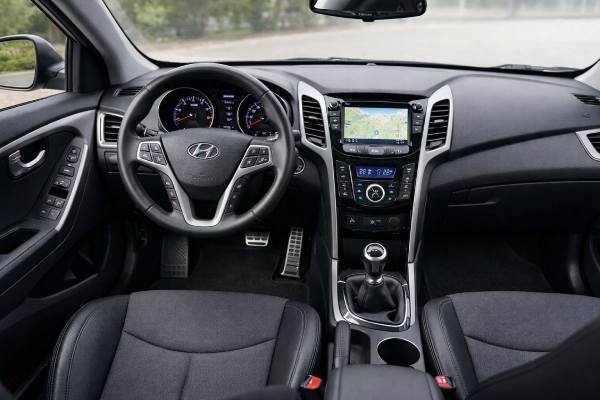
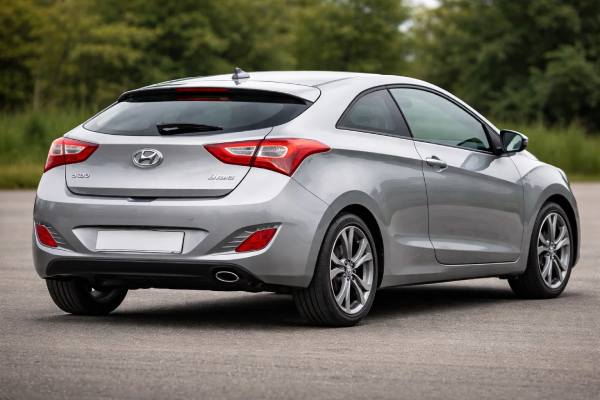
The Hyundai i30 Coupe GD 1.6 GDI is one of those cars that looks more dramatic than its engineering actually is, and that is part of its appeal. Under the sharper three-door body, it remains a practical front-wheel-drive compact with a naturally aspirated 1.6-litre petrol engine, direct injection, a six-speed manual, and useful everyday packaging. In facelift-era 2013–2015 form, it offered a cleaner design, a more focused body style, and enough performance to feel lively without becoming expensive to run. The 135 hp GDI engine is the key difference from the simpler MPi cars, because it gives the Coupe a little more top-end response and better official efficiency, but it also introduces the extra maintenance considerations that come with direct injection. That is the trade-off buyers need to understand. If you want a stylish three-door hatch that is still usable as a daily car, the i30 Coupe is easy to like. If you want the lowest-risk long-term powertrain, careful maintenance history matters more here than appearance.
What to Know
- The 1.6 GDI gives the i30 Coupe stronger top-end performance than the basic petrol engine while keeping a simple naturally aspirated layout.
- The three-door body is still practical enough for daily use, with a 378 L boot and split-fold rear seats.
- The chassis is more composed than the styling suggests, so the car works better as an everyday coupe-hatch than as a pure style purchase.
- Direct injection adds carbon-build-up risk over time, so servicing and usage quality matter more than on an older MPi engine.
- A sensible baseline service interval is oil every 15,000 km or 12 months, with spark plugs at about 75,000 km.
On this page
- Hyundai i30 Coupe essentials
- Hyundai i30 Coupe numbers
- Hyundai i30 Coupe grade and protection
- Trouble spots and service actions
- Maintenance plan and used-buy advice
- Driving feel and fuel reality
- Hyundai i30 Coupe versus rivals
Hyundai i30 Coupe essentials
The i30 Coupe was Hyundai’s attempt to make the GD-generation i30 look and feel more distinctive without turning it into a high-cost niche car. That is why it matters as a used buy. It is not a separate sports coupe in the traditional sense. It is a three-door hatchback with a lower, cleaner silhouette, a sportier visual identity, and the same practical core layout as the rest of the i30 range. That means it offers more usability than its name first suggests. You still get five seats, a reasonable boot, front-wheel drive, and a cabin designed for normal daily life rather than compromise-heavy style.
Mechanically, the 1.6 GDI version sits in an interesting middle ground. It uses Hyundai’s G4FD direct-injected petrol four-cylinder, producing 135 hp and 164 Nm. It is naturally aspirated, so there is no turbocharger to worry about, but unlike the simpler MPi engines it uses direct injection and an 11:1 compression ratio. That gives the engine a slightly sharper, more modern character and decent official fuel economy, but it also changes the long-term ownership picture. The car is still simpler than a small turbo hatch, yet it is not quite as carefree as the port-injected alternative.
That is the core engineering story of this model. The i30 Coupe is not fast enough to be treated like a hot hatch, and Hyundai did not intend it to be. Instead, it offers a balanced mix of styling, low running stress, and enough performance to make the six-speed manual worthwhile. The manual gearbox matters here. It helps the 1.6 GDI stay in its stronger rev range and makes the car feel lighter and more eager than the numbers alone suggest. With 9.9 seconds to 100 km/h and a 195 km/h top speed, the Coupe is quick enough to feel engaging without becoming expensive to insure or feed.
The body also deserves more credit than it usually gets. Although it is sold as a Coupe, the packaging is closer to a sporty three-door hatchback. Boot space stands at 378 L and grows to 1,316 L with the rear seats folded. That is enough for a weekend away, airport runs, or normal family use, which is more than can be said for many style-led compact coupes. The low roofline does make rear access less convenient than in the five-door hatch, but that is the expected trade-off rather than a flaw.
As a used car, then, the i30 Coupe only makes sense when bought with clear expectations. Its main strengths are design, sensible size, a reasonably mature chassis, and a practical shape hiding under the coupe badge. Its main risks come from the 1.6 GDI engine’s direct-injection nature, age-related steering issues on the wider GD platform, and the fact that buyers sometimes shop it as a fashion item instead of a properly maintained car. That is why the best examples are the ones that combine style with paperwork, not style instead of it.
Hyundai i30 Coupe numbers
The figures below refer to the Hyundai i30 Coupe GD 1.6 GDI 135 hp built from 2013 to 2015, primarily in six-speed manual form. The model was sold in different markets with varying trim, wheel, and equipment combinations, so some detail-level items such as tow approval, brake diameters, and accessory packages may differ by VIN and region. The tables below show the core specification set for the 1.6 GDI three-door Coupe.
| Powertrain and efficiency | Value |
|---|---|
| Code | G4FD |
| Engine layout and cylinders | Inline-4, DOHC, 4 valves per cylinder |
| Bore × stroke | 77.0 × 85.44 mm (3.03 × 3.36 in) |
| Displacement | 1.6 L (1,591 cc) |
| Induction | Naturally aspirated |
| Fuel system | Direct injection |
| Compression ratio | 11:1 |
| Max power | 135 hp (99 kW) @ 6,300 rpm |
| Max torque | 164 Nm (120.96 lb-ft) @ 4,850 rpm |
| Timing drive | Chain |
| Rated efficiency | 6.0 L/100 km (39.2 US mpg / 47.1 UK mpg) |
| Urban / extra-urban | 8.0 / 4.7 L/100 km |
| Real-world highway @ 120 km/h (75 mph) | About 6.6–7.3 L/100 km is a realistic expectation |
| Transmission and driveline | Value |
|---|---|
| Transmission | 6-speed manual |
| Drive type | FWD |
| Differential | Open |
| Automatic | Not consistently documented for this exact 2013–2015 pre-2015-facelift Coupe specification in open sources; verify by market |
| Chassis and dimensions | Value |
|---|---|
| Suspension, front / rear | Independent MacPherson / independent multi-link spring suspension with stabilizer |
| Steering | Rack-and-pinion, electric power assist |
| Brakes | Ventilated front discs / rear discs |
| Most popular tyre size | 205/55 R16 H |
| Wheel size | 16 in common baseline fitment |
| Ground clearance | 140 mm (5.51 in) |
| Length / width / height | 4,300 / 1,780 / 1,470 mm (169.29 / 70.08 / 57.87 in) |
| Wheelbase | 2,650 mm (104.33 in) |
| Turning circle | 10.6 m (34.78 ft) |
| Kerb weight | 1,192 kg (2,628 lb) |
| GVWR | 1,820 kg (4,012 lb) |
| Payload | 628 kg (1,385 lb) |
| Fuel tank | 53 L (14.0 US gal / 11.66 UK gal) |
| Cargo volume | 378–1,316 L (13.35–46.47 ft³) |
| Performance and capability | Value |
|---|---|
| 0–100 km/h | 9.9 s |
| Top speed | 195 km/h (121.17 mph) |
| Braking distance | No single open official figure is consistently published for this exact trim |
| Towing capacity | Market- and VIN-dependent; verify homologation plate before towing |
| CO₂ emissions | 139 g/km |
| Emissions standard | Euro 5 |
| Fluids and service capacities | Value |
|---|---|
| Engine oil viscosity | Commonly 0W-30 or 5W-30 |
| Engine oil capacity | About 3.6 L routine fill, 4.2 L total |
| Coolant capacity | About 5.8 L (6.13 US qt) |
| Transmission / ATF | VIN-specific |
| Differential / transfer case | Not applicable |
| A/C refrigerant | Verify by VIN-specific workshop data |
| A/C compressor oil | Verify by VIN-specific workshop data |
| Key torque specs | Use official workshop data only for critical fasteners |
| Safety and driver assistance | Value |
|---|---|
| ANCAP rating | 5 stars |
| ANCAP overall score | 35.69 out of 37 |
| Frontal / side / pole | 15.35 / 15.33 / 2.0 |
| Whiplash / pedestrian | Good / Adequate |
| ESC | Standard in the ANCAP-rated specification |
| ADAS | AEB not available, lane support not available |
The numbers show the car’s personality clearly. This is not an all-out performance coupe. It is a compact three-door hatch with a mildly sporty edge, respectable performance, and a more practical cabin and boot than its styling suggests. The 1.6 GDI engine gives it enough pace to feel worthwhile, but the car’s real value lies in balance rather than raw speed.
Hyundai i30 Coupe grade and protection
The i30 Coupe was sold as a style-led derivative of the GD-generation i30, but the trim picture still followed the usual Hyundai logic of the time. Some cars were basic and value-focused, while others added enough convenience and appearance upgrades to feel much more complete. That matters because used buyers often assume all Coupe versions were highly specified. In practice, they were not. The best approach is to judge the actual equipment rather than the body style alone.
Lower-spec cars usually came with smaller alloy or steel-based wheel packages, simpler audio setups, manual or less advanced climate control, and basic cloth interiors. Mid-grade examples often improved the overall feel with steering-wheel audio controls, better trim finishes, upgraded infotainment, and nicer wheels. Higher-spec cars could bring parking sensors, climate upgrades, automatic lights or wipers in some markets, and more polished interior materials. None of that transforms the mechanical verdict, but it does affect how current and comfortable the car still feels in daily use.
Safety is the more important part of the equipment story. The ANCAP rating for the 2012-era GD i30 states that the rating applies to all 5-door and 3-door hatch and wagon variants. That makes it directly relevant to the i30 Coupe’s three-door body style. The assessed safety specification is strong for the period: dual front airbags, a driver knee airbag, side airbags, and head-protecting side curtains as standard, along with ABS, EBD, and ESC. That is a clear improvement over the more variable first-generation i30 safety story, and it is one reason the GD-generation car remains a more convincing used buy.
The actual ANCAP score also helps explain why the GD feels like a more mature product. It achieved 35.69 out of 37 overall, with high frontal and side scores, full pole-test points, good whiplash protection, and adequate pedestrian protection. That gives the Coupe a credible passive-safety profile for its era. It also means buyers do not need to guess as much as they would with some earlier compact coupes, where safety equipment varied more dramatically from trim to trim.
That said, modern active-safety expectations need to stay realistic. AEB is listed as unavailable on any variant in the relevant ANCAP data, and lane-support systems were not fitted either. So the i30 Coupe should be judged as a solid 2013–2015 compact car with good passive safety, ESC, and a well-developed structure, not as a car with contemporary driver-assistance systems.
Quick identifiers are still worth using. Better-equipped cars often show themselves through larger wheels, parking sensors, nicer seat trim, and climate-control interfaces. But these are secondary to the basic used-car checks: no airbag warning lights, correct seat-belt operation, properly functioning ESC and ABS systems, and interior trim that does not suggest past accident repair or removed airbag components. On this model, specification matters, but condition still matters more. A modestly trimmed Coupe with clean history is usually a better buy than a higher-spec one with weak paperwork or unexplained warning lights.
Trouble spots and service actions
The i30 Coupe 1.6 GDI is generally a sound car when maintained properly, but it is not the version to buy blindly. Its ownership risks are not dramatic in one single area. Instead, they come from the way several medium-level issues can build up over time if the car has been neglected or used in the wrong pattern. The direct-injected petrol engine is the biggest example. It is not inherently fragile, but it asks for a more careful maintenance mindset than the simpler 1.6 MPi engine.
The most important engine-specific point is intake-valve carbon build-up. Because the G4FD uses direct injection, fuel no longer washes the backs of the intake valves in the way a port-injected engine does. Over time, especially on cars that have spent most of their life on short trips or with extended oil-change intervals, carbon deposits can build up. The symptoms are usually rougher cold starts, uneven idle, a slight loss of top-end smoothness, or muted throttle response. This is usually a medium-prevalence, medium-cost issue rather than a catastrophe, but it is one of the most important reasons to choose the GDI only when the car’s maintenance history is strong.
Timing-chain concerns come next. There is no routine factory replacement interval, which is normal for a chain-driven petrol engine. But that should not be read as “ignore it forever.” As mileage and age climb, especially when oil changes have been stretched, chain noise, tensioner wear, or timing-correlation faults can appear. The sensible approach is inspection and diagnosis when symptoms arise, not automatic replacement on a guessed schedule. Persistent cold-start rattle or fault codes deserve real attention.
Fuel and ignition faults are the next tier. Occasional injector-related running roughness, coil-pack issues, and sensor-related warning lights can appear as the car ages. Most of these are manageable, but on a direct-injected engine they deserve a more methodical diagnosis than the usual “replace the cheapest part first” approach. Oil consumption is not a defining trait of every 1.6 GDI, but neglected examples can start to show it. That is why a thorough cold start and oil-level check matter during inspection.
Outside the engine bay, platform-related steering issues are worth checking. The wider GD-family Hyundai and Kia cars are known for MDPS coupling wear that can cause clicking, knocking, or a slight thud through the steering column. This is usually more of an annoyance than a loss-of-control fault, but it is common enough to inspect carefully on every test drive. Suspension drop links, bushings, dampers, and rear brake corrosion are also typical age-related items.
Publicly accessible recall and TSB data that maps cleanly to the European-market i30 Coupe 1.6 GDI is limited compared with higher-volume hatchback or North American platform equivalents. So the honest advice is this: ask a Hyundai dealer to run the VIN for open campaigns, inspect the steering system closely, and do not treat the lack of an obvious recall list as proof that a car is trouble-free. The right pre-purchase check should include a cold start, fault-code scan, steering evaluation, service-history review, and a close look at how the GDI engine behaves when hot and cold. A good i30 Coupe will feel tidy and predictable. A bad one will often reveal itself quickly.
Maintenance plan and used-buy advice
A clear maintenance routine is what separates a likeable i30 Coupe 1.6 GDI from a cheap-looking one that becomes expensive later. The good news is that the car is not unusually demanding. The less good news is that the direct-injection engine is much less forgiving of vague maintenance than an old-school port-injected unit. Buyers should therefore place more value on evidence of careful servicing than on low mileage alone.
A practical schedule looks like this:
| Item | Practical interval | Notes |
|---|---|---|
| Engine oil and filter | Every 15,000 km or 12 months | Earlier changes are sensible with short-trip use |
| Engine air filter | Every 45,000 km | Inspect earlier in dusty conditions |
| Cabin air filter | Inspect regularly and replace as needed | Often overdue on used cars |
| Fuel filter | About every 60,000 km if serviceable in local-market configuration | Check history carefully |
| Spark plugs | About every 75,000 km | Replace on time, not only after misfire |
| Timing chain | No fixed routine replacement interval | Inspect for stretch symptoms, noise, and timing faults |
| Serpentine / auxiliary belt | About 120,000 km | Replace earlier if noisy or cracked |
| Coolant | About 120,000 km or 8 years | Do not ignore time-based replacement |
| Brake fluid | Every 2 years is a sensible preventive interval | Important for pedal feel and corrosion control |
| Manual transmission fluid | Check history and condition | Preventive refresh is wise on older cars |
| Brake pads and rotors | Inspect at every service | Rear brakes can corrode on lightly used cars |
| Tyres and alignment | Inspect regularly | Uneven wear often reveals steering or suspension issues |
| 12 V battery | Test from about 5 years onward | Weak batteries can cause misleading faults |
The service-capacity picture is straightforward. Routine oil fill is about 3.6 L, with total system capacity around 4.2 L. Common oil grades are 0W-30 and 5W-30. Coolant capacity is about 5.8 L. Beyond that, gearbox fluid, refrigerant charge, compressor oil, and critical torque values should always be confirmed against workshop data for the exact VIN. That matters because older cars accumulate mixed servicing, aftermarket parts, and assumptions that do not always match the original specification.
As a used buy, the best i30 Coupe 1.6 GDI is usually the manual car with a thick file of routine servicing rather than one or two recent big invoices. Look for proof of regular oil changes, spark-plug replacement, coolant service, and a general pattern of preventive care. Also check whether the car has spent most of its life on short commutes or on mixed mileage. A GDI engine used only for short urban runs is more likely to be the one that needs intake cleaning or runs rougher with age.
During inspection, look beyond the obvious style points. Check for steering-column knock, rough idle, hesitation when cold, warning lights, uneven tyre wear, tired brakes, and any sign of accident repair around the long Coupe doors or rear-quarter structure. Inside, verify every electrical function, including climate controls, window motors, central locking, and steering-wheel controls.
The cars to seek are the ones that have been maintained like normal hatchbacks, not admired like fashion accessories. The cars to avoid are cheap examples with patchy history, rough cold starts, clunky steering, or a seller who cannot explain basic servicing. Long-term durability is good when the fundamentals are right. That is why this version can still be a smart buy, but only for a buyer who shops with discipline.
Driving feel and fuel reality
The i30 Coupe drives more like a tidy, well-sorted hatchback than a true sports coupe, and that is exactly why it works. The GD platform was already a decent base, and in three-door form it keeps the same basic strengths: stable straight-line behavior, predictable cornering, and a ride that is firm enough to feel composed without becoming tiring. It is not the sharpest car in the class, but it does feel more mature than many style-led compact coupes from the same period.
The 1.6 GDI engine plays a big role in that impression. With 135 hp and 164 Nm, it is not especially torquey at low rpm, so the car rewards revs more than a turbocharged petrol would. But it is also smoother and more linear than some small turbo engines, and the six-speed manual helps it stay in the useful part of the power band. Around town, that means normal throttle response and easy drivability. On faster roads, it means you need to work the gearbox a bit more to extract the car’s best pace.
Officially, the Coupe reaches 100 km/h in 9.9 seconds and tops out at 195 km/h. Those numbers are enough to make the car feel brisk rather than fast. The stronger impression comes from its general coherence. The manual shift, reasonable body control, and solid motorway stability make the i30 Coupe feel like a car designed for everyday use first and style second, which is a compliment.
Fuel economy is good rather than extraordinary. Officially, the manual posts 6.0 L/100 km combined, with 8.0 L/100 km urban and 4.7 L/100 km extra-urban. In real life, most drivers will see more than that. A healthy car driven sensibly is more likely to return somewhere in the high-sixes to low-sevens overall, with motorway cruising often landing in the mid-sixes and dense city use pushing the figure higher. That still keeps the car reasonable to run, especially compared with larger naturally aspirated coupes or older hot hatchbacks.
Noise, vibration, and harshness are respectable for the class. The engine sounds more mechanical when extended than a lazy turbo motor, but it is not harsh. Wind and tyre noise depend heavily on wheel size, tyre brand, and general condition. A well-kept car on decent tyres still feels fairly refined. A neglected one with cheap rubber and worn dampers will feel much older than the design suggests.
The dynamic verdict is therefore uncomplicated. The i30 Coupe 1.6 GDI is not thrilling in the way a turbo warm hatch can be, but it is composed, easy to trust, and still stylish enough to feel special compared with an ordinary five-door hatch. That makes it a good fit for drivers who want something a little more distinctive without giving up daily practicality.
Hyundai i30 Coupe versus rivals
The i30 Coupe 1.6 GDI sits in an awkward but interesting space in the used market. It is not a pure sports coupe, and it is not just a regular hatchback either. That means its real rivals are not always obvious. Cars like the Kia Pro_Cee’d, Volkswagen Scirocco 1.4 TSI, and even certain three-door hatchbacks from Ford and Opel are closer comparisons than larger rear-drive coupes.
The Kia Pro_Cee’d is the most direct rival because it shares much of the same family engineering logic while presenting itself in a similar sporty three-door format. If the Kia and Hyundai are in similar condition, the choice often comes down to styling preference, equipment, and service history rather than a decisive mechanical gap. That is why the Hyundai needs to be bought on the strength of its condition, not because it is automatically better than its cousin.
A Volkswagen Scirocco brings stronger image appeal and often a more premium-feeling cabin. It also usually brings a more style-conscious used market, which can push prices upward. The Hyundai counters with a simpler naturally aspirated engine, fewer turbo-related worries, and usually a better value-for-money story. If you want the more polished badge, the Scirocco has the edge. If you want the more rational ownership proposition, the i30 Coupe can make more sense.
Compared with a Ford Focus three-door or a sporty Astra GTC, the Hyundai is often less dramatic to drive but easier to live with. The steering and chassis may not be the class benchmark, yet the overall package is coherent and practical. That matters if the car is going to be used every day rather than as a second-car indulgence.
The biggest internal rival is the standard five-door i30. That is where many buyers hesitate, and rightly so. The five-door is easier to access, usually easier to sell on, and often no worse to drive. The Coupe’s answer is emotional rather than purely logical. It looks more distinctive, feels a little more special, and still keeps most of the hatchback’s practical core. That is enough for some buyers and irrelevant to others.
So where does the Hyundai land? It succeeds as a stylish but usable compact coupe-hatch. It is not the fastest, the sharpest, or the most premium option in the class. But it is one of the more balanced, especially if you want naturally aspirated petrol simplicity with just enough visual drama. Buy the manual, buy the history, and buy the condition. Do that, and the i30 Coupe 1.6 GDI remains a clever choice for someone who wants more character than a standard hatch without moving into a far costlier type of car.
References
- Hyundai i30 | Safety Rating & Report | ANCAP 2012 (Safety Rating)
- Hyundai i30 II Coupe 1.6 GDI (135 Hp) | Technical specs, data, fuel consumption, Dimensions 2026 (Technical Data)
- Hyundai i30 2013 1.6 petrol service and maintenance 2026 (Service Guide)
- Hyundai Owners manuals 2026 (Owner’s Manual Portal)
Disclaimer
This article is for informational purposes only and is not a substitute for professional diagnosis or repair. Specifications, torque values, service intervals, and procedures vary by VIN, market, transmission, and equipment, so always verify critical details against the official service documentation for the exact vehicle.
If this guide helped you, please consider sharing it on Facebook, X, or another social platform to support our work.