

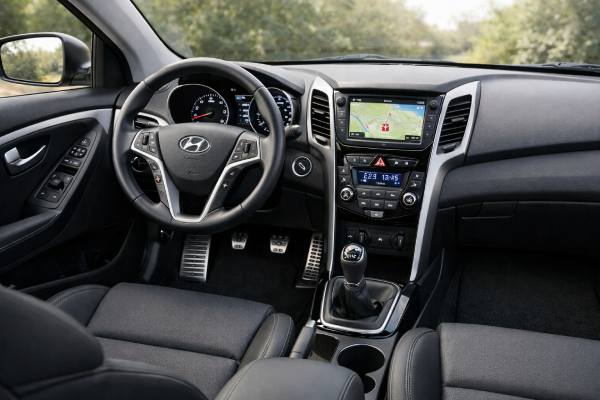
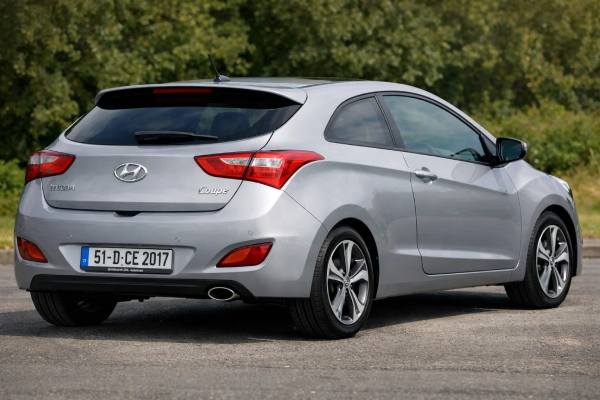
Hyundai never sold the facelifted GD i30 Coupe 1.6 T-GDi as a full hot hatch. Instead, it sits in a useful middle ground: quicker and more distinctive than the regular petrol i30, yet easier to live with and usually cheaper to keep than a true GTI. The 186 hp turbo four gives the three-door real mid-range shove, while the multi-link rear axle and Turbo-specific tuning keep the car stable and tidy rather than wild. For many owners, that balance is the whole point.
As a used buy, the i30 Coupe Turbo still makes sense. It is roomy for a three-door, well equipped in most markets, and based on a generally solid Hyundai mechanical package. It is not the class benchmark for steering feel, but it often ages better than more complicated rivals. The catch is simple: this engine rewards careful servicing. Oil quality, ignition upkeep, tyres, and a clean history matter more here than on the slower naturally aspirated i30 models.
Owner Snapshot
- Strong mid-range torque makes the car feel quicker on the road than the badge suggests.
- The chassis is mature and stable, with better rear-axle control than many budget sporty hatchbacks.
- Turbo trim cars were usually well equipped, so you often get heated seats, climate control, and useful daily-driver features.
- Neglected oil changes, worn plugs, and cheap tyres can make a good car feel far worse than it really is.
- A sensible owner interval for engine oil is about every 10,000 to 12,000 km or once a year.
Guide contents
- Hyundai i30 Coupe Turbo Profile
- Hyundai i30 Coupe Specs and Data
- Hyundai i30 Coupe Trims and Safety
- Reliability Issues and Service Actions
- Maintenance and Buying Advice
- Road Manners and Real-World Performance
- How It Stacks Up Against Rivals
Hyundai i30 Coupe Turbo Profile
The facelifted Hyundai i30 Coupe Turbo was Hyundai’s way of adding real pace and more visual attitude to the GD-generation i30 without jumping all the way to a hard-edged hot hatch. In period, that made it an unusual car. It offered a three-door body, distinctive Turbo styling, a proper turbocharged direct-injection petrol engine, and stronger standard equipment than most regular i30 trims. Yet it stayed front-wheel drive, manual only, and relatively restrained in both looks and behaviour.
That is still the right way to think about it today. This is not a stripped-out corner carver. It is a fast, usable compact coupe-hatch with enough performance to feel special on a back road and enough refinement to handle commuting or longer motorway runs without wearing you out. The 1.6-litre T-GDi engine delivers its best work in the middle of the rev range, so the car feels muscular in everyday overtakes and on rolling roads. The factory suspension tuning is firmer than a standard i30, but not punishing, and the multi-link rear axle gives it a more composed feel than many torsion-beam rivals from the same era.
The ownership appeal is straightforward. You get a roomy cabin for a three-door, a practical hatch opening, a 378-litre boot, and a generally generous list of comfort features. Hyundai’s five-year warranty was a major selling point when new, and cars that stayed inside the dealer network early in life often have tidy documentation. That matters now, because this model makes far more sense as a cared-for, standard example than as a cheap modified performance bargain.
The caveat is equally clear. The Turbo is more maintenance-sensitive than the plain 1.4 and 1.6 non-turbo i30s. It can hide neglect for a while, but misfires, tired plugs, weak coils, carbon build-up, worn tyres, and overdue fluid changes all chip away at the experience. Buy the right one, though, and the i30 Coupe Turbo lands in a sweet spot: quicker and more distinctive than mainstream hatchbacks, but calmer and often less demanding than the sharper GTI crowd.
Hyundai i30 Coupe Specs and Data
For the facelift-era 1.6 T-GDi Coupe, the key story is simple: a 1,591 cc direct-injection turbo four, 6-speed manual gearbox, front-wheel drive, and a chassis package tuned to be stable first and playful second. Public factory data is reasonably clear on the core mechanical package, dimensions, capacities, and performance figures.
Powertrain and efficiency
| Spec | Value |
|---|---|
| Code | Gamma 1.6 T-GDi (commonly known as G4FJ family) |
| Engine layout and cylinders | Inline-4, DOHC, 4 valves per cylinder |
| Bore × stroke | 77.0 × 85.44 mm (3.03 × 3.36 in) |
| Displacement | 1.6 L (1,591 cc) |
| Induction | Twin-scroll turbocharged with intercooling |
| Fuel system | Direct injection |
| Compression ratio | 9.5:1 |
| Max power | 186 hp (137 kW) @ 5,500 rpm |
| Max torque | 265 Nm (195.5 lb-ft) @ 1,500–4,500 rpm |
| Timing drive | Chain |
| Rated efficiency | 7.3 L/100 km (32.2 mpg US / 38.7 mpg UK) |
| Urban / extra-urban | 9.6 / 6.0 L/100 km |
| Real-world highway @ 120 km/h (75 mph) | Approx. 7.0–7.8 L/100 km (30–34 mpg US / 36–40 mpg UK) |
Transmission and driveline
| Spec | Value |
|---|---|
| Transmission | 6-speed manual |
| Drive type | Front-wheel drive |
| Differential | Open differential |
| Front suspension | MacPherson struts |
| Rear suspension | Multi-link |
| Steering | Electric rack-and-pinion with Flex Steer, 15.3:1 ratio |
| Front brakes | 300 mm (11.81 in) ventilated discs |
| Rear brakes | 284 mm (11.18 in) discs |
| Wheels and tyres | 225/40 R18 on 18-inch alloys |
Chassis, dimensions, and capacities
| Spec | Value |
|---|---|
| Ground clearance | 140 mm (5.51 in) |
| Length | 4,300 mm (169.29 in) |
| Width | 1,780 mm (70.08 in) |
| Height | 1,470 mm (57.87 in) |
| Wheelbase | 2,650 mm (104.33 in) |
| Turning circle | 10.6 m (34.8 ft) |
| Kerb weight | 1,357–1,455 kg (2,992–3,208 lb) |
| GVWR | 1,870 kg (4,123 lb) |
| Fuel tank | 53 L (14.0 US gal / 11.7 UK gal) |
| Cargo volume | 378–1,316 L (13.35–46.47 ft³), VDA |
| Payload | 415–513 kg (915–1,131 lb) |
| Towing capacity | 1,400 kg (3,086 lb) braked / 600 kg (1,323 lb) unbraked |
Performance and capability
| Spec | Value |
|---|---|
| 0–100 km/h (0–62 mph) | 8.0 s |
| 80–120 km/h | 7.9 s |
| Top speed | 219 km/h (136 mph) |
| 100–0 km/h braking distance | Not consistently published in factory material |
Fluids and service capacities
| Item | Value |
|---|---|
| Engine oil | 4.5 L (4.76 US qt / 3.96 UK qt) |
| Manual transmission oil | 1.7 L (1.80 US qt / 1.50 UK qt) |
| Coolant | Verify exact Hyundai coolant spec by VIN and market |
| Differential / transfer case | Not applicable as a separate service unit |
| A/C refrigerant | Verify under-bonnet label; charge varies by market and equipment |
| Key torque specs | Public technical sheets do not publish the critical workshop torques; use Hyundai service documentation |
Safety and driver assistance
| Item | Value |
|---|---|
| Crash rating | 5-star generation result |
| ANCAP result | 5 stars, overall 35.69/37 for the tested 2012-generation car; applied to 5-door, 3-door, and wagon variants |
| Euro NCAP generation percentages | Adult 90%, child 90%, pedestrian 67%, safety assist 86% |
| IIHS / headlight rating | Not applicable for this market-specific model |
| ADAS suite | ABS, EBD, Brake Assist, ESC, VSM, TCS, HAC standard; LDWS only on selected packages in some markets; no modern AEB or ACC as core equipment |
The most important takeaway from the numbers is that the i30 Coupe Turbo was engineered as a quick road car rather than an all-out performance flagship. Its official figures are solid, its dimensions remain practical, and the 18-inch tyre package gives it visual presence, but the hardware stays simple enough to keep long-term ownership manageable.
Hyundai i30 Coupe Trims and Safety
Trim structure varied by country, but the facelifted 1.6 T-GDi Coupe was usually sold either as a dedicated Turbo model or as a clearly separated high-spec performance version rather than just another engine choice. That matters on the used market, because the Turbo usually came with the visual cues and the comfort kit buyers now expect.
The easiest identifiers are outside. Look for the darker grille treatment, red accent details in the body kit, 18-inch alloys, dual exhaust outlets, LED running lights, and the more aggressive bumper treatment. Inside, many cars have sport seats, part leather or cloth-and-leather trim, alloy pedals, red stitching or red trim accents, a heated steering wheel, heated front seats, climate control, cruise control with speed limiter, rain and light sensors, and rear parking sensors. In some markets, keyless entry and start, navigation, a reversing camera, panoramic roof, and lane departure warning were bundled into one option pack rather than fitted as separate boxes.
Mechanically, the important point is that the Turbo is not just a cosmetic pack. It has the stronger 300 mm front brakes, the 18-inch wheel-and-tyre package, and model-specific chassis tuning. However, it does not give you a limited-slip differential or an especially advanced driver-assistance suite. That means condition matters more than brochure bragging rights. A standard car on quality tyres often drives better than a more heavily optioned car on mismatched rubber.
In safety terms, the Coupe benefits from sharing the second-generation i30 structure. The generation earned a five-star crash result, and the 3-door was treated as structurally comparable in the regional safety material. Equipment was strong for the time: dual front airbags, front side airbags, curtain airbags, a driver knee airbag on most versions, ISOFIX, and the expected stability and brake-control systems. That gave the car a robust passive-safety baseline even before you get into trim-level extras.
Modern buyers should still keep expectations in period. This is not a camera-and-radar hatchback. Lane departure warning existed only as a package feature in some markets, while autonomous emergency braking, adaptive cruise, blind-spot monitoring, and rear cross-traffic alert were not core strengths of the model. If a car does have LDWS or camera-based navigation functions, make sure they still work after any windscreen replacement or front-end repair, because calibration and sensor alignment can matter on optioned cars.
Reliability Issues and Service Actions
The facelifted i30 Coupe Turbo has a better reputation than many people expect, but it is not a car that shrugs off neglect. In broad terms, the platform is solid, the manual gearbox is usually durable, and the electrical complexity is moderate. Most ownership trouble comes from service shortcuts, age, or modified examples rather than one catastrophic design flaw.
Most common issues
- Misfire under load or rough running: often points to tired spark plugs, worn coil packs, or an ignition system that has been stretched too far between services. Remedy is usually straightforward: fit the correct plugs, inspect coils, and check for boost or vacuum leaks.
- Carbon build-up symptoms: hesitation, uneven idle, and softer throttle response can appear over time on any direct-injection petrol engine, especially if the car does lots of short trips. Walnut blasting or a proper intake clean is the usual fix when deposits become significant.
- Tyre-related handling complaints: the Turbo’s 18-inch setup is sensitive to tyre brand, tread depth, and alignment. Cheap front tyres can make the steering feel worse, increase wheelspin, and spoil braking confidence.
Occasional issues
- Clutch wear and slip: more likely on tuned cars or examples driven hard in traffic. A heavy bite point, flare under boost, or vibration on take-off deserves attention before purchase.
- Suspension knocks: drop links, bushes, top mounts, and sometimes wheel bearings are common wear points as mileage climbs. These are not unusual for the class, but they noticeably affect refinement.
- Battery and charging complaints: weak batteries cause random warning lights and poor cold starts. On a car with heated seats, heated wheel, and winter use, a tired 12 V battery can masquerade as a bigger problem.
Less common but more serious
- Turbocharger and oiling risk: not because the unit is famously weak, but because neglected oil changes can coke up a turbo engine faster than owners expect.
- Timing-chain noise: there is no routine replacement interval, but chain stretch, tensioner wear, or poor oil history should be taken seriously if you hear cold-start rattle or see timing-correlation faults.
This is also not a software-heavy car in the modern sense. There is no complex dual-clutch calibration to fear on the Turbo because it is manual only. The updates that matter most are the simple ones: dealer history, any ECU drivability flashes, infotainment updates if fitted, and proof that recall or field actions were checked by VIN in the correct market. That VIN check matters because public recall coverage differs by country, and a national database or dealer printout is more useful than generic internet lists.
Maintenance and Buying Advice
For long-term ownership, the smartest approach is to treat the i30 Coupe Turbo like a mildly stressed enthusiast engine, not like an anonymous fleet hatchback. The official service schedule was fairly broad, but the cars that age best nearly always get shorter oil intervals and better consumables.
Practical maintenance schedule
- Engine oil and filter: every 10,000 to 12,000 km or 12 months is the sensible real-world interval. The factory interval was longer, but the turbo engine benefits from fresher oil.
- Engine air filter: inspect every 15,000 km, replace around 30,000 km sooner in dusty use.
- Cabin filter: every 15,000 km or yearly.
- Spark plugs: inspect early and plan replacement roughly every 45,000 to 60,000 km on a turbo petrol unless records prove recent work.
- Brake fluid: every 2 years.
- Coolant: follow official Hyundai timing for your VIN and market, but treat 5 years as the point where you want clear documentation.
- Manual gearbox oil: many owners leave it alone too long. A refresh around 60,000 to 90,000 km is sensible if shift quality matters.
- Brake pads and discs: inspect every service, especially on lightly used cars where corrosion can outpace wear.
- Tyre rotation and alignment: inspect every 10,000 km and align whenever the front tyres show shoulder wear.
- Serpentine belt and hoses: inspect from about 60,000 km onward.
- 12 V battery: test from year four; replacement is often due in the five-to-six-year range.
- Timing chain: no routine replacement schedule, but investigate any rattle, poor oil history, or timing faults immediately.
Fluid and decision-use notes
| Item | Practical note |
|---|---|
| Engine oil | Use a quality full-synthetic petrol-engine oil that matches Hyundai’s specification for your VIN; 5W-30 is a common European choice |
| Oil capacity | 4.5 L |
| Manual transmission oil | 1.7 L of the correct Hyundai-spec manual fluid |
| Brake fluid | DOT 4 class fluid is the normal workshop choice |
| Coolant | Use only Hyundai-compatible coolant of the correct chemistry and mix ratio for the exact car |
Buyer’s checklist
- Start the engine cold and listen for chain rattle, unstable idle, or ticking that does not settle.
- Drive the car under full load in a high gear and watch for misfire, boost hesitation, or clutch slip.
- Check that all four tyres are quality items and that the front pair are not worn on the inner shoulders.
- Inspect the suspension for knocks and the brake discs for heavy lip or corrosion.
- Look underneath for subframe and seam corrosion if the car lived in a salted climate.
- Confirm service history, plug changes, recent oil work, and VIN-based recall checks.
The best buys are usually late, standard cars with strong paperwork and no tuning history. A lightly modified example is not automatically bad, but the burden of proof becomes much higher. As a rule, seek condition over mileage and history over options. A clean 2016 or 2017 Turbo on proper tyres is normally a better long-term bet than a cheaper car with a remap, loud intake, bargain tyres, and vague maintenance records.
The long-term durability outlook is good if the basics are respected. This is not an indestructible neglect-proof engine, but neither is it a fragile one. Think of it as a car that rewards discipline.
Road Manners and Real-World Performance
On the road, the i30 Coupe Turbo feels more mature than aggressive. The engine’s best trait is not peak power, but the way it produces useful torque low in the rev range. In everyday driving, that makes the car feel flexible and easy. You do not need to thrash it to make quick progress, and the official 80–120 km/h figure explains why it works so well in real overtakes.
The chassis tuning follows the same logic. Straight-line stability is strong, motorway manners are settled, and the rear suspension gives the car decent composure over uneven surfaces. It is firmer than a normal i30, especially on 18-inch tyres, but still more comfortable than many genuine hot hatches from the same period. That is good news for buyers who want a sporty daily rather than a weekend toy.
Steering is the weak point if you are chasing involvement. The Flex Steer modes change weight more than feel, and the front axle is more secure than talkative. On a damp road or a poor front tyre set, the open differential also reminds you that this is a brisk front-driver, not a traction monster. Push hard out of a tighter bend and you can feel the inside front tyre working.
Braking is respectable, with the larger front discs giving the Turbo enough confidence for road use, but the verdict depends heavily on tyres and disc condition. A cared-for car feels solid. A neglected one quickly feels ordinary.
For economy, the official combined figure is 7.3 L/100 km. In normal mixed use, expect something a bit worse than that. A careful motorway run can still land in the 7s, but urban use or enthusiastic driving will move the car into the 9s and sometimes above. In cold weather, short trips make the penalty obvious. That is the price of a pre-GPF, non-mild-hybrid turbo petrol from this era.
So the driving verdict is clear: the i30 Coupe Turbo is quick enough to be enjoyable, refined enough to be easy to live with, and honest enough not to pretend it is something more extreme than it is.
How It Stacks Up Against Rivals
The i30 Coupe Turbo makes the most sense when you compare it with sporty mainstream coupes and warm hatchbacks rather than full GTI heroes. In that company, it has a clear personality.
| Rival | Where the Hyundai wins | Where the rival wins |
|---|---|---|
| Kia pro_cee’d GT | Softer daily ride, subtler styling, often easier to buy as an unmodified car | More attitude, sharper character, stronger enthusiast image |
| SEAT Leon SC FR 1.8 TSI | Simpler ownership feel, strong equipment, understated value | More polished steering and a more eager powertrain |
| Volkswagen Scirocco | Better rear-seat usability, practical hatch layout, lower-key running experience | Stronger image and a more coupe-like sense of occasion |
Against a Ford Focus-style rival, the Hyundai also gives away some steering feel. Against a Peugeot 308 GT-type rival, it is usually less flamboyant and less efficient. But the Hyundai keeps landing the same counterpunch: it is a well-judged middle car. It offers enough pace to feel worthwhile, enough comfort to stay pleasant, and enough simplicity to avoid feeling fussy as it ages.
That is why the i30 Coupe Turbo is appealing now. It is not the sharpest choice, the fastest choice, or the most prestigious choice. It is the sensible enthusiast choice for someone who wants a three-door turbo hatch with real equipment, everyday usability, and a calmer ownership profile than the badge might suggest. Buy on service history, tyre quality, and mechanical honesty, and it can still be a very satisfying used performance value.
References
- Hyundai i30 Coupe | Technische Daten Benziner | Stand: April 2016 2016 (Technical Data)
- i30 Coupe Pressetext Zweite Generation 2016 (Press Kit)
- New Hyundai i30 Turbo 2015 (Pricelist)
- Hyundai i30 | Safety Rating & Report | ANCAP 2012 (Safety Rating)
- Check if a vehicle, part or accessory has been recalled 2017 (Recall Database)
Disclaimer
This article is for informational purposes only and is not a substitute for professional diagnosis, repair, or factory service advice. Specifications, torque values, fluid requirements, service intervals, and procedures can vary by VIN, market, build date, and fitted equipment. Always verify the exact details for your car against official Hyundai service documentation.
If this guide was useful, please consider sharing it on Facebook, X/Twitter, or another platform. That small gesture helps support our work.