
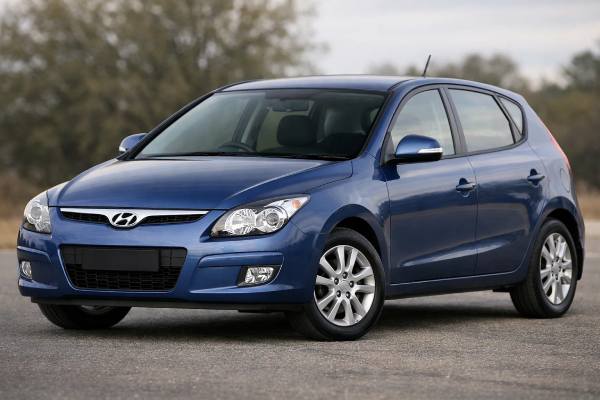
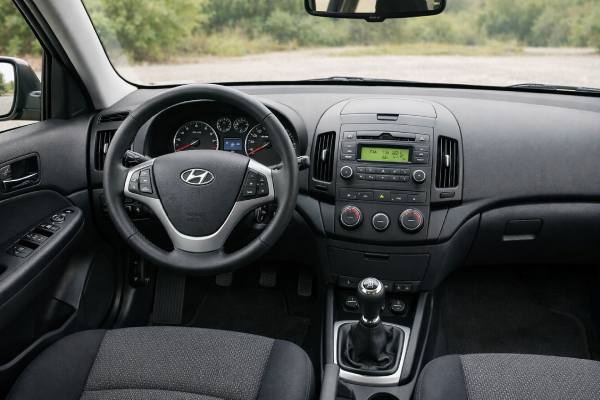
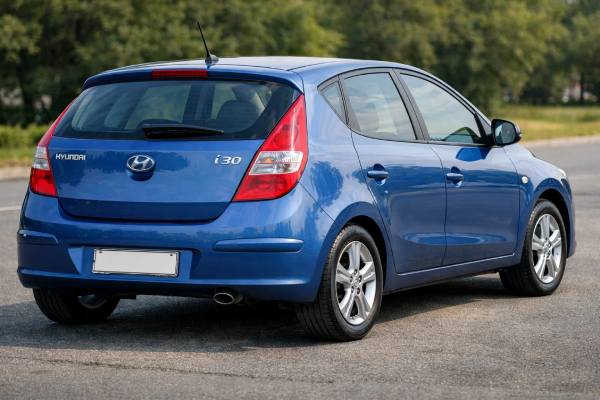
The first-generation Hyundai i30 FD was one of Hyundai’s earliest serious attempts to build a compact hatchback around European expectations rather than just price. In 2.0 CRDi form, it combined a strong 141 hp diesel engine with useful low-end torque, a 6-speed manual gearbox, and a practical five-door hatch body. That formula still makes sense today for drivers who want an older diesel family car that can cover highway miles comfortably without high running costs. The strengths are clear: good mid-range pull, honest packaging, respectable luggage space, and fuel economy that remains competitive for a larger-displacement diesel from the late 2000s. The main caution is age. These cars are now old enough that service history, recall completion, corrosion, and previous repairs matter more than brochure numbers. A good example can still be a capable daily car, but a neglected one can quickly turn cheap entry price into expensive catch-up maintenance.
Owner Snapshot
- Strong low-rpm torque makes the car easy to drive in traffic and relaxed on the highway.
- The 6-speed manual suits the diesel well and helps keep cruising revs modest.
- Hatchback practicality is still good, with useful rear-seat folding versatility.
- Buy on condition, not badge or trim alone; clutch wear, boost leaks, and poor service history matter.
- A sensible routine service interval is every 15,000 km or 12 months, with shorter intervals for severe use.
Guide contents
- Hyundai i30 FD diesel overview
- Hyundai i30 FD technical data
- Hyundai i30 FD trims and safety
- Reliability, common issues and recalls
- Maintenance and used buying advice
- Driving impressions and real-world use
- How it stacks up against rivals
Hyundai i30 FD diesel overview
The Hyundai i30 FD 2.0 CRDi sits near the top of the original diesel range in terms of usable performance. It is not a hot hatch, but it is the version that gives the i30 a more effortless character. The 2.0-liter common-rail turbo-diesel produces 140 hp and 305 Nm, and that torque arrives low enough in the rev range to make the car feel stronger in everyday driving than the headline acceleration time suggests. In practice, this is a diesel hatch built for mixed use: commuting, family duties, and long-distance driving.
The core appeal of the FD i30 is balance. It is compact enough to park easily, yet large enough inside to work as a genuine small family car. Cabin packaging is straightforward, visibility is generally good, and the hatchback tailgate makes loading far easier than in a small sedan. The 53-liter fuel tank also helps the car deliver useful range between fill-ups, especially for drivers who spend a lot of time on open roads.
This generation of i30 mattered for Hyundai because it moved the brand closer to the mainstream European hatchback class. The design, ride tuning, and cabin layout were aimed at buyers cross-shopping Ford Focus, Volkswagen Golf, Opel Astra, and Kia cee’d. The result was a car that felt more mature than many earlier Hyundai compact models. It was not the class leader in every area, but it was much more than a budget compromise.
Today, though, the buying equation is different from when the car was new. The i30 FD 2.0 CRDi is now judged as an older used diesel, not as a new-car value choice. That shifts attention toward known wear items, recall status, underbody condition, emissions-related age issues, and the quality of past maintenance. A tidy, well-documented example can still make a great low-cost long-distance car. A tired one can become a rolling list of deferred repairs.
The best way to think about this version is as a practical, torque-rich hatchback with honest strengths. It offers enough performance to feel easy rather than strained, enough space to be genuinely useful, and simple front-wheel-drive packaging that keeps ownership relatively straightforward. It does not have the polish or safety technology of newer rivals, but it still has a strong case for buyers who want a durable, usable diesel hatchback and are willing to inspect carefully before buying.
Hyundai i30 FD technical data
For this article, the focus is the European-market Hyundai i30 FD five-door hatchback with the 2.0 CRDi diesel engine and 6-speed manual transmission. Minor differences can appear between markets, trim levels, tyres, and brochure years, so the data below should be treated as representative for the exact 2007–2010 140 hp diesel hatch rather than universal for every body style and country.
Powertrain and efficiency
| Item | Hyundai i30 FD 2.0 CRDi |
|---|---|
| Code | D4EA |
| Engine layout and cylinders | Inline-4, 4 cylinders, DOHC, 4 valves/cyl |
| Bore × stroke | 83.0 × 92.0 mm (3.27 × 3.62 in) |
| Displacement | 2.0 L (1,991 cc) |
| Induction | Turbocharged, intercooler |
| Fuel system | Common-rail direct injection |
| Compression ratio | 17.3:1 |
| Max power | 141 hp (103 kW) @ 4,000 rpm |
| Max torque | 305 Nm (225 lb-ft) @ 1,800 rpm |
| Timing drive | Timing belt |
| Transmission | 6-speed manual |
| Drive type | FWD |
| Differential | Open |
| Rated efficiency | 5.5 L/100 km (42.8 mpg US / 51.4 mpg UK) combined |
| Urban | 7.2 L/100 km (32.7 mpg US / 39.2 mpg UK) |
| Extra-urban | 4.4 L/100 km (53.5 mpg US / 64.2 mpg UK) |
| Real-world highway @ 120 km/h | Typically around 5.5–6.3 L/100 km depending on tyres, weather, load, and condition |
Transmission, chassis, and dimensions
| Item | Hyundai i30 FD 2.0 CRDi |
|---|---|
| Suspension front | MacPherson strut |
| Suspension rear | Multi-link rear suspension layout |
| Steering | Rack-and-pinion, power assisted |
| Brakes front / rear | Ventilated discs / solid discs |
| Wheels / tyres | 205/55 R16 is the most common fitment |
| Ground clearance | about 150 mm (5.9 in), where listed |
| Length | about 4,240 mm (166.9 in) |
| Width | about 1,775 mm (69.9 in) |
| Height | about 1,480 mm (58.3 in) |
| Wheelbase | about 2,650 mm (104.3 in) |
| Turning circle | about 10.4 m (34.1 ft) |
| Kerb weight | about 1,330–1,430 kg (2,932–3,153 lb), depending on market/spec |
| GVWR | about 1,900 kg (4,189 lb) |
| Fuel tank | 53 L (14.0 US gal / 11.7 UK gal) |
| Cargo volume | 340 L (12.0 ft³) seats up / about 1,200 L (42.4 ft³) seats down |
Performance, fluids, and safety basics
| Item | Hyundai i30 FD 2.0 CRDi |
|---|---|
| 0–100 km/h | about 10.3 s |
| Top speed | about 205 km/h (127 mph) |
| Payload | about 470 kg (1,036 lb) |
| Braked towing capacity | market-dependent; verify by VIN and handbook |
| Engine oil | Low-ash diesel oil meeting the correct Hyundai/ACEA specification; commonly 5W-30 or 5W-40 depending on climate and market |
| Engine oil capacity | about 6.7 L (7.1 US qt) |
| Coolant | Ethylene-glycol based coolant to Hyundai specification |
| Coolant capacity | about 7.3 L (7.7 US qt) |
| Transmission fluid | Manual gearbox oil to Hyundai specification; capacity varies by gearbox code |
| A/C refrigerant | Verify by under-hood label and VIN |
| Crash rating | Euro NCAP 4 stars under the 2007 test regime |
| ADAS | No AEB, ACC, lane keeping assist, or blind-spot monitoring in the modern sense |
A few points deserve context. First, curb weight and some dimensions vary slightly across public references because market equipment and measurement methods differed. Second, towing figures, refrigerant charge, and certain torque specs are best confirmed from VIN-specific workshop documentation. Third, this is an older diesel hatchback, so official laboratory fuel figures are less useful in the real world than condition, tyre choice, and driving pattern. A healthy car on proper tyres driven gently can be efficient, but urban short-trip use will usually move consumption well above the catalog number.
Hyundai i30 FD trims and safety
Trim and equipment on the FD i30 varied by market more than many buyers expect. That is important because a 2.0 CRDi in one country may have a noticeably different feature set from a similar-looking car sold elsewhere. In broad terms, lower trims usually came with simpler wheel designs, more basic interior materials, manual air-conditioning, and fewer convenience features. Higher trims often added alloy wheels, upgraded seat trim, cruise control, richer trip-computer functions, leather on key touch points, and a stronger audio package.
Mechanically, the 2.0 CRDi remained mostly consistent. The big differences between trims were not usually engine tune or major chassis changes, but equipment level, wheel and tyre package, and convenience features. That means shopping for the right example is less about chasing a specific trim badge and more about checking exactly what is fitted. Build sheet data, VIN-based parts lookups, and a careful visual inspection are more reliable than relying on seller descriptions.
Quick identifiers help. Lower-spec cars often have smaller wheels, fewer buttons on the steering wheel, and basic climate controls. Better-equipped versions tend to show alloy wheels, a more complete multifunction steering wheel, nicer cabin trim, and sometimes upgraded lighting and audio equipment. Interior wear can also tell you a lot about how the car was used. Driver’s seat bolster damage, shiny steering wheels, and sagging shift boots can point to high use even when the odometer reading looks modest.
Safety equipment was decent for the period but basic by current standards. Depending on market and trim, cars could include front airbags, side airbags, and curtain airbags. ISOFIX child-seat anchor points helped reinforce the i30’s family-car role. ABS was expected, while electronic stability control availability could vary depending on year and spec. That variation matters for used buyers because a better-equipped car with stability control is usually more desirable than a superficially similar lower trim without it.
The official Euro NCAP result for the i30 FD was respectable for the time, but it should be read with period context. The car performed credibly enough to be competitive in the late 2000s, yet it does not offer modern active-safety systems such as autonomous emergency braking, lane-centering assistance, or radar-based cruise control. Buyers moving out of a newer car will notice that immediately. As a result, the FD i30’s safety story today rests more on having a sound structure, working restraint systems, healthy brakes and tyres, and a completed recall history than on advanced driver assistance.
Reliability, common issues and recalls
The Hyundai i30 FD 2.0 CRDi is generally a sound older diesel hatchback, but that broad statement only applies when the car has been maintained properly. Reliability on a 2007–2010 example is now shaped by age, mileage, driving pattern, and service quality more than by factory reputation. A car that has done regular highway use with on-time servicing can feel durable and settled. A car used mainly for short trips with delayed oil changes can develop a much more expensive personality.
The most common issues are the familiar ones for a turbo-diesel of this period. Fuel-system problems can show up as hard starting, rough idle, hesitation, or stuttering under acceleration. In many cases, the likely causes are a restricted fuel filter, contaminated diesel, injector imbalance, or air entering the system. Intake and boost plumbing are another area to inspect closely. Split intercooler hoses or loose boost pipe connections can cause loss of power, smoke under load, and limp-home behavior. These are common enough to deserve a careful inspection during any pre-purchase test drive.
Clutch and dual-mass flywheel wear can also become major cost items on higher-mileage cars. Symptoms include take-up shudder, a heavy pedal, vibration at idle, rattle with the clutch engaged or disengaged, and slip under full-load acceleration. A tired clutch is not unusual on an older diesel hatchback, but it matters because replacement cost can quickly change whether the car was actually a bargain.
EGR fouling, intake contamination, and diesel soot buildup should also be on the list. Cars used mainly in city traffic are more likely to suffer from uneven running and poor throttle response. Excess smoke, weak low-rpm pull, or inconsistent turbo response can indicate more than one issue at once. A diagnostic scan is a smart step, especially if the car has warning lights or recent parts replacement with no clear explanation.
On the chassis side, expect age-related wear in front suspension joints, bushings, anti-roll bar links, driveshaft boots, wheel bearings, and brake hardware. None of these items is unusual, but together they can create a car that feels much worse than it should. Loose tracking, knocking over small bumps, uneven tyre wear, and vibration under braking are all signs that the car needs more than just a basic service.
Recalls matter on this generation. Steering-related service actions and airbag control unit campaigns have affected some FD cars. For that reason, an official VIN recall check is essential. Do not assume the car was repaired simply because it has been on the road for years. Ask for dealer records and verify campaign completion before purchase. On an older i30, recall completion is part of basic due diligence, not an optional bonus.
Maintenance and used buying advice
Good maintenance is what separates a satisfying i30 FD 2.0 CRDi from an exhausting one. The factory schedule provides a strong starting point, but age and diesel-specific wear mean many owners are better served by conservative intervals rather than the longest possible ones. The goal is simple: keep fluids fresh, catch wear early, and prevent small faults from turning into larger failures.
Practical maintenance schedule
- Engine oil and filter: every 15,000 km or 12 months. Shorten the interval for frequent cold starts, heavy city driving, towing, or dusty conditions.
- Engine air filter: inspect at each service and replace when dirty.
- Cabin air filter: replace regularly to preserve heater and A/C performance.
- Fuel filter: replace on schedule and earlier if poor fuel quality or water contamination is suspected.
- Coolant: first replacement around 210,000 km or 10 years, then every 30,000 km or 24 months.
- Brake fluid: every 24 months is a sensible preventive interval.
- Timing belt system: replace at the manufacturer’s interval for the exact VIN and market; include tensioners and idlers.
- Auxiliary belts and hoses: inspect for cracking, glazing, swelling, and leaks.
- Manual gearbox oil: inspect for leaks and refresh at sensible intervals even if not always listed as frequent maintenance.
- Brake pads and rotors: inspect at every service.
- Tyres and alignment: rotate tyres, maintain correct pressure, and check alignment if wear looks uneven.
- 12 V battery: load-test once the battery reaches about 4–5 years of age.
- Suspension and steering: inspect joints, bushings, boots, and bearings annually.
Fluids, capacities, and useful service notes
| Item | Typical guidance |
|---|---|
| Engine oil capacity | about 6.7 L (7.1 US qt) |
| Coolant capacity | about 7.3 L (7.7 US qt) |
| Fuel tank | 53 L (14.0 US gal / 11.7 UK gal) |
| Oil grade | Confirm by VIN and climate; diesel-approved oil only |
| Coolant type | Hyundai-approved ethylene-glycol coolant |
| Brake fluid | DOT 4 type is commonly specified for cars of this class |
| Tyre size | 205/55 R16 common on mainstream trims |
Used buyer’s inspection checklist
- Start the engine from cold and watch for long cranking, excessive smoke, or unstable idle.
- Check for smooth boost delivery with no flat spots or limp mode.
- Listen for clutch or flywheel noise at idle and during take-off.
- Inspect under the car for oil, coolant, and gearbox leaks.
- Check tyres for uneven wear that may point to suspension or alignment issues.
- Test all electrics, especially air-conditioning, windows, central locking, and instrument illumination.
- Inspect the body for rust at arches, lower doors, tailgate edges, and underneath.
- Confirm recall completion and service history with invoices, not just stamps.
The best buys are usually steady-mileage cars with complete records, recent fluid service, good tyres, and no warning lights. Cars to avoid are those with patchy history, repeated low-budget repairs, obvious corrosion, or unexplained running faults. Long-term durability can be good, but only if the car has been maintained like a diesel and not treated as maintenance-free transport.
Driving impressions and real-world use
The Hyundai i30 FD 2.0 CRDi feels most at home when driven smoothly and steadily. Its defining trait is low-end torque rather than high-rev excitement. In daily use, that makes the car easy to place in traffic and pleasantly undemanding on longer trips. It can pull from low revs without constant downshifts, and the 6-speed manual gearbox helps it settle into calm highway cruising more convincingly than many smaller-engined rivals from the same era.
Throttle response is typical for a late-2000s turbo-diesel. There is useful shove once the engine is in its working range, but it is not instantaneous in the way a modern electric motor or newer diesel can feel. A healthy car should still respond cleanly and predictably. Noticeable lag, surging, smoke, or flat acceleration usually suggests a fault rather than normal behavior.
Ride quality is one of the i30’s better traits. The suspension tuning tends to favor everyday comfort over sharpness, which suits the car’s role. Broken urban surfaces are handled reasonably well, and the car is generally stable at motorway speeds. Steering feel is competent rather than memorable. It does not offer the same level of feedback as the best driver-focused hatchbacks of the era, but it is predictable and easy to live with.
Noise levels are acceptable for the class and age. At idle, the diesel sounds like a diesel, but once up to speed the engine is less intrusive than many buyers might expect. Road noise and tyre quality matter a lot on older examples. A car on worn budget tyres can feel rougher, noisier, and less secure than one on decent matched rubber. Because of that, tyres are part of the driving experience, not just a maintenance line item.
Real-world efficiency remains one of the car’s strongest points. Official combined consumption is around 5.5 L/100 km, but real-world use varies widely. In city traffic and short-trip winter driving, expect noticeably worse results. On steady mixed or highway routes, a healthy car can still return pleasing numbers for a 2.0-liter diesel hatch. That makes this version attractive for drivers who cover meaningful annual mileage.
Overall performance is best described as strong enough rather than quick. A 0–100 km/h time in the low 10-second range is perfectly adequate for family hatchback duty. The more important number is the 305 Nm of torque, because that is what gives the car its easy, useful feel. The i30 FD 2.0 CRDi does not feel sporty, but it does feel capable, and for many owners that matters more.
How it stacks up against rivals
Compared with late-2000s diesel rivals, the Hyundai i30 FD 2.0 CRDi makes its case through practicality and ownership logic rather than image. A Ford Focus 2.0 TDCi usually feels sharper to drive, while a Volkswagen Golf 2.0 TDI often delivers a more polished interior impression. The Opel Astra and Peugeot 308 also brought strong diesel options in the same period. The Hyundai’s advantage was that it offered much of the same real-world usefulness without trying to charge a premium for the badge.
The i30’s strongest rival is arguably the Kia cee’d of the same era, because the two cars share a similar Korean approach to the European compact class. In that comparison, the Hyundai feels slightly more understated in character, but the two are close in spirit: sensible, usable, and not especially flashy. Buyers who want the sharpest chassis will usually lean toward the Focus. Buyers who want the strongest brand image may still prefer the Golf. Buyers who want an honest, practical diesel hatch at a reasonable price often find the Hyundai makes excellent sense.
Where the i30 can fall behind is refinement at the margins. Some rivals have a more polished cabin, a more sophisticated control feel, or a slightly stronger reputation in enthusiast circles. Yet those differences matter less in today’s used market than condition, maintenance history, and overall honesty of the car. A well-kept i30 is a better buy than a neglected rival with a stronger badge.
That is really the key to the verdict. The i30 FD 2.0 CRDi is not the most exciting option in its class, and it does not offer modern safety technology or standout luxury. What it offers is straightforward usefulness: practical dimensions, good torque, respectable economy, and ownership that can stay manageable if the car has been cared for properly. For buyers who understand what an older diesel requires, that remains a worthwhile combination.
References
- Frontal impact driver Frontal impact passenger Side impact driver Car Details 2007 (Safety Rating)
- Home | Hyundai Recalls & Service Campaigns 2026 (Recall Database)
- Hyundai recalls certain ‘i30 (FD)’ passenger vehicles – CCPC Consumers 2024 (Recall Database)
- Hyundai i30 I 2.0 CRDi (140 Hp) | Technical specs, data, fuel consumption, Dimensions 2026 (Technical Data)
- HYUNDAI I30 OWNER’S MANUAL Pdf Download | ManualsLib 2026 (Owner’s Manual)
Disclaimer
This article is for informational purposes only and is not a substitute for professional diagnosis or repair. Specifications, torque values, service intervals, procedures, and fitted equipment can vary by VIN, market, production date, emissions package, and trim. Always verify critical technical data against the official service documentation for the exact vehicle.
If this guide was useful, please consider sharing it on Facebook, X, or another social platform to support our work.