
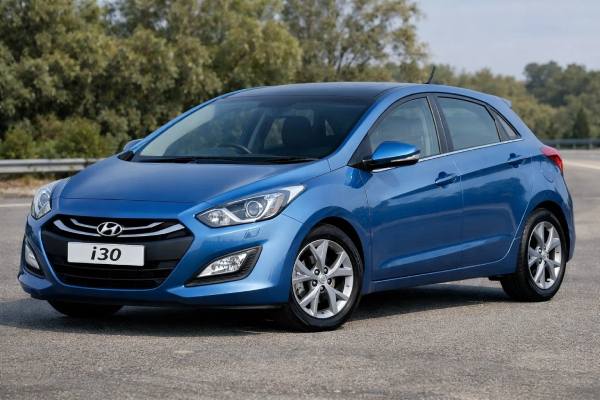
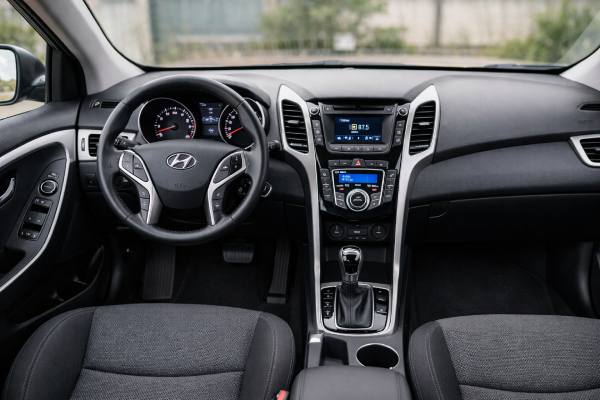
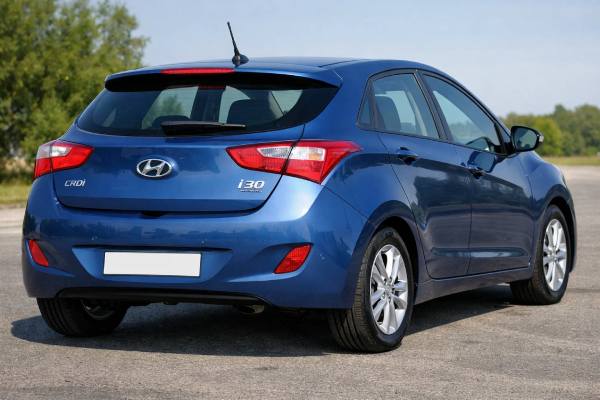
The second-generation Hyundai i30 GD marked a real step forward for the model. It kept the practical shape and European focus that made the earlier car useful, but added a more polished cabin, cleaner design, stronger safety credentials, and a broader sense of maturity on the road. In 1.6 CRDi 110 hp form, it also landed in a sweet spot for many used-car buyers: enough torque for relaxed daily driving, genuinely low official fuel use, and simpler long-term ownership than more stressed diesel alternatives. This is not the quickest GD diesel, and it was never meant to be. Its appeal is efficiency, reasonable running costs, and hatchback practicality with a grown-up feel. Today, that still makes sense. The main caution is that this is now an older Euro 5 diesel with a DPF, so service history, chain health, recall checks, and the kind of mileage the car has done matter more than trim level or paint color.
Core Points
- The 1.6 CRDi 110 hp gives the i30 GD a strong balance of fuel economy and everyday torque.
- The chassis is more mature than the older FD generation and still feels stable on long motorway runs.
- Hatchback practicality remains strong, with useful rear-seat folding and a square luggage area.
- Short-trip use is the main ownership caveat because DPF and EGR issues become more likely on lightly used diesel cars.
- A sensible oil-and-filter interval is every 15,000 km or 12 months, with shorter intervals for severe use.
Contents and shortcuts
- Hyundai i30 GD big picture
- Hyundai i30 GD specs and data
- Hyundai i30 GD trims and safety
- Common issues and service campaigns
- Maintenance plan and buyer’s guide
- Driving feel and real economy
- How the i30 GD stacks up
Hyundai i30 GD big picture
The Hyundai i30 GD matters because it is the generation where the model stopped feeling like a clever outsider and started feeling like a fully established European compact hatchback. Hyundai designed and tuned it around European expectations, and that shows in the way the car combines a tidy footprint with solid motorway stability, honest interior space, and a cabin that feels less cost-driven than the earlier FD car. In 1.6 CRDi 110 hp form, the GD makes an especially sensible used buy because it focuses on the things that still matter years later: low running costs, predictable front-wheel-drive behavior, and enough torque to avoid feeling strained in normal use.
The 1.6-liter diesel in this version produces 110 hp and 260 Nm. Those figures will not excite anyone chasing performance, but they suit the car well. The torque arrives low in the rev range, so the i30 feels easy to drive in traffic and more relaxed on the highway than its power output suggests. Hyundai paired the engine with a 6-speed manual as the default setup, and that remains the most appealing configuration for this power level. Some markets also offered a 6-speed automatic, but the manual is the cleaner fit if efficiency and response matter more than convenience.
The GD hatchback is also usefully sized. At 4,300 mm long with a 2,650 mm wheelbase, it stays easy to park without feeling cramped inside. Boot space is a useful 378 liters with the rear seats up and 1,316 liters with them folded, which keeps the i30 competitive as an everyday family hatch rather than just a commuter car. It is not as cavernous as an estate or liftback, but the shape is practical and the rear opening is wide enough for real daily use.
The broader ownership appeal comes from balance. The i30 GD is not the most premium car in the class, and it is not the most driver-focused either. What it offers is a convincing middle ground. It looks modern enough to avoid feeling dated, its safety story was strong for the time, and its diesel efficiency still makes sense for drivers who cover meaningful mileage. That is the key condition, though. This version makes far less sense for mostly urban, low-speed, short-distance use.
Today, the used-car question is not whether the GD was a good new car. It was. The real question is whether the individual car in front of you has been maintained in a way that suits an older Euro 5 diesel. A good example can still be a very smart buy. A neglected one can quickly demand money through DPF trouble, suspension wear, tired clutches, and overdue fluid service. That is why the i30 GD 1.6 CRDi 110 hp is best understood as a rational, efficient hatchback that rewards careful buying and punishes laziness.
Hyundai i30 GD specs and data
For this article, the baseline is the European-market Hyundai i30 GD five-door hatchback with the 1.6 CRDi 110 hp diesel engine. The most representative version is the 6-speed manual, because that is the setup most closely associated with the headline fuel-economy and performance figures. Some markets also offered Blue Drive efficiency tuning and a 6-speed automatic, so those differences are noted separately where they meaningfully affect the numbers.
Powertrain and efficiency
| Item | Hyundai i30 (GD) 1.6 CRDi 110 hp |
|---|---|
| Code | D4FB |
| Engine layout and cylinders | Inline-4, 4 cylinders, DOHC, 4 valves/cyl |
| Bore × stroke | 77.2 × 84.5 mm (3.04 × 3.33 in) |
| Displacement | 1.6 L (1,582 cc) |
| Induction | Turbocharged, intercooler |
| Fuel system | Common-rail direct injection |
| Compression ratio | 17.3:1 |
| Max power | 110 hp (81 kW) @ 4,000 rpm |
| Max torque | 260 Nm (192 lb-ft) @ 1,900–2,750 rpm |
| Timing drive | Chain |
| Engine systems | Diesel particulate filter |
| Transmission | 6-speed manual standard; 6-speed automatic in some markets |
| Drive type | FWD |
| Differential | Open |
Factory performance and economy by main variant
| Variant | 0–100 km/h | Top speed | Combined fuel use | CO2 |
|---|---|---|---|---|
| 6-speed manual | 11.5 s | 185 km/h (115 mph) | 4.1 L/100 km | 109 g/km |
| 6-speed manual Blue Drive | 11.5 s | 185 km/h (115 mph) | 3.8 L/100 km | 100 g/km |
| 6-speed automatic | 12.3 s | 180 km/h (112 mph) | 5.5 L/100 km | 145 g/km |
Those figures explain the range well. The regular manual is the best all-rounder, the Blue Drive version is the efficiency champion, and the automatic trades away some of the diesel’s strongest advantages.
Chassis and dimensions
| Item | Hyundai i30 (GD) 1.6 CRDi 110 hp |
|---|---|
| Suspension front / rear | Independent MacPherson strut / independent rear coil-spring layout |
| Steering | Rack-and-pinion, motor-driven power steering |
| Steering wheel turns lock-to-lock | 2.85 |
| Turning circle | 10.6 m (34.8 ft) |
| Brakes | Ventilated front discs / rear discs |
| Wheels and tyres | 195/65 R15, 205/55 R16, or 225/45 R17 depending on trim |
| Length | 4,300 mm (169.3 in) |
| Width | 1,780 mm (70.1 in) |
| Height | 1,470 mm (57.9 in) |
| Wheelbase | 2,650 mm (104.3 in) |
| Kerb weight | about 1,290 kg (2,844 lb) |
| GVWR | 1,920 kg (4,233 lb) |
| Payload | about 630 kg (1,389 lb) |
| Fuel tank | 53 L (14.0 US gal / 11.7 UK gal) |
| Cargo volume | 378 L (13.35 ft³) seats up / 1,316 L (46.47 ft³) seats folded |
Fluids, service capacities, and safety basics
| Item | Hyundai i30 (GD) 1.6 CRDi 110 hp |
|---|---|
| Engine oil capacity | 5.3 L (5.6 US qt) |
| Typical oil grade | Low-SAPS diesel oil, commonly 5W-30 ACEA C2/C3 depending on market and climate |
| Coolant capacity | 6.9 L (7.3 US qt) |
| Coolant type | Hyundai-approved ethylene-glycol coolant |
| Automatic transmission fluid | Use the exact Hyundai specification for the fitted gearbox; verify by VIN |
| Braked towing capacity | about 1,500 kg (3,307 lb) |
| Unbraked towing capacity | about 650 kg (1,433 lb) |
| Crash rating | Euro NCAP 5 stars |
| Euro NCAP scores | Adult 90%, Child 90%, Pedestrian 67%, Safety Assist 86% |
| IIHS | Not applicable for this European-market model |
| ADAS | No AEB, ACC, BSD, or lane centering on this 2012–2015 setup; ESC and seatbelt reminders are the meaningful core systems |
A few items should be handled with care. Exact refrigerant charge, some automatic-transmission fluid capacities, and critical workshop torque specs are best confirmed from VIN-specific service documentation. Public sources cover the broad picture well, but they do not replace workshop data when ordering parts or tightening critical fasteners.
Hyundai i30 GD trims and safety
The i30 GD was sold in a wide range of trims across Europe, and that matters because equipment level can change the ownership experience more than the engine itself. Lower trims were usually focused on value, while mid- and upper-range cars added the features that make the car feel much more complete in daily use. Names varied by country, but the usual themes were easy enough to spot: simpler wheels and cabin trim at the bottom, then better infotainment, more comfort equipment, larger alloys, extra trim detailing, and navigation or camera features higher up the ladder.
For the 1.6 CRDi 110 hp specifically, the most common and sensible trims are the middle ground. They often combine the efficient diesel with 15- or 16-inch wheels, sensible tyre costs, cruise control, decent seat trim, steering-wheel controls, Bluetooth, and the kind of convenience equipment that makes the car feel modern enough today. Higher trims look better in photos and can bring nicer cabin materials, but they also tend to carry larger wheels, more expensive tyres, and a slightly firmer ride. That is not automatically a problem, but it does change the car’s character.
There were also functional differences beyond appearance. Blue Drive versions used low rolling resistance tyres, stop-start, and related efficiency measures to cut fuel use and CO2. Those are attractive on paper, but in the used market the main question is not whether the car once had the best catalog number. It is whether those systems still work properly and whether the car’s usage pattern matched the diesel drivetrain. A standard 110 hp manual with good history can be a better buy than a neglected eco version.
Quick identifiers help. Smaller wheels usually point to more value-oriented trims. Better-equipped cars often add chrome interior details, different seat fabrics, more steering-wheel buttons, rear parking sensors, and navigation or upgraded media systems. Because country naming varied, the most reliable buying method is still a VIN-based equipment lookup combined with a careful visual inspection.
Safety was one of the GD’s strongest selling points when new. The 2012 Euro NCAP result gave the i30 five stars with strong adult and child occupant scores and a healthy safety-assist result for the period. Standard equipment in the official test included electronic stability control, front airbags, side airbags, curtain airbags, seatbelt reminders, and active restraint hardware that placed the car firmly in the mainstream of the class rather than in the bargain basement.
It is important, though, to read that safety story in period context. The i30 GD did well under the standards of its time, but it is still a pre-modern-ADAS compact hatchback. There is no standard autonomous emergency braking, no modern blind-spot monitoring, and no lane-centering function in the sense buyers now expect. Safety today depends far more on correct tyres, healthy brakes, working airbags, and recall completion than on electronic intervention. That does not weaken the car’s value, but it does help set realistic expectations for buyers coming from newer vehicles.
Common issues and service campaigns
The i30 GD 1.6 CRDi 110 hp is generally a sensible used diesel hatchback, but it is not a car that thrives on neglect. Its reputation is strongest when the car has done the kind of mileage a diesel likes: regular mixed or motorway use, on-time oil changes, and proper attention to filters and brakes. When that pattern breaks down, the problems that appear are the predictable ones for an older Euro 5 diesel rather than a dramatic single model-specific flaw.
Common, lower-to-medium cost issues
- DPF loading from short-trip use: symptoms include frequent regens, rising fuel consumption, warning lights, or limp mode.
- EGR contamination: hesitation, rougher response, smoke under load, and recurring engine-management faults are typical clues.
- Suspension wear: drop links, bushes, and other front-end wear items can create rattles and make the car feel older than it is.
- Rear brake drag: not unusual on lightly used cars with rear disc brakes.
- Battery and glow-plug aging: cold-weather starting complaints are often electrical rather than catastrophic.
Common, medium-cost ownership risks
- Clutch and dual-mass flywheel wear on manuals: expect shudder, slip, rattle at idle, or a heavy feel on higher-mileage cars.
- Boost leaks or intercooler-hose issues: flat response and a dull, breathless feel under load are typical.
- Injector balance or sealing problems: harder starts, rough idle, diesel smell, or excessive correction values deserve investigation.
- Engine-mount fatigue: extra vibration at idle can make a healthy engine feel rougher than it is.
Occasional but important
- Timing-chain wear symptoms: the chain setup avoids scheduled belt replacement, but it should not be treated as a lifetime non-issue. Cold-start rattle, timing-correlation faults, or noisy tensioner behavior need attention.
- Cooling-system leaks: hoses, plastic fittings, and thermostat-housing areas can age quietly before they fail obviously.
- Steering or sensor-related faults: electric power steering and chassis electronics are not usually a GD disaster area, but warning lights should never be ignored on a test drive.
Software and calibration updates matter more than many buyers think. On diesel cars of this era, repeated DPF or drivability complaints can sometimes be influenced by control-software revisions as well as hardware condition. If a seller claims the car has had “all updates done,” that is useful, but workshop invoices are more meaningful than verbal reassurance.
Recall and service-campaign history should always be checked by VIN. Market coverage varies, and campaign completion is far more important than internet lists that may not match the country the car was sold in. The safest routine is simple: run the VIN through Hyundai’s official recall portal, ask for dealer or workshop records, and treat incomplete recall history as a negotiation point at minimum.
For pre-purchase checking, ask for five things before anything else:
- Full service history with dates and mileage.
- Evidence of correct oil servicing on time.
- Proof of recall completion.
- Recent brake and suspension invoices if mileage is high.
- A diagnostic scan showing no active engine, ABS, or airbag faults.
A strong i30 GD usually feels tidy, pulls cleanly, stops straight, and has no warning lights. A tired one often reveals itself through multiple small faults at once, which is why a careful inspection is much more useful than relying on model reputation alone.
Maintenance plan and buyer’s guide
The i30 GD 1.6 CRDi does best with conservative maintenance. That does not mean it is fragile. It means diesel economy only stays cheap when the owner avoids stretching intervals and catches wear early. A practical used-car routine is usually stricter than the most optimistic brochure logic, especially if the car’s past is not fully documented.
Practical maintenance schedule
- Engine oil and filter: every 15,000 km or 12 months for normal use; shorten the interval for repeated cold starts, city use, towing, or dusty conditions.
- Engine air filter: inspect at every service and replace when dirty.
- Cabin air filter: replace regularly, especially if airflow drops or the car spends time in urban traffic.
- Fuel filter: keep on schedule and replace early if poor fuel quality or starting trouble appears.
- Coolant: follow the factory schedule for the exact VIN, but on an older used diesel it is reasonable to refresh early if history is unclear.
- Brake fluid: every 24 months is a good preventive rule.
- Manual gearbox oil: inspect for leaks and refresh sensibly on higher-mileage cars even if a previous owner ignored it.
- Brakes: inspect pads, discs, caliper movement, and parking-brake action at every service.
- Tyres and alignment: rotate tyres regularly and do not ignore inner-edge wear or steering pull.
- Battery and glow plugs: test before winter once the car is several years old.
- Timing components: chain-driven engine, so inspect for noise, stretch symptoms, and correlation faults rather than waiting for obvious failure.
- Belts and hoses: inspect auxiliary belt, pulleys, and coolant hoses for age-related wear.
Fluids and decision-making data
| Item | Guidance |
|---|---|
| Engine oil capacity | 5.3 L (5.6 US qt) |
| Coolant capacity | 6.9 L (7.3 US qt) |
| Fuel tank | 53 L (14.0 US gal / 11.7 UK gal) |
| Oil type | Low-SAPS diesel oil of the correct ACEA and Hyundai specification |
| Coolant type | Hyundai-approved ethylene-glycol coolant |
| Brake fluid | DOT 4-type fluid is the normal expectation |
| Common tyre sizes | 195/65 R15, 205/55 R16, 225/45 R17 |
| Critical torque values | Verify by VIN-specific workshop data before tightening safety-critical fasteners |
That last point matters. Public sources are useful for capacities and broad service planning, but wheel fasteners, suspension fasteners, and drivetrain torque specs are best taken from the workshop manual for the exact car.
Used buyer’s checklist
- Cold start: listen for chain noise, injector clatter beyond the normal diesel level, and unstable idle.
- DPF health: watch for warning lights, forced-regeneration stories, or signs the car only does very short trips.
- Clutch and flywheel: check for slip, vibration, rattling, or harsh take-up.
- Steering and suspension: listen for knocks and check the steering tracks straight.
- Brakes: make sure the car stops cleanly with no drag or vibration.
- Body and underside: inspect wheel arches, lower edges, subframe areas, and exhaust condition.
- Cabin electronics: test media, climate controls, parking sensors, switches, and warning lights.
- Paperwork: service invoices matter more than stamps alone.
- Recall status: verify by VIN, not assumption.
Long-term durability is good enough to make the i30 GD worth buying, but only when the service history is honest and the car’s use pattern matches an older diesel. The best buys are regular-mileage cars with documented maintenance, good tyres, and clean diagnostics. The worst are short-trip diesel cars with patchy records and unexplained warning lights.
Driving feel and real economy
The i30 GD 1.6 CRDi 110 hp is best judged by how it feels over a full week of normal driving, not by its headline power figure. In that setting, it is a well-judged compact hatch. The steering is accurate enough, the chassis feels more tied down than the old FD, and the car has the kind of straight-line stability that makes long motorway runs easy. It is not a hot hatch, and it does not try to be. What it offers is calm, tidy, well-balanced road manners.
The powertrain character matches that goal. Throttle response is typical for a diesel of the period: measured off the line, then stronger once the torque arrives. There is some lag if you ask for sudden acceleration from very low revs, but a healthy car pulls cleanly once on boost and feels more energetic in the mid-range than the 110 hp figure suggests. The 6-speed manual is a good match because it lets the driver keep the engine in its effective band without drama. The automatic is easier in traffic but blunts the car’s main strengths and raises fuel use noticeably.
Ride quality is one of the GD’s quieter strengths. On 15- or 16-inch wheels, the car usually rides with enough compliance to deal well with poor urban surfaces. Move up to 17-inch wheels and the car sharpens visually and dynamically, but impact harshness and tyre cost both rise. For most used buyers, the smaller-wheel diesel is the smartest combination. It feels more comfortable, usually runs cheaper tyres, and suits the car’s personality better.
Noise levels are acceptable for a diesel hatch of this era. At idle, it is clearly a diesel, and under cold load the engine is not shy about it. Once warm and cruising, the GD is settled enough to feel more refined than many older compact diesels. Tyre quality makes a big difference here. A car on cheap, worn rubber will feel noisier, harsher, and less composed than one on a decent matched set.
Real-world economy is where the 110 hp car earns its keep. Official combined fuel use of 4.1 L/100 km for the standard manual and 3.8 L/100 km for Blue Drive is impressively low, but owners should expect real life to be higher. Mixed use often lands around 5.0 to 5.8 L/100 km in a healthy manual car. Fast motorway work at 120 km/h will usually mean something in the low-to-mid 5s. Frequent city driving, winter use, and DPF trouble can push it higher. Even so, the car remains efficient enough to justify itself for drivers who do proper mileage.
Performance is adequate rather than brisk. A 0–100 km/h time of 11.5 seconds is fine for the class and purpose, and the 185 km/h top speed tells you the car has enough gearing for relaxed cruising. The real story is that the i30 feels competent. It is the sort of hatchback that covers distance with little fuss, and for this type of used diesel, that is exactly the point.
How the i30 GD stacks up
In the used market, the Hyundai i30 GD 1.6 CRDi 110 hp sits among the strongest rational choices in the class. Its nearest rivals include the Kia cee’d 1.6 CRDi, Ford Focus 1.6 TDCi, Volkswagen Golf 1.6 TDI, Opel Astra diesel variants, and some lower-powered Skoda and Peugeot alternatives. The Hyundai does not dominate all of them in one dramatic way. Instead, it does something more valuable: it avoids many major weaknesses while doing most things well enough.
Against the Ford Focus, the Hyundai usually gives away some steering feel and driver involvement. The Focus is the more entertaining car. Against the Golf, the i30 usually loses a little cabin polish and badge prestige. Against the cee’d, the decision often comes down to condition and local pricing because the cars are so close in purpose. What the i30 brings to the table is a mature chassis, sensible packaging, strong safety for its era, and a diesel drivetrain that is efficient without feeling underpowered in normal use.
The strongest case for the i30 is ownership logic. It is roomy enough without being bulky, comfortable enough without being soft, and modern enough without carrying the same premium-risk perception as some rivals. That matters when shopping for a used diesel in 2026. Buyers are not just comparing road tests anymore. They are comparing what the car might need in the next two years. The Hyundai often looks attractive in that calculation because the basics are solid and the car does not depend on complicated hardware to make sense.
Its disadvantages are just as important to state clearly:
- It is still an older Euro 5 diesel, so urban-only use is a bad match.
- The 110 hp engine is more sensible than exciting.
- Larger-wheel trims can undermine the comfort-and-value sweet spot.
- A neglected diesel Hyundai is no cheaper to fix than any other neglected diesel hatchback.
That leads to a clear verdict. The i30 GD 1.6 CRDi 110 hp is one of the better used compact diesels for buyers who want an honest, efficient hatchback with strong day-to-day manners and no need for brand theatre. It makes the most sense as a regular-mileage commuter or family car. Buy the cleanest, best-documented example you can find, prefer the manual unless you specifically want the automatic, and avoid cars whose service history does not match the needs of an older diesel. Do that, and the GD still makes a very convincing case.
References
- Hyundai Owners manuals | Hyundai Motor UK 2026 (Owner’s Manual)
- Hyundai i30 – Crash Test 2012 2012 (Safety Rating)
- Home | Hyundai Recalls & Service Campaigns 2026 (Recall Database)
- Hyundai i30 II 1.6 CRDi (110 Hp) | Technical specs, data, fuel consumption, Dimensions 2026 (Technical Data)
Disclaimer
This article is for informational purposes only and is not a substitute for professional diagnosis or repair. Specifications, torque values, service intervals, procedures, and fitted equipment can vary by VIN, market, model year, transmission, emissions package, and trim. Always verify critical service information against the official documentation for the exact vehicle before carrying out maintenance or repairs.
If this guide was useful, please consider sharing it on Facebook, X, or another social platform to support our work.