


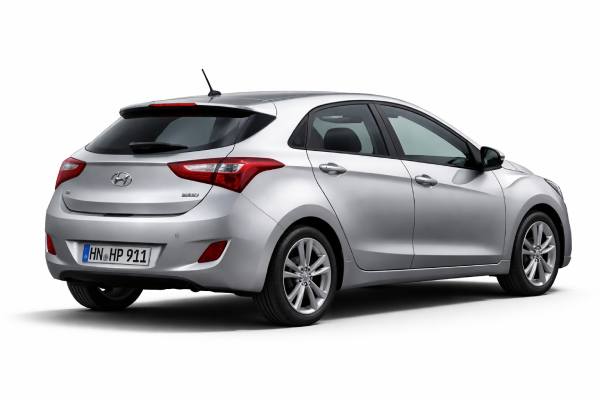
The Hyundai i30 GD 1.6 CRDi is one of the more convincing compact diesels of its era because it combines sensible engineering with real day-to-day usefulness. Compared with the older FD-generation i30, the GD brought a more mature body, better cabin packaging, a more modern six-speed drivetrain, and stronger passive-safety credentials in most markets. In 128 hp form, the 1.6-litre common-rail diesel is the key attraction. It delivers useful mid-range torque, low official fuel consumption, and enough performance to make the car feel more relaxed than its modest displacement suggests. It is also a practical hatchback rather than a stripped efficiency special, with a good-sized boot and a cabin that still works well for family use. The caveat is the usual one for a Euro 5 diesel of this age: short-trip use, incomplete maintenance, and steering-system wear matter far more than badge appeal. Bought carefully, though, the i30 GD 1.6 CRDi remains one of the smarter used diesel hatchbacks in its class.
Top Highlights
- The 1.6 CRDi combines low official fuel use with a useful 260 Nm torque curve, which suits daily driving better than the numbers alone suggest.
- The GD-generation hatchback is roomy for its size, with a 378 L boot and up to 1,316 L with the rear seats folded.
- The six-speed manual is the best fit for this engine, giving stronger real-world flexibility than the automatic.
- DPF use pattern matters, so repeated short urban trips are a weaker match than mixed or motorway mileage.
- A sensible service rhythm is engine oil every 15,000 km or 12 months, with fuel filter at 30,000 km and coolant at about 90,000 km or 5 years.
Section overview
- Hyundai i30 GD diesel profile
- Hyundai i30 GD spec sheet
- Hyundai i30 GD trims and safety
- Reliability map and service actions
- Maintenance blueprint and buyer checks
- Road feel and diesel efficiency
- Rivals and market position
Hyundai i30 GD diesel profile
The second-generation Hyundai i30, known internally as the GD, marked a meaningful step forward from the first car. It was not just a styling refresh. The GD felt more complete as a compact family hatchback, with a tidier cabin, improved packaging, stronger safety credentials, and a chassis that was easier to take seriously. In 1.6 CRDi form, it also hit a particularly sensible middle ground. This is the version for drivers who want proper diesel range and torque without moving into a larger, heavier, or more expensive car.
The heart of the model is Hyundai’s D4FB 1.6-litre diesel. In 128 hp form it produces 260 Nm between 1,900 and 2,750 rpm, which gives the i30 a much more effortless real-world feel than a naturally aspirated petrol hatch of similar size. It does not need to be driven hard to feel useful. That matters in overtakes, hill work, and loaded family use, where modest petrol engines often need more revs and more gear changes to keep up. Here, the diesel’s torque does most of the work. The six-speed manual suits it well, helping the car settle into easy motorway cruising while still keeping lower gears close enough for town use.
The wider ownership case is based on proportion rather than excitement. The i30 GD is large enough to be genuinely practical, but still compact enough to be easy to park and inexpensive to run. Boot space is 378 L, rising to 1,316 L with the rear seats folded, which is enough to make it a credible everyday family hatch rather than just a commuter. The dimensions are also well judged. At 4,300 mm long, it sits squarely in the core hatchback class, but it uses that footprint effectively.
The diesel version’s appeal becomes even clearer on the motorway. With a 53 L tank and very low official combined fuel use, this car was built to cover distance economically. That is where it makes the most sense today as well. A buyer doing regular mixed or highway mileage is far more likely to see the i30 CRDi at its best than someone using it only for short cold urban trips.
That also points to the main caution. This is a Euro 5 common-rail diesel with a particulate filter, so maintenance history and usage pattern matter. A well-kept i30 GD 1.6 CRDi can still be a rational and durable compact hatch. A neglected one, or one used mostly for short stop-start trips, can become much less attractive very quickly. In other words, this is not the right car for every used buyer. But for the right driver, it remains one of the better-balanced diesel hatchbacks of its period.
Hyundai i30 GD spec sheet
The figures below refer to the Hyundai i30 GD 1.6 CRDi 128 hp diesel hatchback produced from 2012 to 2015, primarily in six-speed manual form unless otherwise noted. As with many European-market compact cars, exact trim, tyre, towing, and service specifications can vary by region and VIN, so treat this as a practical baseline rather than a substitute for official workshop documentation.
| Powertrain and efficiency | Value |
|---|---|
| Code | D4FB |
| Engine layout and cylinders | Inline-4, DOHC, 4 valves per cylinder |
| Bore × stroke | 77.2 × 84.5 mm (3.04 × 3.33 in) |
| Displacement | 1.6 L (1,582 cc) |
| Induction | Turbocharger and intercooler |
| Fuel system | Diesel common rail |
| Compression ratio | 17.3:1 |
| Max power | 128 hp (94 kW) @ 4,000 rpm |
| Max torque | 260 Nm (191.8 lb-ft) @ 1,900–2,750 rpm |
| Timing drive | Chain |
| Rated efficiency | 4.1 L/100 km (57.4 US mpg / 68.9 UK mpg) |
| Real-world highway @ 120 km/h (75 mph) | About 5.0–5.8 L/100 km in a healthy car |
| Transmission and driveline | Value |
|---|---|
| Transmission | 6-speed manual |
| Optional transmission | 6-speed automatic in some markets |
| Drive type | FWD |
| Differential | Open |
| Chassis and dimensions | Value |
|---|---|
| Suspension, front / rear | Independent MacPherson / independent coil spring rear |
| Steering | Rack-and-pinion, electric power assist |
| Steering ratio | Not consistently published in open public data for this exact trim |
| Brakes | Ventilated front discs / rear discs |
| Most popular tyre sizes | 195/65 R15, 205/55 R16, 225/45 R17 |
| Length / width / height | 4,300 / 1,780 / 1,470 mm (169.3 / 70.1 / 57.9 in) |
| Wheelbase | 2,650 mm (104.3 in) |
| Turning circle | 10.6 m (34.8 ft) |
| Kerb weight | 1,290 kg (2,844 lb) |
| GVWR | 1,920 kg (4,233 lb) |
| Payload | 630 kg (1,389 lb) |
| Fuel tank | 53 L (14.0 US gal / 11.7 UK gal) |
| Cargo volume | 378–1,316 L (13.35–46.47 ft³) |
| Performance and capability | Value |
|---|---|
| 0–100 km/h | 10.9 s |
| Top speed | 197 km/h (122.4 mph) |
| Braking distance | No single open official figure is consistently published for this exact trim |
| Towing capacity | Varies by market and approval plate; verify VIN-specific rating |
| CO₂ emissions | 97 g/km in common published manual specification |
| Fluids and service capacities | Value |
|---|---|
| Engine oil | Commonly 0W-30 or 5W-30, diesel-approved spec |
| Engine oil capacity | About 5.3 L routine fill, about 5.7 L total |
| Coolant | About 6.9 L (7.29 US qt) |
| Transmission / ATF | VIN- and gearbox-specific |
| Differential / transfer case | Not applicable |
| A/C refrigerant | Verify by VIN-specific service data |
| A/C compressor oil | Verify by VIN-specific service data |
| Key torque specs | Use official workshop data only for critical fasteners |
| Safety and driver assistance | Value |
|---|---|
| ANCAP rating | 5 stars |
| ANCAP overall score | 35.69 out of 37 |
| Frontal / side / pole | 15.35 / 15.33 / 2.0 |
| Euro NCAP basis | ANCAP states the tested European LHD model was assessed by Euro NCAP and that Australian variants offered comparable occupant protection |
| Euro NCAP percentages | The current public archive does not clearly expose the original old-protocol percentage split for this 2012-era model |
| IIHS | Not applicable to this diesel powertrain in its primary market context |
| ADAS suite | No AEB, no lane support, no blind-spot monitoring on this 2012–2015 diesel trim set |
The spec sheet tells the same story as the car itself. Nothing here is exotic. But the engine, packaging, and efficiency all line up well for real-world use. That is exactly why this version of the i30 still deserves attention.
Hyundai i30 GD trims and safety
The i30 GD was sold in a wide range of regional trim structures, so the smartest way to buy one is by equipment, not by trim name alone. In some markets, the hierarchy ran from basic value-oriented cars through comfort-focused mid grades to more complete upper trims with larger wheels, better trim materials, upgraded infotainment, and added convenience features. That means the experience of owning one can differ quite a bit even when the engine and body are the same.
Lower-grade cars usually came with smaller wheels, simpler cloth trim, and more modest cabin features. Mid-grade versions often added alloy wheels, better steering-wheel trim, upgraded audio controls, and more complete convenience equipment. Higher trims could add climate control, parking sensors, better audio systems, upgraded seat materials, and more polished cabin finishes. These do not change the car’s core mechanical verdict, but they do affect how usable and modern it feels now.
Safety equipment is the more important distinction. The ANCAP rating for the 2012–2014 i30 applies to all variants and states that dual front airbags, a driver knee airbag, side airbags, and head-protecting side curtains were standard, along with ABS, EBD, and ESC. That is a stronger standard-safety position than many older rivals managed, and it is one of the GD-generation car’s real advantages over the first-generation FD. It also means the i30 GD has a more consistent passive-safety story than the older model, where equipment variation was a much bigger concern.
That said, buyers should still verify what is actually fitted. Imported-market cars, rebuilt cars, and accident-repaired cars deserve especially careful checking. Confirm airbag warning-light behavior, seat-belt reminder operation, ESC function, and any evidence of dashboard or interior trim disturbance that might suggest past airbag work. On a used hatchback of this age, paperwork matters just as much as features.
The driver-assistance picture is very simple. This car was built before AEB, lane-keeping assistance, blind-spot monitoring, and adaptive cruise control became normal in the class. ANCAP explicitly lists AEB and lane support as not available on any variant in the relevant 2012 rating. So buyers should evaluate the car on its passive safety, braking systems, visibility, and handling balance, not expect modern crash-avoidance tech.
Quick identifiers are still useful. Smaller wheels and very basic trim usually point to lower-spec cars. Dual-zone climate control, parking sensors, and upgraded cabin finishes usually indicate a better-equipped example. But the best used buy is not automatically the fanciest one. It is the car with verified maintenance, correct safety equipment, clean warning-light status, and a specification that fits how it will actually be used. On an older diesel hatch, substance matters more than ornament.
Reliability map and service actions
The i30 GD 1.6 CRDi is usually reliable when it has been maintained properly, but it is not a diesel you can buy on optimism alone. Its faults tend to cluster in sensible places: emissions hardware stressed by short trips, steering-system wear, normal suspension aging, and the usual used-diesel sensitivity to oil, fuel, and service quality. The core engine design itself is not the main problem. Ownership quality is.
The first reliability question is use pattern. This engine uses common-rail injection, turbocharging, and a particulate filter, which is fine when the car sees the kind of driving it was designed for. Longer mixed or motorway trips suit it well. Repeated short, cold urban use does not. On a car that has lived that harsher life, DPF-related issues, sensor faults, incomplete regenerations, or generally compromised running are more likely. That does not mean every town-driven car is bad, but it does mean this is the first ownership pattern worth investigating when you inspect one.
The second major area is steering. Hyundai’s wider GD-era platform family also developed a well-known MDPS flexible-coupling wear issue in related models, producing a clicking or thud noise through the steering system. That does not usually remove steering control, but it is annoying, common enough to check carefully, and exactly the sort of thing that can separate a well-kept used car from a neglected one. In practice, any i30 GD should be checked for column clunks, notchiness, or strange noises on low-speed steering inputs.
There is also a broader brake-pedal-switch concern worth knowing about within the related GD family, where deteriorating stopper-pad material could cause odd brake-light behavior, warning lights, or shift-interlock symptoms in affected North American Elantra GT equivalents. Even where that exact recall does not directly map market-to-market, the lesson is useful: do not ignore brake-switch, ESC, or odd warning-light symptoms on this platform.
Engine-wise, the D4FB deserves normal diesel caution rather than fear. Timing chain condition should be monitored rather than assumed perfect forever. If service history is poor, listen for cold-start chain noise and pay attention to any timing-correlation faults or rough idle. Oil quality matters more here than on a simple naturally aspirated petrol. So does fuel-filter replacement. Turbo-diesel engines tolerate neglect less gracefully.
Chassis wear follows a familiar compact-hatch pattern. Expect eventual suspension-link wear, tired dampers, brake corrosion on lightly used cars, and possible wheel-bearing noise as mileage climbs. None of those items is unique to Hyundai, but all of them shape the total ownership cost.
For a pre-purchase check, ask for a cold start, a full scan for stored faults, service invoices, and a road test long enough to evaluate steering feel, clutch take-up, turbo response, and brake behavior. A sorted i30 GD diesel is a very sensible used hatch. A neglected one is a long list of medium-cost repairs waiting to happen.
Maintenance blueprint and buyer checks
The i30 GD 1.6 CRDi does not demand exotic maintenance, but it does demand disciplined maintenance. That is the right way to frame it. This is a car that rewards steady, correct servicing more than heroic catch-up work. On a used diesel, that difference matters. A seller who can prove routine care is worth more than one who can only promise that the car “runs perfectly.”
A practical schedule looks like this:
| Item | Practical interval | Notes |
|---|---|---|
| Engine oil and filter | Every 15,000 km or 12 months | Use correct diesel-capable oil, especially for DPF-equipped service |
| Engine air filter | Every 15,000 km inspection or replacement interval | Check earlier in dusty use |
| Cabin air filter | Inspect regularly and replace as needed | Often neglected on older cars |
| Fuel filter | About every 30,000 km | Important for common-rail system health |
| Glow plugs | About every 120,000 km | Replace as needed earlier if cold starting worsens |
| Timing chain | No fixed routine replacement interval | Inspect for stretch symptoms, noise, or timing faults |
| Serpentine / auxiliary belt | About 120,000 km | Replace earlier if noisy or cracked |
| Coolant | About 90,000 km or 5 years | Do not ignore the time limit |
| Brake fluid | Every 2 years is a sensible preventive interval | Helps avoid corrosion and soft pedal feel |
| Transmission fluid | Check history and condition | A preventive change is wise on aging cars |
| Brake pads and rotors | Inspect at every service | Rear brakes deserve special attention on lightly used examples |
| Tyres and alignment | Inspect regularly | Uneven wear often reveals suspension or steering issues |
| 12 V battery | Test with age | Weak batteries can trigger confusing electrical complaints |
The core service numbers are straightforward. Routine oil fill is about 5.3 L, with total oil capacity around 5.7 L. Common oil grades include 0W-30 and 5W-30, but the exact specification should always suit the diesel and emissions system fitted to the car. Coolant capacity is about 6.9 L. Other details, including ATF, manual-gearbox fluid, refrigerant charge, and critical torque specs, should be confirmed by VIN-specific workshop data before any major work is done.
The best used buy is usually the six-speed manual with a full paper trail, consistent long-run use, and no steering noises or warning-light surprises. During inspection, check for uneven tyre wear, rear-brake corrosion, underbody rust in salted climates, rough cold starts, smoke, coolant contamination, and any evidence of dashboard disturbance or unfinished recall work. Also inspect the service file for fuel-filter changes, not just oil changes. On a common-rail diesel, that detail matters.
The cars to seek are the ones that have clearly lived the kind of life this engine likes: regular use, full warm-ups, and sensible servicing. The cars to avoid are bargain examples with short-trip history, patchy paperwork, steering clunks, unexplained warning lights, or a seller who cannot answer basic maintenance questions. Long-term durability is good when the fundamentals are right. That is why this i30 still deserves consideration.
Road feel and diesel efficiency
On the road, the i30 GD 1.6 CRDi feels exactly like a good compact diesel hatch should. It is calm, stable, and easy to live with rather than dramatic or especially sharp. The chassis is well judged for the class. It tracks cleanly on the motorway, stays controlled over broken surfaces, and gives the impression of a car developed to be used every day rather than admired for one standout trait.
The engine is the main dynamic influence. With 260 Nm arriving low in the rev range, the i30 feels stronger in normal traffic than its 128 hp figure suggests. It is not fast in a hot-hatch sense, but it rarely feels breathless unless it is heavily loaded or driven hard at the top end. That makes it a good match for commuting, family use, and longer runs. The six-speed manual strengthens that impression. It keeps the engine in its useful torque band and makes motorway cruising feel more relaxed than older five-speed diesels.
Official performance backs up that real-world feel. The manual reaches 100 km/h in 10.9 seconds and tops out at 197 km/h. Those are respectable numbers for a family diesel hatch of this period. More importantly, the delivery feels usable. Overtakes require planning, but not constant downshifts. The engine responds with steady pull rather than a dramatic burst.
Fuel economy is one of the car’s strongest selling points. Officially, the manual posts 4.1 L/100 km combined, 4.9 L/100 km urban, and 3.7 L/100 km extra-urban. Real-life use is naturally higher. A healthy example driven normally is more likely to deliver something around the mid-fives overall, with motorway figures often staying close to the low-fives and heavy urban use pushing the number upward. That is still good enough to make the car financially appealing for drivers covering real annual mileage.
Noise, vibration, and harshness are what you would expect from a solid small diesel of the period. Cold starts are distinctly diesel in character, but once warm, the car settles into a sensible long-distance rhythm. Cabin refinement depends a lot on tyre choice and general condition now that these cars are older. Cheap tyres, tired dampers, and worn bushings can make one i30 feel far older than another.
The dynamic verdict, then, is not complicated. The i30 GD 1.6 CRDi is not a sports hatch and does not try to be. Its strengths are composure, torque, range, and everyday ease. For a buyer who values those qualities more than badge prestige or handling drama, it remains a very good fit.
Rivals and market position
The i30 GD 1.6 CRDi lives in one of the most competitive used-car segments, so it is best judged as a complete ownership package rather than by any one headline number. Its biggest advantages are sensible diesel performance, strong fuel economy, good cabin packaging, and a consistent safety story. It does not dominate every rival, but it avoids enough major weaknesses to stay highly relevant.
Its closest natural rival is the second-generation Kia Cee’d 1.6 CRDi. The two cars share much of their engineering philosophy and occupy the same value-focused middle ground. In practice, that means condition, service history, and specification matter more than brand loyalty. If the Hyundai has cleaner paperwork, fewer warning signs, and better upkeep, it is the right choice. If the Kia does, the logic is the same in the other direction.
A Ford Focus 1.6 TDCi from the same era usually offers the sharper steering and more engaging chassis. Drivers who care most about handling still notice that. But the i30 fights back with a straightforward, well-rounded character and often a better value equation on the used market. The Hyundai does not need to beat the Focus dynamically to make sense. It only needs to remain the easier car to justify overall.
A Volkswagen Golf 1.6 TDI often carries stronger badge appeal and a more polished reputation, but it can also come with higher purchase prices and a more image-led market premium. That can be worth paying if the specific car is excellent. But if the question is practical ownership value rather than brand status, the i30 often compares very well.
Compared with the first-generation FD i30 diesel, the GD is clearly the more complete car. It feels more modern, safer, and more polished, with stronger standard safety equipment and a tidier cabin. That matters because many buyers cross-shop both generations on price alone. In most cases, the GD is worth the step up if the budget allows.
That is really the i30 GD 1.6 CRDi’s place in the market. It is not the most exciting, the most prestigious, or the biggest hatchback in its class. But it is one of the more rational. It offers enough torque, enough space, enough safety, and enough efficiency to feel genuinely well judged. Find a manual example with full service history, healthy diesel behavior, and a quiet steering system, and the GD-generation i30 remains one of the smarter compact diesel hatchbacks you can still buy from this period.
References
- Hyundai i30 | Safety Rating & Report | ANCAP 2012 (Safety Rating)
- Hyundai i30 II 1.6 CRDi (128 Hp) | Technical specs, data, fuel consumption, Dimensions 2026 (Technical Data)
- Hyundai i30 2012 1.6 diesel service and maintenance 2026 (Service Guide)
- MOTOR DRIVEN POWER STEERING (MDPS) COUPLING REPLACEMENT 2017 (TSB)
- Part 573 Safety Recall Report 17V-769 2017 (Recall Database)
Disclaimer
This article is for informational purposes only and is not a substitute for professional diagnosis or repair. Specifications, torque values, service intervals, and procedures vary by VIN, market, transmission, and equipment, so always verify critical details against the official service documentation for the exact vehicle.
If this guide was useful, please consider sharing it on Facebook, X, or another social platform to support our work.