
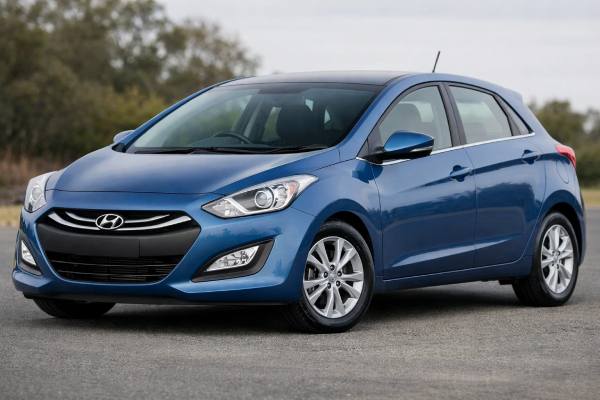
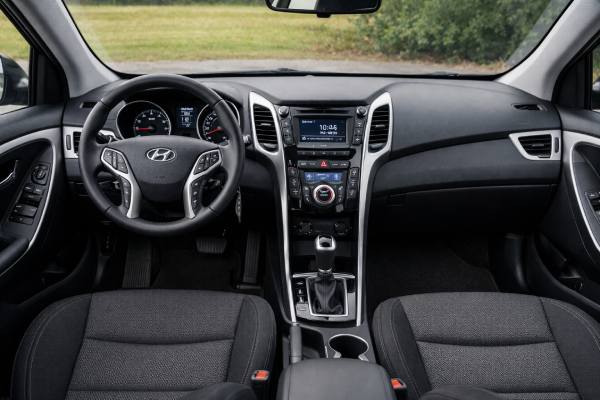
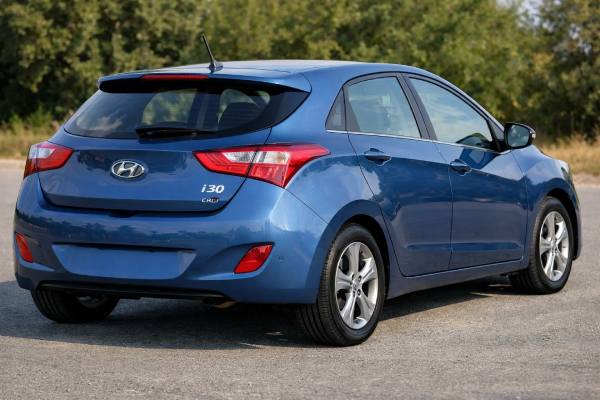
The Hyundai i30 GD 1.4 CRDi 90 hp sits in the sensible middle ground of the used hatchback market. It is not the fastest diesel in the range, but that is also the point. This version was built for buyers who wanted low fuel use, solid motorway range, and straightforward everyday practicality without stepping up to the stronger, costlier 1.6 CRDi models. Under the bonnet, the 1.4-liter common-rail turbo diesel brings useful low-rpm torque, a six-speed manual gearbox, and the kind of efficiency that still looks good today.
What makes this model interesting now is balance. The GD-generation i30 grew more refined than the earlier FD car, safety improved, cabin quality moved forward, and the chassis kept the composed feel that made the i30 easy to recommend. The real buying question is not whether the concept works. It is whether the specific car has the right service history, recall record, and condition for diesel ownership.
Essential Insights
- Excellent fuel economy and a 53-liter tank make this one of the stronger long-distance budget choices in the range.
- The GD body is roomy, well packaged, and more polished than the earlier i30 without becoming costly to run.
- The 1.4 CRDi’s 220 Nm torque output gives better real-world flexibility than the 90 hp figure suggests.
- Poorly maintained cars can suffer DPF trouble, EGR soot build-up, injector issues, or diesel-related warning lights.
- A practical oil and filter interval is every 15,000 km or 12 months, especially on short-trip or city-heavy use.
Contents and shortcuts
- Hyundai i30 GD Diesel Rundown
- Hyundai i30 GD Numbers
- Hyundai i30 GD Trims and Safety
- Weak Points and Recall Trail
- Service Plan and Used Checks
- Road Feel and Fuel Use
- Rivals and Best Alternatives
Hyundai i30 GD Diesel Rundown
The second-generation Hyundai i30, known internally as the GD, was an important step for Hyundai in Europe. It did not try to shock the class. Instead, it became more refined, safer, and more complete than the first-generation FD car. In 1.4 CRDi 90 hp form, it also answered a clear need in the market: a compact diesel hatch that kept ownership costs low without feeling stripped out or old-fashioned.
This engine is the smaller diesel in the GD hatch range, but it is still a four-cylinder rather than a tiny three-cylinder economy special. That matters because the car feels smoother and more settled than some low-output rivals from the same period. Its strength is not outright pace. It is the way the engine delivers its torque early enough to make normal driving easy. In traffic, it does not need constant downshifts. On the motorway, it settles into a relaxed cruise and rewards patient driving with very strong fuel economy.
The chassis helps the overall impression. Hyundai kept a multi-link rear suspension on the GD i30, which was a real plus in this class. The car rides with maturity, deals with poor surfaces well, and feels more grown-up than many budget-minded hatchbacks. Steering is light and easy, not especially talkative, but the whole car is predictable and user-friendly. That balance is one of the reasons the i30 kept attracting buyers who might otherwise have chosen a Focus, Golf, or cee’d.
As a used buy, the 1.4 CRDi appeals to a specific kind of owner. It makes sense for someone who does regular distance, mixed commuting, or rural and motorway use, and wants a car that can return diesel-like economy without the higher purchase cost of more powerful trim levels. It is less ideal for an owner who only does short urban trips, because diesel after-treatment systems do not enjoy that life. In the wrong usage pattern, the i30 can become more trouble than its modest badge and sensible image suggest.
Another reason this model still matters is packaging. The GD hatch is larger and more polished than the old FD without losing practicality. Rear-seat space is respectable, the boot is usefully shaped, and the cabin design is clear and modern enough that the car still feels familiar rather than dated. The best examples come across as honest, durable family transport.
That is the real theme of this car. The Hyundai i30 GD 1.4 CRDi is not a charisma purchase. It is a rational one. When service history is good and the car has not been trapped in a short-trip life, it can still deliver exactly what many used buyers want: comfort, economy, usability, and low drama.
Hyundai i30 GD Numbers
The figures below describe the common European 5-door Hyundai i30 GD hatchback with the 1.4 CRDi 90 hp diesel and 6-speed manual from the 2012 to 2015 period. Some details vary by market, trim, tyre package, and emissions version, so this should be read as the correct working baseline rather than a universal number for every VIN.
Powertrain and efficiency
| Item | Specification |
|---|---|
| Engine code | D4FC |
| Engine layout and cylinders | Inline-4, transverse, 4 cylinders |
| Valvetrain | DOHC, 4 valves per cylinder |
| Bore × stroke | 75.0 × 79.0 mm (2.95 × 3.11 in) |
| Displacement | 1.4 L (1,396 cc) |
| Induction | Turbocharged |
| Fuel system | Common-rail direct injection |
| Compression ratio | 17.0:1 |
| Max power | 90 hp (66 kW) @ 4,000 rpm |
| Max torque | 220 Nm (162 lb-ft) @ 1,500–2,750 rpm |
| Timing drive | Chain |
| Rated efficiency | 4.1 L/100 km (57.4 mpg US / 68.9 mpg UK) |
| Real-world highway @ 120 km/h | about 4.8–5.5 L/100 km (42.8–49.0 mpg US / 51.4–58.9 mpg UK) |
Transmission and driveline
| Item | Specification |
|---|---|
| Transmission | 6-speed manual |
| Drive type | Front-wheel drive |
| Differential | Open |
Chassis and dimensions
| Item | Specification |
|---|---|
| Suspension front / rear | MacPherson strut / multi-link |
| Steering | Motor Driven Power Steering; about 2.85 turns lock-to-lock |
| Brakes | Front and rear disc brakes; front ventilated and rear solid on mainstream trims |
| Most common tyre size | 195/65 R15, with 205/55 R16 on some higher-spec versions |
| Ground clearance | about 140 mm (5.5 in), trim dependent |
| Length / width / height | 4,300 / 1,780 / 1,470 mm (169.3 / 70.1 / 57.9 in) |
| Wheelbase | 2,650 mm (104.3 in) |
| Turning circle | about 10.6 m (34.8 ft) kerb-to-kerb |
| Kerb weight | about 1,306 kg (2,879 lb) |
| GVWR | about 1,850 kg (4,079 lb) |
| Fuel tank | 53 L (14.0 US gal / 11.7 UK gal) |
| Cargo volume | 378 L / 1,316 L VDA (13.3 / 46.5 ft³) |
Performance and capability
| Item | Specification |
|---|---|
| 0–100 km/h | 13.5 s |
| Top speed | 170 km/h (106 mph) |
| Braking distance | Tyre and surface dependent; no single factory figure confirmed for this trim |
| Towing capacity | about 1,500 kg (3,307 lb) braked / 600 kg (1,323 lb) unbraked |
| Payload | about 555 kg (1,224 lb) |
Fluids and service capacities
| Item | Specification |
|---|---|
| Engine oil | Typically 5W-30 class oil to the correct diesel specification for market and DPF fitment; about 5.3 L (5.6 US qt) with filter |
| Coolant | Long-life coolant, roughly 6.8–6.9 L (7.2–7.3 US qt); verify by VIN |
| Manual transmission fluid | Specification and fill amount vary by gearbox revision; verify by VIN |
| Differential / transfer case | Not applicable |
| Brake fluid | DOT 4 |
| A/C refrigerant | R134a; charge varies by equipment level |
| Key torque specs | Wheel nuts 88–108 Nm (65–80 lb-ft) |
Safety and driver assistance
| Item | Specification |
|---|---|
| Crash ratings | Euro NCAP 2012: 5 stars, 88% adult occupant, 84% child occupant, 64% vulnerable road users, 68% safety assist |
| IIHS | Not applicable for this European-market model |
| Headlight rating | Not applicable |
| ADAS suite | No ACC, blind-spot monitoring, or rear cross-traffic alert; AEB-related equipment was not standard on this trim |
These figures make the car’s identity clear. It is not quick, but it is efficient, reasonably light, and thoughtfully packaged. The specification that matters most is not its power output. It is the combination of torque, six-speed gearing, practical dimensions, and low rated fuel use.
Hyundai i30 GD Trims and Safety
In the UK and several nearby markets, the GD i30 hatch came in trims such as Classic, Active, Style, Style Nav, Sport, Sport Nav, and Premium. For the 1.4 CRDi 90 hp manual, availability was narrower than it was for the bigger diesel or petrol engines. That is important for used buyers, because this version was aimed more at value and economy than at range-topping comfort.
In practical terms, the 1.4 CRDi 90 sat in the lower-to-middle part of the lineup. Classic and Active are the trims most often associated with this engine in the 5-door hatch. That means many cars use the simpler wheel and tyre packages, more modest interior trim, and a practical rather than luxury-oriented feature list. For a used buyer, that is not bad news. Lower trims are often cheaper to maintain, and the 15-inch tyre package is usually quieter, more compliant, and cheaper to replace than larger wheels.
Typical equipment on these cars includes:
- air conditioning
- Bluetooth and steering-wheel audio controls
- electric windows and mirrors
- trip computer functions
- multiple airbags
- ABS and stability control on many regional specifications
- ISOFIX outer rear-seat mountings
Mid- and high-trim GD i30s can look more attractive on the used market because of features like larger alloys, cruise control, different seat trim, navigation, parking sensors, panoramic roof, or camera-based parking support. But the 1.4 CRDi buyer often benefits from sticking to the simpler specification. These cars are easier to own, usually lighter, and less likely to bring extra electrical faults with age.
Safety was one of the GD-generation car’s real advances. The Euro NCAP result was much stronger than the older FD-generation i30 achieved, and that matters because the test protocol by 2012 was more demanding. The GD i30’s five-star result, with 88 percent adult occupant and 84 percent child occupant protection, gives it a more convincing passive-safety baseline than many older mainstream rivals in the same budget bracket.
Still, the driver-assistance story must be kept in perspective. This is not a modern ADAS-heavy hatchback. The mainstream 1.4 CRDi 90 does not bring the current expectation of automatic emergency braking, active cruise, lane-centering, rear cross-traffic warning, or blind-spot radar. Some advanced safety content existed higher in the range or as part of selected packs in some markets, but not as standard on the ordinary low-output diesel trim.
That means condition matters more than brochure theory. When viewing a used example, inspect:
- airbag, ABS, ESC, and steering-system warning lights
- headlamp condition and output
- tyre age, quality, and matched fitment
- seat-belt function and buckle action
- evidence of straight crash repair around the front rails and slam panel
- rear-seat fixings and ISOFIX anchor condition
The best way to judge a 1.4 CRDi trim is not by badge alone. Check the actual equipment, wheel size, safety hardware, and whether the car’s simple specification has helped it age better than a more heavily optioned version.
Weak Points and Recall Trail
The Hyundai i30 GD 1.4 CRDi can be a dependable diesel hatch, but its long-term health depends heavily on maintenance and usage pattern. This is not a car that likes neglect, and it is definitely not a diesel that enjoys endless short cold trips.
Common, medium-cost issues
- DPF-related trouble on short-trip cars: Symptoms include regeneration problems, warning lights, limp mode, higher oil level from dilution, and poor economy. The likely root cause is repeated interrupted regeneration or city-only use. The correct remedy depends on severity: a forced regeneration, sensor diagnosis, oil change, software checks, or DPF cleaning or replacement.
- EGR and intake soot build-up: This usually shows up as sluggish response, uneven running, smoke under load, or fault codes. Short journeys and poor-quality servicing make it more likely. Cleaning or replacement of the EGR path and associated diagnosis is the normal fix.
- Injector and fuel-system wear: Hard starting, diesel knock, poor idle quality, or fuel smell should not be ignored. Early diagnosis matters because small injector issues become expensive if left to damage other parts of the system.
Occasional, sometimes higher-cost issues
- Turbo and boost-control faults: Split hoses, vacuum leaks, actuator issues, or turbo wear can cause weak pull and limp-home operation. The engine itself is not highly stressed, but boost problems still appear with age.
- Timing-chain wear: The D4FC uses a chain rather than a routine replacement belt, but that does not mean it is lifetime-free. Poor oil-change history can lead to chain noise, cold-start rattle, or timing-related faults.
- Glow plugs and starting system faults: Weak glow plugs, tired batteries, or relay issues can make winter starts noticeably worse.
Common age-related chassis and electrical issues
- front drop links and bushes
- wheel-bearing noise
- rear brake drag or uneven wear
- battery and charging complaints
- parking-sensor faults on equipped cars
- blower resistor or minor switchgear issues
- hatch wiring and lock-actuator wear
Corrosion is not the i30 GD’s defining weakness, but it still deserves inspection. Look carefully at the rear arches, underbody seams, brake lines, subframes, jacking points, lower doors, and the rear end of the sill structure. Cars from coastal or salted-road areas need a proper lift check.
Recall history matters more than many private sellers admit. In some markets, certain 2010–2012 i30 vehicles were recalled for ESC module problems linked to moisture ingress and possible short-circuit malfunction. Later, i30 and Elantra vehicles in Australia were recalled because an ABS module circuit board could short when exposed to moisture, creating an engine-bay fire risk even with the car parked. Not every 2012–2015 i30 1.4 CRDi in every country is affected in the same way, but that is exactly why VIN-based recall checking matters.
Before buying, ask for:
- full service history
- proof of recall completion
- evidence of correct oil specification use
- recent brake and tyre invoices
- a cold start and a proper road test
- a scan for stored diesel and emissions faults
A healthy i30 GD diesel can be a good long-distance budget hatch. A badly used one can hide expensive emissions and fuel-system work behind an otherwise tidy appearance.
Service Plan and Used Checks
The best i30 GD 1.4 CRDi cars are usually the ones that were treated like diesels rather than just cars. They had the right oil, regular filter changes, proper warm-up and run cycles, and early attention when warning lights first appeared. This model rewards routine maintenance, but it is less forgiving than a simple naturally aspirated petrol hatch.
A practical ownership schedule looks like this:
| Item | Practical interval |
|---|---|
| Engine oil and filter | Every 15,000 km or 12 months |
| Engine air filter | Inspect at each service, replace roughly every 30,000–45,000 km or sooner in dusty use |
| Cabin air filter | Every 15,000 km or 12 months |
| Fuel filter | Replace by schedule or sooner where fuel quality is questionable |
| Coolant | First replacement at about 210,000 km or 10 years, then every 30,000 km or 24 months |
| Brake fluid | Every 24 months |
| Brake pads and discs | Inspect at every service |
| Drive belts and tensioners | Inspect regularly; tensioner and pulley condition matter |
| Timing chain | No fixed replacement interval; inspect for noise, stretch symptoms, and timing faults |
| Manual gearbox oil | Inspect for leaks and shift quality; proactive change around 90,000–120,000 km is sensible |
| Tyre rotation | Every 10,000–15,000 km |
| Alignment check | Yearly or when wear pattern changes |
| 12 V battery | Test from year 4 onward |
| DPF health | Monitor regeneration behavior and oil level on short-trip cars |
The key fluid and capacity details are worth noting. Engine oil fill is about 5.3 L with filter, and the correct oil grade depends on the emissions setup and regional specification. On DPF-equipped cars, the right low-ash diesel oil matters. Coolant volume is roughly 6.8 to 6.9 L, brake fluid is DOT 4, and wheel-nut torque is 88 to 108 Nm. Gearbox fluid specification is version-specific enough that it is better confirmed by VIN than guessed from a parts counter habit.
A strong buyer’s guide for this model starts with the diesel-specific checks:
- Cold start from genuinely cold.
- No chain rattle that lingers beyond the first moments.
- Stable idle and clean pull from low rpm.
- No obvious DPF or engine warning lights.
- No excessive smoke under heavy load.
- No sign of rising oil level or strong diesel smell in the oil.
- Smooth clutch take-up and clean six-speed shift action.
- Rear brakes releasing correctly after a drive.
- Underside free of major rust or crash repair.
The best trims to look for are usually clean Classic or Active 5-door cars with honest equipment, regular servicing, and good motorway or mixed-use history. The cars to avoid are urban-only diesels with vague servicing, repeated emissions faults, cheap tyres, and evidence that warning lights were cleared rather than fixed.
Long-term durability is decent when the use case matches the engine. Buyers who regularly do distance usually get the best from it. Buyers who only crawl around town usually do not.
Road Feel and Fuel Use
On the road, the i30 GD 1.4 CRDi feels like a car designed to be easy rather than impressive. That works in its favor. It has a calm, mature setup, it tracks well on faster roads, and it does not ask much of the driver. The engine’s modest power figure understates how usable the car feels in daily traffic.
The most important dynamic trait is refinement for the class. Hyundai made real progress with the GD i30, and that shows in the way it rides and settles. Broken surfaces are handled with more composure than many cheap compact hatchbacks. The multi-link rear suspension helps the car feel planted rather than choppy, especially at speed or on patchy rural roads.
Steering is light and safe, not especially rich in feedback. That will not satisfy someone coming from a Ford Focus, but it suits the i30’s character. The car is easy to place in town, easy to park, and never feels nervous on the motorway. Braking performance is generally consistent when the discs, pads, and calipers are in good condition, though rear brake maintenance matters more than some owners expect.
The diesel engine is all about mid-range usefulness. Around town, the 220 Nm torque figure makes the car feel more flexible than the 90 hp output suggests. It pulls cleanly from low rpm and lets you short-shift without feeling completely flat. On faster roads, though, the limits are obvious. Overtakes require planning, especially with passengers or luggage. This is not a quick diesel hatch. It is an efficient one.
Real-world economy is where the 1.4 CRDi earns its place:
- city: about 5.4–6.2 L/100 km, or 37.9–43.6 mpg US and 45.6–52.3 mpg UK
- highway at 100–120 km/h: about 4.8–5.5 L/100 km, or 42.8–49.0 mpg US and 51.4–58.9 mpg UK
- mixed use: about 5.0–5.7 L/100 km, or 41.3–47.0 mpg US and 49.6–56.5 mpg UK
Those numbers assume a healthy car with correct tyre pressures, no dragging brakes, and an owner who allows the diesel system to complete its regen and warm-up cycles. Constant short trips, winter cold, poor tyres, and blocked emissions hardware will push the numbers upward.
The 53-liter tank is a real strength. Even outside perfect test conditions, the i30 can deliver a very useful touring range. That is one reason it still makes sense for commuters and motorway users.
So the verdict on the move is straightforward. The i30 GD 1.4 CRDi is not here for excitement. It is here for low-stress driving, strong economy, and solid road manners. Buyers who want a fast response should look elsewhere. Buyers who want a steady, economical diesel hatchback may find this one quietly impressive.
Rivals and Best Alternatives
The Hyundai i30 GD 1.4 CRDi belongs in the heart of the mainstream compact hatch market, so its real competitors are obvious. It was not trying to out-punch hot hatches or premium badges. It was competing for buyers who wanted a sensible diesel family car.
Against the Ford Focus 1.6 TDCi, the Ford remains the sharper steer and the more engaging car for an enthusiastic driver. But the Hyundai counters with a strong equipment story, a more relaxed everyday character, and often better value on the used market. If steering feel matters most, the Focus wins. If overall ownership sense matters most, the gap narrows.
Against the Volkswagen Golf 1.6 TDI, the Golf usually brings stronger badge appeal, a slightly more premium cabin impression, and good long-distance manners. The i30 fights back with lower purchase cost, often cheaper-equipment simplicity, and less pressure to buy the badge over the condition. In the used world, the better-maintained car is usually the better buy, regardless of logo.
Against the Kia cee’d 1.4 CRDi or 1.6 CRDi, the Hyundai is competing with a close relative. Shared engineering means the real decision is about history, trim, and price. The i30 can feel a little more conservative in design, but there is no dramatic reliability gulf between them. Condition matters more than brand here.
Against the Toyota Auris diesel, Toyota keeps its reputation strength, but the Hyundai often feels more polished to drive and more generous in cabin design and equipment for the money. The i30 is usually the more appealing car to sit in for long trips.
The i30 GD 1.4 CRDi’s strongest points are:
- genuinely low fuel consumption
- good motorway range
- composed chassis and mature ride
- practical cabin and hatchback packaging
- sensible used values
Its weaker points are:
- modest performance
- diesel-system sensitivity to short-trip use
- no modern advanced driver-assistance package on mainstream trims
- recall and campaign history that must be checked carefully
- less brand pull than a Golf
That leaves the Hyundai in a useful place. Buy the Focus if dynamic feel is the priority. Buy the Golf if badge image matters most. Buy the i30 GD 1.4 CRDi if you want a rational diesel hatch with strong economy, decent space, and balanced road manners. In good condition, it remains one of the more convincing no-drama choices in the class.
References
- Hyundai Owners manuals | Hyundai Motor UK 2026 (Owner’s Manual Portal)
- EuroNCAP | Hyundai i30 2012 (Safety Rating)
- 2012 Hyundai i30 1.4 CRDi 90 Specs & Performance 2023 (Technical Data)
- Hyundai Motor Company Australia Pty Ltd – HYUNDAI i30 2010 – 2012 2016 (Recall Database)
- Hyundai Motor Company Australia Pty Ltd – HYUNDAI I30, ELANTRA 2020 (Recall Database)
Disclaimer
This article is for informational purposes only and is not a substitute for professional diagnosis, repair, or official workshop procedures. Specifications, torque values, intervals, capacities, and repair methods can vary by VIN, market, model year, emissions equipment, and trim level, so always verify details against official service documentation for the exact vehicle.
If this guide was useful, please consider sharing it on Facebook, X, or another social platform to support our work.