
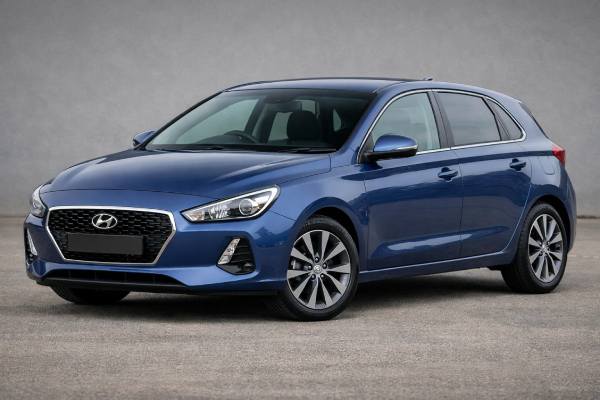
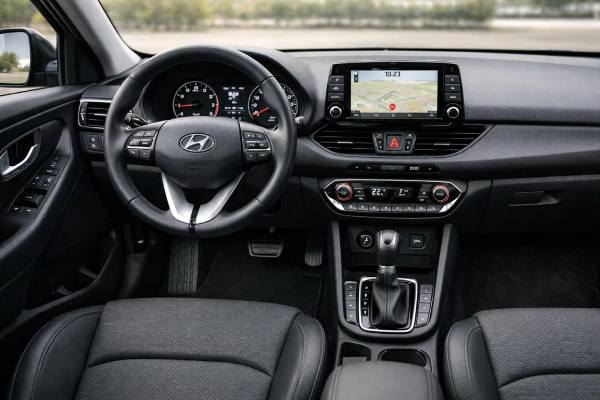
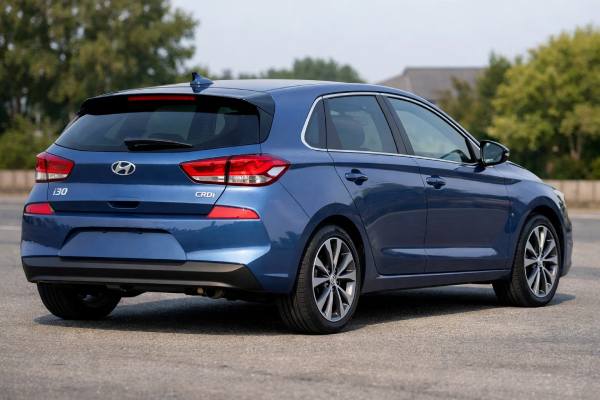
The 2017–2019 Hyundai i30 PD 1.6 CRDi 110 hp sits in a sweet spot of the modern family-hatch market. It is not the flashiest version of the i30 range, but for many owners it is the most rational one: a compact hatchback with strong mid-range diesel torque, low official fuel use, good long-distance manners, and a safety package that was impressive for its class when new. Hyundai’s third-generation i30 also marked a real step forward in body rigidity, cabin quality, and general refinement, so this diesel feels more mature than earlier i30s. In used-car terms, that matters. A well-kept example can still make a very convincing commuter or small-family car. The main caution is usage pattern: like many Euro 6 diesels, this engine is happiest when it gets regular longer runs rather than endless short cold trips. This guide focuses on the European-market five-door hatchback, because trim naming, emissions, and service details vary by country and VIN.
At a Glance
- Strong motorway economy and useful 280 Nm diesel torque make it an easy long-distance car.
- The PD-generation i30 feels more refined and better built than older i30 models, with a solid safety baseline.
- Entry and mid trims already carried meaningful equipment, including autonomous emergency braking in some launch-market specifications.
- Repeated short-trip use is the main ownership caveat, because DPF and related diesel after-treatment issues become more likely.
- Treat 12 months as the basic service rhythm, even where higher mileage limits apply; check oil, brake fluid, and tyres regularly.
Guide contents
- Hyundai i30 PD Diesel Overview
- Hyundai i30 PD Specs and Data
- Hyundai i30 PD Trims and Safety
- Reliability, Faults and Campaigns
- Maintenance and Buying Advice
- Road Manners and Efficiency
- Against Golf, Focus and Ceed
Hyundai i30 PD Diesel Overview
In PD-generation form, the Hyundai i30 became a more serious rival to the Volkswagen Golf, Ford Focus, and Kia Ceed. The body was cleaner and more conservative than before, the cabin layout was easier to live with, and the car felt tuned for European tastes rather than simply adapted for them. The 1.6 CRDi 110 hp diesel was one of the sensible middle-ground engines in the launch range. It gave buyers enough torque for relaxed overtaking and motorway work without the extra cost of the stronger 136 hp unit. Hyundai positioned this engine alongside sharper steering, more agile handling, and the availability of a 7-speed dual-clutch transmission in some markets, although many 110 hp cars were sold with the 6-speed manual.
That matters because the best way to understand this car is not as a hot hatch or bargain-basement runabout, but as a durable, understated everyday hatchback. Hyundai sold the i30 with a broad European-market equipment spread, and even lower trims could include useful items such as cruise control with speed limiter, tyre-pressure monitoring, Bluetooth, high-beam assist, and autonomous emergency braking. Mid and upper trims added the features that buyers in this class usually want on the used market today: alloy wheels, climate control, parking sensors or camera, larger infotainment, Apple CarPlay and Android Auto, and nicer seat trim.
The 1.6 CRDi’s appeal is still clear in 2026. Official combined consumption for the manual launch car was 3.8 L/100 km, with CO2 at 99 g/km, and real owners usually buy this engine for exactly that reason: it can cover distance cheaply without feeling underpowered. At the same time, it avoids some of the cost and complexity jump that comes with more performance-focused variants.
The flip side is simple. This is a Euro 6 diesel with emissions hardware that wants proper use. If you mainly drive a few kilometres at a time in stop-start traffic, the i30 PD diesel is not the smartest choice. If you do mixed or highway mileage, it makes a lot more sense. That usage divide is the single biggest factor in whether the 1.6 CRDi feels like a wise buy or a false economy. In general, this model’s reputation is shaped less by core-engine weakness than by the same sensor, software, and regeneration issues seen across many modern compact diesels when they are used in the wrong pattern.
Hyundai i30 PD Specs and Data
For this article, the reference point is the European five-door hatchback with the 1.6 CRDi 110 hp diesel. Factory brochures cover the headline figures, while technical catalogues fill in some of the more detailed measurements that Hyundai did not always publish clearly in consumer literature. Some values vary slightly by trim, gearbox, eco-pack, and market, so the tables below should be read as a solid baseline rather than a VIN-level decode.
| Powertrain and efficiency | Value |
|---|---|
| Code | 1.6 CRDi diesel; commonly catalogued in the D4FB family |
| Engine layout and cylinders | Inline-4, DOHC, 4 cylinders, 4 valves per cylinder |
| Displacement | 1.6 L (1,582 cc) |
| Bore × stroke | 77.2 × 84.5 mm (3.04 × 3.33 in) |
| Induction | Turbocharged, intercooler |
| Fuel system | Common-rail direct injection |
| Compression ratio | 16.0:1 |
| Max power | 110 hp (81 kW) @ 4,000 rpm |
| Max torque | 280 Nm (206.5 lb-ft) @ about 1,500–2,500 rpm |
| Timing drive | Chain |
| Rated efficiency | 3.8 L/100 km (61.9 mpg US / 74.3 mpg UK) |
| Real-world highway @ 120 km/h | typically 4.7–5.5 L/100 km |
| Transmission and driveline | Value |
|---|---|
| Transmission | 6-speed manual; 7-speed DCT in some markets |
| Drive type | FWD |
| Differential | Open |
| Chassis and dimensions | Value |
|---|---|
| Suspension front/rear | MacPherson strut / multi-link independent |
| Steering | Electric rack-and-pinion |
| Brakes | Ventilated front discs, rear discs |
| Wheels and tyres | Common sizes include 195/65 R15, 205/55 R16, 225/45 R17 |
| Ground clearance | 140 mm (5.51 in) |
| Length | 4,340 mm (170.87 in) |
| Width | 1,795 mm (70.67 in) |
| Height | 1,455 mm (57.28 in) |
| Wheelbase | 2,650 mm (104.33 in) |
| Turning circle | 10.6 m (34.8 ft) |
| Kerb weight | about 1,338 kg (2,950 lb), depending on trim and gearbox |
| GVWR | about 1,860 kg (4,101 lb) |
| Fuel tank | 50 L (13.21 US gal / 11.00 UK gal) |
| Cargo volume | 395 L / 1,301 L (13.95 / 45.94 ft³) |
| Performance and service capacities | Value |
|---|---|
| 0–100 km/h | about 11.0 s |
| Top speed | about 190 km/h (118 mph) |
| Braked towing | 1,500 kg (3,307 lb) |
| Unbraked towing | 650 kg (1,433 lb) |
| Payload | about 522 kg (1,151 lb), trim-dependent |
| Engine oil | approx. 5.3 L (5.6 US qt) with filter |
| Coolant | approx. 6.7 L (7.1 US qt) |
| Oil grade | low-SAPS diesel oil; 5W-30 is common, but verify exact Hyundai spec by VIN |
| Transmission fluid | verify by gearbox code and VIN before ordering |
| A/C refrigerant | verify by VIN and production date |
| Key torque specs | always confirm against official service data for wheel nuts, drain plugs, and brake fasteners |
| Safety and driver assistance | Value |
|---|---|
| Euro NCAP | 5 stars |
| Adult occupant protection | 88% |
| Child occupant protection | 84% |
| Vulnerable road users | 64% |
| Safety assist | 68% |
| ADAS availability | AEB, lane departure warning, speed limiter, camera-based safety tech depending on trim and market |
The numbers explain the i30’s character. It is not quick in a modern performance sense, but 280 Nm gives it enough low-rpm flexibility to feel stronger than its sprint time suggests. Its dimensions are almost ideal for European family-hatch duty: compact enough for city parking, long enough for stable motorway travel, and practical enough to compete well on boot space and rear-seat usability.
Hyundai i30 PD Trims and Safety
Trim naming varied by country, so the cleanest way to read the i30 PD range is to use launch-market examples as a guide rather than assume every country got identical badges. In one well-documented launch-market layout, the hatchback was presented in Classic, Deluxe, and Deluxe Plus forms. Even the basic Classic model looked respectable on paper, with front, side, and curtain airbags, cruise control with speed limiter, tyre-pressure monitoring, Bluetooth, high-beam assist, and autonomous emergency braking. That is a good reminder that a base-trim PD i30 may still be better equipped than buyers expect.
Deluxe added the items many used-car shoppers want most, including 16-inch alloys, LED daytime running lights, manual air conditioning, folding mirrors, and a reversing camera. Deluxe Plus was the more desirable used-car sweet spot, adding dual-zone climate control, rear parking assist, LED headlights, upgraded infotainment, navigation, voice recognition, and smartphone integration. In some markets, Hyundai also offered trim structures with SE, Premium, Style, N Line styling touches, or package-based equipment rather than the Irish naming system. That is why the actual car matters more than the brochure badge.
The safety story is strong overall. The PD i30 earned a five-star Euro NCAP result, with high scores for adult and child occupant protection and a credible safety-assist performance for its era. Structurally, the car performed well enough to establish a solid passive-safety baseline across the range. The passenger compartment remained stable in the main frontal test, and front-seat whiplash performance was good. For family buyers, that still matters more than marketing language.
The detailed equipment story is more variable. Some driver-assistance features were standard on certain trims and markets, while others were optional or package-based. Depending on year and specification, buyers may find autonomous emergency braking, lane departure warning, lane-keeping support, speed-sign recognition, rear camera systems, parking sensors, and other camera-based features. Because of that variation, no used buyer should assume all late-2010s i30 diesels carry the same active-safety content.
There are a few quick identifiers worth checking when you view a car. Higher trims tend to have larger alloy wheels, upgraded headlamp units, more developed infotainment menus, and climate-control interfaces instead of simpler manual heater controls. Inside, look for steering-wheel button layouts, screen size, navigation presence, and whether the car has parking camera or front safety-camera hardware. Where available, a VIN decode or Hyundai dealer printout is the safest way to confirm original equipment.
One more ownership point matters here: any car with front camera-based safety systems should be inspected carefully after windscreen replacement or front-end accident repair. A misaligned or poorly calibrated safety camera can leave a car full of warning lights or quietly reduce the effectiveness of its driver-assistance systems. On well-kept examples, this is not usually a serious problem. On repaired or neglected cars, it is a detail worth checking before money changes hands.
Reliability, Faults and Campaigns
The overall reliability picture for the 2017–2019 i30 PD 1.6 CRDi is good rather than flawless. Its strongest point is that the model is not defined by one catastrophic weakness. Most of the issues that matter on the used market are familiar modern-diesel concerns: DPF-related complaints on poorly used cars, occasional electronic faults, warning lights triggered by camera or sensor problems, and some calibration-related complaints on DCT-equipped examples. In other words, this is usually a car that ages through accumulated smaller faults and maintenance neglect rather than through one famous engineering disaster.
The most important diesel-specific issue is usage mismatch. Repeated short, cold, low-speed runs can increase the likelihood of DPF regeneration trouble, higher fuel consumption, rising oil level from dilution, or warning lights linked to exhaust-sensor behaviour. Typical symptoms include frequent radiator-fan operation after shut-off, rougher idle during active regeneration, unusually frequent regeneration cycles, and a car that seems to use more fuel than it should for its size and power. These symptoms do not automatically mean the engine is failing. They usually mean the emissions system has been forced to work in the wrong conditions for too long.
A realistic fault map looks like this:
- Common and lower-cost: infotainment freezing, Bluetooth issues, weak 12 V batteries, intermittent parking-camera or sensor glitches, tyre-pressure alerts, and normal suspension wear.
- Occasional and medium-cost: DPF pressure-sensor faults, EGR-related running issues, safety-camera faults that trigger lane or AEB warnings, and air-conditioning problems linked to age or charge loss.
- Less common but worth checking: low-speed hesitation or odd clutch behaviour on DCT models, rough calibration, and drivability complaints that may improve after software updates.
Software history matters more than many used buyers realize. Dealer-serviced cars often benefit from safety campaigns, infotainment updates, and control-module recalibration carried out during routine visits. That does not guarantee a fault-free car, but it can make a noticeable difference in drivability and warning-light behaviour. If two otherwise similar cars are available, the one with documented dealer history and update records is usually the safer bet.
Mechanically, the 1.6 CRDi itself tends to be durable when serviced correctly. The timing drive is chain-based rather than belt-based, which avoids one big scheduled replacement cost, but it should not be treated as maintenance-free for life. Cold-start rattle, chain noise, or timing-correlation faults deserve immediate attention. Like many modern diesels, this engine also depends on clean oil and consistent service quality.
For recalls and service actions, the safest rule is VIN-first verification. Public recall tools are useful, but completion status is best checked through official recall systems and dealer records for the market where the car was originally sold. Never assume that a campaign was completed simply because a car has stamps in its service book. Ask for evidence.
Maintenance and Buying Advice
For long-term ownership, the i30 PD diesel rewards conservative maintenance. Hyundai’s published schedules can allow long intervals in some regions, and the warranty terms were strict about completing services on time. On a used 1.6 CRDi, though, many careful owners choose shorter oil-service intervals than the maximum official allowance, especially if the car does short trips, urban work, or repeated cold starts. That approach is sensible.
A practical maintenance schedule for a used example looks like this:
- Engine oil and filter: every 10,000–15,000 km or 12 months on a used car. For mostly short-trip use, stay closer to the lower end.
- Engine air filter: inspect every service and replace roughly every 20,000–30,000 km, sooner in dusty use.
- Cabin air filter: every 12 months or about 15,000–20,000 km if air quality matters and the car is used in traffic.
- Fuel filter: follow the diesel schedule for the exact VIN; do not ignore it on a common-rail engine.
- Coolant: check level and condition at every service; replace according to the official schedule for the market and coolant type.
- Brake fluid: usually every 2 years.
- Brake inspection: pads, discs, flex hoses, and slide pins at every service.
- Manual gearbox or DCT fluid: inspect for leaks and follow gearbox-specific fluid guidance.
- Timing chain: no routine belt replacement interval, but inspect promptly if there is rattle, noise, or correlation-fault evidence.
- Auxiliary belt and hoses: inspect every service for cracks, glazing, or swelling.
- Tyres and alignment: pressure checks monthly, alignment whenever wear pattern or steering-centre problems appear.
- 12 V battery: test regularly after five years of age, sooner on low-mileage cars.
Useful service data for planning purposes includes roughly 5.3 L of engine oil with filter and about 6.7 L of coolant system capacity, but exact fluid grades, fill quantities, and procedures should always be confirmed against the official Hyundai documentation for the exact vehicle. That same caution applies to torque values. Wheel nuts, drain plugs, caliper bolts, and other critical fasteners should always be tightened to the proper model- and trim-specific figure.
The buyer’s inspection checklist should focus on the items that change ownership cost the most:
- Cold-start behaviour and idle quality.
- Any evidence of frequent interrupted DPF regenerations.
- Service invoices, not just a stamped book.
- Smooth clutch action on manuals.
- Low-speed engagement and shift quality on DCT cars.
- Warning lights for engine, ABS, AEB, or lane systems.
- Camera clarity, parking sensors, infotainment stability, and Bluetooth pairing.
- Uneven tyre wear, front-end knocks, rear suspension noise, and steering pull.
- Signs of coolant loss, oil seepage, or amateur repairs.
- Proof that recalls and service campaigns were completed.
The best used buys are usually manual cars with complete service history, mixed or motorway use, and working safety hardware. Be more cautious with ultra-low-mileage urban diesels that have spent years doing very short trips. Those cars can look appealing in advertisements but may need more catch-up maintenance than higher-mileage examples that were used properly.
Long term, the durability outlook is good if the car is maintained well and driven in a way that suits a modern diesel. Neglected examples can become frustrating. Cared-for ones remain a strong value choice.
Road Manners and Efficiency
The i30 PD diesel drives like a mature family hatch rather than a sporty one. That is one of its strengths. It feels settled, quiet enough for the class, and easy to place on the road. The suspension setup gives the car a composed motorway character, and the cabin generally avoids the busy, restless feel that some lower-cost hatchbacks develop at speed. For buyers who spend real time on dual carriageways and motorways, that calmness is a bigger advantage than a flashy chassis tune.
The engine suits that personality well. With 280 Nm available low in the rev range, the 1.6 CRDi does not need to be worked hard. In normal driving it feels stronger than the 110 hp figure suggests, because the useful part of the powertrain is its torque delivery rather than its top-end rush. Around town, response is respectable once rolling, but this is still a small turbo diesel, so the emphasis is on steady pull rather than sharp throttle reaction. On the motorway, the engine is in its element: low-ish revs, relaxed cruising, and enough shove for clean overtakes.
The 6-speed manual is usually the easier version to recommend for long-term ownership. It plays well with the engine’s torque and tends to suit the car’s straightforward character. The 7-speed dual-clutch transmission can also work well, especially for buyers who want easier commuting, but it adds another layer of service history, clutch behaviour, and software condition to judge when shopping used.
Handling is competent and predictable rather than exciting. The front end bites well enough for everyday driving, the rear stays tidy, and straight-line stability is good. Steering feel is not a class benchmark, but the car rarely feels awkward or unsettled. That balance makes sense in a hatchback aimed at broad family use. In poor weather or on rough roads, secure and calm usually matters more than lively.
Real-world economy is one of the main reasons to buy this version. Official combined consumption is 3.8 L/100 km for the manual launch car, but real use usually lands higher. A healthy example on mixed roads often returns around 4.8–5.6 L/100 km. At a steady 100–120 km/h, many owners see roughly 4.7–5.5 L/100 km, depending on temperature, tyre choice, traffic, and load. Heavy winter use, short journeys, urban traffic, and repeated interrupted regenerations can push that figure higher, sometimes noticeably.
Performance figures support the same verdict. Around 11.0 seconds to 100 km/h and a top speed close to 190 km/h are entirely adequate in this segment, but the more useful real-world measure is how comfortably the car sits at 120 km/h and how confidently it can accelerate from there for an overtake. That is the strength of this engine: easy, economical distance work rather than outright pace.
Against Golf, Focus and Ceed
The Hyundai i30 PD diesel’s rivals show exactly what it does well and where it gives ground.
Against the Volkswagen Golf, the Hyundai usually loses on badge appeal, some areas of drivetrain polish, and the overall sense of premium finish. The Golf remains the more rounded benchmark in many minds. But the i30 often gives back value through better equipment for the money, simpler ownership appeal, and a lower used purchase price. For practical buyers, that equation can make the Hyundai the smarter choice.
Against the Ford Focus, the Hyundai is usually the calmer and more comfort-led car, while the Focus remains the sharper driver’s choice. If steering feel, cornering enthusiasm, and dynamic engagement matter most, the Ford still has a clear edge. If your priorities are refinement, equipment, safety, and cost-conscious ownership, the Hyundai makes a stronger argument. That is why many commuters end up preferring it.
Against the Kia Ceed, the comparison is especially close because the two brands overlap in philosophy and, in some cases, engineering. The Ceed’s original seven-year warranty was a major selling point when new, while Hyundai’s own warranty support was already better than much of the market. On the used market now, the decision is often down to condition, equipment, service history, and price rather than brand identity. The i30 often feels a touch more mature in its cabin and ride tuning, while the Ceed remains a natural alternative for buyers who like Kia’s approach.
The Peugeot 308 is another realistic rival. It can feel more style-led and, in some body styles, slightly more distinctive. The Hyundai’s advantage is that it usually feels easier to recommend as a used family hatch. It is less dependent on charm, and more reliant on core virtues: clear controls, strong safety fundamentals, good economy, useful cabin space, and generally straightforward ownership.
That is the core verdict on the 2017–2019 Hyundai i30 PD 1.6 CRDi 110 hp. It is not the segment’s most exciting car, and it does not dominate every comparison category. But it remains one of the most sensible compact diesel hatchbacks of its era. Buy one with the right service history and the right usage pattern, and it still makes a convincing case as an everyday long-distance family car.
References
- All-New – Hyundai i30 2016 (Brochure)
- EuroNCAP | Hyundai i30 2017 (Safety Rating)
- Routine Servicing 2026 (Servicing)
- 5-Year Warranty | New Cars | Hyundai Motor UK 2026 (Warranty)
- Check if a vehicle, part or accessory has been recalled – GOV.UK 2026 (Recall Database)
Disclaimer
This article is for informational purposes only and is not a substitute for professional diagnosis, repair, or VIN-specific technical guidance. Specifications, torque values, service intervals, fluid grades, capacities, and repair procedures can vary by VIN, market, gearbox, emissions package, and equipment level, so always verify against official Hyundai service documentation for the exact vehicle.
If this guide helped you, please consider sharing it on Facebook, X, or another social platform to support our work.