
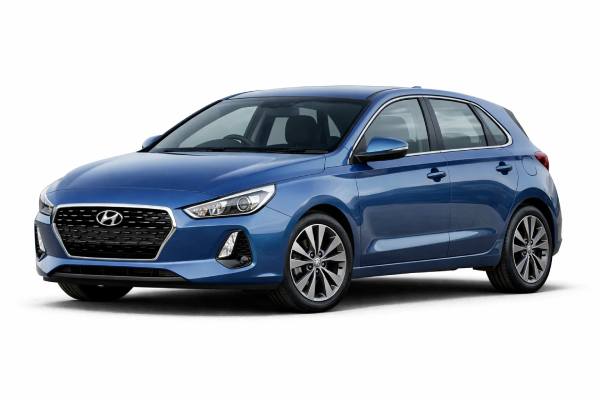
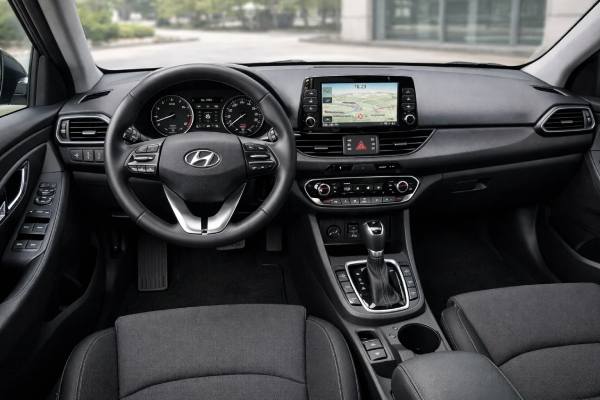

The Hyundai i30 PD with the 136 hp 1.6 CRDi diesel sits in a sweet spot that many used-car buyers still appreciate: it is efficient on long trips, strong enough for daily motorway use, and practical without feeling basic. In hatchback form it combines tidy exterior dimensions with a useful boot, a mature cabin, and a chassis that feels more composed than many budget-minded rivals. The diesel itself changed during this 2017–2020 run, so not every i30 PD 1.6 CRDi is mechanically identical, but the ownership theme stays consistent. A good one is easy to live with, comfortable at speed, and cheap to fuel for its size. The flip side is familiar modern-diesel housekeeping: short-trip use can upset the DPF and emissions hardware, and neglected service history matters more here than on the simpler petrol models. For buyers who drive real distances, though, this remains one of the smarter non-premium family hatchbacks of its era.
Owner Snapshot
- Strong mid-range torque and relaxed motorway manners make it an easy long-distance hatchback.
- The hatchback body is practical, with a 395 L boot and good rear-seat space for the class.
- Official combined fuel figures are very low for a 136 hp family diesel, especially on 16-inch wheels.
- Avoid neglected short-trip cars with DPF, EGR, SCR, or transmission warning signs.
- For long-term durability, fresh oil and inspection work every 10,000–15,000 km or 12 months is a sensible routine.
Guide contents
- Hyundai i30 PD diesel profile
- Hyundai i30 PD 136 specs
- Hyundai i30 PD trims and safety
- Reliability and service actions
- Maintenance and used buying
- Driving and real-world economy
- How the i30 PD stacks up
Hyundai i30 PD diesel profile
The 2017–2020 Hyundai i30 PD 1.6 CRDi 136 is best understood as a practical European-market family hatch with unusually broad appeal. It is not a hot hatch, and it is not a stripped-out economy special. Instead, it aims at buyers who want one car to do nearly everything: commute, carry family, cover long motorway distances, and still return strong fuel economy. In that role, it works very well.
The 136 hp diesel was the upper mainstream diesel choice in the ordinary i30 range, sitting above the lower-output 1.6 CRDi versions. It gave the car enough performance to feel settled and unstrained at highway speeds, especially when loaded, while keeping running costs lower than a comparable petrol for drivers who do bigger annual mileage. Hyundai paired it with a six-speed manual or, depending on year and market, a seven-speed dual-clutch transmission. That choice matters. The manual is the simpler long-term ownership option, while the DCT makes the car feel quicker and more relaxed in rolling acceleration.
A big part of this model’s appeal is balance. The i30 PD is not the roomiest hatch in the class, but it uses its footprint well. The ride is mature, the body control is tidy, and the cabin layout is easy to understand. Hyundai also pushed hard on perceived quality and safety during this generation, so the i30 no longer felt like the bargain-bin alternative it might have been a decade earlier. It is straightforward, honest, and well judged.
There is one important ownership detail, though: this 2017–2020 window covers more than one version of the 1.6 CRDi. Early public technical data describes an earlier 1582 cc diesel with one set of torque, oil-capacity, and timing-drive details, while later official data shows a revised 1598 cc Euro 6d-TEMP version with SCR after-treatment, different oil capacity, and a different timing-drive listing. By 2020, some European markets also added 48-volt mild-hybrid support. That does not make the car confusing to own, but it does mean buyers should treat the VIN and engine label as more important than a simple year range.
In simple terms, this is a strong used buy for the right driver. If your weekly routine includes fast A-roads or motorway miles, the diesel makes a great case for itself. If your use is mostly cold starts and short urban hops, the same car becomes less attractive, because the emissions system gets less chance to stay healthy.
Hyundai i30 PD 136 specs
This section follows the European five-door hatchback, because that is where Hyundai published the clearest open technical data for the 2017–2020 i30 PD diesel. The key point is that the 136 hp 1.6 CRDi changed during the run, so some numbers differ between early launch cars and later Euro 6d-TEMP or facelift examples.
Powertrain and efficiency
| Item | Early 2017 1.6 CRDi 136 | Later 2018–2020 1.6 CRDi 136 |
|---|---|---|
| Engine layout and cylinders | Inline-4, DOHC, 4 valves/cyl | Inline-4, DOHC, 4 valves/cyl |
| Displacement | 1.6 L (1582 cc) | 1.6 L (1598 cc) |
| Bore × stroke | 77.2 × 84.5 mm (3.04 × 3.33 in) | 77.0 × 85.8 mm (3.03 × 3.38 in) |
| Induction | Turbo diesel, VGT, intercooler | Turbo diesel, VGT, intercooler |
| Fuel system | Common-rail direct injection | Common-rail direct injection |
| Compression ratio | 16.0:1 | 15.9:1 |
| Max power | 136 hp (100 kW) @ 4000 rpm | 136 hp (100 kW) @ 4000 rpm |
| Max torque | 280 Nm (207 lb-ft) MT / 300 Nm (221 lb-ft) DCT | 280 Nm (207 lb-ft) MT / 320 Nm (236 lb-ft) DCT |
| Timing drive | Chain listed in open early data | Belt listed in open later data |
| Transmission | 6MT or 7DCT | 6MT or 7DCT; some 2020 markets add 48V mild hybrid |
| Drive type | FWD | FWD |
| Differential | Open front differential | Open front differential |
| Rated combined efficiency | about 3.9–4.1 L/100 km | about 4.3–4.4 L/100 km |
| Rated combined economy | about 57.4–60.3 mpg US / 68.9–72.4 mpg UK | about 53.5–54.7 mpg US / 64.2–65.7 mpg UK |
Those official figures are excellent on paper. In real use, most owners should expect higher numbers, especially in winter, with bigger wheels, or on short trips. A healthy car driven steadily at 120 km/h can still be impressively frugal for a 136 hp diesel hatch.
Chassis, dimensions, and capability
| Item | Hyundai i30 PD hatchback |
|---|---|
| Suspension front / rear | MacPherson strut / multi-link |
| Steering | Electric rack, ratio 13.4:1 |
| Brakes | Front vented discs 280–305 mm; rear discs 272–284 mm |
| Popular tyre sizes | 205/55 R16; 225/45 R17 |
| Ground clearance | 140 mm (5.5 in) |
| Length | 4340 mm (170.9 in) |
| Width | 1795 mm (70.7 in) |
| Height | 1455 mm (57.3 in) |
| Wheelbase | 2650 mm (104.3 in) |
| Turning circle | 10.6 m (34.8 ft) |
| Kerb weight | roughly 1338–1516 kg (2949–3342 lb), depending on trim and transmission |
| GVWR | about 1860–1900 kg (4101–4189 lb) |
| Fuel tank | 50 L (13.2 US gal / 11.0 UK gal) |
| Cargo volume | 395 L / 1301 L (13.9 / 45.9 ft³), VDA |
| Towing capacity | 1500 kg braked / 650 kg unbraked (3307 / 1433 lb) |
| Payload | roughly 374–532 kg (825–1173 lb) |
Fluids, service capacities, and safety headline data
| Item | Typical published figure |
|---|---|
| Engine oil with filter | 5.3 L (5.6 US qt) early; 4.4 L (4.6 US qt) later |
| Coolant | 6.7 L (7.1 US qt) |
| Manual gearbox oil | 1.8 L (1.9 US qt) |
| 7DCT fluid | 2.0 L (2.1 US qt) |
| AdBlue / urea tank | 12 L on later SCR-equipped cars |
| Wheel nut torque | 107–127 Nm (79–94 lb-ft) |
| 0–100 km/h | 10.2 s manual; 9.9–10.6 s depending on year and DCT version |
| Top speed | 200 km/h (124 mph) |
| Euro NCAP | 5 stars |
| Euro NCAP category scores | 88% adult, 84% child, 64% vulnerable road users, 68% safety assist |
The headline takeaway is simple: the i30 PD 136 is roomy, efficient, and more capable than its modest badge suggests. The exact mechanical details, however, are VIN-sensitive enough that parts ordering and timing-drive planning should always be checked against the specific car.
Hyundai i30 PD trims and safety
Trim structure depended on country, but the European i30 PD range usually followed a familiar ladder. In Germany, for example, the normal hatchback moved through grades such as Pure, Select, Trend, Style, Premium, and later N Line. Other markets used different names, but the logic stayed similar: lower trims focused on value, mid-level cars added the sweet-spot equipment, and upper trims brought the larger wheels, more driver assistance, and better infotainment.
For used buyers, trim matters because it changes more than just comfort features. Wheel size affects ride quality and tyre cost. Brake hardware grows on some higher-spec cars. Electronic parking brake fitment appears on upper trims. Seven-speed DCT availability depends on engine and market. On later N Line versions, suspension and steering tuning gave the diesel hatch a slightly firmer, more visual sport package without changing the basic role of the car. If you want the cleanest daily-driver setup, a mid-trim 16-inch car is often the best compromise. If you want the best factory look, the 17-inch Style, Premium, or N Line cars are more appealing but usually ride a little more sharply.
The cabin equipment spread is also worth watching. Early cars could be fairly plain, but nicer trims added dual-zone climate control, better seat trim, LED lighting, parking aids, and upgraded infotainment. Later cars introduced larger touchscreens, stronger phone integration, and by the 2020 facelift, a more modern digital and connected feel. Some facelift cars gained a 7-inch digital cluster, 10.25-inch navigation, wireless phone mirroring in some markets, and Hyundai’s connected services.
Safety is a genuine strength of the PD-generation i30. The body structure was developed with a much stronger focus on high-strength steel use, and Hyundai backed that up with a broad active-safety push. Euro NCAP awarded the hatchback five stars, with strong adult and child occupant scores. Just as important for buyers, the rating applied to the 1.6 CRDi manual and automatic hatchback variants.
ADAS content improved over time. Early i30 PD cars already offered or included features such as Forward Collision-Avoidance Assist, Driver Attention Warning, High Beam Assist, and Lane Keeping Assist. Depending on year and trim, buyers could also find Smart Cruise Control with Stop and Go, Blind-Spot Collision Warning, Rear Cross-Traffic Collision Warning, and speed-limit recognition. The 2020 facelift broadened the menu again with functions such as Lane Following Assist, upgraded forward collision support, rear collision warnings, and stronger blind-spot support in some markets.
For used buyers, the practical message is this: do not assume every i30 PD 136 has the same safety kit. A well-specced later car can feel meaningfully more modern than an early base model, even though both wear the same basic badge.
Reliability and service actions
The Hyundai i30 PD 1.6 CRDi 136 is generally a solid diesel hatchback, but it rewards the right use pattern and punishes neglect. On the whole, I would rate it as dependable rather than bulletproof. A car with full history, regular longer drives, and timely software updates can age very well. A short-trip car with missing records is much less appealing.
Common | Medium cost: DPF loading and incomplete regeneration.
Typical symptoms are raised idle speed, cooling fan running after shutdown, poor fuel economy, warning lights, or limp-home behavior. The likely cause is repeated short-trip use that never lets exhaust temperatures stay high enough for clean regeneration. The remedy can be as simple as a proper hot run and diagnostic check, or as expensive as a forced regen, sensor replacement, or DPF work if the problem has been ignored too long.
Occasional | Medium cost: EGR, NOx, SCR, and AdBlue-related faults on later emissions-spec cars.
These usually show up as warning messages, rougher running, failed regeneration logic, or reduced-power mode. The root cause may be sensor drift, EGR contamination, poor operating pattern, or an SCR component issue. On some cars, a software update is part of the fix. On others, specific sensors, pumps, or valves need replacement.
Occasional | Medium to high cost: 7DCT hesitation, shudder, or poor low-speed smoothness.
This gearbox suits the car’s torque well when healthy, but heavy stop-start use is harder on it than steady-distance driving. Symptoms include jerky take-up, delayed response, or inconsistent shift behavior. The likely causes range from clutch wear and adaptation issues to calibration problems. A test drive in slow traffic tells you a lot here. Some cases improve with software and adaptation work; others need parts.
Occasional | Low to medium cost: chassis wear and brake corrosion.
Drop links, bushes, rear brake wear, and the usual wheel-bearing or alignment issues can appear with age and mileage. Cars on large wheels tend to reveal suspension wear sooner. None of this is unusual for the class, but it is worth budgeting for on higher-mileage examples.
Rare | High cost: VIN-specific safety and service campaigns.
Late-2018 to 2020 cars deserve a careful recall-history check. Public campaign records for some markets include brake-assistance and engine-oil-supply related safety actions on certain VIN groups. Do not rely on seller memory. Verify completion through Hyundai and dealer records.
One unusual but important note concerns the timing drive. Hyundai’s open technical data for this engine family changes across the 2017–2020 period, with early documents listing a chain-driven setup and later documents listing a belt-driven setup. That tells you two things. First, this engine family evolved. Second, buyers should never order timing parts from a registration lookup alone if they can avoid it.
Before purchase, ask for full service records, proof of recall completion, evidence of recent fluid work, and a cold-start inspection. Watch for smoke, rattles, harsh DCT take-up, brake-pedal abnormalities, and any stored emissions warnings. A clean diagnostic scan is especially valuable on later SCR-equipped cars.
Maintenance and used buying
Hyundai’s published European service schedule for this diesel can look long, but the used-market reality is simpler: these engines last better when serviced more conservatively than the longest official interval suggests. That is especially true once mileage rises or the car sees mixed urban use.
A practical ownership plan looks like this:
- Engine oil and filter: every 10,000–15,000 km or 12 months. Use a Hyundai-approved low-SAPS oil in the correct VIN-specific grade, commonly 0W-30 or 5W-30 depending on market and climate. Do not stretch changes just because the car still runs well.
- Engine air filter: inspect at every service; replace around 30,000 km sooner in dusty use.
- Cabin filter: every 12 months or roughly 15,000–30,000 km.
- Fuel filter: around 30,000–60,000 km depending on service history and fuel quality.
- Brake fluid: every 2 years.
- Coolant: follow the official schedule for the exact VIN; older cars should not stay on original coolant indefinitely.
- Manual gearbox or DCT fluid: if no clear record exists, a preventive change is sensible in long-term ownership rather than waiting for symptoms.
- Tyres, alignment, pads, and discs: inspect at every service; rotate tyres as wear demands.
- 12 V battery: test annually from about year 4 onward, because weak voltage can trigger strange electrical and stop-start complaints.
- Timing system: verify whether your exact engine uses the earlier chain-listed or later belt-listed setup, then follow the correct inspection or replacement plan.
Useful open capacities for this powertrain family include 5.3 L or 4.4 L of engine oil with filter depending on revision, 6.7 L coolant, 1.8 L manual gearbox oil, and 2.0 L DCT fluid. Later SCR cars also carry AdBlue. Wheel nut torque in Hyundai owner literature sits at 107–127 Nm, but always confirm the exact workshop figure for your wheel size and market.
As a used buy, the best versions are usually straightforward. A well-maintained 136 hp manual is the safer long-term bet for high-mileage owners. A healthy DCT car is still a good choice, but only if it behaves properly from cold and in crawling traffic. Facelift cars are attractive for their newer safety and infotainment features, though their extra emissions and mild-hybrid hardware add some complexity.
When inspecting one, focus on these points:
- cold-start smoke, idle quality, and injector noise
- DPF or emissions warnings
- smooth clutch or DCT take-up
- even braking and clean brake-pedal feel
- underbody corrosion, especially on cars from wet or salted regions
- suspension knocks and tyre-wear patterns
- working air conditioning, sensors, cameras, and driver aids
- full service record and recall verification
Long-term durability is good when the car is used for the job this engine likes. It is not the best choice for pure short-trip city use, but as an efficient distance hatchback it still makes strong sense.
Driving and real-world economy
On the road, the i30 PD 1.6 CRDi 136 feels like a car designed by people who understood everyday use. It is not showy, but it is composed. Straight-line stability is strong, the seating position is natural, and the cabin stays settled enough at motorway speed that long drives are easy. The steering is accurate rather than chatty. You do not buy this car for feedback, but you do get predictable responses and a secure front end.
The diesel engine suits that character well. Low- and mid-range pull are the main story. It does not feel explosive, yet it has enough shove to make overtakes and hill work easy without constant downshifts. Turbo lag is modest once the car is rolling. In manual form, the powertrain feels simple and well matched. In DCT form, the car can feel quicker in rolling acceleration, though some examples are less graceful in stop-start traffic than on open roads.
Ride quality depends a lot on wheel size. The 16-inch setup is the sweet spot for comfort and tyre cost. Seventeen-inch cars look better and still ride well, but sharper edges are more noticeable. On good roads, the multi-link rear suspension helps the car feel planted and grown-up. Braking feel is reassuring, and the car is easy to place in town despite being genuinely useful on the highway.
Real-world fuel use is where the diesel makes its best argument. Sensible owner expectations are about 5.5–6.8 L/100 km in urban-heavy driving, 5.0–6.0 L/100 km at steady highway speeds around 100–120 km/h, and roughly 5.1–6.2 L/100 km in mixed use. That works out to about 38–46 mpg US / 47–55 mpg UK in town, 39–47 mpg US / 47–56 mpg UK on the highway, and 38–46 mpg US / 46–55 mpg UK mixed. Winter weather, short trips, and DPF regeneration can push those numbers upward.
Official performance is perfectly adequate for the class. Depending on year and gearbox, 0–100 km/h takes about 10 seconds, and top speed is around 200 km/h. In practice, the more important trait is not the headline sprint number but the relaxed way the car holds speed and climbs gradients. That is exactly what many diesel-hatch buyers want.
For drivers who cover real distance, this i30 feels mature, efficient, and easy to trust. That is why it still holds appeal in the used market.
How the i30 PD stacks up
Against its main rivals, the Hyundai i30 PD 1.6 CRDi 136 plays a value-and-balance game rather than chasing a single headline win. Compared with a Volkswagen Golf diesel of the same era, the Hyundai usually gives away a little badge appeal and sometimes a touch of cabin polish, but it fights back with strong standard safety, straightforward ergonomics, and often better used-market value. Against the Kia Ceed, it feels like a close cousin with a slightly different flavor, so individual history and condition matter more than the brand badge.
Versus the Ford Focus diesel, the Hyundai is usually less playful but often easier to recommend as an all-round ownership proposition. Against an Opel or Vauxhall Astra 1.6 CDTi, the i30 often feels more cohesive inside and more reassuring in safety and trim progression. Compared with a Peugeot 308 BlueHDi, the Hyundai gives up some French flair and sometimes a bit of ride suppleness, but many buyers will prefer the more conventional cabin layout and switchgear.
The i30’s strongest arguments are clear:
- efficient long-distance diesel performance
- practical hatchback packaging
- mature ride and road manners
- good safety story for the class
- strong value as a used buy
Its weaker points are equally clear:
- less ideal for short-trip urban use than a petrol rival
- DCT needs a careful test drive
- emissions hardware complexity rises on later cars
- exact engine revision matters more than many buyers expect
So where does that leave it? For a motorway-heavy owner who wants a sensible, well-equipped family hatch without paying Golf money, the Hyundai i30 PD 1.6 CRDi 136 is one of the better answers. It is not the flashiest rival, but it is a very convincing real-world one.
References
- Hyundai i30 | Technische Daten Diesel | Stand: 4.2017 2017 (Technical Data)
- Hyundai i30 | Technische Daten | Stand: 11.2018 2018 (Technical Data)
- New Hyundai i30: sleeker, safer, and more efficient 2020 (Press Kit)
- EuroNCAP | Hyundai i30 2017 (Safety Rating)
- Check if a vehicle, part or accessory has been recalled 2026 (Recall Database)
Disclaimer
This article is for informational purposes only and is not a substitute for professional diagnosis, repair, or VIN-specific service information. Specifications, torque values, service intervals, equipment, and procedures can vary by VIN, market, production date, transmission, emissions version, and trim level, so always verify details against official Hyundai service documentation for the exact vehicle.
If this guide helped you, please consider sharing it on Facebook, X, or your favorite forum to support our work.