
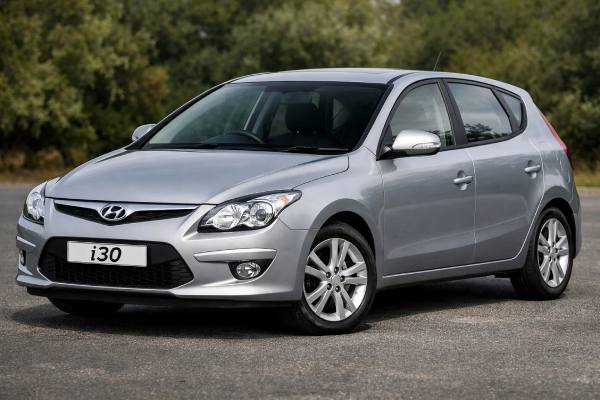
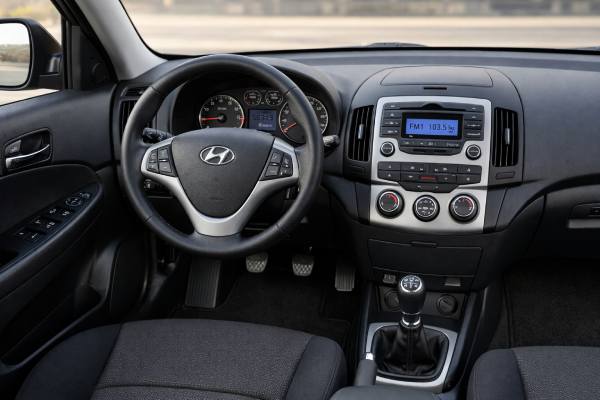
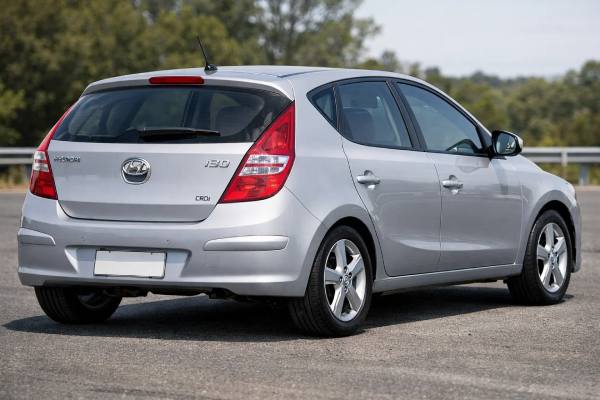
The facelifted 2010–2012 Hyundai i30 1.6 CRDi 90 is one of those cars that makes more sense in daily ownership than it does on a spec sheet. It takes the first-generation FD hatchback, adds the cleaner late-cycle styling update, and pairs it with Hyundai’s 1.6-liter common-rail diesel in its lower-output 90 hp tune. That means this version is not about speed. It is about usable torque, strong fuel economy, and a practical five-door body that still feels compact in town. For the right owner, that is a very appealing mix. The chassis is more sophisticated than many value-focused rivals of its era, the cabin is straightforward to live with, and the diesel can cover long distances cheaply when it is maintained properly. The caution is equally clear: this engine prefers regular longer runs, clean servicing, and careful buying. Neglected short-trip cars can become expensive faster than their modest purchase price suggests.
Essential Insights
- Strong mid-range torque makes the 90 hp diesel feel easier in real traffic than the number suggests.
- The facelift brought Euro 5 emissions, a 6-speed manual, and improved official fuel economy.
- The FD platform’s independent rear suspension helps the i30 feel more composed than many budget hatchbacks.
- Later diesel cars can suffer from EGR, intake, and DPF-related issues if used mostly for short urban trips.
- A practical baseline is engine oil and filter every 15,000 km or 12 months.
Section overview
- Hyundai i30 FD Facelift Basics
- Hyundai i30 FD 90 CRDi Data
- Hyundai i30 FD Grades and Protection
- Common Trouble and Campaign Notes
- Upkeep Plan and Purchase Tips
- Daily Driving and Diesel Economy
- Where It Sits Against Rivals
Hyundai i30 FD Facelift Basics
The facelifted Hyundai i30 FD arrived for 2010 with cleaner styling, detail improvements, and a more polished overall feel, but the core concept did not change. This was still Hyundai’s European-focused compact hatchback: front-wheel drive, practical five-door body, sensible cabin packaging, and a chassis tuned to compete with mainstream class leaders rather than simply undercut them on price. In 1.6 CRDi 90 form, the facelifted car became one of the range’s most economical choices.
The powertrain matters here because the 90 hp diesel is easy to underestimate. It uses Hyundai’s D4FB 1.6-liter four-cylinder common-rail diesel with turbocharging and intercooling. Peak output is only 90 hp at 4,000 rpm, but torque is a far more useful 235 Nm from low in the rev range. That shapes the car’s real character. It is not fast, but it does not need large revs to pull away cleanly or carry a full load without feeling breathless. In everyday use, that makes it noticeably more relaxed than the small petrol alternatives, especially when climbing hills or joining faster traffic.
The facelift version is also important because it separates this car from the earlier 2007–2009 90 hp diesel hatch. For the 2010–2012 facelift, the official combined fuel-consumption figure dropped to about 4.4 L/100 km, emissions moved to Euro 5, and the 90 hp diesel hatch gained a 6-speed manual gearbox. That does not transform it into a brisk car, but it does make it a better motorway companion than the earlier five-speed version. Lower cruising revs improve refinement and help the car deliver the kind of long-range economy diesel buyers expect.
Size and packaging remain part of the i30’s appeal. The hatchback measures about 4,280 mm long, 1,775 mm wide, and 1,480 mm tall, with a 2,650 mm wheelbase. Cargo space is about 340 liters with the rear seats in place and up to 1,250 liters with them folded. That is not class-leading by modern standards, but it is useful enough for daily family duties, airport runs, bulky shopping, and the occasional flat-pack job. The hatch is still compact enough to park easily and does not feel oversized in town.
The chassis is more interesting than many buyers expect. Front suspension is MacPherson strut, while the rear uses an independent multi-link layout rather than the simpler torsion-beam setup many cheaper hatchbacks relied on. That does not make the i30 sporty in a hot-hatch sense, but it does make it feel composed and mature. Ride quality is usually better than people expect from a budget-minded compact, and stability with passengers or luggage is one of its quieter strengths.
So the broad ownership picture is simple. The facelifted i30 1.6 CRDi 90 is a value-led compact diesel hatch that works best for drivers who do enough distance to justify diesel running costs. It offers torque, range, sensible packaging, and a chassis that still feels respectable. It is not exciting, but it is often far more usable than its modest power figure suggests.
Hyundai i30 FD 90 CRDi Data
The facelift 2010–2012 i30 1.6 CRDi 90 is one of those cars where the numbers tell a very clear story. Everything points to efficiency and low-stress everyday use rather than speed. The figures below reflect the common European hatchback specification for the facelifted FD car, but market differences still matter for trim weight, tire size, and some service details.
| Powertrain and efficiency | Specification |
|---|---|
| Code | D4FB |
| Engine layout and cylinders | Inline-4, DOHC, 4 valves per cylinder |
| Bore × stroke | 77.2 × 84.5 mm (3.04 × 3.33 in) |
| Displacement | 1.6 L (1,582 cc) |
| Induction | Turbocharged, intercooler |
| Fuel system | Common rail direct injection |
| Compression ratio | 17.3:1 |
| Max power | 90 hp (66 kW) @ 4,000 rpm |
| Max torque | 235 Nm (173 lb-ft) @ 1,750–2,500 rpm |
| Timing drive | Chain |
| Rated efficiency | 5.0 / 4.1 / 4.4 L/100 km urban / extra-urban / combined |
| Rated efficiency in mpg | 47.0 / 57.4 / 53.5 mpg US and 56.5 / 68.9 / 64.2 mpg UK |
| Real-world highway @ 120 km/h | Usually about 5.4–6.0 L/100 km in a healthy car |
| Emissions standard | Euro 5 |
| Exhaust after-treatment | DPF fitted on commonly published facelift 90 hp data |
That set of numbers explains why the 90 hp diesel exists. The car is not quick, but it offers strong range from a 53-liter tank and useful torque without needing aggressive revs. A healthy example can genuinely travel long distances cheaply, which is the main reason this version still appeals on the used market.
| Transmission, driveline, and chassis | Specification |
|---|---|
| Transmission | 6-speed manual |
| Transmission family | Commonly associated with Hyundai’s 6-speed manual transaxle family for this engine, but confirm by VIN |
| Drive type | FWD |
| Differential | Open front differential |
| Suspension front / rear | MacPherson strut / independent multi-link |
| Steering | Rack-and-pinion power steering |
| Steering ratio | Not consistently published in open model-specific data |
| Brakes | Ventilated front discs / rear discs |
| Wheels and tyres | 185/65 R15 on many 90 hp cars; some trims use larger wheels |
| Ground clearance | Not consistently published for the exact trim, commonly reported around compact-hatch norms |
| Length / width / height | 4,280 / 1,775 / 1,480 mm (168.5 / 69.9 / 58.3 in) |
| Wheelbase | 2,650 mm (104.3 in) |
| Turning circle | 10.2 m (33.5 ft) |
| Kerb weight | About 1,291 kg (2,846 lb) |
| GVWR | 1,820 kg (4,012 lb) |
| Fuel tank | 53 L (14.0 US gal / 11.7 UK gal) |
| Cargo volume | 340 L (12.0 ft³) seats up / 1,250 L (44.1 ft³) seats folded |
| Cargo method | Published in typical European hatchback format; verify exact market documentation |
| Performance and service capacities | Specification |
|---|---|
| 0–100 km/h | 14.9 s |
| Top speed | 172 km/h (107 mph) |
| Braking distance | Not consistently published for the exact 90 hp facelift hatchback |
| Towing capacity | 1,400 kg (3,086 lb) braked / 550 kg (1,213 lb) unbraked |
| Payload | About 529 kg (1,166 lb) |
| Engine oil | 0W-30 or 5W-30; about 5.3 L (5.6 US qt) service fill, about 5.7 L (6.0 US qt) dry |
| Coolant | About 6.8 L (7.2 US qt) |
| Transmission oil | Verify by gearbox code; manual drain-and-fill is commonly just under 2.0 L |
| Differential / transfer case | Not applicable |
| A/C refrigerant | R-134a; exact charge varies by VIN and under-bonnet label |
| A/C compressor oil | PAG-type oil; verify exact grade by compressor label |
| Key torque specs | Wheel nuts commonly 100 Nm (73.8 lb-ft) |
| Crash ratings | Euro NCAP 2008 reassessment: 5 stars under the old protocol; ANCAP 5 stars where side curtains are fitted |
| Headlight rating | IIHS not applicable for this market and generation |
| ADAS suite | No AEB, ACC, lane support, BSD, or traffic-sign assist |
The practical takeaway from the table is straightforward. The facelift 90 hp diesel i30 is not a numbers car in the performance sense. It is a numbers car in the efficiency sense. If you want low fuel use, long range, and sensible running costs, the specification supports that. If you expect lively acceleration, it does not.
Hyundai i30 FD Grades and Protection
Trim naming for the facelift FD i30 varies by market, but most 2010–2012 1.6 CRDi 90 hatchbacks were sold as practical, value-oriented versions rather than luxury models. In many European markets, that meant trim names such as Classic, Comfort, Style, or their local equivalents. The important thing is not the badge itself. It is what the badge included in the market where the car was sold.
Lower trims usually came with the basics covered: manual air conditioning or a simple climate setup, power windows, central locking, CD or basic audio, trip computer, cloth seats, and 15-inch wheels with 185/65 R15 tires. These cars are easy to identify by their simpler interior finishes and less decorative cabin trim. Higher trims layered on alloy wheels, cruise control, steering-wheel audio buttons, better seat fabrics, automatic lights, and sometimes small convenience touches that make the car feel more grown-up without changing the core driving experience.
Mechanically, the 90 hp diesel did not usually gain dramatic hardware changes between trims. The engine, gearbox, and overall character remained the same. That means this is one of those used cars where you can happily buy a lower trim if the condition is better, because you are not giving away the car’s main strengths by doing so. The differences are comfort and equipment, not a fundamentally better powertrain.
Safety specification deserves closer attention. The FD i30’s crash-test story improved after Hyundai addressed earlier concerns around knee and femur protection, and the car achieved a 5-star Euro NCAP rating under the old protocol in its later reassessment. ANCAP’s rating also confirms that the i30 family can reach 5 stars, but there is an important condition: the 5-star result applies where side-curtain airbags are fitted. Without them, the related wagon rating drops. That matters because older used cars are often advertised by trim name without a clear airbag breakdown.
For a buyer, the most important safety checklist is simple:
- Confirm front, side, and curtain airbag presence rather than assuming.
- Check that ABS and ESC are fitted and working properly.
- Inspect seat-belt pretensioner and airbag warning-lamp behavior at startup.
- Verify recall completion for airbag and ABS-related campaigns by VIN.
This generation predates modern driver-assistance features, so expectations need to stay realistic. There is no autonomous emergency braking, no lane-keeping assist, no adaptive cruise, and no blind-spot monitoring. The safety package is mainly passive and stability-based: airbags, strong enough crash structure for its time, ABS, ESC, and predictable road manners. That still makes it a respectable older hatchback when correctly equipped, but not a modern active-safety benchmark.
One useful ownership point is that mid-grade cars often hit the best balance. A modest trim with curtain airbags, working ESC, decent audio, and cruise control usually feels far more complete in daily use than a very basic entry car, while still avoiding the extra cosmetic wear points that can come with highly optioned examples. On this model, condition, safety equipment, and service history matter more than chasing the fanciest badge.
Common Trouble and Campaign Notes
The facelifted i30 1.6 CRDi 90 is usually reliable when it has been used the way an older diesel likes to be used: regular longer drives, timely oil changes, clean fuel servicing, and sensible warm-up habits. Trouble tends to build when the car has lived on short trips or has been maintained like a cheap petrol hatch. That distinction matters because most of the known issues are not sudden disasters. They are gradually developing faults that become expensive only after long neglect.
The most common problem area is soot-related diesel hardware. The EGR valve and intake system can build deposits over time, especially on urban cars. Typical symptoms are flat throttle response, hesitation below 2,000 rpm, rough idle, smoke under load, or an engine-management light. On facelift Euro 5 cars, DPF health becomes part of the story too. If the car rarely gets a full hot run, regeneration may be interrupted repeatedly, leading to rising soot load, warning lights, or limp mode. The remedy depends on severity: forced regeneration, intake and EGR cleaning, or component replacement in worse cases.
Fuel-system condition is the next key area. The D4FB diesel depends on clean common-rail operation, so injector imbalance, poor spray pattern, or leaking injector seals can make a big difference. The driver may notice harder cold starts, uneven idle, metallic diesel knock, smoke, or a smell of combustion gases around the injector area. That does not mean the engine is weak. It means diesel fuel hardware is expensive enough that you need to catch problems early.
Clutch and driveline wear also deserves attention. Many older diesel i30s have spent years doing stop-start work, towing light loads, or hauling passengers. Common symptoms are clutch slip under load, shudder on take-off, vibration through the pedal, or a rattle at idle that points toward flywheel wear. The 90 hp tune is not especially hard on the driveline, but age and mileage catch up eventually.
A few other issues show up often enough to deserve mention:
- Turbo hoses and vacuum lines can split or leak, causing weak boost and oily residue.
- Thermostats can age badly, hurting warm-up time and economy.
- Brake calipers and rear brakes can drag on lightly used cars.
- Suspension bushes, drop links, and wheel bearings become normal old-car wear items.
- Electric power steering faults or warning lights should never be ignored.
Recall and campaign history is especially important on FD cars. Official campaign information across Hyundai recall portals includes several headline items relevant to 2008–2012 i30 FD models:
- Airbag Control Unit software campaign: a parameter-setting issue could affect deployment logic, with a software upgrade used as the remedy.
- ABS module moisture-related campaign: moisture entering the ABS control module could lead to an internal short.
- Driver airbag inflator campaign on certain later FD cars: rupture risk during deployment.
- Brake vacuum pump campaign on certain 2011 cars: lubrication obstruction could lead to hard brake pedal feel and warning lamps.
The most sensible pre-purchase strategy is to assume none of this has been done until proven otherwise. Ask for VIN-based recall confirmation, dealer printouts, and evidence of past campaign completion. On a car this age, paperwork matters almost as much as the test drive.
Upkeep Plan and Purchase Tips
The best way to keep a facelift i30 1.6 CRDi 90 cheap is to stay ahead of routine service. This is not a car that rewards delayed maintenance. It rewards small, timely jobs that stop the diesel system, clutch, and emissions hardware from becoming major bills.
A practical service plan looks like this:
| Item | Practical interval |
|---|---|
| Engine oil and filter | Every 15,000 km or 12 months |
| Engine air filter | Inspect every service, replace around 30,000–45,000 km |
| Cabin air filter | Replace about yearly or sooner in dusty use |
| Fuel filter | Around 30,000–60,000 km depending on fuel quality and history |
| Coolant | Around 90,000 km or 5 years |
| Manual transmission oil | Sensible preventive change around 90,000–120,000 km |
| Brake fluid | Every 2 years |
| Auxiliary belt | Around 120,000 km or earlier if noisy or cracked |
| Timing chain | No fixed replacement interval; inspect for noise, stretch, and timing-correlation faults |
| Brake inspection | At every service |
| Tyre rotation | Around 10,000–15,000 km |
| Alignment check | When wear becomes uneven or after suspension repairs |
| Battery test | Yearly after about 4 years |
| DPF and regeneration behavior | Monitor at service time on Euro 5 cars |
The important point is that the timing chain is condition-based, not a forever component. A quiet cold start, correct oil, and regular level checks matter far more than any myth about chains never needing attention. On the diesel, correct oil specification matters even more if the car has a DPF, because the wrong oil can shorten filter life.
Useful service figures include about 5.3 liters for a normal oil change, about 5.7 liters total oil capacity, around 6.8 liters of coolant, and a 53-liter fuel tank. Manual gearbox oil quantity depends on the exact transaxle, so it is worth checking the gearbox code or workshop literature before ordering fluid. Wheel nuts are commonly tightened to 100 Nm, but that figure should still be confirmed against the exact wheel and local service data.
For used-car buyers, the inspection list should be focused and practical:
- Insist on a fully cold start.
- Listen for chain noise, injector tick, and poor warm-up behavior.
- Check for smoke under hard acceleration.
- Scan for stored engine, ABS, steering, and airbag faults.
- Ask when the fuel filter, brake fluid, and gearbox oil were last changed.
- Verify recall completion by VIN.
Also inspect the car physically for age-related wear:
- Diesel smell or carbon buildup around injectors
- Oily boost hoses and intake pipe joints
- Rust around lower doors, rear arches, tailgate edge, and underbody fasteners
- Uneven front tire wear from alignment or suspension issues
- Brake drag after a test drive
- Weak cabin blower or air-conditioning performance
The best cars are usually the ones with boring histories: regular servicing, motorway use, no warning lamps, and documented recall work. The worst are low-price city diesels with vague sellers, half-warm engines, and “probably just needs a clean” explanations. In long-term durability terms, this i30 can age well. It just needs the kind of upkeep older diesels always need.
Daily Driving and Diesel Economy
The facelift i30 1.6 CRDi 90 is more satisfying on the road than many buyers expect, but only if you judge it by the right standard. This is not a warm hatch. It is a sensible diesel commuter and family car. Once you treat it that way, many of its strengths become obvious.
The first strength is drivability. The car does not feel quick, but the 235 Nm torque figure arrives early enough to make urban driving easy. You do not need to chase revs or row through gears constantly. In normal traffic, the engine feels flexible and cooperative, which is exactly what you want from a small diesel hatch. The 6-speed manual also helps. Compared with the older five-speed diesel i30, the facelifted car settles more comfortably at steady motorway speed.
Ride and handling are quietly good. The front end feels predictable, and the independent rear suspension gives the car a planted, mature feel over broken surfaces. Straight-line stability is solid for a compact hatchback, and the body control usually feels more expensive than the car’s market position suggests. Steering is light rather than especially communicative, but it suits the car’s daily-use mission. On poor roads, the i30 generally feels less nervous than some cheaper rivals with simpler rear suspension setups.
Noise levels depend heavily on condition. A healthy car has the expected small-diesel clatter at idle, but once warm it should settle into a reasonable cruise. The facelifted six-speed car is the better motorway tool because it sits at lower revs and sounds less busy. Cheap worn tires, tired wheel bearings, or neglected engine mounts can make the same car feel far older than it really is, so condition matters a lot to the driving impression.
Real-world economy is where the 90 hp diesel earns its place. Official combined consumption is 4.4 L/100 km, with 5.0 in urban use and 4.1 extra-urban. In real life, a healthy car usually lands somewhere like this:
- City: about 5.8–6.8 L/100 km depending on traffic and regeneration behavior
- Highway at 100–120 km/h: about 5.4–6.0 L/100 km
- Mixed use: about 5.6–6.3 L/100 km for most owners
Those are good numbers for a conventional diesel hatch of this era. But they are also sensitive numbers. If the thermostat is weak, the brakes drag, the alignment is poor, or the DPF is struggling, fuel use will rise. That is why unusually poor economy on a 90 hp i30 diesel is often a symptom, not just bad luck.
Performance itself is modest. The car needs about 14.9 seconds to reach 100 km/h, so overtakes require planning, especially when loaded. Still, because the torque arrives low down, the car often feels more useful than that 0–100 time suggests. For commuting, long trips, and sensible family use, it is usually adequate. For aggressive passing or heavy towing, it is merely enough.
In daily life, that balance works well. The i30 1.6 CRDi 90 is quiet enough, comfortable enough, and efficient enough to feel like a smart tool rather than an exciting one. For many owners, that is exactly the point.
Where It Sits Against Rivals
The facelift Hyundai i30 1.6 CRDi 90 sat in one of the most competitive parts of the market, and its natural rivals are still the ones buyers compare today on the used market: the Kia Cee’d 1.6 CRDi, Ford Focus 1.6 TDCi, Volkswagen Golf 1.6 TDI, Opel Astra diesel hatch, and in some markets the Mazda 3 diesel. That is a strong group, so the Hyundai only makes sense if you understand where it wins and where it does not.
Against the Kia Cee’d, the story is familiar. The cars share much of their engineering, so condition matters more than branding. Buy the better car, not the shinier badge. Against the Ford Focus, the Hyundai usually gives away some steering feel and driver appeal, but it answers with a more comfort-first setup and a reputation for sensible ownership when maintained well. Against the Volkswagen Golf 1.6 TDI, the i30 often loses on perceived cabin richness and badge status, yet it can be the more rational choice if you value purchase price and straightforward ownership over image.
The Hyundai also compares well with budget-conscious rivals because of its suspension setup. A compact hatch with independent rear suspension, solid stability, and genuinely good motorway manners is useful in daily life, even if it does not show up well in a classified listing. The i30’s ride and composure are among the main reasons it still feels respectable now.
Its weaknesses are not hard to spot. The 90 hp version is slow by modern standards. Some rivals offered better low-end urgency or stronger overtaking pace. The diesel-specific risk profile is also real: EGR buildup, DPF issues on short-trip cars, injector faults, clutch and flywheel wear, and campaign history all need checking. The cabin is practical but plain, and the safety story is solid for its time rather than modern.
Its strengths are equally clear:
- Strong real-world fuel economy
- Useful low-rpm torque
- Compact size with sensible cabin space
- Stable ride and handling
- Straightforward daily usability
- Good value if bought carefully
That leads to a simple conclusion. The facelift i30 1.6 CRDi 90 is not the most desirable diesel hatch of its era, and it is not the most enjoyable. But it is one of the more sensible. For a buyer who does regular longer trips, wants a compact five-door with low running costs, and is willing to check service history properly, it still makes a convincing case. For a short-trip urban driver who simply wants the cheapest diesel on the market, it is much less convincing. In that context, the i30 is best thought of as a practical, efficient, mature small hatch that rewards the right owner more than the impulsive one.
References
- Owner manuals | Hyundai Australia 2025 (Owner’s Manual)
- EuroNCAP | Hyundai i30 2008 (Safety Rating)
- Hyundai i30 | Safety Rating & Report | ANCAP 2009 (Safety Rating)
- Service & Safety Campaigns | Hyundai New Zealand 2026 (Recall Database)
- Car Recalls | Owning | Hyundai Australia 2025 (Recall Checker)
Disclaimer
This article is for informational purposes only and is not a substitute for professional diagnosis, repair, or official workshop guidance. Specifications, torque values, service intervals, procedures, and equipment can vary by VIN, market, production date, emissions package, and trim, so always verify critical details against the correct official service documentation for the exact vehicle.
If this guide helped you, please consider sharing it on Facebook, X, or another social platform to support our work.