
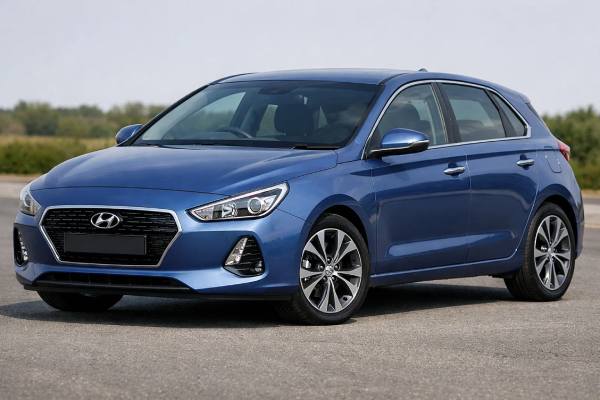
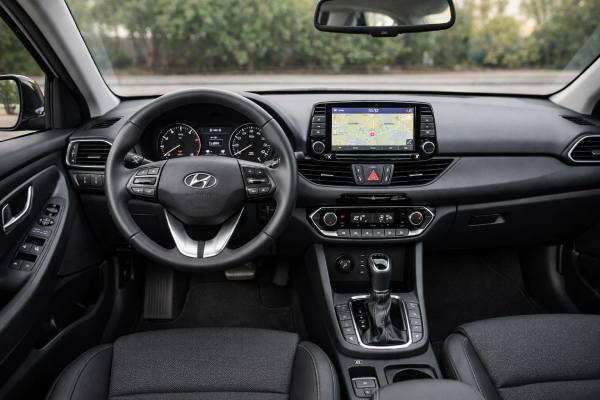
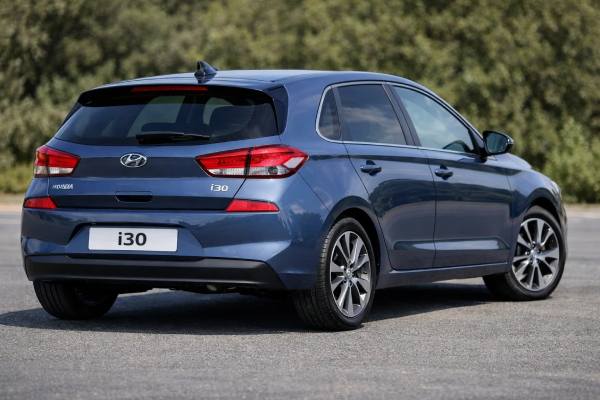
The 2019–2020 Hyundai i30 PD with the 1.6 CRDi Smartstream diesel sits in a sweet spot that many used-car buyers still appreciate. It offers the mature packaging of the third-generation i30, strong motorway manners, and fuel use that remains genuinely low in real driving when the car gets regular longer trips. In this lower-output 115 hp form, the engine is not meant to feel sporty, but it brings a broad torque band, relaxed cruising, and lower running costs than many petrol rivals of the same era. That makes it especially attractive as a family hatchback, estate, or commuter car. The key to ownership is understanding what kind of diesel it is: efficient and durable when maintained well, but less happy with repeated cold starts and very short urban use. For buyers who want a balanced compact Hyundai with solid safety, good cabin space, and sensible long-term value, this is one of the more rational diesel choices in the class.
Owner Snapshot
- Strong low-rpm torque and easy motorway cruising make it a very good long-distance daily driver.
- Fuel economy is a real advantage, especially on mixed and highway use.
- Cabin packaging, hatchback practicality, and the wagon option give it broad family appeal.
- Short-trip driving can accelerate DPF, EGR, and emissions-system complaints on neglected cars.
- A yearly oil service or about 15,000 km is the sensible ownership rhythm, even when some schedules look longer.
What’s inside
- Hyundai i30 PD diesel profile
- Hyundai i30 PD tech specs
- Hyundai i30 PD trims and safety
- Reliability and known faults
- Maintenance and buying advice
- Road manners and economy
- Rivals and value
Hyundai i30 PD diesel profile
This version of the i30 is best understood as the efficient, sensible middle ground in the late-PD range. It uses Hyundai’s 1.6-litre Smartstream CRDi diesel, usually identified by the D4FE engine code, in a 115 hp tune. In practice, that means a front-wheel-drive compact car with enough torque to feel stronger than its headline output suggests. Official figures for the facelift-era car place maximum output at 115 PS and 280 Nm, with 0–100 km/h in about 10.9 to 11.0 seconds and a top speed of 192 km/h. Those numbers do not sound fast, but they suit the character of the car well.
The real strength is how the engine behaves in everyday driving. It pulls well from low revs, settles into a quiet cruise more easily than many small turbo petrol engines, and feels most at home on suburban A-roads and motorways. Around town it is calm rather than eager. Below about 1,500 rpm it can feel a little flat, but once into the main torque band it becomes smooth and predictable. Buyers choosing between the 6-speed manual and 7-speed dual-clutch version will usually find the manual feels simpler and slightly more direct, while the DCT gives the i30 a more effortless long-distance nature.
It is also important to define the exact scope of this article. The i30 PD range overlapped pre-facelift and facelift production, and some markets carried earlier diesel calibrations alongside newer Euro 6d-Temp versions. This guide focuses on the late-2019 to 2020 1.6 CRDi 115 cars commonly listed under the facelift-era configuration, rather than the earlier 110 PS U2 diesel sold in some regions.
As an ownership proposition, the i30’s appeal comes from balance. It is roomy without being bulky, mature without feeling dull, and cheaper to buy than equivalent German rivals in many used markets. The hatch is the most common and easiest to resell, while the wagon is the quiet bargain if you need a larger boot. The cabin is straightforward rather than flashy, but ergonomics are strong and visibility is usually better than many rivals from the same period.
Its main caveat is simple: this is a modern emissions-controlled diesel, not an old-school trouble-free long-runner that tolerates anything. Cars used for repeated short cold trips, delayed servicing, or cheap parts can quickly become less attractive than the headline economy suggests. A well-kept example, though, is still a very smart buy.
Hyundai i30 PD tech specs
The 1.6 CRDi 115 sits toward the economy-focused end of the facelift i30 diesel range. Most examples are front-wheel drive and were sold with either a 6-speed manual or 7-speed DCT, depending on trim and market. Hatchback data is the safest baseline for shoppers because it is the body style most buyers search for first, but the wagon shares the same core mechanical package and simply adds weight and cargo capacity.
Here are the key numbers that matter most in practice.
| Item | Hyundai i30 (PD) 1.6 CRDi 115 |
|---|---|
| Engine code | D4FE |
| Layout | Front-transverse, inline-4 turbo diesel |
| Valvetrain | DOHC, 16 valves, 4 valves per cylinder |
| Bore × stroke | 77.0 × 85.8 mm (3.03 × 3.38 in) |
| Displacement | 1.6 L (1,598 cc) |
| Induction | Turbocharger with intercooler |
| Fuel system | Common-rail direct injection |
| Max power | 115 hp / 85 kW @ 4,000 rpm |
| Max torque | 280 Nm (207 lb-ft) @ 1,500–2,750 rpm |
| Emissions standard | Euro 6d-Temp |
| Transmission | 6MT or 7DCT |
| Drive type | FWD |
| Differential | Open |
| Efficiency and performance | Manual | 7DCT |
|---|---|---|
| Combined fuel use | 4.3 L/100 km | 4.1 L/100 km |
| Combined economy | 54.7 mpg US / 65.7 mpg UK | 57.4 mpg US / 68.9 mpg UK |
| CO2 | 112 g/km | 107 g/km |
| 0–100 km/h | 11.0 s | 10.9 s |
| Top speed | 192 km/h (119 mph) | 192 km/h (119 mph) |
| Real-world highway at 120 km/h | typically about 4.8–5.5 L/100 km | typically about 4.7–5.3 L/100 km |
| Chassis and dimensions | Hatchback |
|---|---|
| Front suspension | MacPherson strut |
| Rear suspension | Multi-link or CTBA by market/version |
| Steering | Rack and pinion, electric assist |
| Turning circle | about 10.6 m (34.8 ft) kerb-to-kerb |
| Brakes | Ventilated front discs, rear discs |
| Most common tyre sizes | 205/55 R16, 225/45 R17 |
| Ground clearance | about 140 mm (5.5 in) |
| Length | 4,340 mm (170.9 in) |
| Width | 1,795 mm (70.7 in) |
| Height | 1,455 mm (57.3 in) |
| Wheelbase | 2,650 mm (104.3 in) |
| Kerb weight | 1,313–1,492 kg (2,895–3,289 lb) |
| GVWR | 1,880–1,920 kg (4,145–4,233 lb) |
| Fuel tank | 50 L (13.2 US gal / 11.0 UK gal) |
| Cargo volume, seats up/down | 395 / 1,301 L (13.9 / 45.9 ft³), VDA |
| Capacities and service data | Typical figure |
|---|---|
| Engine oil | about 4.4 L (4.65 US qt) drain and refill |
| Coolant | about 7.3 L (7.7 US qt) |
| Towing capacity, braked | up to 1,500 kg (3,307 lb) |
| Towing capacity, unbraked | 650 kg (1,433 lb) |
| Payload | varies widely by trim and body; check VIN label |
On safety, Euro NCAP awarded the i30 five stars under the 2017 protocol, with strong adult and child occupant protection. IIHS ratings do not apply because this model was not a North American i30 offering.
Hyundai i30 PD trims and safety
Trim structure varied by country, but in broad European and UK terms the late-2019 to 2020 i30 range clustered around practical mainstream grades, followed by better-equipped Premium versions and sportier N Line trims. For this diesel, the most common shopping pattern is simple: base or mid-grade cars dominate fleet stock, while private buyers more often went for Premium or N Line specification.
The best-value trims are usually the mid-level ones. They tend to keep 16-inch or 17-inch wheels, which suit the chassis and help ride quality, while adding the comfort equipment most owners actually want. Higher trims bring more visual appeal and extra ADAS, but the 18-inch wheel packages can make rough roads feel sharper and replacement tyres cost more.
Quick identifiers are useful when looking at used listings:
- Advance or equivalent entry trims usually have cloth seats, smaller wheels, and a simpler cabin finish.
- Premium cars often add larger infotainment, dual-zone climate control, heated front seats, and 17-inch alloys.
- N Line cars are easy to spot from their black exterior accents, more aggressive bumpers, red interior stitching, and often 18-inch wheels.
- N Line S models typically add the most comfort and assistance hardware, including upgraded seat trim and more highway-focused driver aids.
For 2020, Hyundai sharpened the i30’s safety and tech appeal. The facelift brought a broader SmartSense package, cleaner digital interfaces, and more advanced highway-assist functions on upper trims. Features such as Forward Collision-Avoidance Assist with junction support, Driver Attention Warning, Intelligent Speed Limit Assist, and Multi-Collision Braking became stronger selling points. Higher DCT trims could also include Navigation-based Smart Cruise Control-Curve and Highway Driving Assist.
That matters because not every five-star i30 feels equally equipped in everyday use. The core structure is solid across the range, but the active-safety experience changes noticeably by trim. If ADAS matters to you, it is worth paying close attention to whether the car has the camera and radar-based package fitted from the factory, and whether a windscreen replacement or bumper repair may have disturbed calibration.
As for passive safety, the car gives buyers what they would expect from a strong compact hatch of its era: multiple airbags, ESC, ABS, strong occupant protection, and ISOFIX child-seat mounting points. Euro NCAP scores of 88% for adult occupants and 84% for child occupants remain respectable, though the 64% vulnerable road user score and 68% safety-assist score reflect the older test protocol rather than a modern 2025 benchmark.
If you want the best mix of value, comfort, and ownership simplicity, a 2020 mid- or upper-mid trim manual car is usually the sweet spot. If you want the most complete feature set, the better DCT-equipped trims are appealing, but condition and service history matter more than badge level.
Reliability and known faults
The late-PD i30 diesel is generally a sound car, but it is not a car to buy casually. The engine itself has a good reputation when it gets proper oil services and enough heat cycles to keep the aftertreatment system healthy. Most ownership trouble comes from emissions hardware, neglected maintenance, or occasionally from transmission and electronics issues rather than from catastrophic engine weakness.
A practical way to judge it is by prevalence and cost:
- Common, low to medium cost: DPF loading from short trips, EGR contamination, battery fatigue, tyre wear, brake wear, minor sensor faults.
- Occasional, medium cost: NOx or exhaust-sensor warnings, AdBlue or SCR-related faults where fitted, DCT hesitation or shudder, parking-sensor and camera faults.
- Rare, high cost: badly neglected turbo lubrication problems, injector issues, serious DCT repair, accident-damaged ADAS hardware, or a diesel that has been driven with persistent warning lights and incomplete regens.
Typical symptoms and likely causes look like this:
- Frequent fan running after shutdown, rising fuel use, or warning lamps: interrupted DPF regenerations from repeated short-trip use.
- Flat performance, limp mode, or emissions warnings: EGR fouling, NOx sensor trouble, or SCR-related faults depending on market specification.
- Jerky low-speed behavior on DCT cars: clutch adaptation, software calibration, worn clutch packs, or poor prior maintenance.
- Hard cold starting or uneven idle: battery voltage, glow-plug issues, fuel quality, or a sensor beginning to drift.
- Front-end knocks over broken roads: anti-roll-bar links, bushes, or suspension wear rather than a deeper platform issue.
Software and calibration work can matter more than owners expect. DCT behavior, ADAS function, infotainment glitches, and some emissions-system driveability complaints can improve with dealer updates. On a used car, that means proof of dealer servicing is genuinely valuable, not just nice to have.
One recall item worth checking carefully is the driver airbag inflator campaign that affected some 2019–2020 i30 PD vehicles in certain markets. The remedy was replacement of the affected component, and any serious buyer should verify completion through Hyundai’s VIN-based recall checker and dealer records. That same VIN check is also the right place to look for any market-specific field actions or service campaigns.
Pre-purchase, ask for a full service record, evidence of recent battery testing, proof that emissions warnings have not been ignored, and confirmation that the car actually does the kind of mileage a diesel likes. A tidy city-only example with low miles can be a worse buy than a higher-mileage motorway car with consistent maintenance.
Maintenance and buying advice
This is the section where owners save money. The i30 1.6 CRDi is not especially expensive to keep, but it rewards preventive maintenance and punishes delay. The safest ownership mindset is to service it slightly earlier than the bare minimum, especially if the car sees mixed use or colder weather.
A practical maintenance plan looks like this:
| Item | Sensible interval |
|---|---|
| Engine oil and filter | every 12 months or 15,000 km |
| Engine air filter | inspect yearly, replace about 30,000 km sooner in dusty use |
| Cabin filter | every 12 months or 15,000–20,000 km |
| Fuel filter | inspect by schedule; many owners budget replacement around 30,000–60,000 km depending on fuel quality |
| Coolant | inspect condition regularly; follow VIN-specific long-life schedule, especially on used cars |
| Brake fluid | every 2 years |
| Brake pads and discs | inspect every service |
| Manual gearbox oil | inspect for leaks; refresh around 100,000–120,000 km is prudent |
| 7DCT fluid and clutch behavior | follow market schedule; inspect operation closely at every service |
| Tyre rotation and alignment | inspect at each service, rotate about every 10,000–15,000 km |
| 12 V battery | test yearly after age four |
| Timing components | verify VIN-specific service requirement and proof of any belt work |
The biggest buyer’s-guide point is the diesel operating profile. This engine wants regular longer drives. A car that mostly did motorway work is often a safer bet than a low-mile urban example. On inspection, look for excessive soot around the tailpipe, a history of repeated warning lights, long crank times, rough idle, or a seller who cannot explain how the car is used.
Common reconditioning items are predictable: tyres, front brakes, battery, suspension links, and sometimes a deep clean or repair of EGR and intake components on short-trip cars. None of those is unusual. What matters is whether they have been addressed before they triggered bigger faults.
My preferred used examples are:
- 2020 facelift hatchback or wagon.
- Mid-spec or Premium trim on 16-inch or 17-inch wheels.
- Manual transmission, unless you specifically want the DCT and can verify smooth operation and proper servicing.
- Cars with a complete service history and confirmed recall completion.
Cars to avoid are not tied to a single model year so much as a pattern of neglect. Walk away from any example with unexplained emissions lights, weak starting, clutch shudder, missing service records, or obvious evidence that the car has spent its life on short urban cycles. Long-term durability is good when the car is used as intended, but it is only average when maintenance has been reactive instead of planned.
Road manners and economy
On the road, the i30 1.6 CRDi 115 makes a strong case for itself as an everyday car rather than an enthusiast’s car. Its ride is composed, the steering is light but accurate enough, and the chassis feels settled at speed. Hyundai tuned the PD generation with a mature European flavor, so the car tracks straight on the motorway and does not feel nervous in crosswinds or quick lane changes.
The engine’s character is defined by torque, not revs. It pulls cleanly from low engine speed once the turbo is in its working range, and that makes the car feel better in rolling traffic than the 115 hp figure suggests. Throttle response is not immediate from very low rpm, but once above that initial softness it becomes easy to meter and reassuring on inclines or during overtakes. Passing performance is respectable rather than rapid, and the manual lets you keep the engine in its best zone more easily than the DCT does.
The 6-speed manual suits the engine well. It is usually the better choice for buyers who want maximum simplicity and predictable control. The 7DCT is convenient and often a little more efficient on paper, but it can feel less graceful in repeated low-speed crawling if calibration or clutch condition is not ideal. On open roads, though, it settles down and becomes a good match for the diesel’s relaxed nature.
Noise, vibration, and harshness are well contained for a compact diesel. Around town you hear the engine more than in an equivalent petrol, but at cruising speed the i30 often feels quieter and less strained than many small-capacity turbo rivals. Tyre choice matters here; 16-inch and 17-inch setups preserve the best balance.
Real-world fuel use is one of the car’s core advantages:
- City: about 5.8–6.8 L/100 km in normal use, higher with cold starts and traffic.
- Highway at 100–120 km/h: about 4.7–5.5 L/100 km.
- Mixed driving: about 5.0–5.8 L/100 km for a healthy, properly serviced car.
That means roughly 40 to 47 mpg US in mixed driving, and clearly more on relaxed highway runs. Cold weather, short trips, and active DPF regeneration can shift those numbers upward by a meaningful margin.
Overall, the i30 1.6 CRDi 115 drives like a refined tool. It is calm, easy, efficient, and better on a long journey than many people expect. It does not hide the fact that it is a diesel, but it uses its diesel strengths very well.
Rivals and value
Against its main rivals, the i30 diesel succeeds by being balanced rather than class-leading in one dramatic area. It is not the sharpest handler, the plushest car, or the most prestigious badge, but it is one of the easier cars to recommend when ownership cost, practicality, and long-distance use all matter.
The closest technical rival is the Kia Ceed 1.6 CRDi, which shares much of the underlying engineering. The Ceed often feels a little more design-led inside, but the i30 can be the better used buy if pricing is kinder and service history is stronger. In real terms, condition matters more than the Hyundai-versus-Kia badge decision.
The Volkswagen Golf diesel still has the edge in badge prestige, and some buyers will prefer its slightly more polished cabin materials. But a comparable Golf usually costs more to buy, and the i30 often closes the gap with strong equipment and simpler value math. The Hyundai also feels less intimidating as an ownership proposition for buyers who want a sensible used family hatchback rather than a status choice.
The Ford Focus 1.5 EcoBlue is arguably the better driver’s car. Steering feel and cornering composure are stronger. Yet the i30 is often quieter and more straightforward in daily use, especially if you just want comfortable commuting and dependable motorway behavior.
The Peugeot 308 1.5 BlueHDi can return excellent economy and has a more distinctive cabin, but it is also more taste-dependent. Some drivers dislike the driving position and compact steering wheel layout. The Hyundai is more conservative, but that can be a virtue in a used purchase.
A non-diesel alternative worth mentioning is the Toyota Corolla Hybrid. If your driving is mostly urban and suburban, the Corolla is often the smarter modern choice because it avoids diesel aftertreatment headaches altogether. But for buyers doing heavier motorway mileage, towing light loads, or simply wanting long-range fuel economy with fewer hybrid-system complexities, the i30 diesel still makes sense.
So where does the Hyundai land? It is one of the better value compact diesels from this period if your usage matches the powertrain. Choose it for:
- regular longer-distance driving,
- practical interior space,
- strong fuel economy,
- good safety,
- and sensible used pricing.
Do not choose it just because the mpg figure looks attractive on a short-journey lifestyle. When used properly, it compares very well with class rivals. When used incorrectly, its diesel hardware becomes the thing that erases the value advantage.
References
- Hyundai i30 Wagon press kit 2020 (Press Kit)
- Hyundai i30 Technical Specifications 2020 (Technical Data)
- Euro NCAP | Hyundai i30 2017 (Safety Rating)
- Hyundai Owners manuals | Hyundai Motor UK 2025 (Owner’s Manual)
- Home | Hyundai Recalls & Service Campaigns 2025 (Recall Database)
Disclaimer
This article is provided for informational purposes only and is not a substitute for professional diagnosis, repair, or factory service information. Specifications, torque values, service intervals, procedures, and equipment can vary by VIN, market, production date, body style, and trim. Always confirm details against the correct official owner’s manual, workshop literature, recall history, and dealer or manufacturer documentation for the exact vehicle.
If this guide helped you, please consider sharing it on Facebook, X, or another social platform to support our work.