
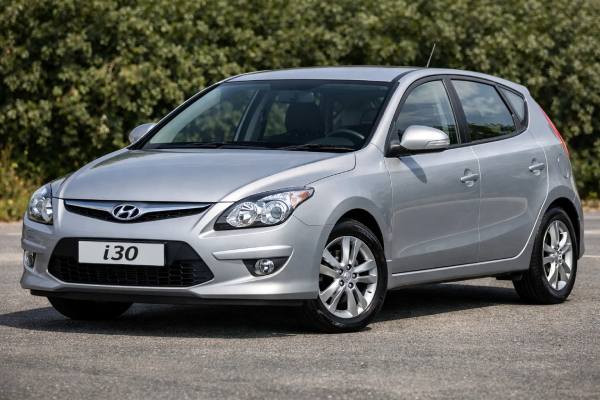
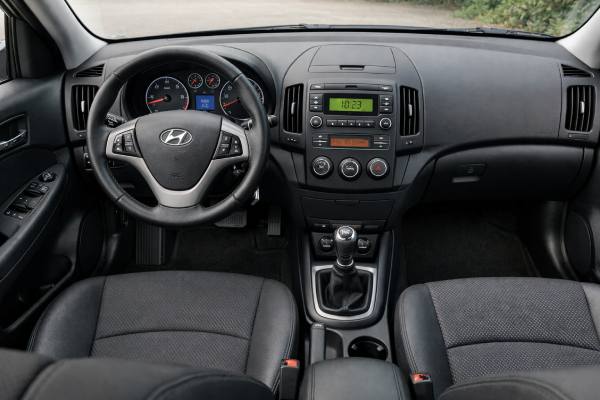
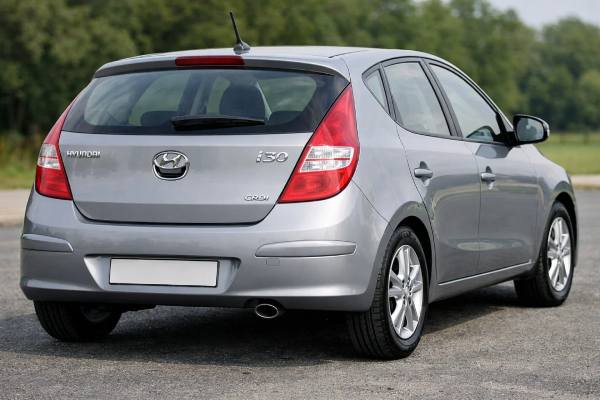
The 2010–2012 facelifted Hyundai i30 FD 1.6 MPI is one of those cars that becomes more appealing once you look past the badge and focus on the engineering. It kept the same basic formula that made the early i30 a sensible compact hatchback, but added a fresher exterior, updated trim packaging in many markets, and a more modern emissions setup while still avoiding the complexity of a turbocharged or direct-injected petrol engine. That matters today. The 1.6-litre G4FC engine is naturally aspirated, port-injected, and chain-driven, which gives the car a relatively straightforward long-term ownership profile. With 126 hp, it is not fast, but it is usable, efficient enough, and well matched to the facelift model’s everyday family-car mission. The real strengths are practicality, predictable running costs, and low mechanical drama. The main caution is age: steering-system history, trim-specific safety equipment, and ordinary wear now matter more than the facelifted styling.
Essential Insights
- The facelift keeps a simple naturally aspirated 1.6 MPI engine with a timing chain and multi-point injection.
- The six-speed manual improves flexibility over the early car’s five-speed setup in many published facelift specifications.
- The hatchback remains practical, with 340 L of boot space and up to 1,250 L with the rear seats folded.
- Steering recall history matters, especially for EPS faults and steering-column joint issues on FD-era cars.
- A sensible service baseline is oil every 15,000 km or 12 months, with spark plugs and fuel filter at about 60,000 km.
Explore the sections
- Hyundai i30 FD refresh profile
- Hyundai i30 FD facelift data
- Hyundai i30 FD grades and protection
- Fault patterns and factory fixes
- Service plan and smart buying
- On-road behavior and consumption
- Position against key rivals
Hyundai i30 FD refresh profile
The facelifted FD-generation i30 did not reinvent the car, but it did sharpen the original formula in useful ways. Hyundai updated the styling, stretched the hatch slightly in overall length, and in widely published facelift specifications paired the 1.6 MPI with a six-speed manual instead of the earlier five-speed unit. Mechanically, though, this remained the same kind of car that made the original i30 easy to recommend: front-wheel drive, a simple transverse four-cylinder petrol engine, a multi-link rear suspension, and a cabin designed around space and ease of use rather than gimmicks.
That continuity is a major reason the facelifted 1.6 MPI still makes sense as a used hatchback. The G4FC engine is not exotic. It is a naturally aspirated 1.6-litre inline-four with dual overhead camshafts, multi-point fuel injection, and a timing chain. In used-car terms, that is good news. There is no turbocharger to manage, no direct-injection system to make intake carbon a defining ownership theme, and no scheduled timing-belt replacement in the usual sense. For buyers who want a practical petrol hatchback without unnecessary complication, that is still a strong selling point.
The facelift version also feels slightly more modern on paper than the earlier 2007–2010 car. Published figures show Euro 5 emissions compliance, a six-speed manual, and the same 126 hp output with 154 Nm of torque. The result is a car that remains modest in absolute pace but is well suited to normal driving. It is quick enough for commuting, school runs, and motorway work, yet still simple enough to be maintained without premium-car headaches.
The wider appeal of the facelifted i30 is that it balances several things well. It is compact outside, but roomy enough for four adults. It has a useful hatchback cargo area, but it does not feel bulky in urban driving. It is comfortable enough for daily use, but its suspension layout is more sophisticated than many bargain-focused rivals from the same period. That gives it a broader skill set than buyers sometimes expect.
The main thing to remember is that the facelift did not erase the importance of condition and specification. Some cars were better equipped than others, and safety content still varied by market and trim. That means the best facelifted i30 1.6 MPI is not simply the newest one. It is the one with verified maintenance, the right safety equipment, and clear steering-system history. Buy on those terms, and the facelifted FD remains a highly rational used compact hatch.
Hyundai i30 FD facelift data
The figures below refer to the facelifted 2010–2012 Hyundai i30 FD 1.6 MPI five-door hatchback in manual form unless noted otherwise. Because this car was sold across multiple markets, exact equipment, wheel packages, towing approvals, and some service values can vary by VIN and region. The table is intended as a clean technical baseline for the facelifted 126 hp petrol hatch.
| Powertrain and efficiency | Value |
|---|---|
| Engine code | G4FC |
| Engine layout and cylinders | Inline-4, DOHC, 4 valves per cylinder |
| Bore × stroke | 77.0 × 85.4 mm (3.03 × 3.36 in) |
| Displacement | 1.6 L (1,591 cc) |
| Induction | Naturally aspirated |
| Fuel system | MPFI / multi-point injection |
| Compression ratio | 10.5:1 |
| Max power | 126 hp (93 kW) @ 6,200 rpm |
| Max torque | 154 Nm (113.6 lb-ft) @ 4,200 rpm |
| Timing drive | Chain |
| Rated efficiency | 6.5 L/100 km (36.2 US mpg / 43.5 UK mpg) |
| Urban / extra-urban | 8.0 / 5.5 L/100 km |
| Real-world highway @ 120 km/h (75 mph) | About 6.6–7.3 L/100 km is a realistic expectation in good condition |
| Transmission and driveline | Value |
|---|---|
| Transmission | 6-speed manual |
| Optional transmission | 4-speed automatic |
| Drive type | FWD |
| Differential | Open |
| Automatic official combined economy | 6.9 L/100 km |
| Automatic 0–100 km/h | 12.1 s |
| Automatic top speed | 183 km/h (114 mph) |
| Chassis and dimensions | Value |
|---|---|
| Suspension, front / rear | MacPherson strut / independent multi-link |
| Steering | Rack-and-pinion, electric power assist |
| Steering ratio | Not consistently published in open facelift 1.6 MPI data |
| Brakes | Ventilated front discs / rear discs |
| Common tyre size | 185/65 R15 |
| Other wheel packages | 16-inch and 17-inch wheels on higher trims in some markets |
| Length / width / height | 4,280 / 1,775 / 1,480 mm (168.5 / 69.9 / 58.3 in) |
| Wheelbase | 2,650 mm (104.3 in) |
| Turning circle | 10.2 m (33.5 ft) |
| Kerb weight | 1,193 kg (2,630 lb) |
| GVWR | 1,720 kg (3,792 lb) |
| Payload | 527 kg (1,162 lb) |
| Fuel tank | 53 L (14.0 US gal / 11.7 UK gal) |
| Cargo volume | 340–1,250 L (12.0–44.1 ft³) |
| Performance and capability | Value |
|---|---|
| 0–100 km/h | 11.1 s |
| Top speed | 192 km/h (119.3 mph) |
| Braking distance | No single open official figure is consistently published for this exact trim |
| Towing capacity, braked | 1,200 kg (2,646 lb) on commonly published spec sheets |
| Towing capacity, unbraked | 550 kg (1,213 lb) on commonly published spec sheets |
| Payload | 527 kg (1,162 lb) |
| Fluids and service capacities | Value |
|---|---|
| Engine oil | Commonly 0W-30 or 5W-30 |
| Engine oil capacity | About 3.3 L change fill, about 3.7 L total system |
| Coolant | About 6.0 L (6.34 US qt) |
| Transmission fluid | VIN- and gearbox-specific |
| Differential / transfer case | Not applicable |
| A/C refrigerant | R134a; exact charge varies by market and compressor |
| A/C compressor oil | Verify by workshop manual for the exact car |
| Key torque specs | Use VIN-specific service data only for critical fasteners |
| Safety and driver assistance | Value |
|---|---|
| ANCAP rating context | Old-model small-car rating, build dates through Feb 2012 |
| ANCAP applicability | Variants fitted with ESC and side curtain airbags |
| Overall ANCAP score | 32.54 out of 37 |
| Frontal / side / pole | 12.97 / 15.57 / 2.0 |
| Pedestrian protection | Marginal |
| ADAS | No AEB, lane support, adaptive cruise control, or blind-spot monitoring |
The key technical takeaway is that the facelifted i30 1.6 MPI stayed true to the original car’s logic. It added some polish and a more modern published specification, but it remained a conventional compact hatchback with a simple petrol engine and sensible packaging. That restraint is part of its appeal. Nothing here is especially flashy, but almost every element supports straightforward ownership.
Hyundai i30 FD grades and protection
Trim structure on the facelifted FD i30 depends heavily on market, so the safest way to shop is by verified equipment rather than by model badge alone. In broad terms, lower trims focused on value and basic practicality, mid-grade cars added convenience and cabin improvements, and upper trims brought larger alloy wheels, better seat trim, extra audio features, parking aids, and in some markets stronger standard safety equipment. That sounds ordinary, but it matters because on this generation the difference between a desirable car and a merely cheap one often comes down to what was fitted at the factory.
For the facelifted 1.6 MPI, the most useful distinction is not really between “nice” and “basic” trim. It is between cars with the right safety package and cars without it. ANCAP’s published old-model assessment for the i30 makes clear that the relevant five-star rating applies to variants fitted with ESC and side curtain airbags. It also notes that those features were not standard across all versions. In practical terms, that means buyers should confirm the actual airbag and stability-control specification on the exact car they are viewing, not assume that all facelifted i30s carry the same crash protection.
The rest of the trim hierarchy still matters. Lower-grade cars typically came with smaller wheels, simpler cloth trim, and fewer cabin conveniences. Mid-level examples often add a leather steering wheel, steering-wheel audio controls, alloy wheels, and a more complete feel. Upper trims can bring climate-control upgrades, parking sensors, rain-sensing wipers or automatic lights in some markets, plus slightly nicer interior finishes. These are not just luxury items. They affect how old or modern the car feels in day-to-day use.
Quick identifiers help. Steel wheels or very basic cloth often point to lower trims. Six airbags should be verified rather than assumed. ESC is worth checking by both dashboard function and original specification, especially if safety matters more than features. Parking sensors, climate-control buttons, and larger factory alloy wheels often indicate a higher-grade car, but they do not automatically prove the best safety content. That still needs to be confirmed directly.
Year-to-year differences through 2010–2012 were generally evolutionary rather than radical. The facelift brought the restyled look and updated published mechanical profile, but most market-specific changes were about equipment bundling rather than deep engineering. Because of that, the best buying advice is simple: prioritize confirmed ESC, side-curtain airbags, clean airbag-system status, and original-equipment clarity over cosmetic trim upgrades. A better-specified safety car is worth more than a flashier one with uncertain history.
This section is where the facelifted i30 really shows its used-car character. It can be a well-equipped and sensible small hatch, but only if you buy the right example. Specification matters, and it matters more here than many buyers first assume.
Fault patterns and factory fixes
The facelifted FD i30 1.6 MPI is generally a durable car when maintained properly, but its biggest ownership risks are not glamorous. They are the sort of issues that build over time in a normal family hatchback: steering faults, deferred servicing, electrical irritation from age, and the gradual wear that turns a cheap used car into an expensive correction project. The engine itself is one of the more reassuring parts of the package. The naturally aspirated G4FC is simpler than later downsized petrol alternatives and does not carry a reputation for chronic design failure when serviced on time.
The most important official factory actions are steering-related. One recall addressed an incorrectly tightened universal-joint bolt on the steering column, which could allow the joint to loosen, create knocking noise, and in extreme cases affect steering control. Another recall covered motor-driven power-steering faults on affected FD cars, where the loss of assist could make the steering heavy and illuminate the EPS warning lamp. Those are not small footnotes. They should be among the first things any buyer checks by VIN.
Beyond official recalls, steering remains the system most likely to shape the ownership experience. Even when a car has had campaign work completed, age-related play, clunking, or an uneven assisted feel can still appear. Typical symptoms include a knock through the wheel at low speed, noise over rough surfaces, or an EPS light with heavier-than-normal steering. The likely remedies depend on the exact fault, but the smartest approach is always proper diagnosis. On cars this age, owners and workshops may already have replaced parts once, and paperwork matters as much as the test drive.
The engine’s weak points are much more ordinary. Oil that has been left too long can accelerate chain wear symptoms and noisier cold starts. That does not mean the chain is inherently fragile; it means the engine expects normal maintenance. Cooling systems also deserve respect. Older hoses, clamps, and plastic components can start to seep or harden with age, and neglected coolant is a recurring clue that the rest of the service history may be thin. Ignition maintenance is another simple but important point. Old plugs and tired coils can make an otherwise healthy engine feel rougher than it really is.
Chassis wear follows the usual compact-hatchback pattern. Bushings, drop links, dampers, wheel bearings, and brake hardware all become inspection items once age climbs. Cars used for short trips can also show rear-brake corrosion or sticking calipers sooner than expected. None of that is unusual, but it matters to total ownership cost.
The pre-purchase checklist is therefore straightforward. Ask for a cold start. Confirm recall completion. Drive the car long enough to assess steering feel, brake straightness, suspension noise, and idle quality. Then inspect the service paperwork for oil-change regularity and evidence of normal maintenance rather than reactive repair. A sorted facelifted i30 is usually a good used hatch. A neglected one becomes expensive in small steps rather than one dramatic failure.
Service plan and smart buying
The facelifted i30 1.6 MPI rewards steady maintenance. That is one of its main strengths as a used car. It does not need a heroic service budget, but it does respond badly to neglect because so many of its components are meant to last through ordinary care rather than rescue-level intervention. For owners and buyers alike, the smartest approach is to treat the car as a simple, honest machine and keep all the basics current.
A practical maintenance schedule looks like this:
| Item | Practical interval | Notes |
|---|---|---|
| Engine oil and filter | Every 15,000 km or 12 months | Shorter intervals make sense with repeated cold starts and short trips |
| Engine air filter | Every 45,000 km | Inspect earlier in dusty use |
| Cabin air filter | Inspect regularly and replace as needed | Often overlooked on older hatchbacks |
| Fuel filter | About every 60,000 km | Especially worth doing when history is unclear |
| Spark plugs | About every 60,000 km | Replace on schedule, not after misfire begins |
| Timing chain | No fixed belt-style replacement interval | Inspect for stretch symptoms, noise, and timing-correlation faults |
| Serpentine / auxiliary belt | About every 120,000 km | Inspect condition and noise at every service |
| Coolant | About every 120,000 km or 8 years | Do not ignore time-based replacement |
| Brake fluid | Every 2 years is a sensible preventive interval | Important for pedal feel and corrosion control |
| Manual or automatic transmission fluid | Check history and condition | A preventive refresh is wise on older cars |
| Brake pads and rotors | Inspect at every service | Rear brakes deserve special attention on lightly used cars |
| Tyres and alignment | Inspect regularly | Uneven wear often points to suspension or steering issues |
| 12 V battery | Test as the car ages | Weak batteries can trigger misleading electrical symptoms |
For decision-making, the key fluid numbers are simple and useful. Routine oil-change fill is about 3.3 L, with total oil system volume around 3.7 L. Common oil grades are 0W-30 and 5W-30. Coolant capacity is roughly 6.0 L. Other values, such as exact gearbox fluid specification, A/C oil charge, or critical fastener torque, should be verified against the workshop information for the exact VIN. That is especially important now because these cars have often moved through several owners and not all workshop history is complete.
As a buyer, the best version is usually the six-speed manual 1.6 MPI with verified ESC and side-curtain airbags, a documented recall record, and clear evidence of regular oil service. During inspection, focus on the expensive-in-total items rather than one dramatic failure: steering clunk, worn tyres, tired brakes, suspension play, patchy electrical operation, and underbody corrosion. Check the lower door seams, hatch area, and subframe regions in climates where salt is used.
Cars to seek are well-kept manual examples with honest mileage and full paperwork. Cars to treat cautiously are bargain-priced examples with steering warnings, no recall proof, irregular service intervals, or a long list of “easy fixes” still waiting to be done. The durability outlook is good when the basics are right. That is the i30’s whole argument: it stays sensible if you stay disciplined.
On-road behavior and consumption
The facelifted i30 FD 1.6 MPI drives the way a sensible family hatchback should. It feels composed, easy to place, and more mature than some buyers expect from a value-focused brand of this era. The ride is generally compliant without becoming loose, and the multi-link rear suspension helps the car feel more settled than many cheaper torsion-beam rivals over broken surfaces. It is not a car built around steering purity, but it does give the driver a confident, predictable sense of where the front end is going when the chassis is in good condition.
The 1.6 MPI engine shapes the whole experience. It is smooth and linear rather than punchy. With 126 hp and 154 Nm, it does not produce a big low-rpm shove, so brisk driving requires a little planning and some revs. The facelift’s commonly published six-speed manual helps because it gives the car a more flexible feel than the earlier five-speed setup. It is not about making the i30 fast. It is about making the most of modest power in normal traffic. That is why the manual remains the obvious enthusiast-free but sensible buyer’s choice.
Published performance figures are entirely honest. The facelifted 1.6 manual reaches 100 km/h in 11.1 seconds and runs on to 192 km/h. The four-speed automatic takes 12.1 seconds and feels less eager in everyday overtakes. In real life, that means the automatic works, but the manual makes the car feel better matched to its engine. If you carry passengers often or drive on faster roads, the manual’s advantage becomes easier to appreciate.
Fuel economy is one of the facelift’s better strengths, though expectations should stay realistic. Officially, the manual records 6.5 L/100 km combined, 8.0 L/100 km urban, and 5.5 L/100 km extra-urban. In real use, most owners should expect high-sixes to low-sevens overall, with steady highway use often landing in the upper sixes and dense city traffic pushing consumption higher. Cold weather, short trips, and cheap low-rolling-resistance claims defeated by worn tyres will all influence the result. The automatic generally uses more fuel in every scenario.
Noise, vibration, and harshness are respectable for the class. The petrol engine stays smoother than many small diesels, and the cabin refinement is usually acceptable at legal motorway speeds if the tyres and door seals are in decent condition. Much of the facelifted i30’s road-test verdict now depends on maintenance rather than design alone. Good tyres, healthy dampers, clean wheel alignment, and a tight steering system make a real difference. A cared-for example still feels neatly resolved. A neglected one quickly loses that impression.
So the dynamic verdict is simple. The facelifted i30 1.6 MPI is not exciting, but it is easy to trust. It is comfortable enough, efficient enough, and refined enough to be a very usable daily hatchback. That steadiness is exactly why it ages better than flashier cars with more complicated hardware.
Position against key rivals
The facelifted i30 1.6 MPI sits in a very competitive part of the market, so the best way to judge it is not by asking whether it is the class leader at one thing. It is better understood as one of the stronger all-rounders. It does not dominate on performance, cargo space, or badge prestige, but it combines enough space, enough efficiency, and enough mechanical simplicity to stay highly relevant as a used family hatchback.
The most direct rival is the Kia Cee’d 1.6 petrol from the same period. The two cars are close in engineering philosophy and long-term ownership logic. In used-car terms, that means condition, service history, and safety specification should decide the purchase more than brand loyalty. If one car has cleaner maintenance, better tyres, working steering, and clearer recall history, it is almost certainly the smarter buy regardless of the badge.
Against a Ford Focus 1.6 petrol, the Hyundai usually loses the pure driver’s-car argument. The Focus has the stronger reputation for steering feel and chassis engagement. But the i30 counters with a simpler, more straightforward ownership case and often better value on the used market. If driving enjoyment matters most, the Ford still has a case. If buying discipline and low-stress ownership matter more, the Hyundai becomes very persuasive.
Compared with a Toyota Auris 1.6 of similar age, the Hyundai often gives away some brand reassurance but fights back with strong practicality and a simpler cost-versus-specification story. Toyota’s reputation is powerful, and resale logic often follows it. But the facelifted i30 often feels like the more rational value buy if two comparable cars are sitting in front of you and the Hyundai has stronger maintenance history.
A Skoda Octavia brings more boot space and a slightly larger-car feel, but it also shifts the conversation toward bulk and, often, higher purchase cost for a similarly clean example. The i30 is better for buyers who want a true compact hatchback rather than a near-family-saloon alternative.
That is the facelifted i30’s place in the market. It is not the sharpest, the most spacious, or the most prestigious. It is one of the most balanced. The simple naturally aspirated petrol engine, practical hatch layout, decent safety when correctly specified, and reasonable service demands all add up to a car that still makes sense. Find a manual 1.6 MPI with clear recall history, the right safety equipment, and an owner who cared about the basics, and the facelifted FD i30 remains one of the smarter used compact hatchbacks from its era.
References
- Hyundai i30 | Safety Rating & Report | ANCAP 2008 (Safety Rating)
- REC-000611 – Hyundai Motor Company – HYUNDAI i30 | Vehicle Recalls 2014 (Recall Database)
- REC-000612 – Hyundai Motor Company – HYUNDAI i30 (FD) , Elantra (HD) 2009 – 2010 | Vehicle Recalls 2015 (Recall Database)
- Hyundai i30 I (facelift 2010) 1.6 (126 Hp) | Technical specs, data, fuel consumption, Dimensions 2026 (Technical Data)
- Hyundai i30 2010 1.6 petrol service and maintenance 2026 (Service Guide)
Disclaimer
This article is for informational purposes only and is not a substitute for professional diagnosis or repair. Specifications, torque values, service intervals, and procedures vary by VIN, market, transmission, and equipment, so always verify critical details against the official service documentation for the exact vehicle.
If this guide helped you, please consider sharing it on Facebook, X, or another social platform to support our work.