
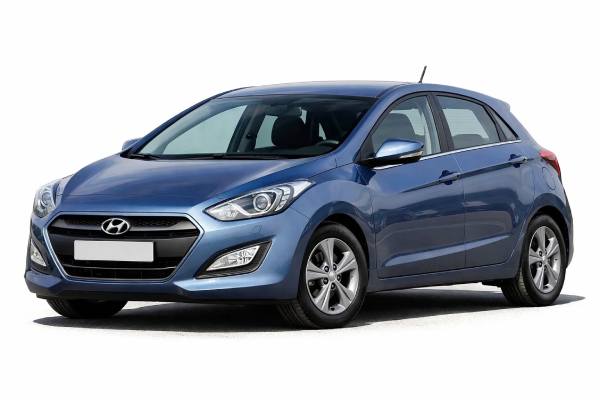
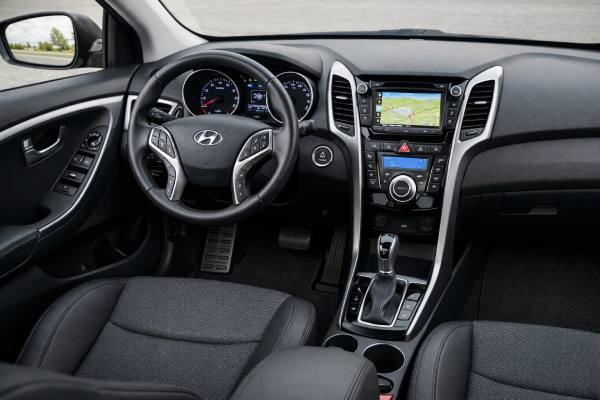

The facelifted Hyundai i30 GD 1.4 MPI is one of the simplest late-model compact hatchbacks you can still buy with confidence. It pairs the improved second-generation i30 body with a naturally aspirated 1.4-liter petrol engine that avoids many of the long-term concerns linked to small turbo engines, direct injection, and more complex drivetrains. In 100 hp form, it is clearly an economy-focused version, not a performance model, but that is exactly why it appeals. Running costs are predictable, servicing is straightforward, and the underlying GD platform still gives you a roomy cabin, tidy road manners, and useful safety fundamentals for the era. The 2015 facelift also sharpened the design, refreshed the equipment mix, and kept the i30 competitive in a class full of strong rivals. For buyers who want a practical family hatch with low drama and honest engineering, the facelift 1.4 MPI remains a smart choice. The key is to buy on service history, condition, and equipment that truly matters.
Fast Facts
- The 1.4 MPI engine is mechanically simple and usually less risky long term than many small turbo petrol rivals.
- The facelifted GD body still offers good cabin space, a 378 L boot, and composed motorway manners.
- Ride comfort is strongest on the common 15-inch wheel setup, especially on poor urban roads.
- Performance is modest, so full-load driving and steep hills require more frequent downshifts.
- Engine oil and filter are best changed every 12 months or 12,000–15,000 km for long-term durability.
Quick navigation
- Hyundai i30 GD facelift essentials
- Hyundai i30 GD facelift figures
- Hyundai i30 GD facelift equipment
- Usual faults and factory fixes
- Care plan and buyer notes
- Daily driving and fuel costs
- Best alternatives in class
Hyundai i30 GD facelift essentials
The facelifted Hyundai i30 GD 1.4 MPI makes sense for the same reason many used buyers still prefer naturally aspirated petrol engines: it offers fewer expensive unknowns. By 2015, many compact hatchbacks had moved toward smaller turbocharged engines, increasingly complex emissions hardware, and more aggressive economy tuning. Hyundai’s 1.4 MPI went in a calmer direction. It stayed conventional, with multi-point fuel injection, no turbocharger, and a straightforward front-wheel-drive layout. That does not make it exciting, but it does make it easier to understand and usually easier to own.
The facelift itself matters. The 2015 refresh kept the strong basics of the GD-generation i30 but added a cleaner nose, a more polished look, and small improvements in trim structure and available equipment depending on market. The car already had a solid platform. It was built to compete properly in Europe, so the cabin packaging, suspension tuning, and motorway manners are all more mature than many buyers expect from a value-led Hyundai badge of the period.
This version is the entry petrol choice in many markets, and its character is clear from the first drive. With 100 hp and 134 Nm, it is enough for daily commuting, school runs, and steady mixed driving, but it is not especially quick. You need to rev it and use the gearbox intelligently if the car is loaded or the road rises sharply. Buyers coming from a diesel or a turbo petrol may find it flat at low rpm. Buyers stepping out of an older 1.2 or 1.4 naturally aspirated hatchback will usually find it smooth, familiar, and easy to drive.
That engine character fits the rest of the car. The i30 GD is not a hot hatch, but it is a well-judged family hatch. Cabin space is generous for the class, rear-seat room is respectable, and the 378 L boot is useful enough for real life. The controls are simple, visibility is decent, and the driving position suits a wide range of owners. Hyundai also kept the GD’s multi-link rear suspension, which helps the car feel composed and grown-up over broken surfaces and longer undulations.
As a used buy, the facelifted 1.4 MPI version suits people who value predictability more than headline performance. It is especially sensible for drivers who do too many short trips for a diesel, who do not want the repair risk of older turbo engines, or who simply want a lower-stress everyday hatchback. Its weakness is not complexity. Its weakness is modest output. That means the buying decision is simple: if you can live with steady rather than brisk performance, the i30 1.4 MPI gives you a lot of practical car for the money. If you need frequent overtaking punch or regular full-load motorway performance, a larger petrol or diesel i30 may suit you better.
Hyundai i30 GD facelift figures
The tables below focus on the 2015–2017 facelift Hyundai i30 GD hatchback with the 1.4 MPI petrol engine in 100 hp form. Figures can vary slightly by market, trim, tyre size, and transmission, but the layout below reflects the common European-spec five-door hatchback.
| Powertrain and efficiency | Specification |
|---|---|
| Code | G4FA or market-specific 1.4 MPI designation, depending on documentation format |
| Engine layout and cylinders | Front-transverse inline-4, DOHC, 4 cylinders, 4 valves per cylinder |
| Bore × stroke | About 77.0 × 75.0 mm (3.03 × 2.95 in) |
| Displacement | 1.4 L (1,368 cc) |
| Induction | Naturally aspirated |
| Fuel system | MPI / multi-point petrol injection |
| Compression ratio | About 10.5:1 |
| Max power | 100 hp (74 kW) @ about 5,500–6,000 rpm |
| Max torque | 134 Nm (99 lb-ft) @ about 3,500–4,000 rpm |
| Timing drive | Chain |
| Rated efficiency | About 5.6–5.9 L/100 km, market- and wheel-dependent |
| Real-world highway @ 120 km/h (75 mph) | Usually about 6.2–7.0 L/100 km in good condition |
| Transmission and driveline | Specification |
|---|---|
| Transmission | 6-speed manual in most markets |
| Drive type | FWD |
| Differential | Open |
| Chassis and dimensions | Specification |
|---|---|
| Suspension front / rear | MacPherson strut / multi-link independent rear |
| Steering | Electric-assist rack and pinion |
| Steering ratio | About 2.85 turns lock-to-lock |
| Brakes | Front ventilated discs, rear solid discs or drums depending on exact market and trim |
| Most popular tyre size | 195/65 R15 |
| Ground clearance | About 140–150 mm (5.5–5.9 in), market-dependent |
| Length / width / height | 4,300 / 1,780 / 1,470 mm (169.3 / 70.1 / 57.9 in) |
| Wheelbase | 2,650 mm (104.3 in) |
| Turning circle | About 10.6 m (34.8 ft) |
| Kerb weight | About 1,220–1,260 kg (2,690–2,778 lb), trim-dependent |
| GVWR | About 1,780–1,820 kg (3,924–4,012 lb) |
| Fuel tank | 53 L (14.0 US gal / 11.7 UK gal) |
| Cargo volume | 378 L (13.3 ft³) seats up / 1,316 L (46.5 ft³) seats folded, VDA |
| Performance and capability | Specification |
|---|---|
| 0–100 km/h | About 12.5–13.2 s |
| Top speed | About 182–187 km/h (113–116 mph) |
| Braking distance | Exact figure depends heavily on wheel and tyre package |
| Towing capacity | Often about 1,200 kg (2,646 lb) braked; verify by VIN plate and local type approval |
| Payload | About 500–540 kg (1,102–1,190 lb) |
| Fluids and service capacities | Specification |
|---|---|
| Engine oil | Usually 5W-30 or 5W-40 meeting the correct Hyundai and ACEA petrol spec |
| Engine oil capacity | About 3.3–3.6 L (3.5–3.8 US qt) with filter |
| Coolant | Long-life ethylene-glycol coolant, typically 50:50 mix |
| Coolant capacity | About 5.5–5.8 L (5.8–6.1 US qt), verify by VIN |
| Manual transmission oil | API GL-4 manual gear oil |
| Manual transmission capacity | About 1.7–1.9 L (1.8–2.0 US qt) |
| A/C refrigerant | R-134a; exact charge varies by label |
| A/C compressor oil | PAG type; verify by under-bonnet label |
| Key torque specs | Wheel nuts commonly 88–107 Nm (65–79 lb-ft); check workshop data for other critical values |
| Safety and driver assistance | Specification |
|---|---|
| Crash ratings | Euro NCAP 2012 generation result for GD i30: 5 stars, 90% adult, 90% child, 67% pedestrian, 86% safety assist |
| IIHS | Not applicable to this exact overseas-market model |
| Headlight rating | No IIHS headlight rating for this model |
| ADAS suite | Core systems include ABS, ESC, seatbelt reminders, and lane-departure warning on some later facelift trims; no widespread factory AEB, ACC, or blind-spot assist on most 1.4 MPI cars |
The numbers explain the car well. The i30 1.4 MPI is not a fast hatch, but it combines reasonable economy, sensible dimensions, useful cabin space, and conventional petrol engineering in a package that still feels modern enough for family use.
Hyundai i30 GD facelift equipment
Trim names vary by market, so the safest way to assess a facelifted i30 1.4 MPI is by actual equipment rather than the badge on the brochure or tailgate. Across Europe, buyers typically saw entry and mid-level grades with names such as S, Classic, Active, Comfort, or Style, plus local special editions. The 1.4 MPI often sat near the lower middle of the range, which means many cars were sensibly specified rather than overloaded with expensive extras.
That is usually a good thing in the used market. Entry cars often came with steel wheels, manual air conditioning, basic cloth trim, and a simpler audio setup. Mid-spec examples usually added alloy wheels, cruise control, steering-wheel buttons, Bluetooth, better trip-computer functions, and upgraded trim materials. Some later facelift cars also brought lane-departure warning, rear parking sensors, automatic lights, or a more advanced touchscreen depending on market. Those items can improve everyday usability, but they are not essential to making the car good.
The 1.4 MPI does not usually bring major mechanical differences by trim. The main ownership differences come from wheel size, infotainment complexity, and whether the car has enough comfort equipment to feel pleasant without becoming an electrical burden. In practice, the sweet spot is often a mid-level car on 15-inch or 16-inch wheels. Those versions tend to ride better, cost less to tyre, and avoid some of the aging electronics found in higher-spec cars.
Quick identifiers help on the forecourt. Steel wheels, simpler HVAC controls, and basic cloth usually mean a lower-grade car. Alloy wheels, a leather-trimmed steering wheel, cruise control, steering-wheel audio buttons, and a more developed central display usually signal a mid-level trim. Navigation, climate control, parking sensors, automatic lights, and larger alloys tend to indicate a higher trim. VIN-based equipment confirmation is still the best check because different countries bundled features differently.
Safety is a genuine strength of the GD generation. The second-generation i30 earned a five-star Euro NCAP result under the 2012 test protocol, which represented a meaningful improvement over the earlier FD model. For buyers, that means the structure and restraint systems were competitive in period. Depending on trim and market, you can expect front, side, and curtain airbags, ESC, ABS, hill-start assist, and full seatbelt reminders. Some markets also offered lane-departure warning or speed-limiter functions on later cars.
What you should not expect is modern crash-avoidance tech in the way newer cars offer it. Most 2015–2017 1.4 MPI facelift cars do not have autonomous emergency braking, adaptive cruise control, or blind-spot intervention. That means condition matters more than brochure promise. Good tyres, healthy brakes, working ESC, and no warning lights are far more important than a fancier trim name.
One final point for used buyers: after repairs, steering and safety systems deserve proper checks. A simple, honest mid-spec i30 with good tyres, full service history, and working safety systems is usually a stronger purchase than a higher-trim car with warning lights, cheap tyres, or patchy maintenance. On this model, equipment matters, but condition matters more.
Usual faults and factory fixes
The facelifted i30 GD 1.4 MPI is generally a dependable car, but it is old enough now that age-related faults matter more than any original brochure promise. The good news is that most common issues are conventional and manageable. The engine itself is usually not the big expense. More often, ownership costs come from ignition parts, steering-system wear, cooling-system neglect, suspension aging, or the normal wear patterns of a compact family hatch.
A practical fault map looks like this:
- Common, low cost: ignition-coil and spark-plug faults.
- Symptoms: misfire, hesitation under load, rough idle, engine warning light.
- Likely cause: aging ignition coils or overdue plugs.
- Remedy: proper scan first, then replace the faulty coil or refresh the full ignition service items as needed.
- Common, low to medium cost: steering-coupling wear in the electric power steering system.
- Symptoms: clicking or thudding through the steering wheel at low speed or while parking.
- Likely cause: wear in the flexible coupling inside the motor-driven steering assembly.
- Remedy: replace the coupling before condemning the column or rack.
- Common, low to medium cost: front drop links, bushes, and top mounts.
- Symptoms: knocking over broken roads, vague front-end feel, uneven tyre wear.
- Likely cause: age, potholes, and normal suspension fatigue.
- Remedy: replace worn parts in pairs and carry out a proper wheel alignment.
- Occasional, medium cost: cooling-system leaks or thermostat issues.
- Symptoms: coolant loss, unstable temperature, slow warm-up, weak heater.
- Likely cause: aging hoses, clamps, thermostat housing, or overdue coolant.
- Remedy: pressure-test the system and fix leaks early. Repeated overheating should always count heavily against the car.
- Occasional, medium cost: timing-chain noise on poorly serviced engines.
- Symptoms: cold-start rattle, rough idle, timing-correlation faults.
- Likely cause: long oil intervals, low oil level, or poor-quality oil.
- Remedy: inspect chain, guides, and tensioner together. The chain is durable when serviced, but it is not a lifetime exemption from maintenance.
- Occasional, medium cost: clutch wear on hard-used manual cars.
- Symptoms: high bite point, slipping under load, noisy release bearing.
- Likely cause: city use, poor driving habits, or simple age.
- Remedy: fit a full clutch kit and assess flywheel condition during the job.
The good part of the 1.4 MPI is what it avoids. There is no turbocharger, no direct-injection carbon pattern to fear, and no diesel emissions hardware to clog on short trips. That lowers the long-term ownership risk considerably. It does not remove the need for maintenance, but it does mean the typical problems are usually easier and cheaper to diagnose.
Factory actions still matter, though. Public recall resources show that i30 campaign and safety-check status should always be verified by VIN rather than assumed. Hyundai also published steering-related service information in related applications, and ESC-related actions existed in some markets on certain GD-era cars. The right approach is simple: check the car by VIN using an official recall database and ask a Hyundai dealer to confirm open or closed campaigns.
Rust is not usually the headline issue on a late GD, but it is still worth checking the sill edges, jacking points, rear wheel arches, front subframe, lower door seams, and brake-line routing. A good 1.4 MPI i30 usually ages quietly. A neglected one tends to show a cluster of small faults that tell the real story quickly.
Care plan and buyer notes
The i30 1.4 MPI rewards regular, conservative maintenance. That is part of its appeal. You do not need specialist diesel knowledge or turbo-petrol caution, but you do need to stay ahead of the basics. Buyers should assume that a car with vague history will need a catch-up service immediately, even if it feels fine during a short test drive.
A sensible maintenance plan looks like this:
| Item | Practical interval | Notes |
|---|---|---|
| Engine oil and filter | Every 12,000–15,000 km or 12 months | Better for timing-chain life than stretched intervals |
| Engine air filter | Inspect every service, replace around 30,000 km | Earlier in dusty use |
| Cabin air filter | Every 12 months or 15,000 km | Helps HVAC performance and demisting |
| Spark plugs | About 45,000–60,000 km depending on fitted type | Verify plug specification first |
| Coolant | Inspect yearly; renew every 4–5 years if history is unclear | Check hoses and thermostat housing too |
| Brake fluid | Every 24 months | Important for pedal feel and ABS system health |
| Manual gearbox oil | Preventive change around 90,000–120,000 km | Helps shift quality and long-term wear |
| Auxiliary belt and tensioners | Inspect yearly | Replace on cracks, noise, or visible wobble |
| Timing chain | No fixed replacement interval; inspect for noise, slack symptoms, and timing faults | Clean oil is the key protection |
| Brake inspection | Every service | Rear hardware can stick with age |
| Tyre rotation and alignment | Every 10,000–12,000 km and after suspension work | Helps economy, stability, and tyre life |
| 12 V battery test | Yearly after year four | Weak batteries often trigger nuisance faults |
Useful planning figures include about 3.3–3.6 L of engine oil with filter, about 5.5–5.8 L of coolant, and roughly 1.7–1.9 L of manual gearbox oil depending on transmission version. Wheel-nut torque is commonly in the 88–107 Nm range, but more critical fasteners should always be checked against workshop data for the exact VIN.
A smart buyer’s checklist should include:
- Confirm the exact trim and gearbox, rather than trusting the ad description.
- Ask for invoices, not only a stamped service book.
- Start the engine cold and listen for chain noise or uneven idle.
- Turn the steering at parking speed to check for clicking or knocking.
- Test the air conditioning properly and make sure it cools quickly.
- Check for warning lights, especially ABS, ESC, and engine-management faults.
- Inspect the underside for rust, damp leaks, and damaged jacking points.
- Look at tyre wear pattern and tyre brand quality.
- Drive on rough roads to expose suspension or steering noises.
The best versions are usually mid-level facelift cars on 15-inch wheels with full history and sensible owners. The versions to avoid are those with mixed cheap tyres, poor service records, unresolved warning lights, or signs of overheating. Long-term durability is strong when the basics are covered. That is the real attraction of this model: it is not demanding, but it does reward being looked after properly.
Daily driving and fuel costs
The facelifted i30 1.4 MPI is honest on the road. It does not pretend to be something it is not, and many owners end up appreciating that. Around town, it feels light, easy to place, and predictable. Throttle response is clean because there is no turbocharger to spool, and parking speeds are easy thanks to the light steering. The controls are simple, visibility is decent, and the manual gearbox usually feels natural once warmed through.
Where the engine shows its limits is low-rpm load. The 1.4 MPI does not offer much shove from the bottom end, so quick overtakes, steep inclines, or fully loaded driving need more downshifts than in the 1.6 petrol or diesel versions. That is not a defect. It is simply the character of a 100 hp naturally aspirated petrol in a modern-size hatchback. Drivers who understand that usually get along well with it. Drivers expecting effortless torque may find it tiring.
The chassis remains one of the car’s strongest points. The GD platform feels mature, and the facelift keeps that underlying calmness. Straight-line stability is very good for the class, and the multi-link rear suspension helps the car remain composed over broken roads and long undulations. It is not the sharpest steering car in the segment, but it is tidy, predictable, and easy to trust. On 15-inch wheels, ride comfort is especially good for a compact hatch, which makes the 1.4 MPI a better daily commuter than its modest output might suggest.
Braking feel is solid when the system is healthy, though neglected rear hardware can blunt that confidence. Cabin refinement is also respectable. At urban speeds the i30 feels smooth and quiet enough, and on the motorway it remains settled, with wind and tyre noise kept within reasonable limits for the class.
Real-world economy is sensible:
- City: about 7.2–8.4 L/100 km
- Highway at 100–120 km/h: about 5.8–7.0 L/100 km
- Mixed use: about 6.4–7.4 L/100 km
Cold weather, repeated short trips, cheap tyres, low tyre pressure, or a roof load can push those numbers upward. This is not a miracle economy car, but it is efficient enough to make sense as a daily petrol hatch without bringing diesel complexity.
Performance is best described as adequate. Expect roughly low-13-second acceleration to 100 km/h and a top speed somewhere in the mid-180 km/h range. More important than the number is the way the car uses it. The i30 1.4 MPI is comfortable, steady, and easy to live with. It is not built to thrill, but it is built to work. For many buyers, especially those covering ordinary daily distances without heavy loads, that is exactly what matters.
Best alternatives in class
The facelifted Hyundai i30 GD 1.4 MPI sits in a useful position in the used market. It is not the obvious enthusiast’s choice, and it does not have the strongest badge prestige, but it often ends up being one of the smarter practical buys because it combines modern-enough safety and comfort with simpler petrol engineering.
The closest relative is the Kia cee’d with a similar naturally aspirated petrol setup. In many cases, the decision between the Hyundai and Kia comes down to price, condition, and local service support more than to any meaningful engineering advantage. Both appeal for the same reason: useful space, straightforward ownership, and sensible maintenance costs.
Compared with the Ford Focus 1.0 EcoBoost or similar small turbo petrol rivals, the Hyundai usually feels less lively at low rpm and less interesting to drive quickly. The Focus is the sharper driver’s car. The i30 responds with a calmer ownership case. The lack of a turbocharger and direct injection often looks very attractive to buyers planning for long-term used ownership rather than short-term showroom appeal.
Against the Volkswagen Golf 1.2 TSI or 1.4 TSI of the same years, the Hyundai often loses on interior richness and badge image. But it can win on simplicity, purchase price, and risk management. A naturally aspirated i30 may feel less sophisticated, yet many owners accept that trade gladly once repair bills enter the conversation.
The Toyota Auris is another natural alternative. Toyota still carries a stronger broad reputation for durability, but the Hyundai often offers a more spacious feel and strong value for money. The Opel or Vauxhall Astra is also worth considering, though turbo petrol versions can again shift the reliability discussion toward higher-complexity territory.
This i30 is strongest for buyers who want:
- a conventional petrol hatch with no turbocharger,
- useful family-car space,
- respectable safety for the period,
- and predictable ownership costs.
It is less suitable for buyers who want strong overtaking performance, low-rpm torque, or the most engaging steering in the class. It is also less suited to drivers who regularly carry four adults and luggage in hilly regions, where the extra power of a 1.6 petrol or diesel would be noticeable.
Overall, the facelifted i30 GD 1.4 MPI is one of those cars that makes more sense with time. It is not exciting, but it is honest. It gives you a practical five-door body, mature chassis tuning, acceptable economy, and a simpler petrol engine than many rivals offered by the mid-2010s. That combination is exactly why it remains easy to recommend to careful used-car buyers today.
References
- Hyundai Owners Manuals 2026 (Owner’s Manual)
- EuroNCAP | Hyundai i30 2026 (Safety Rating)
- Check if a vehicle, part or accessory has been recalled – GOV.UK 2026 (Recall Database)
- Hyundai-i30-2016-UK.pdf 2016 (Model Brochure)
- Hyundai Fleet Guide 2014 (Technical Guide)
Disclaimer
This article is for informational purposes only and is not a substitute for professional diagnosis, repair, or official workshop guidance. Specifications, torque values, service intervals, procedures, and equipment can vary by VIN, market, gearbox, and trim, so always verify details against the correct official service documentation for the exact vehicle.
If this guide helped you, please consider sharing it on Facebook, X, or another social platform to support our work.