
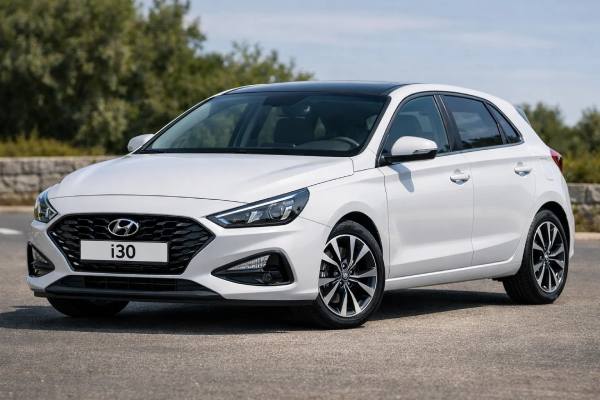
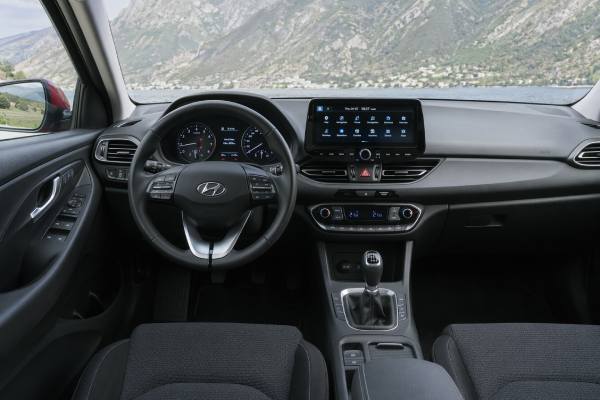
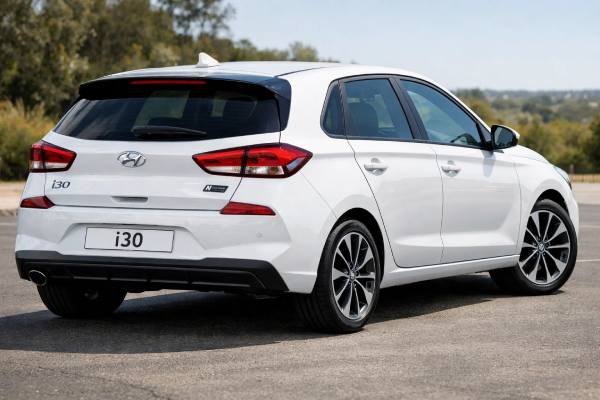
The facelifted Hyundai i30 PD with the 1.0 T-GDi sits in the sensible middle of the family hatchback class. It is not the fastest car here, and it does not try to be. What it offers instead is a balanced mix of compact exterior size, honest cabin packaging, low running costs, and a small turbo petrol engine that feels stronger than its displacement suggests once it is on boost. The 2020 facelift also mattered more than the styling alone implies. Hyundai added more active-safety tech, improved infotainment, and broadened availability of the 48-volt mild-hybrid system. For buyers in 2026 looking at used examples, that makes this version more appealing than an early pre-facelift car. The key question is not whether the i30 1.0 T-GDi is fundamentally good. It usually is. The real question is which gearbox, trim, and service history give you the best ownership experience over the long term.
Owner Snapshot
- It is spacious for its footprint and still easy to park in tight urban use.
- The 1.0 turbo feels more flexible than an old-school naturally aspirated 1.0, especially from 1,500 rpm upward.
- Facelift cars gained stronger safety tech and better infotainment, which lifts daily usability.
- The 7-speed dual-clutch and 48-volt versions deserve a closer test drive and a full dealer-history check.
- A sensible service rhythm is every 10,000 to 15,000 km or 12 months for oil and filter changes.
Guide contents
- Hyundai i30 PD facelift profile
- Hyundai i30 PD specs and data
- Hyundai i30 PD trims and safety
- Reliability and known faults
- Maintenance and used-buying
- Road manners and economy
- How it stacks up to rivals
Hyundai i30 PD facelift profile
For this 2020 to 2024 facelift, Hyundai did not reinvent the i30. It refined it in the areas that matter most to everyday owners. The hatchback kept its familiar front-wheel-drive layout, compact exterior dimensions, and practical five-door body, but it gained a cleaner nose, revised lighting, updated digital interfaces, and a broader SmartSense safety package. That matters because the i30’s appeal has always been rooted in calm, usable engineering rather than headline numbers.
The 1.0 T-GDi variant is the entry turbo petrol in the facelift range. In Hyundai’s own literature it is listed as a 120 PS unit, which equals 88.3 kW and roughly 118 hp in strict conversion terms. In the used market it is commonly rounded up and advertised as 120 hp, so both figures are widely seen. Either way, the character is the same: a small three-cylinder turbo with useful mid-range torque and enough output to carry the hatchback body without feeling strained in normal driving.
One reason this facelift version is worth singling out is the wider spread of powertrain choices. Early facelift cars could be found with a regular 6-speed manual or a 7-speed dual-clutch transmission, while mild-hybrid versions added Hyundai’s 6-speed intelligent manual transmission, or iMT, as an efficiency-focused option. That gives buyers a meaningful choice. The standard manual is the simplest route. The DCT is more convenient in traffic but needs a more careful road test. The 48-volt cars are attractive on paper because they shave fuel use and smooth out stop-start operation, but they also add electrical complexity.
Inside, the facelift improved the i30 more than many buyers expect. Depending on trim and year, you can find an 8-inch or 10.25-inch center display, digital cluster features, wireless smartphone integration on some versions, and more complete lane and collision-assistance functions than many older rivals offered as standard. The 2024 update tightened this again with more standard LED lighting, broader USB-C support, and further safety-feature expansion, although market specification varies.
In short, the facelifted i30 1.0 T-GDi is best understood as a rational, well-equipped compact hatch. It is strong on comfort, visibility, packaging, and ownership logic. Its weaknesses are smaller: the engine is willing rather than fast, and the dual-clutch version is less naturally smooth at crawl speeds than a torque-converter automatic.
Hyundai i30 PD specs and data
The table below focuses on the European-market facelift hatchback with the 1.0 T-GDi engine, including both standard and 48-volt mild-hybrid variants where relevant.
| Category | Hyundai i30 PD 1.0 T-GDi facelift data |
|---|---|
| Engine code family | 1.0 T-GDi petrol three-cylinder |
| Engine layout and cylinders | Inline-3, 3 cylinders, DOHC D-CVVT, 4 valves per cylinder |
| Bore × stroke | 71.0 × 84.0 mm (2.80 × 3.31 in) |
| Displacement | 1.0 L (998 cc) |
| Induction | Turbocharged |
| Fuel system | Direct injection |
| Compression ratio | 10.5:1 |
| Max power | 120 PS market rating; 88.3 kW at 6,000 rpm, about 118 hp in strict conversion |
| Max torque | 172 Nm (127 lb-ft) at 1,500 to 4,000 rpm |
| Timing drive | Chain |
| Rated efficiency | About 5.3 to 6.4 L/100 km depending on gearbox, wheel size, and 48V system |
| Real-world highway at 120 km/h | Roughly 6.0 to 6.8 L/100 km in normal conditions |
| Transmission and driveline | Data |
|---|---|
| Transmission | 6-speed manual, 6-speed iMT on mild hybrid, or 7-speed dual-clutch automatic |
| Drive type | Front-wheel drive |
| Differential | Open differential |
| Chassis and dimensions | Data |
|---|---|
| Front suspension | MacPherson strut with anti-roll bar |
| Rear suspension | Torsion-beam type rear axle on 1.0 models |
| Steering | Rack-and-pinion with electric assist |
| Brakes | Front ventilated discs, rear discs |
| Popular tyre sizes | 195/65 R15, 205/55 R16, 225/45 R17, 225/40 R18 |
| Ground clearance | 140 mm (5.5 in) |
| Length | 4,340 mm (170.9 in) |
| Width | 1,795 mm (70.7 in) |
| Height | 1,455 mm (57.3 in) |
| Wheelbase | 2,650 mm (104.3 in) |
| Turning circle | About 10.6 m kerb-to-kerb, based on 5.3 m turning radius (34.8 ft) |
| Running-order weight | Roughly 1,291 to 1,478 kg (2,846 to 3,258 lb), depending on spec |
| GVWR | Roughly 1,800 to 1,840 kg (3,968 to 4,057 lb) |
| Fuel tank | 50 L (13.2 US gal / 11.0 UK gal) |
| Cargo volume | 395 L seats up / 1,301 L seats folded, VDA (14.0 / 45.9 ft³) |
| Performance and capability | Data |
|---|---|
| 0–100 km/h | 11.2 s |
| 0–62 mph | 11.2 s |
| Top speed | 196 km/h (122 mph) |
| Braked towing | 1,000 kg (2,205 lb) manual or iMT; 700 kg (1,543 lb) DCT |
| Unbraked towing | 500 kg (1,102 lb) manual or iMT; 300 kg (661 lb) DCT |
| Payload | Roughly 360 to 510 kg depending on exact trim and gearbox |
| Fluids and service items | Practical note |
|---|---|
| Engine oil | Use VIN-specific Hyundai service documentation; market-approved full-synthetic grades are commonly 0W-30 or 5W-30 in Europe |
| Coolant | Use Hyundai-approved coolant mix only; exact fill varies by engine and market |
| Transmission fluid | DCT and manual gearboxes use different fluids; check by VIN before service |
| A/C refrigerant | R-1234yf; later hatchback rescue data shows about 450 g (15.9 oz), but verify by VIN |
| Key torque specs | Wheel, brake, and chassis torque values vary with hardware package and should be confirmed from workshop data |
These figures tell the main story. The i30 1.0 is not a hot hatch, but it is not underpowered for normal family use either. Its modest weight, longish torque plateau, and sensible gearing make it feel more alert than the 11.2-second 0–100 figure suggests. The broad efficiency range mainly reflects wheels, transmission choice, and whether the car carries the 48-volt system.
Hyundai i30 PD trims and safety
Trim strategy depended on country, but the facelift i30 1.0 T-GDi usually appeared in practical mainstream grades before stepping into more premium or sport-themed versions. In markets such as the UK, common facelift trim names included SE Connect, Premium, and N Line. Other European countries used different naming, but the equipment logic stayed similar.
At the lower-middle end, SE Connect-type cars gave the i30 a strong value case. You typically got the 8-inch infotainment system, smartphone connectivity, alloy wheels, rear parking assistance, a reversing camera, and a useful bundle of active safety features. For many buyers, this is the sweet spot because it avoids expensive extras while still delivering the core facelift improvements.
Premium-type cars pushed the i30 into a more upscale daily-driver role. These often added larger wheels, the bigger 10.25-inch navigation screen, digital instrument features, dual-zone climate control, heated front seats, heated steering wheel, privacy glass, keyless start, and wireless charging. If you want the facelift to feel meaningfully newer than a pre-facelift car, this is usually the grade where that difference becomes obvious.
N Line versions are mostly about appearance and cabin atmosphere rather than major mechanical change on this engine. Expect sportier bumpers, interior trim changes, different seats, and wheel packages. On the used market, check tyre size carefully, because larger rims look better but usually bring a firmer ride and slightly higher tyre costs.
Safety is one of the facelift’s real strengths. Euro NCAP’s rating for the i30 hatchback remained a five-star result, and the 1.0 T-GDi manual hatchback was explicitly within the tested family. The published category scores were 88 percent for adult occupant protection, 84 percent for child occupant protection, 64 percent for vulnerable road users, and 68 percent for safety assist. That rating later aged out of validity in 2024, which reflects test-cycle age rather than a sudden problem with the car.
In day-to-day terms, facelift equipment is more important than the star count alone. Depending on trim and year, features could include autonomous emergency braking, lane keeping, lane follow assist, driver attention warning, blind-spot collision warning, rear cross-traffic warning, intelligent speed limit support, and, on later cars, broader front-collision functionality and highway-oriented assistance. The 2024 update increased standard LED lighting and widened the availability of newer assistance features in some markets.
If you replace the windshield, front radar, steering angle sensor, or camera-related components, ask whether ADAS calibration was done properly. This is an easy detail to miss on a used car, and it matters more than buyers often realize.
Reliability and known faults
In broad terms, the facelift i30 1.0 T-GDi has a better ownership reputation than many people expect from a downsized turbo engine. There is no single widely recognized catastrophic flaw that defines the model. Most problems fall into the normal modern-car pattern: software sensitivity, gearbox behavior, electrical niggles, and wear items that become more obvious when servicing has been stretched.
The best way to judge it is by prevalence and cost.
Common, usually low to medium cost
- Stop-start and battery-related quirks: Weak 12-volt batteries can trigger start-stop refusal, random warnings, or poor cold-morning behavior. On 48-volt cars, a tired support battery or software mismatch can make the mild-hybrid system feel inconsistent.
- Parking sensors, camera, and driver-assist warnings: These are often caused by calibration, contamination, or battery-voltage instability rather than a major failure.
- Suspension noise: Drop links, bushes, and sometimes alignment-sensitive tyre wear are normal used-car items, especially on larger wheel packages.
Occasional, medium cost
- 7-speed DCT hesitation or shudder: Symptoms are jerky take-up, poor low-speed smoothness, or a feeling that the gearbox is unsure in crawling traffic. Root causes range from software behavior to clutch wear or driving conditions that are hard on dry-clutch systems. Remedy starts with software checks and adaptation, then moves to clutch-related work if needed.
- Misfire under load: Rough running, hesitation, or an engine light can point to ignition coils, spark plugs, or an air leak in the boost path. Most cases are fixable without major engine work.
- Short-trip soot and petrol particulate filter stress: Cars used mostly for cold urban hops may need a longer hot drive now and then to complete self-cleaning routines.
Rare to occasional, higher-cost potential
- Turbo or boost-control issues: If the car feels flat, surges oddly, or overboosts, inspect actuators, pipework, and sensors before assuming the turbocharger itself has failed.
- Cooling-system leaks or thermostat behavior: Not a signature defect, but any unexplained coolant loss needs a prompt inspection.
- Direct-injection intake deposits at higher mileage: This is a long-term modern DI trait rather than an i30-only defect, but short-trip use can accelerate it.
For mild-hybrid cars, software updates matter. Hyundai’s service network explicitly checks for recommended updates during routine servicing, and that is useful here. If a seller cannot show dealer or specialist history, ask directly whether engine, gearbox, infotainment, and ADAS software were kept current.
Recall and service-campaign history is VIN-specific. Public details are not neatly organized by one universal European list for this exact variant, so the safest route is practical: run the VIN through Hyundai’s official recall checker and ask for dealer printouts showing completed campaigns. For a used buy, that is more valuable than relying on generic forum claims.
Maintenance and used-buying
The i30 1.0 T-GDi responds well to boring, regular maintenance. If you want the best chance of trouble-free ownership, shorten service intervals rather than stretching them. Small turbo petrol engines reward clean oil, healthy ignition parts, and a strong battery.
A practical ownership schedule looks like this:
| Item | Practical interval |
|---|---|
| Engine oil and filter | Every 10,000 to 15,000 km or 12 months |
| Cabin air filter | Every 12 months or about 15,000 to 20,000 km |
| Engine air filter | Inspect annually, replace around 30,000 km sooner in dusty use |
| Spark plugs | Around 60,000 to 75,000 km is a sensible working target |
| Brake fluid | Every 2 to 4 years depending on market schedule and moisture test |
| Coolant | Inspect annually; replacement interval varies by market and can be much longer than older cars |
| Tyre rotation and tread check | About every 10,000 to 13,000 km |
| Wheel alignment | Check yearly or after pothole damage and uneven wear |
| 12V battery test | Annually after year 3; replacement often falls in the 4 to 6 year window |
| DCT health check | During every service and test drive, especially if the car lives in city traffic |
| Timing chain | No routine replacement interval, but inspect if noisy or if timing-correlation faults appear |
For the 48-volt mild-hybrid versions, add basic checks on system charging behavior, warning lights, and the consistency of stop-start operation. There is no reason to fear the mild-hybrid setup, but you do want evidence that the car was not simply driven until warning lamps appeared.
Used-buyer inspection priorities should be simple and disciplined:
- Ask for a complete service history, not just stamps.
- Confirm recall and service-campaign completion by VIN.
- Cold-start the engine and listen for rattles, unstable idle, or misfire.
- Test the DCT in stop-go driving, reverse maneuvers, and gentle hill starts.
- Check for uneven tyre wear, especially on 17-inch and 18-inch cars.
- Inspect for accident signs around bumper sensors, windshield replacement, and front-camera mounting.
- Verify all driver-assist warnings are absent and the camera image is clean.
- Check coolant level, oil condition, and any evidence of poor-quality repairs.
The best ownership bet for long-term simplicity is usually the standard 6-speed manual. The DCT can still be a good choice, but only if it behaves cleanly and has been serviced by the book. Premium trim is attractive if you want the nicer infotainment and comfort features; SE Connect-type cars make the strongest value play. Overall durability looks good when the car is maintained on time.
Road manners and economy
From behind the wheel, the facelift i30 1.0 T-GDi feels mature rather than exciting. That is a compliment. The steering is light at parking speeds, stable on the motorway, and predictable on a back road. It does not have the sharp front-end eagerness of the best Ford Focus versions, but it is tidy, reassuring, and easy to place. Ride quality is one of the i30’s stronger points on 16-inch and many 17-inch wheel packages. Step up to larger wheels and the car looks better, but road noise and sharp-edge impact become more noticeable.
The engine suits the car better than the three-cylinder label suggests. Around town, it pulls cleanly once the turbo is awake and does not require constant downshifts if you stay within the torque band. There is some expected low-rpm softness and a faint three-cylinder character, but it is never coarse in a way that spoils the car. On the open road, the small engine has enough reserve for normal overtakes, though you notice the gap to stronger 1.5-litre rivals when the car is fully loaded.
Gearbox choice changes the verdict. The 6-speed manual feels the most natural and often the most satisfying. The 6-speed iMT on mild-hybrid cars is clever and efficient, though it feels slightly more filtered than a conventional manual. The 7-speed dual-clutch is fast enough once moving, but in tight traffic it can hunt, hesitate, or feel less fluid than a conventional automatic.
Real-world economy is respectable. In mixed driving, expect about 5.5 to 6.5 L/100 km if the car is healthy and driven sensibly. Frequent short trips, winter use, and heavy traffic can push that into the 6.8 to 7.8 range. At a true 120 km/h motorway cruise, many owners will see roughly 6.0 to 6.8 L/100 km depending on tyres, weather, and gearbox. Mild-hybrid versions can save a little fuel, but the gain is usually modest rather than dramatic.
Straight-line performance is adequate rather than strong. The official 0–100 km/h figure of 11.2 seconds sounds modest, yet the car rarely feels painfully slow in everyday use because peak torque arrives early. That makes it a better daily companion than the raw numbers suggest.
How it stacks up to rivals
The facelift i30 1.0 T-GDi sits in a crowded part of the market, so context matters. Against the Ford Focus 1.0 EcoBoost, the Hyundai usually loses on steering feel and chassis sparkle. The Focus is the more engaging car when driven hard. The i30 answers with a calmer cabin, straightforward ergonomics, and often a stronger equipment-for-money case.
Against the Volkswagen Golf 1.0 TSI or eTSI, the Hyundai again plays the value card. The Golf tends to feel more polished in powertrain refinement and perceived cabin finish, and its badge still helps resale in many regions. The i30 is usually easier to buy well, easier to understand, and often cheaper to equip to the same level. For many private owners, that matters more than the last five percent of refinement.
The Kia Ceed 1.0 T-GDi is the closest conceptual rival because it shares much of the same corporate engineering philosophy. In practice, choice often comes down to trim, price, warranty transfer rules, and the exact condition of the used example. The i30 usually has the slightly more conservative feel; the Ceed can present a slightly younger image depending on trim.
Other alternatives include the Opel Astra 1.2 Turbo, Peugeot 308 1.2 PureTech, Renault Megane TCe, and Toyota Corolla 1.2T where available. Some of those rivals bring stronger styling or a more characterful cabin, but they do not always beat the Hyundai on straightforward ownership logic.
That is the i30’s real advantage. It is not the class leader in any single dramatic way, but it avoids major weaknesses. It is roomy enough, safe enough, efficient enough, and modern enough. The facelift added just enough technology to keep it competitive, while the 1.0 turbo keeps running costs sensible. If you want a used family hatchback that is easy to live with and does not try too hard, the facelift i30 1.0 T-GDi remains a very credible buy.
References
- New Hyundai i30: sleeker, safer, and more efficient 2020 (Press Kit)
- Bolder and more high-tech: i30 gets update 2024 (Press Release)
- EuroNCAP | Hyundai i30 2020 (Safety Rating)
- Home | Hyundai Recalls & Service Campaigns 2026 (Recall Database)
- Hyundai Owners manuals | Hyundai Motor UK 2026 (Owner’s Manual)
Disclaimer
This article is for informational purposes only and is not a substitute for professional diagnosis, repair, or VIN-specific workshop guidance. Specifications, torque values, service intervals, software updates, and procedures can vary by VIN, market, gearbox, trim, and production date, so always verify the exact details against official Hyundai service documentation for the vehicle in front of you.
If this guide helped you, please consider sharing it on Facebook, X, or another social platform to support our work.