
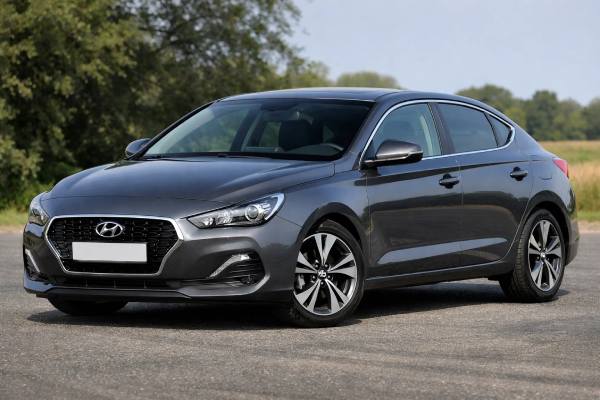
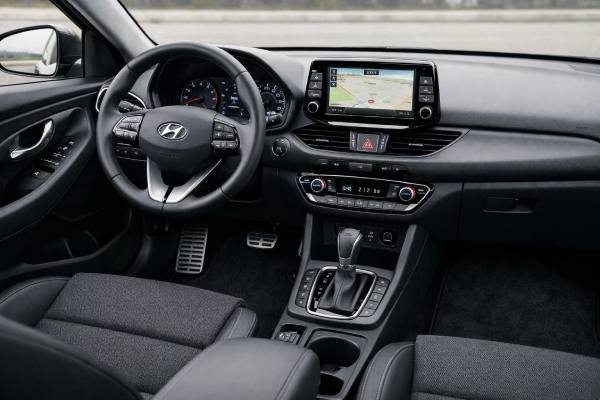
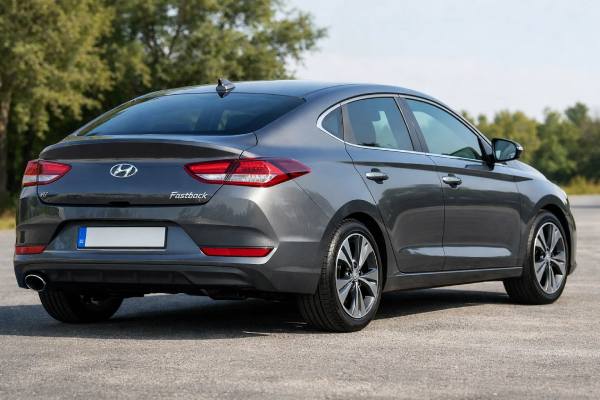
The Hyundai i30 Fastback PD 1.6 CRDi 136 is one of the more unusual diesel family cars from its period. It gives you the same basic engineering as the regular i30, but wraps it in a lower, longer, coupe-style five-door body that feels more distinctive without becoming impractical. For the right owner, that is the appeal: strong mid-range diesel torque, relaxed motorway manners, useful luggage space, and cleaner styling than many ordinary hatchbacks. The detail that matters most is that this year span covers two slightly different versions. Late-2018 and 2019 cars use the Euro 6d-Temp 1.6 CRDi, while the 2020 facelift moved the 136 hp diesel to a 48-volt mild-hybrid setup in many markets. Both can be excellent long-distance cars. Both also need sensible maintenance and the right usage pattern, because this is still a modern emissions-controlled diesel. If you want an i30 with more style than the hatchback but fewer compromises than many crossovers, the Fastback deserves a serious look.
Essential Insights
- The Fastback combines strong diesel cruising ability with a more distinctive shape than the standard i30 hatch.
- Mid-range torque, stable high-speed behavior, and low fuel use are its core strengths.
- Cargo space is still useful at 450 L, though later 48-volt cars lose some boot volume under the floor.
- Repeated short trips can accelerate DPF, EGR, and AdBlue-related trouble on neglected cars.
- A 12-month or 15,000 km oil service routine is the safer long-term habit, even if official schedules can be longer.
Explore the sections
- Hyundai i30 Fastback in context
- Hyundai i30 Fastback hard numbers
- Hyundai i30 Fastback equipment and safety
- Reliability patterns and known fixes
- Maintenance plan and purchase advice
- Driving impressions and fuel use
- Coupe-style rivals compared
Hyundai i30 Fastback in context
The i30 Fastback is not just an i30 hatch with a different rear panel. Hyundai gave it a distinct role in the range. The body is longer at 4,455 mm, lower at 1,425 mm, and shaped to look more like a compact five-door coupe than a conventional family hatchback. That change gives the car a more elegant profile, and it also shifts the way it feels on the road. The Fastback sits lower than the regular i30 five-door and carries a slightly more planted character at speed, which suits the diesel engine well.
The diesel story is a little more complicated than the badge suggests. In many markets, the Fastback first arrived with petrol engines, and the 136 hp 1.6 CRDi joined later in the 2018 model-year update. That means buyers looking at early registration dates should always verify the actual engine and emissions package rather than assuming every 2018 Fastback offered the same setup. By late 2018 and through 2019, the 1.6 CRDi 136 had become a proper Fastback option, usually with either a 6-speed manual or the 7-speed dual-clutch transmission. In 2020, the facelift added a 48-volt mild-hybrid system to the 136 hp diesel in many European markets, along with updated safety tech, refreshed styling, and slightly different packaging.
In ownership terms, the car makes the most sense for drivers who do real distance. This is a very good motorway and mixed-route commuter. It cruises quietly for a diesel, carries its speed with little effort, and feels less strained than many small turbo petrol rivals once the road opens up. The 136 hp figure does not make it sound quick, but the torque delivery matters more in real life. Overtaking is easy enough, climbing grades with passengers aboard is no problem, and the car feels composed rather than busy.
The Fastback also lands in an interesting practical space. It is not as outright useful as the i30 Wagon, but it is more versatile than its styling suggests. The regular diesel Fastback offers a 450 L VDA boot, which is enough for airport luggage, weekly family use, or a couple’s road trip with no drama. Rear headroom is a little tighter than in the hatch, and the lower roofline is part of the deal, but the trade still works for many buyers because the car looks sharper without becoming hard to live with.
Its biggest ownership caveat is not body style but powertrain profile. Like most modern diesels, it does best when driven long enough to stay warm and complete emissions-system housekeeping. Buy it for the way you actually use a car, not for the brochure mpg number alone.
Hyundai i30 Fastback hard numbers
The most useful way to read the Fastback diesel’s specifications is to split them into pre-facelift 2018–2019 data and facelift-era 2020 data. The core shape, wheelbase, and road behavior remain familiar, but the later 48-volt mild-hybrid version adds some torque, electrical hardware, and a reduction in luggage volume because of the battery packaging.
| Powertrain and engine | 2018–2019 1.6 CRDi 136 | 2020 1.6 CRDi 136 48V |
|---|---|---|
| Engine layout | Inline-4 turbo diesel, transverse | Inline-4 turbo diesel, transverse |
| Engine family | 1.6 CRDi Euro 6d-Temp | 1.6 CRDi Euro 6d mild hybrid |
| Displacement | 1.6 L (1,598 cc) | 1.6 L (1,598 cc) |
| Bore × stroke | 77.0 × 85.8 mm (3.03 × 3.38 in) | 77.0 × 85.8 mm (3.03 × 3.38 in) |
| Valvetrain | DOHC, 4 valves per cylinder | DOHC, 4 valves per cylinder |
| Timing drive | Chain on the 2018 German technical sheet | Belt on the facelift 48V technical sheet |
| Induction | VGT turbo and intercooler | VGT turbo and intercooler |
| Fuel system | Common-rail direct injection | Common-rail direct injection |
| Compression ratio | 15.9:1 | 15.9:1 |
| Max power | 136 hp (100 kW) @ 4,000 rpm | 136 hp (100 kW) @ 4,000 rpm |
| Max torque | 280 Nm manual, 320 Nm DCT | 280 Nm iMT, 320 Nm DCT |
| Mild-hybrid system | none | 48 V, 12 kW starter-generator, 0.44 kWh battery |
| Transmission | 6MT or 7DCT | 6iMT or 7DCT |
| Drive type | FWD | FWD |
| Differential | Open | Open |
| Chassis and dimensions | Fastback diesel |
|---|---|
| Front suspension | MacPherson strut |
| Rear suspension | Multi-link |
| Steering | Electric rack and pinion |
| Steering ratio | 13.4:1 |
| Turns lock-to-lock | 2.57 |
| Front brakes | 288 mm discs, or 305 mm on higher trims |
| Rear brakes | 272 mm discs, or 284 mm on higher trims |
| Most common tyre sizes | 225/45 R17 and 225/40 R18 |
| Ground clearance | 135 mm (5.3 in) |
| Length | 4,455 mm (175.4 in) |
| Width | 1,795 mm (70.7 in) |
| Height | 1,425 mm (56.1 in) |
| Wheelbase | 2,650 mm (104.3 in) |
| Turning circle | 10.6 m (34.8 ft) |
| Fuel tank | 50 L (13.2 US gal / 11.0 UK gal) |
| Cargo volume | 450 / 1,351 L (15.9 / 47.7 ft³), VDA |
| Cargo volume, 48V version | 405 / 1,306 L (14.3 / 46.1 ft³), VDA |
| Performance and efficiency | 2018–2019 1.6 CRDi 136 | 2020 1.6 CRDi 136 48V |
|---|---|---|
| 0–100 km/h | 10.4 s manual / 10.1 s DCT | 10.4 s iMT / 10.1 s DCT |
| Top speed | 200 km/h (124 mph) | 200 km/h (124 mph) |
| Combined official fuel use | 4.4 manual / 4.3 DCT L/100 km | 4.4 iMT / 4.4 DCT L/100 km |
| Combined mpg US / UK | about 53.5 / 65.7 to 54.7 / 67.0 | about 53.5 / 64.2 |
| Real-world highway at 120 km/h | roughly 4.8–5.6 L/100 km | roughly 4.7–5.4 L/100 km |
| Towing, braked | 1,500 kg (3,307 lb) | 1,500 kg (3,307 lb) |
| Towing, unbraked | 650 kg (1,433 lb) | 650 kg (1,433 lb) |
| Payload | roughly 338–565 kg depending on trim and transmission | roughly 338–500 kg depending on trim and transmission |
| Fluids and service capacities | 2018–2019 1.6 CRDi 136 | 2020 1.6 CRDi 136 48V |
|---|---|---|
| Engine oil | 4.4 L with filter | 4.4 L with filter |
| Coolant | 6.7 L | 7.3 L |
| Manual gearbox oil | 1.8 L | 1.6 L |
| 7DCT fluid | 2.0 L | 2.0 L |
| Urea / AdBlue | 12 L | 12 L |
| A/C refrigerant | verify under-bonnet label | verify under-bonnet label |
| A/C compressor oil | verify under-bonnet label | verify under-bonnet label |
| Key torque spec | wheel nuts 107–127 Nm (79–94 lb-ft) | wheel nuts 107–127 Nm (79–94 lb-ft) |
| Safety and assistance | Fastback diesel |
|---|---|
| Euro NCAP | 5 stars |
| Adult occupant protection | 88% |
| Child occupant protection | 84% |
| Vulnerable road user | 64% |
| Safety assist | 68% |
| IIHS | not applicable to this model line |
| ADAS availability | market and trim dependent; FCA, LKA, DAW, HBA, blind-spot systems, smart cruise, and later LFA, RCA, LVDA, and upgraded BCA/FCA on facelift cars |
Hyundai i30 Fastback equipment and safety
The Fastback’s trim structure changed by country, but the broad pattern stayed consistent. Earlier 136 hp diesel cars were commonly sold in mid- and upper-level trims such as Style and Premium, often with 17-inch or 18-inch wheels and a stronger feature count than an entry-level hatchback. By 2020, the facelift range pushed harder into N Line and Prime-style equipment combinations, with the diesel often positioned as a higher-spec choice rather than a bargain-basement fleet engine.
For used buyers, that matters because the Fastback usually came better equipped than a comparable i30 hatch diesel. The common differences include:
- larger infotainment screens and navigation,
- heated seats and better trim materials,
- larger wheels and bigger brakes,
- more frequent use of the 7DCT,
- and a wider spread of SmartSense features.
The trim sweet spot is usually a mid- or upper-mid car on 17-inch wheels. That package keeps the Fastback’s sharp look, preserves decent ride quality, and avoids some of the tyre-cost and firmness penalty of the 18-inch setups. On earlier cars, higher trims could add the 305 mm front and 284 mm rear brake package, which is a worthwhile mechanical difference rather than just a styling one.
Quick identifiers help when browsing listings:
- 17-inch cars usually ride better and cost less to keep in tyres.
- Premium-level cars often add more comfort equipment and the larger brake setup.
- N Line models are easy to spot from their more aggressive bumpers, darker detailing, sport seats, and unique wheel designs.
- Facelift cars usually show slimmer lamps, a revised grille, updated digital interfaces, and a more modern ADAS menu structure.
Safety is one of the Fastback’s stronger arguments. Hyundai positioned it as a style-led car without giving up the i30 family’s practical safety strengths. Launch material highlighted a strong standard safety package, and the Euro NCAP five-star result remains an important ownership positive. The platform uses a rigid passenger cell, defined crumple zones, door side-impact protection, and the usual modern safety basics such as ABS, ESC, hill-start assist, and multiple airbags. Rear ISOFIX mounts make it family-usable, even if the roofline says “style” before it says “family car.”
ADAS is where year and market differences matter most. Earlier Fastbacks were promoted with Autonomous Emergency Braking with pedestrian recognition, Driver Attention Alert, Blind Spot Detection, Lane Keeping Assist, High Beam Assist, and available Smart Cruise Control. Facelift cars added a more advanced SmartSense package, including Lane Following Assist, Rear Collision-avoidance Assist, Leading Vehicle Departure Alert, improved Blind-Spot Collision-Avoidance Assist, and Front Collision-Avoidance Assist that could recognize cyclists in addition to pedestrians.
The caution for buyers is calibration. If the car has had a replacement windscreen, front bumper repair, or even minor front-end accident work, ask whether the camera and radar systems were recalibrated. A badly repaired Fastback can still look stylish in photos while quietly carrying misaligned safety hardware. In this model, trim matters, but correct operation matters more.
Reliability patterns and known fixes
The i30 Fastback 1.6 CRDi 136 is not known for one single catastrophic flaw. Instead, its reliability pattern is shaped by modern diesel hardware, transmission choice, and maintenance history. The body itself is not the problem. The engine and aftertreatment system are where ownership stories diverge.
A practical map of the trouble spots looks like this:
- Common and low to medium cost: DPF loading from short-trip use, EGR contamination, tired 12 V batteries, worn front brakes, and suspension link wear.
- Occasional and medium cost: AdBlue warnings, NOx sensor faults, intake soot, boost or vacuum-control issues, and jerky low-speed behavior from the 7DCT.
- Rare but expensive: turbo damage after neglected oil services, chronic emissions faults ignored for too long, injector trouble, or major dual-clutch repair.
The most typical symptom chain is simple:
- Warning light plus rising fuel use plus frequent cooling-fan operation after shutdown usually points to interrupted DPF regeneration.
- Hesitation, reduced power, or limp mode can mean EGR contamination, soot loading, or emissions-sensor faults.
- Rough creeping or shudder on DCT cars often starts as calibration or wear-related clutch behavior, especially on cars driven mainly in stop-start traffic.
- Repeated AdBlue messages on facelift cars can come from level, dosing, or sensor issues and should be fixed early rather than reset and ignored.
One especially useful detail for this year range is the timing-drive change shown in the official technical sheets. The 2018 German Fastback diesel data shows a chain-driven setup, while the facelift 48-volt technical data shows a belt-driven arrangement. That means owners and buyers should not assume timing service needs are identical across all 2018–2020 cars. Verify the exact VIN, engine version, and market documentation before making any chain-versus-belt service decision.
Software support matters too. Dealer updates can improve driveability, dual-clutch behavior, infotainment stability, and some emissions-related faults. A car with proof of dealer servicing is worth more here than on a simpler old diesel because it is more likely to have had the needed calibrations applied. On facelift cars, software and sensor health matter even more because the 48-volt system adds an extra layer of integration.
Corrosion is not usually the car’s headline weakness, but used examples still deserve an underside inspection in cold-climate markets. Check brake pipes, rear suspension hardware, underbody seams, and the lower edges of repaired panels. Inside, look for signs of water entry around the tailgate area after poor accident repair or blocked drains.
For a pre-purchase inspection, request:
- Full service history with correct oil grade.
- Proof that emissions or AdBlue warnings were actually repaired.
- Cold-start check with no fault lights.
- Smooth manual clutch take-up or clean DCT low-speed behavior.
- Confirmation that all ADAS functions work and show no stored errors.
- VIN recall and service-campaign check through Hyundai’s official system.
A healthy motorway-used Fastback can be a very good buy. A low-mile city diesel with warning-light history often is not.
Maintenance plan and purchase advice
This is one of those cars where ownership cost stays reasonable if you maintain it early and sensibly. Follow only the longest possible schedule, and the diesel Fastback can become a false economy. Service it with some margin, and it is generally easy to live with.
A practical maintenance plan looks like this:
| Item | Practical interval |
|---|---|
| Engine oil and filter | every 12 months or 15,000 km |
| Engine air filter | inspect yearly, replace around 30,000 km |
| Cabin filter | every 12 months or 15,000–20,000 km |
| Fuel filter | around 30,000–60,000 km depending on schedule and fuel quality |
| Brake fluid | every 2 years |
| Coolant | inspect yearly; replace by VIN-specific schedule or if history is unclear |
| Manual gearbox oil | inspect for leaks; a refresh around 100,000–120,000 km is prudent |
| 7DCT fluid | inspect behavior at every service and follow exact transmission guidance |
| Aux belt and hoses | inspect every service |
| Brake pads and discs | inspect every service |
| Tyre rotation and alignment | check around every 10,000–15,000 km |
| 12 V battery | test yearly after year four |
| AdBlue | keep topped up and investigate repeated warnings immediately |
| Timing components | verify by VIN whether your car uses chain or belt, then service accordingly |
The official service literature for these cars can show longer intervals, including 30,000 km or two years for regular maintenance in some markets. That is why used buyers should look beyond the stamp count and ask how the car was used. A diesel doing long highway work can tolerate the official schedule better than one doing repeated short starts in winter traffic. In real ownership, an annual oil service is cheap protection.
Fluid and capacity details worth knowing:
- Engine oil capacity is about 4.4 L with filter.
- Coolant is about 6.7 L on earlier cars and about 7.3 L on the facelift 48V version.
- Manual gearbox oil is about 1.8 L on earlier cars and 1.6 L on later facelift data.
- The dual-clutch gearbox uses about 2.0 L.
- AdBlue capacity is 12 L.
- Wheel nut torque falls in the 107–127 Nm range.
The buying checklist should focus on the real weak points, not just cosmetics:
- cold-start smoothness,
- no stored fault lights,
- documented oil changes,
- evidence of steady rather than purely urban use,
- clutch or DCT behavior in traffic,
- healthy air-conditioning,
- even tyre wear,
- and no signs of accident repair around the front sensors or rear hatch opening.
The best used examples are usually 2019 or 2020 cars in mid- to upper-level trims on 17-inch wheels. A facelift 2020 car gives you the newest safety and connectivity features, but it also adds 48-volt complexity and reduces boot volume. A good late-2018 or 2019 non-mild-hybrid diesel can be the smarter long-term value if the history is excellent.
Long-term durability is respectable when the car gets regular warm running, quality oil, and fast attention to emissions warnings. It becomes mediocre only when owners treat it like an old-school diesel that can ignore short-trip stress and delayed servicing.
Driving impressions and fuel use
On the road, the Fastback is one of the more convincing versions of the PD-platform i30. It feels slightly more tied down than the regular five-door, and that suits the 136 hp diesel very well. Straight-line stability is strong, the steering is light but precise enough, and the car settles into a motorway rhythm with very little effort. This is not a hot hatch, but it is a mature high-speed companion.
The powertrain is defined by usable torque rather than drama. From low revs, the engine pulls with the kind of effortlessness that still makes sense in a diesel family car. The manual suits that character nicely because it lets you surf the mid-range without fuss. The 7DCT is more relaxed on long drives and can feel slightly stronger in rolling acceleration, but it is still the transmission most likely to feel awkward in parking or crawling traffic when wear or calibration is not ideal.
The 2020 facelift 48-volt diesel adds only a small change to the basic feel. It does not turn the car into a hybrid in the way a full hybrid feels different. What it does do is smooth some stop-start behavior, add a little extra polish in transitions, and support slightly better efficiency in the right conditions. It also allows the intelligent manual transmission setup on some cars, which can feel more unusual at first but works well once you adapt.
Ride quality is one of the Fastback’s quieter strengths. On 17-inch wheels it has a well-judged balance between control and comfort. The suspension is firm enough to support the lower body style, but not harsh in the way some style-led trims can become. The 18-inch cars look excellent, but they also transmit more sharp-edge impacts and cost more in tyres.
Real-world fuel use is a major reason to buy this model:
- City: about 5.9–7.1 L/100 km in normal use, worse in cold weather and short-trip driving.
- Highway at 100–120 km/h: about 4.7–5.6 L/100 km.
- Mixed driving: about 5.0–5.8 L/100 km for a healthy, well-maintained car.
- Moderate towing or full-load motorway travel: expect roughly 15–30 percent more fuel use depending on speed, terrain, and wind.
That translates to roughly the low- to mid-40s mpg US in mixed use, and clearly better numbers on long steady trips. For drivers who regularly cover distance, that remains a real ownership advantage over many petrol alternatives.
The other performance point that matters is not 0–100 km/h, even though around 10.1–10.4 seconds is respectable enough. It is the way the Fastback carries speed between 80 and 120 km/h. That is where the diesel feels most natural. It is easy, calm, and confident, especially with two people and luggage aboard.
Overall, the Fastback 1.6 CRDi 136 feels like a stylish long-distance tool. It does not try to disguise its diesel nature. It simply uses it well.
Coupe-style rivals compared
The Hyundai i30 Fastback 1.6 CRDi 136 occupies a slightly odd corner of the market because there were never many true direct rivals. It is not a standard hatch, not a full estate, and not a premium coupe-sedan. That is part of its appeal, but it also means buyers should compare it by use case rather than body-label alone.
The closest mainstream comparison is the regular i30 hatchback diesel. The hatch is a little easier to park, slightly more upright inside, and easier to find on the used market. The Fastback counters with better style, a more special feel, and road manners that many drivers find a bit more composed at speed. If you care about appearance but still want sensible ownership costs, the Fastback is the more distinctive choice.
Against the Kia Ceed range, Hyundai’s sister-car rival usually wins on pure used-market availability. But the Ceed has no exact equivalent to the Fastback’s five-door coupe silhouette. If you want something sharper-looking without moving into a more expensive badge, the Hyundai has a real identity advantage.
The Ford Focus 1.5 EcoBlue is the better driver’s car in steering feel and front-end response. It is more eager and more playful. The Fastback is calmer, quieter in its demeanor, and often the better long-range cruiser. Buyers who do big motorway mileage will often prefer the Hyundai’s more settled character.
The Mazda3 Fastback is the more design-led alternative. It looks excellent and has a richer-feeling interior, but the diesel Mazda is rarer, and the Hyundai is often easier to own from a parts-and-value perspective. The Hyundai also offers stronger cargo flexibility for the body style.
The Skoda Octavia diesel is the rational space king. It has more outright practicality and a larger rear opening. If your priority is pure family usefulness, the Octavia is hard to ignore. But it is also more conventional to look at, and many buyers simply prefer the Fastback’s lower, sleeker profile.
A Toyota Corolla hybrid is the smarter modern alternative for mostly urban use. It avoids diesel aftertreatment concerns and suits slow, short, repetitive driving much better. But for high-mile motorway users, the Hyundai diesel still holds an advantage in easy long-range economy and sustained load-carrying feel.
So who should buy the Fastback diesel?
- Drivers who want more style than the hatchback.
- Owners covering regular mixed or highway mileage.
- Buyers who want diesel efficiency without estate-car size.
- People who value design but still want a practical five-door.
Who should skip it?
- Mostly urban short-trip drivers.
- Buyers who need the biggest possible boot.
- Anyone unwilling to stay ahead of diesel maintenance.
In the right role, the i30 Fastback 1.6 CRDi 136 is one of the more quietly appealing used Hyundais of its era. It is not flashy in the usual sense. It is simply well judged.
References
- Hyundai i30 Fastback | Technische Daten | Stand: 11.2018 2018 (Technical Data)
- Hyundai i30 Fastback | Technische Daten | Stand: 4.2019 2021 (Technical Data)
- Euro NCAP | Hyundai i30 2017 (Safety Rating)
- Hyundai Owners manuals | Hyundai Motor UK 2025 (Owner’s Manual)
- Home | Hyundai Recalls & Service Campaigns 2025 (Recall Database)
Disclaimer
This article is for informational purposes only and is not a substitute for professional diagnosis, repair, or workshop guidance. Specifications, torque values, service intervals, fluids, procedures, and equipment can vary by VIN, market, trim, transmission, emissions package, and production date. Always verify every critical detail against the correct official service documentation and owner information for the exact vehicle.
If this guide helped you, please consider sharing it on Facebook, X, or another social platform to support our work.