
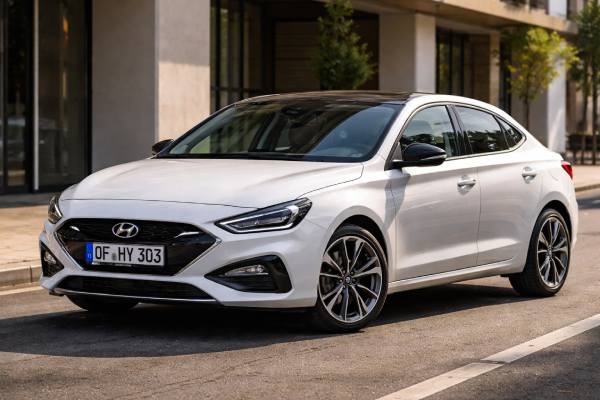
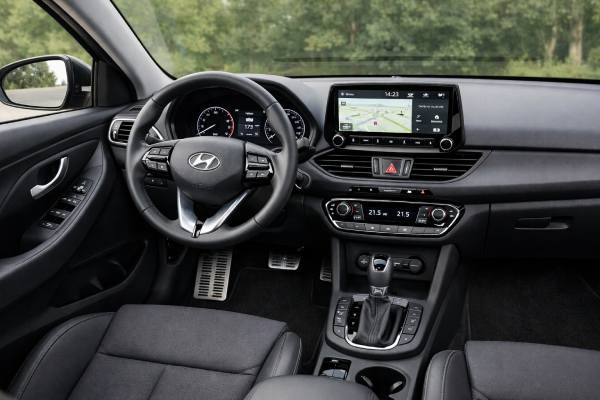
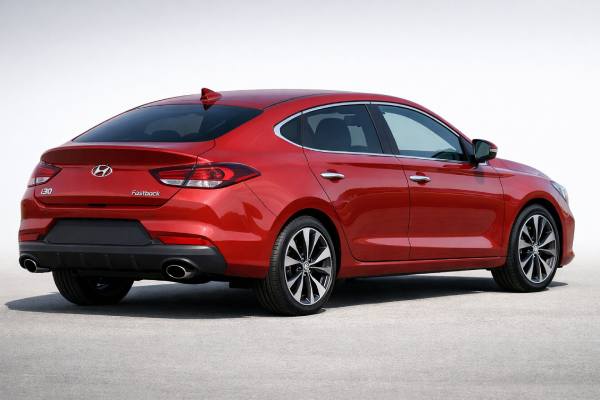
The facelifted Hyundai i30 Fastback PD 1.5 T-GDi 48V 160 hp is one of the more interesting compact cars Hyundai built in the early 2020s. It mixes a sleek liftback body with a strong mid-range turbo petrol engine, 48-volt mild-hybrid support, and a chassis that feels sharper than the regular i30 without becoming tiring in daily use. That makes it appealing to buyers who want something more stylish than a normal hatchback, but who still need useful rear-seat space, a real luggage area, and sensible running costs. The facelift also improved the i30 family with better connectivity, more modern driver-assistance systems, and a cleaner front-end design. For ownership, the core appeal is balance: good pace, decent efficiency, and everyday practicality. The main caution is specification complexity. This engine was offered with different trim structures, manual and DCT transmissions, and market-specific equipment, so buying by VIN, history, and actual hardware is much safer than buying by badge alone.
Essential Insights
- The 1.5 T-GDi 48V gives the Fastback stronger real-world performance than the smaller 1.0-litre models.
- The Fastback body adds style without losing the practical 450 L boot and useful rear hatch opening.
- Facelift cars gained better SmartSense safety tech, stronger infotainment, and a more polished cabin feel.
- Check carefully for ignition issues, DCT low-speed shudder, and any warning lights linked to the 48V system.
- A sensible oil-service rhythm for used ownership is every 10,000–15,000 km or 12 months.
Section overview
- Hyundai i30 Fastback Facelift Shape
- Hyundai i30 Fastback Power Data
- Hyundai i30 Fastback Trims and Safety
- Reliability Patterns and Service Actions
- Maintenance Rhythm and Buying Advice
- Road Manners and Real Economy
- Versus Mazda3, Proceed and A3
Hyundai i30 Fastback Facelift Shape
The facelifted i30 Fastback sits in an unusual but appealing corner of the market. It is not a traditional saloon, because it keeps a useful hatchback-style rear opening. It is not a regular hatch either, because the roofline, rear glass, and overall profile are lower and more elegant. That matters in ownership terms. You get a car that looks more distinctive than the standard i30 without giving up the practical layout that makes compact family cars easy to live with.
With the facelift, Hyundai improved the formula rather than rewriting it. The front end became sharper, the lighting signatures cleaner, and the cabin tech more competitive. More important than the styling change, though, was the way Hyundai broadened the powertrain and safety package. The 1.5 T-GDi 48V engine became the most attractive non-N performance choice in the range. It gave the Fastback enough shove to match its more dynamic shape, while the mild-hybrid system added smoother stop-start operation and small efficiency gains in real use.
This version also benefits from Hyundai’s decision to keep the i30 family fundamentally honest. The Fastback still has proper rear seats, a usable hatch opening, and a boot that works for everyday luggage, not just overnight bags. That is one of its biggest strengths. Some coupe-like compact cars sacrifice too much practicality for style. The i30 Fastback does not. It gives you a lower, more athletic look, but still behaves like a normal family car when you need it to.
The driving position is also a quiet strength. It feels more integrated than in many compact crossovers, and the lower body shape helps the car feel calmer and more planted at motorway speeds. Hyundai further sharpened the appeal by tying the 1.5 T-GDi 48V to sportier trim themes in several markets. In the UK, the 160 PS mild-hybrid was effectively an N Line proposition. In Germany and some other mainland European markets, the same engine appeared in N Line and higher-spec versions with larger wheels, stronger lighting, and more equipment. That makes the Fastback a useful car to buy used, because the better engines often came with the better cabins and stronger safety equipment.
The ownership case is simple. This is the i30 for buyers who want more visual character than the hatchback and more performance than the smaller engines provide, but who do not want the full running costs or attention level of an N model. That is a sensible place to be. The caveat is that this is also the version where specification and maintenance matter most. The 48V system, iMT or DCT transmission choice, wheel size, and driver-assistance hardware all change the ownership experience. A good car feels polished and modern. A neglected one feels needlessly complicated.
Hyundai i30 Fastback Power Data
For this guide, the reference model is the facelifted Hyundai i30 Fastback PD 1.5 T-GDi 48V with the 160 hp marketing designation. In official European Hyundai material, the engine is usually listed as 117 kW and 159 PS, which is close enough that many markets round it to 160 hp in listings and search terms. The core data below reflects the facelift-era Fastback with either 6-speed intelligent manual transmission or 7-speed DCT.
| Powertrain and efficiency | Value |
|---|---|
| Code | 1.5 T-GDi 48V Kappa/Smartstream family |
| Engine layout and cylinders | Inline-4, DOHC, 4 cylinders, 4 valves per cylinder |
| Displacement | 1.5 L (1,482 cc) |
| Bore × stroke | 71.6 × 92.0 mm (2.82 × 3.62 in) |
| Induction | Turbocharged |
| Fuel system | Direct injection |
| Compression ratio | market-specific published consumer material does not clearly list it; verify by VIN-level data |
| Max power | 160 hp class output; officially 117 kW (159 PS) @ 5,500 rpm |
| Max torque | 253 Nm (186.6 lb-ft) @ 1,500–3,500 rpm |
| Mild-hybrid system | 48V mild-hybrid support |
| Timing drive | Chain |
| Rated efficiency | 5.4 L/100 km in older converted figures; WLTP values commonly around 6.5 L/100 km iMT and 6.3 L/100 km DCT |
| Real-world highway @ 120 km/h | around 6.2–7.1 L/100 km in a healthy standard car |
| Transmission and driveline | Value |
|---|---|
| Transmission | 6-speed iMT or 7-speed DCT |
| Drive type | FWD |
| Differential | Open |
| Chassis and dimensions | Value |
|---|---|
| Suspension front/rear | MacPherson strut / multi-link or CTBA depending on exact market specification |
| Steering | Electric rack-and-pinion |
| Brakes | Ventilated front discs; rear brakes vary by wheel and trim package |
| Wheels and tyres | Common N Line setups include 18-inch wheels; smaller sizes also exist by market |
| Ground clearance | 135 mm (5.3 in) |
| Length | 4,455 mm (175.4 in) |
| Width | 1,795 mm (70.7 in) |
| Height | 1,425 mm (56.1 in) |
| Wheelbase | 2,650 mm (104.3 in) |
| Turning circle | around 10.6 m (34.8 ft), market dependent |
| Kerb weight | 1,376–1,503 kg (3,034–3,314 lb) iMT; 1,407–1,534 kg (3,102–3,382 lb) DCT |
| GVWR | 1,850 kg (4,079 lb) iMT; 1,880 kg (4,145 lb) DCT |
| Fuel tank | 50 L (13.2 US gal / 11.0 UK gal) |
| Cargo volume | 450 L / 1,351 L (15.9 / 47.7 ft³), VDA |
| Performance and capability | Value |
|---|---|
| 0–100 km/h | 8.6 s iMT / 8.8 s DCT |
| Top speed | 210 km/h (130 mph) |
| Braked towing | 1,420 kg (3,131 lb) |
| Unbraked towing | 600 kg (1,323 lb) |
| Payload | roughly 346–504 kg depending on trim and gearbox |
| Fluids and service capacities | Value |
|---|---|
| Engine oil | Hyundai-approved full-synthetic oil, commonly 0W-30 or 5W-30 depending on market and emissions requirement |
| Engine oil capacity | approximately 4.0–4.5 L with filter, but always verify by VIN and drain procedure |
| Coolant | Hyundai-approved long-life coolant at the correct mix ratio |
| Coolant capacity | typically around 5.5–6.0 L, verify by VIN before ordering |
| Transmission fluid | use only the exact Hyundai fluid for the iMT or DCT fitted |
| Differential and transfer case | not applicable as separate service units on this FWD layout |
| A/C refrigerant | verify from the under-bonnet label and production date |
| A/C compressor oil | verify by refrigerant type and VIN |
| Key torque specs | confirm wheel, spark plug, brake, and drain-plug values in official service data before work |
| Safety and driver assistance | Value |
|---|---|
| Euro NCAP baseline for PD i30 family | 5 stars |
| Adult occupant protection | 88% |
| Child occupant protection | 84% |
| Vulnerable road users | 64% |
| Safety assist | 68% |
| ADAS suite | FCA/AEB, lane keep assist, lane following assist, driver attention warning, intelligent speed warning, rear collision warning support, eCall, and more depending on trim |
The numbers tell the story clearly. This is not the wildest i30, but it is the one that gives the Fastback body the performance it deserves. It is quick enough to feel genuinely lively, efficient enough to remain sensible, and practical enough to work as an everyday car.
Hyundai i30 Fastback Trims and Safety
Trim structure is unusually important on the facelift Fastback because the 1.5 T-GDi 48V was not always spread evenly across the whole range. In the UK, Hyundai tied the 160 PS mild-hybrid version closely to the N Line theme, which meant buyers got the stronger engine alongside the sportier styling, different wheel choices, and a more aggressive interior look. In Germany, the same engine could be found in N Line and Prime forms, which made the car easier to compare across a more conventional trim ladder.
That difference matters on the used market. A UK-style N Line car usually comes with the visual package people expect: more assertive bumpers, sport seats, darker interior details, larger wheels, and a cabin that feels more special than the ordinary i30. German-market N Line and Prime examples often go further, especially when option packages were added. Those could include 10.25-inch navigation, Bluelink services, digital cluster, adaptive cruise on DCT cars, heated seats and steering wheel, keyless entry, full LED headlamps, front and rear parking sensors, and electrically adjustable front seats in upper forms.
Mechanically, the trim difference is not as dramatic as on an i30 N, but it still matters. The facelift N Line Fastback with the 1.5 T-GDi 160 PS received steering and suspension tuning updates compared with the regular i30 range, which gives it a slightly sharper road feel. Wheel size changes the experience, too. Eighteen-inch N Line setups look right on the Fastback, but smaller wheel-and-tyre packages usually ride a little more gently and cost less to replace. Buyers who want the best everyday comfort may prefer a car on smaller factory wheels; buyers who want the strongest visual package will probably accept the trade.
The safety picture is strong overall, but it needs to be read carefully. There is no separate Fastback-specific crash result for this facelift model. The relevant official benchmark remains the five-star Euro NCAP rating for the PD i30 family. That gives the Fastback a sound structural and passive-safety foundation. What changed with the facelift was the active-safety suite. Hyundai added Lane Following Assist, Rear Collision-avoidance Assist, and Leading Vehicle Departure Alert, and it upgraded Front Collision-Avoidance Assist with cyclist recognition on certain specifications. eCall also became part of the package.
In real ownership terms, that means even non-luxury facelift Fastbacks can feel noticeably more current than earlier PD cars. You may find lane support, speed-limit warning, driver attention monitoring, camera-based emergency braking, parking support, and in some specs adaptive cruise. But as always, the exact list varies by market, trim, and gearbox. In German brochure form, some of the more advanced safety features were bundled into assistance packages rather than fitted universally. DCT cars could also unlock equipment not always available on manual cars.
When inspecting one, do not buy the label; buy the actual car. Look for the headlamp type, wheel size, screen size, parking-camera resolution, and the driver-assistance menus in the infotainment or cluster. Confirm whether the car really has the package the seller claims. On any example with repaired bodywork or replaced windscreen glass, ask directly whether camera and safety-system calibration was done afterward. With a late-model connected car like this, that question matters.
Reliability Patterns and Service Actions
The facelift i30 Fastback 1.5 T-GDi 48V has a generally good reliability profile, but it is not a car that responds well to lazy ownership. The engine, mild-hybrid system, and transmission choices are all modern enough that small neglect can show up as drivability problems rather than dramatic mechanical failure. The good news is that the model is not known for one unavoidable, fatal weakness. The more realistic risk is a collection of smaller faults, wear items, and ignored service needs.
The most common trouble points are familiar turbo-petrol issues. Ignition coils and spark plugs can trigger rough running or hesitation under load. Symptoms are usually clear: a slight stumble when accelerating hard, an occasional misfire feeling in a taller gear, or an engine that no longer feels as smooth as it should. These are often medium-cost fixes rather than disasters, but they still tell you something about how carefully the car has been maintained.
Direct injection brings another longer-term consideration. Like many modern turbo petrols, the 1.5 T-GDi can accumulate intake-valve deposits over time because fuel no longer washes those valves directly. That usually shows up gradually rather than suddenly. Rougher idle, a slightly lazy part-throttle response, or reduced smoothness at higher mileage are typical clues. Cars that do mostly mixed or motorway driving usually cope better than cars that spend their life on short urban trips.
The 48V mild-hybrid system is usually low-drama, but it does add complexity. In practice, buyers should pay attention to warning lights, irregular stop-start behaviour, and charging-related messages. A weak 12V battery can also create confusion because low-voltage issues often mimic deeper electronic faults. The mild-hybrid battery itself is covered by Hyundai’s five-year unlimited-mileage warranty when new, which is reassuring, but on used cars the practical question is simpler: does the system behave normally every time, and is there any evidence of repeated electrical complaints?
Transmission choice is one of the biggest reliability variables. The iMT manual setup is usually the simpler long-term proposition. The DCT can work well, but it is more sensitive to low-speed wear, calibration, and service history. Warning signs include shudder when moving off, hesitation on inclines, jerky parking manoeuvres, or awkward stop-start traffic behaviour when hot. Some of that can be software-related. Some of it can be clutch wear. Either way, it deserves serious attention before purchase.
Chassis wear is mostly predictable. N Line cars with larger wheels can wear tyres, front suspension links, and bushes faster than softer, smaller-wheel versions. None of that is unusual, but it still affects the used-car budget. Infotainment glitches, camera faults, and sensor warnings also appear occasionally, which is why every screen, switch, parking sensor, and assistance function should be tested properly on a viewing.
Software and campaign history matter more here than some buyers expect. Hyundai dealer servicing includes checks for updates and recommended system actions, and that can affect drivability, infotainment stability, and safety-feature behaviour. On a late-model mild-hybrid Fastback, a strong service record is valuable not just because it proves oil changes, but because it increases the chance that the car has stayed current in less visible ways.
Maintenance Rhythm and Buying Advice
The i30 Fastback 1.5 T-GDi 48V is best maintained with a slightly conservative mindset. Hyundai’s published intervals can look generous, and in some markets the official routine structure allows long inspection gaps. But on a used direct-injection turbo car with mild-hybrid hardware, shorter, cleaner maintenance is almost always the better strategy. The aim is to protect the turbocharger, timing chain, ignition system, DCT where fitted, and the electrical system before small issues grow into expensive ones.
A practical maintenance schedule looks like this:
| Item | Practical interval | Notes |
|---|---|---|
| Engine oil and filter | 10,000–15,000 km or 12 months | The German Fastback brochure lists oil change at 15,000 km or 1 year |
| General service inspection | 30,000 km or 2 years | That is the broad official structure in some published materials, but used owners should still check the car annually |
| Engine air filter | Inspect yearly, replace around 20,000–30,000 km | Sooner in dusty use |
| Cabin filter | 12 months or 15,000–20,000 km | Keeps HVAC performance and cabin air quality healthy |
| Spark plugs | around 45,000–60,000 km | Shorter intervals make sense on hard-driven turbo petrols |
| Coolant | Check every service, renew by official schedule | Use only the correct Hyundai-approved coolant |
| Brake fluid | Every 2 years | Important for corrosion control and pedal consistency |
| Brake inspection | Every service | Pads, discs, hoses, and slider condition matter |
| iMT or DCT fluid | Inspect for leaks and verify any official service guidance for the exact gearbox | Never guess fluid type |
| Timing chain | No routine belt change, but inspect on symptoms | Noise, timing faults, or poor oil history matter |
| Auxiliary belt and hoses | Inspect every service | Replace on age, cracking, or noise |
| Tyres and alignment | Pressure monthly, alignment when wear pattern changes | N Line wheel packages make alignment more important |
| 12V battery | Test yearly from around year 4 onward | Weak batteries can trigger multiple nuisance faults |
| 48V system health | Inspect if any hybrid or charging warning appears | Especially relevant on low-use cars |
The buyer’s checklist should focus on the things that change ownership cost fastest. Start with a cold engine. Listen for chain rattle, uneven idle, or obvious misfire. On the road test, accelerate in a taller gear and feel for hesitation or spark blowout. On DCT cars, perform repeated low-speed take-offs, incline starts, and warm stop-start crawling. You want smooth, predictable behaviour, not shrug-worthy harshness.
Then check the car’s electronic side just as carefully. Test the camera, parking sensors, screen response, smartphone connection, lane-support settings, and any adaptive cruise or safety warnings. A car can drive well but still be annoying if its electronics are already developing small faults.
The best used buys are usually well-kept N Line or high-spec cars with full invoice history, matching premium tyres, clean wheel condition, and no mystery modifications. Light cosmetic upgrades are one thing. Unclear remaps, cheap suspension parts, or unknown imported software changes are another.
Long term, the durability outlook is good if the car is maintained properly. It is not a fragile machine, but it is a modern one. Buyers who stay ahead of service and do not ignore early symptoms usually do well with it.
Road Manners and Real Economy
The facelifted i30 Fastback 1.5 T-GDi 48V feels like the version of the i30 range that most naturally matches its body style. The smaller engines can do the job, but this 160 hp-class mild-hybrid setup gives the car the right level of urgency. It is not a hot hatch, yet it is quick enough to feel genuinely eager. That matters in a sleek compact car, because the shape invites expectations the weakest engines cannot really meet.
In normal driving, the engine’s character is its best feature. Peak torque arrives low enough that the Fastback feels stronger than the numbers suggest in daily use. It pulls well from middle revs, copes easily with passengers and luggage, and does not need to be worked hard just to keep pace with traffic. The 48V system does not turn it into an electric-feeling car, but it can smooth the stop-start process and support more efficient coasting, especially on iMT versions.
The chassis is well judged. Hyundai gave the facelift i30 range a composed, European-tuned feel, and on the Fastback that translates into good motorway stability and tidy cornering balance. N Line versions add a little more sharpness through steering and suspension tuning, which helps the car feel more alert without becoming too stiff for everyday roads. Ride quality depends on wheel size. Smaller-wheel cars are more forgiving over poor urban surfaces, while 18-inch N Line cars feel more tied down but a little firmer.
Steering is light enough for daily use and accurate enough to keep the car enjoyable. It is not overflowing with feedback, but it suits the Fastback’s role. The car feels secure and planted rather than nervous. Straight-line refinement is also a strong point. Wind and road noise are well controlled for the class, and the lower body shape helps it feel calmer than some taller alternatives at motorway speeds.
Transmission choice changes the car more than raw performance does. The iMT suits the engine well and adds a little novelty with its coasting and decoupling behaviour. For long-term ownership, it is also the simpler choice. The DCT makes traffic easier and can feel neat when healthy, but it is the version that needs more careful judging on a used-car test drive.
Real-world fuel use is respectable for a 160 hp-class petrol Fastback. Official WLTP numbers sit around the low-6s L/100 km depending on gearbox, but owners should expect a spread. In mixed driving, around 6.5–7.5 L/100 km is realistic. Steady 100–120 km/h motorway work often falls between 6.2 and 7.1 L/100 km. Heavy city use, colder weather, larger wheels, and DCT stop-start work can push that into the high-7s or low-8s. Those figures are still reasonable given the performance and size.
Performance is comfortably strong enough for the class. A 0–100 km/h time in the high-8-second range and a 210 km/h top speed make the Fastback feel properly brisk rather than merely adequate. More importantly, it has the kind of mid-range response that makes overtaking easy and long-distance driving relaxed. That is where this version really earns its place in the range.
Versus Mazda3, Proceed and A3
The facelift i30 Fastback competes in an interesting space because it is not a straight copy of any one rival. Some buyers compare it with sporty hatchbacks, others with sleek liftbacks, and others with entry-premium compact cars.
Against the Mazda3, the Hyundai usually gives away a little interior richness and some steering finesse, but it fights back with stronger everyday practicality and a more obviously turbocharged mid-range. The Mazda can feel more premium in the cabin and more polished in small details. The Hyundai often feels easier to live with if you want effortless overtaking, a larger hatch opening, and more straightforward tech.
Against the Kia Proceed GT-Line, the comparison is especially close. Both cars aim at buyers who want style without moving to an SUV, and both sit on broadly similar ownership logic. The Proceed tends to lean a little harder into lifestyle design and shooting-brake appeal, while the i30 Fastback feels more restrained and slightly more mature. On the used market, this rivalry is often settled by condition, equipment, and service history rather than by any major mechanical difference.
Against the Audi A3 in Sportback or Saloon form, the Hyundai loses obvious prestige and some cabin polish. That is expected. What it offers instead is value. The i30 Fastback usually gives you more equipment for the money, lower perceived risk from premium-brand repair pricing, and a shape that still feels distinctive. For buyers who care more about sensible ownership than logo status, that trade can be very attractive.
You could also compare it with a Skoda Octavia or a higher-trim Ford Focus, but the Hyundai’s identity remains fairly clear. It is the choice for someone who wants a compact car that feels a little more stylish than a normal hatchback and a little more engaging than a basic family runabout, yet still behaves sensibly in the real world.
That is really the i30 Fastback 1.5 T-GDi 48V verdict in one sentence: it is a well-balanced, quietly underrated car. It does not dominate any single category, but it gets the balance between looks, pace, equipment, practicality, and everyday running costs very right. For many buyers, that matters more than having the biggest badge or the most extreme character.
As a used buy, it makes the most sense in clean N Line or upper-spec form with full history, original hardware, and healthy electronics. Treated that way, it can be one of the smartest and most distinctive compact petrol fastbacks of its era.
References
- New Hyundai i30: sleeker, safer, and more efficient 2020 (Press Kit)
- Hyundai i30 Technical Specifications 2020 (Technical Data)
- i30 Fastback 2020 (Technical Data)
- EuroNCAP | Hyundai i30 2017 (Safety Rating)
- 5-Year Warranty | New Cars | Hyundai Motor UK 2026 (Warranty)
Disclaimer
This article is for informational purposes only and is not a substitute for professional diagnosis or repair. Specifications, torque values, service intervals, fluid grades, capacities, procedures, and equipment vary by VIN, market, transmission, and trim, so always verify details against official Hyundai service documentation for the exact vehicle.
If this guide was useful, please consider sharing it on Facebook, X, or another platform to support our work.