
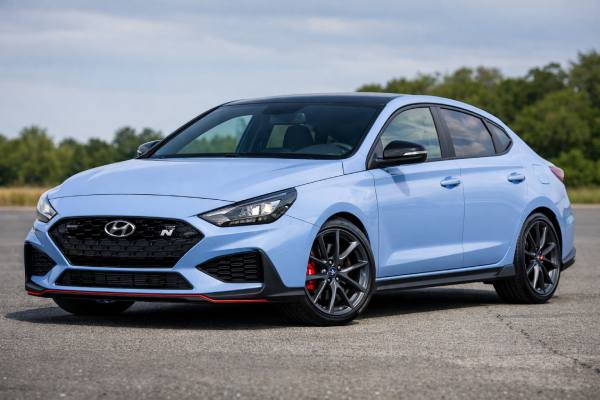
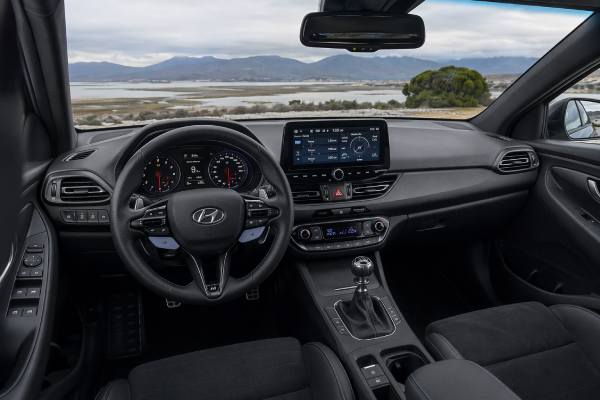

The facelift Hyundai i30 Fastback N is one of those rare cars that manages to feel special without becoming unusable. In 280 hp form, it takes the already strong i30 N formula and adds a sleeker fastback body, sharper facelift-era hardware, and a more complete high-performance package than the earlier car. You get a 2.0-litre turbo engine, front-wheel drive, adaptive dampers, an electronically controlled limited-slip differential, and the choice of a 6-speed manual or Hyundai’s wet 8-speed N DCT. The result is a car that can do the weekday commute, a long motorway trip, and a track day without changing its core personality. That said, it is still a serious performance car. Tyres, brakes, alignment, and service discipline matter more here than on a normal i30. For buyers who want a fast front-wheel-drive car with genuine engineering depth and everyday usability, the facelift i30 Fastback N remains one of the most interesting choices of its era.
Top Highlights
- The 280 hp engine, e-LSD, and adaptive dampers give the Fastback N real track-capable hardware, not just styling.
- The fastback body adds visual appeal without making the car impractical for daily use.
- The wet N DCT is a strong option if you want faster acceleration and easier everyday driving.
- Consumables wear quickly on hard-driven cars, so service history matters more than mileage alone.
- A yearly oil change or about 10,000–15,000 km is the sensible routine, with shorter intervals for regular track use.
Contents and shortcuts
- Hyundai i30 Fastback N identity
- Hyundai i30 Fastback N technical set
- Hyundai i30 Fastback N trim logic
- Reliability hot spots and fixes
- Maintenance routine and buyer filters
- Track manners and road pace
- Everyday rivals and trade-offs
Hyundai i30 Fastback N identity
The facelift i30 Fastback N is best understood as the more style-conscious version of Hyundai’s first serious European hot hatch formula. Under the skin, it shares the same core performance philosophy as the facelift i30 N hatchback: a 2.0-litre Theta turbocharged four-cylinder engine, front-wheel drive, adaptive damping, launch control, N Grin Control drive modes, and a chassis tuned with real attention to track behavior. What changes is the body. The Fastback is longer, lower, and visually more dramatic, with a sloping rear profile that gives the car a more mature and distinctive look than the hatch.
That difference is not just cosmetic. The Fastback feels a touch more grown-up in the way it presents itself. It still has the same blunt N attitude when you switch it into its sharper modes, but the body style softens the image just enough that it works very well as a daily performance car. You can still show up to work, do a motorway trip, or carry luggage without feeling like you are driving something obviously compromised.
The facelift matters because Hyundai did more than a visual refresh. For the 2021-on update, the i30 N range gained a 280 PS flat-power version of the engine, the new wet-type 8-speed N DCT transmission, retuned suspension and steering, lighter forged 19-inch wheels for the 280 PS model, and optional N Light sports bucket seats. It also brought more active safety technology and a more modern infotainment package. In practical terms, this is the version most buyers actually want, because it feels more complete than the pre-facelift car.
The user profile for this model is quite specific. If you want a pure value hot hatch, there are easier choices. If you want all-weather traction, there are quicker all-wheel-drive rivals. The i30 Fastback N instead appeals to buyers who care about front-wheel-drive balance, driver involvement, and the idea of an “everyday sports car” that does not need to apologize for either part of that phrase.
Its main strengths are clear:
- real mechanical hardware, not just power,
- an honest and adjustable chassis,
- strong usability for a performance car,
- and a lower-profile image than some obvious rivals.
Its main ownership truth is just as clear. This is not a normal i30 with a body kit. It is a genuine N model, and it needs to be treated like one. A badly driven or badly maintained Fastback N can get expensive quickly. A well-kept one, however, offers a depth of engineering that still makes it very competitive years after launch.
Hyundai i30 Fastback N technical set
The 280 hp facelift Fastback N corresponds to the Performance Package specification in Hyundai’s official technical data. That matters because the 280 PS car is not just a power bump. It also brings the stronger brake package, forged 19-inch wheels, the electronically controlled limited-slip differential, and the full high-performance intent of the facelift N range.
| Powertrain and efficiency | Hyundai i30 Fastback N 280 6MT | Hyundai i30 Fastback N 280 N DCT |
|---|---|---|
| Engine code / family | Theta 2.0 T-GDi | Theta 2.0 T-GDi |
| Engine layout | Inline-4, front-transverse | Inline-4, front-transverse |
| Cylinders and valvetrain | 4 cylinders, DOHC, 4 valves per cylinder | 4 cylinders, DOHC, 4 valves per cylinder |
| Bore × stroke | 86.0 × 86.0 mm (3.39 × 3.39 in) | 86.0 × 86.0 mm (3.39 × 3.39 in) |
| Displacement | 2.0 L (1,998 cc) | 2.0 L (1,998 cc) |
| Induction | Twin-scroll turbocharger | Twin-scroll turbocharger |
| Fuel system | T-GDi direct injection | T-GDi direct injection |
| Compression ratio | 9.5:1 | 9.5:1 |
| Max power | 280 hp (206 kW) @ 5,500–6,000 rpm | 280 hp (206 kW) @ 5,500–6,000 rpm |
| Max torque | 392 Nm (289 lb-ft) @ 2,100–4,700 rpm | 392 Nm (289 lb-ft) @ 2,100–4,700 rpm |
| Timing drive | Chain | |
| Rated efficiency | 8.0 L/100 km | 8.4 L/100 km |
| Official economy | 29.4 mpg US / 35.3 mpg UK | 28.0 mpg US / 33.6 mpg UK |
| Real-world highway at 120 km/h | about 7.4–8.3 L/100 km | about 7.7–8.7 L/100 km |
| Transmission and driveline | Hyundai i30 Fastback N 280 |
|---|---|
| Transmission | 6-speed manual or 8-speed wet N DCT |
| Drive type | FWD |
| Differential | electronically controlled limited-slip differential |
| Launch control | standard on the 280 hp car |
| N functions | N Grin Shift, N Power Shift, and N Track Sense Shift on N DCT |
| Chassis and dimensions | Hyundai i30 Fastback N 280 |
|---|---|
| Front suspension | MacPherson strut |
| Rear suspension | Multi-link |
| Steering | rack and pinion with motor-driven assist |
| Steering ratio | about 12.27:1 on the 19-inch performance setup |
| Turns lock-to-lock | 2.14 |
| Minimum turning radius | 5.83 m, about 11.66 m kerb-to-kerb |
| Front brakes | ventilated discs, 360 mm (14.2 in) |
| Rear brakes | ventilated discs, 314 mm (12.4 in) |
| Wheels and tyres | 8.0J × 19 in forged alloy wheels, 235/35 R19 |
| Ground clearance | 135 mm (5.3 in) |
| Length | 4,455 mm (175.4 in) |
| Width | 1,795 mm (70.7 in) |
| Height | 1,419 mm (55.9 in) on 19-inch tyres |
| Wheelbase | 2,650 mm (104.3 in) |
| Kerb weight | 1,431–1,511 kg (3,155–3,331 lb) manual / 1,474–1,554 kg (3,250–3,426 lb) N DCT |
| GVWR | 1,950 kg (4,299 lb) manual / 1,980 kg (4,365 lb) N DCT |
| Fuel tank | 50 L (13.2 US gal / 11.0 UK gal) |
| Cargo volume | 436 / 1,337 L (15.4 / 47.2 ft³) with rear stiffness bar, VDA |
| Cargo volume without bar | 450 / 1,351 L (15.9 / 47.7 ft³), VDA |
| Performance and capability | Hyundai i30 Fastback N 280 |
|---|---|
| 0–100 km/h | 5.9 s manual / 5.4 s N DCT with Launch Control |
| Top speed | 250 km/h (155 mph) |
| Towing, braked | up to 1,600 kg (3,527 lb), market dependent |
| Towing, unbraked | up to 700 kg (1,543 lb), market dependent |
| Payload | roughly 426–506 kg (939–1,116 lb), depending on trim and transmission |
| Fluids and service capacities | Hyundai i30 Fastback N 280 |
|---|---|
| Engine oil | use the VIN-specific Hyundai turbo-petrol specification; public press data does not publish a service-fill quantity |
| Coolant | verify exact Hyundai specification and fill quantity by VIN |
| Manual transmission oil | verify exact specification and fill quantity by VIN |
| N DCT fluid | wet-clutch DCT fluid; verify exact Hyundai specification and fill quantity by VIN |
| Differential fluid | verify by VIN and workshop literature |
| A/C refrigerant | verify under-bonnet label |
| A/C compressor oil | verify under-bonnet label |
| Key torque spec | wheel nuts 107–127 Nm (79–94 lb-ft) |
| Safety and assistance | Hyundai i30 Fastback N facelift |
|---|---|
| Euro NCAP | 5 stars, i30 family rating |
| Adult occupant protection | 88% |
| Child occupant protection | 84% |
| Vulnerable road user | 64% |
| Safety assist | 68% |
| IIHS | not applicable |
| ADAS suite | FCA with vehicle and pedestrian detection, LFA, LVDA, HBA, LKA, eCall; other items vary by body, transmission, and market |
Hyundai i30 Fastback N trim logic
The facelift Fastback N is simpler to understand than many performance cars because the 280 hp variant effectively bundles most of the hardware enthusiasts actually want. In Hyundai’s own technical language, the key split is between the standard 250 PS trim and the Performance Package 280 PS trim. Since this article focuses on the 280 hp car, the important point is that you are looking at the stronger spec, not just the stronger engine map.
What that changes mechanically is significant:
- electronically controlled limited-slip differential,
- larger 360 mm front brakes and 314 mm rear brakes,
- forged 19-inch wheels,
- specific high-performance tyres,
- and the complete N software and drive-mode character expected of the top setup.
For buyers, that means there is less confusion than with many rivals. If the car is a genuine facelift Fastback N 280, it should already have the hardware that shapes the verdict.
There are still meaningful option and market differences, though. The biggest one is transmission. The manual is still the purist’s choice. It gives the car slightly less weight, a more mechanical feel, and fewer long-term drivetrain concerns than the wet N DCT. The DCT, however, is not a weak compromise. It is one of the better performance dual-clutch units in this class, and on the facelift car it adds the N-specific functions that many buyers genuinely enjoy. It also makes the car faster to 100 km/h and much easier to use in dense traffic.
The next big distinction is seating. Standard sport seats are already supportive, but optional N Light sports bucket seats are a real upgrade if you care about track use or hard road driving. They are lighter, more supportive laterally, and visually more special. For some buyers, they are a major plus. For others, the standard seats are the smarter everyday choice, especially if the car sees a lot of commuting.
Wheel and tyre configuration matters too. The facelift 280 PS car’s forged 19-inch wheels reduce unsprung mass compared with the previous cast design, but they still tie the car to low-profile tyres. That sharpens response and supports braking, yet it also makes tyre replacement more expensive and ride quality less forgiving on broken roads. It is part of the Fastback N experience, not an incidental detail.
Safety and driver assistance sit slightly outside the traditional hot-hatch conversation, but they matter here because Hyundai made the facelift N much more complete as an everyday car. The official i30 N press material lists Forward Collision-avoidance Assist with vehicle and pedestrian detection, Lane Following Assist, Leading Vehicle Departure Alert, High Beam Assist, Lane Keeping Assist, and eCall across the facelift N package. Blind-spot and rear cross-traffic functions were explicitly described for certain hatchback N DCT configurations, so used buyers should not assume every Fastback N carries the same assistance set. Check the exact car.
The i30 family’s Euro NCAP five-star rating is also worth understanding correctly. It is a model-range rating rather than a separate N-only crash program, but for a practical high-performance car that is still an ownership positive. The Fastback N gives you a serious performance car without abandoning the everyday safety expectations of the broader i30 line. That mix is one of its biggest advantages.
Reliability hot spots and fixes
The facelift Fastback N is not a fragile car, but it is a demanding one. Its reliability is shaped less by one famous design flaw and more by how the car has been used. A gently driven motorway car and a tuned, tracked, heavily modified example may both show the same mileage on paper while representing completely different ownership risks.
A realistic issue map looks like this:
- Common and low to medium cost: front tyres, front brakes, alignment wear, 12 V batteries, suspension links, exhaust-flap rattles, and heat-stressed spark plugs on hard-driven cars.
- Occasional and medium cost: ignition-coil or plug-related misfires, wheel bearing noise, adaptive-damper or sensor warnings, clutch wear on abused manuals, and calibration-related N DCT complaints.
- Rare but expensive: track-cooked brakes, turbo or catalyst distress after poor oil care or repeated abuse, accident-damaged ADAS components, and drivetrain damage on tuned cars that were not maintained to match.
The most important thing to understand is that many of the Fastback N’s “problems” are actually use-pattern issues rather than weak design issues. This car is hard on consumables when driven hard. Tyres can disappear quickly. Front pads and discs are not cheap. Alignment goes out faster than on an ordinary i30 if the car sees potholes, kerbs, or repeated curb-strike track work. That is normal for the segment, but it means a neglected car becomes expensive very quickly.
Typical symptoms and likely paths:
- misfire under load or roughness at higher boost: start with plugs and coils, especially if the car is tuned or driven hard;
- steering pull or uneven front tyre wear: alignment, bush, or previous impact damage;
- clicking or harshness on full-power exits: tyres, alignment, or e-LSD-related behavior that needs closer inspection;
- harsh low-speed response from the N DCT: adaptation, software, or usage pattern;
- braking vibration after aggressive driving: overheated pads or discs rather than an engine problem.
Software and calibrations matter more than many buyers expect. The facelift N added more electronic integration, especially on DCT cars. Dealer or specialist updates can affect transmission logic, infotainment stability, and some driver-assistance behavior. That is why a full service history is more important than a seller saying “it has never needed anything.”
Track use is another nuance. The i30 N was built to tolerate enthusiastic driving, but track use still shortens service life for oil, brake fluid, pads, tyres, and sometimes wheel bearings. That does not make ex-track cars automatic rejects. It means they need proof of proper aftercare. A well-maintained enthusiast-owned car can be a better buy than a casually neglected “never tracked” one.
For pre-purchase checks, ask for:
- a full service record,
- proof of correct oil use,
- evidence of brake and tyre replacement,
- a cold start with no warning lights,
- confirmation of whether the car is tuned or flashed,
- and proof of recall or campaign completion by VIN.
The best Fastback Ns are not necessarily the lowest-mile cars. They are the cars with the clearest evidence of disciplined ownership.
Maintenance routine and buyer filters
Owning a Fastback N well is about being proactive. Hyundai’s public technical material gives you the framework, but for real-world ownership it makes sense to service the car slightly earlier than the bare minimum, especially if it is driven hard or occasionally tracked.
A practical maintenance schedule looks like this:
| Item | Practical interval |
|---|---|
| Engine oil and filter | every 12 months or 10,000–15,000 km |
| Engine air filter | inspect yearly, replace around 20,000–30,000 km sooner in dusty or track use |
| Cabin filter | every 12 months or 15,000–20,000 km |
| Spark plugs | inspect early; many owners budget replacement around 30,000–45,000 km on hard-driven cars |
| Coolant | inspect yearly; replace by VIN-specific schedule or when history is unclear |
| Brake fluid | every 2 years in ordinary use, yearly if tracked |
| Brake pads and discs | inspect every service and after any track day |
| Manual gearbox oil | inspect for leaks; refresh around 60,000–100,000 km depending on use |
| N DCT fluid and adaptation check | follow exact Hyundai guidance and inspect operation regularly |
| Differential and driveline checks | inspect for leaks, noise, and warning codes at major services |
| Auxiliary belt and hoses | inspect every service |
| Tyre rotation and alignment | inspect around every 10,000 km or sooner after pothole or track use |
| 12 V battery test | yearly after year four |
| Timing chain | monitor only if noise, timing faults, or abnormal wear symptoms appear |
Fluid guidance for buyers is straightforward even when public press material is not. Use the exact Hyundai-approved oil, coolant, and gearbox fluid for the VIN and market. This is not the car for generic “close enough” fluid choices. The turbo engine, N DCT, e-LSD calibration, and track-capable brake system all depend on correct maintenance inputs.
Essential torque information available in public material is limited, but wheel nut torque in the 107–127 Nm range is the published baseline. For major suspension, brake, drivetrain, and engine fasteners, the workshop literature for the exact VIN is the only safe source.
The buyer’s checklist should be brutally practical:
- cold start clean and quiet,
- no smoke or misfire under load,
- even tyre wear across the front axle,
- healthy brakes with no heat cracks or severe lip wear,
- no gearbox shunt or warning lights,
- correct operation of dampers, exhaust modes, and all N drive settings,
- straight steering wheel on a level road,
- and clear evidence the car has not been cheaply modified and returned to stock for sale.
Common reconditioning items are predictable: tyres, front brakes, alignment, spark plugs, battery, and sometimes a suspension component or wheel bearing. None of that is alarming on its own. What matters is whether the price reflects it.
The safest used examples are lightly modified or completely stock cars with documented servicing and sensible owners. The cars to avoid are badly tuned examples, heavily tracked cars with vague histories, or “bargains” wearing cheap tyres and generic service parts. Long-term durability is good when maintenance is disciplined. It drops sharply when owners treat the Fastback N like an ordinary commuter car with a loud exhaust.
Track manners and road pace
This is where the facelift Fastback N earns its reputation. It is fast enough in a straight line, but what really defines it is how complete it feels once the road starts asking more of it. The 280 hp engine is strong, but the car’s real talent lies in the way the powertrain, differential, damping, steering, and front-end grip all work together.
The engine feels broad rather than peaky. Hyundai’s flat-power tuning gives the car strong response through the middle of the rev range, and the 392 Nm torque figure means it pulls much harder than many ordinary 2.0-litre turbo cars at road speeds. There is some low-rpm turbo softness, but once the engine is in its main working zone it feels urgent and very usable. The manual rewards committed drivers. The N DCT feels faster and more dramatic, particularly with launch control and the N-specific shift functions.
Ride and body control are impressively mature for a hot front-wheel-drive car on 19-inch wheels. In the softer modes, the Fastback N is firm but livable. In the sharper modes, it tightens significantly and feels ready for serious road or track work. The key difference compared with many rivals is that Hyundai lets the driver tailor the car well. You can mix engine, damping, steering, exhaust, and differential settings in ways that make the car more flexible in daily use.
The front axle is one of the car’s core strengths. The e-LSD does real work on corner exit, helping the car put power down much more cleanly than a basic open-differential performance hatch. On the road, that makes the Fastback N feel strong and confident out of tighter bends. On track, it gives the car the “N” identity people talk about: eager, adjustable, and more serious than its badge once led some buyers to expect.
Real-world fuel use reflects the performance:
- City: about 10.0–12.5 L/100 km in ordinary urban use.
- Highway at 100–120 km/h: about 7.4–8.7 L/100 km.
- Mixed driving: about 8.5–10.5 L/100 km.
- Fast road or track driving: much higher, often dramatically so.
That is the honest trade-off. This is not an efficient warm hatch. It is a real performance car that can still be used every day.
Brake feel is strong when the system is healthy, and high-speed stability is excellent. The main caution is heat. Repeated hard stops, old fluid, or cheap pads quickly reveal themselves on an N car. With proper maintenance, though, the car stays very composed.
Overall, the Fastback N drives like a well-developed front-wheel-drive performance car with real engineering behind it. It is not perfect, but it is engaging, confidence-inspiring, and much more versatile than its styling first suggests.
Everyday rivals and trade-offs
The facelift i30 Fastback N lives in an interesting space because it competes on both performance and personality. Purely on numbers, there are rivals with more power, more driven wheels, or bigger badges. But the Hyundai wins people over by feeling complete and honest rather than by chasing a headline.
The most obvious rival is the Volkswagen Golf GTI Clubsport or, depending on budget, the Golf R. The Golf products are more polished inside and sometimes a touch more refined. The R is clearly quicker off the line thanks to all-wheel drive. But the Hyundai counters with a stronger sense of mechanical personality, a more adjustable front-drive balance, and a body style that feels less common.
The Honda Civic Type R is the sharper benchmark for front-wheel-drive handling purity. It is more aggressive in the way it delivers its chassis brilliance, and for some drivers it remains the purest choice. Yet the Hyundai is easier to live with day to day, less visually extreme, and often better value on the used market.
The Renault Mégane R.S. used to be a natural comparison, especially for buyers who cared about front-end feel and chassis engineering. The Hyundai generally feels more complete in infotainment, safety, and daily usability, while still giving up very little in road enjoyment.
The BMW M235i Gran Coupé and similar premium-badge alternatives offer stronger straight-line performance and a more upscale cabin impression. But they are also heavier, more expensive to run, and often less honest about where the engineering money went. The Hyundai feels like a car built by enthusiasts for drivers.
Even Hyundai’s own i30 N hatchback is a serious rival. The hatch is slightly more practical at the rear opening and sometimes more obviously “hot hatch” in character. The Fastback counters with better looks, a slightly more mature feel, and a luggage space that still works well enough for real life. For many buyers, that design difference is enough.
So what is the verdict? Buy the Fastback N if you want:
- front-wheel-drive performance with real chassis depth,
- a car that can handle commuting and track work,
- more style than the hatchback,
- and strong value for the hardware on offer.
Look elsewhere if you want:
- maximum all-weather traction,
- the quietest ride,
- the lowest consumable costs,
- or the most premium badge.
The Hyundai i30 Fastback N is not the default choice in this class. That is part of what makes it appealing. It feels like the driver’s alternative for people who have done their homework. In the right hands, it is one of the most satisfying and well-rounded fast front-wheel-drive cars of the early-2020s.
References
- Hyundai i30 N | Technical specifications 2021 (Technical Data)
- The new Hyundai i30 N: focused on dynamic performance 2021 (Press Kit)
- Hyundai announces New i30 N prices and specifications 2021 (Press Release)
- Euro NCAP | Hyundai i30 2017 (Safety Rating)
- Home | Hyundai Recalls & Service Campaigns 2025 (Recall Database)
Disclaimer
This article is for informational purposes only and is not a substitute for professional diagnosis, repair, or factory service guidance. Specifications, torque values, service intervals, procedures, fluids, and equipment can vary by VIN, market, model year, transmission, and installed options. Always verify critical details against the correct official service documentation for the exact vehicle before maintenance, repair, or purchase decisions.
If this guide helped you, please consider sharing it on Facebook, X, or another social platform to support our work.