
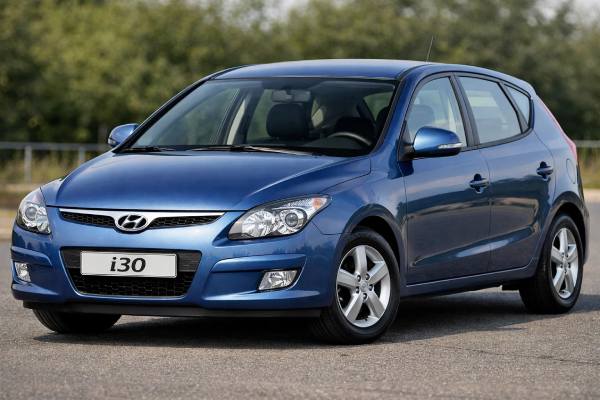
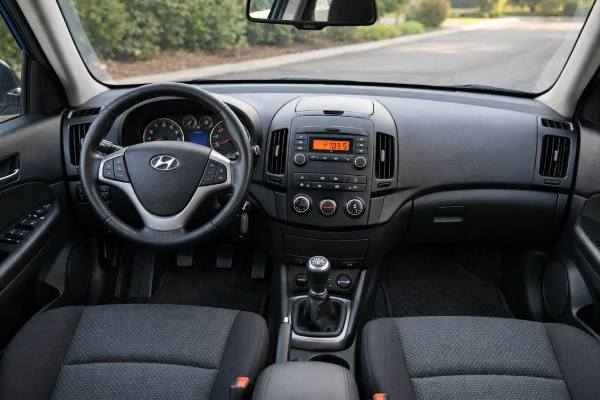
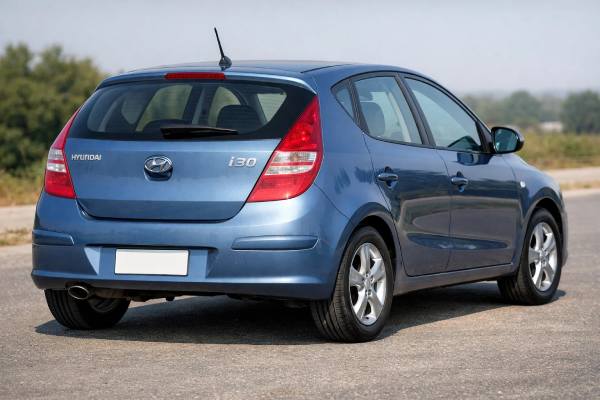
The first-generation Hyundai i30 FD with the 1.4 MPI petrol engine sits in a sweet spot for buyers who want a simple, honest compact hatchback without turbocharging, direct injection, or unusually high running costs. In 109 hp form, the 1.4-liter G4FA engine is not fast, but it is smooth, easy to service, and usually cheaper to own long term than many later downsized rivals. The FD platform also matters: it gave the i30 a roomy cabin, a useful hatchback boot, and more composed road manners than many budget-minded cars of the same era. That said, this is now an older car, so condition matters more than badge or brochure spec. Rust, suspension wear, recall history, and steering or ABS-related campaigns should be checked carefully. For the right buyer, though, the 2007–2010 i30 1.4 MPI remains a practical, durable family hatch with straightforward engineering and good everyday usability.
Quick Specs and Notes
- The 1.4 MPI engine is simple, chain-driven, and usually easier to maintain than later small turbo petrol engines.
- Cabin room and the 340 L hatchback boot still make the FD i30 a practical daily car.
- Ride comfort is strongest on the common 15-inch wheel setup, especially on broken urban roads.
- Recall and service history matter: verify steering, ABS module, and airbag campaign status by VIN.
- Engine oil and filter should typically be changed every 15,000 km or 12 months, or every 7,500 km in severe use.
Guide contents
- Hyundai i30 FD 1.4 basics
- Hyundai i30 FD 1.4 data
- Hyundai i30 FD trims and safety
- Reliability, faults and fixes
- Maintenance and buyer checks
- Driving feel and economy
- Rivals and value
Hyundai i30 FD 1.4 basics
The FD-generation Hyundai i30 was Hyundai’s serious move into the European C-segment. That matters because the car was designed to feel more grown-up than earlier Hyundai hatchbacks. The suspension tuning, cabin packaging, and overall ergonomics were aimed squarely at mainstream rivals such as the Ford Focus, Opel Astra, Toyota Auris, and Volkswagen Golf. In 1.4 MPI form, the i30 did not chase performance. Instead, it offered a low-stress ownership package built around a naturally aspirated, multi-point injected petrol engine and a conventional 5-speed manual transmission.
For many used buyers, that is still the main appeal. The 1.4 MPI G4FA engine avoids several later pain points found in some newer small petrol engines. There is no turbocharger to age, no direct-injection carbon build-up pattern to manage, and no dual-clutch gearbox complexity in the typical European 109 hp manual hatch. The engine uses a timing chain rather than a timing belt, which reduces scheduled replacement cost, although chain condition still depends heavily on clean oil and sensible service intervals.
The numbers tell the story clearly. With 109 hp and 137 Nm, this i30 is adequate rather than eager. It is comfortable in city traffic, fine on secondary roads, and usable on the motorway, but it needs revs and downshifts when fully loaded or climbing grades. Buyers expecting diesel-like low-rpm pull or hot-hatch punch will be disappointed. Buyers who want predictable throttle response, simple cold starts, and steady running will usually be pleased.
This version is best understood as a practical family hatch. The FD hatchback offers good outward visibility, sensible switchgear, and competitive rear-seat space for its class. Boot volume is also decent, so it works well as a daily commuter, a first family car, or a lower-cost second car. On 15-inch wheels, it tends to ride with more compliance than sharper-handling rivals. That gives it a calm character that suits mixed urban and suburban use.
Its age, however, changes the buying equation. The newest cars in this group are now well beyond their first decade, so condition matters far more than brochure promise. A good i30 1.4 MPI feels solid, quiet enough, and straightforward. A neglected one may show rust, tired bushings, sticky rear brakes, EPS or ABS warning lights, and patchy service history. The engine itself is usually not the weak point. More often, ownership costs come from age-related chassis, electrical, or recall-related issues. In short, the FD i30 1.4 is still a smart buy when you want space, simplicity, and reasonable durability more than speed, prestige, or the newest safety technology.
Hyundai i30 FD 1.4 data
For this article, the focus is the European-market 5-door Hyundai i30 FD hatchback with the 1.4 MPI petrol engine and 5-speed manual transmission. Public data for older Hyundai models can vary slightly by market and trim, so the table below reflects the commonly published specification for the 109 hp hatchback.
| Item | Specification |
|---|---|
| Engine code | G4FA |
| Engine layout and cylinders | Front-transverse inline-4, DOHC, 4 valves per cylinder |
| Bore × stroke | 77.0 × 75.0 mm (3.03 × 2.95 in) |
| Displacement | 1.4 L (1,396 cc) |
| Induction | Naturally aspirated |
| Fuel system | MPI / MPFI |
| Compression ratio | 10.5:1 |
| Max power | 109 hp (80 kW) @ 6,200 rpm |
| Max torque | 137 Nm (101 lb-ft) @ 5,000 rpm |
| Timing drive | Chain |
| Rated efficiency | 6.1 L/100 km (38.6 mpg US / 46.3 mpg UK) combined |
| Official urban / extra-urban | 7.6 / 5.2 L/100 km |
| Real-world highway @ 120 km/h | Usually about 6.3–7.0 L/100 km, depending on load, tyres, and weather |
| Item | Specification |
|---|---|
| Transmission | 5-speed manual |
| Drive type | FWD |
| Differential | Open |
| Front suspension | MacPherson strut |
| Rear suspension | Multi-link independent rear suspension |
| Steering | Rack-and-pinion, electric assist |
| Steering ratio | Not consistently published in public owner literature |
| Brakes | Front ventilated discs, rear discs on many European trims; exact diameters vary by wheel package and market |
| Most common tyre size | 185/65 R15 |
| Length | 4,245 mm (167.1 in) |
| Width | 1,775 mm (69.9 in) |
| Height | 1,480 mm (58.3 in) |
| Wheelbase | 2,650 mm (104.3 in) |
| Turning circle | About 10.2–10.4 m (33.5–34.1 ft), trim-dependent |
| Item | Specification |
|---|---|
| Kerb weight | About 1,268 kg (2,795 lb) for a typical manual hatch |
| GVWR | 1,728 kg (3,810 lb) |
| Payload | About 460 kg (1,014 lb) |
| Fuel tank | 53 L (14.0 US gal / 11.7 UK gal) |
| Cargo volume | 340 L (12.0 ft³) seats up / about 1,250 L (44.1 ft³) seats folded, VDA method |
| 0–100 km/h | 12.6 s |
| Top speed | 187 km/h (116 mph) |
| Braking distance | Exact published figure for this exact 1.4 MPI setup is not commonly available in public sources |
| Towing capacity | Market- and type-approval-dependent; verify the VIN plate and local handbook before towing |
| Item | Specification |
|---|---|
| Engine oil | 5W-30 or 5W-40 meeting the correct Hyundai/ACEA specification for climate and market |
| Engine oil capacity | About 3.3 L (3.49 US qt) |
| Coolant | Ethylene-glycol long-life coolant, typically 50:50 mix |
| Coolant capacity | About 5.8 L (6.13 US qt), verify by VIN |
| Manual transmission oil | API GL-4 SAE 75W-80 |
| Manual transmission capacity | About 1.9 L (2.01 US qt) |
| A/C refrigerant | R-134a; exact charge varies by body and compressor label |
| A/C compressor oil | PAG type; exact charge varies by system label |
| Key torque specs | Oil drain plug about 39 Nm (29 lb-ft); spark plugs about 25–28 Nm (18–21 lb-ft) |
| Item | Specification |
|---|---|
| Euro NCAP | 4 stars adult, 4 stars child, 2 stars pedestrian for the 2007 FD-era test |
| IIHS | Not applicable to this European-market model |
| Airbags | Front, side, and curtain airbags on many European-spec cars; count may vary by trim and market |
| Stability systems | ABS and EBD widely fitted; ESP availability depends on trim and market |
| ADAS suite | No modern AEB, ACC, lane centering, blind-spot monitoring, or traffic sign assist on 2007–2010 FD 1.4 MPI cars |
The key takeaway from the spec sheet is balance. The i30 FD 1.4 is roomy and mechanically simple, but it is not a performance car. What it offers instead is usable efficiency, decent packaging, and conventional engineering that remains understandable to independent workshops and owners.
Hyundai i30 FD trims and safety
Trim structure on the FD i30 varies by country, so the exact names and equipment lists are not identical across Europe. In many UK and EU brochures, buyers saw versions such as Classic, Comfort, Style, Premium, or special-edition derivatives. The basic pattern was predictable: lower trims used steel wheels, simpler audio, cloth trim, and manual air conditioning, while higher trims added alloy wheels, upgraded seat fabrics, leather wheel trim, climate control, extra convenience features, and sometimes better audio or parking aids.
For used-car buyers, the mechanical differences are usually more important than the trim badge itself. The 1.4 MPI 109 hp engine is the main constant. The major things to check are whether the car has ESP, what wheel and tyre package it uses, and whether it carries the more useful convenience features you actually want. A 15-inch-wheel car often rides better and costs less to keep on tyres. A higher trim can be more comfortable, but it may also add age-sensitive items such as climate-control hardware, steering-wheel switches, parking sensors, and extra electrical equipment.
Quick identifiers help when a seller is vague. Steel wheels with plastic covers and manual rotary HVAC controls usually point to a lower trim. Alloy wheels, front fog lamps, steering-wheel audio buttons, automatic climate controls, and more detailed trip-computer displays usually indicate a mid- or higher-grade car. The safest way to confirm equipment is always the VIN build data or a dealer equipment printout, because trim names and option packs changed by region.
Year-to-year changes also matter. Earlier 2007–2009 cars and later 2010 facelift cars are close mechanically, but the facelift brought mild styling revisions, including bumper and grille changes, along with some detail improvements in trim and efficiency depending on market. These are not night-and-day differences, but later cars can feel slightly more polished.
On safety, context is important. The FD i30 earned a respectable result in its day, but 2007 crash-test scores are not directly comparable with later, stricter protocols. For period buyers, the good news was that the shell structure and airbag strategy were competitive enough to make the i30 a credible family hatch. In many European forms, the car offered front, side, and curtain airbags, along with ISOFIX child-seat anchorages on the outer rear seats. ABS was widely fitted, while ESP became more important to seek out because it was not equally standard in every market and trim.
Modern driver assistance, however, is basically absent. There is no lane-keeping assist, automatic emergency braking, adaptive cruise, blind-spot warning, or rear cross-traffic system on these 2007–2010 1.4 MPI cars. That means buyers should place extra value on tyre quality, brake condition, good headlights, and a stable alignment.
One final ownership note: after steering-column work, alignment, crash repair, or airbag-related service, correct diagnostic checks and calibration matter. On an older i30, the best-equipped trim is not always the best buy. Often the smarter choice is the better-maintained car with documented service history, known recall completion, working ABS and ESP systems, and no warning lights.
Reliability, faults and fixes
The Hyundai i30 FD 1.4 MPI is generally one of the simpler and safer long-term bets in its class, but age and maintenance history now separate good cars from costly ones. The engine itself is usually sound. Most ownership trouble comes from recall-related systems, aging suspension parts, electrical wear, and neglected servicing.
Here is the practical fault map.
- Common, low to medium cost: front drop links, lower arm bushes, top mounts, and wheel alignment issues.
- Symptoms: clunks over broken surfaces, vague tracking, uneven tyre wear.
- Likely cause: age-related rubber deterioration and normal chassis wear.
- Best remedy: replace tired bushes or links in pairs and align the car properly.
- Common, low to medium cost: rear brake drag and rusty discs on lightly used cars.
- Symptoms: hot rear wheel, reduced fuel economy, uneven pad wear, poor handbrake feel.
- Likely cause: sticking slide pins, corroded rear disc surfaces, or infrequent use.
- Best remedy: clean and lubricate hardware or replace discs, pads, and caliper service parts as needed.
- Common, medium cost: battery, ground, ignition coil, and sensor age.
- Symptoms: misfire, intermittent check-engine light, hesitant starting, strange electrical faults.
- Likely cause: weak battery, poor grounds, tired ignition coils, or aging crank/cam sensors.
- Best remedy: load-test the battery first, inspect grounds, then scan live data before replacing parts.
- Occasional, medium cost: timing-chain wear on poorly serviced engines.
- Symptoms: cold-start rattle, rough idle, timing-correlation faults, loss of crisp throttle response.
- Likely cause: extended oil-change intervals or low oil level.
- Best remedy: inspect chain stretch and tensioner condition; replace chain, guides, and tensioner when out of spec.
- Occasional, medium cost: cooling-system leaks and thermostat-related issues.
- Symptoms: coolant smell, unexplained coolant drop, lazy heater performance, overheating.
- Likely cause: aging hoses, clamps, thermostat housing, or neglected coolant.
- Best remedy: pressure-test the system and correct leaks early. Overheating history should always reduce a car’s value.
- Occasional, medium to high cost: clutch and release-bearing wear.
- Symptoms: slipping under load, noisy pedal operation, high bite point, difficult launches.
- Likely cause: city driving, aggressive starts, or simply age.
- Best remedy: fit a full clutch kit and inspect flywheel condition while the gearbox is out.
The more important service actions are recall-related. Some FD-era cars were subject to official actions covering electric power steering assistance and software or motor inspection. Public recall records also show campaigns in some regions for ABS-module fire-risk conditions and airbag-control concerns. The right approach is simple: never guess. Run the VIN through official recall channels and ask for dealer proof that all applicable work is complete.
Rust deserves real attention too. Check rear wheel arches, sill edges, jacking points, lower tailgate seams, subframe areas, and brake-line routing, especially on cars that lived in wet or salted-road climates. Mechanical parts are usually affordable. Structural rust is what turns a cheap i30 into a bad buy.
For pre-purchase inspection, ask for full service history, cold-start the engine, scan EPS, ABS, and airbag systems, inspect the underside, and test the clutch, brakes, steering effort, and air conditioning. A cared-for i30 FD 1.4 can be impressively dependable. A neglected one can quickly consume the savings that made it look attractive.
Maintenance and buyer checks
A practical maintenance plan matters more on this car than a perfect trim level. The i30 FD 1.4 MPI responds well to simple, regular care, and that is exactly why the best examples age well. The schedule below is a sensible ownership baseline for the 109 hp manual hatchback. Always tighten it if the car does many short trips, sees dust, heat, or extended idling, or has an incomplete history.
| Item | Practical interval | Notes |
|---|---|---|
| Engine oil and filter | Every 15,000 km or 12 months; 7,500 km in severe use | Clean oil protects the timing chain and hydraulic tensioner |
| Engine air filter | Inspect every 15,000 km; replace around 30,000 km | Sooner in dusty areas |
| Cabin air filter | Every 15,000 km or 12 months | Helps HVAC performance and demisting |
| Spark plugs | Around 45,000–60,000 km depending on plug type | Verify the fitted plug spec before ordering |
| Coolant | Inspect yearly; replace about every 4–5 years unless the car’s official fill spec says otherwise | Unknown coolant history is a reason to renew it |
| Brake fluid | Every 24 months | Important for pedal feel and corrosion control |
| Manual gearbox oil | Inspect service history at 60,000 km; renew around 90,000–120,000 km | Fresh GL-4 oil often improves shift feel |
| Brake inspection | At every service or yearly | Check pads, rear caliper movement, flex hoses, and handbrake function |
| Tyre rotation | Every 10,000–12,000 km | Also check alignment after pothole strikes |
| Auxiliary belt and hoses | Inspect yearly; replace on cracks, glazing, or noise | Age matters more than mileage on some cars |
| Timing chain | No fixed routine replacement; inspect for rattle or timing faults at each service | Replace when noisy, stretched, or out of spec |
| 12 V battery | Test yearly after year four | Many aging electrical complaints start here |
Useful fluid and workshop notes for this engine include about 3.3 L of engine oil, about 1.9 L of manual gearbox oil, and approximately 5.8 L of coolant, but exact fill can vary by market, year, and drain method. Sensible oil grades are usually 5W-30 or 5W-40 depending on climate and handbook specification. Torque values that matter to home owners include roughly 39 Nm for the oil drain plug and about 25–28 Nm for spark plugs.
As a buyer, prioritize condition over extras. The best versions to seek are usually late pre-facelift or facelift-era cars with documented servicing, stable idle, quiet timing chain behavior, working air conditioning, and proof of recall completion. ESP is worth having. So are good tyres from a known brand. Cheap tyres on an old hatchback often tell you how the whole car was maintained.
Inspection checklist:
- Cold-start the engine and listen for chain rattle.
- Check for EPS, ABS, and airbag warning lights.
- Inspect the underside for rust, bent jacking points, and damp leaks.
- Test the clutch bite, shift quality, and brake straightness.
- Confirm both radiator fans and the air conditioning work properly.
- Look for uneven tyre wear that hints at suspension or alignment issues.
- Ask for invoices, not just a stamped service book.
Long-term outlook is good when the basics are covered. A well-kept FD i30 1.4 MPI can comfortably pass 200,000 km and often much more. What shortens its useful life is usually neglect, corrosion, or unresolved recall work, not the core engine design.
Driving feel and economy
On the road, the Hyundai i30 FD 1.4 MPI feels honest and predictable. It does not disguise its modest output, but it also avoids the peaky or synthetic character that some later small turbo engines developed. Throttle response is clean, the clutch is light, and the engine is smooth enough in normal commuting. Around town, it feels easy to place and easy to drive. Visibility is decent, the controls are simple, and the car does not ask much of the driver.
The powertrain’s character is straightforward. Below mid-range, the 1.4 MPI is calm but not especially strong. To make reasonable progress, especially with passengers or on hills, you need to use the gearbox. That is not a flaw so much as the basic nature of a naturally aspirated 1.4-liter engine making 109 hp in a family hatch. Once revved, it pulls cleanly enough, but it never feels muscular. Buyers stepping out of a diesel may find it thin at low rpm. Buyers used to older Japanese or Korean naturally aspirated engines will find it familiar.
Ride quality is one of the i30’s better traits. On 15-inch wheels, it deals with urban cracks, patched asphalt, and expansion joints with a composed, slightly soft edge. The rear multi-link setup helps the car feel stable rather than crude over mid-corner bumps. It is not as sharp or communicative as the best Ford Focus of the era, but it is stable, calm, and easy to trust. Steering feedback is moderate at best, yet the car tracks neatly on the motorway when the suspension is healthy and the alignment is correct.
NVH is acceptable for its age. At city speeds, the i30 is quiet enough. At motorway speeds, wind and tyre noise become more noticeable, and the 1.4 engine can sound busy because it needs revs to hold pace. Still, nothing feels unusually harsh in a good example.
Real-world fuel economy is usually fair rather than exceptional. Expect roughly:
- City: about 7.8–8.8 L/100 km
- Highway: about 6.0–7.0 L/100 km
- Mixed driving: about 6.7–7.6 L/100 km
Cold weather, short trips, heavy traffic, roof loads, and poor tyres can easily add 0.7–1.5 L/100 km. The official combined figure of 6.1 L/100 km is achievable only with a light foot and favorable conditions.
Performance is modest but usable. The quoted 0–100 km/h time of 12.6 seconds tells you most of what you need to know. Passing ability improves noticeably with a downshift, and that is the right way to drive this car. It rewards smooth inputs rather than lazy gearing. In summary, the i30 FD 1.4 is not exciting, but it is comfortable, predictable, and easy to live with, which is exactly why many owners still rate it highly as a daily hatch.
Rivals and value
The Hyundai i30 FD 1.4 MPI competes best when judged as a used-car ownership proposition, not just on road-test flair. Against its main rivals, it often wins on simplicity, value, and cabin practicality rather than outright polish.
The closest comparison is the Kia cee’d of the same era because it shares much of the engineering logic. In practice, condition, price, and local parts support matter more than choosing between the two. The Hyundai often feels slightly more conservative in presentation, while the Kia may offer similar value with a different trim mix.
Against the Toyota Auris 1.4 or 1.33, the Hyundai usually matches it for practicality and can undercut it on purchase price. Toyota still holds a stronger reputation for long-term reliability, but the i30 1.4 MPI is simpler and sturdier than many buyers assume, especially when backed by good service history. If you find a clean i30 with complete records, it can be the better value deal.
Compared with the Ford Focus, the Hyundai gives away some steering feel and handling sharpness. The Focus is the better driver’s car. The i30, though, often feels easier to buy, easier to understand, and less demanding as an older family hatch, especially if comfort and parts cost matter more than cornering finesse.
The Opel or Vauxhall Astra of the same period is a worthy alternative, but many buyers find the i30’s cabin layout and ownership simplicity more appealing. The Mazda3 remains an enjoyable rival, though rust concerns can be at least as important there as on the Hyundai.
So where does the FD i30 1.4 MPI land today? It is a strong choice for buyers who want:
- a conventional petrol hatch with no turbo complexity,
- sensible running costs,
- useful family space,
- and decent ride comfort.
It is less convincing for buyers who want brisk performance, very low-rpm torque, or modern driver assistance systems. In that sense, the Hyundai’s verdict is clear. As a used compact hatchback, it is not the most exciting or prestigious option, but it is one of the more rational ones. A good example can still offer years of dependable service, and that makes the i30 FD 1.4 MPI easy to recommend to practical owners.
References
- Check if a vehicle, part or accessory has been recalled – GOV.UK 2026 (Recall Database)
- REC-000612 – Hyundai Motor Company – HYUNDAI i30 (FD) , Elantra (HD) 2009 – 2010 | Vehicle Recalls 2015 (Recall Notice)
- Frontal impact driver Frontal impact passenger Side impact … 2007 (Safety Rating)
- 2010 Hyundai i30 Owner’s Manual PDF (571 Pages) 2010 (Owner’s Manual)
- HYUNDAI I30 OWNER’S MANUAL Pdf Download | ManualsLib 2010 (Owner’s Manual)
Disclaimer
This article is for informational purposes only and is not a substitute for professional diagnosis, repair, or official workshop guidance. Specifications, torque values, service intervals, procedures, and equipment can vary by VIN, market, production date, and trim, so always verify details against the correct official service documentation for the exact vehicle.
If this guide helped you, please consider sharing it on Facebook, X, or another social platform to support our work.