

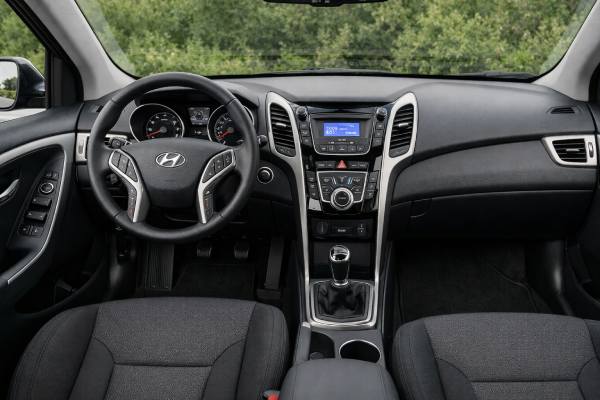
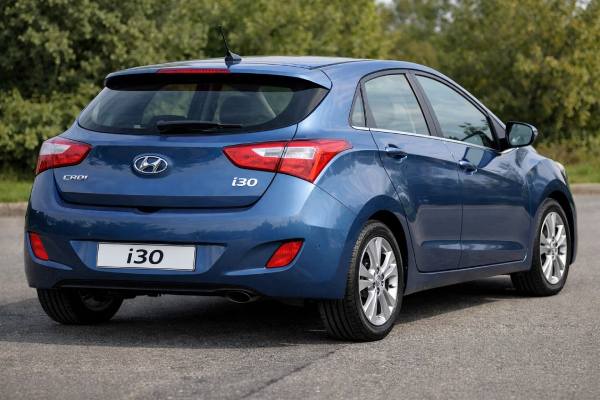
The second-generation Hyundai i30 GD with the 1.6 MPI petrol engine is one of the quieter success stories in the used compact-car market. It does not rely on a turbocharger, direct injection, or unusually complicated electronics to feel modern enough for daily use. Instead, it offers a balanced package: a roomy five-door hatchback body, a well-judged chassis, a chain-driven naturally aspirated 1.6-liter petrol engine, and straightforward front-wheel-drive engineering. In 120 hp form, it is not fast, but it is smooth, easy to live with, and usually less risky long term than some downsized turbo rivals from the same era. The GD generation also improved cabin space, refinement, and crash safety over the earlier FD model. For buyers who want a practical family hatch with predictable running costs, the 2012–2015 i30 1.6 MPI still makes a great deal of sense. The key is to buy on condition, service history, and recall completion rather than trim badge alone.
At a Glance
- The 1.6 MPI engine is simple, chain-driven, and usually cheaper to own long term than many small turbo petrol rivals.
- The GD body adds a more refined cabin, a 378 L boot, and a noticeably more mature road feel than the earlier FD.
- Ride comfort and motorway stability are strong points, especially on 15-inch or 16-inch wheels.
- Steering-coupling wear, ignition coils, and deferred cooling-system maintenance are more important than the core engine design.
- Engine oil and filter are best changed every 12 months or 12,000–15,000 km for long-term durability.
On this page
- Hyundai i30 GD petrol character
- Hyundai i30 GD key numbers
- Hyundai i30 GD trims and safety kit
- Known weak spots and campaigns
- Service schedule and smart buying
- On-road manners and consumption
- Main alternatives and value
Hyundai i30 GD petrol character
The GD-generation Hyundai i30 matters because it was the point where Hyundai stopped feeling like an outsider in the European compact class and started feeling genuinely competitive. The design became cleaner, the cabin more mature, and the chassis better resolved. In 1.6 MPI form, that progress is paired with one of the simpler engines in the range, and that is exactly why this version deserves attention from used buyers.
The 1.6 MPI is not the headline engine. It does not have the punch of the 1.6 GDI or the low-rpm shove of the diesel models. But it is often the calmer long-term ownership choice. It uses multi-point injection rather than direct injection, which helps it avoid one of the common concerns of many early-2010s petrol engines: intake-valve carbon build-up. It is also naturally aspirated, so there is no turbocharger to age, no boost-control hardware to chase, and no turbo-related heat stress. The timing drive is a chain rather than a belt, which removes one large scheduled replacement item, even though chain condition still depends heavily on clean oil and sensible servicing.
On paper, 120 hp and 156 Nm do not sound exciting. In practice, the i30 1.6 MPI feels honest and usable. It is smooth in town, easy to drive in traffic, and capable enough for normal family use. The engine likes revs more than torque, so it rewards measured downshifts rather than lazy low-rpm driving. That means it will not impress drivers stepping out of a turbodiesel, but it does suit owners who value predictability and low stress more than outright pace.
The body and chassis are a large part of the appeal. The GD i30 hatch is spacious for its class, with good rear-seat room and a useful 378 L boot. It is also composed on rough roads, helped by Hyundai’s multi-link rear suspension. That gives it a more settled, less budget-minded feel than some older rivals with simpler rear-axle layouts. Straight-line stability is good, and the car generally feels larger and calmer than its price point suggests.
This version is best for buyers who do a mix of city, suburban, and occasional motorway use. It makes particular sense for people who do not want diesel complexity, who cover too many short trips for a diesel to be happy, or who simply want a conventional petrol hatch that still feels modern enough inside. The catch is that these cars are now old enough for age-related faults to matter more than brochure specs. Suspension wear, electrical niggles, steering noises, cooling-system maintenance, and patchy service history are what separate a smart buy from a disappointing one. In other words, the i30 GD 1.6 MPI is not special because it is flashy. It is special because it is sensible.
Hyundai i30 GD key numbers
The table below focuses on the European-market five-door Hyundai i30 GD hatchback with the 1.6 MPI petrol engine rated at 120 hp. Exact figures can vary slightly by market, trim, tyre size, and gearbox, so the notes below reflect the commonly published configuration for the 2012–2015 hatch.
| Powertrain and efficiency | Specification |
|---|---|
| Code | G4FG |
| Engine layout and cylinders | Front-transverse inline-4, DOHC, 4 cylinders, 4 valves per cylinder |
| Bore × stroke | 77.0 × 85.4 mm (3.03 × 3.36 in) |
| Displacement | 1.6 L (1,591 cc) |
| Induction | Naturally aspirated |
| Fuel system | MPI / multi-point petrol injection |
| Compression ratio | About 10.5:1 |
| Max power | 120 hp (88 kW) @ about 6,300 rpm |
| Max torque | 156 Nm (115 lb-ft) @ about 4,850 rpm |
| Timing drive | Chain |
| Rated efficiency | About 6.4–6.7 L/100 km (36.8–35.1 mpg US / 44.1–42.2 mpg UK), gearbox- and market-dependent |
| Real-world highway @ 120 km/h (75 mph) | Usually about 6.3–7.2 L/100 km in good condition |
| Transmission and driveline | Specification |
|---|---|
| Transmission | 6-speed manual or 6-speed automatic, depending on market |
| Drive type | FWD |
| Differential | Open |
| Chassis and dimensions | Specification |
|---|---|
| Suspension front / rear | MacPherson strut / multi-link independent rear |
| Steering | Rack-and-pinion with electric assist |
| Steering ratio | About 2.85 turns lock-to-lock |
| Brakes | Front ventilated discs, rear solid discs on many trims; exact diameter varies with wheel package |
| Most common tyre size | 195/65 R15 or 205/55 R16 |
| Ground clearance | About 140–150 mm (5.5–5.9 in), market-dependent |
| Length / width / height | 4,300 / 1,780 / 1,470 mm (169.3 / 70.1 / 57.9 in) |
| Wheelbase | 2,650 mm (104.3 in) |
| Turning circle | About 10.6 m (34.8 ft) |
| Kerb weight | About 1,250–1,280 kg (2,756–2,822 lb), trim-dependent |
| GVWR | About 1,820 kg (4,012 lb) |
| Fuel tank | 53 L (14.0 US gal / 11.7 UK gal) |
| Cargo volume | 378 L (13.3 ft³) seats up / 1,316 L (46.5 ft³) seats folded, VDA |
| Performance and capability | Specification |
|---|---|
| 0–100 km/h | About 10.9–11.2 s |
| Top speed | About 190–195 km/h (118–121 mph) |
| Braking distance | Exact result depends strongly on tyre package and test source |
| Towing capacity | Often up to 1,300–1,400 kg (2,866–3,086 lb) braked; verify by VIN plate and market handbook |
| Payload | About 500–550 kg (1,102–1,213 lb) |
| Fluids and service capacities | Specification |
|---|---|
| Engine oil | Usually 5W-30 or 5W-40 meeting the correct Hyundai and ACEA spec |
| Engine oil capacity | About 3.6–3.8 L (3.8–4.0 US qt) with filter |
| Coolant | Long-life ethylene-glycol coolant, typically 50:50 mix |
| Coolant capacity | About 5.7–6.0 L (6.0–6.3 US qt), verify by VIN |
| Manual transmission oil | API GL-4 manual gear oil; exact grade varies by market |
| Manual transmission capacity | About 1.9–2.0 L (2.0–2.1 US qt) |
| Automatic transmission fluid | Hyundai-approved ATF for the fitted 6-speed automatic; verify by transmission code |
| A/C refrigerant | R-134a; charge varies by label |
| A/C compressor oil | PAG type; verify by under-bonnet label |
| Key torque specs | Wheel nuts commonly 88–107 Nm (65–79 lb-ft); other critical values should be checked against VIN-specific workshop data |
| Safety and driver assistance | Specification |
|---|---|
| Crash ratings | Euro NCAP 2012: 5 stars, 90% adult, 90% child, 67% pedestrian, 86% safety assist |
| IIHS | Not applicable to this exact overseas-market model |
| Headlight rating | No IIHS headlight rating for this model |
| ADAS suite | ABS, ESC, and seatbelt reminders were the core systems; no modern AEB, ACC, lane centering, or blind-spot assist on most 2012–2015 1.6 MPI cars |
The i30 GD 1.6 MPI is not defined by one standout number. Its appeal comes from the way these figures fit together: enough power, useful cabin space, a modern-enough chassis, and mechanical simplicity that still matters in the used market.
Hyundai i30 GD trims and safety kit
Trim names vary by country, so the safest approach with a GD i30 is to forget the brochure badge for a moment and focus on what the car actually has. In different European markets, buyers saw grade names such as Classic, Active, Style, Comfort, Premium, or local-market special editions. The underlying pattern was familiar. Entry versions usually came with steel wheels, simpler cloth trim, basic audio, and manual air conditioning. Mid-level cars added alloy wheels, leather-trimmed touchpoints, upgraded infotainment, cruise control, parking sensors, and nicer interior details. Higher trims often added larger alloys, dual-zone climate control, privacy glass, upgraded seats, navigation, and more convenience equipment.
For the 1.6 MPI specifically, the mechanical differences between trims are usually modest. The main things that change the ownership experience are wheel size, gearbox type, and equipment density. Fifteen- and sixteen-inch cars usually ride better, cost less to tyre, and suit the calm nature of the 120 hp engine. Higher trims can look more desirable, but they also bring more age-sensitive electronics, more buttons, and sometimes more expensive interior trim parts. The smartest buy is rarely the one with the most kit. It is the one with the best history and the fewest unresolved problems.
Quick identifiers help. A base car often has smaller wheels, simpler seat fabrics, and less elaborate infotainment. A mid-spec car usually adds steering-wheel controls, alloy wheels, and a more informative trip computer. Higher trims may bring climate control, rear sensors, navigation, folding mirrors, and more decorative exterior trim. The best way to verify any of this is still VIN-based equipment data or the original dealer build information, because trim names moved around by market.
Safety was a real strength of the GD i30 in period. The second-generation model earned a five-star Euro NCAP result under the 2012 protocol, which was a meaningful improvement over the older FD car. In practical terms, the body shell, restraint systems, and standard active-safety equipment were strong enough to place the i30 among the credible mainstream choices in the class. Depending on market, buyers got front, side, and curtain airbags, and some markets also included a driver knee airbag. ABS, EBD, ESC, and full seatbelt reminders were a major part of the package.
The car is still from a transitional safety era, though. It has the fundamentals but not most of the newer crash-avoidance systems. Do not expect widespread availability of autonomous emergency braking, adaptive cruise control, blind-spot monitoring, or lane-keeping assistance on this 2012–2015 1.6 MPI hatch. That means safety on a used example depends heavily on condition. Good tyres, straight braking, a healthy battery, no ABS or airbag warnings, and stable alignment make a direct difference.
One final point matters after repairs. If the car has had steering-column work, front-end accident repair, wheel-speed sensor replacement, or airbag-related work, proper diagnostics are important. On a modern-enough hatch like the GD, the most attractive trim is not always the best purchase. A simple but well-kept i30 is often the smarter and safer car to own.
Known weak spots and campaigns
The i30 GD 1.6 MPI is generally a dependable compact hatchback, but it is not immune to age and mileage. The good news is that its common faults are mostly conventional. The engine itself is not usually the expensive part of ownership. More often, costs come from neglected servicing, ignition issues, cooling-system wear, steering noises, and normal chassis aging.
The most useful way to read this car is by issue pattern.
- Common, low cost: ignition-coil and spark-plug faults.
- Symptoms: misfire under load, uneven idle, engine warning light, hesitation.
- Likely cause: aging coils or overdue plugs.
- Remedy: scan first, then replace the weak coil or fit a full fresh set of plugs where appropriate.
- Common, low to medium cost: steering-column coupling wear on some cars.
- Symptoms: clicking or thudding through the steering wheel at low speed or during parking inputs.
- Likely cause: wear in the flexible coupling within the motor-driven power steering assembly.
- Remedy: replace the coupling rather than chasing the entire steering system unnecessarily.
- Common, low to medium cost: front suspension links, bushes, and top mounts.
- Symptoms: knocking over broken surfaces, vague front-end feel, uneven tyre wear.
- Likely cause: potholes, age, and ordinary wear.
- Remedy: renew worn parts in pairs and align properly.
- Occasional, medium cost: cooling-system leaks or thermostat issues.
- Symptoms: coolant loss, slow warm-up, inconsistent heater output, temperature swings.
- Likely cause: aging hoses, thermostat housing, clamp fatigue, or overdue coolant.
- Remedy: pressure-test the system and repair early. These engines dislike repeated overheating.
- Occasional, medium cost: timing-chain noise on neglected engines.
- Symptoms: cold-start rattle, rough running, timing-correlation faults at higher mileage.
- Likely cause: long oil-change intervals, low oil level, or poor-quality oil.
- Remedy: assess chain, guides, and tensioner together. The chain is durable when serviced, not immortal.
- Occasional, medium cost: automatic-transmission shift quality issues on poorly maintained cars.
- Symptoms: harsh shifts, flare, delayed engagement.
- Likely cause: aged ATF, heat, or long service neglect.
- Remedy: proper diagnosis and fluid service where condition allows. Do not treat “sealed for life” as literal truth on an aging car.
The engine itself is usually not a heavy oil consumer, and because it is MPI rather than GDI, intake-valve carbon build-up is far less of a concern than on some direct-injection rivals. That is one of the model’s biggest long-term strengths. What matters more is whether the owner kept up with oil changes and fixed small cooling or ignition issues before they cascaded into larger ones.
Campaign and recall history also matters. Public recall records in some markets show ESC-related action on certain early i30s, and Hyundai also published steering-system service information in related GD-platform applications. Market coverage varies, so the right process is always the same: run the VIN through an official recall checker and ask a dealer to confirm open or closed campaign status in writing.
Rust is not the first thing most buyers fear on the GD, but it still deserves inspection. Check the sill edges, lower door seams, rear arches, front subframe area, jacking points, and brake-line routing. A clean i30 GD usually ages well. A neglected one often announces itself through a cluster of small faults rather than one dramatic failure.
Service schedule and smart buying
The i30 GD 1.6 MPI responds best to regular preventive care. That is what makes it attractive: you do not usually need exotic fixes, but you do need consistency. A buyer should assume that a car with vague history will need a catch-up service immediately, even if it drives well on the test route.
A practical maintenance plan looks like this:
| Item | Practical interval | Notes |
|---|---|---|
| Engine oil and filter | Every 12,000–15,000 km or 12 months | Better for chain and top-end durability than stretching intervals |
| Engine air filter | Inspect every service, replace around 30,000 km | Earlier in dusty conditions |
| Cabin air filter | Every 12 months or 15,000 km | Helps HVAC performance and demisting |
| Spark plugs | About 45,000–60,000 km depending on plug type | Verify the exact plug fitted |
| Coolant | Inspect yearly; renew about every 4–5 years if history is unclear | Also inspect hoses and thermostat housing |
| Brake fluid | Every 24 months | Important for pedal feel and corrosion resistance |
| Manual gearbox oil | Preventive change around 90,000–120,000 km | Helps long-term shift quality |
| Automatic ATF | Sensible preventive servicing on older cars | Do not rely blindly on “lifetime” marketing |
| Auxiliary belt and tensioners | Inspect yearly | Replace on cracks, noise, or wobble |
| Timing chain | No fixed routine replacement; inspect for noise, slack symptoms, and timing faults | Oil quality matters more than mileage alone |
| Brakes | Inspect every service | Rear hardware and slide pins can bind with age |
| Tyre rotation and alignment | Every 10,000–12,000 km and after suspension work | Keeps the car stable and quiet |
| 12 V battery test | Yearly after year four | Many nuisance electrical faults begin here |
Useful ownership figures include about 3.6–3.8 L of engine oil with filter, about 5.7–6.0 L of coolant, and about 1.9–2.0 L of manual gearbox oil depending on transmission variant. Wheel-nut torque is commonly in the 88–107 Nm range, but critical fasteners beyond that should always be checked against the VIN-specific workshop data.
The used-buyer checklist is simple but important:
- Confirm whether the car is manual or automatic and whether that matches your use.
- Ask for invoices, not just a stamped service book.
- Start the engine cold and listen for chain rattle, belt noise, and idle quality.
- Check for misfire, warning lights, and uneven warm-up.
- Test the air conditioning properly, not just the fan.
- Drive over rough roads to expose steering-coupling and suspension noises.
- Inspect the underside for rust, damp leaks, and bent jacking points.
- Check tyre brand and wear pattern, because they tell you a lot about maintenance habits.
The best years are generally later pre-facelift cars with complete service history and sensible wheel sizes. The trims to seek are usually mid-level versions with enough comfort equipment but without the highest concentration of aging electronics. Long-term durability is strong when the basics are covered. For many owners, that is exactly the point of this car.
On-road manners and consumption
The i30 GD 1.6 MPI is not a car that sells itself with drama. Its strengths appear over time: the way it settles on the motorway, the way it absorbs ordinary road damage without feeling flimsy, and the way the naturally aspirated engine responds cleanly to the throttle without turbo hesitation or diesel vibration. In daily use, that matters.
Around town, the 1.6 MPI is smooth and predictable. There is enough response off idle for normal traffic work, though not enough torque to feel especially punchy. If you want brisk acceleration, you need revs. That is not a flaw so much as the nature of a naturally aspirated petrol in a modern-sized family hatchback. The good part is that throttle response is linear and easy to meter, parking effort is light, and the manual gearbox usually feels natural once warm.
On open roads, the i30’s chassis makes a stronger impression than the engine. Straight-line stability is very good for the class, and the multi-link rear axle helps the car stay composed over patched roads and longer undulations. It is not as sharp as the best Ford Focus of the era, but it is calm and confidence-inspiring. On 15- or 16-inch wheels, ride quality is one of the car’s best qualities. Bigger rims may improve appearance, but they rarely improve the 1.6 MPI ownership experience.
Steering feel is decent rather than vivid. The car turns in predictably and behaves neutrally in normal road use. Braking feel is usually good when the rear calipers and pads are healthy, though neglected rear hardware can make the car feel less crisp than it should. NVH is also respectable. At city speed the i30 feels refined enough, and at motorway pace wind and tyre noise remain controlled by the standards of the class and period.
Real-world fuel economy is fair, though not remarkable:
- City: about 7.8–9.0 L/100 km
- Highway at 100–120 km/h: about 6.0–7.2 L/100 km
- Mixed use: about 6.8–7.8 L/100 km
Cold weather, short trips, low tyre pressure, cheaper tyres, automatic transmission use, and poor alignment can all add noticeable consumption. Drivers expecting diesel-like economy will be disappointed. Drivers wanting a smoother, simpler petrol hatch with acceptable real-world costs will usually be satisfied.
Performance is enough rather than abundant. Expect roughly 11 seconds to 100 km/h and a top speed in the low-190 km/h range depending on setup. The important thing is not the number itself, but the way the car uses it. It will cruise comfortably, keep up with traffic easily, and manage family duties without complaint. What it will not do is feel especially quick with a full load or on steep climbs unless you use the gearbox properly. That leaves the verdict clear: the i30 GD 1.6 MPI is best enjoyed as a balanced everyday hatch, not as a performance car.
Main alternatives and value
The Hyundai i30 GD 1.6 MPI sits in the used market as a rational alternative to the usual European and Japanese names. It may not be the segment icon, but it often ends up being one of the more sensible buys because it avoids some complexity while still feeling modern enough to live with every day.
The Kia cee’d is the closest relative and the most obvious rival. In many cases, choosing between the two comes down to condition, trim, and local service support. They share much of the same engineering logic, and both appeal for similar reasons: honest packaging, sensible parts costs, and straightforward ownership. The Hyundai tends to feel slightly more conservative, which some buyers prefer.
Compared with the Ford Focus 1.6 petrol, the Hyundai gives away some steering sharpness and driver involvement. The Focus remains the better car for keen drivers. The i30 counters with a calmer cabin, a strong reputation for value, and simpler long-term ownership in naturally aspirated petrol form. If you want a comfortable commuter rather than a back-road favorite, the Hyundai makes a strong case.
Against the Volkswagen Golf 1.2 TSI or 1.4 TSI models of the period, the Hyundai often looks less premium inside and feels less polished in details, but it can be the safer long-term buy when naturally aspirated petrol simplicity matters more than brand image. That matters for owners who plan to keep the car rather than just resell it quickly.
The Toyota Auris is another natural comparison. Toyota usually keeps an advantage in reputation for durability, but the i30 often offers a better blend of cabin room, ride quality, and value for money. The Opel or Vauxhall Astra is a viable alternative, though older turbo petrol versions can introduce a different set of maintenance questions. Mazda3 rivals are also worth considering, but body condition and rust history can become decisive there too.
The Hyundai is strongest for buyers who want:
- a conventional petrol hatch with no turbocharger,
- useful family space,
- respectable safety for the era,
- and predictable running costs.
It is less appealing for buyers who want especially low fuel consumption, strong low-rpm torque, or the most engaging steering in the class. Even so, that does not reduce its core value. The i30 GD 1.6 MPI is one of those cars that keeps making sense after the novelty has gone. A good example is practical, comfortable, easy to maintain, and hard to fault as an all-round daily hatchback. That is why it remains a smart recommendation in the used compact segment.
References
- Hyundai Owners manuals | Hyundai Motor UK 2026 (Owner’s Manual)
- EuroNCAP | Hyundai i30 2026 (Safety Rating)
- Hyundai i30 | Safety Rating & Report | ANCAP 2026 (Safety Rating)
- REC-000614 – Hyundai Motor Company Australia Pty Ltd – HYUNDAI i30 2010 – 2012 | Vehicle Recalls 2016 (Recall Database)
- Check if a vehicle, part or accessory has been recalled 2026 (Recall Database)
Disclaimer
This article is for informational purposes only and is not a substitute for professional diagnosis, repair, or official workshop guidance. Specifications, torque values, service intervals, procedures, and equipment can vary by VIN, market, gearbox, and trim, so always verify details against the correct official service documentation for the exact vehicle.
If this guide helped you, please consider sharing it on Facebook, X, or another social platform to support our work.