

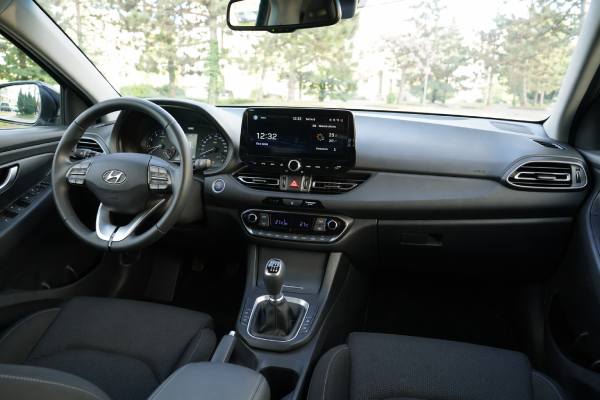
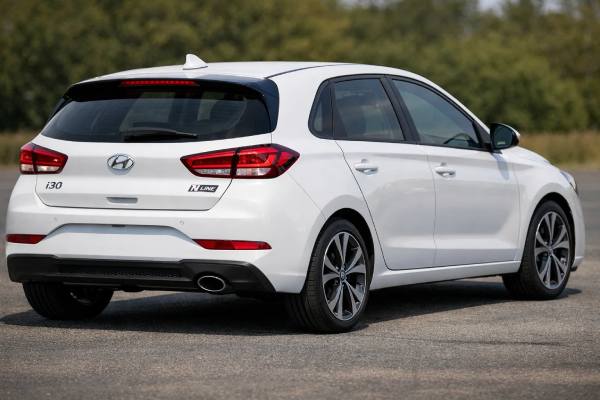
The facelifted Hyundai i30 PD 1.0 T-GDi 48V is one of those cars that makes more sense the longer you look at it. On paper, it is a compact hatchback with a small turbo petrol engine and mild-hybrid hardware. In everyday use, it feels like a carefully judged family car that aims to lower fuel use, smooth stop-start behavior, and keep ownership costs reasonable without turning the car into something complicated or fragile. The 48-volt system is the key distinction here. It adds a belt-driven motor-generator, a small lithium-ion polymer battery, smarter coasting behavior, and, in many markets, Hyundai’s intelligent manual transmission. That combination gives the facelift i30 a slightly more polished, more efficient character than the regular non-hybrid 1.0. For used buyers, the appeal is clear: modern safety, practical cabin space, honest running costs, and enough technology to feel current, as long as the service history and software support are in order.
Quick Specs and Notes
- The 48V setup adds useful efficiency gains in mixed driving without changing the i30’s straightforward hatchback character.
- Cabin space, boot volume, and motorway comfort remain strong points for a car of this size.
- UK-market trims usually gave the 1.0 48V a good balance of safety and infotainment even before the top trim.
- The 7-speed DCT needs a careful crawl-speed test drive, and the 48V car should have clean electrical and software history.
- A sensible oil-and-filter interval is every 10,000 to 15,000 km or 12 months.
Navigate this guide
- Hyundai i30 PD 48V essentials
- Hyundai i30 PD 48V numbers
- Hyundai i30 PD 48V grades and driver aids
- Typical faults and service actions
- Service routine and buying tips
- Everyday pace and fuel use
- Rival choices and value
Hyundai i30 PD 48V essentials
The facelifted i30 1.0 T-GDi 48V is not a full hybrid and does not try to behave like one. Hyundai’s idea was simpler. Keep the familiar small turbo petrol engine, then add a 48-volt mild-hybrid system to support it during start-up, acceleration, coasting, and energy recuperation. That approach gives the car a slightly cleaner, more polished feel in daily driving without changing the basic layout that makes the i30 easy to own.
In practical terms, this version still feels like a normal five-door family hatchback. It is front-wheel drive, compact enough for town use, roomy enough for small-family duties, and mature enough on the motorway to be a credible long-distance commuter. The 48V system is there to trim fuel use and improve smoothness, not to deliver dramatic electric-only behavior. That is important for buyers to understand. If you are expecting a Toyota-style hybrid experience, this is not it. If you want a familiar petrol hatchback with a little extra efficiency and lower-emissions hardware, it makes much more sense.
The engine itself is the known 998 cc three-cylinder turbo petrol, rated at 120 PS. In strict conversion terms that works out to roughly 118 hp, but in everyday listings this car is almost always described as 120 hp, and that is how most buyers will encounter it. The mild-hybrid hardware adds a 48V motor-generator and a small 0.44 kWh lithium-ion polymer battery. The system does not turn the i30 into a performance car, but it does make it feel slightly more refined in start-stop traffic and helps the engine during transitional moments.
One of the engineering details that matters most is transmission choice. Hyundai paired this setup with a 6-speed intelligent manual transmission in many markets and also offered a 7-speed dual-clutch automatic. The intelligent manual is more interesting than it sounds. It can decouple the engine under light load and allow efficient coasting strategies that a conventional manual cannot manage as well. That helps explain why this version feels most at home with relaxed, steady driving rather than hard charging between junctions.
The 2024 refresh kept the i30 current longer than many rivals in this class. Standard LED lighting became broader, cabin connectivity improved, USB-C ports arrived, and more Smart Sense safety equipment became standard. That means late cars are meaningfully easier to recommend than early facelift examples when prices are close.
In short, the i30 1.0 T-GDi 48V works because it stays disciplined. It does not overpromise. It simply delivers a practical hatchback with useful mild-hybrid help, modern safety, and a reassuringly normal ownership experience.
Hyundai i30 PD 48V numbers
For this article, the baseline is the European facelift hatchback with emphasis on UK-market published technical data, because those documents give the clearest open specifications for the 1.0 T-GDi 48V hatch.
| Powertrain and efficiency | Hyundai i30 PD 1.0 T-GDi 48V |
|---|---|
| Engine layout | Inline-3 turbo petrol |
| Cylinders | 3 |
| Valvetrain | DOHC, 4 valves per cylinder |
| Bore × stroke | 71 × 84 mm (2.80 × 3.31 in) |
| Displacement | 1.0 L (998 cc) |
| Induction | Turbocharged |
| Fuel system | Direct injection |
| Compression ratio | 10.5:1 |
| Engine max power | 120 PS / 88 kW @ 6,000 rpm |
| Engine max torque | 172 Nm (126.9 lb-ft) @ 1,500 to 4,000 rpm |
| Electric motor type | 48V mild-hybrid motor-generator |
| Electric motor max power | 16 PS / 11.8 kW |
| Electric motor torque | Not separately published in a useful road-car figure |
| Battery chemistry | Li-ion polymer |
| Battery capacity | 0.44 kWh |
| System voltage | 48 V |
| Hybrid system output | 120 PS / 88.3 kW @ 6,000 rpm |
| Hybrid system torque | 172 Nm (126.9 lb-ft) @ 1,500 to 4,000 rpm |
| Timing drive | Chain |
| Rated efficiency | About 5.2 to 5.4 L/100 km combined in UK 2024 data, depending on trim and gearbox |
| Real-world highway at 120 km/h | About 5.9 to 6.8 L/100 km in normal conditions |
| Transmission and driveline | Data |
|---|---|
| Transmission | 6-speed intelligent manual or 7-speed DCT |
| Drive type | FWD |
| Differential | Open |
| Chassis and dimensions | Data |
|---|---|
| Front suspension | MacPherson strut |
| Rear suspension | Multi-link in UK hatch data; some early pan-European preliminary sheets listed configuration variation by market |
| Steering | Motor Driven Power Steering |
| Steering turns lock-to-lock | 2.57 |
| Turning circle | 5.3 m turning radius, about 10.6 m kerb-to-kerb (34.8 ft) |
| Brakes | Front and rear discs |
| Length | 4,340 mm (170.9 in) |
| Width | 1,795 mm (70.7 in) |
| Width incl. mirrors | 2,039 mm (80.3 in) |
| Height | 1,455 mm (57.3 in) |
| Wheelbase | 2,650 mm (104.3 in) |
| Kerb weight | 1,216 to 1,365 kg manual; 1,246 to 1,395 kg DCT |
| GVWR | 1,800 kg manual; 1,830 kg DCT |
| Fuel tank | 50 L (13.2 US gal / 11.0 UK gal) |
| Cargo volume | 395 L seats up / 1,301 L seats down, VDA |
| Popular tyre sizes | 205/55 R16 and 225/45 R17 on the 1.0 48V hatch |
| Performance and capability | Data |
|---|---|
| 0–100 km/h | Around 11.2 to 11.4 s |
| 0–62 mph | 11.4 s in UK MY23 data |
| Top speed | 196 km/h (122 mph) |
| Braked towing | 1,200 kg manual / 700 kg DCT |
| Unbraked towing | 600 kg manual / 300 kg DCT |
| Payload | Market sheets often omit a single simple figure; expect it to vary with trim and gearbox |
| Fluids and service capacities | Practical note |
|---|---|
| Engine oil | Use Hyundai-approved oil to the VIN-specific standard; 0W-30 and 5W-30 appear commonly in Europe depending on market and climate |
| Coolant | Hyundai-approved coolant only; verify exact fill by VIN |
| Transmission fluid | Manual and DCT cars use different fluids; do not substitute |
| A/C refrigerant | R-1234yf |
| A/C refrigerant charge | 450 g (15.9 oz) shown in 2024 rescue data |
| Key torque specs | Wheel, brake, and suspension fasteners vary by wheel and hardware package; verify in workshop data before repair |
The numbers show why this car works. It is not quick, but it is well judged. The 48V system adds efficiency and polish, while the hatchback body keeps useful practicality. The gap between manual and DCT tow ratings is also worth noting, because it is larger than many buyers expect.
Hyundai i30 PD 48V grades and driver aids
The facelift i30 1.0 T-GDi 48V was sold with different trim names across Europe, but UK-market documentation gives a useful snapshot of how Hyundai positioned this version late in the run. In that market, the 1.0 48V hatch mainly sat in SE Connect and Premium trims, while N Line emphasis shifted more toward the stronger 1.5 T-GDi. That matters when shopping used cars because a sporty-looking i30 is not always the same thing as a 1.0 48V mild hybrid.
SE Connect was the value-focused version, but it was not stripped. It generally included 16-inch alloys, rear camera, rear sensors, cruise control, Apple CarPlay and Android Auto, trailer wiring package, and Forward Collision-Avoidance Assist with car and pedestrian detection. Lane Keep Assist and Manual Speed Limit Assist were also standard. For a mainstream family hatch, that is a solid base.
Premium is where the 1.0 48V starts to feel significantly more complete. It added 17-inch wheels, LED headlights, LED rear lights, front and rear parking sensors, the 10.25-inch navigation system, a 7-inch supervision cluster, heated front seats, heated steering wheel, wireless phone charging, climate control, keyless start, Blind Spot Collision Warning, Rear Cross Traffic Collision Warning, Lane Follow Assist, and more upscale trim materials. For many buyers, that makes Premium the most desirable used trim if the price jump is sensible.
The 2024 model update broadened standard equipment again in the wider European line. Hyundai added more standard LED lighting, USB-C charging points, over-the-air map updates, and more Smart Sense equipment. In simple terms, the late-build cars became easier to live with and slightly harder for rivals to outclass in daily convenience.
Safety performance remains one of the i30’s stronger ownership arguments. Euro NCAP awarded the i30 a five-star rating, with 88 percent for adult occupant protection, 84 percent for child occupant protection, 64 percent for vulnerable road users, and 68 percent for safety assist. Those figures come from the original model-family assessment, and while the rating later expired due to age, the underlying hardware and safety structure remained relevant for facelift buyers.
The ADAS picture is worth reading carefully because Hyundai split features by trim and by market. Broadly, you should expect:
- Standard core safety functions such as AEB, lane-keeping support, eCall, and tyre-pressure monitoring.
- Premium-grade extras such as blind-spot warning, rear cross-traffic warning, lane-following support, and more complete speed-limit assistance.
- On later European cars, extra options such as FCA Junction Turning and Highway Driving Assist 1.5.
For used buyers, one more point matters: calibration. If the windshield, front radar area, or parking-sensor network has been repaired after an accident, proof of correct calibration is more valuable than glossy detailing. On a modern i30, badly calibrated safety tech is a bigger concern than minor cosmetic wear.
Typical faults and service actions
The good news is that the i30 1.0 T-GDi 48V does not carry a widely accepted reputation for one catastrophic design flaw. Its trouble spots are more ordinary and more manageable. That does not mean buyers should relax. It means inspection needs to focus on the modern details that now decide whether a compact hatch feels dependable or annoying.
The most common low-cost problems are usually electrical or calibration-related. A weak 12V battery can trigger stop-start refusal, odd warning messages, infotainment resets, and inconsistent behavior from the mild-hybrid system. Many owners assume the 48V hardware is failing when the simpler 12V supply is actually the first thing to test. On a used example, a good battery report and clean charging behavior are worth more than fresh floor mats.
The next tier involves the transmission and drivability. The 7-speed DCT is not automatically a bad choice, but it deserves a deliberate road test. Symptoms to watch include hesitation when pulling away, shudder during parking-speed maneuvers, abrupt throttle response after a slow roll, or jerky downshifts in traffic. Causes range from software calibration and adaptation issues to clutch wear. The fix path usually starts with fault-code checks and dealer-level updates before moving to clutch-related work.
The mild-hybrid hardware itself is usually quiet in service, but there are sensible checks to make:
- Make sure the 48V warning system is clear on the dashboard.
- Confirm stop-start and coasting behavior work consistently once the car is warm.
- Inspect the luggage-area battery installation zone for signs of water ingress or poor repair.
- Ask whether the car has had dealer software updates, especially if it ever showed hybrid or drivability warnings.
Engine-side issues follow the familiar small-turbo pattern. Misfires are often ignition-related rather than terminal. Hesitation under load may point to spark plugs, coils, intake leaks, or boost-control faults. Short-trip cars can also suffer more from deposit build-up, incomplete warm-up cycles, and petrol particulate filter stress. Timing-chain issues are not the defining problem of this engine, but cold-start rattle or correlation faults should never be ignored.
Chassis wear is normal rather than dramatic. Expect the usual anti-roll-bar links, bushes, wheel alignment sensitivity, and tyre wear on larger wheel packages. Premium cars on 17-inch wheels tend to balance comfort and precision better than a sportier-looking setup that has been fitted with cheap replacement tyres.
Official recall and service action status is VIN-specific. Hyundai’s public recall checker is the right first step, then dealer records should confirm completion. On a used 48V car, do not accept vague phrases like “all sorted” or “serviced recently.” Ask for evidence. These are modern cars, and the difference between a sorted i30 and an irritating one is often found in software history, battery health, and the honesty of the paperwork.
Service routine and buying tips
The i30 1.0 T-GDi 48V is the kind of car that rewards sensible maintenance rather than heroic repair bills. If you buy one used, the goal is simple: stay ahead of fluids, ignition parts, battery health, and small warning signs before they become bigger electrical or drivability complaints.
A practical schedule looks like this:
| Item | Practical interval |
|---|---|
| Engine oil and filter | Every 10,000 to 15,000 km or 12 months |
| Engine air filter | Inspect yearly, replace around 30,000 km sooner in dusty use |
| Cabin filter | Every 12 months or roughly 15,000 to 20,000 km |
| Spark plugs | Around 60,000 km is a sensible target |
| Brake fluid | Every 2 years is a safe working rule |
| Coolant | Inspect annually; replace by official schedule for VIN and market |
| Brake pads and rotors | Inspect at every service |
| Tyre rotation | About every 10,000 to 12,000 km |
| Wheel alignment | Check yearly or after pothole damage |
| 12V battery test | Every year after year 3 |
| 48V system check | During annual service if warning lights or stop-start issues appear |
| DCT behavior check | At every service and every used-car test drive |
| Timing chain | No routine replacement interval; inspect if noisy or if timing faults appear |
Fluid choice matters more than brand loyalty here. Use Hyundai-approved oil for the exact engine, the correct coolant, and the correct gearbox fluid for manual or DCT applications. This is especially important on a mild-hybrid car because drivability problems can masquerade as mechanical faults when the real issue is poor maintenance practice or an incorrect fluid.
For buyers, the inspection checklist should be disciplined:
- Verify full service history with invoices, not just stamps.
- Check recall and campaign status by VIN.
- Start the engine from cold and listen for chain noise, misfire, or unstable idle.
- Test every electrical system, including stop-start, camera, parking sensors, phone pairing, and heated features.
- On DCT cars, crawl in traffic, reverse on a slight incline, and perform repeated low-speed starts.
- Inspect boot-floor and battery areas for moisture, poor trim fit, or accident repair clues.
- Check tyre brand and wear pattern. Cheap mismatched tyres often tell you how the rest of the car was treated.
- Confirm no ADAS warnings remain and ask whether the windshield has ever been replaced.
The safest used bet is usually a well-maintained Premium manual or intelligent-manual car. It gives you the better lights, stronger infotainment, and fuller safety equipment without relying on the DCT if you prefer long-term simplicity. A clean DCT example can still be a good buy, but only when the low-speed behavior is convincingly smooth. Long term, these cars look durable when serviced on time and not treated as disposable lease leftovers.
Everyday pace and fuel use
On the road, the i30 1.0 T-GDi 48V feels calmer and more mature than its engine size suggests. The mild-hybrid hardware does not turn it into a different class of car, but it does round off the edges. Pull-away, stop-start operation, and gentle part-throttle transitions feel a little neater than in a plain small turbo hatch, especially in urban use where the 48V system can support restart and recuperation events more often.
Ride quality is a strong point. On 16-inch wheels, the i30 absorbs rougher urban surfaces well and settles nicely at motorway speeds. The 17-inch Premium setup is still comfortable, though it introduces a slightly firmer edge over broken pavement. Straight-line stability is good, and the car feels planted rather than nervous in crosswinds. Steering feedback is not class-leading, but the weighting is natural and predictable.
The engine has a sensible character. There is still some low-rpm softness, because this is a small turbocharged three-cylinder hauling a family hatchback, but once it reaches the useful part of the torque band it feels cooperative and flexible. Around 1,500 to 4,000 rpm, it does the work owners will ask of it most often. It is not fast, yet it is rarely frustrating unless the car is heavily loaded and asked to overtake uphill with little planning.
Transmission choice changes the driving experience more than the mild-hybrid system does. The intelligent manual suits the engine well and supports the car’s efficient-coasting behavior. It feels slightly different from a conventional manual, but not in a way that most drivers struggle to accept. The DCT is easier in traffic when everything is working properly, though it can still feel less fluid at walking pace than a traditional torque-converter automatic.
Real-world fuel use is one of the main reasons to choose this version. In mixed driving, many owners should expect roughly 5.3 to 6.3 L/100 km. At a steady 100 to 120 km/h motorway cruise, about 5.9 to 6.8 L/100 km is a realistic band depending on weather, tyre size, traffic, and load. Cold weather and short trips can lift those figures noticeably, especially when the engine spends much of its time warming up rather than cruising.
Official performance is modest, with 0–100 km/h in roughly 11.2 to 11.4 seconds and a top speed of 196 km/h. Those numbers will not impress anyone, but the i30’s verdict is not built on outright pace. Its strength is that it feels competent, refined enough, and efficient enough almost all the time. For a daily hatchback, that matters more.
Rival choices and value
The facelift i30 1.0 T-GDi 48V lives in one of the toughest parts of the market, where almost every rival is good at something. Its case is strongest when the buyer wants balance rather than a single standout trait.
Against the Ford Focus 1.0 EcoBoost mild hybrid, the Hyundai gives up some steering precision and chassis entertainment. The Focus is still the more eager driver’s car. The i30 answers with a more conservative cabin layout, a strong equipment story, and a calmer sense of everyday use. If you want a car that feels “sorted” more often than “exciting,” the Hyundai can be the easier car to live with.
Against the Volkswagen Golf 1.0 eTSI, the Hyundai usually wins on straightforward value. The Golf often feels more polished in fine details and may hold its money better in some markets, but the i30 tends to give buyers more visible equipment for the same outlay. On the used market, that can mean better lights, better seats, or better safety kit without moving up a price band.
The Kia Ceed 1.0 T-GDi mild hybrid is the closest alternative in spirit. It is a logical comparison because both cars chase the same sweet spot of mainstream hatchback usability with light electrification. In practice, condition, service history, and trim level matter more than brand mythology. The Hyundai often feels slightly more understated. The Kia sometimes looks fresher or younger. Neither is a clear universal winner.
The Toyota Corolla is also relevant, though it comes from a different hybrid philosophy. If your priority is full-hybrid urban efficiency and low-speed electric assistance, the Corolla is the more convincing hybrid product. If you want a more conventional driving feel, manual option availability, and simpler day-to-day familiarity for a petrol-hatchback buyer, the i30 makes a different and still valid argument.
What makes the i30 1.0 T-GDi 48V worth recommending is that it avoids obvious traps. It is practical, modern enough, safe, efficient, and usually honest to own. It does not dominate on badge prestige, performance, or handling flair, but it does many things well at once. For buyers who care more about sensible ownership than showroom mythology, that is often the better deal.
References
- New Hyundai i30: sleeker, safer, and more efficient 2020 (Press Kit)
- Hyundai i30 | Technical, Specifications and Pricing | Model year 2023 | April 2024 2024 (Technical Data)
- Bolder and more high-tech: i30 gets update 2024 (Press Release)
- EuroNCAP | Hyundai i30 2020 (Safety Rating)
- Home | Hyundai Recalls & Service Campaigns 2026 (Recall Database)
Disclaimer
This article is for informational purposes only and is not a substitute for professional diagnosis, repair, or VIN-specific workshop guidance. Specifications, torque values, fluid approvals, service intervals, software updates, and procedures can vary by VIN, market, trim, gearbox, and equipment, so always verify the exact details against official Hyundai service documentation for the vehicle you are servicing or buying.
If this guide was useful, please consider sharing it on Facebook, X, or another social platform to support our work.