

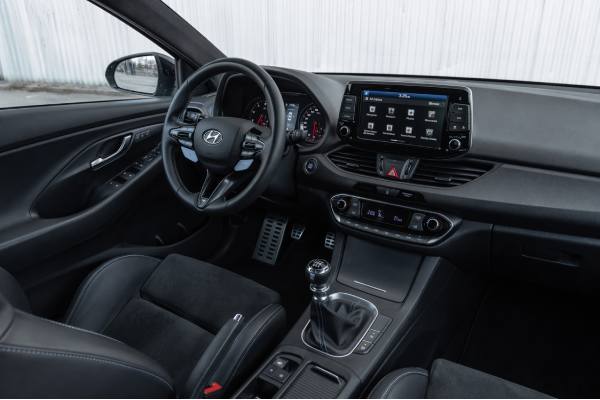
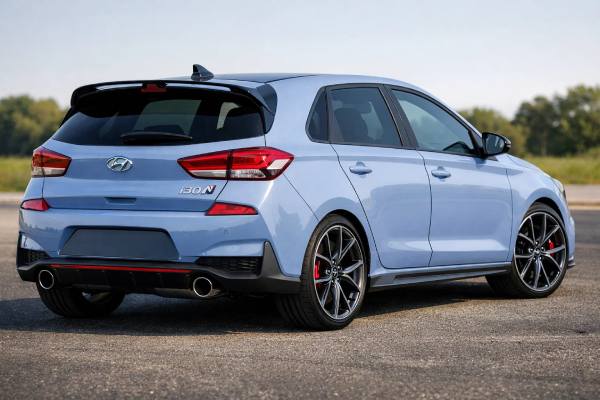
The 2017–2020 Hyundai i30 N PD in 275 hp form is the car that turned Hyundai from an outsider into a genuine hot-hatch contender. It combines a 2.0-litre turbocharged petrol engine, a standard six-speed manual, adaptive dampers, and in Performance Package form an electronic limited-slip differential, larger brakes, and a louder active exhaust. That recipe matters because the i30 N was never just about headline power. Its real appeal is the way the engineering works together: crisp front-end bite, strong braking, everyday usability, and a chassis that still feels alive even at normal road speeds. For owners, it can be both a practical five-door hatch and a serious enthusiast car. The main caution is simple: condition matters more here than with an ordinary i30, because tyres, brakes, clutch, suspension, and service history reveal how the car was used. This guide focuses on the original 275 hp pre-facelift Performance Package cars, including late registrations sold into 2020 in some markets.
What to Know
- The 275 hp Performance Package adds the e-LSD, larger brakes, 19-inch wheels, and active exhaust that give the i30 N its strongest character.
- Steering precision, damping range, and everyday practicality are still major strengths in this class.
- The six-speed manual is a core part of the car’s appeal and usually the simpler long-term ownership choice.
- Heavy track use can accelerate wear in the clutch, tyres, front brakes, and suspension consumables.
- A sensible used-car oil-service rhythm is every 10,000–15,000 km or 12 months.
Explore the sections
- Hyundai i30 N Character
- Hyundai i30 N Technical Sheet
- Hyundai i30 N Trims and Safety
- Weak Points and Factory Fixes
- Service Planning and Used Checks
- Real-World Speed and Feel
- Civic Type R and Hot Hatch Rivals
Hyundai i30 N Character
The original i30 N matters because it was not built as a token performance trim. Hyundai developed it as a proper N car, with its own chassis hardware, differential strategy, steering calibration, braking setup, and driver-focused software. In 275 hp Performance Package form, the car was pitched directly at the serious side of the hot-hatch class, not the warm-hatch middle ground. That is why it still feels special. It has the everyday shape and practicality of a regular five-door i30, but underneath it is much more focused.
The engine is central to that identity. Hyundai’s 2.0-litre turbocharged T-GDi unit makes 275 hp and 353 Nm, with an overboost function that raises torque to 378 Nm for short periods. On paper that looks merely competitive. On the road, it feels stronger because the power delivery is wide and the engine pulls cleanly through the middle of the rev range. It is not the most exotic-sounding four-cylinder in the class, but the active exhaust on the Performance Package gives it enough character to feel memorable without becoming tiring on long journeys.
Just as important is the mechanical package around it. The 275 hp car gets the hardware that turns a good hatch into a convincing one: electronic limited-slip differential, reinforced brakes, 19-inch wheels with performance tyres, electronically controlled suspension, rev matching, launch control, and a rear stiffness bar. Hyundai also judged the driving modes well. In softer settings the car remains usable every day. In its more aggressive settings, it becomes far sharper and more animated. That range is one reason the i30 N aged well. It is exciting when you want it to be, but it does not demand commitment every time you start it.
The cabin helps, too. Compared with some more extreme rivals, the Hyundai remains practical and ergonomic. It has useful rear seats, a real hatchback boot, simple controls, and visibility that makes daily driving easy. The seats are supportive, the driving position is good, and the manual gearbox contributes to the sense of involvement without making commuting a burden. This was one of the car’s biggest strengths when new, and it is still a major reason to buy one used.
There is, however, an ownership reality that buyers should understand. A hot hatch like this tells the truth about its previous life. A car that was serviced properly, warmed up correctly, and used enthusiastically but intelligently can still be an excellent buy. A car that has been repeatedly launched, tracked without proper cooling and brake care, or maintained to the minimum can feel tired quickly. That is why the i30 N is not a car to judge by mileage alone. The best examples are the ones with detailed history, sensible modifications or none at all, and evidence that the owner understood what the car actually is.
Hyundai i30 N Technical Sheet
This section focuses on the original 275 hp i30 N Performance Package hatchback with six-speed manual transmission. Hyundai’s 2019 UK technical-specification PDF is the clearest open factory source for the core numbers, and it is useful because it separates the standard 250 hp N from the 275 hp N Performance. A few workshop-level service figures are not clearly published in the open sources, so those are marked honestly rather than guessed.
| Powertrain and efficiency | Value |
|---|---|
| Code | 2.0 T-GDi N application; public Hyundai UK spec material does not list a family code |
| Engine layout and cylinders | Inline-4, DOHC, 4 cylinders, 4 valves per cylinder |
| Displacement | 2.0 L (1,998 cc) |
| Bore × stroke | 86.0 × 86.0 mm (3.39 × 3.39 in) |
| Induction | Turbocharged |
| Fuel system | Direct injection |
| Compression ratio | 9.5:1 |
| Max power | 275 hp (202.3 kW) @ 6,000 rpm |
| Max torque | 353 Nm (260.4 lb-ft) from 1,500 rpm |
| Overboost torque | 378 Nm (278.8 lb-ft) for up to 18 seconds |
| Timing drive | Chain |
| Rated efficiency | 8.3 L/100 km (28.3 mpg US / 34.0 mpg UK) WLTP combined |
| Real-world highway @ 120 km/h | roughly 7.2–8.5 L/100 km in standard trim |
| Transmission and driveline | Value |
|---|---|
| Transmission | 6-speed manual |
| Drive type | FWD |
| Differential | Electronic limited-slip differential on 275 hp Performance Package |
| Chassis and dimensions | Value |
|---|---|
| Suspension front/rear | MacPherson strut / multi-link |
| Steering | R-MDPS electric steering; 2.14 turns lock-to-lock |
| Brakes | Ventilated discs front and rear; Performance front 345 mm, rear 314 mm |
| Wheels and tyres | 235/35 R19 on 8.0J × 19 alloy wheels |
| Length | 4,335 mm (170.7 in) |
| Width | 1,795 mm (70.7 in) |
| Height | 1,447 mm (57.0 in) |
| Wheelbase | 2,650 mm (104.3 in) |
| Turning circle | 11.6 m (38.1 ft) |
| Kerb weight | 1,429–1,509 kg (3,150–3,327 lb), trim-dependent |
| GVWR | 1,950 kg (4,299 lb) |
| Fuel tank | 50 L (13.2 US gal / 11.0 UK gal) |
| Cargo volume | 381 L / 1,287 L (13.5 / 45.5 ft³), VDA |
| Performance and capability | Value |
|---|---|
| 0–100 km/h (0–62 mph) | 6.1 s |
| Top speed | 250 km/h (155 mph) |
| Braking distance 100–0 km/h | 34.6 m (113.5 ft) |
| Towing capacity | 1,600 kg (3,527 lb) braked / 700 kg (1,543 lb) unbraked |
| Payload | 441–521 kg (972–1,149 lb) |
| Fluids and service capacities | Value |
|---|---|
| Engine oil | use Hyundai-approved full-synthetic oil of the correct viscosity and spec for the VIN; exact public factory fill not clearly published in the open sources reviewed |
| Coolant | use Hyundai-approved coolant to the correct mix ratio for the market; exact public capacity not clearly published in the open sources reviewed |
| Transmission fluid | use only the correct Hyundai manual-transmission fluid for the gearbox code |
| Differential fluid | integrated with the transaxle system; verify exact service procedure by VIN |
| A/C refrigerant | verify by under-bonnet label and VIN |
| A/C compressor oil | verify by VIN and refrigerant type |
| Key torque specs | always confirm wheel, brake, suspension, spark-plug, and drain-plug figures in official service data before work |
| Safety and driver assistance | Value |
|---|---|
| Euro NCAP baseline for PD i30 family | 5 stars |
| Adult occupant protection | 88% |
| Child occupant protection | 84% |
| Vulnerable road users | 64% |
| Safety assist | 68% |
| ADAS suite on UK 2019 N spec | AEB/FCA, driver attention alert, lane departure warning with lane keep assist, TPMS, rear camera, front and rear parking sensors |
The numbers explain why the i30 N made such an impact. It was fast enough to be credible, but what really mattered was the combination of proper mechanical hardware, strong brakes, useful practicality, and a manual gearbox that kept the car feeling honest.
Hyundai i30 N Trims and Safety
The first thing to understand is that the original i30 N range was split between the standard 250 hp car and the 275 hp Performance Package car. For this guide, the 275 hp version is the real subject because it is the one most enthusiasts mean when they say “i30 N” from this period. Mechanically, the difference was meaningful. The Performance Package added the electronic limited-slip differential, larger 19-inch wheel-and-tyre setup, reinforced brakes, active variable exhaust, and the extra power. Those are not cosmetic upgrades. They change the character of the car.
In UK 2019 specification, Hyundai also separated the interior and comfort story more clearly than many people remember. The standard N had cloth seats, 18-inch Michelin tyres, and red brake calipers. The N Performance moved to 19-inch Pirelli P Zero tyres, calipers with N logos, faux suede and leather seat facings, heated front seats, electric seat adjustment with memory on the driver’s side, heated steering wheel, and some extra visual detail. Both versions already had a strong baseline of convenience kit, including navigation, smartphone integration, digital radio, wireless charging, front and rear parking sensors, rear camera guidance, smart key access, climate control, and LED headlamps.
That makes buying easier today. Most 275 hp cars already feel well equipped, so the key decision is less about “base versus luxury” and more about originality, condition, and modifications. You will find many cars with aftermarket wheels, springs, intakes, exhaust changes, or remaps. Some of those are done intelligently, but every change moves the car farther away from the reference setup that made it so good in the first place. A standard or lightly modified car is usually the safer buy unless you know the builder and the parts history.
Year-to-year changes are also important. The original pre-facelift car began with 250 and 275 hp manual variants. By the facelift transition, Hyundai moved the i30 N to a 280 PS specification in many markets and added the N DCT eight-speed automatic. That means a car registered in 2020 may not automatically be the same thing as the 275 hp pre-facelift Performance Package car. Check power output, gearbox, wheel size, exhaust, and VIN data instead of trusting the registration year alone.
Safety should also be read carefully. There is no separate N-only Euro NCAP crash result. The published five-star score applies to the PD i30 family baseline, which still matters because the N uses the same core body structure. For the N itself, what changes in practice is the equipment level. UK-spec 2019 N and N Performance cars included front, side, and curtain airbags, a passenger airbag deactivation switch, AEB with forward collision warning, driver attention alert, ESC, hill-start assist, ISOFIX on the rear outer seats, lane departure warning with lane keep assist, and individual tyre-pressure display. That is a respectable list for a 2017–2020 hot hatch.
The final inspection point is calibration. Any car with replaced windscreen glass, parking-camera faults, or front-end repair deserves careful checking. Performance cars often get modified or repaired more aggressively than ordinary hatchbacks. On the i30 N, that means you should test not only the obvious performance items, but also the cameras, warning systems, lighting, and every mode or menu tied to the car’s driver-assistance hardware.
Weak Points and Factory Fixes
The i30 N’s reliability story is better than many first-generation performance cars manage, but it is still a performance hatch, so the important issues are mostly about use, wear, and maintenance discipline. The encouraging part is that the model is not defined by one notorious, unavoidable design failure. The less encouraging part is that enthusiastic use can hide a lot of fatigue.
A realistic fault map looks like this:
- Common and low-to-medium cost: front tyre wear, front brake wear, stone-chipped paint around the nose and sills, heat-cycled brake fluid, tired battery performance, and rattles from interior trim or exhaust hardware.
- Occasional and medium cost: ignition-coil or spark-plug related misfire under load, exhaust-valve noise, suspension drop-link wear, alignment drift, and uneven inside-edge tyre wear on cars driven hard over rough roads.
- Occasional and medium-to-high cost: clutch wear on badly launched cars, rough second-hand manual shift feel from abuse or poor fluid condition, cracked or heavily heat-spotted front discs, and dampers or top mounts that have had a hard life.
- Less common but worth respecting: intake-valve deposit build-up from direct injection, boost leaks, and timing-chain or timing-correlation concerns on cars with poor oil-change history.
The engine itself is generally the strong part, provided it has had correct oil, sensible warm-up, and regular servicing. Problems usually start at the edges: poor fuel, tired plugs, hard use on old oil, or repeated heat cycles without proper maintenance. A misfire on boost does not always mean a major engine problem; it often points first to ignition components or maintenance neglect. Still, it should not be ignored, especially on a tuned car.
The clutch deserves special attention because many i30 Ns were bought specifically to be enjoyed. A healthy standard car should pull away cleanly, take full-throttle load without slip, and feel consistent after repeated starts. A tired clutch may feel acceptable in normal driving but reveal itself with higher-gear acceleration. If the bite point is unusually high or the pedal feels inconsistent when hot, inspect further.
Chassis and consumable wear are more predictable. Front tyres and front brakes take real punishment, especially on the 19-inch Performance Package setup. Owners who track the car without stepping up fluid, pad compound, and alignment care can leave the next buyer with a long list of “small” jobs that add up quickly. That is why matching premium tyres, fresh brake fluid, and sensible pad choice are all good signs on a used example.
Software matters, too. Hyundai’s dealer servicing system includes software checks and updates, and those can matter for infotainment stability, engine-management refinement, and safety-system behavior. Even on a mostly mechanical hot hatch, update history still has value. A full dealer history is not mandatory, but documented professional servicing is especially helpful on a car with variable exhaust control, adaptive damping, drive-mode electronics, and camera-based safety functions.
For recalls and campaigns, VIN verification is essential. Do not rely on model-year assumptions or online lists alone. Check the official recall system, and ask the seller for proof of campaign completion and service invoices. On a performance car, paperwork is not a nice extra. It is part of the mechanical inspection.
Service Planning and Used Checks
The safest way to own an i30 N well is to service it like an enthusiast’s road car, not like a disposable lease hatch. Hyundai’s official service structure provides the baseline, but a used 275 hp turbo hot hatch deserves slightly more conservative intervals if you want it to stay sharp. The biggest mistake is assuming the car can be treated like an ordinary 1.4-litre commuter because it looks like an i30. It cannot.
A practical ownership schedule looks like this:
| Item | Practical interval | Notes |
|---|---|---|
| Engine oil and filter | 10,000–15,000 km or 12 months | Use shorter intervals for hard driving, repeated short trips, or track use |
| Engine air filter | Inspect yearly, replace around 20,000 km | Sooner if the car runs an aftermarket intake or sees dusty use |
| Cabin filter | 12 months or 15,000–20,000 km | Cheap and worth keeping fresh |
| Spark plugs | 30,000–45,000 km on enthusiast use | Turbo DI engines reward not stretching plug life |
| Coolant | Check every service; renew by official schedule | Watch level and signs of heat stress |
| Brake fluid | Every 2 years minimum; yearly if tracked | Fresh fluid matters on this car |
| Brake pads and discs | Inspect every service | The 275 hp car can consume fronts quickly |
| Manual gearbox oil | Inspect for leaks; refresh around 60,000–90,000 km if driven hard | Use only the correct Hyundai spec |
| Timing chain | No scheduled belt interval, but inspect on symptoms | Noise, poor oil history, or timing faults matter |
| Auxiliary belt and hoses | Inspect every service | Replace on cracking or age |
| Tyres and alignment | Pressure monthly; geometry whenever wear pattern changes | Inner-edge wear is a clue, not bad luck |
| 12 V battery | Test yearly from about year 4 onward | Weak batteries trigger nuisance faults on modern cars |
A few practical buying checks are especially important. First, inspect the tyres carefully. Correct-size premium tyres on all four corners suggest an owner who understood the car. Cheap mismatched tyres usually suggest the opposite. Second, look at the brake condition with the same seriousness. Lip on the discs, heat checking, discoloured hubs, or bargain pads tell a story. Third, do not skip a cold start. You want to hear chain behavior, idle stability, and exhaust-valve noise before the car is warm.
On the road test, check the following:
- Straight steering and clean braking without vibration.
- Full-throttle pull in higher gears with no misfire or clutch slip.
- Consistent manual shift quality once fully warm.
- No adaptive damper warnings, ESC lights, or camera-related errors.
- Exhaust behavior in the drive modes without obvious rattles.
- No knocking from the front axle over poor surfaces.
- Smooth rev-matching function if enabled.
Modification history deserves a calm, honest view. A well-mapped car with proper supporting hardware and invoices may be fine, but it still narrows your safety margin. Poorly fitted springs, loud exhausts, bargain intakes, or unknown remaps are not “free upgrades.” They are risk. For most buyers, the best long-term i30 N is a car that remains close to factory spec, runs good tyres, has fresh fluids, and has been owned by someone methodical rather than theatrical.
The durability outlook is good if those conditions are met. The i30 N is tough enough to be used properly, but it is not immune to neglect. Buy on evidence, not excitement.
Real-World Speed and Feel
The reason the i30 N earned respect so quickly is that it feels engineered by people who understood how a fast hatch should behave on an ordinary road. It is quick, but the speed is only part of the story. What really stands out is the way the car combines front-end bite, body control, and adjustability without becoming exhausting.
The steering is one of the car’s best features. It is quick enough to feel alert, accurate enough to trust, and consistent enough that the nose goes exactly where you aim it. The electronically controlled differential then helps the car turn that front-end precision into real traction on corner exit. On a dry road, the 275 hp Performance Package feels eager and keyed in rather than messy. That is a big achievement in a powerful front-wheel-drive hatchback.
Ride quality is also better judged than the i30 N’s image suggests. In softer modes it is firm, but not absurd, and it settles well on faster roads. In the more aggressive modes it becomes sharper and busier, yet still feels tied down rather than crude. This matters because many buyers use the i30 N as a daily driver. It is not as isolated as a Golf GTI, but it is far easier to live with than some harder-edged rivals.
The powertrain has real personality. Throttle response is strong once the turbo is in play, mid-range shove is substantial, and the manual gearbox gives the car a sense of directness that many newer performance cars have lost. Rev matching is useful rather than gimmicky, and launch control works if you ever need it, though repeated use is not kind to driveline wear. The active exhaust adds pops and crackles in the aggressive modes, but the car does not depend on noise to feel fast.
Real-world economy is acceptable rather than impressive. The official combined figure of 8.3 L/100 km for the 275 hp Performance model is achievable only in favorable conditions. In actual use, expect about 10.0–12.5 L/100 km in city driving, 7.2–8.5 L/100 km at a steady 100–120 km/h cruise, and roughly 8.5–10.5 L/100 km in mixed use. Hard driving, short trips, cold weather, and track work can raise those numbers quickly. Nobody buys an i30 N for Prius-grade economy, but the fuel use is still reasonable for what the car offers.
Performance remains strong even now. A 6.1-second 0–100 km/h time and 250 km/h top speed still put it in proper hot-hatch territory, and the 34.6 m braking figure is genuinely serious. More important than the headline numbers, though, is how repeatable the car feels. In a good example, the brakes are confidence-inspiring, the front axle feels planted, and the whole car encourages you to use more of it. That quality is harder to quantify than horsepower, but it is the reason the i30 N still matters.
Civic Type R and Hot Hatch Rivals
The i30 N’s rivals explain its place in the market very clearly.
Against the Honda Civic Type R FK8, the Hyundai gives away some ultimate pace and some of the Honda’s astonishing front-axle brilliance. The Civic is the more extreme, more track-focused machine. It is also visually louder and, for some buyers, less discreet to own every day. The i30 N fights back with a more understated shape, a more playful exhaust character, and a value proposition that was hard to ignore when new and remains attractive used.
Against the Volkswagen Golf GTI Performance, the Hyundai feels more raw and more mechanical. The Golf usually wins for polish, cabin finish, and ease. The i30 N wins for drama, steering engagement, diff-led corner exit, and the sense that Hyundai was trying harder to impress enthusiasts than to preserve mainstream brand manners. If you want the more rounded daily hatch, the Golf still makes sense. If you want the more vivid one, the Hyundai usually does.
Against the Renault Mégane RS, the i30 N sits in an interesting middle ground. The Renault has serious chassis credibility and can feel more delicate and precise on the right road. The Hyundai counters with a more complete everyday package, stronger standard equipment in many markets, and a friendlier blend of ride, practicality, and driver engagement. It is the car many buyers end up choosing when they want excitement without feeling locked into a specialist tool.
The Ford Focus ST is another natural comparison. The Ford brings a muscular engine and a familiar hot-hatch personality, but the i30 N often feels more cohesive as a front-end package, especially in 275 hp Performance form with the e-LSD and brake hardware. The Hyundai’s steering and damping calibration helped it feel like a car developed around a clear idea rather than simply upgraded for more power.
That is why the i30 N became such a big deal. It did not necessarily dominate every single category, but it combined almost all the important ones: strong engine, manual gearbox, proper diff, useful practicality, serious braking, and enough comfort to live with. In 275 hp form, it remains one of the most convincing hot hatches of its period.
Buyers today should think less in terms of internet reputation and more in terms of fit. If you want the sharpest possible front-wheel-drive car for track bragging rights, the Civic Type R may still be the answer. If you want the most polished daily performance hatch, a Golf GTI may suit you better. But if you want a car that feels engineered by enthusiasts, remains practical, and still delivers real value on the used market, the original Hyundai i30 N 275 hp deserves its place near the top of the shortlist.
References
- Hyundai i30 N Technical Specification 2019 (Technical Data)
- Hyundai announces New i30 N prices and specifications 2021 (Press Release)
- EuroNCAP | Hyundai i30 2017 (Safety Rating)
- Fixed Price Hyundai Servicing | Hyundai Motor UK 2026 (Servicing)
- Check if a vehicle, part or accessory has been recalled – GOV.UK 2026 (Recall Database)
Disclaimer
This article is for informational purposes only and is not a substitute for professional diagnosis or repair. Specifications, torque values, service intervals, procedures, and fluid requirements vary by VIN, market, model year, and equipment, so always verify details against official Hyundai service documentation for the exact vehicle.
If this guide was useful, please consider sharing it on Facebook, X, or another platform to support our work.