
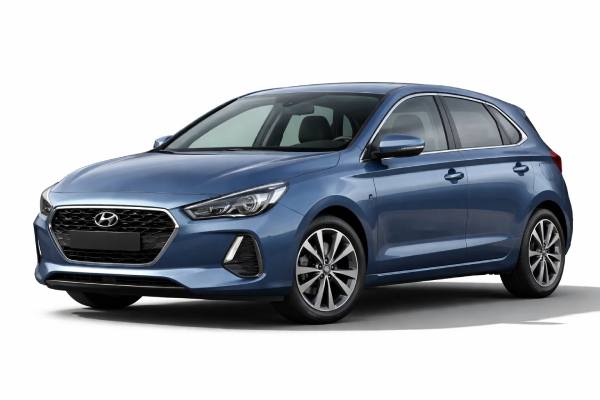
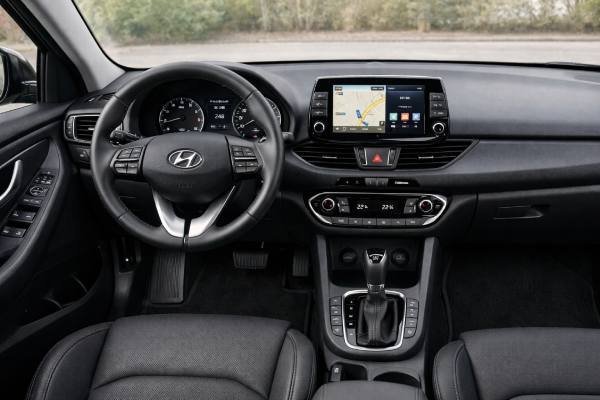

The 2017–2020 Hyundai i30 PD with the 1.4 MPI 100 hp petrol engine is one of those cars that makes more sense the longer you plan to keep it. It is not the quickest i30, and it was never meant to be. Instead, it pairs a simple naturally aspirated 1.4-liter petrol engine with a manual gearbox, a roomy five-door hatchback body, and the kind of everyday usability many buyers still want in a used family car. In European-market form, the PD-generation i30 also brought a more mature cabin, a larger-feeling interior, and strong passive safety credentials. The trade-off is clear: modest performance, equipment that can vary more than buyers expect from country to country, and a need to check recalls and service history carefully on older examples. This guide focuses on the European five-door hatch, using Hyundai’s own period literature and official safety material as the baseline.
Owner Snapshot
- The 1.4 MPI is one of the simpler i30 engines to own long term because it avoids turbo hardware.
- The PD hatch offers a useful 395 L boot and a roomy cabin for a compact family car.
- Euro NCAP safety performance was strong for its class, with a 5-star result for the i30 range.
- Equipment can vary sharply by market, and some brochures conflict on whether AEB was fitted to 1.4 petrol versions.
- A sensible baseline is engine oil and filter every 10,000 km or 12 months, whichever comes first.
Guide contents
- Hyundai i30 PD in Context
- Hyundai i30 PD Data and Specs
- Hyundai i30 PD Trims and Safety
- Common Faults and Recall Watch
- Maintenance and Used-Buying Tips
- Road Manners and Real Use
- Against Golf, Ceed and Focus
Hyundai i30 PD in Context
In the PD-generation i30 lineup, the 1.4 MPI sits at the honest, low-stress end of the range. It is the version for drivers who care more about predictable running costs and simple hardware than about fast overtakes or brochure-leading torque. Hyundai’s own period material pitched the i30 as a roomy, more mature compact hatch with improved steering feel, better handling, and a wider spread of connectivity and safety equipment than older i30s. In that wider story, the 1.4 MPI is the calmest choice: a non-turbo petrol engine with 100 PS, front-wheel drive, and manual transmission.
That matters in the used market. Turbocharged small engines can feel stronger at low rpm, but the 1.4 MPI’s appeal is its relative mechanical simplicity. There is no turbocharger to age, no intercooler plumbing to worry about, and the power delivery is linear rather than punchy. For owners doing mainly town driving, school runs, or moderate suburban mileage, that can be more valuable than headline pace. The i30 body itself helps the case. Hyundai quoted class-competitive space, and owner-manual data shows a 395 L VDA boot with the rear seats up and 1,301 L with them folded. That is enough for a pushchair, holiday bags, or DIY-store cargo without stepping up to the wagon.
The other reason this version matters is that it avoids the trap of judging a used hatch only by performance. Plenty of buyers need a comfortable commuter, a first family car, or a second household car that is easy to park, easy to insure, and not intimidating to service. The i30 PD 1.4 MPI fits that brief well. It has a settled chassis, a mature cabin design, and, in better-equipped trims, genuinely useful modern features such as a rear camera, smartphone integration, navigation, climate control, and LED lighting.
Its weak points are just as clear. This is not a fast car, especially when loaded. The old official combined fuel figure also reflects the gentler test cycle of the period, so real motorway economy will usually land above the brochure number. Equipment needs careful checking because the exact safety and comfort spec can vary by country, trim, and build date. And like most late-2010s compact cars, older used examples can start to show battery, infotainment, or minor electronics irritations before they show major engine trouble. That makes the 1.4 MPI i30 a sensible buy only when the individual car is right, not automatically the best buy just because the engine is simpler.
Hyundai i30 PD Data and Specs
The summary below focuses on the European-market five-door hatchback with the 1.4 MPI petrol engine and manual transmission. Figures are based on Hyundai’s period brochure, owner-manual data, and Euro NCAP’s model file for the 1.4 petrol manual hatchback. Where Hyundai did not publish a figure clearly in the open owner-facing sources used here, it is better to leave the row blank than guess.
Powertrain and efficiency
| Item | Hyundai i30 PD 1.4 MPI |
|---|---|
| Engine type | Naturally aspirated petrol, multi-point injection |
| Displacement | 1.4 L (1,368 cc) |
| Cylinders | Inline 4 |
| Fuel system | MPI / PFI |
| Max power | 100 hp (73.3 kW) at 6,000 rpm |
| Max torque | Not clearly published in the open Hyundai brochure used here |
| Transmission | Manual |
| Drive type | FWD |
| Official fuel use | 6.8 urban / 4.9 extra-urban / 5.6 combined L/100 km |
| CO2 | 157 urban / 115 extra-urban / 130 combined g/km |
Chassis, tyres, and dimensions
| Item | Hyundai i30 PD 1.4 MPI |
|---|---|
| Body style | 5-door hatchback |
| Wheelbase | 2,650 mm (104.33 in) |
| Length | 4,340 mm (170.87 in) |
| Width | 1,795 mm (70.66 in) |
| Height | 1,455 mm (57.28 in) |
| Typical tyre sizes | 195/65 R15, 205/55 R16, 225/45 R17 |
| Most common used-market size | 205/55 R16 |
Weights and capacities
| Item | Hyundai i30 PD 1.4 MPI |
|---|---|
| Kerb weight / running order | 1,244 kg (2,743 lb) |
| GVWR | 1,760 kg (3,880 lb) |
| Fuel tank | 50 L (13.21 US gal / 11.0 UK gal) |
| Boot volume, seats up | 395 L (13.95 ft³), VDA |
| Boot volume, seats folded | 1,301 L (45.94 ft³), VDA |
| Towing, braked | 1,200 kg (2,646 lb) in the brochure baseline |
| Towing, unbraked | 600 kg (1,323 lb) |
Fluids and service capacities
| Item | Hyundai i30 PD 1.4 MPI |
|---|---|
| Engine oil spec | API SM and ILSAC GF-4 or above, or ACEA A5/B5 |
| Common oil grades | 5W-30, 5W-40, 0W-40, 10W-30, 15W-40 depending on climate |
| Engine oil capacity | 3.6 L (3.8 US qt), drain and refill |
| Coolant type | Ethylene-glycol base coolant for aluminum radiator, mixed with soft or deionized water |
| Brake fluid | FMVSS 116 DOT 3 or DOT 4 |
| A/C refrigerant | Market-dependent; verify by VIN and under-hood label |
| Key torque values | Use VIN-specific service data; not fully published in the open owner literature |
Safety and crash data
| Item | Hyundai i30 PD 1.4 MPI |
|---|---|
| Euro NCAP rating | 5 stars |
| Adult Occupant | 88% |
| Child Occupant | 84% |
| Vulnerable Road Users | 64% |
| Safety Assist | 68% |
| Tested applicability | Euro NCAP lists the 1.4 petrol manual hatchback among applicable variants |
A few notes help interpret these numbers. First, the brochure’s towing figure for the Irish-market baseline is 1,200 kg braked, but some owner-manual versions list 1,300 kg for the 1.4 MPI manual, so buyers who plan to tow should confirm the VIN-specific plate and market documentation rather than rely on a generic database. Second, the official 5.6 L/100 km combined figure is useful as a reference point, but it comes from the older test regime and should not be read as a guaranteed everyday result. Third, the strongest hard numbers in the open record are the basics: displacement, power, dimensions, weights, boot space, and safety performance.
Hyundai i30 PD Trims and Safety
For trims and equipment, the clearest period Hyundai source in the open web record is the Irish-market brochure. That matters because the names and standard features can differ by country. In that brochure, the main grades are Classic, Deluxe, and Deluxe Plus. Even in base form, the i30 is not stripped bare. Classic includes front, side, and curtain airbags, cruise control with a speed limiter, tyre-pressure monitoring, Bluetooth, a 5-inch touchscreen, and high-beam assist. Deluxe adds the features many used-car buyers now see as the sweet spot: 16-inch alloys, rear camera, air conditioning, folding mirrors, fog lamps, and upgraded exterior lighting. Deluxe Plus adds the more premium touches, including half-leather trim, dual-zone climate control, rear parking assist, an 8-inch touchscreen, built-in navigation, Apple CarPlay, and Android Auto.
| Trim | Key features that matter today |
|---|---|
| Classic | 15-inch steel wheels, airbags, cruise and limiter, TPMS, Bluetooth, 5-inch screen, high-beam assist |
| Deluxe | 16-inch alloys, rear camera, manual A/C, folding mirrors, fog lamps, LED running lights |
| Deluxe Plus | Half-leather, dual-zone climate, rear parking assist, 8-inch nav screen, Apple CarPlay, Android Auto, LED headlamps |
The most important buyer warning here is not about leather or wheel size. It is about safety-equipment consistency. In the same brochure, Hyundai’s safety section says AEB is not available on the 1.4 petrol, yet the equipment listing for Classic also includes “Autonomous Emergency Braking.” That kind of conflict is exactly why used buyers should not assume a specific ADAS feature is present just because a trim name sounds familiar. The correct approach is to inspect the actual car, run the VIN through Hyundai’s records where possible, and confirm by build sheet or dealer printout. On a used 1.4 MPI, treat AEB, camera-based lane functions, and other active-safety features as “verify physically” items rather than guaranteed equipment.
Crash protection, however, is easier to pin down. Euro NCAP published the i30’s rating on July 5, 2017 and recorded a 5-star result with 88% for adult occupant protection, 84% for child occupant protection, 64% for vulnerable road users, and 68% for safety assist. The database also shows that the rating applies to the 1.4 petrol manual five-door hatchback. That is important because it means the low-output petrol car still benefits from the same core body shell and passive-safety standard that made the wider i30 range competitive in its class.
There are still nuances. Euro NCAP’s page shows a modest vulnerable-road-user mitigation score in the original testing structure, and the equipment mix behind “Safety Assist” depends on what was actually fitted. So the practical used-car reading is this: passive safety is a real strength, but active-safety content on any individual 1.4 MPI car needs to be confirmed one car at a time. Buyers who want the fullest convenience and infotainment bundle should target Deluxe Plus, while buyers who want the lowest running-cost risk may still be very happy with a clean Classic or Deluxe provided the safety spec is checked carefully before purchase.
Common Faults and Recall Watch
The i30 PD 1.4 MPI is not a car with a long public list of catastrophic, engine-specific horror stories. That is good news. The naturally aspirated MPI layout is the most conservative petrol option in the range, and that alone helps its reputation. Still, older used cars live or die by the details, so it makes sense to separate routine wear, common annoyances, and genuine recall-related safety issues.
| Issue area | Prevalence | Severity and cost tier | What to look for |
|---|---|---|---|
| 12 V starter battery aging | Common | Low to medium | Lazy starts, random warnings, weak stop-start behavior if fitted, recent battery replacement history |
| Minor infotainment or warning-light glitches | Occasional | Low to medium | Screen resets, stored fault codes, warning lamps that appear intermittently |
| Brake wear or corrosion on short-trip cars | Occasional | Low to medium | Lipped discs, pulsing, uneven braking after the car has stood for long periods |
| Recall code 21DC03 | Limited but important | High safety significance | Brake pedal hardening on affected cars; confirm campaign completion |
| Recall code 11DC45 | Limited but important | High safety significance | Seat-belt tensioner recall on certain 2020-production vehicles |
The best-documented everyday weak point is electrical rather than mechanical. ADAC’s i30 breakdown data flags the starter battery as the key failure source for affected i30 years, which lines up with what many buyers see in late-2010s compact cars generally: a tired 12 V battery can trigger low-voltage warnings, odd electronic behavior, or hard starting before it fully fails. In practical terms, that means battery age matters. A properly tested newer battery is a real plus on a used example.
Public owner and used-review reporting also points to occasional infotainment faults and unexplained warning lights rather than a single dominant drivetrain defect. That does not make the car unreliable, but it does mean a pre-purchase scan is worthwhile even when the engine feels healthy. Small electronic irritations are cheaper to live with than an engine rebuild, but they still matter in a daily driver.
The recalls deserve more attention because they are clear, specific, and official. Safety Gate alert A12/01793/23 covers certain i30 PDE cars built from October 25, 2018 to July 15, 2020, where fibres from the tandem pump belt could seal the tandem pump pre-filter and cause brake-pedal hardening that impedes normal braking. Safety Gate alert A12/01036/22 covers certain i30 PDE cars built from May 25, 2020 to October 6, 2020, where the front seat-belt tensioners may be defective. Hyundai’s official recall and service-campaign checker is the right place to verify completion by VIN.
There is also a quieter reliability point worth remembering: Hyundai’s service network says recommended updates are checked during retailer servicing. That matters because some rough-running or warning-light complaints on modern cars are not “bad hardware” in the dramatic sense, but calibration, campaign, or module issues that a dealer can identify quickly. For buyers, the ideal file includes stamped servicing, invoices, and proof that recalls and campaigns were completed, not just a seller’s verbal promise.
Maintenance and Used-Buying Tips
This engine rewards routine care more than heroic repair work. The best ownership strategy is boring in the best possible sense: regular oil changes, clean filters, strong battery health, and quick action when warning lights appear. Hyundai’s Europe-market maintenance material for the i30 puts engine oil and filter replacement at 10,000 km or 12 months, whichever comes first, and that is a good baseline for the 1.4 MPI even if the car feels lightly used. Spark plugs are long-life items at 160,000 km or 120 months in the manual data, while coolant is a much longer-cycle fluid with first replacement at 210,000 km or 10 years, then every 30,000 km or 24 months.
Practical maintenance schedule
| Item | Sensible interval |
|---|---|
| Engine oil and filter | Every 10,000 km or 12 months |
| Engine air filter | Inspect regularly; replace around 75,000 km or 60 months sooner in dusty use |
| Cabin filter | Check yearly and replace as needed, often annually in real use |
| Spark plugs | 160,000 km or 120 months |
| Coolant | First replace at 210,000 km or 10 years, then every 30,000 km or 24 months |
| Brake fluid | Inspect at every service; many specialists refresh it every 2 years |
| Brake pads and discs | Inspect every service |
| Tyres | Rotate and inspect roughly every 10,000 to 12,000 km |
| 12 V battery | Test annually once the battery is a few years old |
| Fuel filter | No routine replacement interval in the open schedule; inspect if drivability symptoms appear |
| Timing components | No open published replacement interval; investigate if noisy or if timing faults appear |
Useful fluid guidance
- Engine oil capacity: 3.6 L (3.8 US qt), drain and refill.
- Engine oil standard: API SM and ILSAC GF-4 or above, or ACEA A5/B5.
- Coolant: ethylene-glycol based coolant for aluminum radiator, mixed with soft or deionized water.
- Brake fluid: DOT 3 or DOT 4.
- Fuel tank: 50 L.
That service picture tells you a lot about what to inspect before buying. A good car should have proof of annual oil servicing even if it has covered low mileage. The engine bay should be dry rather than freshly dressed. The clutch should take up cleanly without slip under load. The brakes should feel even, not pulsing or dragging. Tyre wear should be matched across the axle and reasonably even across the tread, because uneven shoulder wear can point to alignment or suspension neglect. The infotainment system should boot cleanly, and the dashboard should stay free of warning lamps after a proper test drive.
For the used market, the safest picks are usually well-documented manual cars with plain, moderate spec rather than neglected “high-spec bargains.” Deluxe is often the sweet spot because it adds the rear camera, A/C, and nicer wheels without depending on every optional safety feature being present. Deluxe Plus is worth paying for if the condition is excellent and the electronics all work. Cars to avoid are the ones with patchy history, overdue recalls, weak cold starts, multiple warnings, and suspiciously new battery terminals without invoices. Long-term durability is good when maintenance is consistent, but the car is only as strong as the history behind it.
Road Manners and Real Use
The i30 PD 1.4 MPI drives the way a sensible family hatch should. Hyundai’s brochure talks about sharper steering and more agile handling than before, and on the road the car mostly delivers that in a calm, grown-up way. It feels stable, easy to place, and more mature than many budget-minded hatchbacks from the previous decade. The steering is light enough for city use and parking, but the chassis does not feel flimsy or nervous at speed. That is one reason the PD-generation i30 still feels current enough as a daily car.
What it does not feel is quick. With 100 hp moving a car of roughly 1.24 tonnes in running order, the 1.4 MPI is an engine you work rather than surf. Around town that is fine. The throttle response is predictable, the clutch is easy to modulate, and there is no turbo lag to catch you out in traffic. On faster roads, though, the engine needs revs. If you carry passengers, climb hills, or join a motorway from a short slip road, you will notice the lack of effortless shove. Buyers stepping out of a small turbo petrol may find it a little flat until they adapt their expectations.
Ride quality is one of the car’s better traits. On ordinary 15-inch or 16-inch wheels, the i30 generally feels more composed than many sportier rivals on larger rims. That suits the engine. The 1.4 MPI is strongest as a comfortable commuter and steady family hatch, not as a driver’s car. Cabin noise is acceptable rather than class-leading. Around town it is quiet enough, but at motorway pace the engine has to work harder than a torquier turbo rival, so overtakes and hills can bring more revs and more noise into the cabin. That is normal for this type of setup.
Fuel use follows the same pattern. Officially, Hyundai quoted 5.6 L/100 km combined, with 6.8 in urban use and 4.9 extra-urban. In practice, owners should treat those figures as a reference rather than a promise. Gentle mixed driving can stay reasonably close, but repeated cold starts, dense urban traffic, short trips, and fast motorway cruising will raise consumption noticeably. The upside is consistency: the MPI engine tends to respond clearly to driving style, and it does not need exotic maintenance habits to deliver decent economy.
Load carrying is another quiet strength. The 395 L boot is useful, the rear seats fold for larger items, and the car’s chassis remains predictable when the car is full of passengers or luggage. Towing is possible, but this is not the best i30 for regular trailer duty. If towing matters more than simplicity, a torquier engine makes more sense. For ordinary family duties, though, the 1.4 MPI is exactly the kind of car that disappears into daily life, and that is often a compliment.
Against Golf, Ceed and Focus
Compared with its main rivals, the Hyundai i30 PD 1.4 MPI wins on straightforwardness more than on any single headline number. Against a same-era Volkswagen Golf, it usually feels less premium and less polished in small details, but it is often simpler to understand, simpler to buy well, and less intimidating to own outside the dealer network. Against the Ford Focus, it gives up some steering sparkle and driver appeal, yet many owners will prefer the Hyundai’s calmer ride and less fussy character. Against the Kia Ceed, it is the closest call of all, because the two cars share a lot of philosophy: sensible packaging, solid warranty reputation, and usable everyday ergonomics.
Where the i30 1.4 MPI clearly trails is performance. Many rival petrol hatches of the same period used smaller turbo engines that felt stronger in the mid-range. That matters if you do frequent motorway work or drive in hilly areas. The Hyundai asks more from the driver in those situations. You plan overtakes earlier, downshift more often, and accept that the car’s strengths lie elsewhere. Buyers who want the easiest long-distance performance should look at the turbo i30s or a torquier rival.
Where the Hyundai fights back is ownership tone. The cabin is mature, the boot is usefully large, passive safety is strong, and the engine is mechanically conservative. Hyundai’s five-year unlimited-mileage warranty also helped the car build a good ownership image when new, and that still matters in the used market because it encouraged dealer servicing and gave early owners a reason to keep records. A clean, fully documented i30 can therefore be a smarter used purchase than a theoretically “better” rival that has been maintained carelessly.
The best rival comparison is probably this. If you want the sharpest handling, buy the Focus. If you want the most polished badge image, buy the Golf. If you want the closest alternative with similar values, look hard at the Ceed. But if you want a compact hatch that combines solid crash structure, good space, modern-enough tech, and one of the simpler petrol engines of its era, the Hyundai i30 PD 1.4 MPI remains a strong used-car choice. It is not exciting, but it is often the car that still makes sense after the test drive is over.
References
- All-New – Hyundai i30 2017 (Brochure)
- Hyundai Owners manuals | Hyundai Motor UK 2026 (Owner’s Manual)
- EuroNCAP | Hyundai i30 2017 (Safety Rating)
- Home | Hyundai Recalls & Service Campaigns 2026 (Recall Database)
- 5-Year Warranty | Hyundai Motor Europe 2026 (Warranty)
Disclaimer
This article is for informational purposes only and is not a substitute for professional diagnosis, repair, or VIN-specific workshop guidance. Specifications, torque values, service intervals, recall applicability, and repair procedures can vary by VIN, market, transmission, trim, and equipment, so always verify details against official Hyundai service documentation and dealer records before servicing or buying a vehicle.
If this guide helped you, please consider sharing it on Facebook, X, or another social platform to support our work.