
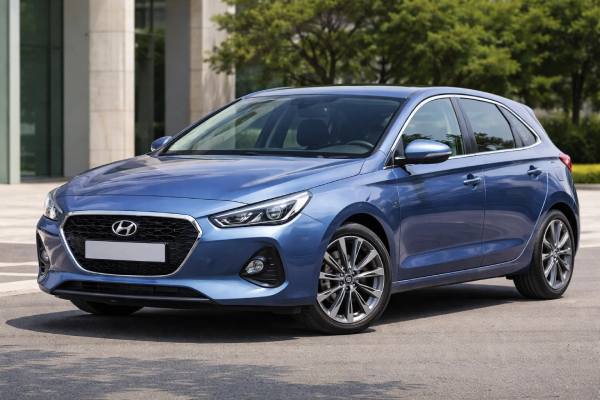
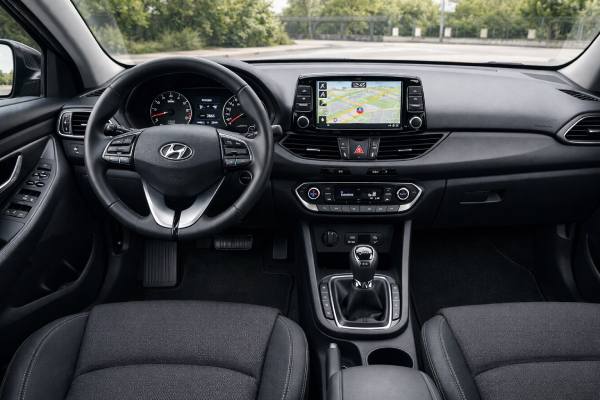
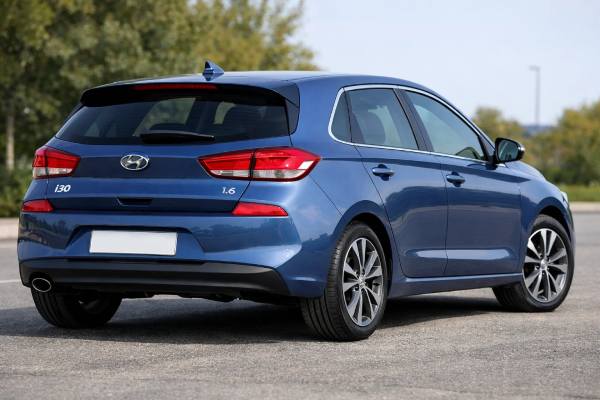
The 2017–2020 Hyundai i30 PD with the 1.0 T-GDi 120 hp engine sits in a sweet spot of the family hatchback market. It gives buyers a lighter front end than the bigger petrol options, a useful six-speed manual in early cars, and official fuel economy that still looks competitive today. This version also matters because it covers two phases of the same generation: the original 2017 launch cars and the updated 2020 facelift, which added newer safety features and, in some markets, a 48-volt mild-hybrid version with a seven-speed dual-clutch transmission. For most owners, the appeal is simple: good cabin space, solid safety, predictable handling, and lower running costs than larger turbo engines. The main caution is also simple. Like many small direct-injection turbo petrol engines, it rewards strict oil-change discipline and does not love repeated short-trip neglect.
Owner Snapshot
- The 1.0 T-GDi offers useful mid-range torque and lower fuel use than the bigger petrol engines.
- Boot space is strong for the class at 395 L with the rear seats up.
- Early manual cars are mechanically straightforward and usually the easiest long-term ownership choice.
- Skipped oil services and constant short trips are the biggest ownership risks for this engine type.
- Engine oil and filter service is due every 15,000 km or 12 months in normal use.
Guide contents
- Hyundai i30 PD basics
- Hyundai i30 PD specs data
- Hyundai i30 PD trims and safety
- Reliability, issues, and actions
- Maintenance and buying advice
- Road manners and economy
- How it stacks up against rivals
Hyundai i30 PD basics
The PD-generation i30 was Hyundai’s answer to the core European family hatchback market, and the 1.0 T-GDi was the sensible smaller-petrol option. It used a 998 cc three-cylinder turbocharged direct-injection petrol engine with 120 hp and 171 Nm, paired at launch with a six-speed manual gearbox and front-wheel drive. On paper, that gave it enough torque to feel stronger than its size suggests, without pushing running costs into hot-hatch territory. Official performance was 0–100 km/h in 11.1 seconds and 190 km/h top speed, which is entirely adequate for normal mixed driving.
What made this version attractive was its balance. The i30’s body is not tiny, so buyers get genuine family-hatch practicality. Hyundai listed a 395 L boot, which was competitive in the class, and the chassis used independent MacPherson struts at the front with a multi-link rear setup on this engine in the official technical material. That helped the car feel more mature than some cheaper rivals that relied on simpler rear axle layouts on lower-output versions. Steering, ride quality, and motorway stability were designed around everyday European use rather than sharp sports-car responses, and that suits the 1.0 T-GDi well.
There are really two sub-periods within this article’s 2017–2020 window. The first covers the original launch car from 2017 onward, with the plainest equipment mix and the simplest version of the powertrain. The second is the 2020 facelift. Hyundai revised the styling, upgraded infotainment and digital features in many markets, and expanded the SmartSense driver-assistance package. For the 1.0 T-GDi specifically, Hyundai also announced a new seven-speed dual-clutch option and the availability of 48-volt mild-hybrid assistance in the updated range, depending on market and trim. That means a 2020 car can feel meaningfully newer than a 2017 example even though both are still PD-generation i30s.
For buyers today, the ownership case is straightforward. This is not the fastest i30, but it is usually the easiest one to justify. Fuel use is modest, tax exposure is usually reasonable in Europe, and the chain-driven engine avoids a fixed timing-belt replacement job. The main trade-off is that a small turbo direct-injection petrol engine needs better maintenance habits than an old naturally aspirated port-injected unit. Clean oil, correct spark-plug intervals, and attention to any misfire or boost-leak symptom matter more here than they would in a simpler older hatchback.
Hyundai i30 PD specs data
Below is the core technical picture for the 2017–2020 Hyundai i30 PD 1.0 T-GDi 120 hp hatchback. The figures reflect Hyundai material for the 1.0 T-GDi hatch and owner’s manual data where service capacities are concerned. Equipment, tyre size, emissions figures, and later transmission details can vary slightly by country and facelift specification.
| Item | Specification |
|---|---|
| Engine code/family | Kappa 1.0 T-GDi |
| Engine layout and cylinders | Inline-3, DOHC, 4 valves per cylinder |
| Displacement | 1.0 L (998 cc) |
| Induction | Turbocharged |
| Fuel system | Direct injection |
| Max power | 120 hp (88.3 kW) @ 6,000 rpm |
| Max torque | 171.1 Nm (126.2 lb-ft) @ 1,500–4,000 rpm |
| Timing drive | Chain |
| Transmission | 6-speed manual at launch; 7-speed DCT became available for 2020 in some markets |
| Drive type | FWD |
| Official combined economy | 4.9 L/100 km (48.0 mpg US / 57.6 mpg UK) |
| Official highway/extra-urban economy | 4.4 L/100 km (53.5 mpg US / 64.2 mpg UK) |
| Official urban economy | 5.6 L/100 km (42.0 mpg US / 50.4 mpg UK) |
| Top speed | 190 km/h (118 mph) |
| 0–100 km/h | 11.1 s |
| Chassis and dimensions | Specification |
|---|---|
| Front suspension | Independent MacPherson strut |
| Rear suspension | Multi-link |
| Steering | Rack-and-pinion with power assistance |
| Brakes | Ventilated front discs / solid rear discs |
| Turning circle | 10.6 m (34.8 ft) |
| Length | 4,340 mm (170.9 in) |
| Width | 1,795 mm (70.7 in) |
| Height | 1,455 mm (57.3 in) |
| Wheelbase | 2,650 mm (104.3 in) |
| Kerb weight | 1,194 kg (2,632 lb) minimum |
| GVWR | 1,800 kg (3,968 lb) |
| Fuel tank | 50 L (13.2 US gal / 11.0 UK gal) |
| Cargo volume | 395 L / 1,301 L (13.9 / 45.9 ft³) |
| Fluids and service capacities | Specification |
|---|---|
| Engine oil spec | ACEA A5/B5; SAE 5W-30 recommended for the 1.0 T-GDi |
| Engine oil capacity | 3.6 L (3.8 US qt) |
| Coolant type | Phosphate-based ethylene glycol antifreeze with distilled water |
| Coolant capacity | 6.0 L (6.3 US qt) |
| Manual gearbox fluid | API GL-4 SAE 70W TGO-9 |
| Manual gearbox capacity | 1.6–1.7 L (1.7–1.8 US qt) |
| Brake/clutch fluid | FMVSS 116 DOT 3 or DOT 4 |
| Brake/clutch fluid capacity | 0.7–0.8 L (0.7–0.8 US qt) |
| A/C refrigerant | R-1234yf, 500 g (17.6 oz) |
| A/C compressor oil | PAG oil, 110 ± 10 g |
A few notes matter here. First, the chain timing drive is good news for long-term maintenance planning, but it is not a fit-and-forget forever part. Noise, poor oil history, or timing-correlation faults still deserve inspection. Second, 2020 facelift cars can differ mechanically if they use the later 48-volt mild-hybrid setup or the seven-speed dual-clutch instead of the original six-speed manual. Third, tyre size varies a lot by trim and market, so buyers should confirm the wheel-and-tyre package on the exact car instead of assuming one universal factory setup.
Hyundai i30 PD trims and safety
Trim structure for the i30 PD depended heavily on country, so buyers will see names such as S, SE, Premium, N Line, Style, Comfort, or local-market equivalents. The key point is that the 1.0 T-GDi usually sat in the middle of the range rather than at the bare base. That means many cars have sensible equipment, but not all of them have the same safety or infotainment package. Early cars often paired the 1.0 T-GDi with smaller alloy wheels, a six-speed manual, cloth trim, and simpler infotainment. Better-equipped versions added larger screens, dual-zone climate control, parking aids, and upgraded audio. By 2020, Hyundai also introduced wider availability of a 10.25-inch navigation screen, digital-cluster options in some markets, Bluelink-connected services on navigation cars, and broader N Line styling choices.
Mechanically, the biggest trim and year difference for this engine is not suspension tuning but powertrain and safety-equipment evolution. Original 1.0 T-GDi cars were mainly six-speed manuals. For the facelifted 2020 range, Hyundai announced that the 120 PS 1.0 T-GDi could also be paired with a seven-speed dual-clutch transmission, and in some markets with 48-volt mild-hybrid assistance through either a 6iMT or the DCT. That is worth knowing because the ownership feel and service conversation differ between a basic early manual and a later electrified or dual-clutch facelift car.
Safety is a genuine strong point. Euro NCAP tested the i30 in 2017 and published a five-star result. The detailed tested variant included the 1.0 T-GDi manual hatchback. The published sub-scores were 88% for adult occupant protection, 84% for child occupant protection, 64% for vulnerable road users, and 68% for safety assist. That gives the i30 a solid baseline safety case for a mainstream hatch of this era.
ADAS content improved over time. On the pre-facelift car, available Hyundai SmartSense features varied by trim and market, but lane-keeping assistance, driver-attention warning, high-beam assist, speed-limit information, and forward-collision warning or braking were already part of the conversation. For the 2020 facelift, Hyundai announced new Lane Following Assist, Rear Collision-avoidance Assist, Leading Vehicle Departure Alert, an upgraded blind-spot system, and an improved Forward Collision-avoidance Assist that could recognize cyclists in addition to existing pedestrian detection. Buyers who want the most modern active-safety setup should lean toward later facelift cars and verify equipment from the VIN, factory order code, or original brochure for that market.
Quick identifiers help when shopping. Early cars tend to have the simpler front-end styling and less digital-looking cabin interfaces. The 2020 facelift has visibly revised lights and grille details, and higher trims may show the larger central display and newer electronic driver-assistance menu layout. If safety equipment is a priority, check not only the trim badge but also the actual presence of radar and camera-based systems and ask whether windshield replacement or ADAS recalibration work has been done properly after any accident repair.
Reliability, issues, and actions
Taken as a whole, the i30 PD 1.0 T-GDi has a good reputation when it is serviced on time. It is not known as a disaster engine, and the official service schedule is clear. The biggest divide is usually between cars that received consistent oil services and correct plugs, and cars that spent years doing only cold short trips with delayed maintenance. In other words, this is more often a maintenance-sensitive ownership story than a fundamentally flawed one. Hyundai also notes through its service network that software updates and recommended improvements are checked during dealer servicing, which matters because modern drivability and assistance issues are not always mechanical.
Common low-to-medium-cost watchpoints include rough idle, occasional misfire, or weaker boost response. In practice, the usual path is spark plugs first, then ignition coils, then checks for intake or boost-hose leaks and air-metering issues. Because this is a small direct-injection turbo engine, poor oil condition can also show up as sluggish response, noisy operation, or long-term chain and turbo stress. Cars used mostly for city commuting may also show more intake contamination over time than higher-mileage motorway cars. None of those symptoms automatically mean a major failure, but they are reasons to avoid cheap, poorly serviced examples.
Manual transmission cars are usually the safest long-term buy. The six-speed manual is simple, and most problems are normal wear items rather than design drama. Expect clutch wear on heavily urban cars, and listen for release-bearing noise or feel for a high bite point. On 2020 facelift cars with the optional seven-speed DCT, buyers should pay more attention to low-speed hesitation, shunt, warning lights, and service history, because transmission behavior is more calibration-sensitive than on the manual. That does not make later DCT cars bad, but it does raise the importance of clean software history and good maintenance records.
Chassis concerns are typical rather than alarming. Expect routine wear in front suspension bushes, anti-roll-bar links, brake hardware, and wheel bearings as mileage climbs. On cars used in wet or salted climates, inspect the underside, brake lines, rear suspension mounts, and subframe areas for corrosion. Electronics are usually manageable, but weak 12 V batteries can create misleading warning messages on modern Hyundai products, especially on cars with more assistance features. A pre-purchase inspection should therefore include a battery and charging-system test rather than only a code scan.
For recalls and service actions, do not rely on rumor lists. Use Hyundai’s official recall and service campaign portal and cross-check with the official UK recall database or your local market’s equivalent. Completion should be verified by VIN and by dealer service history, especially on a 2020 car with newer assistance systems. That is more reliable than assuming all cars of a given year were updated in the same way.
Maintenance and buying advice
The official maintenance schedule is one of this car’s strengths because it is clear and sensible. In normal European service, Hyundai specifies engine oil and filter every 15,000 km or 12 months. For severe service, that drops to 7,500 km or 6 months. Severe service includes repeated short trips, long idling, dusty roads, salted roads, trailer use, mountain driving, heavy traffic, and frequent high-speed use. Spark plugs on the turbo direct-injection petrol engine are due every 75,000 km or 60 months. The first coolant replacement is due at 210,000 km or 10 years, then every 30,000 km or 24 months. Brake fluid and the climate-control air filter are both scheduled every 30,000 km or 24 months.
| Maintenance item | Normal interval | Severe-use note |
|---|---|---|
| Engine oil and filter | 15,000 km / 12 months | 7,500 km / 6 months |
| Spark plugs | 75,000 km / 60 months | Keep strict interval on short-trip cars |
| Cabin filter | 30,000 km / 24 months | Earlier if dusty use |
| Brake fluid | 30,000 km / 24 months | Do not stretch |
| Coolant | First at 210,000 km / 10 years, then 30,000 km / 24 months | Check condition earlier if history is unknown |
| Manual gearbox oil | Inspect in normal service | Service by about 120,000 km in harsh use or unknown history |
| Intake, intercooler, vacuum and turbo hoses | Inspect regularly | Important on older cars |
Useful service facts for decision-making are easy to keep in mind. The engine takes 3.6 L of oil, Hyundai recommends SAE 5W-30 for the Kappa 1.0 T-GDi, coolant capacity is 6.0 L, and the manual gearbox takes 1.6–1.7 L of API GL-4 SAE 70W fluid. That makes routine service straightforward and not unusually expensive for the class. The practical takeaway is this: buy on history, not badge. A car with annual oil changes, the right plugs, correct coolant, and evidence of dealer or specialist checks is a better bet than a newer-looking car with patchy records.
For inspection, focus on five areas. First, confirm cold-start behavior: no long crank, no obvious rattle, no misfire. Second, check for smooth boost delivery and no whistling or split-hose feel under load. Third, inspect for oil misting around intake plumbing and turbo-area heat. Fourth, drive over rough surfaces and listen for suspension link or bush noise. Fifth, test every electrical item, especially safety systems, parking aids, cameras, and warning lights. On facelift cars with more ADAS, ask whether the windshield is original or whether recalibration documentation exists after replacement.
Best buys are usually well-maintained 2018–2020 manuals in mid-grade trims, because they combine mature early-production status with reasonable equipment and avoid the extra complexity of later powertrain options. A 2020 facelift is worth the premium if you want newer safety tech and infotainment. Cars to avoid are the usual suspects: long-service-interval examples with vague oil history, obvious aftermarket tuning, repeated dashboard warnings, or sellers who cannot explain recall and service-campaign status. Long term, the outlook is good if upkeep is consistent. Neglect turns this into a fussy small turbo petrol. Proper servicing turns it into a sensible daily hatch.
Road manners and economy
On the road, the 1.0 T-GDi i30 feels like a well-sorted family hatch rather than a cut-price special. The steering is stable and predictable, the body control is tidy, and the car feels secure at motorway speed. It is not a sharp driver’s car in the way a Ford Focus is, but it is mature and easy to live with. The multi-link rear suspension listed in Hyundai’s technical material helps the car feel composed over patchy surfaces and gives it a more settled rear axle than some rivals with simpler setups. Cabin refinement is decent for a three-cylinder turbo hatch, although you will still hear the engine more clearly under hard acceleration than in a larger four-cylinder model.
The powertrain character suits normal daily driving. Peak torque arrives from 1,500 rpm, so the car does not need constant high revs to move smartly in traffic. There is still some small-engine turbo lag if you ask for strong acceleration from very low revs in a tall gear, but the six-speed manual lets the driver manage that easily. The official 11.1-second 0–100 km/h time tells the truth: this is brisk enough, not quick. Overtaking is fine if you plan a downshift, but the i30 1.0 T-GDi is best when driven smoothly rather than aggressively.
Official economy is one of the main reasons to buy it. Hyundai quoted 4.9 L/100 km combined, 4.4 extra-urban, and 5.6 urban for the original 1.0 T-GDi manual hatch. In real use, owners should expect higher numbers than the brochure figures, especially on winter short trips or steady 120 km/h motorway runs. A realistic pattern for a healthy manual car is often around the mid-5s to low-6s L/100 km on relaxed mixed use and more in cold weather or dense city traffic.
Ride quality is generally comfortable on mainstream wheel sizes, and tyre choice matters a lot. Cars on modest factory wheels often feel better balanced for daily use than sportier trims on larger wheels. Braking feel is easy to modulate and suits daily driving, though this is not a car bought for repeated hard stops or track-style use. The facelifted 2020 models gain appeal mainly through equipment and safety rather than a dramatic change in basic chassis character. If you want the simplest and most predictable ownership experience, the manual remains the standout. If you want the most modern daily-use convenience, a well-documented 2020 facelift with the newer features makes a stronger case.
How it stacks up against rivals
Against the Ford Focus 1.0 EcoBoost, the Hyundai i30 1.0 T-GDi usually loses on steering feel and outright chassis sparkle, but it fights back with a calm cabin, strong practicality, and a more understated ownership experience. Buyers who care most about how a hatchback corners will still lean Focus. Buyers who want a quieter, simpler daily tool often prefer the i30.
Against the Kia Ceed 1.0 T-GDi, the comparison is naturally close because the cars sit in the same corporate family. The Ceed often feels slightly more modern in cabin layout depending on year, while the i30 feels a touch more conservative. In practice, condition, trim, and local-market equipment matter more than the badge. If both cars have the same service quality, choose on seating comfort, equipment, and price.
Against the Opel or Vauxhall Astra petrol hatchbacks of the same era, the Hyundai usually feels like the more rounded all-purpose buy. The Astra can be light on its feet and efficient on long runs, but the i30 often wins on the feeling of robust everyday usability, safety confidence, and straightforward ownership.
The trickiest rival is the Toyota Corolla Hybrid. It is not a direct like-for-like competitor because the powertrain is very different, but many used buyers cross-shop them. The Corolla is the better city-economy choice and the better option for stop-start commuting. The i30 1.0 T-GDi is the better choice for buyers who want a conventional manual hatch with lower purchase complexity and a more familiar service experience.
So where does the Hyundai land? It is not the class athlete, and it is not the class economy champion in all conditions. What it does offer is balance. For a buyer who wants solid safety, good space, sensible official maintenance, and a modern petrol hatch without stepping into a larger engine, the i30 PD 1.0 T-GDi remains one of the smarter used choices in the segment.
References
- Euro NCAP | Hyundai i30 2017 (Safety Rating)
- Hyundai i30 Technical Specifications 2020 (Technical Data)
- New Hyundai i30: sleeker, safer, and more efficient 2020 (Press Information)
- Käyttöohjekirjat – Hyundai 2026 (Owner’s Manual Portal)
- Home | Hyundai Recalls & Service Campaigns 2026 (Recall Database)
Disclaimer
This article is for informational purposes only and is not a substitute for professional diagnosis, repair, or factory service information. Specifications, torque values, maintenance intervals, software updates, and repair procedures can vary by VIN, market, model year, transmission, and equipment level, so always verify the exact vehicle against official Hyundai service documentation and dealer records before making maintenance or repair decisions.
If this guide helped you, please consider sharing it on Facebook, X, or another social platform to support our work.