
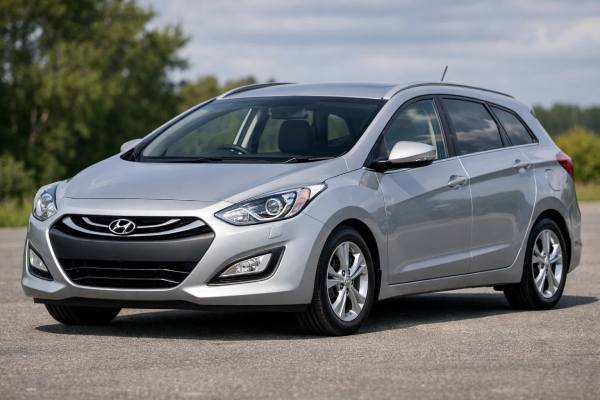

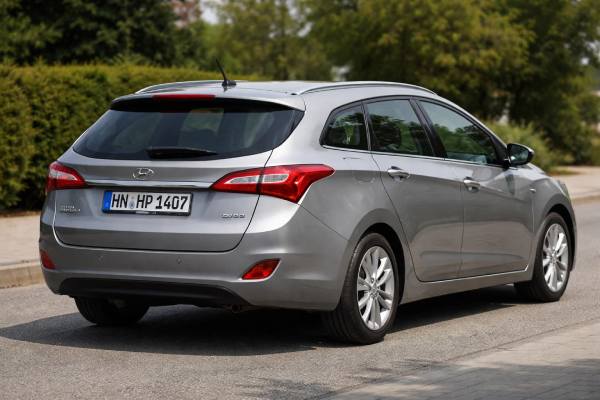
The Hyundai i30 Tourer GD 1.6 CRDi 110 hp is one of those estates that makes more sense the longer you look at it. It combines a useful diesel torque curve, a genuinely practical luggage area, and the more polished second-generation i30 platform in a package that was built for family, commuting, and distance rather than image. For many buyers, that is exactly the point. You get the added cargo flexibility of the Tourer body without moving into a larger or costlier wagon class.
This version is especially appealing because it sits in a strong middle ground. The 1.6 CRDi diesel gives the Tourer enough real-world pull to feel relaxed when loaded, while still returning excellent fuel economy when driven well. The key today is not just the specification sheet. It is whether the car has been used in a way that suits a modern diesel, serviced on time, and kept ahead of wear in the clutch, emissions system, brakes, and underbody.
At a Glance
- Large estate body, flat-folding rear seats, and a well-shaped cargo area make it much more versatile than the hatchback.
- The 1.6 CRDi 110 hp engine offers strong low-rpm torque and very good long-distance fuel economy.
- Ride comfort and motorway stability are better than many budget-focused compact wagons from the same era.
- Short-trip cars can develop DPF, EGR, and diesel warning-light issues if servicing and regeneration needs are ignored.
- A sensible engine-oil and filter interval is every 15,000 km or 12 months, especially on mixed or urban use.
Start here
- Hyundai i30 Tourer GD Profile
- Hyundai i30 Tourer GD Specs
- Hyundai i30 Tourer GD Equipment
- Known Faults and Campaigns
- Maintenance and Buying Advice
- Driving Manners and Efficiency
- Against Other Diesel Estates
Hyundai i30 Tourer GD Profile
The Hyundai i30 Tourer arrived as the estate version of the second-generation i30, and that matters because the GD-generation car was a clear step forward from the earlier FD model. Hyundai improved the cabin, sharpened the design, raised the overall refinement level, and kept the practical character that made the i30 attractive in the first place. In Tourer form, the result is one of the more rational compact estates of its era.
The first reason this version stands out is body style. The Tourer is not just a hatchback with a stretched rear end. It gives you a larger, more useful luggage area, better load length, and stronger family-car appeal without becoming difficult to park or expensive to run. For buyers with child seats, dogs, luggage, hobby gear, or regular motorway duty, that extra space changes the way the car fits into daily life. The tailgate opening is useful, the boot floor is easy to work with, and the rear seats fold to create real cargo flexibility.
The second reason is the engine choice. The 1.6 CRDi 110 hp diesel sits in a smart part of the range. It offers far better everyday performance than the smallest diesel, but it still stays on the right side of running costs. In a car like this, torque matters more than headline horsepower, and this engine delivers enough of it low down to make the Tourer feel relaxed rather than strained. That is important when the car is loaded, climbing, or joining faster roads.
The platform itself also deserves credit. Hyundai kept a multi-link rear suspension on the GD i30, which helped the car ride and handle with more maturity than some compact rivals that chased cost savings more aggressively. The Tourer feels planted, calm, and predictable. It is not a sports wagon, but it does not feel crude or flimsy either. That gives it a quiet strength on long trips.
Where buyers need to be realistic is diesel ownership. This is not the best estate for constant short, cold trips. A car used mainly in traffic and rarely allowed to complete regenerations can become frustrating. The Tourer works best for owners who actually drive enough distance for a modern diesel to stay healthy. In that context, it still makes a lot of sense.
That is the core of the i30 Tourer GD 1.6 CRDi story. It is a practical, efficient, well-balanced compact estate with honest engineering and a clear purpose. In the used market, the good ones are easy to understand. They are the cars with strong history, healthy diesel behavior, and no shortcuts in maintenance.
Hyundai i30 Tourer GD Specs
The figures below describe the common European Hyundai i30 Tourer GD 1.6 CRDi 110 hp manual from the 2012 to 2015 period. Some details vary by market, trim, wheel package, and transmission, so treat these figures as a solid working baseline for the model rather than a universal number for every VIN.
Powertrain and efficiency
| Item | Specification |
|---|---|
| Engine code | D4FB / U2 1.6 CRDi |
| Engine layout and cylinders | Inline-4, transverse, 4 cylinders |
| Valvetrain | DOHC, 4 valves per cylinder |
| Bore × stroke | 77.2 × 84.5 mm (3.04 × 3.33 in) |
| Displacement | 1.6 L (1,582 cc) |
| Induction | Turbocharged |
| Fuel system | Common-rail direct injection |
| Compression ratio | 17.3:1 |
| Max power | 110 hp (81 kW) @ 4,000 rpm |
| Max torque | 260 Nm (192 lb-ft) @ 1,900–2,750 rpm |
| Timing drive | Chain |
| Rated efficiency, 6MT | 4.5 L/100 km (52.3 mpg US / 62.8 mpg UK) |
| Real-world highway @ 120 km/h | about 4.8–5.5 L/100 km (42.8–49.0 mpg US / 51.4–58.9 mpg UK) |
Transmission and driveline
| Item | Specification |
|---|---|
| Transmission | 6-speed manual |
| Drive type | Front-wheel drive |
| Differential | Open |
Chassis and dimensions
| Item | Specification |
|---|---|
| Suspension front / rear | MacPherson strut / multi-link |
| Steering | Rack and pinion, Motor Driven Power Steering |
| Brakes | Disc brakes front and rear; front ventilated, rear solid |
| Most common tyre size | 195/65 R15, with 205/55 R16 and 225/45 R17 on higher trims |
| Ground clearance | about 140 mm (5.5 in), market dependent |
| Length / width / height | 4,485 / 1,780 / 1,500 mm (176.6 / 70.1 / 59.1 in) |
| Wheelbase | 2,650 mm (104.3 in) |
| Turning circle | about 10.6 m (34.8 ft) |
| Kerb weight | about 1,326–1,467 kg (2,924–3,234 lb), trim dependent |
| GVWR | about 1,920 kg (4,233 lb) for manual versions |
| Fuel tank | 53 L (14.0 US gal / 11.7 UK gal) |
| Cargo volume | 528 L seats up / 1,642 L seats folded (18.6 / 58.0 ft³) |
Performance and capability
| Item | Specification |
|---|---|
| 0–100 km/h | 11.8 s |
| Top speed | 185 km/h (115 mph) |
| Braking distance | depends heavily on tyre package and test surface; no single factory figure confirmed for this exact trim |
| Towing capacity | 1,500 kg (3,307 lb) braked / 650 kg (1,433 lb) unbraked |
| Payload | roughly 450–550 kg depending on trim and equipment |
Fluids and service capacities
| Item | Specification |
|---|---|
| Engine oil | Correct low-ash diesel oil to the required market specification; about 5.3 L (5.6 US qt) with filter |
| Coolant | Long-life coolant, about 6.8–6.9 L (7.2–7.3 US qt) as a working figure |
| Manual transmission fluid | Specification varies by gearbox revision; confirm by VIN before service |
| Differential / transfer case | Not applicable |
| Brake fluid | DOT 4 |
| A/C refrigerant | R134a; charge varies by equipment level |
| Key torque specs | Wheel nuts 88–108 Nm (65–80 lb-ft) |
Safety and driver assistance
| Item | Specification |
|---|---|
| Crash ratings | Euro NCAP 5-star rating for the GD-generation i30 line |
| Headlight rating | IIHS not applicable |
| ADAS suite | No mainstream ACC, BSD, RCTA, or lane-centering on ordinary 2012–2015 Tourer diesel trims |
| Core safety hardware | ABS, ESC/ESP, Vehicle Stability Management, Brake Assist Control, airbags, ISOFIX, and Hill-start Assist Control on many versions |
What matters most here is not one single number. It is the combination: a useful diesel torque band, estate-car cargo volume, solid towing rating, and a chassis that was engineered to feel more mature than a price-led bargain wagon.
Hyundai i30 Tourer GD Equipment
Trim structure varied by market, but the pattern is familiar. Depending on country, buyers saw names such as Classic, Active, Style, Style Nav, Premium, or similar equivalents. The 1.6 CRDi 110 hp engine often sat in the middle of the range, which is exactly where many used buyers want it now. You typically get the useful mechanical package without always paying for the most complex equipment.
Entry-level Tourers still tended to be well judged. Hyundai understood that a wagon buyer was usually shopping for function first, so even simpler cars often came with sensible essentials: air conditioning, multiple airbags, split-fold rear seats, roof rails or wagon-specific load hardware, Bluetooth or audio connectivity depending on market, and the major stability and brake-assist systems. That baseline matters now, because even lower trims can still feel useful and family-ready.
Mid-spec versions are often the sweet spot. They may add alloy wheels, cruise control, better seat trim, more steering-wheel functions, parking sensors, better audio integration, and small upgrades that make the cabin feel more complete without creating too many additional age-related repair risks. High-spec models can look more attractive on classifieds, but they also bring more things that can fail with age: larger wheels, more sensors, more interior electronics, navigation units, cameras, and comfort extras that are expensive to put right when neglected.
Quick identifiers are more helpful than the trim badge:
- wheel size and tyre size
- presence of parking sensors or camera
- climate-control panel type
- cruise-control buttons
- roof rails and cargo-floor arrangement
- seat trim and steering-wheel finish
- whether the car has Flex Steer, folding mirrors, or integrated navigation
The safety story is one of the strong points of the GD-generation i30. Hyundai made clear progress here, and the 5-star Euro NCAP result reflects that. Structurally, the car was a better and more modern proposition than the FD-generation i30. For a compact estate buyer, that matters, because family duty is often part of the reason to choose this body style in the first place.
That said, buyers need realistic expectations about driver assistance. On this 2012–2015 1.6 CRDi 110 Tourer, safety is still built mainly around good passive protection and core active systems like ABS, ESC, VSM, and Brake Assist. Do not expect the current generation of camera- and radar-based intervention. Most ordinary examples do not have modern AEB, blind-spot alerts, lane-centering, or rear cross-traffic warning.
A used inspection should focus on actual safety condition, not just brochure content:
- Warning lights must illuminate and clear correctly at startup.
- Tyres should be matched, correctly rated, and not overly old.
- Braking should be straight and progressive.
- Seatbelts should retract sharply and latch cleanly.
- Rear child-seat anchor points should be intact and unmodified.
- Front crash structure should show no signs of careless repair.
The best equipment strategy for this model is simple. Buy enough trim to get the features you will really use, but not so much that the car becomes harder to own. For most buyers, a clean, mid-spec Tourer with the 1.6 CRDi manual is the most balanced version.
Known Faults and Campaigns
The i30 Tourer GD 1.6 CRDi is generally a solid diesel estate, but it must be judged as a modern emissions-era diesel rather than an old-school simple oil-burner. The difference matters. A well-used, well-serviced example can age very well. A short-trip, under-maintained one can hide expensive work behind an otherwise tidy body.
Common, medium-cost issues
- DPF trouble: The biggest pattern problem on these cars is diesel particulate filter health on vehicles used mostly for short journeys. Symptoms include frequent regeneration, warning lights, limp mode, fuel-economy drop, and sometimes rising oil level from dilution. Remedy depends on severity: correct diagnosis, forced regeneration, sensor checks, oil change, and sometimes DPF cleaning or replacement.
- EGR and intake soot build-up: This can cause hesitation, uneven running, smoke, or fault codes. Cars used in heavy city traffic are more exposed. Cleaning or replacement is usually the path forward.
- Glow plugs and starting weakness: Hard winter starts, rough cold idle, or fault codes can come from glow plugs, relays, or a tired battery. These are not always expensive repairs, but ignoring them makes the car feel worse than it really is.
Occasional, higher-cost issues
- Injectors and high-pressure fuel hardware: Hard starting, diesel smell, rough idle, combustion noise, or poor economy deserve fast diagnosis. Delay usually raises the bill.
- Turbo and boost-control faults: Split hoses, actuator problems, or turbo wear can cause weak pull or limp mode. The engine is not extreme in output, but it still depends on clean oil and proper heat cycles.
- Clutch and dual-mass flywheel wear: On higher-mileage manual Tourers, especially tow cars or urban cars, DMF chatter, vibration, or poor take-up may appear. These jobs are not unusual, but they are not cheap either.
Common age-related chassis issues
- front anti-roll-bar links and bushes
- wheel-bearing noise
- rear brake drag or uneven rear pad wear
- tired dampers on heavily loaded cars
- occasional steering or column noises
- central-locking and tailgate wiring faults
Timing-chain life is usually good, but chain-driven does not mean chain-immune. Poor oil service history can contribute to chain noise or timing-related issues over time. It is not the most common failure point, yet it is worth treating seriously if a cold-start rattle persists.
Corrosion is not the car’s main weakness, but an estate body that has seen winters and family use still needs a careful check. Inspect the rear arches, sill edges, tailgate lower seam, brake lines, subframes, jacking points, and underbody seams. Also check the cargo area for water ingress, as wagons that carry wet gear can hide rear-compartment moisture issues.
Campaign history matters. Public Hyundai recall resources and regional recall notices show that i30-family vehicles have had important safety-related campaigns in some markets, including ABS module moisture and short-circuit concerns. Completion must be verified by VIN and dealer record, not guessed from model year alone.
Before purchase, request:
- complete service history
- proof of recall completion
- evidence of correct oil type
- recent brake and tyre invoices
- a true cold start
- a diagnostic scan for stored emissions and diesel faults
A healthy Tourer is a strong used estate. A neglected one can still look tempting because the body style and cabin hide diesel-system expense remarkably well.
Maintenance and Buying Advice
The i30 Tourer 1.6 CRDi rewards disciplined, ordinary maintenance. That sounds simple, but it matters. This is not the kind of car that thrives on delayed oil changes, unknown diesel additives, or bargain-basement servicing. Buyers who want the best from it should think like long-term owners, not bargain hunters.
A practical maintenance schedule looks like this:
| Item | Practical interval |
|---|---|
| Engine oil and filter | Every 15,000 km or 12 months |
| Engine air filter | Inspect every service, replace roughly every 30,000–45,000 km or sooner in dusty use |
| Cabin air filter | Every 15,000 km or 12 months |
| Fuel filter | Replace by schedule or sooner if fuel quality is doubtful |
| Coolant | First replacement around 210,000 km or 10 years, then every 30,000 km or 24 months |
| Brake fluid | Every 24 months |
| Brake pads and discs | Inspect at every service |
| Serpentine belt and tensioners | Inspect regularly |
| Manual gearbox oil | Check for leaks and shift quality; proactive change around 90,000–120,000 km is sensible |
| Timing chain | No fixed interval; inspect if noise, stretch symptoms, or timing faults appear |
| Tyre rotation | Every 10,000–15,000 km |
| Alignment check | Yearly or after uneven wear appears |
| 12 V battery | Test from year 4 onward |
| DPF health | Monitor regeneration behavior, warning lights, and oil level |
Fluid decisions matter more than many owners think. The engine takes about 5.3 L of oil with filter, but the correct oil specification for DPF-equipped diesel use is more important than the number itself. Coolant volume is roughly 6.8 to 6.9 L. Brake fluid is DOT 4. Wheel-nut torque is 88 to 108 Nm. Gearbox oil specification should be confirmed by VIN and transmission code rather than guessed from a generic database.
A strong used-car inspection should focus on the diesel-specific truth:
- Cold start without hesitation or excessive noise.
- No warning lights staying on.
- Smooth low-rpm pull.
- No obvious smoke under load.
- Stable coolant temperature.
- No DMF chatter or clutch slip.
- Rear brakes releasing cleanly after a drive.
- No wetness around injectors or major boost hoses.
- Proper underbody condition and brake-line health.
- Cargo area free of water intrusion.
The best versions to target are manual cars with clear evidence of regular mixed or motorway use, routine servicing, and recent brake or tyre work. Mid-spec trims with sensible wheel sizes are usually the smart buy. The versions to be cautious about are low-mileage city diesels, heavily worn tow cars, or estate bodies with obvious cargo abuse and neglected rear suspension.
Long-term durability is good when the car’s use pattern matches the engine. That is the key sentence for this whole model. Buy it because you drive enough to justify a diesel estate, and it makes sense. Buy it for short urban life, and it often does not.
Driving Manners and Efficiency
From behind the wheel, the i30 Tourer 1.6 CRDi feels exactly like the kind of car it was meant to be: stable, relaxed, useful, and more refined than its modest badge might suggest. The Tourer body does not ruin the car’s manners. In some ways it enhances them.
Ride quality is one of its better traits. The GD platform, combined with the multi-link rear suspension, gives the Tourer a calm and mature feel over broken roads. It handles poor surfaces better than many compact estates that lean too hard toward cost cutting. The body stays settled, and the car never feels overly stiff or nervous. That becomes even more important when the boot is loaded or the rear seats are occupied.
Straight-line stability is strong. This is a car that makes sense on a motorway. It tracks steadily, is not tiring at speed, and feels happier the longer the journey goes on. Steering is light rather than especially communicative, but it is accurate enough and well suited to the car’s role. The Tourer is easy to place in town, yet it also feels reassuring on faster roads.
The engine gives the car its real character. The 1.6 CRDi 110 is not a performance diesel, but it has enough mid-range strength to feel pleasantly usable. The 260 Nm torque figure means you do not have to work the gearbox constantly. Joining traffic, climbing grades, or carrying family load is handled with less effort than the modest power figure might imply. There is some diesel clatter when cold, and the engine never becomes silky, but it fits the car well.
Braking performance is usually good when the system is healthy. Pedal feel is straightforward and confidence is decent, though estate use often exposes rear-brake maintenance more quickly than owners expect. A dragging rear caliper can quietly hurt both economy and feel.
Real-world economy is a major reason to buy this car:
- city: about 5.7–6.6 L/100 km, or 35.6–41.3 mpg US and 42.8–49.6 mpg UK
- highway at 100–120 km/h: about 4.8–5.5 L/100 km, or 42.8–49.0 mpg US and 51.4–58.9 mpg UK
- mixed use: about 5.1–5.9 L/100 km, or 39.9–46.1 mpg US and 47.9–55.4 mpg UK
That efficiency, paired with a 53-liter tank, gives the Tourer one of its biggest ownership advantages: excellent distance between fills. For a family car or commuter estate, that still matters a lot.
Performance numbers tell a fair story. An 11.8-second 0–100 km/h time and 185 km/h top speed are enough, not exciting. But numbers alone miss the point. The car feels more capable than that in day-to-day use because the engine is flexible, visibility is good, and the controls are easy. Even moderate towing is handled with decent stability, though fuel use typically rises by 15–25 percent under real load.
This is not an enthusiast’s estate. It is a mature, efficient working wagon. Judged on that basis, it does its job well.
Against Other Diesel Estates
The Hyundai i30 Tourer 1.6 CRDi 110 sits in a crowded and competitive part of the used market, so context matters. It is not just competing against hatchbacks. It is competing against some very well-known compact diesel estates.
Against the Kia cee’d Sportswagon 1.6 CRDi, the Hyundai is facing its closest engineering relative. That means the decision often comes down to condition, equipment, and price rather than a dramatic mechanical difference. The Hyundai usually feels slightly more conservative in design, while the Kia can sometimes be cheaper. Neither has a clear reliability knockout advantage over the other when service history is equal.
Against the Ford Focus Estate 1.6 TDCi, the Ford remains the more engaging car to drive. Steering feel and cornering response still give the Focus an edge. But the Hyundai answers with a calmer ride, strong space efficiency, and often a slightly more relaxed ownership feel. If you value long-trip comfort and wagon practicality over driving sparkle, the i30 Tourer remains very competitive.
Against the Volkswagen Golf Estate 1.6 TDI, the Golf usually carries the stronger badge and a more premium market image. It can also feel slightly tighter and more polished in some areas. But the Hyundai often makes the more rational used buy, especially when price, equipment, and body condition are taken together. In this class, paying for a badge instead of a better-maintained example is a familiar mistake.
Against the Toyota Auris Touring Sports diesel, the Toyota brings brand reputation and a calm, practical image. The Hyundai counters with a more conventional driving feel, strong equipment, and a cabin that many drivers find more natural to use over long distances.
The i30 Tourer’s strongest points are:
- genuinely useful estate space
- strong real-world diesel economy
- comfortable and composed chassis
- sensible towing rating
- good overall value on the used market
Its weaker points are:
- diesel after-treatment sensitivity to short-trip use
- only adequate, not strong, outright performance
- no modern advanced driver-assistance suite on ordinary trims
- recall and service-campaign history that must be verified
- less brand pull than some German rivals
That leaves the Hyundai in a good place. Buy the Focus if driving feel matters most. Buy the Golf if image matters most. Buy the i30 Tourer if you want a balanced, economical, practical diesel estate that can still do real family duty without becoming complicated or expensive to live with. In good condition, it remains one of the more quietly sensible choices in the class.
References
- Think you know Hyundai? Think Again. 2013 (Brochure)
- Hyundai ireland Fleet guide 2013 (Fleet Brochure)
- Hyundai Owners Manuals 2026 (Owner’s Manual Portal)
- Hyundai i30 – Crash Test 2012 2012 (Safety Rating)
- Home | Hyundai Recalls & Service Campaigns 2026 (Recall Checker)
Disclaimer
This article is for informational purposes only and is not a substitute for professional diagnosis, repair, or official workshop procedures. Specifications, torque values, service intervals, capacities, and repair methods can vary by VIN, market, model year, emissions equipment, and trim level, so always verify details against official service documentation for the exact vehicle.
If this guide was useful, please consider sharing it on Facebook, X, or another social platform to support our work.