

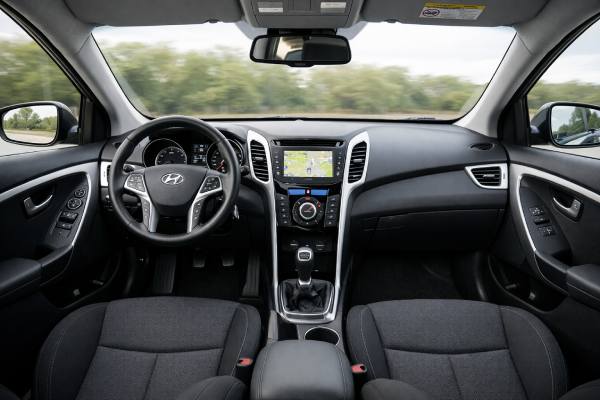
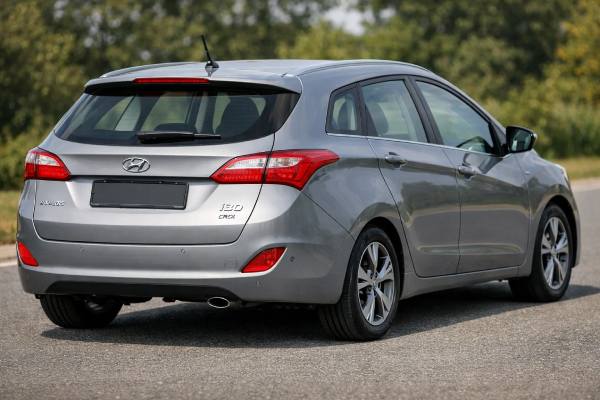
The Hyundai i30 Tourer GD 1.4 CRDi is one of those wagons that makes the most sense when you look at the whole ownership picture. It is not quick, and it was never meant to be. What it offers instead is a useful estate body, very low official fuel consumption, and a simple front-wheel-drive diesel layout that can work well for long-distance commuting or family use if it has been maintained correctly. The 1.4-liter CRDi engine gives the Tourer enough torque to feel easier in daily driving than the 90 hp figure suggests, while the GD platform adds a more polished cabin and better overall refinement than earlier i30 estates. The real question in today’s used market is not whether the concept is good. It is whether the specific car has had the right kind of life. A regularly serviced, motorway-used example can still be a practical and economical wagon. A neglected short-trip car can quickly become an EGR, DPF, clutch, or injector project.
What to Know
- Large 528 L boot and folding rear seats make the Tourer genuinely useful for family and travel duty.
- The 1.4 CRDi is slow on paper, but its diesel torque suits normal commuting better than the headline power figure suggests.
- Official economy is excellent, and real-world highway use can still be impressively efficient.
- Short-trip driving is hard on DPF-equipped examples and can worsen EGR, intake, and soot-related faults.
- A sensible oil-and-filter interval is every 10,000 to 15,000 km or 12 months.
Start here
- Hyundai i30 Tourer GD Essentials
- Hyundai i30 Tourer GD Spec Tables
- Hyundai i30 Tourer GD Grades and Safety
- Known Failures and Campaign History
- Workshop Routine and Buyer Strategy
- Driving Character and Real MPG
- Against Other Small Estates
Hyundai i30 Tourer GD Essentials
The i30 Tourer GD was Hyundai’s answer to buyers who wanted compact-hatch dimensions on the road but more luggage space and better long-distance flexibility in daily life. In 1.4 CRDi form, it became the economy-focused diesel estate in the range. That makes its role very clear. This is not the engine for drivers who want easy overtaking with a full load or brisk motorway climbing without downshifting. It is the engine for buyers who care about running costs, range, and practical space more than pace.
That focus shapes the whole car. The D4FC 1.4-liter turbo-diesel produces 90 hp, but more importantly it makes 220 Nm of torque low in the rev range. In real driving, that matters much more than the power figure. The engine feels stronger in town and on gentle A-road work than a 90 hp petrol would, because the torque arrives early and lets the Tourer move off cleanly without much effort. The compromise appears once speed builds or weight increases. With passengers, luggage, and motorway gradients, you can feel that this is the entry diesel, not the stronger 1.6 CRDi.
The Tourer body is what keeps the package appealing. Hyundai did not just stretch the hatchback for style. The estate genuinely improves utility. Boot space grows enough to matter in everyday ownership, and the longer roofline makes loading easier for family travel, airport runs, pushchairs, dogs, or flat-pack cargo. The car still remains compact enough to park easily and does not feel oversized in urban use. That is a major advantage over larger diesel estates from the same era, many of which offer more space but also higher fuel, tyre, and maintenance costs.
The GD-generation platform also improved the i30 story compared with the earlier FD car. Cabin materials were better, refinement improved, and the chassis felt more settled. Hyundai’s compact cars from this period were no longer just value buys. They were credible alternatives to the class standards. The Tourer keeps that theme. It is not the most characterful small estate, but it is hard to dismiss when you look at its mix of space, safety, and low fuel use.
From a modern used-car perspective, the most important ownership question is usage pattern. The 1.4 CRDi makes best sense for drivers who still cover regular open-road mileage. It is much less compelling if the car has spent years doing only short, cold, urban trips. DPF condition, EGR cleanliness, and injector health matter more here than brand image. Buy the right example and the Tourer can still be a cheap, useful diesel estate. Buy the wrong one and its economy advantage disappears into catch-up repairs.
Hyundai i30 Tourer GD Spec Tables
The figures below focus on the 2012–2015 Hyundai i30 Tourer GD 1.4 CRDi 90 hp in its common European-market 6-speed manual form. Exact tyre fitment, towing approval, service-fill figures, and some trim-dependent equipment vary by VIN and market, so treat the tables as a strong baseline rather than a substitute for VIN-specific documentation.
Powertrain and efficiency
| Item | Value | Notes |
|---|---|---|
| Code | D4FC | Hyundai U-II diesel family |
| Engine layout and cylinders | Inline-4, DOHC, 16-valve | 4 cylinders, 4 valves per cylinder |
| Bore × stroke | 75.0 × 79.0 mm | 2.95 × 3.11 in |
| Displacement | 1.4 L (1,396 cc) | Small-displacement diesel |
| Induction | Turbocharged, intercooled | No performance intent, economy first |
| Fuel system | Common rail direct injection | Diesel |
| Compression ratio | 17.0:1 | Common published figure |
| Max power | 90 hp (66 kW) @ 4,000 rpm | 89 bhp in some listings |
| Max torque | 220 Nm (162 lb-ft) @ 1,500–2,750 rpm | Key reason it feels stronger than the power figure suggests |
| Timing drive | Chain | No fixed belt replacement interval |
| Rated efficiency | 4.1 L/100 km (57.4 mpg US / 68.9 mpg UK) | Combined |
| Real-world highway @ 120 km/h | about 4.9–5.7 L/100 km | Condition and load matter |
Transmission and driveline
| Item | Value | Notes |
|---|---|---|
| Transmission | 6-speed manual | The common setup for this engine |
| Drive type | FWD | Front-wheel drive |
| Differential | Open | Standard road-car layout |
Chassis and dimensions
| Item | Value | Notes |
|---|---|---|
| Suspension (front/rear) | MacPherson strut / independent rear suspension | One of the car’s better engineering points |
| Steering | Rack and pinion, electric assist | Light and easy rather than very talkative |
| Brakes | Vented front discs / rear solid discs | ABS standard |
| Wheels/Tyres | 195/65 R15 most common | 16- and 17-inch packages also appeared by trim |
| Ground clearance | roughly 140–150 mm | Market and tyre dependent |
| Length / Width / Height | 4,485 / 1,780 / 1,500 mm | 176.6 / 70.1 / 59.1 in |
| Wheelbase | 2,650 mm | 104.3 in |
| Turning circle (kerb-to-kerb) | 10.6 m | 34.8 ft |
| Kerb (Curb) weight | about 1,280 kg | 2,822 lb |
| GVWR | 1,910 kg | 4,211 lb |
| Fuel tank | 53 L | 14.0 US gal / 11.7 UK gal |
| Cargo volume | 528–1,642 L | 18.7–58.0 ft³ |
Performance and capability
| Item | Value | Notes |
|---|---|---|
| Acceleration | 0–100 km/h in 13.5 s | Slow by class standards |
| Top speed | 170 km/h | 106 mph |
| Braking distance | depends heavily on tyre and test source | not consistently published for this exact trim |
| Towing capacity | about 1,500 kg braked | market dependent |
| Payload | about 513–630 kg | varies by source and trim |
Fluids and service capacities
| Item | Value | Notes |
|---|---|---|
| Engine oil | 5W-30 low-SAPS diesel oil meeting correct Hyundai spec | Correct oil matters on DPF cars |
| Engine oil capacity | 5.3 L | 5.6 US qt |
| Coolant | Hyundai-approved long-life coolant mix | Verify exact standard by market |
| Coolant capacity | 6.9 L | 7.3 US qt |
| Transmission fluid | Correct Hyundai manual-transmission oil | Verify by gearbox code |
| Manual transmission capacity | about 1.9–2.0 L | approximate service-fill range |
| A/C refrigerant | R134a | Charge varies by system |
| A/C compressor oil | PAG type | Verify exact amount by system label |
| Key torque specs | Wheel nuts commonly around 90–110 Nm | Check exact manual figure for VIN |
Safety and driver assistance
| Item | Value | Notes |
|---|---|---|
| Crash ratings | Euro NCAP 5 stars | 2012-era protocol |
| Adult / child / VRU / safety assist | commonly published as 90% / 90% / 67% / 86% | protocol-era result, not directly comparable with newer standards |
| Headlight rating (IIHS) | Not applicable | No useful IIHS relevance here |
| ADAS suite | Very limited | Stability control standard, but no modern AEB or lane-centering package in this trim class |
The spec sheet shows why this version has a loyal used-car audience. It is not powerful, but it is light enough, efficient enough, and spacious enough to justify itself. The weak point on paper is obvious: acceleration. The strong points are just as obvious: torque, range, and luggage room.
Hyundai i30 Tourer GD Grades and Safety
Trim names varied between markets, but the basic structure of the i30 Tourer range was familiar. Lower trims focused on value and efficiency, mid-level trims offered the features most owners wanted, and higher trims added comfort, appearance, and convenience rather than major mechanical changes. That means the used buyer should care more about condition and equipment balance than about chasing the highest original list price.
Entry-level Tourers were usually not stripped-out cars. Even modestly specified examples often included air conditioning, electric windows, remote locking, adjustable front seats, basic audio integration, and the core safety systems that mattered. Mid-spec versions commonly added alloy wheels, steering-wheel audio controls, Bluetooth, cruise control, parking sensors, and better seat trim. Higher trims could add dual-zone climate control, upgraded infotainment, larger wheels, automatic lighting, rain-sensing wipers, and a more polished interior feel.
The most meaningful trim differences are not the badge names themselves. They are the consequences of equipment choices. Smaller wheels generally suit the 1.4 CRDi best. They improve ride quality, reduce tyre costs, and fit the car’s economy-first character. Higher trims on larger wheels look more attractive but can ride more firmly and expose worn suspension parts more clearly. The engine, gearing, and overall character remain fundamentally the same.
Quick identifiers help when looking at used examples. Lower trims tend to have smaller wheels, simpler cloth seat patterns, and more basic climate-control panels. Better-equipped cars usually have more steering-wheel buttons, parking-sensor hardware, and more polished interior trim details. None of that changes the diesel’s output, but it does affect how modern the car feels in daily use.
Safety is one of the stronger reasons to take the GD Tourer seriously. The second-generation i30 platform moved Hyundai onto firmer ground in this area. Euro NCAP awarded the model a 5-star rating under the 2012 testing regime, which was a credible result for a mainstream compact family car at the time. Just as important as the star count, the car’s safety package was broad enough to matter in real ownership. Multiple airbags, ABS, stability control, and a stronger body structure were all part of the package.
It is worth keeping the safety result in context. A 2012 five-star car should not be compared directly with a 2025 or 2026 five-star car. Protocols became tougher, and driver-assistance expectations moved dramatically. The i30 Tourer’s safety case is mainly about good passive protection, predictable chassis behavior, and standard electronic stability systems rather than cutting-edge active safety. There was no modern suite of autonomous emergency braking, lane-centering, or blind-spot intervention in the 1.4 CRDi’s typical trim band.
For many buyers, that is not a deal breaker. In fact, it can be part of the appeal. An older family estate with strong passive safety, stable handling, and fewer cameras and sensors can be less stressful to own long term. The key is being realistic. The i30 Tourer was a well-sorted safe car for its day, but it is still a product of the early 2010s, not the ADAS-heavy era that followed.
Known Failures and Campaign History
The i30 Tourer 1.4 CRDi is generally durable when maintained properly, but it has a very clear reliability profile. The base engine is not notorious for one single catastrophic design flaw. Instead, the usual trouble comes from modern diesel systems aging poorly under the wrong use pattern. Short trips, delayed oil changes, and cheap servicing do far more damage here than the Hyundai badge would suggest.
Common, low to medium cost at first: EGR fouling, intake contamination, and airflow-related running issues. Symptoms include hesitation, rough response off boost, smoke, poor fuel economy, and occasional limp-home behavior. The likely root cause is soot buildup from repeated short trips and incomplete warm-up cycles. If the car is DPF-equipped, the same kind of use pattern can also create regeneration trouble. The remedy depends on fault codes and live data. It may be cleaning, forced regeneration, sensor work, or parts replacement if the system has been neglected for too long.
Common, medium cost: injector-seal issues and diesel fuel-system wear. The 1.4 CRDi is not unusually fragile, but higher-mileage examples can develop rough starts, uneven idle, diesel smell, or chuffing noise around injectors. Catching that early matters. A minor seal issue is far cheaper than waiting until it becomes a harder-starting, poorly running car with carbon buildup around the injector seats.
Occasional, medium to high cost: timing-chain wear or tensioner noise. The chain is an ownership advantage because there is no fixed belt interval, but it is not immune to abuse. Long oil intervals, poor oil quality, or repeated cold starts can accelerate wear. Listen for metallic rattle on start-up, chain noise that lingers, or timing-related fault codes. When the system is genuinely worn, the right repair is a proper chain-set job, not wishful thinking.
Common, medium to high cost: clutch and dual-mass flywheel wear. Even though this is the smallest diesel in the range, it still produces more low-rpm torque than a petrol of similar power, and that loads the driveline. City-driven cars can develop judder, flywheel chatter, or slipping under load. On a used diesel estate, clutch feel tells you a lot about how the car has been driven.
Turbo and boost-control issues: less common than EGR or DPF trouble, but still worth checking. Vacuum leaks, tired boost-control hardware, or oil-history problems can make the engine feel especially flat. Because the car is already not fast, a weak example can feel much slower than the numbers suggest.
Chassis and body wear: front drop links, bushes, top mounts, rear brakes, and wheel bearings are ordinary age-related issues. Underbody corrosion is not the defining weakness of the GD, but no 2012–2015 estate should be bought without a careful look at brake lines, subframes, rear arches, sill edges, tailgate seams, and underfloor fixings.
As for recalls and service actions, the only sensible approach is official verification. Run a VIN-based recall check, ask for dealer records where possible, and look for proof rather than reassurance. A car with a proper maintenance folder and believable recent work is far more valuable than one sold only on low mileage and fresh polish.
Workshop Routine and Buyer Strategy
The best way to own the 1.4 CRDi Tourer is to treat it like a modern diesel, not like an indestructible old one. These engines respond well to fresh oil, clean filters, regular inspection, and being used in a way that allows the emissions system to stay healthy. Stretch the intervals and use it only for cold urban hops, and the savings soon disappear.
A practical maintenance routine looks like this:
- Engine oil and filter: every 10,000 to 15,000 km or 12 months.
- Engine air filter: inspect every service, replace every 20,000 to 30,000 km sooner in dusty use.
- Cabin filter: every 15,000 to 20,000 km or yearly.
- Fuel filter: about every 30,000 to 40,000 km or every 2 years.
- Coolant: every 5 years or around 90,000 to 100,000 km.
- Brake fluid: every 2 years.
- Manual gearbox oil: every 60,000 to 90,000 km if long-term ownership matters.
- Timing chain: no fixed replacement interval, but inspect at once if there is rattle, metal contamination, or timing-correlation faults.
- Accessory belt and hoses: inspect every service and replace on condition.
- Brake pads, discs, sliders, and rear-caliper function: inspect every service.
- Tyres and alignment: inspect regularly and align after suspension work.
- Battery and charging system: test yearly once the battery is around four years old.
For fluids, stay conservative. A correct low-SAPS 5W-30 diesel oil is the safest default for many examples, especially if DPF hardware is fitted. Oil capacity is about 5.3 L, coolant about 6.9 L, and manual gearbox fluid around 1.9 to 2.0 L. Those figures are useful for ownership planning, but you should still verify the exact approved grades and fills by VIN before major service work.
The buyer’s strategy should start with history, not appearance. Ask first for invoices showing regular oil changes, fuel-filter replacement, and any clutch, brake, or injector work. Then start the car cold. You want a quick start, no prolonged chain noise, and no heavy smoke beyond the briefest initial moment. On the road, load the engine in a high gear and watch for clutch slip, turbo hesitation, uneven power, or excessive vibration.
After that, inspect underneath. The Tourer’s larger cargo role means some cars have lived much harder lives than the exterior suggests. Check rear springs, dampers, brakes, towbar wiring if fitted, boot-floor condition, and the spare-wheel well. Scan-tool checks are strongly recommended. Older diesels often tell the truth in stored fault codes before they show it on the dashboard.
The best used examples are usually manual cars with full records, obvious open-road use, and evidence of routine maintenance rather than one-off problem fixing. Mid-spec trims often make the most sense. Avoid cars with repeated short-trip history, weak cold starts, chain noise, warning lights recently cleared, or sellers who cannot explain the service pattern. Long term, the i30 Tourer 1.4 CRDi can be a durable wagon. It just needs a buyer willing to choose maintenance quality over headline bargain pricing.
Driving Character and Real MPG
On the road, the i30 Tourer 1.4 CRDi feels exactly like the numbers suggest, but often in a more positive way than people expect. It is not fast. That part is unavoidable. Yet the engine’s 220 Nm torque output gives it enough low-speed pull that it feels more relaxed in traffic than many small naturally aspirated petrol wagons. Around town and on gentle A-road work, the car moves cleanly and does not feel especially strained unless you ask too much of it.
The powertrain works best when you drive with patience rather than urgency. Throttle response is decent once the engine is in its torque band, but there is only so much performance available. The 6-speed manual suits the engine well because it lets you keep the diesel in its useful range without excessive revs. On the motorway, the Tourer settles into a calm rhythm and feels at home covering distance. That is where the car makes the most sense.
Ride and handling are among the quiet strengths of the GD platform. Straight-line stability is good, the steering is light but accurate, and the car feels more mature than many economy-focused estates of the era. It is not an enthusiastic driver’s car like a well-sorted Focus Estate, but it is composed, predictable, and easy to trust. The rear suspension helps the Tourer stay planted over rougher roads, especially when loaded. That matters for family use because a wagon that feels settled with luggage is always more pleasant to own.
Noise levels are acceptable for a small diesel estate. Cold-start clatter is present, and hard acceleration reminds you that this is a 1.4-liter diesel working honestly. Once warm and cruising, however, the i30 settles down well. Tyre noise depends strongly on wheel size and tyre brand. Smaller-wheel cars usually feel more relaxed and suit the car’s purpose better.
Real-world fuel use is still one of the Tourer’s biggest arguments. Officially, combined economy is 4.1 L/100 km. In practice, a healthy manual car often returns roughly 5.6–6.5 L/100 km in short-trip urban use, 4.9–5.7 L/100 km on highway runs at about 100–120 km/h, and 5.1–5.9 L/100 km in mixed driving. Cold weather, DPF regeneration, roof load, poor tyres, and city-only use can all push those numbers higher. Under moderate towing or full family-holiday load, a penalty of roughly 10 to 20 percent is realistic.
The biggest point to remember is that condition changes the verdict. A clean, healthy 1.4 CRDi feels smoother, more willing, and more economical than a neglected one. If a test car feels flat, smoky, or unusually rough, do not assume that is just how the model is. A good Tourer is slow but tidy. A bad one feels slow and tired. That distinction matters more here than on many faster cars.
Against Other Small Estates
The i30 Tourer 1.4 CRDi sits in a very rational corner of the used market. It is not a prestige car, not a sporty estate, and not the most exciting choice. Its strength is balance. That becomes clearer when you compare it with rivals from the same period.
Against the Kia cee’d Sportswagon diesel: this is the closest rival in spirit and engineering. The two cars share a lot of core thinking. In practice, the better buy is almost always the one with the cleaner history, the better underside condition, and the more believable maintenance record. Badge alone should not decide the choice.
Against the Ford Focus Estate 1.6 TDCi: the Ford is usually the better driver’s car. Steering feel, front-end precision, and overall dynamic polish are stronger. But the Hyundai answers with strong practicality, a straightforward cabin, and often a better value equation in the used market. If driving enjoyment is the priority, the Focus wins. If ownership value is the priority, the Tourer remains very competitive.
Against the Skoda Octavia Estate diesels: the Skoda usually offers a larger-feeling cabin and boot, and it has a strong reputation for sensible family ownership. It can also command more money in comparable condition. The Hyundai’s strength is that it gives you a lot of the same everyday usefulness without always carrying the same used-price premium.
Against the Peugeot 308 SW and Opel Astra Sports Tourer diesels: both rivals can be attractive for space and comfort, but long-term ownership often depends heavily on exact engine and transmission combinations. The Hyundai’s appeal is its clearer brief: modest power, good economy, useful cargo room, and relatively easy ownership if it has been serviced properly.
Against smaller petrol estates: this is where the Tourer’s diesel engine justifies itself. For drivers who do regular distance, the low fuel use and easy cruising range remain attractive. For drivers who mostly do short urban hops, however, a simple petrol wagon may still be the smarter buy despite higher pump consumption.
That leads to the core verdict. The Hyundai i30 Tourer GD 1.4 CRDi is not the wagon you buy with your heart. It is the one you buy because it solves a real-world problem well. It offers practical luggage space, strong fuel economy, stable road manners, and a sensible size. Its biggest weakness is that the wrong usage pattern can turn its diesel advantages into diesel headaches. Its biggest strength is that a well-kept example still does exactly what a compact family estate should do: carry people and cargo cheaply, calmly, and without much fuss.
References
- Hyundai Owners Manuals 2026 (Owner’s Manual)
- Owner’s Manuals. 2025 (Owner’s Manual)
- Check if a vehicle, part or accessory has been recalled – GOV.UK 2026 (Recall Database)
- Car Recalls | Owning | Hyundai Australia 2026 (Recall Checker)
- Hyundai i30 – Crash Test 2012 2012 (Safety Rating)
Disclaimer
This article is for informational purposes only and is not a substitute for professional diagnosis or repair. Specifications, torque values, intervals, procedures, and equipment can vary by VIN, market, trim, emissions hardware, and model year. Always verify critical information against the correct official service documentation, owner’s manual, parts catalog, and recall records for the exact vehicle.
If this guide helped you, please consider sharing it on Facebook, X, or another social platform to support our work.