
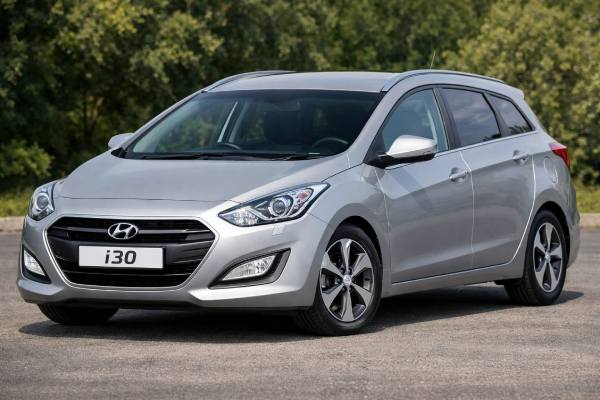
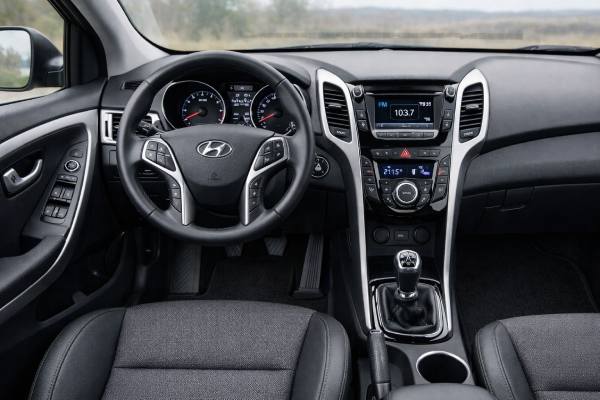
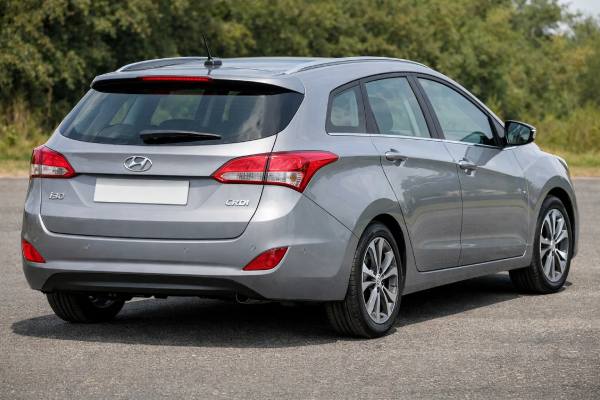
The facelifted Hyundai i30 Tourer GD 1.6 CRDi 136 hp is one of the smartest versions of the second-generation i30 range. It takes the more refined GD platform, adds the stronger Euro 6 diesel tune, and pairs it with a compact estate body that delivers real family-car cargo space without moving into SUV territory. That makes it especially appealing today. This is not a flashy performance wagon, but it offers exactly what many used-car buyers still want: strong low-rpm torque, sensible six-speed manual or optional seven-speed DCT gearing, low fuel use, and a load bay big enough for daily life, travel, and bulky gear. The facelift also sharpened the styling and made the whole car feel a little more mature than the early GD. The key caution is simple. This is now an older diesel estate, so service history, DPF health, timing-chain behavior, and the kind of mileage the car has done matter more than trim badge alone.
At a Glance
- The Tourer body adds a major cargo-space advantage over the hatch without becoming difficult to park.
- The 136 hp diesel is the more complete 1.6 CRDi choice for motorway use, passengers, and luggage.
- Euro 6 tuning and the facelift update make late GD cars feel cleaner and more polished than early versions.
- Repeated short-trip use is the main ownership caveat because DPF and EGR issues are more likely on lightly used diesels.
- A sensible oil-and-filter interval is every 15,000 km or 12 months, with shorter intervals for severe use.
On this page
- Hyundai i30 Tourer wagon brief
- Hyundai i30 Tourer hard data
- Hyundai i30 Tourer spec layers
- Wear points and recall trail
- Maintenance map and buyer filters
- Touring feel and fuel use
- Where it fits among estates
Hyundai i30 Tourer wagon brief
The facelifted i30 Tourer sits in a corner of the used market that still makes a lot of sense. It is a compact estate from a period when manufacturers still built wagons for buyers who wanted cargo flexibility without the size, weight, and higher running costs of an SUV. That gives it a very clear identity even now. The Tourer is more useful than the hatchback, easier to live with than many larger estates, and still efficient enough to justify itself as a serious long-distance family car.
The second-generation GD already represented a clear step forward over the older FD i30. Hyundai’s European development work gave it better road manners, a more polished cabin, and a more mature overall feel. The facelift sharpened that formula rather than changing its purpose. Styling was tidied, the diesel range was improved, and in many markets Hyundai added the seven-speed dual-clutch transmission to the stronger 1.6 CRDi. That matters because the facelifted 136 hp diesel feels like the version that best matches the Tourer body. It has enough torque and flexibility to carry the estate shell without the car ever feeling obviously underpowered.
This version’s appeal is not hard to understand. The 1.6 CRDi 136 hp offers low-end shove and strong cruising ability, the wagon body gives real family-car usefulness, and the car stays compact enough to be easy in town. The i30 Tourer is 4,485 mm long, so it is noticeably more practical than the hatch, but it still belongs in the compact class rather than drifting into larger-family-car territory. That is important for buyers who want space without giving up easy parking and modest tyre costs.
Cargo volume is one of the strongest reasons to choose it. Behind the rear seats, the Tourer offers 528 liters of boot space, and with the rear seats folded the available volume rises to 1,642 liters. Those are serious estate-car numbers. The shape of the luggage area also helps. It is low enough to load conveniently, square enough to be useful, and flexible enough for travel gear, child seats, flat-pack boxes, or bulky everyday loads. In practical terms, it is much closer to a traditional wagon than to a hatchback that merely looks a little longer.
The broader ownership story is also attractive. This is a car built around conventional front-wheel-drive hardware and a familiar compact-diesel recipe. There is no all-wheel-drive system to worry about, no huge wheels as standard, and no need to treat it like a complex premium product. That does not mean it is maintenance-free. Far from it. But it does mean the car’s value still rests on solid fundamentals rather than on image alone.
That is really the core of the Tourer’s appeal today. It is a rational car in a body style many buyers still appreciate once they remember how useful estates can be. The facelifted 136 hp version is the one that turns the recipe into something genuinely satisfying, because it gives the car enough performance to feel easy and enough economy to preserve its practical value.
Hyundai i30 Tourer hard data
For this article, the focus is the facelifted Hyundai i30 Tourer GD sold from 2015 to 2017 with the 1.6 CRDi 136 hp diesel engine. Depending on market, this engine was offered with either a 6-speed manual or a 7-speed DCT. That matters because torque, curb weight, towing limits, and official economy differ enough to affect the buying decision.
Powertrain and efficiency
| Item | Hyundai i30 Tourer (GD facelift) 1.6 CRDi 136 hp |
|---|---|
| Code | D4FB / U2 1.6 CRDi family |
| Engine layout and cylinders | Inline-4, 4 cylinders, DOHC, 4 valves/cyl |
| Bore × stroke | 77.2 × 84.5 mm (3.04 × 3.33 in) |
| Displacement | 1.6 L (1,582 cc) |
| Induction | Turbocharged, intercooler |
| Fuel system | Common-rail direct injection |
| Compression ratio | 16.0:1 |
| Max power | 136 hp (100 kW) @ 4,000 rpm |
| Max torque, manual | 280 Nm (207 lb-ft) @ 1,500–3,000 rpm |
| Max torque, DCT | 300 Nm (221 lb-ft) @ 1,750–2,500 rpm |
| Timing drive | Chain |
| Emissions standard | Euro 6 |
| Drive type | FWD |
| Differential | Open |
| Rated efficiency, manual | 3.9 L/100 km (60.3 mpg US / 72.4 mpg UK) combined |
| Rated efficiency, DCT | 4.2 L/100 km (56.0 mpg US / 67.3 mpg UK) combined |
| Real-world highway @ 120 km/h | typically about 5.3–6.1 L/100 km depending on tyre size, weather, load, and DPF condition |
The manual version is the economy leader on paper, while the DCT trades some fuel use for a smoother traffic experience and a little extra torque. That is a useful distinction because the Tourer body encourages longer trips and heavier loading, which makes the stronger drivetrain even more relevant.
Chassis, dimensions, and cargo
| Item | Hyundai i30 Tourer (GD facelift) |
|---|---|
| Suspension front / rear | Fully independent MacPherson strut / fully independent multi-link |
| Steering | Rack and pinion, electric power steering |
| Steering wheel turns lock-to-lock | 2.85 |
| Turning circle | 10.6 m (34.8 ft) |
| Brakes | Ventilated front discs / rear discs |
| Wheels and tyres | 195/65 R15, 205/55 R16, or 225/45 R17 depending on trim |
| Length | 4,485 mm (176.6 in) |
| Width | 1,780 mm (70.1 in) |
| Height | about 1,495–1,500 mm (58.9–59.1 in) |
| Wheelbase | 2,650 mm (104.3 in) |
| Ground clearance | about 135 mm (5.3 in) |
| Kerb weight | about 1,313–1,469 kg manual / about 1,496 kg DCT |
| GVWR | about 1,920 kg manual / about 1,940 kg DCT |
| Fuel tank | 53 L (14.0 US gal / 11.7 UK gal) |
| Cargo volume | 528 L (18.65 ft³) seats up / 1,642 L (57.99 ft³) seats folded |
These figures explain the Tourer’s appeal better than any marketing slogan. It offers proper wagon cargo space in a body that is still short enough to feel like a compact car, not a large family estate.
Performance, capability, and service basics
| Item | Hyundai i30 Tourer (GD facelift) |
|---|---|
| 0–100 km/h, manual | about 10.5 s |
| Top speed, manual | about 194 km/h (121 mph) |
| 0–100 km/h, DCT | about 10.9 s |
| Top speed, DCT | about 197 km/h (122 mph) |
| Payload | about 451–607 kg manual / about 444 kg DCT depending on trim |
| Braked towing capacity | about 1,500 kg manual / about 1,400 kg DCT |
| Unbraked towing capacity | about 650 kg (1,433 lb) |
| Engine oil capacity | about 5.3 L (5.6 US qt) |
| Coolant capacity | about 6.9 L (7.3 US qt) |
| Oil type | Low-SAPS diesel oil meeting the correct Hyundai and ACEA specification |
| Coolant type | Hyundai-approved ethylene-glycol coolant |
| Crash rating | Euro NCAP 5 stars |
| Euro NCAP scores | Adult 90%, Child 90%, Pedestrian 67%, Safety Assist 86% |
| ADAS | No modern AEB, ACC, BSD, or lane-centering package |
A few details still need VIN-specific confirmation, especially refrigerant charge, some gearbox-fluid information, and workshop torque settings. The broad picture, though, is clear: this is a practical estate with strong cargo numbers, good efficiency, and enough performance to feel properly useful.
Hyundai i30 Tourer spec layers
The facelifted Tourer was sold in multiple trim levels across Europe, and the naming varied by market. That means buyers should think in terms of equipment layers rather than obsessing over one exact trim badge. Entry versions focused on value and often smaller wheels. Mid-range cars added the features most owners actually appreciate every day. Higher trims brought a more premium feel through bigger alloys, upgraded upholstery, panoramic roof options, rear parking sensors, and extra comfort equipment.
The 136 hp diesel often appeared in the middle or upper-middle part of the range, which makes sense. It was the powertrain for buyers who wanted the Tourer to do real estate-car work rather than simply chase the lowest tax or fuel figure. In practice, that usually means the strongest used examples combine the 136 hp diesel with a mid-level trim and either 15- or 16-inch wheels. That combination tends to keep the ride more compliant, tyre costs lower, and the whole car closer to its comfort-and-practicality sweet spot.
Entry trims were rarely completely bare. Hyundai still gave the i30 Tourer a credible standard package, often including front, side, and curtain airbags, ISOFIX points, Bluetooth, air conditioning, steering-wheel audio controls, electronic stability systems, and practical load-area flexibility. Mid-level trims usually add features such as cruise control, speed limiter, rear parking sensors, auto lights, nicer seat fabrics, better audio integration, and 16-inch alloy wheels. Higher trims can add panoramic glass roof, privacy glass, dual-zone climate control, rain-sensing wipers, upgraded seat trim, and more visual detailing.
Wheel and tyre choice matters more than it first appears. A Tourer on 15-inch wheels usually delivers the easiest ride and lowest tyre bills. Sixteen-inch wheels are a good compromise and often the best match for how the car is meant to be used. Seventeen-inch cars look sharper, but they can feel firmer on poor roads and are more sensitive to potholes and tyre replacement cost. In the used market, the best-looking car is not always the best ownership choice.
Safety equipment was a strong part of the GD story. The i30 family earned a five-star Euro NCAP rating with strong adult and child occupant scores, and the Tourer shared the same core structure and safety philosophy. In practical terms, that means the car was fully mainstream in passive safety for its era, not a budget afterthought. Stability control, multiple airbags, restraint systems, and a credible body shell were part of its appeal when new and still matter now.
Period context still matters, though. This was a good early-2010s safety package, not a substitute for the driver-assistance systems found on newer cars. Buyers should not expect modern autonomous emergency braking, blind-spot intervention, or lane-centering. The most important safety equipment on a used Tourer today is a healthy suspension, good tyres, strong brakes, working airbags, and evidence that recalls and service campaigns were completed. In other words, a clean mid-spec car with sensible wheels and documented maintenance usually makes more sense than a more heavily optioned car with deferred care.
Wear points and recall trail
The facelifted i30 Tourer 1.6 CRDi 136 hp is fundamentally a strong used-car package, but it is still an older diesel estate. That means its reliability is shaped more by maintenance quality and driving pattern than by brochure reputation. A Tourer that spent its life doing regular mixed or motorway mileage is far more attractive than one that only did short urban trips and missed oil services. The basic engineering is sensible, but diesels do not reward the wrong kind of neglect.
The main diesel-specific concerns are predictable. DPF loading is common on cars used mainly for short journeys, especially in cold weather. Symptoms include warning lights, frequent regeneration, limp mode, rising fuel consumption, or a car that feels unusually flat. EGR fouling can bring rougher response, hesitation, smoke under load, or recurring engine-management faults. Fuel-filter neglect or poor diesel quality can make cold starts harder and idle quality rougher, while intercooler or boost-hose leaks can quietly rob the engine of the strength that makes the 136 hp version appealing in the first place.
Manual cars need the usual diesel clutch and dual-mass flywheel checks. Shudder on take-up, slip under load, rattle at idle, or a heavy clutch pedal all deserve attention. DCT cars need a different inspection mindset. The transmission is a real selling point when healthy, but it also introduces another system that should not be taken on trust. Jerky take-up, delayed engagement, fault lights, or repeated “it just needs a reset” explanations are not good signs.
Timing hardware deserves respect too. This diesel uses a chain rather than a scheduled timing belt, but that does not mean the chain should be treated as immortal. Persistent cold-start rattle, timing-correlation faults, or tensioner noise deserve proper diagnosis. On a used diesel of this age, it is much better to investigate chain behavior early than wait for the car to decide the issue for you.
Chassis wear is usually normal rather than alarming. Front suspension bushes, drop links, rear brake drag, wheel bearings, engine mounts, and tyre wear patterns are the sorts of things that decide whether the Tourer feels tight and mature or cheap and worn out. A tired example often shows several small faults at once: a knock here, a flat spot there, a dragging brake, a little extra vibration at idle. None of those alone necessarily means disaster, but together they say a lot about how the car has been treated.
Recall and service-campaign history is essential. The correct process is a VIN check through Hyundai’s official recall portal plus invoice-backed evidence of completed dealer work where possible. On a used facelifted Tourer, that should be basic due diligence. The same applies to software history if known, because emissions and transmission behavior can sometimes be influenced by calibrations as well as hardware condition. A seller with full records is far easier to trust than one relying on vague reassurance.
Maintenance map and buyer filters
The best maintenance strategy for the i30 Tourer 1.6 CRDi 136 hp is conservative and organized. This is not a fragile car, but it is a diesel estate that works best when fluids stay fresh, filters are not stretched, and small wear items are dealt with before they turn into larger bills. The Tourer’s used-car appeal depends on that discipline.
Practical maintenance schedule
- Engine oil and filter: every 15,000 km or 12 months for normal use; shorten the interval for frequent cold starts, city use, towing, or dusty operation.
- Engine air filter: inspect at each service and replace when dirty.
- Cabin air filter: replace regularly to maintain heater and A/C performance.
- Fuel filter: keep on schedule and replace early if fuel quality or starting behavior is doubtful.
- Coolant: follow the factory timing for the exact VIN, but refresh early if the history is incomplete.
- Brake fluid: every 24 months is a sensible preventive interval.
- Manual gearbox oil: inspect for leaks and refresh periodically on higher-mileage cars.
- DCT service: verify the exact maintenance requirements and servicing history before purchase.
- Brakes: inspect pads, discs, calipers, and parking-brake operation at every routine service.
- Tyres and alignment: rotate tyres and investigate uneven wear or steering pull quickly.
- Battery and glow plugs: test before winter on older cars.
- Timing components: inspect for cold-start chain noise, correlation faults, and tensioner symptoms rather than assuming permanent service life.
- Belts and hoses: inspect auxiliary belt, pulleys, and coolant hoses for age-related wear.
Fluids and decision-making data
| Item | Practical guidance |
|---|---|
| Engine oil capacity | about 5.3 L (5.6 US qt) |
| Coolant capacity | about 6.9 L (7.3 US qt) |
| Fuel tank | 53 L (14.0 US gal / 11.7 UK gal) |
| Oil type | Low-SAPS diesel oil meeting the correct Hyundai and ACEA specification |
| Coolant type | Hyundai-approved ethylene-glycol coolant |
| Brake fluid | DOT 4-type fluid is the normal expectation |
| Common tyre sizes | 195/65 R15, 205/55 R16, 225/45 R17 |
| Critical torque values | Confirm from VIN-specific workshop data before tightening safety-critical fasteners |
That last line matters. Public data are good for broad planning, but wheel fasteners, suspension bolts, injector clamps, and other critical settings should always come from the exact workshop documentation for the vehicle in front of you.
Used buyer’s checklist
- Start the engine from cold and listen for chain noise, unstable idle, or excessive diesel harshness.
- Check that DPF, airbag, ABS, and ESC warning lights go out properly after start-up.
- Confirm smooth boost delivery with no flat spots or excess smoke under load.
- On manuals, test the clutch and flywheel carefully for slip, shudder, or rattling.
- On DCT cars, check low-speed smoothness, take-up quality, and fault-free operation.
- Inspect tyres for mismatch and uneven wear.
- Inspect the cargo area, tailgate seals, and rear floor for water ingress or heavy abuse.
- Check the body, arches, underside, and exhaust for corrosion or accident repairs.
- Verify service history with invoices, not just stamps.
- Run the VIN through Hyundai’s official recall portal.
The safest buys are steady-mileage cars with full records, good tyres, clean diagnostics, and evidence of careful servicing. Cars to avoid are those with warning lights, vague DCT behavior, repeated short-trip history, or obvious catch-up maintenance waiting to happen. Long-term durability is good enough to recommend the model, but only when the individual example has been maintained in a way that suits an older diesel estate.
Touring feel and fuel use
The i30 Tourer 1.6 CRDi 136 hp drives the way a compact diesel estate should. It is calm, stable, and more mature than sporty. Straight-line stability is one of its better traits, and the longer estate body does not make it feel clumsy. In fact, the Tourer often feels slightly more settled than the hatch at motorway pace, especially when loaded the way an estate is likely to be used.
The stronger 1.6 CRDi tune is a very good match for the body. Around town, it still behaves like a diesel, which means measured response off the line and a little lag if you ask for sudden acceleration from very low revs. Once the turbo is working properly, though, the car feels easy rather than strained. That matters on an estate because owners are more likely to carry luggage, bicycles, child gear, or more than one passenger. The 136 hp version copes with that better than the lower-output diesel options.
The six-speed manual is the most logical choice for many buyers. It preserves the diesel’s fuel-efficiency advantage, makes the most of the engine’s mid-range, and avoids the extra system complexity of the DCT. The 7-speed DCT has a place, especially for drivers who spend a lot of time in slow traffic, but it changes the character slightly. It feels smoother in commuter use and offers a little more torque, while the manual usually feels a little more direct and simpler to own.
Ride comfort depends a lot on wheel size. Fifteen- and sixteen-inch cars suit the Tourer very well. They keep the car comfortable on broken roads and help preserve the value-minded, long-distance character that makes this model so sensible. Seventeen-inch cars can feel sharper visually and a little firmer dynamically, but road noise, pothole harshness, and tyre replacement costs all rise. For many used buyers, the smaller-wheel setup is still the better choice.
Noise levels are respectable for a diesel estate of this era. The engine is clearly audible on cold start and at idle, but once warm and settled into a cruise it becomes easier to live with than many older compact diesels. Tyres and engine mounts matter a lot here. A well-kept Tourer on decent rubber feels composed and fairly refined. A neglected one on budget tyres can feel much older than it really is.
Real-world economy is still one of the strongest reasons to choose this version. Official combined figures of 3.9 L/100 km for the manual and 4.2 L/100 km for the DCT are very strong for a practical estate. In the real world, healthy manual cars often return low-to-mid 5s L/100 km in mixed use, while DCT cars are usually a little higher. At a steady 120 km/h on the motorway, expect something around the mid-5s to low-6s depending on load, weather, and tyre package. That is still impressive for a 136 hp family wagon.
Performance is better described as confident than fast. Around 10.5 seconds to 100 km/h in the manual is enough to make the Tourer feel properly usable, and the mid-range strength matters more than the number. For the intended role, that is exactly right.
Where it fits among estates
In the used market, the facelifted i30 Tourer 1.6 CRDi 136 hp sits among some strong estate rivals. The most obvious include the Kia cee’d Sportswagon 1.6 CRDi, Ford Focus Estate 1.5 or 1.6 TDCi, Skoda Octavia Estate diesel models, Peugeot 308 SW diesel variants, Volkswagen Golf Variant diesels, and Opel Astra Sports Tourer diesels. The Hyundai does not dominate every one of them, but it makes a very balanced case.
Against the Kia cee’d Sportswagon, the Hyundai feels like a close relative in philosophy because it is. The choice often comes down to local pricing, service history, and personal preference rather than a major engineering difference. Against the Focus Estate, the Hyundai usually gives away some steering sparkle, but it often feels calmer as a practical ownership choice. Against a Golf Variant, it may lack some cabin prestige, yet it usually avoids some of the premium-brand purchase pressure that comes with the Volkswagen badge.
The Skoda Octavia Estate is probably the rival that makes the most practical sense to compare against. The Skoda usually feels larger and more mature, and it offers even more cargo flexibility in some versions. The Hyundai’s answer is that it can deliver a lot of the same real-world usefulness in a slightly tidier, less intimidating package and often at a more attractive used price. That matters for buyers who want value without falling into the trap of buying a cheaper but rougher car.
The Tourer’s main strengths are easy to summarize:
- real estate-car luggage space,
- a stronger and more useful diesel tune than the lower-output versions,
- very respectable real-world fuel economy,
- mature on-road manners,
- and a straightforward family-car layout.
Its drawbacks are equally worth stating plainly:
- it is still an older Euro 6 diesel with DPF and EGR ownership risks,
- the DCT adds another system that needs careful checking,
- larger-wheel trims can move it away from the comfort-and-value sweet spot,
- and it does not offer the modern ADAS suite newer buyers may be used to.
That leads to a clear final judgment. The facelifted i30 Tourer 1.6 CRDi 136 hp is one of the better rational used estates if you value space, diesel economy, and mature road manners more than image. It works best for regular-mileage drivers who actually need the estate body and understand what older diesel ownership requires. Buy the cleanest, best-documented example you can find, prefer condition over trim, and be especially careful with DCT history if choosing an automatic. Done that way, the Tourer still makes a very convincing case.
References
- Hyundai i30 2015 (Brochure)
- Hyundai Owners manuals | Hyundai Motor UK 2026 (Owner’s Manual)
- Euro NCAP | Hyundai i30 2012 (Safety Rating)
- Home | Hyundai Recalls & Service Campaigns 2026 (Recall Database)
- Hyundai i30 II CW (facelift 2015) 1.6 CRDi (136 Hp) blue | Technical specs, data, fuel consumption, Dimensions 2026 (Technical Data)
Disclaimer
This article is for informational purposes only and is not a substitute for professional diagnosis or repair. Specifications, torque values, service intervals, procedures, and fitted equipment can vary by VIN, market, model year, transmission, emissions package, and trim. Always verify critical service information against the official documentation for the exact vehicle before carrying out maintenance or repairs.
If this guide helped you, please consider sharing it on Facebook, X, or another social platform to support our work.