
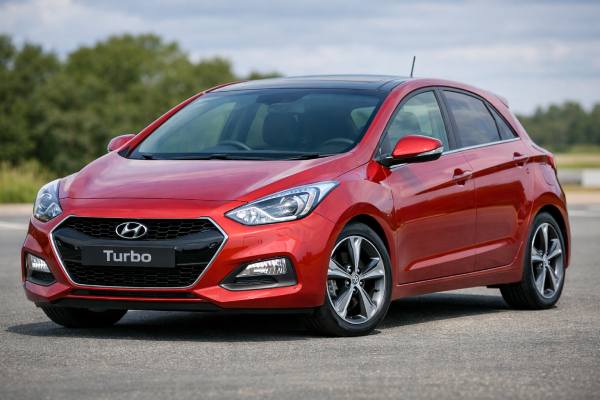
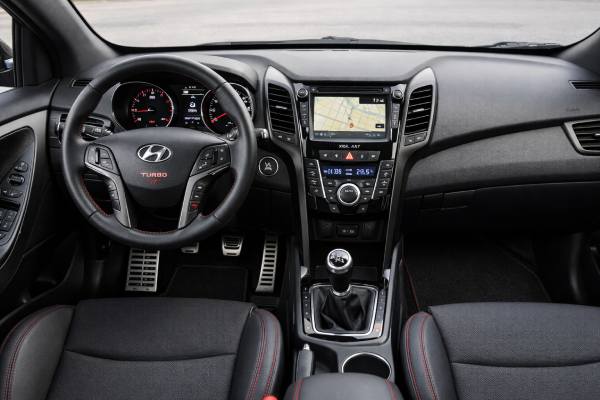
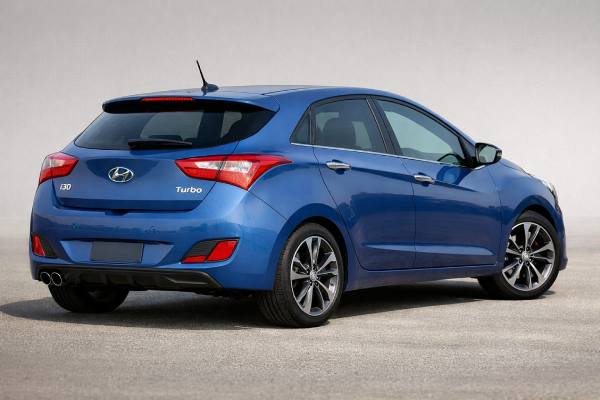
The facelifted Hyundai i30 Turbo GD is one of those cars that makes more sense the deeper you look. On the surface, it is a sharper, faster version of the ordinary i30. Underneath, it is a well-rounded warm hatch with a turbocharged 1.6-litre direct-injection petrol engine, a six-speed manual gearbox, multi-link rear suspension, and enough practicality to work as a real daily car. That matters, because the i30 Turbo was never meant to be a stripped-out track special. Its real appeal is balance: 186 hp, strong mid-range torque, stable motorway manners, useful hatchback space, and running costs that stay more reasonable than many higher-strung hot hatches. The trade-off is just as clear. The 1.6 T-GDi engine is more demanding than Hyundai’s simpler naturally aspirated petrol options, so service history, oil quality, and the condition of the steering and turbo systems matter more than styling or mileage alone. Bought carefully, though, it remains an appealing and underrated fast hatch.
Quick Overview
- The 1.6 T-GDi gives the i30 Turbo genuine warm-hatch pace, with 186 hp and 265 Nm.
- Standard 18-inch wheels, sport seats, and stronger safety equipment make it feel more complete than a simple appearance package.
- The hatchback body stays practical, with 378 L of boot space and a useful split-fold rear bench.
- Direct injection and turbocharging raise the maintenance stakes, so a full service record matters more here than on the basic petrol i30.
- A sensible baseline service rhythm is oil every 15,000 km or 12 months, with spark plugs at about 75,000 km.
Jump to sections
- Hyundai i30 Turbo character
- Hyundai i30 Turbo spec tables
- Hyundai i30 Turbo equipment and safety
- Known issues and service actions
- Maintenance timing and buyer advice
- Real-world pace and economy
- Against key hot hatches
Hyundai i30 Turbo character
The facelifted i30 Turbo sits in an interesting part of the market. It is too fast and too focused to be treated as just another trim level, but it is also calmer and more practical than the hard-edged hot hatches that usually dominate attention. That middle ground is exactly why it still has value today. Hyundai took the ordinary GD-generation i30, added the 1.6 T-GDi engine, larger wheels, chassis and trim upgrades, and a more serious equipment list, then left enough comfort and practicality in place to make the result easy to live with.
That balance starts with the engine. The 1.6 T-GDi uses Hyundai’s G4FJ turbocharged petrol four-cylinder, with direct injection, dual overhead camshafts, and a timing chain. Output is 186 hp at 5,500 rpm, while torque reaches 265 Nm from 1,500 to 4,500 rpm. Those are healthy numbers for a front-wheel-drive hatch of this size, and they define the car’s personality more than the headline horsepower does. The i30 Turbo is not explosive off boost, but once it is in the middle of the rev range it feels meaningfully stronger than the naturally aspirated i30 range. It has enough shove for fast road use without crossing into the more demanding ownership territory of a full performance flagship.
The chassis supports that identity well. Unlike cheaper compact hatches that rely on a basic rear axle layout, the i30 Turbo keeps an independent multi-link rear suspension. That helps the car feel more planted and mature than some rivals over broken surfaces and on faster roads. It is not the sharpest handler in the class, but it does feel coherent. Hyundai tuned it to be confidence-inspiring, not edgy. The result is a car that can cover distance comfortably, hold itself together on poorer roads, and still feel engaging enough to justify the Turbo badge.
The equipment mix also matters. In one official 2015 market price list, the Turbo came with 18-inch alloy wheels on 225/40 R18 tyres, bi-xenon adaptive headlights, LED daytime running lights, LED tail lights, sports seats, heated front seats, cloth-and-leather upholstery, cruise control with speed limiter, rear parking sensors, electric parking brake, and a driver knee airbag in addition to the usual front, side, and curtain airbags. That is a stronger standard package than many “sport” versions that rely more on styling than substance.
What the i30 Turbo is not is a bargain-basement GTI clone. It works best when understood on its own terms: a warm hatch with useful power, solid equipment, real practicality, and a level of refinement that suits daily use. That is why it can still make sense today. The car’s problem is not that it was poorly judged when new. It is that many used buyers overlook it entirely, or buy it for the wrong reasons. The best ones are owned by people who liked the whole package, not only the badge on the tailgate.
Hyundai i30 Turbo spec tables
The figures below refer to the facelifted 2015–2017 Hyundai i30 Turbo GD 1.6 T-GDi 186 hp in six-speed manual form, using the five-door hatchback as the baseline where a body-style distinction matters. Some markets also sold the Turbo in three-door form, but the main drivetrain and safety story remained closely related. As always, local trim, homologation, and VIN-specific details can alter some figures.
| Powertrain and efficiency | Value |
|---|---|
| Code | G4FJ |
| Engine layout and cylinders | Inline-4, DOHC, 4 valves per cylinder |
| Bore × stroke | 77.0 × 85.44 mm (3.03 × 3.36 in) |
| Displacement | 1.6 L (1,591 cc) |
| Induction | Turbocharger and intercooler |
| Fuel system | Direct injection |
| Compression ratio | 9.5:1 |
| Max power | 186 hp (137 kW) @ 5,500 rpm |
| Max torque | 265 Nm (195.45 lb-ft) @ 1,500–4,500 rpm |
| Timing drive | Chain |
| Rated efficiency | 7.3 L/100 km (32.2 US mpg / 38.7 UK mpg) |
| Urban / extra-urban | 9.6 / 6.0 L/100 km |
| Real-world highway @ 120 km/h (75 mph) | About 7.2–8.0 L/100 km is a realistic expectation |
| Transmission and driveline | Value |
|---|---|
| Transmission | 6-speed manual |
| Drive type | FWD |
| Differential | Open |
| Transmission code | Public open sources usually list only the 6-speed manual type, not a consumer-facing gearbox code |
| Chassis and dimensions | Value |
|---|---|
| Suspension, front / rear | Independent MacPherson with coil spring and anti-roll bar / independent multi-link |
| Steering | Rack-and-pinion, electric power assist |
| Steering ratio | Not consistently published in open public data for this exact trim |
| Brakes | Ventilated front discs / rear discs |
| Wheels and tyres | 225/40 R18 on 7.5J x 18 rims |
| Ground clearance | 140 mm (5.51 in) |
| Length / width / height | 4,300 / 1,780 / 1,470 mm (169.29 / 70.08 / 57.87 in) |
| Wheelbase | 2,650 mm (104.33 in) |
| Turning circle | 10.6 m (34.78 ft) |
| Kerb weight | 1,292–1,394 kg (2,848–3,073 lb) |
| GVWR | 1,920 kg (4,233 lb) |
| Payload | 526–628 kg (1,160–1,385 lb) |
| Fuel tank | 53 L (14.0 US gal / 11.66 UK gal) |
| Cargo volume | 378–1,316 L (13.35–46.47 ft³) |
| Performance and capability | Value |
|---|---|
| 0–100 km/h | 8.0 s |
| Top speed | 219 km/h (136.08 mph) |
| Towing capacity, braked | 1,400 kg (3,086 lb) |
| Towing capacity, unbraked | 600 kg (1,323 lb) |
| Towball load | 60 kg (132 lb) |
| CO₂ emissions | 169 g/km |
| Emissions standard | Euro 6 |
| Fluids and service capacities | Value |
|---|---|
| Engine oil | Commonly 0W-30 or 5W-30 |
| Engine oil capacity | About 4.5 L routine fill, about 5.1 L total |
| Coolant | About 6.4 L (6.76 US qt) |
| Transmission / ATF | Verify by VIN-specific workshop data |
| Differential / transfer case | Not applicable |
| A/C refrigerant | Verify by VIN-specific workshop data |
| A/C compressor oil | Verify by VIN-specific workshop data |
| Key torque specs | Use official workshop data only for critical fasteners |
| Safety and driver assistance | Value |
|---|---|
| ANCAP rating | 5 stars |
| ANCAP overall score | 35.69 out of 37 |
| Frontal / side / pole | 15.35 / 15.33 / 2.0 |
| Whiplash / pedestrian | Good / Adequate |
| ESC | Standard |
| AEB | Not available on any variant in the ANCAP-rated updated i30 range |
| Lane-support systems | Not available on any variant in the ANCAP-rated updated i30 range |
| Lane Departure Warning | Offered as part of an optional pack in at least one official 2015 Turbo market price list |
These figures explain the i30 Turbo’s position clearly. It is quicker and more serious than the normal petrol i30, but it is still compact, usable, and fairly conventional in the way it delivers its performance. The spec sheet is stronger than the badge alone suggests, especially once you notice the suspension layout, wheel package, safety kit, and genuinely practical hatchback packaging.
Hyundai i30 Turbo equipment and safety
The i30 Turbo’s trim story is simpler than that of many ordinary i30s because Hyundai positioned it as a fairly complete package from the start. In other words, the Turbo was not just an engine option that could be heavily stripped back. In at least one official 2015 market price list, the standard equipment already included the visual and mechanical items buyers expected: 18-inch alloy wheels, dual exhaust outlets, bi-xenon adaptive headlights with washers, LED daytime running lights, LED tail lights, sports front seats, heated front seats, cloth-and-leather upholstery, heated leather steering wheel, cruise control with speed limiter, rear parking sensors, and an electric parking brake. That matters, because it means a genuine Turbo usually feels meaningfully different from an ordinary i30 even before the engine starts.
The cabin equipment reinforces that point. Standard features in the same official list also included automatic climate control with ionizer and auto de-fog, automatic lights and wipers, Smart Key and push-button start, a supervision-style instrument cluster, tyre-pressure monitoring, heated mirrors, and a height- and reach-adjustable steering column. This is why the i30 Turbo still holds up as a daily driver. It does not feel like a compromise car that asks you to accept a cheap interior in exchange for a faster engine. It feels like a better-equipped i30 that happens to be quicker too.
Safety equipment is also stronger than many used buyers assume. The ANCAP rating for the updated i30 range built from January 2015 applies to all updated variants, including the wagon, and is the closest official crash reference for the facelifted i30 Turbo body family. On that basis, dual frontal, side chest, side head curtain airbags, and a driver knee airbag were standard, alongside EBD, emergency brake assist, ESC, and advanced seat-belt reminders for all seats. In the official Czech Turbo price list, the standard safety list also included VSM with traction control, hill-start assist, ISOFIX, emergency stop signal, and immobilizer. For a 2015–2017 compact hatch, that is a credible passive-safety and stability-control package.
The key caveat is active safety. ANCAP is very clear that AEB, lane-support systems, and related modern crash-avoidance functions were not available on any updated i30 variant in the assessed range. That means the Turbo’s safety case rests on structure, restraint systems, stability control, and braking support, not on the electronic intervention tools buyers now expect from newer performance hatches. In at least one official price list, Lane Departure Warning was available only as part of an optional Exclusive package, alongside integrated navigation, reversing camera display, and a panoramic sunroof. So LDW existed in some markets, but it was not a standard defining feature of the model.
For used buyers, the practical lesson is simple. Check that the car still has its complete original safety equipment, that the airbag and ESC systems show no faults, and that the specification actually matches what the seller claims. Because the Turbo already came well equipped, missing features or warning lights are more meaningful here than they might be on a sparsely trimmed base model. The best i30 Turbo is not just the fastest one. It is the one whose equipment, safety systems, and ownership history still line up cleanly.
Known issues and service actions
The i30 Turbo’s reliability picture is not bad, but it is also not as carefree as the ordinary 1.6 MPi car. That is the right starting point. The G4FJ turbo engine brings more performance and better mid-range punch, but it also brings higher thermal load, direct injection, and more dependence on correct oil quality and service discipline. In practice, the car’s trouble spots tend to cluster in known, understandable areas rather than appear as one single design disaster.
The first and most important issue category is intake-side carbon build-up, which is a normal risk with direct-injection petrol engines. Because fuel is injected directly into the combustion chamber rather than upstream of the intake valves, the backs of the valves are not washed the way they are on a port-injected engine. Over time, especially with short-trip use and stretched oil-change intervals, deposits can accumulate. Common symptoms include rougher cold starts, slightly uneven idle, dulled throttle response, and a feeling that the engine has lost some of its crispness. The right response is not guesswork. It is diagnosis first, then cleaning if the symptoms and inspection findings support it.
The second area is timing-chain and oil-service discipline. The engine uses a chain rather than a belt, which is a long-term advantage, but it does not make the chain immortal. On neglected cars, persistent cold-start rattle, timing-correlation faults, or rough idle deserve attention. This is best treated as an occasional but potentially medium-to-high-cost issue rather than something to panic about on every example. The real lesson is that turbo petrol engines dislike dirty or delayed oil more than ordinary naturally aspirated commuter engines do.
Third, there is the wider GD-platform steering story. Related GD-family Hyundai models are well known for MDPS flexible-coupling wear that can create a clicking or dull thud through the steering column. In everyday terms, this is usually more irritating than dangerous, but it is common enough to check carefully. A slight clunk on small steering inputs, a click when turning at low speed, or a generally untidy steering feel can point to column-related wear. The fix is usually smaller than a full steering-column replacement, but it still matters for used-car value and daily refinement.
Other faults are more conventional. Coil packs, spark plugs, and sensors can create occasional running issues as the car ages. Turbo-related problems are not the default expectation on a cared-for car, but poor oil service, hard use without warm-up or cool-down sympathy, and boost-leak issues can show up on neglected examples. Manual cars also deserve a clutch check, because 265 Nm is enough to expose a worn clutch if the car has been driven hard or modified.
This is also a model where modification history matters. Unlike a standard i30, the Turbo has a much higher chance of having been remapped, fitted with non-standard intake or exhaust parts, or driven in a more enthusiastic way. That does not automatically make a car bad, but it does mean the best examples are usually the ones closest to standard specification.
Publicly surfaced, easy-to-verify recall and bulletin information tied specifically to the European-market i30 Turbo is limited in the open sources reviewed here. That makes a VIN-based dealer check especially important. In practical terms, the reliability verdict is strong only when the car has been serviced on time, kept close to original, and inspected like a turbocharged direct-injection car rather than treated like a cheap ordinary hatch.
Maintenance timing and buyer advice
The i30 Turbo is one of those cars that rewards boring maintenance habits. That is not a criticism. It is exactly what makes it a better used buy than some more highly stressed performance hatchbacks. The key is to service it like a turbocharged direct-injection engine, not like a low-output family hatch. On this car, the difference between “good used example” and “future repair bill” is often just a few years of disciplined or undisciplined care.
A practical maintenance plan looks like this:
| Item | Practical interval | Notes |
|---|---|---|
| Engine oil and filter | Every 15,000 km or 12 months | Earlier changes are wise with short trips or hard use |
| Engine air filter | Every 45,000 km | Inspect earlier in dusty use |
| Cabin air filter | Inspect regularly and replace as needed | Often neglected on used cars |
| Fuel filter | About every 60,000 km where serviceable in the local-market setup | Check history rather than assuming it was done |
| Spark plugs | About every 75,000 km | Important on turbo direct-injection petrol engines |
| Timing chain | No fixed routine replacement interval | Inspect for noise, stretch symptoms, and timing faults |
| Serpentine / auxiliary belt | About 120,000 km | Replace sooner if noisy or cracked |
| Coolant | About 120,000 km or 8 years | Do not ignore time-based service |
| Brake fluid | Every 2 years is a sensible preventive interval | Especially important on a heavier, faster hatch |
| Manual transmission fluid | Check history and condition | Preventive refresh is wise on older fast-road cars |
| Brake pads and rotors | Inspect at every service | 18-inch wheel package encourages harder driving and faster brake wear |
| Tyres and alignment | Inspect regularly | Uneven wear quickly affects handling and steering feel |
| 12 V battery | Test as the car ages | A weak battery can create misleading electrical complaints |
The fluid picture is straightforward enough to be useful. Routine oil fill is about 4.5 L, with roughly 5.1 L total system capacity. Common oil grades are 0W-30 and 5W-30, though the exact specification should match the local climate and the official service data for the VIN. Coolant capacity is about 6.4 L. Beyond that, exact gearbox-fluid specification, refrigerant charge, compressor-oil volume, and torque values should always come from workshop data for the exact car. That matters more on a Turbo because incorrect fluids or lazy servicing have a much greater long-term cost than they do on the base petrol engine.
As a used buy, the best i30 Turbo is usually a standard or lightly used manual car with strong paperwork and no steering-column knock. Look for evidence of regular oil changes, correct spark-plug replacement, brake renewal, and tyre spending that suggests the previous owner cared about the car. A stack of invoices for small preventive jobs is better than a single recent big invoice that tries to rescue years of neglect.
Inspection should focus on cold-start behavior, idle quality, turbo response, steering feel, clutch take-up, wheel and tyre condition, and brake wear. Ask directly about modifications, remaps, exhaust changes, intake kits, or track use. Many owners will answer honestly if asked properly. Also inspect the body carefully around the large hatch opening, door edges, front bumper, and wheel arches, because style-led cars are often driven in a way that produces more stone chips and cosmetic wear than ordinary i30s.
The versions to seek are complete, standard cars with the right service history and intact equipment. The ones to avoid are bargain-price cars with vague tuning claims, patchy maintenance, steering noises, or warning lights dismissed as “common.” Long-term durability is entirely possible here, but only when the buyer respects what the car is: a turbocharged warm hatch, not just a prettier commuter car.
Real-world pace and economy
On the road, the i30 Turbo feels more mature than its badge suggests. It is not an over-excited, highly strung hot hatch. Instead, it behaves like a quick, well-equipped family hatch with enough extra power to feel rewarding when used properly. That is why it appeals to drivers who want more pace than a normal i30 without stepping all the way into the harder ride, louder cabin, and higher operating costs that often come with a full performance flagship.
The engine defines the driving experience. With 265 Nm from just 1,500 rpm, the 1.6 T-GDi has much better mid-range pull than the naturally aspirated 1.6 GDI Coupe and a noticeably more relaxed character than its 186 hp figure alone suggests. Around town, that means easier overtakes, less dependence on revs, and a general sense that the car is not working hard. On country roads or motorway slip roads, it means the car responds properly once boost builds, without the peaky, old-fashioned feel that some earlier small turbo petrols suffered from.
The manual gearbox suits it well. The ratios make the most of the torque band and help the engine feel stronger than a naturally aspirated rival of similar size. This is important because the i30 Turbo’s performance is not just about the 0–100 km/h figure of 8.0 seconds. It is about how the car delivers ordinary pace with less effort. That is what owners notice day after day. It feels flexible rather than frantic.
Chassis-wise, the car leans toward stability rather than playfulness. Straight-line behavior is solid, motorway cruising is easy, and the multi-link rear suspension helps it keep its composure over poor surfaces. The steering is accurate enough, but not especially rich in feedback. Grip is good on the standard 225-section tyres, though the open differential means hard exits in the wet or on poor tyres can still produce inside-wheel scrabble. ESC is there to keep things tidy, but the system does not turn the car into something it is not. It remains a front-wheel-drive warm hatch first and foremost.
Fuel economy is fair for the performance level, but it is not a miracle. Officially, the car returns 7.3 L/100 km combined, with 9.6 L/100 km urban and 6.0 L/100 km extra-urban. In reality, most drivers should expect more. Normal mixed use often lands in the high-sevens to mid-eights, with patient motorway driving getting closer to the low-sevens. Aggressive short-trip use, cold weather, or constant boost use can push the number up quickly. That is perfectly normal for a 186 hp turbo petrol hatch on 18-inch tyres.
Noise, vibration, and harshness are well judged for the class. The engine sounds purposeful without being coarse, the body feels solid, and the car is more refined at a cruise than many used buyers expect. Under load, it is brisk enough to feel interesting. Under normal driving, it remains civil.
The result is a car that is easy to recommend to the right driver. It is quick enough to be fun, composed enough to be used every day, and efficient enough to avoid feeling indulgent. That blend is exactly what makes the i30 Turbo more interesting now than it perhaps seemed when new.
Against key hot hatches
The i30 Turbo does not compete in the same way as a full GTI or Type R. It sits one step below that level, and that is actually part of its strength. In used-car terms, it is better viewed as a warm hatch with real equipment and honest pace than as a bargain-basement hot hatch. That changes who it makes sense for.
Its closest mechanical and philosophical rival is the Kia pro_cee’d GT. The Kia uses the same broad family approach but presents itself as slightly more overtly sporty. In practice, the difference often comes down to body style preference, history, and condition. The Hyundai usually feels a little more understated and a little more obviously practical. The Kia feels more style-led. Neither one wins automatically. The better-maintained car is usually the smarter buy.
Compared with a Volkswagen Golf GT or lower-output GTI variant, the Hyundai often loses on badge weight and perhaps on cabin polish, but it fights back with value and equipment. A clean i30 Turbo can undercut a comparable German alternative while still offering a proper manual gearbox, strong torque, 18-inch wheels, and a solid safety story. That matters if the goal is real-world value rather than brand prestige.
A Ford Focus EcoBoost in sporty trim remains the more naturally talkative car through the steering, and drivers who prioritize chassis feel above all else may still prefer the Ford. But the i30 Turbo is far from clumsy. It counters with a calmer ownership story and often a stronger standard-equipment package. For many buyers, that matters more in daily use than a little extra steering sparkle.
The biggest internal comparison is with Hyundai’s own naturally aspirated 1.6 GDI models. Those cars are cheaper to buy and simpler to own, but they do not deliver the same effortless performance. If you want style and are willing to accept slower pace, the GDI Coupe can be attractive. If you want the more complete fast-road version of the GD i30, the Turbo is clearly the better car. It is the one that feels intentionally developed rather than merely cosmetically upgraded.
That is where the i30 Turbo wins. It offers more than appearance, but it does not demand the full compromise set of a hardcore hot hatch. It gives you strong mid-range performance, a well-equipped cabin, stable road manners, and useful hatchback practicality, all in a package that can still serve as an everyday car. It will not be the first choice for someone chasing the sharpest lap time or the most prestigious badge. But for someone who wants a genuinely usable fast hatch with a bit of character and a more rational cost base, it remains a very smart alternative.
The final buying logic is simple. Choose the i30 Turbo if you want a warm hatch that still feels complete as a normal car. Skip it if you want the very lowest maintenance risk or the very highest dynamic edge. In that middle ground, though, the Hyundai is still one of the better-balanced and more overlooked choices.
References
- Hyundai i30 | Safety Rating & Report | ANCAP 2015 (Safety Rating)
- Hyundai i30 Turbo 2015 (Technical Data)
- New Hyundai i30 Turbo 2015 (Brochure)
- Hyundai i30 II (facelift 2015) 1.6 T-GDI (186 Hp) | Technical specs, data, fuel consumption, Dimensions 2026 (Technical Data)
- Hyundai i30 2015 1.6 petrol service and maintenance 2026 (Service Guide)
Disclaimer
This article is for informational purposes only and is not a substitute for professional diagnosis or repair. Specifications, torque values, service intervals, and procedures vary by VIN, market, transmission, and equipment, so always verify critical details against the official service documentation for the exact vehicle.
If this guide was useful, please consider sharing it on Facebook, X, or another social platform to support our work.